
Should I open or buy a Little Caesars franchise in 2027?
 Curated byKory White · Fractional CRO · Maryland
 PULSEKNOWLEDGE LIBRARY
Quality
Certified
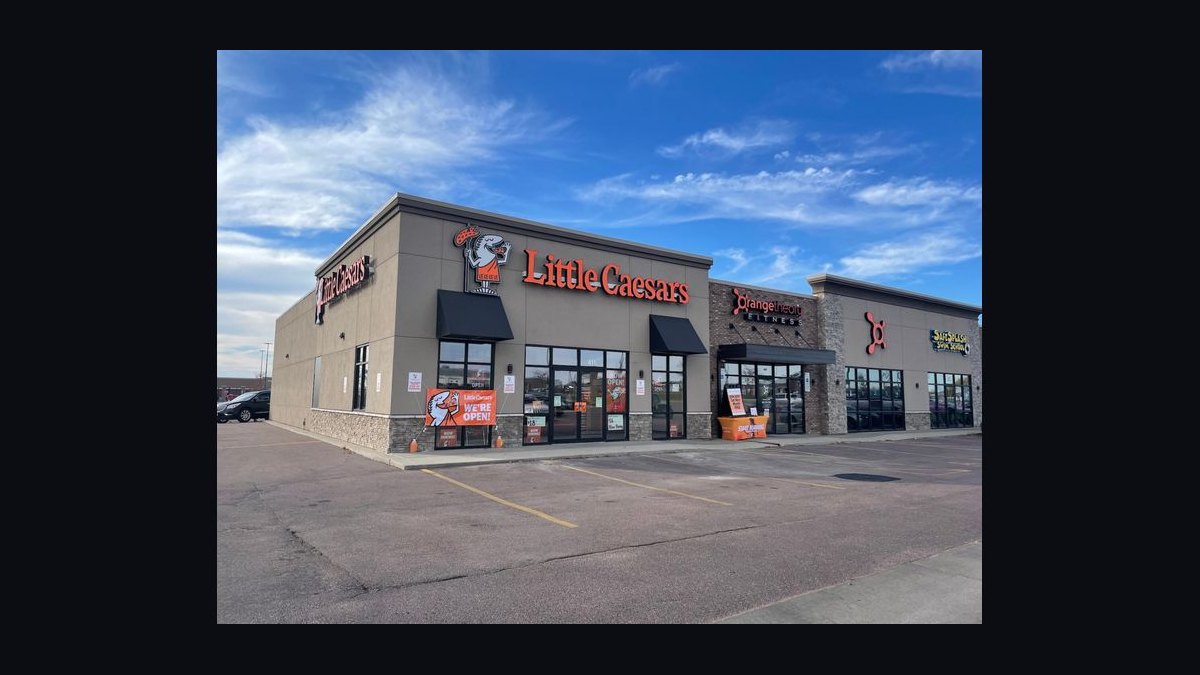
Only if you are a hands-on operator with $450,000–$700,000 liquid, real QSR experience, and a high-traffic site in an underpenetrated market. Little Caesars carries a 6% royalty plus up to 7% advertising fund and publishes no Item 19 earnings claim, so single-unit first-time buyers face the thinnest margin for error in value pizza.
The scenario most buyers walk into
Picture a buyer we'll call the "second-career operator." They sold a business or took an early retirement package, have roughly $300,000 in cash, a $600,000 net worth, and a home they'd rather not pledge. They attend a franchise expo, see a Little Caesars booth with a $20,000 franchise fee on the placard, and mentally file it as an affordable entry into a nationally recognized brand. The $20,000 number is real — it is the Item 5 initial franchise fee in the current Franchise Disclosure Document. It is also the smallest line item in the entire transaction, and treating it as the price of entry is the single most common analytical error in this category.
The actual entry cost lives in Item 7, the estimated initial investment table, and for Little Caesars that range spans roughly $378,700 on the low end to about $1,817,200 on the high end. That spread is not franchisor hedging; it is the honest reflection of a build format that can be an inline endcap in a strip center with a landlord contributing tenant improvement allowance, or a ground-up freestanding building with a drive-thru on land you buy. Those two outcomes are different businesses with different balance sheets. The low end assumes you inherit a second-generation restaurant space with usable hood, grease trap, three-phase power, and floor drains already in place. The high end assumes you are pouring a slab.
Our second-career operator typically lands in the middle: an inline suburban space, roughly 1,200 to 1,600 square feet, with build-out, equipment package, signage, initial inventory, training travel, deposits, and working capital totaling somewhere in the $550,000 to $750,000 band all-in. They finance 75% of that through an SBA 7(a) loan, inject 25% equity, and start operating with maybe $60,000 of cash left in the business account. Month one they do $62,000 in sales. They are thrilled. Then the first full royalty and advertising invoice clears, the first real payroll cycle lands with two shift managers they hadn't budgeted, a compressor fails on the walk-in, and the $60,000 cushion is $31,000 by the end of quarter one.
Nothing in that story involves a bad brand, a bad site, or a lazy owner. It involves a fee structure and a capital plan that leave almost no absorption capacity. That is the actual question a 2027 buyer needs to answer — not "is Little Caesars a good brand," which it demonstrably is at scale, but "does my specific capital stack survive the first eighteen months of this specific cost structure at the volume my specific site will actually produce." The rest of this page is about how to answer that with numbers instead of enthusiasm.
The second scenario worth naming is the resale. Existing units trade regularly, and buying a seasoned store with three years of tax returns solves the biggest problem on this page: you get real revenue data the franchisor won't give you. The trade-off is that you inherit whatever is wrong — a tired build, a bad lease with four years left, a burned-out crew, a market that shifted. Resales in limited-service pizza generally price on a multiple of adjusted EBITDA, and the diligence burden shifts from site selection to forensic accounting. Both paths are legitimate. They fail differently.
How the fee stack and unit economics actually work
Little Caesars operates on a fee structure that is, by disclosed terms, among the heaviest in major pizza. The Item 6 royalty runs 6% of gross sales. The advertising obligation — national fund plus local and cooperative advertising requirements — can reach up to 7% of gross sales depending on your market's co-op structure and any local advertising minimum in your agreement. Combined, that is a 9% to 13% top-line deduction before you have bought a single block of mozzarella or paid a single hour of labor.
Understand what that means mechanically. Fees are levied on gross sales, not on profit. They are the most senior claim on every dollar that crosses your counter, ranking ahead of your food cost, your payroll, your rent, and absolutely ahead of your own draw. A 400-basis-point swing in the advertising obligation between a 3% market and a 7% market is worth $40,000 a year on a $1 million store — the difference between a comfortable owner salary and a stressed one, decided by a contract clause most buyers skim.
Now layer the rest of the P&L. Cost of goods in this format typically runs in the low-to-mid 30s as a percentage of sales, with cheese as the single most volatile input — mozzarella block pricing moves on dairy commodity cycles that no operator controls and every operator absorbs. Labor for a carryout-dominant model with a simplified menu runs meaningfully lighter than for a full-service or heavy-delivery concept, but you are still staffing open-to-close across a seven-day week with a dinner-daypart spike, and in states with QSR-specific wage legislation — California's fast food minimum wage regime being the clearest example — the labor line compresses margin by hundreds of basis points relative to a low-wage state. Occupancy on an inline suburban space typically lands in the high single digits as a percentage of sales, and that percentage is the tell: a store doing $1.2 million with $90,000 of annual rent is healthy at 7.5%; the identical rent on a $700,000 store is 12.9% and the store is probably not survivable.
Stack it and the structure looks like this: gross sales, minus 9–13% fees, minus roughly 30–36% COGS, minus roughly 26–30% labor, minus 7–10% occupancy, minus 5–8% other operating expense (utilities, insurance, repairs, supplies, credit card fees, third-party delivery commissions where applicable). What survives is restaurant-level cash flow, and across the value-pizza segment that number typically lands in a band of roughly 8% to 15% of sales before any debt service and before any corporate overhead you carry.
That surviving band is the whole ballgame, and it is why the fee stack matters so much. Every point of fee comes directly out of a 8–15 point margin. A concept charging 5.5% royalty and 3% advertising hands its operator roughly 450 basis points more margin than a 6%/7% structure — which, against a 10% restaurant-level margin, is nearly half the profit again. Little Caesars offsets this with brand recognition, supply chain scale, a genuinely differentiated hot-and-ready format that reduces order-to-handoff friction, and a national marketing presence a regional brand cannot match. Whether that offset is worth 450 basis points is the honest judgment call, and it depends almost entirely on whether your site produces above- or below-system volume.

The diagram makes a point worth stating plainly: there is no line in that stack you can materially cut. The royalty and advertising percentages are contractual. COGS is set by an approved-supplier system with limited operator discretion beyond waste and portioning. Labor has a floor set by law and a practical floor set by throughput. Occupancy is fixed the day you sign the lease. The only variable genuinely under your control before opening is the denominator — sales volume — and the only lever that moves it is the site. Everything in the diligence process should therefore weight site selection above every other consideration.
The real numbers you should underwrite against
Start with the disclosed facts, because those are the only figures with a legal document behind them. The initial franchise fee is $20,000. The Item 7 estimated initial investment range runs approximately $378,700 to $1,817,200. Financial qualification thresholds have historically required minimum net worth in the neighborhood of $400,000 and minimum liquid capital around $150,000 — treat those as a floor for eligibility, not a target for adequacy, because eligibility and survivability are different tests and the second one is harder.
The critical disclosure is a negative one: Little Caesars does not publish an Item 19 Financial Performance Representation. This is legal and not uncommon, but it is consequential. Under the FTC Franchise Rule, a franchisor that makes no Item 19 disclosure is also prohibited from making financial performance claims to you in any other setting — not in a discovery day presentation, not from a development officer over the phone, not in a spreadsheet handed across a table. If anyone associated with the sale gives you a revenue or profit projection, that is a red flag about the person, not a gift of information. Document it and take it to your franchise attorney.
Because there is no Item 19, every revenue figure you will encounter comes from third-party analysis of FDD data and industry reporting, and those estimates cluster loosely. Independent analyses of the system generally place average unit volume in a wide band from roughly $800,000 to $1,170,000, with better-sited stores in stronger markets running higher and weak sites running materially below. Treat the low end of that band as your base case, not the midpoint. Underwriting to a $1.1 million assumption because it makes the model work is the mechanism by which operators end up in workout.
Model three scenarios and require the middle one to clear:
Downside — $800,000 in sales. At 13% combined fees ($104,000), 34% COGS ($272,000), 29% labor ($232,000), 9% occupancy ($72,000), and 7% other ($56,000), you have $64,000 of restaurant-level cash flow — an 8% margin. On a $650,000 all-in project financed at 75% ($487,500) over ten years at a high-single-digit to low-double-digit rate, annual debt service runs comfortably north of $70,000. This scenario does not service its debt. You are funding the shortfall from reserves and personal savings.

Base — $1,000,000 in sales. At 11% blended fees ($110,000), 33% COGS ($330,000), 28% labor ($280,000), 8% occupancy ($80,000), and 6% other ($60,000), restaurant-level cash flow is $140,000, a 14% margin. Against the same roughly $72,000 of annual debt service, you clear about $68,000 for yourself and cover debt at a debt-service coverage ratio near 1.9x — before you pay yourself a management salary, which you should, because if you are working the store your labor is a real cost the model must carry. Net it out and you are earning a working wage on a $160,000 equity injection.
Upside — $1,250,000 in sales. Fixed costs stop scaling with revenue: occupancy stays at $80,000 (now 6.4%), and much of your management labor is already in place. Restaurant-level cash flow can reach $190,000 to $210,000, and now the deal produces both a wage and a real return on equity. This is the scenario every operator assumes and roughly a quarter achieve.
The pattern is unmistakable: the model is binary around volume. Between the downside and base cases lies a $200,000 revenue swing that flips the deal from insolvent to workable, and that swing is decided almost entirely by site quality and local competitive density. Which means your diligence budget should be lopsided — spend $8,000 on a proper site study and $6,000 on a franchise attorney before you spend a dollar on anything else.
On payback: realistic full recovery of invested capital in this format runs roughly 18 to 36 months for a well-sited new build that hits base case or better, and longer for a store that opens soft and grinds toward volume. Any source telling you twelve months is quoting a top-decile outcome as if it were typical. Build your personal financial plan on the 36-month end of that range and treat anything faster as upside.

Working capital deserves its own paragraph because it is where the Item 7 range is most misleading. The low end of the working capital line in the disclosure covers roughly the first three months. Three months is not enough. New restaurants ramp — a store opens on grand-opening curiosity, dips in month two or three when the novelty fades, and grinds back up over six to twelve months as trial converts to habit. Experienced multi-unit operators typically carry substantially more than the disclosed minimum in per-unit reserve, and the ones who don't are the ones who show up in distressed-sale listings eighteen months later. If your capital plan has you opening with the FDD's minimum working capital figure, your capital plan is a bet that nothing goes wrong.
Finally, understand the debt structure. SBA 7(a) is the standard vehicle. Equity injection expectations for restaurant deals have been running in the 20–30% range depending on lender and borrower strength, personal guarantees are effectively universal, and lenders will often want a lien on personal real estate if the business collateral doesn't cover. Loans that include real estate amortize over 25 years; equipment and working capital portions amortize over ten. Blend those and your monthly payment on a mixed-use loan is meaningfully lower than a pure ten-year note — which is one legitimate reason to consider buying the building rather than leasing, if you have the capital.
Trade-offs against the realistic alternatives
The honest comparison set for a $600,000 QSR investment in 2027 is not "Little Caesars versus nothing." It's Little Caesars against four or five other deployments of the same capital and the same eighteen months of your life.
Other value-pizza franchises. Several competing pizza systems carry royalty structures in the 5% to 5.5% range with lower advertising obligations, and — critically — many of them publish an Item 19. That disclosure difference is worth real money in your underwriting, because you can model against franchisor-attested data rather than third-party estimates. The trade-off is brand pull: Little Caesars' national recognition and the hot-and-ready format's operational simplicity are genuine assets, and a regional brand asks you to build awareness with your own advertising dollars, which is exactly the cost the lower ad fund saved you. Do the arithmetic in both directions rather than assuming the cheaper fee structure wins.
A resale of an existing Little Caesars. This is frequently the better version of the same bet. You buy trailing revenue instead of projecting it, you skip the twelve-to-eighteen-month ramp, and lenders underwrite historical cash flow rather than a projection — which usually means better terms. Established limited-service restaurants generally trade on a multiple of adjusted EBITDA, and the diligence shifts to verifying the seller's addbacks, inspecting deferred maintenance, reading the remaining lease term, and confirming the franchisor will approve the transfer and won't require a costly remodel at transfer. Ask specifically about remodel obligations triggered by transfer or renewal — an unbudgeted image-update requirement can add six figures to a deal that looked clean.
A different QSR category entirely. Sandwich, smoothie, chicken, and coffee concepts with simpler kitchens carry lower equipment costs, lower food-safety complexity, and in several cases lower food cost than pizza. Concepts without a cooking oven avoid hood, suppression, and grease-trap requirements that add substantially to build-out. If your motivation is "own a franchise" rather than "own a pizza store," widen the search before you narrow it.

Independent concept. Zero royalty, zero advertising fund, full menu and pricing control, and typically a lower all-in build because you're not buying a mandated equipment package or a brand-standard build. You keep the 9–13% that would have gone to fees. You also get zero brand awareness, zero supply-chain leverage, zero operating playbook, and 100% of the marketing burden. This works for restaurant veterans with local reputation and fails reliably for first-timers, which is precisely the population most attracted to it.
Real estate instead of operations. Buy the building, lease it to a QSR tenant, and collect rent at a market cap rate. You give up the operating upside and take a fraction of the return, but you also give up the 60-hour weeks and the operating risk. For a buyer whose actual goal is passive income, this is the honest answer, and it is worth saying explicitly: there is no passive version of a single-unit quick-service restaurant. Absentee ownership at one unit does not work in a format with 8–15% restaurant-level margins, because the manager's salary consumes the margin.
Pitfalls that sink these deals and how to avoid each
Signing the lease before the model clears. Occupancy is the one major cost fixed permanently on day one, and it is fixed by a document most buyers sign under time pressure because "the landlord has another interested tenant." Run your three-scenario model with the actual proposed rent, including CAM, taxes, insurance, and every scheduled escalation across the full term, before you sign an LOI. If the downside case can't carry the rent, the site is wrong at that price — negotiate, get tenant improvement allowance, get free rent during build-out, or walk. There is always another site; there is not always another $650,000.
Treating the absence of an Item 19 as neutral. It is not neutral, it is the central risk of this specific deal. Compensate by working Item 20 hard. The FDD lists current franchisees with contact information and, separately, franchisees who left the system in the prior year. Call both lists. Current operators tell you what the business is like; departed operators tell you why it stops working. Aim for fifteen or more conversations and ask concrete questions: actual trailing-twelve revenue, months to positive cash flow, labor as a percentage of sales, what the ad fund co-op actually charges in their market, what field support has done for them in the past year, whether they'd sign again, and what they'd want a buyer to know that isn't in the FDD. Franchisees are candid on the phone in a way no document is.
Under-reserving working capital. Covered above, but it bears repeating as a pitfall because it is the proximate cause of most failures that trace back to a decision rather than a market. Add a dedicated reserve line above the FDD minimum and do not spend it on build-out overruns. Build-out overruns should have their own contingency — 10% to 15% of the construction budget — kept separate from operating reserve.
Modeling your own labor as free. If you are working 55 hours a week in the store, the store is consuming a manager's salary whether or not it writes you a check. A model that shows $68,000 of owner cash flow while you personally work full-time is showing you a wage, not a return on your $160,000 equity. Put a market manager salary in the P&L, look at what's left, and judge the investment on that number. If the answer is that the business breaks even after paying a manager, you have bought a job — which is a legitimate choice, but you should make it knowingly.
Ignoring competitive density inside a tight radius. Pull the count of every pizza outlet — national, regional, and independent — within a mile and a half of your site, and the count of value-priced QSR outlets generally. The differentiated position that made this format compelling has narrowed as national competitors pushed aggressive carryout price points. In a corridor already carrying several value pizza options, you are fighting for share rather than creating demand, and share fights are won by whoever has the better real estate, not whoever wants it more.

Scaling before the first unit is stable. Multi-unit economics are genuinely better — general and administrative overhead spreads, you can afford a district manager, supplier relationships improve, and you build a management bench. But the sequencing matters enormously. Operators who sign a multi-unit development agreement and open stores two and three before store one has hit stable positive cash flow are compounding an unproven model. Get one unit to twelve consecutive months of solid performance, then expand. The development agreement's opening schedule is negotiable at signing; renegotiating it later, under pressure, is not.
Assuming the franchisor's growth pace is your pace. A system's net unit additions tell you about the franchisor's health, not about your market. Legacy midwestern and mid-Atlantic territories carry high existing density; the practical runway is in underpenetrated regions. Ask the development officer directly which specific trade areas they consider open, and cross-check by mapping existing units yourself.
Skipping the peak-hour store visits. Spend Friday and Saturday evening in three operating stores in comparable markets. Count transactions per hour, time order-to-handoff, watch how many staff are on during the dinner spike, and note how many customers walk in versus order ahead. Twenty minutes of that observation calibrates your revenue model better than a week of spreadsheet work — and if a franchisee will let you work a shift, take it. RevOps discipline applies here exactly as it does in software: instrument the funnel, measure the throughput, and don't forecast off a number you haven't watched happen.
Related questions
Does Little Caesars publish an Item 19 earnings claim?
No. The system makes no Financial Performance Representation, which also legally bars anyone selling the franchise from giving you revenue or profit projections in any other format. All revenue estimates you will find come from third-party analysis of FDD data, not from the franchisor.
Can I own a Little Caesars franchise passively?
Not realistically at a single unit. Restaurant-level margins in the 8–15% range are consumed by a market-rate general manager's salary, leaving little for an absentee owner. Passive structures generally require enough units for a district-manager layer, which means substantially more capital.
Is buying an existing store better than opening a new one?
Often, yes, for a first-time operator. A resale gives you three years of tax returns to underwrite against, skips the ramp period, and usually gets better loan terms. The trade-off is inherited problems: lease term, deferred maintenance, crew quality, and possible remodel obligations triggered at transfer.
How much liquid capital should I actually have?
Franchisor eligibility thresholds have historically sat near $150,000 liquid and $400,000 net worth, but eligibility is not adequacy. Plan on your equity injection plus a construction contingency plus a working capital reserve well above the FDD minimum — realistically $450,000 to $700,000 total for a comfortable single-unit build.
What kills these deals most often?
Rent set too high relative to achievable volume, and working capital reserves set too low. Both are decided before opening day, both are effectively irreversible, and together they explain more failures than competition, brand, or operator effort combined.
FAQ
What does it actually cost to open a Little Caesars franchise?
The initial franchise fee is $20,000, but the meaningful figure is the Item 7 estimated initial investment, which spans roughly $378,700 to $1,817,200. The low end assumes an inline second-generation space with an existing kitchen infrastructure; the high end assumes ground-up construction. Most inline suburban builds land in the $550,000 to $750,000 range all-in, and you should carry a separate construction contingency of 10–15% on top of the budgeted build.
What are the ongoing fees?
A 6% royalty on gross sales plus an advertising obligation that can reach up to 7% of gross sales depending on your market's cooperative structure and any local advertising minimum in your agreement. Combined, that is 9% to 13% of every dollar of revenue, taken off the top before food, labor, or rent. Confirm your specific market's advertising co-op requirement in writing before you sign — the spread between a 3% and 7% market is worth roughly $40,000 a year on a million-dollar store.
How much can I expect to earn?
Nobody can legitimately tell you, because the franchisor publishes no Item 19. Third-party estimates place system average unit volume across a broad $800,000 to $1,170,000 band, and restaurant-level margins in this format generally run 8% to 15% of sales before debt service. Model your own three scenarios, underwrite to the low end, and require the base case to cover debt at a comfortable coverage ratio with a market manager salary already expensed.
How long until I break even?
Plan on 18 to 36 months to recover invested capital for a well-sited new build, with monthly positive cash flow arriving earlier than full payback. Claims of twelve-month payback describe a top-decile outcome, not a typical one. A store that opens soft and grinds toward volume can take considerably longer, which is exactly why the working capital reserve matters more than any other line in the capital plan.
Is a single unit worth it, or do I need to scale?
A single well-sited unit hitting base-case volume can support an owner-operator working in the business. It generally cannot support an absentee owner, and it produces a modest return on equity once you expense your own labor honestly. The economics improve materially at three or more units because overhead spreads — but scale only after unit one has delivered twelve consecutive months of stable positive cash flow, never before.
What should I do first if I'm serious?
Request the current FDD and read Items 5, 6, 7, 11, 19, 20, and 21 twice. Then call fifteen franchisees from Item 20, including departed ones. Then build your three-scenario model with a real proposed rent from a real site. Only after those three steps do you engage a franchise attorney, pursue SBA pre-qualification, and consider signing anything. The $20,000 fee should be the last money you spend, not the first.
Sources
- https://www.ftc.gov/business-guidance/resources/franchise-rule-compliance-guide
- https://www.ftc.gov/business-guidance/industry/franchises
- https://www.sba.gov/funding-programs/loans/7a-loans
- https://www.franchise.org/
- https://www.ers.usda.gov/topics/animal-products/dairy/
- https://www.bls.gov/iag/tgs/iag722.htm
- https://www.ibisworld.com/united-states/industry/pizza-restaurants/1141/
- https://www.qsrmagazine.com/
- https://restaurantbusinessonline.com/
- https://www.littlecaesars.com/en-us/franchising/
Related on PULSE
- Should I open or buy a Peace Love and Little Donuts franchise in 2027?
- Should I open or buy The Little Gym franchise in 2027?
- Should I open or buy an Oxi Fresh Carpet Cleaning franchise in 2027?
- Should I open or buy an Oil Can Henry's franchise in 2027?
- Should I open or buy a KidStrong franchise in 2027?
- Should I open or buy a Premier Garage franchise in 2027?
This page will be disappearing soon. Save it to your device for $1 — or read it free while it is here.
@Kory-White- · if Venmo asks, the last 4 of my number are 2012
This page is gone.
This one is off the shelf now. $1 keeps it on your phone for good — the whole page, pictures and diagrams included.
 pulse-qHow Do I Keep Reps From Gaming the Comp Plan in 2026?
 pulse-qShould I open or buy a 7 Brew Coffee franchise in 2027?
 pulse-qShould I open or buy a Pollo Tropical franchise in 2027?
 pulse-qHow do you coach a rep who blames marketing for bad leads in 2026?
 pulse-qShould I open or buy a Goddard School franchise in 2027?
 pulse-qShould I open or buy a Golden Corral franchise in 2027?
 pulse-qHow Many Salespeople Should I Schedule on My Auto Dealership Floor Each Day in 2026?
 pulse-qTop 10 Gong Coaching Review Prompts for SMB Reps in 2027
 pulse-qShould I open or buy a Mo' Bettahs Hawaiian Style Food franchise in 2027?
 pulse-qHow do you rebuild a sales team's trust in the forecast after a mid-year CRM migration corrupts historical pipeline data in 2027?