
Should I open or buy a Golden Corral franchise in 2027?
 Curated byKory White · Fractional CRO · Maryland
 PULSEKNOWLEDGE LIBRARY
Quality
Certified
Only if you are a well-capitalized, experienced multi-unit restaurant operator in a genuinely buffet-receptive market. Golden Corral is America's largest grill-buffet brand with real customer loyalty, but a roughly $2.4M–$7.4M total investment, heavy real estate, 50–80 employees per unit, and a contracting buffet segment make it a specialist play, not a first-timer's franchise.
The outcome you should expect
Set your expectations against the actual shape of this business before you fall in love with the top line. A mature Golden Corral grosses somewhere in the $3 million to $6 million-plus range annually. That number is genuinely impressive next to most franchise concepts — a typical fast-casual unit does a fraction of it — and it is also the single most misleading number in the entire opportunity, because gross revenue in a buffet is bought with the highest cost structure in casual dining.
Here is the realistic outcome profile. On a $4 million unit, food cost in an all-you-can-eat format with steak, seafood rotations, and a full bakery typically runs 30–35% of sales. Labor — a buffet needs cooks, carvers, bakers, bussers, dish crew, and floor staff simultaneously — commonly lands at 32–38%. Those two lines alone consume 62–73% of every dollar before you have paid rent, royalty, marketing fee, utilities, insurance, or a single dollar of debt service. Royalty near 4% plus a marketing fee around 2% takes another six points off the top. Occupancy, whether you pay a landlord or pay yourself as the property owner, is real money on a 10,000–12,000 square foot freestanding building.
What survives at the bottom is a mid-single-digit to low-double-digit operating margin in a good year, which on a $4M unit is a couple hundred thousand dollars of owner earnings — before debt service on a multi-million-dollar build. That is the honest outcome to underwrite. It can be an excellent return on your equity if you financed the real estate sensibly and you own the dirt. It can be a bleeding wound if you levered the whole thing and volume comes in at $2.8M instead of $4.2M.
The second half of the outcome nobody models properly: your exit. An asset-light franchise — a carpet-cleaning route, a fast-casual inline unit, a service brand run from a truck — can be sold or wound down in months. A Golden Corral is a large, special-purpose building on two-and-a-half to four acres. The buyer pool for a 11,000 square foot buffet shell is narrow. Model the residual value of the real estate as a separate line item, because in a headwind segment the building is simultaneously your biggest risk and your biggest source of recoverable value.
Expect a 12- to 24-month runway from signed franchise agreement to open doors. Site approval, entitlement, permitting, and ground-up construction on a pad site of this size do not compress. Budget the carry cost of that timeline — your capital is dead money for a year and a half before the first guest walks in.
What drives that outcome
Four variables move the needle far more than anything else, and three of them are decided before you open.
Real estate terms. This is the dominant driver, and it is why Golden Corral's Item 7 dwarfs almost every other franchise. You are not buying a restaurant; you are making two investments simultaneously — an operating business and a commercial real-estate holding. A 10,000–12,000 sq ft freestanding structure on 2.5–4 acres is frequently owned or built-to-suit rather than leased. Ground-up building costs in the several-million range dominate the investment table. Strong operators generally split these: hold the property in a separate entity, finance it on a real-estate loan with the land and structure as collateral, lease it back to the operating company, and finance the business itself with conventional restaurant lending. That separation isolates the asset value, opens up depreciation treatment, and means a soft buffet segment does not vaporize your entire net worth — you still own repurposable commercial property.
Volume relative to fixed cost. Buffets are a volume machine. Fixed costs — the building, the management team, the minimum crew needed to keep every station stocked — barely flex with traffic. A unit doing $5.5M and one doing $3.1M carry nearly the same overhead. The gap between those two outcomes is almost entirely the market you picked and the operator you are.
Food and labor discipline. In a fixed-price all-you-can-eat model you cannot raise the check to cover waste. Every over-produced pan, every stale bakery tray, every station staffed for a rush that never came comes directly out of margin. Operators who win are relentless about production forecasting, batch cooking to demand rather than to a schedule, waste logging by station, and cross-training so a single person covers two positions during the trough between lunch and dinner.
Segment trajectory. The buffet category contracted meaningfully through and after the pandemic. Rising food and labor costs squeeze a model whose entire promise is unlimited quantity at a fixed low price, and consumer habits shifted toward delivery and grab-and-go — two channels the buffet format structurally cannot serve. You are underwriting into a headwind. That is not disqualifying, but pretending otherwise is how people lose several million dollars.
Benchmarks and realistic ranges
Work from these ranges rather than from a broker's pro forma, and verify every one of them against the current Franchise Disclosure Document before you sign anything.
Franchise fee: approximately $50,000 per the 2026 FDD. Small relative to everything else — do not let the modest fee anchor your sense of the total.
Total Item 7 investment: roughly $2.4 million to $7.4 million. That spread is enormous, and the spread itself is the information. The low end reflects a scenario with favorable land, a leased or built-to-suit structure, and a market with reasonable construction pricing. The high end reflects buying the dirt outright in an expensive metro and building ground-up. Where you land inside that $5 million band is determined almost entirely by real-estate strategy.
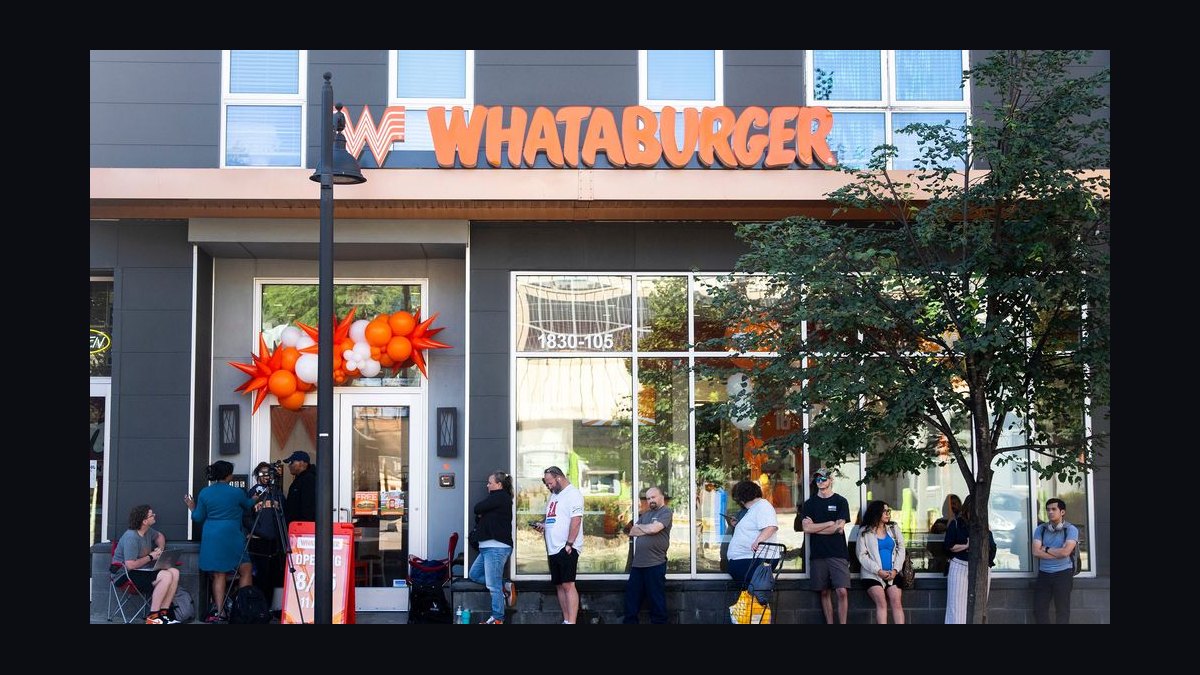
Component ranges to model: building, land, and site work carry the bulk — roughly $1.5M to $5M. Equipment and buffet build-out, including grill line, bakery, hot and cold wells, and back-of-house, runs in the high six figures to low seven figures. Signage and decor land in the low-to-mid six figures. Initial inventory for a large-format operation runs into six figures. Grand-opening marketing is another six-figure line. Training and travel for you and your management bench is a meaningful five-figure cost. Working capital should be six figures at minimum and closer to half a million if you are prudent — the ramp period on a large-format restaurant is unforgiving.
Liquidity: expect the brand to want roughly $1 million-plus liquid, with financing strength behind it. This is not a concept you enter on an SBA loan and optimism.
Ongoing fees: royalty near 4% of gross sales plus a marketing fee around 2%, plus any local advertising contribution. Six points off the top before you have cooked anything.
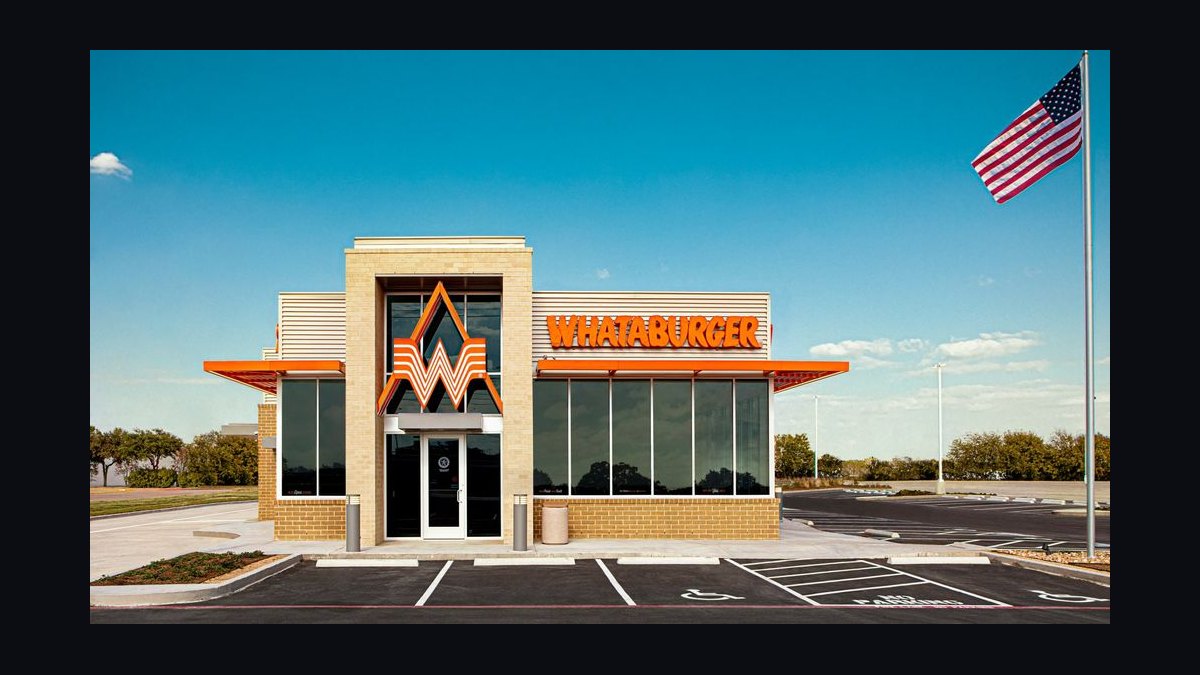
Revenue: mature units in the $3M to $6M-plus band. Read Item 19 carefully and note precisely what it does and does not disclose — whether it reports gross sales only or gets down to unit-level costs, whether it segments by market type, and how many units the reported cohort includes.
Headcount: 50 to 80-plus employees per unit is typical, spanning line cooks, bakers, carvers, servers, bussers, hosts, and dish. Turnover in hourly restaurant roles frequently runs well above 100% annually. Your recruiting and onboarding machinery is not an HR nicety here; it is a core operating system.
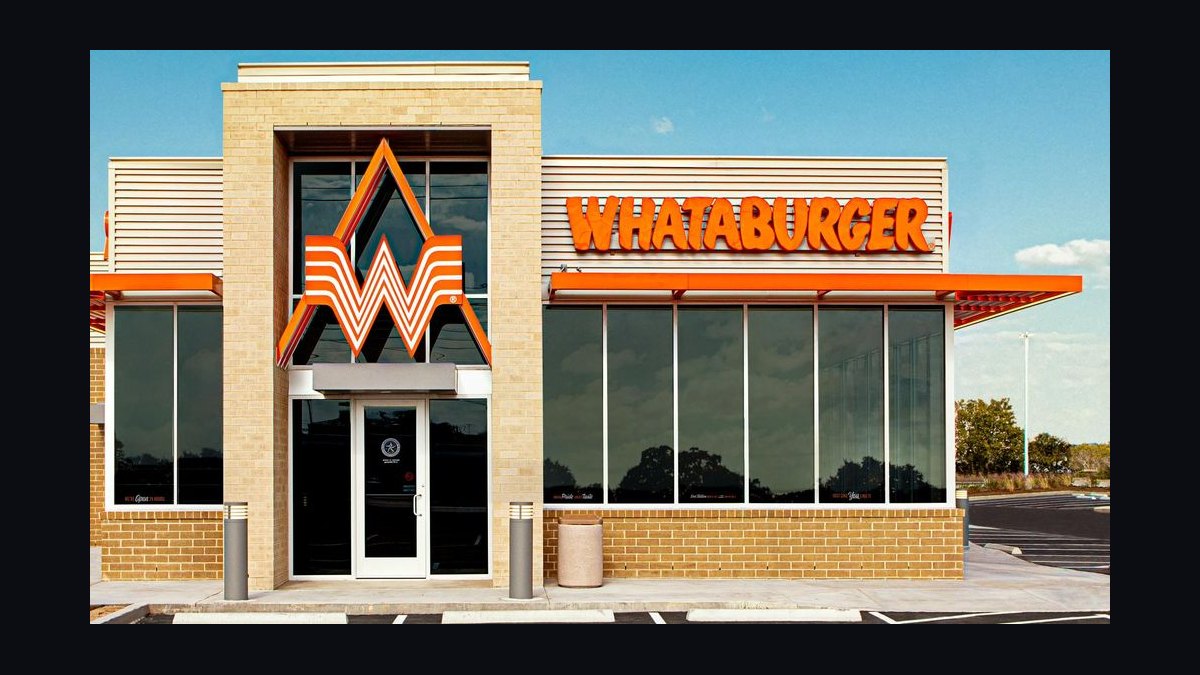
Site parameters: 10,000–12,000+ sq ft of building on 2.5–4 acres. High-traffic suburban corridors near big-box retail or interstate exits. Retrofitting an existing space into this format is rare because the kitchen and buffet-line layout is so specialized. Budget 6–12 months for site approval, permitting, and construction alone, inside the broader 12–24 month opening timeline.
Market fit indicators: strong senior populations, large families, value-oriented demographics, and limited existing buffet competition. Parts of the Southeast, Midwest, and Texas have historically been friendlier than dense coastal metros where rent and labor both run high and consumer preference has shifted hardest.
Risks, edge cases, and failure modes
Under-capitalization is the classic killer. A buyer who scrapes together the minimum, opens with thin working capital, and hits a soft first two quarters has no runway. Large-format restaurants ramp slowly, and the fixed cost does not wait for you. If your capital plan has no cushion for a nine-month ramp plus one bad surprise, you are not ready.
Misreading the local market. A buffet needs density of the right customer, not just density of people. A trade area full of young professionals ordering delivery is not a buffet market regardless of its population count. Cannibalizing an existing nearby unit is another version of the same error — you split the same demand across two sets of fixed costs.
The special-purpose real-estate trap. If the operating business struggles and you need out, you are marketing a large building purpose-built for a buffet line. Alternative uses exist — other large-format restaurants, some retail, medical or fitness conversions — but each requires capital to convert and narrows your buyer pool. This is the single biggest structural difference between this and an asset-light franchise, and it is worth stress-testing explicitly before you commit.
Margin erosion through a thousand small leaks. In a fixed-price model there is no pricing lever to cover sloppiness. Over-production at the carving station, unlogged waste, staffing the full crew through a dead 3pm hour, portion drift on high-cost proteins — none of these is dramatic, and collectively they can erase your entire operating margin. Automated inventory and production forecasting are not optional refinements; they are the difference between a profitable unit and a break-even one.
Regulatory and health-code exposure specific to buffets. Self-serve food carries a heightened compliance and reputational profile. Local health departments in some jurisdictions apply additional requirements to open-service formats, adding both cost and operating complexity. A single serious incident travels further in a buffet than in a plated restaurant.
Segment-level risk you cannot manage away. You can be an excellent operator in a declining category and still generate a mediocre return. Everything above about food discipline and site selection is within your control. The structural trajectory of all-you-can-eat dining is not. Weigh that honestly against the alternative uses of $3 million-plus in capital.
The adjacent comparison worth making. Before committing, price out what the same capital buys elsewhere. Three or four inline fast-casual units in a growing segment, spread across a metro, diversify your risk across sites, cost far less per unit, lease rather than own, and exit far more easily. Family-dining table-service brands sit between the two. Independent buffet or family restaurant ownership gives you total control and zero royalty at the cost of brand draw. None of these is automatically better — but if you have not modeled at least one of them side by side against Golden Corral's numbers, you have not actually made a decision, you have made a preference.
The operator-fit failure mode. This concept punishes absentee ownership. Sixty-plus employees, a complex production kitchen, and razor-thin per-cover economics require a present, experienced operator or a genuinely strong general manager you trust completely. If you are buying this as a passive investment, the numbers will not hold.
A practical rollout plan
Treat the pre-commitment phase as the real work. Almost every catastrophic franchise outcome traces back to diligence someone skipped in the first ninety days.
Days 1–30: read the document properly. Get the current FDD and read Items 5, 6, 7, 19, and 20 in full — not the summary, the actual items. Item 19 tells you what financial performance the franchisor is willing to represent and, just as importantly, what it declines to represent. Item 20 gives you unit counts, openings, closures, and transfers over recent years — the closure and transfer trend in a headwind segment is arguably the most revealing data in the whole document. Have a franchise attorney read it alongside you. Build your own P&L model from the ranges rather than accepting anyone else's.
Days 31–60: talk to a lot of operators. Not three. Call every franchisee in the Item 20 list you can reach, including — especially — the ones who exited. Ask specifics: actual food cost percentage, actual labor percentage, what their build really cost versus budget, how long the ramp took, what their real owner earnings were in year two and year three, whether they would do it again, and what they think the segment looks like in five years. Ask former operators why they sold and what they got.
Days 61–90: validate the market and the site. Confirm the demographic profile genuinely supports a buffet — senior population, family density, value orientation, and existing buffet performance nearby. Walk competing units at peak and at trough. Then work the real estate: site availability at 2.5–4 acres, entitlement risk, local permitting timelines, and whether you will own, lease, or do a built-to-suit. Structure the ownership entity now, not later.
Days 91–270: build. Ground-up construction on this format takes months and rarely finishes early. Manage the general contractor tightly, hold contingency, and start recruiting your management team well before you need them — a great GM hired late is worse than an adequate one hired early.
Days 270–300: open and staff heavily. Overstaff the opening weeks deliberately. A weak opening in a buffet is disproportionately damaging because the format's entire promise is abundance and variety; a guest who hits a picked-over line in week two may not come back.
Ongoing: run the margins like the business depends on it, because it does. Weekly food and labor variance against forecast. Waste logged by station. Production forecasting tied to real traffic patterns. Cross-training so the trough hours run lean. And do not even discuss a second unit until the first has produced clean, verified profitability across a full year including a slow season.
Worth noting for anyone who lives in a spreadsheet: the discipline here is not that different from the RevOps habit of instrumenting a pipeline and reviewing variance weekly. The unit economics of a restaurant are a funnel — traffic in, average check, cost per cover, contribution margin — and the operators who win treat them with the same rigor a good revenue team applies to conversion rates. The failure mode is identical too: measuring the top-line number, celebrating it, and never decomposing what it actually cost to produce.
Related questions
How much liquid capital do I actually need?
Expect roughly $1 million-plus liquid alongside financing capacity, against a total investment of about $2.4M–$7.4M. Verify the current requirement in the FDD — and hold real working-capital cushion beyond the minimum, because the ramp on a large-format restaurant is slow.
Is owning the building better than leasing?
Usually, if you can afford it. Owning separates an appreciating asset from an operating business in a headwind segment, opens depreciation treatment, and preserves residual value. The cost is a much larger capital commitment and a harder, slower exit.
Could I buy an existing unit instead of building?
Often the better path. You get real historical numbers instead of projections, an existing crew, and no construction risk. Scrutinize why the seller is exiting, the deferred maintenance on a large building, and whether the trade area has shifted since the unit opened.
What are the lower-capital alternatives worth comparing?
Fast-casual and QSR franchises in growing segments cost a fraction per unit, lease rather than own, and exit far more easily. Family-dining table-service brands sit in between. Model at least one side by side before committing.
How long until the doors actually open?
Typically 12 to 24 months from signing, with 6–12 months of that consumed by site approval, permitting, and ground-up construction. Budget the carry cost of that dead-capital period explicitly in your model.
FAQ
What is the total investment range to open a Golden Corral franchise?
Roughly $2.4 million to $7.4 million per the 2026 FDD, covering the franchise fee, real estate and site work, construction, equipment and buffet build-out, signage, inventory, opening marketing, training, and working capital. That range is among the highest in franchising, driven almost entirely by the 10,000–12,000+ square foot freestanding building.
How much revenue can a Golden Corral franchise expect?
Mature units generally gross $3 million to over $6 million annually. Actual performance depends heavily on trade-area demographics, local buffet competition, and operational execution, with stronger volumes typically in suburban markets with large family and senior populations. Read Item 19 for what the franchisor is actually willing to represent.
What are the ongoing fees?
A royalty of approximately 4% of gross sales plus a marketing fee of roughly 2%, along with any local advertising contribution. Six points off the top before food, labor, or occupancy — meaningful in a segment where combined food and labor already consume 62–73% of revenue.
Is the buffet segment still viable for new franchisees in 2027?
It faces real structural pressure — rising food and labor costs squeeze a fixed-price unlimited model, and consumer shifts toward delivery and grab-and-go bypass the format entirely. The category contracted meaningfully post-pandemic. Golden Corral's brand recognition and loyal value-seeking base still support profitable units in the right markets, but you are underwriting into a headwind.
What experience do I need to qualify?
The brand typically seeks well-capitalized, experienced multi-unit restaurant operators. Prior high-volume, large-format dining experience is strongly preferred given the 50–80-employee headcount, complex production kitchen, and multi-million-dollar capital commitment. This is not a first-time-owner concept, and absentee ownership tends to fail.
How long does it take from signing to opening?
Commonly 12 to 24 months. Site acquisition, entitlement, permitting, and ground-up construction of a large specialized building consume most of that, with 6–12 months typical for approval and construction alone. Plan for your capital to be committed well before it produces any revenue.
Sources
- https://www.goldencorralfranchise.com/
- https://www.entrepreneur.com/franchises/directory
- https://www.franchise.org/
- https://www.sba.gov/business-guide/plan-your-business/buy-existing-business-or-franchise
- https://www.ftc.gov/business-guidance/resources/consumers-guide-buying-franchise
- https://restaurant.org/research-and-media/research/
- https://www.ibisworld.com/united-states/market-research-reports/buffet-restaurants-industry/
- https://www.bls.gov/iag/tgs/iag722.htm
- https://franchisebusinessreview.com/
Related on PULSE
This page will be disappearing soon. Save it to your device for $1 — or read it free while it is here.
@Kory-White- · if Venmo asks, the last 4 of my number are 2012
This page is gone.
This one is off the shelf now. $1 keeps it on your phone for good — the whole page, pictures and diagrams included.
 pulse-qShould I open or buy a Lee’s Famous Recipe Chicken franchise in 2027?
 pulse-qShould I open or buy a Bob Evans franchise in 2027?
 pulse-qShould I open or buy a Glory Days Grill franchise in 2027?
 pulse-qShould I open a tree service business in 2027?
 pulse-qShould I Hire a Fractional CFO Before Renewing My Commercial Insurance Policy in 2027?
 pulse-qShould I open or buy an Allegra Marketing Print franchise in 2027?
 pulse-qShould I open or buy a Bojangles franchise in 2027?
 pulse-qShould I open or buy a Chipotle franchise in 2027?
 pulse-qHow do you handle a rep who sandbags their pipeline to avoid quota increases in 2027?
 pulse-qShould I open or buy a Duck Donuts franchise in 2027?