
Should I open or buy a Kitchen Tune-Up franchise in 2027?
 Curated byKory White · Fractional CRO · Maryland
 PULSEKNOWLEDGE LIBRARY
Quality
Certified

Open a Kitchen Tune-Up franchise in 2027 only if you hold $150K–$190K in total capital, will personally run in-home consultations for 18–24 months, and your territory clears 40,000 qualifying households. Underwrite to the roughly $380K–$420K median unit revenue, not the published system mean. Passive investors should look elsewhere.
The kitchen-table scenario that decides everything
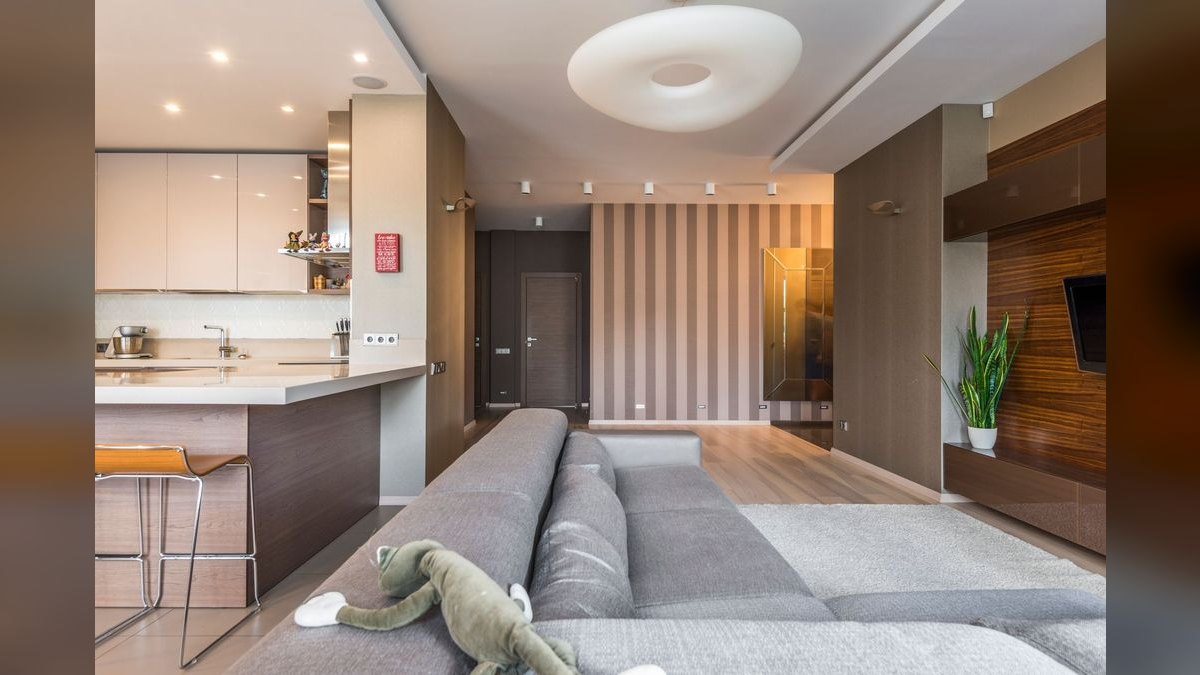
Picture a Tuesday evening in a 1994-built colonial in a suburb where the median home value runs north of $425,000. A couple has been quoting a full kitchen gut for eight months. Two design-build contractors came in at $78,000 and $94,000, each with a four-month timeline and a demolished kitchen in the middle of it. You show up with a sample door, a laminate slab, and a tablet. You measure the boxes, confirm the cabinet frames are structurally sound — which they almost always are in a house of that vintage — and you write a refacing proposal at $26,500 with a five-day install and no demolition. You ask for the order at the table.
That moment is the entire business. Not the brand, not the training program in Aberdeen, South Dakota, not the marketing co-op. Roughly 70% of a Kitchen Tune-Up franchisee's revenue originates in an in-home consultation that the owner personally conducts during the first two years. Every other line item on the P&L is downstream of whether you can sit across from two people who have been arguing about money for eight months and close a five-figure discretionary purchase without a discount.
Now run the counterfactual. Same house, same couple, but you have never sold in-home. You present three options, leave a folder, and say you will follow up. You have just converted a live buying signal into a cold lead. Industry-standard in-home close rates for the two-call model in the $15K–$45K remodeling band sit meaningfully below the one-call rate, and the gap compounds: every unclosed appointment still cost you the lead acquisition, the drive time, the measure, and the design hour. At the $150–$250 cost-per-lead you will pay on Google Local Services Ads in a competitive metro, a 20% close rate versus a 35% close rate is the difference between a business that funds itself by month nine and one that eats your working capital by month five.
This is why the honest version of the buy/no-buy question is not "are the unit economics good." They are defensible. The question is whether you are the person who converts that Tuesday evening. If you have carried a bag for Re-Bath, Bath Fitter, Renewal by Andersen, Closets by Design, or a granite overlay company — if you know the financing pitch, the budget-signal read, and the one-call close — the model transfers cleanly and you should keep reading with a buyer's mindset. If the scene above made you want to email a quote instead, you are looking at the wrong franchise, and no amount of capital fixes that.
How the Kitchen Tune-Up model actually converts a lead into margin
The structural feature that makes this business interesting is what it does *not* own. There is no retail build-out requirement in the base model, no owned manufacturing, and no W-2 production crew mandate. You run out of a home office or a small showroom. The physical work is executed by subcontracted installers using doors and components from approved vendor partners. The franchisor supplies the brand, the sales system, the vendor program, the training, and the national marketing infrastructure.
That architecture produces a specific cost shape. Cost of goods sold — doors, drawer fronts, veneer, hardware, countertops where applicable, plus installer labor — typically lands near 45–52% of the job on a well-run refacing project, leaving gross margin in the 48–55% band. Because there is almost no fixed overhead beyond a vehicle, insurance, software, and your own salary, incremental revenue drops toward the bottom line faster than in a showroom-heavy model. The trade is that you have no operational leverage to hide behind: if you stop selling, revenue goes to zero in about six weeks, which is roughly the length of your backlog.
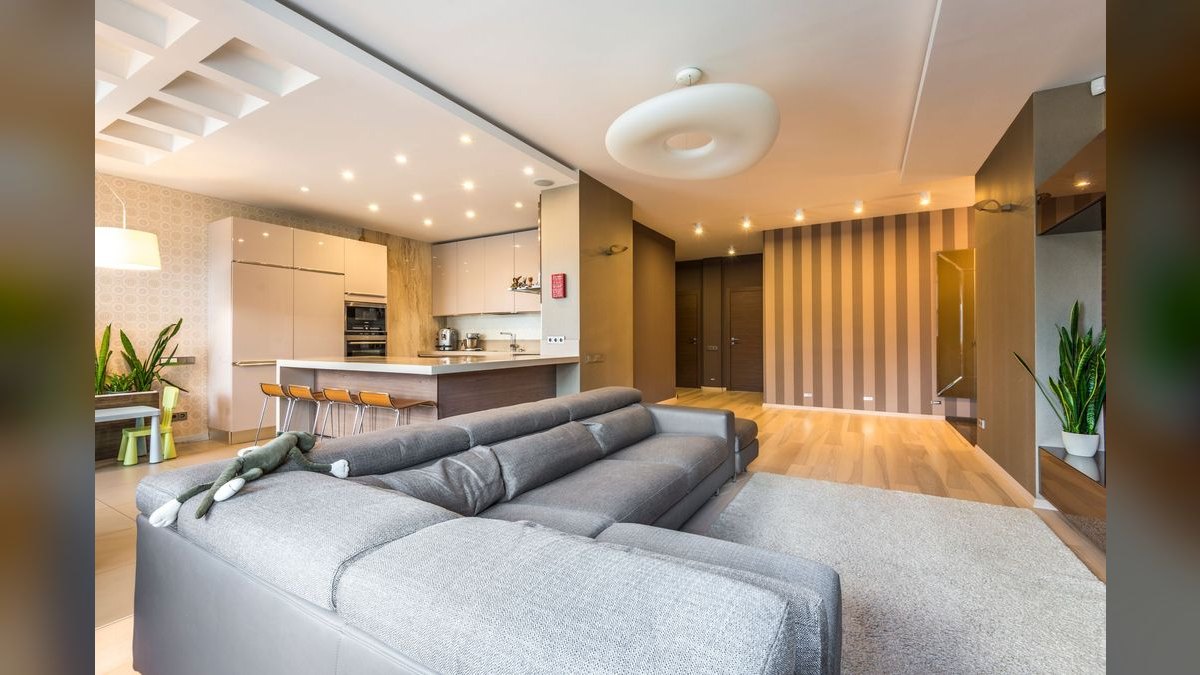
The five-service ladder matters because it lets one lead source feed multiple price points. The 1 Day Tune-Up (wood restoration) is the entry rung, a low-ticket job that gets you inside a house and into the customer's phone contacts. Cabinet painting and redooring occupy the middle. Refacing is the core profit engine at the $15K–$35K ticket. New custom cabinets sit at the top for the customer whose boxes genuinely cannot be saved. A disciplined operator uses the low rungs as lead generation for the high rungs — the restoration customer in March becomes the refacing referral source in September.
The loop at the bottom of that diagram is the whole game. Paid lead acquisition is expensive and stays expensive; referral and review-driven lead acquisition is nearly free and compounds. Owners who systematically request a Google and Houzz review at install completion, and who nurture realtor, interior-designer, and home-stager relationships, reach a point somewhere in months 12–18 where organic volume covers base overhead and paid spend becomes growth capital rather than survival capital. Owners who never build that loop are still buying every job at month 30, which is precisely the profile that shows up in transfer and closure data.
What the money actually looks like
Start with the disclosed figures, then adjust them. The initial franchise fee is $79,950. The royalty is 6% of gross sales, with a brand fund contribution of 2% — 8% combined, remitted monthly. The franchisor recommends a local marketing floor in the neighborhood of $4,000 per month, and realistic ramp-phase spend runs higher than that. Financial qualification typically requires around $100,000 liquid and $200,000 net worth.
| Line item | Low | High | Note |
|---|---|---|---|
| Initial franchise fee | $79,950 | $79,950 | FDD Item 5 |
| Training and travel (Aberdeen, SD HQ) | $1,500 | $5,000 | FDD Item 7 |
| Vehicle lease and wrap | $2,500 | $8,000 | FDD Item 7 |
| Insurance (GL + commercial auto) | $1,000 | $3,500 | FDD Item 7 |
| Computer, software, phone | $1,500 | $4,000 | FDD Item 7 |
| Showroom samples and display kit | $4,500 | $8,000 | FDD Item 7 |
| Initial advertising, first 90 days | $12,000 | $15,000 | ~$4K/mo floor |
| Trade-show and home-show deposits | $1,000 | $3,000 | FDD Item 7 |
| Working capital, 3 months | $25,000 | $50,000 | FDD Item 7 |
| Legal, permits, entity formation | $1,000 | $2,500 | FDD Item 7 |
| Total initial investment | ~$130,000 | ~$189,000 | FDD Item 7 range |
Now the revenue side, and this is where most prospective buyers get hurt. System-average gross revenue disclosed in Item 19 has run in the $503,000–$548,000 range across recent filings. That is a mean, and the distribution is right-skewed: a minority of multi-territory and high-performing operators pull the average above the typical unit. Published percentile breakouts put the median meaningfully lower — call it the $380,000–$420,000 zone. Fewer than half of franchisees meet or exceed the stated average. You must underwrite to the median. If your model only works at $547K, your model does not work.
Run the median case. At $400,000 gross revenue: COGS at 48% is $192,000, leaving $208,000 gross profit. Royalty at 6% is $24,000. Brand fund at 2% is $8,000. Local marketing at $5,000 per month is $60,000. General and administrative — insurance, software, vehicle, phone, accounting, bank fees — runs $25,000–$30,000. That leaves roughly $86,000–$91,000 before you pay yourself. If you draw a $55,000 salary, EBITDA lands near $30,000–$36,000. That is a real but thin Year-1 outcome, and it assumes you hit $400K in year one, which many owners do not.
Run the base case at $550,000. Gross profit at 50% is $275,000. Royalty and brand fund together are $44,000. Marketing at $60,000, G&A at $28,000. Pre-salary contribution is roughly $143,000. At a $60,000 owner draw, EBITDA is around $83,000, and total owner benefit (salary plus EBITDA) is in the $140,000 range. That is the outcome most prospects picture, and it is achievable in Year 2–3 for an operator who built the referral loop — but treating it as a Year-1 plan is the single most common underwriting error in this category.
Payback on a $150,000–$170,000 project, with the owner taking a modest salary, realistically lands at 24–42 months. Owner cash flow in Year 1 for a hands-on operator plausibly runs $35,000–$75,000; Years 2–3 move into the $120,000–$180,000 band once organic lead flow matures. The first 9–12 months are cash-negative in most cases. That is the number that should drive your capital plan: budget $150,000–$190,000 total, not $130,000, and carve out roughly $50,000 as untouchable working capital plus a personal runway you can live on without a draw.
On financing: SBA 7(a) is the standard path for a project this size. Expect roughly 10% equity injection, ten-year amortization on a working-capital-heavy deal, and pricing at WSJ Prime plus a spread in the 2.75%–3.25% area, which puts the coupon in the low double digits at 2026–2027 rate levels. Lenders active in franchise lending — Live Oak, Huntington, Newtek, Celtic, Byline — will want your FDD, a three-year projection, and a personal financial statement. A ROBS rollover through a provider like Guidant or Benetrends removes debt service if you have retirement funds to deploy, at the cost of putting retirement principal at business risk. Veterans should confirm the VetFran discount, and multi-territory buyers should negotiate the second-territory fee, which is where most of the negotiating room actually lives.
Trade-offs, alternatives, and the case for not buying at all
The strongest argument against Kitchen Tune-Up is not that the model is bad. It is that at $500,000 of revenue you write approximately $40,000 per year in royalty and brand-fund checks, forever, for a package whose most valuable components — the sales system and the vendor program — an experienced category operator could partially replicate. That is the trade you are underwriting.
Going independent. Skip the $79,950 fee and the 8% ongoing load, and run a local brand. You save the royalty stream but lose national vendor pricing (expect a material premium on door and component costs buying independently), the training infrastructure, the brand recognition that lifts close rates at the kitchen table, and the review-density halo on Houzz and Google that a national name accumulates. The math favors independent only if you bring five-plus years of category sales experience and an existing referral book that generates leads on day one. Without those, you will spend more than $40,000 a year discovering what the franchisor already knows.
N-Hance. Cabinet refinishing, part of BELFOR Franchise Group. Lower all-in investment, a narrower and simpler service menu, and a smaller average ticket — roughly $3,000–$8,000 versus Kitchen Tune-Up's $15,000–$35,000. Better if you want operational simplicity and faster job turns; worse if you want fewer, larger transactions and less scheduling churn.
Granite Transformations. Surface overlay for kitchen and bath, higher ticket, but a genuine showroom requirement in the 1,500–2,500 square foot range. Higher gross margin per job against multiples of the fixed cost. Only sensible if you want retail presence and have the capital to carry rent through a slow quarter.
Cabinet IQ. Private-equity-backed, emerging, expanding aggressively, premium positioning, higher capital bar. The upside is earlier-mover territory selection; the risk is a thin validation pool. With a small unit count, you cannot make twenty validation calls, which removes your best diligence tool.
Re-Bath. Adjacent vertical — bath rather than kitchen — with a substantially higher capital requirement and a much larger franchisee base. If your real preference is proven systems and deep validation over lower entry cost, this is the honest comparison.
One more alternative worth naming: buying an existing unit rather than opening a new one. A resale comes with revenue, a customer database, installer relationships, and review density — the three assets that take a new owner eighteen months to build. You pay a multiple for that, typically on seller's discretionary earnings, and you inherit whatever reputation the seller created. Ask for the transfer's Item 20 history, the last three years of tax returns, and the Google review trend line over 24 months. A unit whose review velocity has flatlined is a unit whose referral loop has broken, and that is expensive to restart.
Where buyers get hurt, and the ninety-day diligence sequence that prevents it
The failure modes in this category are boringly consistent, which is good news: they are all avoidable with disclosure documents and a phone.
Underwriting to the mean. Covered above, but it deserves repeating because it is the single most common error. Build your model at $400,000, not $547,000. If the conservative case goes materially negative in Year 1, your capital cushion is wrong, not your revenue assumption.

Undercapitalizing the ramp. A $130,000 all-in budget leaves nothing for the nine-to-twelve-month cash-negative period. Marketing burn of $5,000–$8,000 monthly is normal before referrals compound. Plan $150,000–$190,000 and hold a personal runway outside the business.
Buying a saturated territory. Your protected territory stops other Kitchen Tune-Up franchisees. It does nothing about the fifty local refacers, the national refinishing brands, or the design-build firms already in your metro. In the most crowded remodeling markets, cost per call on Google LSA can run several times what it costs in a second-tier suburb. Validate demand and competitive density before you validate the brand.
Failing to lock down installers. Skilled cabinet installers are the structural bottleneck. Owners who secure two reliable crews by month six materially outperform owners still scrambling at month twelve — you cannot sell what you cannot install, and a blown install date destroys the review that generates your next three leads. Start recruiting crews during the diligence period, not after training.
Assuming semi-absentee works in Year 1. It does not. A salesperson can eventually carry the in-home motion, but you cannot hire, train, or hold accountable a closer for a pitch you have never personally delivered. Sell it yourself first, then delegate.

Chafing at the system. General contractors accustomed to their own crews and their own vendors often resent the approved-vendor program, the brand-standard sales process, and the royalty on revenue they feel they generated alone. If that describes your temperament, the independent path is the honest answer.
Here is the diligence sequence that catches all six:
Days 1–7. Pull the FDD and read Items 19, 20, and 21 before anything else. Item 19 gives you the revenue distribution — hunt for quartile or percentile breakouts, not just the average. Item 20 gives you unit counts, transfers, terminations, and non-renewals, and it is your single best red flag. Item 21 has audited financials for the franchisor itself. Elevated closure and transfer counts relative to system size demand a direct explanation in discovery.

Days 8–21. Validate the territory. Request a demographic overlay of your top three ZIP-code clusters and screen for median household income above roughly $85,000, owner-occupancy above 70%, median home value above $425,000, and median home age of 25-plus years — that last one matters most, because cabinet boxes in a house built in the last decade do not need you. Cross-check independently. Walk away from any territory that cannot show 40,000-plus qualifying households.
Days 22–35. Make twenty validation calls to existing franchisees from the Item 20 list — not the three the franchisor suggests. Ask five questions every time: actual Year-1 revenue, months to breakeven, current cost per lead on LSA, installer crew availability, and what they wish they had known. If most respondents came in under $400,000 in Year 1, that is your planning number.
Days 36–50. Build a 36-month P&L in three columns — conservative, base, upside — using the cost structure above. Stress it: what happens if revenue lands 25% under conservative, or if COGS runs 54% instead of 48%?
Days 51–65. Secure financing and get a term sheet in writing before Discovery Day, so you are negotiating from a funded position.

Days 66–75. Attend Discovery Day at the Aberdeen, South Dakota headquarters. Meet the field-support team specifically — they are your Year-1 lifeline, and your read on them is real diligence data.
Days 76–90. Negotiate what is negotiable (multi-territory pricing, veteran discounts, milestone protection windows), sign, form the entity, bind insurance including workers' compensation if you will carry W-2 crews, open the operating account, and claim your Google Business Profile and Houzz listing so review accumulation starts on day one rather than month four.
A closing note on operating discipline once you are live: run this like a RevOps function, not a contracting business. Track cost per lead by source, appointment-set rate, in-home close rate, average ticket, and gross margin per job — weekly, in one sheet. The owners who scale past the median are not the ones with better trucks. They are the ones who noticed in week six that Houzz leads close at twice the rate of LSA leads at half the cost, and moved the budget.
Related questions
Can I run a Kitchen Tune-Up franchise part-time while keeping my job?
Not in Year 1. In-home consultations happen on evenings and weekends, but measures, vendor orders, installer scheduling, and job-site problem-solving happen during business hours. Owners who tried to split attention during the ramp consistently reported slower breakeven and higher marketing waste.
How much should I budget for marketing after the first year?
Plan to hold marketing at roughly 10–12% of revenue through Year 2, then let referral and review-driven volume displace paid spend. Owners who cut marketing the moment they get busy create a demand cliff about six weeks later, which is the length of a typical backlog.
Is a resale better than opening a new territory?
Often, yes — a resale delivers existing revenue, installer relationships, and review density, the three assets that take a new unit 18 months to build. You pay a multiple for that. Demand three years of tax returns and the 24-month Google review trend before agreeing on price.
What close rate should I expect at the kitchen table?
Experienced in-home sellers in the $15K–$45K remodeling band typically close a meaningfully higher share of qualified appointments than newcomers, and the gap drives everything downstream. Track it weekly from week one; if you are under your validation-call benchmark by month three, the problem is the pitch, not the leads.
Does the protected territory stop competitors?
No. It only prevents another Kitchen Tune-Up franchisee from operating there. Independent refacers, national refinishing brands, and design-build firms are unaffected. Evaluate competitive density separately from territory exclusivity — they are unrelated questions.
FAQ
What is the total investment needed to open a Kitchen Tune-Up franchise?
The disclosed Item 7 range runs roughly $130,000 to $189,000, including the $79,950 franchise fee. Financial qualification generally calls for about $100,000 liquid and $200,000 net worth. Practically, budget toward the top of that range — $150,000 to $190,000 — because the low end leaves no cushion for the cash-negative ramp.
How long does it take to break even?
Most operators reach breakeven somewhere in the 18-to-30-month window, with the first 9 to 12 months typically cash-negative. Reserve roughly $50,000 of working capital plus a personal living runway. Full payback on the initial investment, assuming you draw a modest salary, realistically lands at 24 to 42 months.
What are the ongoing fees?
A 6% royalty on gross sales plus a 2% brand fund contribution, remitted monthly — 8% combined. The franchisor also recommends a local marketing floor around $4,000 per month, and ramp-phase spend commonly runs higher. At $500,000 in revenue, the royalty and brand fund together represent roughly $40,000 annually.
Do I need remodeling or cabinet experience?
It is not strictly required, but prior in-home sales experience in kitchen, bath, windows, or a comparable high-ticket residential category is the strongest single predictor of a fast ramp. Trade experience helps with estimating and installer management. What is non-negotiable is willingness to personally sell, project-manage, and recruit subcontractors.
Can this be run semi-absentee?
Eventually, with a strong commissioned salesperson in front and the owner running operations part-time. Not in Year 1. You cannot hire, train, or hold accountable a closer for a consultation you have never personally delivered, and absentee attempts during the ramp show up disproportionately in transfer and closure data.
Should I underwrite to the system average revenue?
No. The Item 19 figure is a mean from a right-skewed distribution, and fewer than half of franchisees meet or exceed it. Build your model on the median — roughly $380,000 to $420,000 — and treat anything above that as upside rather than plan.
Sources
- https://www.kitchentuneup.com/franchise/
- https://www.franchisechatter.com/
- https://www.franchisedirect.com/
- https://www.sba.gov/document/support-sba-franchise-directory
- https://www.franchise.org/franchise-information/franchise-business-outlook
- https://www.ftc.gov/business-guidance/resources/franchise-rule-compliance-guide
- https://www.ibisworld.com/united-states/market-research-reports/remodeling-industry/
- https://nkba.org/research/
- https://www.jchs.harvard.edu/improving-americas-housing
- https://www.bls.gov/oes/current/oes472031.htm
Related on PULSE
- Should I open or buy a Bath Tune-Up franchise in 2027?
- Should I open or buy a Kitchen Solvers franchise in 2027?
- Should I open or buy a Champps Kitchen + Bar franchise in 2027?
- Should I open or buy a Salata Salad Kitchen franchise in 2027?
- How Many Sales Reps Do I Need to Hire for My Commercial Kitchen Equipment Dealer?
- How Many Employees Should I Schedule Each Shift at My Ghost Kitchen?
This page will be disappearing soon. Save it to your device for $1 — or read it free while it is here.
@Kory-White- · if Venmo asks, the last 4 of my number are 2012
This page is gone.
This one is off the shelf now. $1 keeps it on your phone for good — the whole page, pictures and diagrams included.
 pulse-qShould I open or buy a Lee’s Famous Recipe Chicken franchise in 2027?
 pulse-qShould I open a tree service business in 2027?
 pulse-qShould I open or buy a Bob Evans franchise in 2027?
 pulse-qShould I open or buy a Hunt Brothers Pizza franchise in 2027?
 pulse-qHow Do I Keep Reps From Gaming the Comp Plan in 2026?
 pulse-qWho Pays for the Demising Wall Between Tenant Spaces in 2026?
 pulse-qShould I open or buy a Floyd's 99 Barbershop franchise in 2027?
 pulse-qShould I open or buy a Taco Bueno franchise in 2027?
 pulse-qShould I open or buy an Ace Hardware franchise in 2027?
 pulse-qShould I open or buy a Bio-One franchise in 2027?