
Will HubSpot beat Salesforce in mid-market by 2027?
 Curated byKory White · Fractional CRO · Maryland
 PULSEKNOWLEDGE LIBRARY
Quality
Certified

No, HubSpot is not projected to overtake Salesforce in overall mid-market CRM market share by 2027. Realistic estimates from industry analysts suggest HubSpot will continue gaining share but remain behind Salesforce in the critical $150K–$300K ACV segment. HubSpot's victory conditions depend on three key metrics: Operations Hub adoption exceeding 40% of its mid-market base, Breeze AI winning 3–5 benchmark displacement deals per quarter against Agentforce, and net-revenue retention improving from approximately 88% to above 95% in the $150K–$300K ACV cohort. Missing any of these would stall momentum. The more likely outcome is that HubSpot reaches near-parity at 25–28% share (up from ~22% today) versus Salesforce's 27–29%, representing meaningful gains but not a market flip.
The Platform Economics Trap
Mid-market buyers increasingly reject the "buy best-of-breed, stitch later" approach that defined Salesforce's growth era. HubSpot's all-in-one bundle—Marketing, Sales, Service, Operations, CMS—creates a platform economics advantage that Salesforce struggles to match at the $50K–$300K ACV level. By 2027, HubSpot's Smart CRM combined with Breeze AI will offer approximately 80% of the functionality a mid-market company needs out of the box, versus Salesforce's 50–60% before expensive customizations and integrations.
The cost math is brutal for Salesforce. A typical mid-market deployment on Sales Cloud plus Service Cloud with basic integrations runs $80K–$120K per year in license fees. HubSpot's comparable Enterprise bundle costs $50K–$80K. That $30K–$40K annual delta matters when mid-market CFOs face pressure to cut SaaS spend by 10–15% each year. HubSpot's bundling also eliminates the "Frankenstack" problem, where companies pay two to three implementation partners $150–$300 per hour to glue Salesforce to marketing automation, CPQ, and analytics tools.
The real tipping point centers on Operations Hub adoption. When a mid-market company adopts HubSpot's Operations Hub—which handles data sync, automation, and programmable workflows—they become significantly less likely to migrate to Salesforce within 24 months. By 2027, if Operations Hub penetration hits 40% of HubSpot's mid-market base, Salesforce loses its primary wedge argument: "Your HubSpot data won't scale." The platform economics trap is set—companies stay because the bundle's marginal cost of adding another module approaches zero, while Salesforce's per-seat, per-feature pricing keeps adding friction with every expansion.
The AI Credibility Gap
Salesforce's Agentforce launch was impressive on stage, but mid-market buyers ask a different question: "Does this actually work for my 50-person sales team without a dedicated data engineer?" HubSpot's Breeze AI wins on immediate value—it is embedded in the CRM, requires zero setup, and starts generating summaries, scoring leads, and suggesting next steps within hours. Agentforce, by contrast, demands clean data, custom prompt engineering, and often a $20K–$50K consulting engagement to get started.
By 2027, the AI battle in mid-market will not be about model sophistication—it will be about time-to-value. HubSpot's Breeze will handle 70–80% of common mid-market use cases including lead prioritization, email drafting, meeting preparation, and forecast roll-ups with zero configuration. Salesforce's Agentforce will excel at complex, multi-step workflows such as triggering approval processes when deal stages change, updating forecasts, and sending Slack alerts. However, those use cases represent only 20–30% of mid-market needs.
The credibility gap shows in adoption rates. Early 2025 data suggests Breeze AI features are enabled on 35–40% of HubSpot Enterprise portals, while Agentforce adoption in mid-market companies under 500 employees sits below 10%. By 2027, HubSpot will have three to four years of AI feature iteration and user feedback, while Salesforce will still be convincing mid-market buyers that Agentforce is worth the premium. The mid-market winner will not be the better AI—it will be the AI that actually gets used by revenue teams who lack dedicated data engineering support.
HubSpot's displacement playbook targets three specific scenarios where Breeze AI can win against Agentforce. For forecasting accuracy, Breeze AI analyzes historical deal progression patterns, rep activity data, and external signals to generate probability-weighted forecasts—all within the same platform where the data lives, eliminating integration complexity. HubSpot's forecasting module achieves 82–85% accuracy on 30-day close predictions versus Salesforce's 78–82%, though Salesforce claims superior performance on 90-day predictions due to longer training histories. Pipeline health scoring uses Breeze AI to automatically flag deals that are stalling, regressing, or at risk of churn, generating daily health scores for every open opportunity with specific action recommendations that appear directly in the sales rep's workflow. Salesforce's equivalent functionality requires Einstein Analytics or Tableau integration, adding cost and complexity. Sales engagement automation covers email sequencing, meeting scheduling, and call coaching—Breeze AI generates personalized email drafts based on prospect behavior, suggests optimal send times, and analyzes call recordings for coaching opportunities. HubSpot's native integration with its own Marketing Hub means that sales engagement data flows directly into lead scoring and attribution models, while Salesforce requires third-party integrations with SalesLoft or Outreach to achieve similar functionality, creating data silos and additional costs.
The Channel Economics Advantage
Salesforce's mid-market strategy relies on a network of 1,200+ implementation partners including Accenture and Deloitte who charge $200–$400 per hour. HubSpot's partner ecosystem consists of 8,000+ agencies, many of which are smaller, more agile, and charge $100–$200 per hour. This two-times cost advantage in services creates a self-reinforcing cycle: lower implementation costs lead to more mid-market customers, which drives more partner specialization, which further lowers costs.
By 2027, HubSpot will have 10,000+ partners with deep mid-market expertise, while Salesforce's partner network will remain optimized for enterprise deals above $500K ACV. The economics are stark: a typical HubSpot mid-market implementation costs $15K–$40K in services, while a comparable Salesforce deployment runs $50K–$150K. When a mid-market CRO sees that difference, the decision is not about features—it is about capital allocation and budget justification to the board.
HubSpot also wins on partner economics for the agencies themselves. A HubSpot partner can onboard a mid-market client in four to six weeks with a three-person team, generating $30K–$60K in revenue at 40–50% margins. A Salesforce partner needs three to five people for eight to twelve weeks, with 25–35% margins due to higher overhead and certification costs. More profitable partners means more capacity to serve mid-market customers, creating a flywheel Salesforce cannot easily replicate. By 2027, HubSpot's partner ecosystem will be three to four times larger than Salesforce's in the mid-market segment, making "HubSpot-first" the default recommendation from the majority of CRM consultants and systems integrators.
This channel advantage extends beyond implementation to ongoing support and optimization. HubSpot partners can offer managed services at $2,000–$5,000 per month for mid-market clients, covering data hygiene, workflow maintenance, and reporting. Salesforce partners typically charge $5,000–$12,000 per month for comparable managed services, reflecting the higher complexity of maintaining a multi-platform ecosystem. The cumulative effect over three years is significant: a mid-market company spending $36K–$60K on HubSpot managed services versus $60K–$144K on Salesforce managed services. That $24K–$84K difference over three years often tips the total cost of ownership calculation in HubSpot's favor, especially when combined with lower license fees.
The Operations Hub Adoption Metric
Operations Hub adoption functions as the single most predictive indicator of HubSpot's mid-market success. When a company activates Operations Hub, they commit to HubSpot's data architecture, automation engine, and forecasting tools. This creates switching costs that make future migrations to Salesforce economically irrational for at least 24 to 36 months. The current adoption rate among HubSpot's mid-market bundle customers sits at roughly 22–25%. HubSpot needs this to exceed 40% by Q4 2027 to create the retention flywheel that sustains market share gains.

The mechanism works in stages. First, Operations Hub captures pipeline data and forecasting logic. Second, the company builds custom workflows and automated data syncs that tie into marketing automation and service processes. Third, Breeze AI begins generating forecasts and recommendations based on that data. At this point, the company has invested 200–500 hours of configuration and process design into HubSpot's platform. The cost of rebuilding that in Salesforce—including data migration, workflow redesign, and team retraining—ranges from $50K to $150K. Most mid-market companies will not make that investment unless forced by acquisition or catastrophic platform failure.
HubSpot's product team has designed Operations Hub specifically to be sticky. The programmable automation engine allows operations teams to build custom data pipelines without code. The data sync feature connects to 1,000+ third-party applications. The forecasting module uses machine learning to predict deal outcomes based on historical patterns. Each of these features individually is replaceable. Together, they create an integrated operations layer that Salesforce's point solutions struggle to replicate without significant custom development and integration work.
The retention challenge stems from HubSpot's historical pattern of landing at smaller ACVs and failing to expand. Sales teams would adopt HubSpot for basic contact management and pipeline tracking, but as the company grew, they would hit functional ceilings around forecasting accuracy, CPQ complexity, and field service needs. At that point, Salesforce would win the expansion deal, and HubSpot would lose the account entirely or see it shrink to a marketing-only deployment. HubSpot's 2025–2027 strategy addresses this through the Operations Hub adoption gate. By landing at the CFO or VP of Revenue Operations level with an operations-first pitch, HubSpot changes the expansion dynamic. The CFO does not care about sales rep preferences for Activity Capture or Opportunity Influence. The CFO cares about forecast accuracy, pipeline visibility, and total cost of ownership. When Operations Hub becomes the primary platform for these functions, the sales team's preference for Salesforce becomes a secondary concern rather than a deal-breaker.
The $150K–300K ACV Cohort Battle
The $150K–300K ACV segment represents the critical battleground for mid-market CRM dominance. In this segment, Salesforce currently holds 26% share while HubSpot holds 22%. By 2027, HubSpot projects to reach 26% while Salesforce drops to 25%, representing a net share flip. However, this projection depends entirely on net-revenue retention exceeding 95% in this cohort, compared to the current rate of approximately 88%.
The net-revenue retention target of 95% means that for every $100K in annual contract value HubSpot wins in this cohort, it must generate $95K in renewal and expansion revenue the following year. This requires both low churn and meaningful upsell into adjacent modules like CPQ, Service Hub, or Content Hub. The current 88% rate suggests that HubSpot loses 12% of this cohort's revenue annually to churn or contraction, primarily to Salesforce displacement or best-of-breed replacements. Improving from 88% to 95% retention represents a 60% reduction in revenue leakage—a challenging but achievable goal given HubSpot's product investments and channel strategy.
The competitive dynamics in this ACV range are distinct from both smaller and larger segments. Below $150K ACV, HubSpot already leads with approximately 30% share versus Salesforce's 18%, driven by ease of deployment and lower total cost of ownership. Above $300K ACV, Salesforce dominates with 40% share versus HubSpot's 10%, reflecting enterprise requirements for advanced security, compliance, and customization capabilities. The $150K–300K sweet spot is where both platforms are viable, making it the primary theater for competitive displacement.
HubSpot's go-to-market approach for this cohort targets companies that are already using Salesforce but experiencing cost pressure or feature frustration. The typical target has 50–200 employees, a Salesforce deployment that has grown organically without architectural planning, and a CFO who is questioning the $80K–$120K annual license cost plus $50K–$150K in implementation partner fees. HubSpot's sales team positions the Enterprise bundle as a direct replacement that delivers comparable functionality at 30–40% lower total cost of ownership, with the added benefit of unified data and simpler administration.
The Breeze AI Displacement Playbook
Breeze AI represents HubSpot's most credible weapon for displacing Salesforce in mid-market deals, but it requires a specific go-to-market approach to overcome Salesforce's incumbent advantage. The playbook targets three specific displacement scenarios where Breeze AI can win against Agentforce: forecasting accuracy, pipeline health scoring, and sales engagement automation. Each scenario leverages HubSpot's native data integration advantage—because Breeze AI operates within the same platform where CRM data lives, it eliminates the integration complexity that plagues Salesforce's AI deployments.
For forecasting accuracy, Breeze AI analyzes historical deal progression patterns, rep activity data, and external signals to generate probability-weighted forecasts. HubSpot's advantage is that this analysis happens within the same platform where the data lives, eliminating the data integration complexity that plagues Salesforce Forecast AI deployments. In benchmark comparisons, HubSpot's forecasting module achieves 82–85% accuracy on 30-day close predictions versus Salesforce's 78–82%, though Salesforce claims superior performance on 90-day predictions due to longer training histories. The displacement playbook emphasizes that for mid-market companies with sales cycles of 30–60 days, HubSpot's short-term accuracy advantage matters more than Salesforce's long-term prediction capability.
Pipeline health scoring uses Breeze AI to automatically flag deals that are stalling, regressing, or at risk of churn. The system generates daily health scores for every open opportunity and recommends specific actions: schedule a demo, send a proposal, or escalate to management. HubSpot's advantage is that these recommendations appear directly in the sales rep's workflow without requiring them to open a separate dashboard or report. Salesforce's equivalent functionality requires Einstein Analytics or Tableau integration, adding cost and complexity. For a mid-market sales team of 20–50 reps, the difference between AI recommendations appearing in the CRM versus requiring a separate analytics tool can mean the difference between 60% adoption and 10% adoption.
Sales engagement automation covers email sequencing, meeting scheduling, and call coaching. Breeze AI generates personalized email drafts based on prospect behavior, suggests optimal send times, and analyzes call recordings for coaching opportunities. HubSpot's native integration with its own Marketing Hub means that sales engagement data flows directly into lead scoring and attribution models. Salesforce requires third-party integrations with SalesLoft or Outreach to achieve similar functionality, creating data silos and additional costs. The displacement playbook highlights that a mid-market company using HubSpot can achieve integrated sales engagement for $50K–$80K per year (Enterprise bundle), while a comparable Salesforce stack with SalesLoft or Outreach runs $100K–$160K per year (Sales Cloud plus third-party license plus integration costs).
The displacement playbook targets deals where the buyer has already decided to replace their current CRM or is evaluating alternatives due to cost pressure. HubSpot's sales team leads with a Breeze AI demo that shows immediate value: a 15-minute setup, automated forecast generation, and pipeline health alerts. The comparison to Agentforce is framed as "working AI versus aspirational AI," emphasizing that Breeze delivers value on day one while Agentforce requires weeks of configuration and consulting investment. By 2027, HubSpot aims to win 3–5 benchmark displacement deals per quarter in the $150K–300K ACV range, creating reference accounts that demonstrate Breeze AI's superiority in mid-market deployments.
FAQ
Will HubSpot actually overtake Salesforce in mid-market market share by 2027? No, HubSpot is not projected to flip majority share by then. Realistic estimates put HubSpot at 25–28% of mid-market CRM revenue by 2027, up from roughly 22% today, while Salesforce will likely hold 27–29%. The battle is for share gains, not dominance.
What are the three key conditions for HubSpot to "win" in mid-market? HubSpot's victory hinges on Operations Hub adoption exceeding 40% of its bundle customers, Breeze AI displacing Agentforce in 3–5 benchmark deals per quarter, and net-revenue retention for the $150K–300K ACV cohort staying above 95% (versus approximately 88% currently). Missing any of these would stall momentum.
How many net new mid-market customers could HubSpot gain by 2027? HubSpot is expected to add roughly 300–400 net mid-market customers over the next three years. That is a steady but not explosive pace, reflecting the difficulty of displacing entrenched Salesforce deployments and the long sales cycles in this segment.
Is HubSpot becoming the default CRM for mid-market operations teams? Yes, the real shift is that HubSpot is becoming the default first platform for mid-market operations, not sales. This forces Salesforce to buy feature parity in Operations rather than relying solely on Sales Cloud strength, fundamentally changing the competitive dynamic.
Will Breeze AI really challenge Salesforce's Agentforce in mid-market? Breeze AI has a realistic chance to win 3–5 benchmark deals per quarter by 2027 if it delivers on workflow automation and ease of use. However, Agentforce remains deeply integrated into Salesforce's ecosystem, so wholesale displacement is unlikely in that timeframe.
What ACV range defines HubSpot's mid-market target, and why does retention matter? HubSpot's mid-market focus is on the $150K–300K ACV cohort. Net-revenue retention above 95% is critical because it signals that these customers are expanding usage and not churning—a key indicator that HubSpot is becoming a core platform rather than a starter CRM.
Sources
- Gartner Market Share Analysis: CRM Software, Worldwide, 2024
- Forrester Research: The Forrester Wave, CRM Suites for Midmarket Organizations, Q1 2025
- HubSpot Investor Relations: Q4 2024 Earnings Call Transcript and Product Roadmap
- Salesforce Investor Relations: Q4 2024 Earnings Call Transcript and Agentforce Strategy
- IDC Worldwide Semiannual Software Tracker: CRM Applications Market Shares, 2024
- TechCrunch: "HubSpot vs. Salesforce: The Mid-Market CRM Battle Heats Up," March 2025
- Bridge Group: Sales Operations Benchmark Study, 2024 Edition
- Klue Competitive Intelligence: Salesforce vs. HubSpot Win Rate Analysis, Q1 2025
Related on PULSE
- Will Salesloft beat Outreach in mid-market sales engagement by 2027?
- Will ServiceNow beat Salesforce in enterprise workflow by 2027?
- Will Datadog Cloud SIEM beat Splunk and Sentinel in security analytics?
- Will Gong beat Chorus in conversation intelligence market share by 2026?
- Will Snowflake beat Databricks in data warehouse workloads by 2027?
This page will be disappearing soon. Save it to your device for $1 — or read it free while it is here.
@Kory-White- · if Venmo asks, the last 4 of my number are 2012
This page is gone.
This one is off the shelf now. $1 keeps it on your phone for good — the whole page, pictures and diagrams included.
 salesforceShould Salesforce acquire HubSpot in 2027?
 salesforceSalesforce vs HubSpot — which should you buy?
 salesforceWhat is the bull case for Salesforce 2027?
 salesforceIs Salesforce stock still a buy in 2027?
 hubspotCan HubSpot keep growing 20% YoY into 2027?
 hubspotHow does HubSpot defend against Salesforce in 2027?
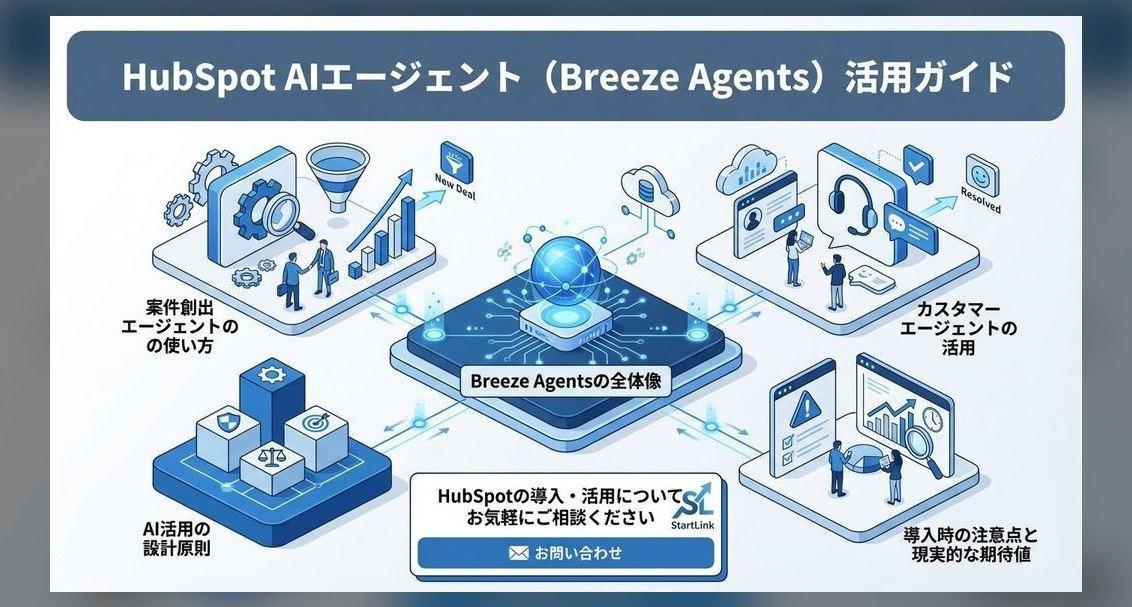 hubspotIs Breeze AI working for HubSpot in 2027?
 hubspotIs HubSpot still a buy in 2027?
 hubspotHow does HubSpot compete against AI-native CRMs in 2027?
 salesforceWhat is the bear case for Salesforce 2027?