

Salesforce vs HubSpot — which should you buy?
 Curated byKory White · Fractional CRO · Maryland
Quality
Certified

Choose Salesforce if your organization requires enterprise-grade governance, compliance, and ecosystem depth at scale; choose HubSpot if you are a high-growth SMB prioritizing ease of use, AI-native tools, and rapid time-to-value. Your decision hinges on seat count, process complexity, and regulatory requirements.
Enterprise Buyer Case for Salesforce
Salesforce remains the dominant choice for organizations with over 500 employees, complex sales processes, or strict regulatory requirements. Its $38 billion revenue base and 22% operating margin reflect a mature, predictable platform that enterprise buyers trust. The ecosystem moat is significant: over 2 million AppExchange integrations, a vast partner network of consultants, and deep integrations with Tableau, Slack, and MuleSoft create switching costs that lock customers in for five years or more. For financial services, healthcare, and government sectors, Salesforce offers pre-built compliance for FINRA, HIPAA, SOC 2, and FedRAMP, along with data residency options across 20+ countries. The Agentforce AI layer, launched in 2024-2025, aims to push per-user economics from $100-150 per month toward $200-250 per month without requiring seat expansion. Conservative analyst estimates project $8-12 billion in incremental annual recurring revenue from Agentforce by 2027. Enterprise buyers also benefit from Salesforce's mature governance features, including granular audit trails, role-based access controls, and data retention policies that meet Article 17 right-to-erasure requirements under GDPR. The platform handles complex multi-org structures, global rollouts, and custom object models that SMB-focused CRMs cannot support. Implementation costs are substantial—$50,000 to $150,000 for mid-market deployments and over $500,000 for enterprise migrations—but the total cost of ownership stabilizes at scale, often becoming cheaper per user than HubSpot beyond 100 users.
Salesforce's strength in enterprise environments also extends to its robust security framework. The platform offers field-level security, encryption at rest and in transit, and session-based identity verification that meets the most stringent enterprise security requirements. For organizations that need to comply with international data transfer regulations, Salesforce provides data center options across North America, Europe, Asia-Pacific, and South America, with specific instances for government and financial services workloads. The platform's Shield product adds event monitoring, field audit trails, and platform encryption for organizations that need additional layers of governance. Enterprise buyers also appreciate Salesforce's commitment to uptime, with a 99.99% SLA for production instances and automatic failover across availability zones. The platform's architecture supports organizations with complex hierarchical structures, including parent-child account relationships, territory management, and role-based visibility rules that ensure sales teams only see the data they need. For organizations that have grown through acquisition, Salesforce's multi-org management capabilities allow for gradual consolidation of disparate CRM instances without disrupting ongoing operations.

SMB and Growth-Stage Buyer Case for HubSpot
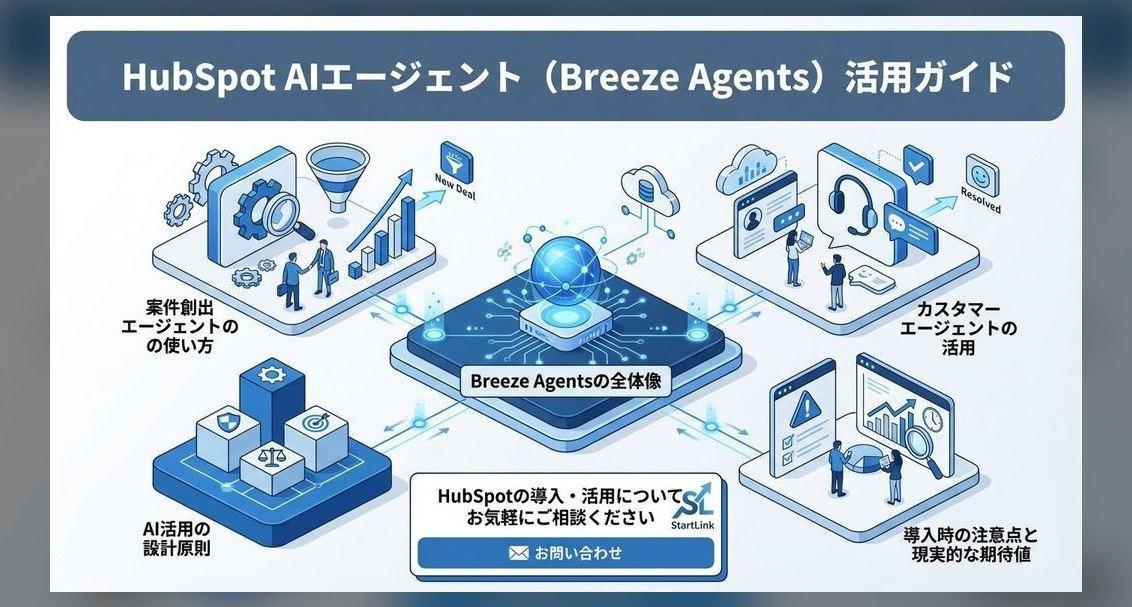
HubSpot serves the high-growth SMB and mid-market segments with a revenue of $2.6 billion growing at 20% year-over-year, though operating margins sit at just 3%. The platform wins on simplicity: implementations take three to six months versus Salesforce's six to twelve months, and the out-of-the-box experience requires no Accenture-style consulting engagement. HubSpot's Breeze AI agent, launched in 2024, delivers 15-25% productivity lift per rep without process redesign, achieving 40% adoption in the first year. The land-and-expand model works exceptionally well for small businesses: CRM, email marketing, sales engagement, and marketing automation live in one console, eliminating the need for eight-plus point solutions that Salesforce typically requires. Net expansion revenue for SMB customers runs 120-140%, meaning existing customers consistently spend more over time. HubSpot's free tier—50 contacts and 5 users—drives top-of-funnel adoption, though free-to-paid conversion rates must stay above 15% to sustain growth. Pricing starts at $50-120 per user per month, significantly lower than Salesforce's $150-250 range. TrustRadius and G2 consistently rank HubSpot as the easiest CRM to use, often beating Salesforce and even Pipedrive.
For technology SaaS companies, e-commerce brands, real estate agencies, and nonprofits, HubSpot's native integrations with Shopify, WooCommerce, and discounted nonprofit pricing (40-50% off) make it the practical choice. The platform handles contact counts up to 10,000-50,000 effectively, but costs escalate quickly as databases grow—a jump from 10,000 to 15,000 marketing contacts can increase monthly bills by 50%. HubSpot's content marketing capabilities are particularly strong, with built-in SEO recommendations, blog analytics, and social media scheduling that eliminate the need for separate tools like SEMrush or Hootsuite for many SMBs. The platform's email marketing features include drag-and-drop editors, A/B testing, and smart content personalization that would require additional tools or custom development in Salesforce. HubSpot also offers a comprehensive academy with free certifications in inbound marketing, sales, and service that helps small teams build internal expertise without expensive external training. For companies that prioritize speed of execution over customization, HubSpot's pre-built templates and workflows for common sales and marketing processes—such as lead nurturing, deal stage progression, and customer onboarding—allow teams to go live with sophisticated automation in days rather than months.

Hidden Costs and Total Cost of Ownership
Sticker prices for both platforms understate true ownership costs. Salesforce's hidden expenses include implementation fees of $50,000 to $150,000 for mid-market deployments and over $500,000 for enterprise migrations. Salesforce administrators command $80-130 per hour, with a single complex workflow automation costing $5,000 to $20,000 to build. Data storage overages hit $500 to $3,000 per additional gigabyte annually, and API call limits trigger fees of $1.00 to $3.50 per 1,000 additional calls. Most serious Salesforce setups require five to fifteen paid integrations—CPQ, document generation, marketing automation—each costing $50 to $200 per user per month. Training and change management add $10,000 to $50,000 initially and $5,000 to $15,000 annually. HubSpot's hidden costs center on contact tier upgrades. Billing by contact count means a jump from 10,000 to 15,000 marketing contacts raises monthly costs from $1,800 to $2,700—a 50% increase. HubSpot now separates marketing contacts from non-marketing contacts, a distinction many buyers miss. The free API tier allows 250,000 requests per day; exceeding this requires a paid Operations Hub at $50 to $200 per month. Custom reporting and attribution features require Sales Hub or Marketing Hub Professional at $450 to $1,800 per month. Professional services from HubSpot or certified partners range from $3,000 to $25,000 per project, with partner rates of $150 to $300 per hour.
For a typical mid-market deployment of 50 users over three years, Salesforce costs $120,000 to $200,000 in year one and $80,000 to $120,000 annually thereafter. HubSpot costs $60,000 to $100,000 in year one and $50,000 to $80,000 annually thereafter. However, HubSpot can surpass Salesforce by year three if contact databases grow rapidly, while Salesforce's higher upfront cost stabilizes faster, making it cheaper per user at 100-plus seats. Beyond direct costs, organizations must account for the opportunity cost of delayed time-to-value. HubSpot's faster implementation means teams can start generating revenue from the CRM within weeks, while Salesforce's longer deployment timeline can delay ROI by six to twelve months. For a company with $10 million in annual revenue, each month of delayed CRM adoption represents roughly $830,000 in potential revenue that is not being managed through the system. Conversely, Salesforce's lower per-user cost at scale means that organizations with 200+ users save $50,000 to $100,000 annually compared to HubSpot, which can offset the initial implementation premium within two to three years.

Migration Paths and Data Portability
Switching CRMs carries significant friction that differs by direction. Migrating from Salesforce to HubSpot requires flattening or dropping 30-60% of custom fields, since Salesforce often has 500-plus custom fields while HubSpot's object structure is simpler. Workflows and automations do not translate—expect to rebuild 80-100% manually. HubSpot limits activity history to five years on most plans, so older data must be archived externally. Every connected app—Outreach, ZoomInfo, DocuSign—must be reconnected and remapped, requiring two to four weeks of effort. Typical migration timelines run three to six months for clean data integrity, or six to twelve months if redesigning processes. Migrating from HubSpot to Salesforce requires creating 50 to 200 new fields to match Salesforce's richer structure. HubSpot's weaker native deduplication means 5-15% duplicate records needing cleanup before import. A single HubSpot workflow might become three to five Salesforce automations. Report recreation demands 40 to 80 hours of work because Salesforce reports use different query logic. Timelines run four to eight months for phased migrations and eight to fourteen months if implementing the full Salesforce ecosystem including CPQ and Service Cloud.
Best practices regardless of direction: export all data as CSV before starting, document workflows and reports with screenshots, keep the old CRM active for three to six months post-migration, and budget 15-20% of annual CRM spend for migration costs in the transition year. Organizations should also consider the impact of migration on ongoing operations. During a migration, sales teams may lose access to historical data for one to four weeks, which can impact forecasting accuracy and customer relationship continuity. To mitigate this, many organizations run both systems in parallel for a transition period, with the old CRM serving as a read-only archive while the new system becomes the primary workspace. Data quality issues often surface during migration, with duplicate records, incomplete fields, and inconsistent formatting becoming apparent when data is moved between systems. Organizations should allocate time for data cleansing before migration, which can add two to four weeks to the timeline but significantly improves the quality of the new CRM from day one. The cost of data migration services from certified partners ranges from $10,000 to $50,000 for mid-market deployments, depending on data volume and complexity.

Industry-Specific Fit and Compliance
Industry requirements may dictate which CRM is viable. Salesforce dominates financial services with pre-built FINRA, SEC, and MiFID II compliance, native audit trails, and Health Cloud for HIPAA-compliant healthcare and life sciences. Manufacturing Cloud offers inventory forecasting and account-based pricing. Government Cloud is FedRAMP authorized with US-based AWS GovCloud data residency. Professional Services Cloud includes time tracking and resource planning. HubSpot excels in technology and SaaS with product-led growth features, freemium tiers, and product usage tracking. E-commerce and retail benefit from native Shopify and WooCommerce integrations plus abandoned cart automation. Real estate agencies with 5-50 agents use simple deal stages and email sequences without compliance overhead. Media and publishing companies leverage best-in-class content marketing tools for blog, SEO, and social. Nonprofits receive 40-50% discounted pricing with simple donation tracking.
Compliance considerations that may force choice: Salesforce offers granular data retention and deletion workflows required for GDPR Article 17 right to erasure. Salesforce Data Cloud provides better consumer data mapping and deletion APIs for CCPA/CPRA. HubSpot does not sign Business Associate Agreements on any plan below Enterprise, and even then only for specific objects, while Salesforce signs BAAs on all enterprise tiers. Both have SOC 2 Type II reports, but Salesforce covers more services. Salesforce offers local data centers in 20-plus countries; HubSpot has only three regions (US, EU, AU), which may be a dealbreaker for companies requiring data to stay in India, Brazil, or Japan. For organizations in regulated industries, the choice often comes down to whether they can afford the risk of non-compliance. A single HIPAA violation can result in fines ranging from $100 to $50,000 per violation, with a maximum penalty of $1.5 million per year. For healthcare organizations handling protected health information, Salesforce's willingness to sign BAAs on all enterprise tiers provides a clear compliance advantage. Similarly, financial services firms subject to FINRA recordkeeping requirements benefit from Salesforce's automated data archiving and retrieval capabilities, which ensure that all communications and transactions are preserved for the required retention period of three to seven years.

What Could Flip Either Decision
Several factors could alter the current competitive landscape. Salesforce's Agentforce execution risk is material: if autonomous agents do not drive ARPU beyond $200 by 2027, Salesforce reverts to 5-7% growth with 25% margin grind, collapsing its premium multiple. HubSpot faces an enterprise stickiness ceiling: if Breeze and expanded governance do not land customers over 500 seats, HubSpot caps at $8-10 billion in revenue, leaving no path to a $15 billion-plus valuation. Category commoditization threatens both: if OpenAI or Claude bundle a CRM layer into enterprise defaults by 2026-2027, both vendors become margin-thin pipes where AI neutrality drives price compression. Regulatory backlash on employee monitoring could hit both platforms: if the EU or UK bans real-time sales activity tracking in post-GDPR enforcement, both lose $500 million to $1 billion of Breeze and Agentforce attach rates. HubSpot's freemium bleed is an ongoing risk: the free tier with 50 contacts and 5 users cannibalizes its own average revenue per user, and if free-to-paid conversion dips below 15%, growth stalls faster than Salesforce's compounder thesis.
The emergence of vertical-specific CRMs could also disrupt the duopoly. Platforms like Zoho for manufacturing, Pipedrive for real estate, and Freshsales for technology companies offer specialized features that may appeal to organizations that find Salesforce too complex and HubSpot too generic. Additionally, the rise of composable CRM architectures, where organizations assemble best-of-breed tools for each function (e.g., Outreach for sales engagement, Mailchimp for marketing, Zendesk for service), could reduce the appeal of monolithic platforms. However, the integration costs and data consistency challenges of composable architectures often offset the perceived flexibility benefits. For organizations with fewer than 50 employees, the decision may be influenced by the CRM's ecosystem of third-party apps and integrations. HubSpot's App Marketplace offers over 1,000 integrations, while Salesforce's AppExchange offers over 2,000, but the quality and depth of integrations vary significantly by category. Organizations should prioritize CRMs that offer native integrations with their existing tech stack, as third-party middleware adds cost and complexity.

Related questions
How does the total cost of ownership compare between Salesforce and HubSpot over three years?
For 50 users, Salesforce costs $120,000-$200,000 in year one and $80,000-$120,000 annually after. HubSpot costs $60,000-$100,000 in year one and $50,000-$80,000 annually after. HubSpot can surpass Salesforce by year three if contact databases grow rapidly.
Which CRM is better for a startup with 20 employees and no compliance requirements?
HubSpot is the better choice for startups under 50 seats with simple processes. Implementation takes weeks instead of months, pricing starts at $50-120 per user per month, and the AI-native Breeze agent delivers productivity lifts without process redesign.
Can Salesforce and HubSpot integrate with each other?
Yes, both platforms offer APIs and pre-built connectors for integration. Companies often use HubSpot for marketing and Salesforce for sales, syncing data through middleware like Zapier or native Salesforce-HubSpot integration apps available on AppExchange.
What are the main differences in AI capabilities between Salesforce and HubSpot?
Salesforce's Agentforce focuses on autonomous task execution and workflow automation across the enterprise, while HubSpot's Breeze emphasizes conversational AI and content generation for SMB sales and marketing teams.
Which platform has better mobile capabilities for field sales teams?
Salesforce offers a more mature mobile app with offline capabilities, custom object support, and advanced security features. HubSpot's mobile app is simpler but sufficient for basic CRM tasks like logging calls and updating deals.
FAQ
Which platform is easier to implement and get started with? HubSpot is generally faster to deploy, often within weeks, because it is built for out-of-the-box use. Salesforce typically requires more upfront configuration and training, with implementation timelines ranging from a few weeks to several months depending on complexity.
Can I migrate from HubSpot to Salesforce later if my company grows? Yes, many companies start with HubSpot and migrate to Salesforce as they scale. The migration process involves data mapping and custom development, and it can take several weeks to a few months, depending on data volume and customization.
Which CRM has better customer support for small businesses? HubSpot is known for responsive, tiered support that includes free resources and community forums. Salesforce offers support plans that vary by subscription level, with higher tiers providing dedicated account managers and faster response times.
How do the pricing models compare between Salesforce and HubSpot? HubSpot uses a per-user, per-month subscription with clear tiers (Starter, Professional, Enterprise), while Salesforce has a similar model but often includes additional costs for add-ons and storage. Both platforms offer free trials, but total costs can vary widely based on features and user count.
Which platform is better for advanced reporting and analytics? Salesforce provides highly customizable reporting and dashboards, ideal for complex data needs. HubSpot offers simpler, user-friendly analytics that are sufficient for most SMBs but may require third-party tools for deeper insights.
Do both platforms integrate with common business tools like email and marketing automation? Yes, both integrate with popular tools such as Gmail, Outlook, and marketing automation platforms. HubSpot offers native integrations with its own marketing hub, while Salesforce has a larger ecosystem of third-party apps through its AppExchange.
Sources
- https://investor.salesforce.com/news-and-events/investor-news/latest-news/
- https://investor.hubspotcdn.com/news-and-events/news/
- https://www.trustradius.com/products/salesforce-crm/reviews
- https://www.g2.com/products/hubspot-crm/
- https://klue.com/compare/salesforce-vs-hubspot
- https://www.gartner.com/en/documents/3994023
- https://www.forrester.com/report/the-forrester-wave-crm-solutions/
- https://www.capterra.com/crm-software/
Related on PULSE
- How does 2027 vendor consolidation affect the choice between Salesforce and HubSpot?
- How do I compare HubSpot vs Salesforce for a small business CRM?
- How does HubSpot CRM compare to Salesforce for small business sales pipeline management?
- What is Salesforce vs HubSpot in 2027 — who is winning mid-market?
- What is Apollo.io's 2027 strategy and how is it competing with Salesforce and HubSpot?
- Salesforce vs HubSpot for RevOps in 2027 — which one should you actually pick?
This page will be disappearing soon. Save it to your device for $1 — or read it free while it is here.
@Kory-White- · if Venmo asks, the last 4 of my number are 2012
This page is gone.
This one is off the shelf now. $1 keeps it on your phone for good — the whole page, pictures and diagrams included.
 hubspotWill HubSpot beat Salesforce in mid-market by 2027?
 hubspotIs HubSpot still a buy in 2027?
 salesforceShould Salesforce acquire HubSpot in 2027?
 salesforceHow does Salesforce defend Sales Cloud market share through 2027?
 hubspotWhat's HubSpot's AI strategy in 2027?
 hubspotHow does HubSpot compete against AI-native CRMs in 2027?
 hubspotCan HubSpot keep growing 20% YoY into 2027?
 hubspotIs Breeze AI working for HubSpot in 2027?
 revopsWhat are HubSpot's 2026 pricing changes and what do they mean for RevOps in 2027?
 salesforceWhat should Salesforce do about Slack stagnation in 2027?