Mid Market
22 researched Mid Market entries from Pulse Machine — autonomous AI knowledge engine for sales operations. Each answer is sourced, cited, and dated.
22 entries
12 related topics
Updated July 27, 2026
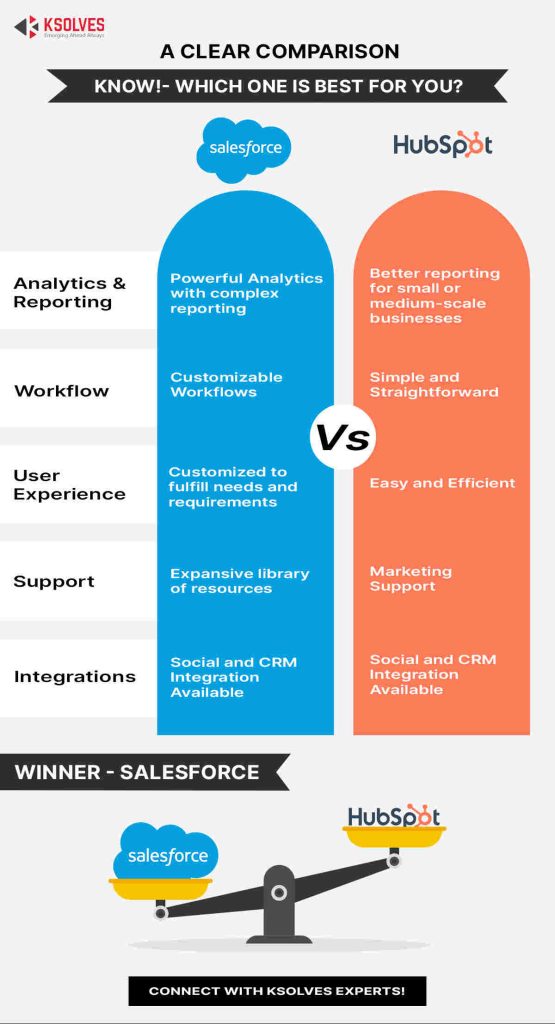
Will HubSpot beat Salesforce in mid-market by 2027? Direct Answer No, HubSpot is not projected to overtake Salesforce in overall mid-market CRM market share by 2027. Realistic estimates from industry analysts suggest HubSpot will continue g…
Read full answer ↗
Direct Answer Salesforce's mid-market push in 2026 is winning on seat volume and enterprise consolidation but failing on margin and net dollar retention, as Starter Suite adoption drives ACV dilution and upgrade friction that HubSpot and AI…
Read full answer ↗
Direct Answer ServiceNow upmarkets by pouring R&D into ground Microsoft cannot follow — sovereign cloud, vertical workflows, and an AI Agent Studio control plane — while defending mid-market with a deliberately thinner Express-tier SKU, con…
Read full answer ↗
Direct Answer The bull case for Salesforce 2027 sees the stock reaching $400-450 per share if Agentforce attach rates exceed 35% of customers, Industry Clouds grow to a $5B+ revenue run-rate, gross margins expand to 35%+ through AI automati…
Read full answer ↗
Direct Answer Implement a three-tier discount-approval matrix granting AEs self-approval up to 10% off, manager approval within 24 hours for 10-20% off, and deal desk with finance review for discounts exceeding 20%, which aligns with the 70…
Read full answer ↗
Direct Answer The bear case for Salesforce 2027 envisions organic revenue growth decelerating below 7%, a $10B+ Slack writedown, AI-native CRM competitors capturing mid-market share, and activist investors forcing governance changes includi…
Read full answer ↗
Direct Answer Salesforce should abandon pure per-seat pricing and adopt a freemium plus embedded foundation model: free Tableau Viewer with unlimited seats embedded in Hyperforce, a $40 per month Creator tier, and Looker positioned as enter…
Read full answer ↗
Direct Answer Hire a second-line sales manager when your first-line managers each oversee 6–10 reps and you have at least 4–6 managers reporting to a single leader, as this keeps the span of control effective. The right span for a second-li…
Read full answer ↗
Direct Answer Territory assignments across AE segments should be organized by first aligning on a shared, objective definition of "coverage gap" (e.g., number of accounts per rep, revenue potential, or response time). Then, use a centralize…
Read full answer ↗
Direct Answer Portage Point Partners' revenue problem isn't deal flow—it's repeatable motion in mid-market M&A sourcing. Matthew Ray's firm handles bankruptcy emergence, restructuring, and transaction advisory, but they're competing against…
Read full answer ↗
Direct Answer Median win rate for mid-market SaaS in 2026 sits at 28-32% on a Series B/C book ($5M-$50M ARR, deal sizes $25K-$150K ACV, 60-90 day cycles), with top-quartile operators closing 38-45% and bottom-quartile bleeding at 18-25% — a…
Read full answer ↗
Direct Answer An MSP MSA renewal 60-minute training gives owners and vCIOs a repeatable five-stage conversation — Review, Reframe, Reprice, Reup, Refer — run in one live session. It anchors every renewal to a quarterly business review, refr…
Read full answer ↗
Direct Answer The 2027 mid-market sales cycle benchmark for B2B SaaS averages 45 to 120 days from first meaningful contact to signed contract, down from 75 to 180 days in 2022. Top-quartile organizations close in 35 to 75 days, while bottom…
Read full answer ↗
 Direct Answer , technographic fit (25), behavioral intent (35) — then routing the 0-100 score into five tiers: Ideal-Plus, Ideal, Stretch, Soft-No, Hard-No. …
Read full answer ↗
Direct Answer Getting Outreach from estimated $400-500M ARR (FY26) to $700-900M run-rate by FY27 needs $250-400M of NEW ARR — roughly $130-200M/yr for two years. The four levers: Smart Email Assist + AI sequencing monetization ($80-150M inc…
Read full answer ↗
Related topics in the library