
Should I open or buy a Bowlero franchise in 2027?
 Curated byKory White · Fractional CRO · Maryland
 PULSEKNOWLEDGE LIBRARY
Quality
Certified
You cannot buy a Bowlero franchise in 2027 — Bowlero Corp grows through corporate ownership and acquiring existing centers, not franchising. Your three realistic paths are building an independent bowling-entertainment center ($2M–$8M+), acquiring and improving one for a possible sale to Bowlero, or simply buying BOWL stock.
The outcome you should expect
Set your expectations against the actual vehicle available to you, not the one the search term implies. Someone typing "Bowlero franchise" is usually picturing a familiar structure: a franchise disclosure document, a territory map, a $50,000 initial fee, a 6% royalty, a corporate field consultant who shows up quarterly, and a proven unit-economics model you can underwrite. None of that is on offer here. Bowlero Corp — parent of the Bowlero, Bowlmor, AMF, and Lucky Strike brands — is a publicly traded operator that has grown primarily by buying bowling centers and converting them, not by selling the right to use its name. When a large operator buys rather than franchises, it is telling you something about the asset: the real estate and the cash flow are valuable enough to keep on its own balance sheet.
So the outcome you should expect is not "I become a Bowlero franchisee." It is one of three concrete outcomes, each with a very different risk profile.
Outcome A — you build an independent center. You spend roughly $2,000,000 to $8,000,000 depending on square footage, lane count, real estate structure, and how ambitious the food-and-beverage buildout is. You open in 12 to 24 months from site control. You gross somewhere in the $1,500,000 to $6,000,000 range once stabilized, and you run at roughly 12% to 25% net margin if you execute well. You are running a hospitality business that happens to have lanes in it, not a bowling business that happens to sell nachos.
Outcome B — you acquire an existing center. You buy a tired but functional center, often in the $1,000,000 to $3,000,000 range, then spend $200,000 to $1,000,000 modernizing it — new scoring systems, a real bar, a kitchen worth eating from, an arcade with redemption, and a party/events space that can be sold to corporate groups. Your outcome here is a rebuilt EBITDA line. If you take a center from $150,000 of EBITDA to $500,000 over four years, you have created a saleable asset that a consolidator would look at, typically in the range of 4x to 8x EBITDA depending on quality, lease structure, and market.
Outcome C — you buy the stock. BOWL trades on the NYSE. You get category exposure with no build risk, no liquor license, no pinsetter mechanic on payroll at 11pm on a Saturday. You also get zero operating leverage from your own effort, and your returns track corporate performance and consumer discretionary spending, not your local hustle.
The uncomfortable but useful reframe: in this category, the entrepreneur is usually the *seller* of the asset to the big brand, not the buyer of a license from it. That inverts the entire mental model. Instead of asking "will they approve me," you should be asking "what makes my center attractive to an acquirer in five years." Those are opposite planning exercises. A franchisee optimizes for compliance with a system. A center owner optimizes for defensible EBITDA, a clean lease or owned real estate, and a market a consolidator wants a footprint in.
One more expectation to set: this is not a semi-absentee business. Bowling-entertainment centers are 20,000 to 50,000 square feet, employ 25 to 70 people across four or five departments (front desk, mechanics, kitchen, bar, events), and run their heaviest volume exactly when you would like to be off. If you are shopping franchises because you want a manageable second income, this category is the wrong shelf entirely — the closer analogues to what you actually want are the smaller-footprint service brands, not a family entertainment center.
What drives that outcome
The single largest driver of whether a bowling-entertainment center works is something that has almost nothing to do with bowling: attach rate on food, beverage, and arcade. Lane rental is a capacity-constrained, price-sensitive revenue line. You have a fixed number of lanes, a fixed number of prime hours per week (roughly Friday evening through Sunday afternoon, plus league nights), and a ceiling on what a lane-hour can be sold for in your market. Food and beverage has no such ceiling. A group of eight that bowls two games and leaves has spent maybe $160. The same group that bowls, orders two rounds and a pile of shareables, and puts $60 on arcade cards, spends $400 in the same footprint of lane time.
That is why the modern format is described as "eatertainment" rather than bowling. The lanes are the reason people gather; the bar and kitchen are the reason the P&L works. Practically, this means your capital allocation should look weird to a traditional bowling operator: you may spend more on a hood system, walk-in, and bar back-of-house than you would like, and fewer dollars on the last four lanes. Twenty-four excellent lanes attached to a real kitchen beats thirty-two lanes attached to a snack window in almost every market.
The second driver is the events and league book. Corporate outings, birthday parties, fundraisers, and youth/adult leagues are pre-sold, high-margin, and — critically — they fill the dead hours. A center that only sells walk-in weekend traffic is monetizing perhaps 25% of its available lane-hours. A center with a full-time events salesperson who is actually held to a quota can move that meaningfully by filling Tuesday at 6pm and Wednesday at noon. This is where the discipline from other industries transfers directly: an events pipeline is a sales pipeline, with stages, aging, and a close rate. Operators who install a simple RevOps-style rhythm here — a CRM for group inquiries, a defined follow-up cadence, tracked source attribution on every party booking, and a weekly review of pipeline coverage against the month's target — consistently out-book operators who let inquiries sit in a shared inbox. That's not a technology problem, it's a process problem, and it is the cheapest available lever in the whole business.
The third driver is occupancy cost and how you structure the real estate. Bowling centers are big-box tenants with heavy floor loads, deep foundations under the lane beds, and expensive mechanical infrastructure. That means the buildout is hard to walk away from and hard to repurpose, which makes lease terms enormously consequential. Owning your building changes the entire calculation: it converts rent into equity, gives you a second asset to sell, and it is a meaningful part of why consolidators like owned-real-estate centers.

The fourth driver is equipment condition and the maintenance burden that comes with it. Pinsetters are mechanical systems with real service lives. A center running older machines needs a full-time mechanic and a parts budget; a center with modern string pinsetters typically needs fewer labor hours and less floor space behind the lanes. When you underwrite an acquisition, the age and type of pinsetters is not a footnote — it is one of the two or three numbers that determines whether the asking price is fair.
Benchmarks and realistic ranges
Here is what the capital stack tends to look like for a new-build independent center. Treat these as planning ranges to pressure-test against local bids, not as quotes.
Building — $500,000 to $3,000,000+. This is the swing factor. A second-generation space in a repositioned retail box, taken on a lease with landlord TI dollars, sits at the bottom of the range. Buying land and building 35,000 square feet from slab up sits far above the top of it. Bowling requires long, unobstructed spans and specific floor prep for the lane bed, which limits how many existing boxes work without structural money.
Lanes and pinsetters — $600,000 to $2,000,000. Driven by lane count (typically 16 to 40+), whether you buy new or refurbished, and pinsetter technology. Used equipment from a closing center can cut this substantially, but you inherit the maintenance profile.
Arcade and attractions — $200,000 to $800,000. Redemption games, prize counter, and possibly laser tag, axe throwing, or duckpin lanes as secondary draws. Some of this can be revenue-shared with a game operator rather than purchased outright, which is worth modeling if capital is tight.
F&B buildout — $300,000 to $1,200,000. Hood, walk-in, line equipment, bar millwork, draft system, POS. Do not value-engineer this line into a warming cabinet; it is where the margin lives.
Technology and POS — $60,000 to $250,000. Scoring systems, lane-side ordering, online booking, POS, and back-office reporting.
Initial marketing — $40,000 to $200,000. Pre-opening awareness, league recruitment, and the launch event calendar.
Working capital — $150,000 to $500,000. Payroll and inventory through the ramp. Under-reserving here is one of the most common ways good concepts die.
Total — roughly $2,000,000 to $8,000,000+.
On the operating side, a $3,000,000-revenue center commonly runs labor near 27% of revenue, occupancy near 14%, blended F&B and arcade COGS near 16%, and marketing plus other operating expense near 22% — leaving EBITDA in the neighborhood of $600,000. Those percentages move with market wage rates and lease structure, and they are the four dials worth obsessing over. A three-point improvement in labor as a percentage of revenue on a $3M center is roughly $90,000 straight to EBITDA, which at a 6x multiple is over half a million dollars of enterprise value.
Recurring monthly costs for an operating center generally land in these bands: lease or mortgage $15,000 to $50,000; total staffing $40,000 to $120,000; utilities $5,000 to $15,000 (HVAC in a 30,000-square-foot box with a fryer line is not cheap); insurance $2,000 to $8,000; lane maintenance and pinsetter parts $1,000 to $5,000. Annual liability and liquor liability insurance frequently runs $20,000 to $60,000 with deductibles from $5,000 to $25,000.
Legal and regulatory costs deserve their own line rather than being buried in soft costs. Zoning and special-use permits for an entertainment venue with late hours commonly take 3 to 12 months and $5,000 to $50,000 in application and legal fees. Liquor licensing is the wild card: in quota states, a license bought on the secondary market can run from tens of thousands to several hundred thousand dollars, and 6 to 18 months of process. ADA compliance in an older building — accessible lanes, seating, restrooms, and paths of travel — can add $50,000 to $200,000 to a renovation. Budget $10,000 to $30,000 for a business attorney with entertainment-venue experience during setup, and treat that as non-optional.
For the acquisition path, the relevant benchmark is the multiple. Bowling centers change hands in a wide band, and quality centers with strong F&B, a defensible market, and clean real estate transact at meaningfully better multiples than tired lane-only assets. The commonly cited range for well-run centers is roughly 4x to 8x EBITDA. Two things move you up that band: owned real estate, and revenue mix weighted toward food, beverage, and events rather than lane rental alone.
Ramp timing matters as much as steady-state numbers. New centers rarely hit stabilized volume in year one. A realistic model shows year one at 60% to 75% of stabilized revenue, year two at 85% to 95%, and stabilization in year three — while fixed costs run at full freight the entire time. Build your debt service coverage assumptions on year-one revenue, not year-three revenue, or you will be renegotiating with your lender at exactly the moment you have the least leverage.
Risks, edge cases, and failure modes
The category-error risk. The most expensive mistake is spending months trying to find a franchise pathway that does not exist, then settling for an adjacent franchise you did not actually want just because it was purchasable. If your real goal is "own a family entertainment business," look at the operators who genuinely do license or develop — the large FEC formats, trampoline-park brands, karting concepts — and compare them honestly against independent center ownership on capital, control, and exit. Do not let the availability of a franchise document substitute for a business-model decision.
Under-capitalization. This category punishes thin balance sheets harder than most. A $4,000,000 project that opens with $80,000 of working capital is one bad quarter — a slow summer, an HVAC failure, a delayed liquor license — from a crisis. The failure pattern is predictable: the operator cuts marketing first, then kitchen labor, then food quality, and the ramp never happens.
Bowling-first thinking. Centers that treat food and beverage as an afterthought consistently underperform. If your kitchen is a freezer and a fryer, your average check will not support a $40,000-per-month occupancy cost. This is the single most common reason an otherwise well-located center posts disappointing EBITDA.
Market size mismatch. A 32-lane center with a full kitchen needs a real population base and a reasonable drive-time trade area. Putting a large-format center in a market that can support a small one is a slow failure — the revenue never arrives, but the fixed cost does. The edge case that catches people: a market with adequate population but where the entertainment spend is already captured by an incumbent with a ten-year head start on the league book.
Competitive pressure from consolidation. Bowlero's acquisition activity cuts both ways for an independent. It compresses competition, because a well-capitalized operator may buy and modernize a center in your trade area and raise the local bar overnight. It also creates the exit market that makes your improvement work valuable. Underwrite both directions: what happens to your revenue if a modernized competitor opens six miles away, and what happens to your exit if the consolidator's appetite cools?
The exit-dependency trap. Building a plan whose only viable outcome is "and then Bowlero buys it" is a bad plan. Acquirers buy on their own strategic timetable, in markets they want, at prices they choose. There is no guarantee of timing, interest, or price. The disciplined version is: build a center that throws off cash you are happy to own for ten years, and treat an acquisition offer as upside rather than as the plan. If the business only works on the exit, you have built a speculation, not a business.
Labor and wage exposure. With labor near 27% of revenue and minimum wages continuing to rise in many states, a two-dollar-per-hour structural wage increase across 40 employees is a real EBITDA event. Centers with heavy scheduled labor during low-traffic hours are the most exposed. This is also where operational discipline pays: demand-based scheduling built off actual hourly traffic data, rather than a static template, is the difference between 27% labor and 32% labor.
Liability and liquor. Serving alcohol in a venue where people throw heavy objects and drive home creates a specific risk profile. Dram-shop exposure varies by state and can be severe. Server training programs, ID-scanning at the bar, and documented service policies are not bureaucratic overhead — they are what your insurer and your attorney will ask about after an incident.

Equipment surprises in an acquisition. The classic bad deal is buying on a trailing EBITDA number without a mechanical inspection, then discovering that the pinsetters need a capital replacement within eighteen months. Any acquisition should include a technical inspection of the machines, lane surfaces, HVAC, and roof, with the findings priced into the offer rather than discovered afterward.
A practical rollout plan
Days 1–15: decide the vehicle. Write down, honestly, which of the three outcomes you actually want: build, acquire, or buy stock. Score each against your capital, your appetite for operating a 60-person hospitality business, and your time horizon. If the honest answer is "I want category exposure without operating," stop here and buy the stock — that is a legitimate answer, not a consolation prize.
Days 15–35: build the model before you build anything else. Construct a monthly P&L for a target center with revenue split explicitly into lane, F&B, arcade, events, and league lines. Run three cases: conservative (year one at 60% of stabilized), base, and upside. Stress-test the conservative case against debt service. If the conservative case cannot cover debt service plus a modest reserve, the deal is too tight regardless of how good the base case looks.
Days 20–45: validate the market with actual evidence. Pull trade-area population and household income within 10 and 20 minutes' drive. Count the competing entertainment options and visit them on a Friday night and a Tuesday night — the Tuesday visit tells you more. Call three local corporate HR or office managers and ask where they hold team events and what they spend. If nobody in the trade area is buying group entertainment, no amount of lane technology fixes that.
Days 30–60: line up capital and pick your path. SBA lending, conventional commercial debt, equipment financing, and sale-leaseback on owned real estate are all in play, usually in combination. If acquiring, this is when you begin sourcing: brokers, the state proprietors' association, and direct outreach to owners in your target markets. Many of the best acquisition targets are owner-operators near retirement who never listed publicly.
Days 45–75: diligence hard. For an acquisition: three years of tax returns and P&Ls, lease or title, liquor license transferability, equipment inspection, league contracts, and party/event booking history. For a build: site control, zoning path, landlord TI negotiation, and a liquor license timeline confirmed with the actual licensing authority rather than assumed.
Days 60–90: commit or walk, and say which. Set the go/no-go criteria in writing before you are emotionally invested — minimum trade-area population, maximum occupancy cost as a percentage of projected revenue, minimum debt service coverage, and a maximum acquisition multiple you will pay. Then hold yourself to them.
Post-decision, the operating year. Open (or take over) with the F&B program actually finished, not "phase two." Hire an events salesperson before you open, not six months after — the pipeline needs to be full on day one. Build the league book deliberately; leagues are recurring revenue in a business that otherwise lives on weather and weekends. Instrument the business: revenue per lane-hour by daypart, average check, arcade card load, party close rate, and labor as a percentage of revenue, reviewed weekly. If you eventually want a consolidator's attention, the thing that earns it is a clean, growing, well-documented EBITDA line — which is exactly the same thing that makes the business worth keeping.
Related questions
Does Bowlero franchise under any of its brands?
Bowlero Corp operates its Bowlero, Bowlmor, AMF, and Lucky Strike centers as a corporate operator and grows largely through acquisition. Verify current corporate strategy directly through the company's investor relations materials and SEC filings before making any assumption about franchising availability.
How many lanes should a new center have?
Most modern entertainment-led centers land in the 16 to 40 lane range. Smaller counts paired with a strong kitchen, bar, and events space usually outperform larger lane counts with weak food service, because food and beverage carries the margin.
Is buying an existing center cheaper than building?
Usually yes on entry price — often $1,000,000 to $3,000,000 versus $2,000,000 to $8,000,000+ — but budget $200,000 to $1,000,000 for modernization. You also inherit the equipment's condition and the market's existing reputation, good or bad.
What multiple do bowling centers sell for?
Well-run centers commonly transact around 4x to 8x EBITDA, with owned real estate, strong F&B mix, and a defensible trade area pushing toward the top of the range. Lane-only centers with weak food service sit at the bottom.
Should I buy BOWL stock instead of operating?
If you want sector exposure without operating risk, yes — it is liquid and requires no license, staff, or lease. But returns track corporate performance and consumer discretionary spending, not your own execution, so there is no operating upside from your effort.
FAQ
Can I buy a Bowlero franchise in 2027?
No. Bowlero Corp does not sell traditional franchises the way most consumer brands do; it operates company-owned centers and expands primarily by acquiring existing bowling centers and converting them to its brands. If you want into this category, you open an independent center, buy an existing one, or purchase BOWL shares. Always confirm current corporate policy through official Bowlero investor materials.
How much does it cost to open a bowling-entertainment center?
Plan for $2,000,000 to $8,000,000 or more all-in. The range is driven mostly by real estate structure — leasing a second-generation box with landlord improvement dollars versus buying land and building — plus lane count, the ambition of the food-and-beverage buildout, and arcade scope. Working capital of $150,000 to $500,000 belongs in that total, not outside it.
What revenue can a modern center generate?
Well-run centers commonly gross $1,500,000 to $6,000,000 annually, with net margins in the 12% to 25% range once stabilized. The spread within that range is driven far more by food, beverage, and events attach rate than by lane count. Expect year one to land well below stabilized volume while fixed costs run in full.
Will Bowlero buy my center if I build a good one?
Possibly, but never plan on it. Consolidators acquire on their own timetable, in markets they want, at prices they set. Build a center whose cash flow you would be content to own for ten years, then treat any acquisition interest as upside. A business that only works if someone buys it is a speculation, not a plan.
What is the biggest operational mistake new owners make?
Treating the business as bowling with a snack bar attached. The lanes are the reason people gather; food, beverage, arcade, and pre-sold group events are where the margin comes from. The second biggest mistake is leaving the events pipeline in a shared inbox with no owner, no cadence, and no accountability for close rate.
Is this a good business for a passive or semi-absentee owner?
No. A 20,000 to 50,000 square foot center with a kitchen, a bar, an arcade, and 25 to 70 employees across multiple departments demands full-time, hands-on leadership — especially through the first two years. If you want lower-touch ownership, look at smaller-footprint service concepts or take the passive route through public equity instead.
Sources
- https://ir.bowlero.com/ — Bowlero Corp investor relations
- https://www.sec.gov/cgi-bin/browse-edgar?action=getcompany&CIK=BOWL&type=10-K — SEC EDGAR filings for Bowlero Corp
- https://www.bpaa.com/ — Bowling Proprietors' Association of America
- https://www.ibisworld.com/united-states/market-research-reports/bowling-centers-industry/ — IBISWorld, Bowling Centers in the US
- https://www.iaapa.org/ — International Association of Amusement Parks and Attractions
- https://www.franchise.org/ — International Franchise Association
- https://www.sba.gov/funding-programs/loans — U.S. Small Business Administration loan programs
- https://www.ada.gov/resources/title-iii-primer/ — ADA Title III requirements for public accommodations
- https://www.ttb.gov/ — Alcohol and Tobacco Tax and Trade Bureau
- https://www.nrn.com/ — Nation's Restaurant News
Related on PULSE
- [Should I open or buy an Oxi Fresh Carpet Cleaning franchise in 2027?](/knowledge/q15521)
- [Should I open or buy an Oil Can Henry's franchise in 2027?](/knowledge/q15520)
- [Should I open or buy a KidStrong franchise in 2027?](/knowledge/q15519)
- [Should I open or buy a Premier Garage franchise in 2027?](/knowledge/q15518)
- [Should I open or buy a Jazzercise franchise in 2027?](/knowledge/q15517)
- [Should I open or buy a Nekter Juice Bar franchise in 2027?](/knowledge/q15516)
This page will be disappearing soon. Save it to your device for $1 — or read it free while it is here.
@Kory-White- · if Venmo asks, the last 4 of my number are 2012
This page is gone.
This one is off the shelf now. $1 keeps it on your phone for good — the whole page, pictures and diagrams included.
 pulse-qShould I open or buy a Lee’s Famous Recipe Chicken franchise in 2027?
 pulse-qShould I Sign a Personal Guarantee on a Commercial Lease in 2026?
 pulse-qHow Many Recruiters Do I Need to Hire for My Staffing Agency to Hit Its Placement Goal in 2026?
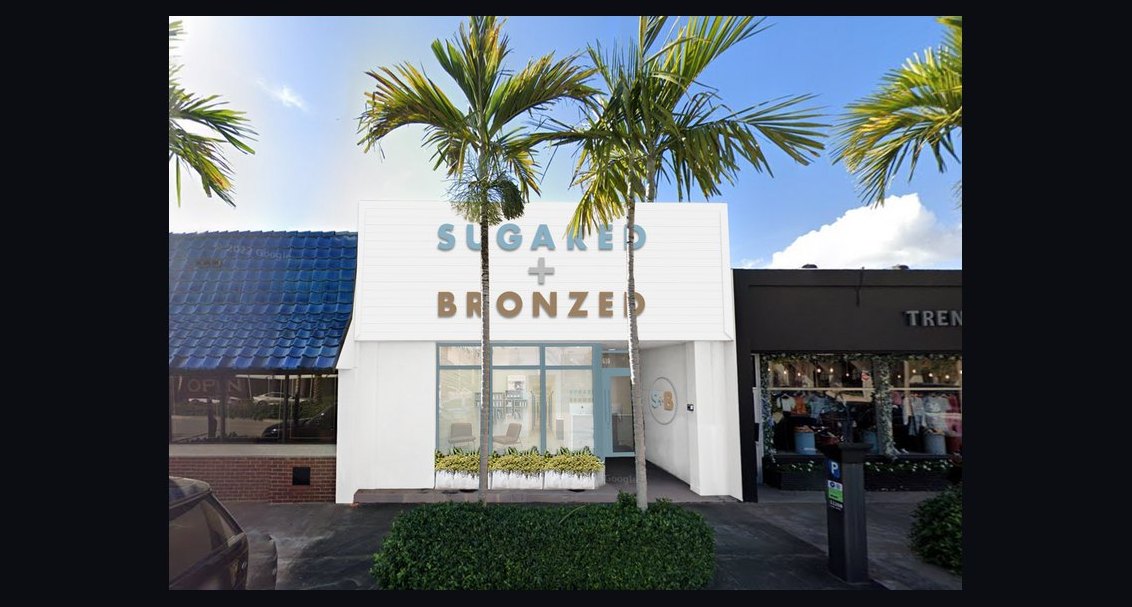 pulse-qShould I open or buy a Sugared + Bronzed franchise in 2027?
 pulse-qShould I open or buy a Glory Days Grill franchise in 2027?
 pulse-qHow do you coach a rep to trade concessions instead of caving in 2026?
 pulse-qHow Do I Keep Reps From Gaming the Comp Plan in 2026?
 pulse-qShould I open or buy a Mo' Bettahs Hawaiian Style Food franchise in 2027?
 pulse-qHow Many Employees Should I Schedule Each Shift at My Roller Rink in 2026?
 pulse-qShould I open or buy a Krispy Kreme franchise in 2027?