
Should I Sign a Personal Guarantee on a Commercial Lease in 2026?
 Curated byKory White · Fractional CRO · Maryland
 PULSEKNOWLEDGE LIBRARY
Quality
Certified
Sign only if you cannot negotiate it away — and then convert it into a good-guy guarantee that ends when you surrender the space broom-clean with proper notice. A full personal guarantee exposes your home and savings to every remaining month of rent; a good-guy version typically caps that at three or four months.
What a personal guarantee is and why it decides your downside
A commercial lease is normally signed by an entity — an LLC, an S-corp, a C-corp. That entity exists precisely so that a business failure stays inside the business. If the company runs out of money, the landlord's claim runs against the company's assets: the furniture, the receivables, whatever cash is left in the operating account. When those run out, the claim runs out with them. That is the bargain you accepted when you paid to form the entity and kept its books separate.
A personal guarantee is a separate contract, usually a page or two attached to the lease or embedded as an article near the back, in which you — the human being, signing in your individual capacity and not as "Member" or "President" — promise to pay whatever the entity does not. It punches a hole straight through the corporate wall. The landlord is not suing you as an owner of the tenant; the landlord is suing you as a co-obligor on the debt. Piercing-the-veil arguments, alter-ego theories, commingling — none of that is needed. You signed. That is the entire case.
Landlords ask for guarantees because their downside is enormous and front-loaded. Before you ever pay a dollar of rent, a landlord on a build-to-suit or heavy-improvement deal may have spent on tenant improvements, paid a broker commission on the whole term, and given free rent during construction. On a mid-size space that outlay can run well into six figures, amortized across the term in the rent number you negotiated. If you leave in month 14, the landlord has not recovered it. The guarantee is how landlords underwrite young companies whose balance sheets would never qualify on their own merits.
Understanding that motivation is the whole key to negotiating it. The landlord does not want your house. The landlord wants recovery of unamortized capital and confidence that the space will not sit dark. Every successful guarantee negotiation substitutes a different form of that same assurance — cash, a letter of credit, a longer term, a stronger co-tenant, a shorter free-rent package — for the open-ended promise. If you argue "I don't want to be personally liable," you lose. If you argue "here is a cheaper, more certain way for you to get made whole," you often win.
There is a second reason the topic deserves this much attention: a guarantee is nearly impossible to unwind later. Rent can be renegotiated when a market softens. Operating-expense caps can be fixed at renewal. But a signed guarantee is a completed contract supported by consideration, and the landlord has no reason on earth to release you from it once the ink is dry unless you bought that release in advance with a written burn-off, sunset, or assignment clause. Whatever protection you want to exist in year four has to be written into the document in year zero. This is one of the few lease terms where the negotiation truly is once-and-forever.
Treat the guarantee as its own deal, negotiated on its own terms, with its own counter-proposals — not as boilerplate you skim after you have already agreed on rent. Once you have shaken hands on the economics and the landlord has committed the space, your leverage has largely been spent. Raise the guarantee early, in the letter of intent, alongside rate and term. An LOI that says "no personal guarantee; security deposit of X months" or "good-guy guarantee only, 90-day notice" sets the frame before lawyers start drafting, and it is dramatically easier to hold a position stated in the LOI than to claw it back out of a lease draft.
The negotiation sequence, step by step
Work the guarantee in a fixed order. Each step trades something the landlord values for a reduction in your personal exposure, and each fallback is a genuine improvement over the one before it — so even a negotiation that "fails" three times leaves you meaningfully better off than signing the first draft.
Step one: ask for no guarantee at all, backed by financials. Assemble a package before you ask — two or three years of business tax returns, recent bank statements showing operating cash, a current profit-and-loss and balance sheet, a business credit report, and a personal financial statement if you are willing to share one. Present it and propose an alternative security structure in the same breath. Established, profitable businesses with real cash on hand win this outright more often than people expect, because the landlord's underwriting question is answered without a guarantee.
Step two: trade cash for the guarantee. Offer a larger security deposit — commonly several months of rent instead of one — or a standby letter of credit from your bank. A letter of credit is often the best instrument available to you: the landlord can draw on it instantly on a default, which is exactly the certainty they want, while your exposure is capped at the face amount and your bank simply holds collateral or a line against it. Negotiate a burn-down: the deposit or LC face amount steps down on each anniversary you have paid on time, so a large opening number shrinks toward nothing as you prove yourself.
Step three: convert to a good-guy guarantee. If the landlord insists on a personal signature, insist that it be limited to the period you actually occupy. This is the single highest-value concession in the entire negotiation and is standard practice in some markets, particularly New York, where landlords and brokers negotiate it as a matter of routine.
Step four: if it must be a full guarantee, shrink it on every axis. Cap the dollar amount. Narrow the scope to base rent. Add a burn-off schedule. Kill joint-and-several liability among partners. Add a sunset trigger. Each of these is independently winnable, and landlords who reject one often accept two others.
Step five: paper it inside the lease. Whatever you win — cap, burn-off, release on assignment — must live in the lease or in a guarantee document executed at the same time by the same parties, not in an email from the leasing agent or a side letter signed by someone without authority. If the building sells, the buyer takes the lease as written and has no obligation to honor a broker's promise.

The good-guy guarantee and what each term actually does
The good-guy guarantee is a limited personal guarantee that trades the landlord's biggest operational fear — a defaulting tenant who stops paying but refuses to leave, forcing a months-long eviction while the space generates nothing — for a hard cap on your exposure. The deal is simple: behave like a "good guy" on the way out, and your personal liability ends the day you hand over the keys.
Four conditions typically trigger the release, and each one is negotiable:
Written notice. You must give advance written notice of your intent to vacate. Sixty to ninety days is a reasonable and common ask; landlords frequently push for longer. The notice period is pure cost to you, because you owe rent through it whether you are in the space or not, so every month you shave is a month of personal liability removed. Confirm exactly how notice must be delivered and to whom — a notice sent to the wrong address or by the wrong method can be treated as never given.
Actual surrender. You have to be fully out and deliver possession. Partial vacancy, leaving equipment behind, or holding a key "just in case" can void the release. Coordinate the move so surrender is clean and documented — a signed surrender acknowledgment from the landlord on the day you hand over keys is worth insisting on.
Broom-clean condition. Push hard to keep the standard at "broom-clean, ordinary wear and tear excepted." Resist any obligation to restore the premises to their original condition or remove the improvements you installed. Restoration obligations can turn a clean exit into a demolition project costing many thousands of dollars, and if restoration is a condition of the release, the landlord can withhold your release until you pay for it.
Payment current through surrender. You must be paid up — base rent plus your share of operating expenses, taxes, and utilities through the surrender date. Since reconciliations often arrive months after the fact, ask that the release not be held hostage to a future year-end true-up, or that any post-surrender reconciliation be capped or paid from the security deposit.
Two traps deserve specific attention. First, make sure your release is not conditioned on the landlord finding a replacement tenant. A release that only takes effect "upon re-letting" is not a good-guy guarantee at all — it just renames the full guarantee and leaves you exposed for however long the space sits empty. Second, watch for language making the release contingent on there being "no default" at any point in the lease's history. One late payment in year two should not vaporize a protection you negotiated for.
Understand the trade honestly: a good-guy guarantee does not release the entity from anything. Your company still owes the remaining rent, and the landlord can still pursue it, take the deposit, and pursue a judgment against the company's assets. What ends is *your personal* liability. For most small-business owners whose company has no meaningful assets at the point of failure, that distinction is the entire ballgame.
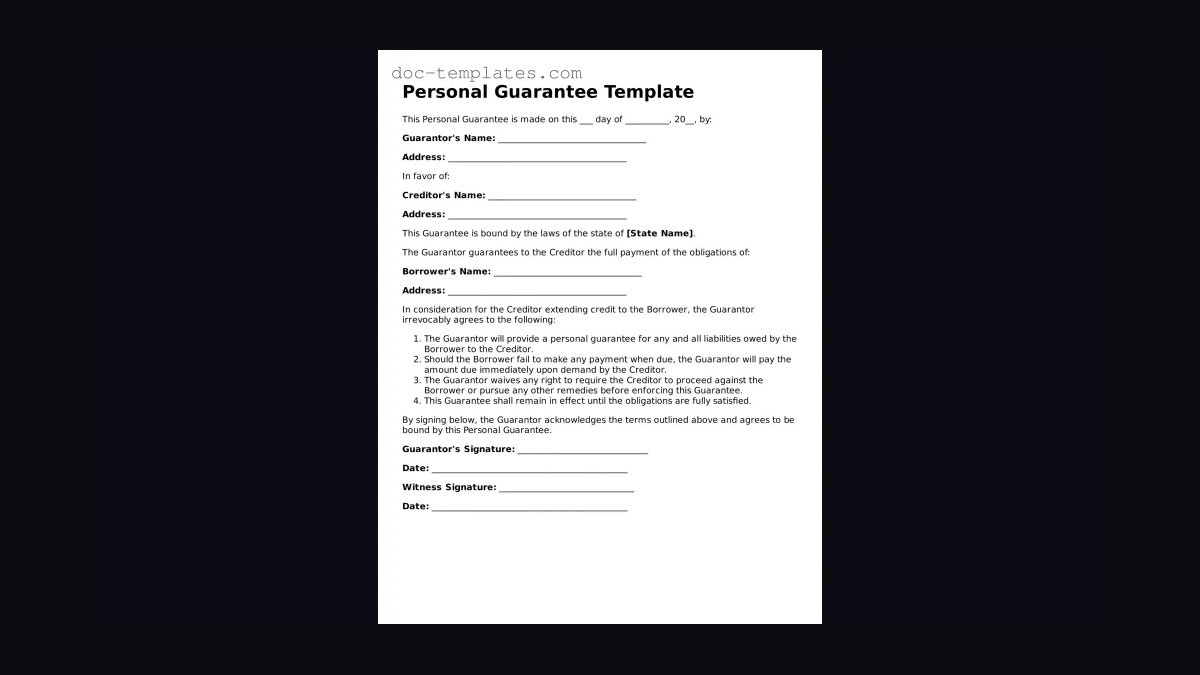
Costs, exposure math, and typical ranges
Run the arithmetic before you negotiate, because the number is what turns an abstract legal worry into a concrete position at the table.
Take a five-year lease at $8,000 per month — $96,000 a year, $480,000 over the term. Suppose the business fails at the end of year two. Under an uncapped full guarantee covering "all sums due under the lease," the landlord's claim against you personally starts at the remaining thirty-six months of base rent, roughly $288,000. Then it grows. Add your share of operating expenses, taxes, and insurance under a triple-net structure, which on many buildings adds a meaningful percentage on top of base rent. Add unamortized tenant-improvement dollars and the broker commission the landlord fronted, if the lease says those become due on default — that clause is common and easy to miss. Add default interest and late fees at the rate stated in the lease. Add the landlord's attorneys' fees, which a prevailing-party clause shifts to you. It is entirely realistic for a $288,000 rent number to become a $350,000-plus claim.
Now run the same failure under a good-guy guarantee with ninety days' notice. You give notice, keep paying while you wind down, surrender broom-clean, and your personal exposure is the rent and charges through the surrender date — three or four months, call it $24,000 to $32,000 plus the final expense reconciliation. Identical business failure. An order-of-magnitude difference in what happens to your personal balance sheet.
The intermediate structures land between those poles. A dollar cap set at six to twelve months of base rent puts your worst case at roughly $48,000 to $96,000 on this lease, known and budgetable from day one. A burn-off schedule — full exposure in years one and two, half in year three, a quarter in year four, zero in year five — means the same year-two failure still costs you the full remaining amount, but a year-four failure costs a fraction of it. Burn-offs reward survival; caps protect against early death. If you can only get one, choose based on where you think your risk actually sits: young companies with real launch risk should take the cap, established companies moving into a bigger space should take the burn-off.
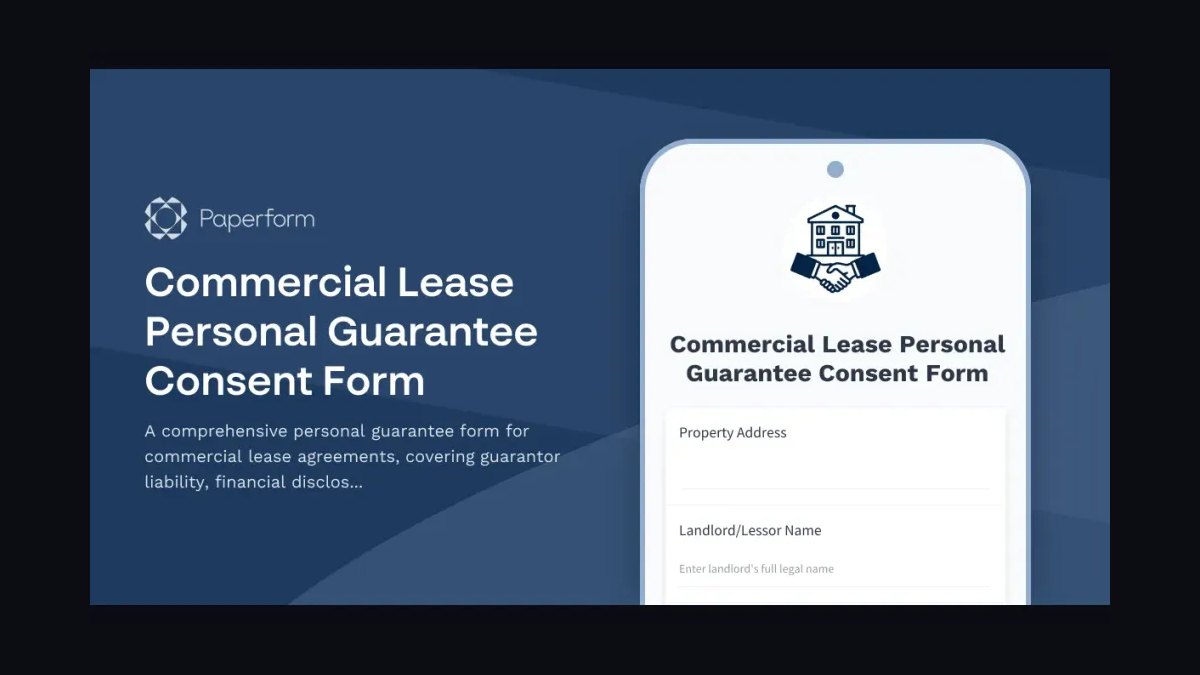
Price the alternatives you are offering, too. A security deposit of three to six months on this lease is $24,000 to $48,000 of your cash sitting dead in the landlord's account for years, earning you nothing. A letter of credit typically costs an annual fee measured as a percentage of the face amount and usually requires collateral or capacity on your line — real money, but far less than the deposit's opportunity cost, and the exposure is capped and visible. Compare that carrying cost against the expected value of an uncapped guarantee and the LC almost always looks cheap.
Budget for the review itself. Having a commercial real estate attorney read the guarantee and the related lease articles — default, remedies, acceleration, assignment, surrender — is a few hours of work and the highest-return legal spend in the entire deal. Do not have a general practitioner do it. Someone who negotiates leases in your market knows which landlords have accepted caps and burn-offs before, which is information no amount of careful reading will give you.
Finally, count the credit cost. If the landlord obtains a judgment against you personally, it can be reported and can appear in consumer and commercial credit files, complicating mortgages, auto loans, and future business borrowing for years. Some guarantees also require you to maintain a stated personal net worth or liquidity, which can quietly constrain what you do with your own money for the life of the lease. Read for those covenants specifically.
Where tenants get it wrong
Negotiating the guarantee last. By the time the lease draft arrives, rent and term are settled, the landlord has taken the space off the market, and you have emotionally moved in. That is the weakest possible moment to open a hard issue. Put your guarantee position in the letter of intent alongside the rate.
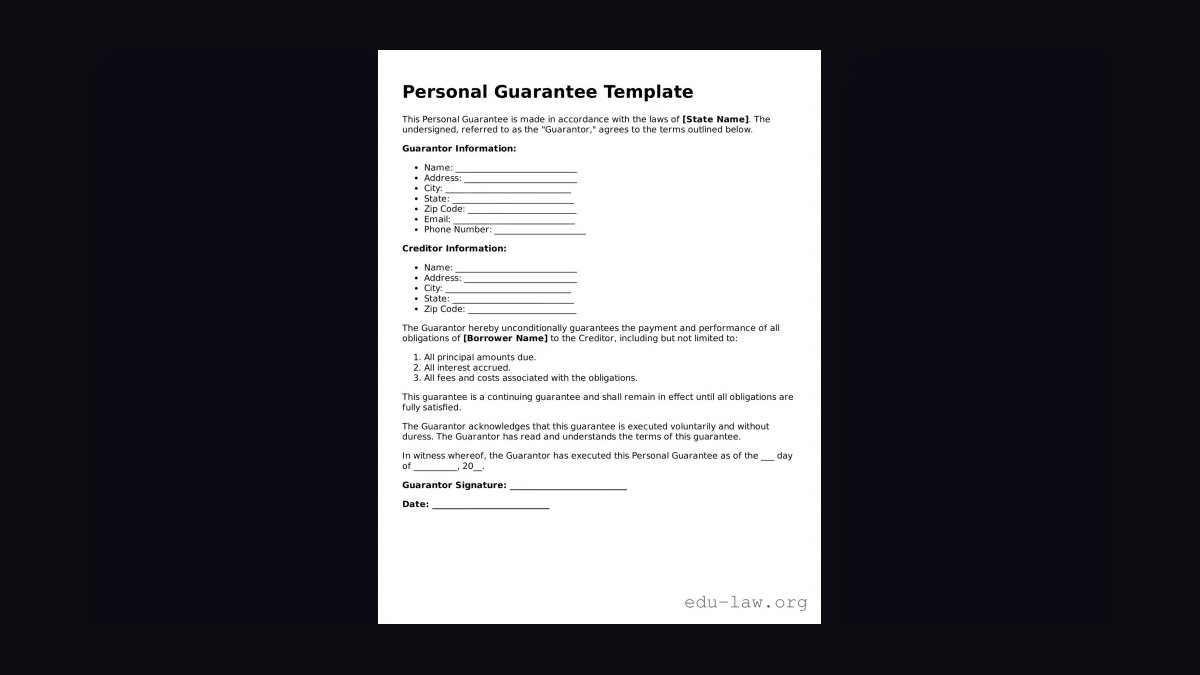
Treating the first draft as the market. Landlord counsel drafts for the landlord. The opening guarantee is deliberately broad — unlimited, continuing, irrevocable, joint and several, covering all sums. That is a starting position, not a description of what landlords accept. Mark it up.
Missing the word "several." In "joint and several," *several* is the dangerous half. It means the landlord can collect the entire obligation from whichever guarantor is easiest to reach — typically the partner with a house and a savings account. Your recourse is to sue your co-guarantors for contribution, which means suing your former partners, which almost never happens. Insist on pro-rata liability with each guarantor's share stated as a percentage.
Ignoring acceleration. An acceleration clause lets the landlord declare all remaining rent for the entire term immediately due on default. Combined with an uncapped guarantee, one missed payment converts into a lump-sum judgment for years of future rent. Strike acceleration outright, or at minimum require that accelerated rent be discounted to present value and reduced by rent the landlord collects from a replacement tenant.
Waiving mitigation. Many drafts have the guarantor waive any requirement that the landlord try to re-rent the space. That waiver lets a landlord leave the unit dark and bill you for every month of it. Never agree. Require commercially reasonable re-letting efforts and require that everything collected from a new tenant reduces your obligation.
.jpeg)
Letting the guarantee survive assignment. If you sell the business or assign the lease with the landlord's consent, your guarantee should terminate. Without that clause, you can be personally liable for the conduct of a stranger operating a business you no longer own — the worst possible position, because you carry the risk with zero control. Negotiate an express release on any landlord-approved assignment, or at minimum a release once the assignee has performed for a stated period.
Waiving notice. Guarantees routinely waive notice of default, presentment, demand, and protest. At least preserve the right to written notice and a cure period before the landlord proceeds against you personally. You may well be willing to write the check to prevent a default — but only if someone tells you it is happening.
Signing in the wrong capacity by accident. Every signature block on the lease should read with your title. Only the guarantee should carry a bare individual signature. If you find your unadorned name on the lease itself, you may have personally signed the whole lease — a far worse outcome than the guarantee you were arguing about.
Forgetting the guarantee at renewal. Options to extend and renewal amendments often state that the guaranty "remains in full force and effect." A guarantee you burned off over five years can quietly reattach for another five. Renewal is also your best leverage moment — you are a proven payer, the landlord's vacancy risk is real — so use it to remove the guarantee entirely.
Skipping the spousal signature question. Landlords sometimes ask both spouses to sign. In community-property states this materially widens what is reachable. Understand what you are being asked to do before a second signature goes on the page.
Choosing the right structure for your situation
There is no single correct answer, only a correct match between the guarantee structure and your actual circumstances. Work through it deliberately.
Start with market conditions. When vacancy in your submarket is high, landlords compete for credit-worthy occupancy and guarantee terms soften noticeably. When space is tight, they harden. Before you negotiate, get the current vacancy and net-absorption numbers for your specific submarket and property type — the major brokerage firms publish quarterly market reports, and a tenant-rep broker will have them at hand. Negotiating without knowing whether you are in a landlord's market or a tenant's market is negotiating blind.
Then assess your own profile honestly. A profitable business with several years of returns, real cash reserves, and clean business credit has a genuine shot at no guarantee, or a guarantee replaced by a letter of credit. A first-time operator with a new entity and a thin balance sheet will be asked for a guarantee and should focus energy on limiting it rather than eliminating it.

Weigh the space against the risk. A commodity office suite or a small retail bay that needs little work is a low-capital deal for the landlord, which means less unamortized money to protect and a softer guarantee position. A heavy buildout — a restaurant, a clinic, a lab — means the landlord is funding substantial improvements that have little value to anyone else, and the guarantee ask will be correspondingly firm. If you need heavy improvements, expect to pay for guarantee relief with either cash security or term.
Consider what you personally have to lose. An operator with home equity, retirement accounts outside protected vehicles, and college savings is risking something concrete. An operator whose personal balance sheet is thin has less at stake in practice, though a judgment still damages credit and can follow you for years. Exemption rules vary substantially by state — what a creditor can reach in one state differs from another — so ask local counsel what a judgment would actually touch in your case.
Finally, decide what you will trade. Rank your priorities before you sit down: a lower rate, more free rent, a bigger improvement allowance, a shorter term, an early-termination right, and guarantee relief all cost the landlord money, and you will not get all of them. For most owner-operators, guarantee relief and an early-termination right are worth more than a modest rate concession, because they cap catastrophic downside rather than trimming a routine expense. A dollar of rate savings is a dollar. A capped guarantee can be a hundred thousand.
And use a tenant-rep broker. In most markets their fee is paid out of the landlord's commission pool, so representation costs you nothing directly. They know which landlords in your submarket have accepted good-guy language, which have agreed to burn-offs, and what a realistic ask looks like on a given building. That precedent is worth more than any general advice, including this page. The same discipline a RevOps team applies to a customer contract — know the counterparty's precedent, decide your concessions before the call, and never negotiate the highest-stakes term last — applies exactly here.
Related questions
Does a personal guarantee end when I sell my business?
Only if the guarantee says so. Absent an express release on landlord-approved assignment or a change-of-control provision, you stay liable for a tenant you no longer control. Negotiate that release up front; buyers rarely have leverage to obtain it at closing.
Can a landlord require both spouses to sign?
Landlords can ask, and some do, particularly in community-property states where a single spouse's signature may not reach jointly held assets. It is negotiable. Understand what a second signature adds to the landlord's collection pool before agreeing.
What if I already signed an uncapped guarantee?
Your leverage returns at renewal, expansion, or any amendment the landlord wants. Trade the thing they need — an extension, a rate bump, extra space — for a cap, a burn-off, or an outright release, and get the change signed as a lease amendment.
Is a letter of credit better than a personal guarantee?
Usually yes for the tenant. Your exposure is capped at the face amount, your personal assets stay out of reach, and the landlord gets faster, more certain recovery. The cost is bank fees and tied-up collateral or credit capacity.
Does the guarantee cover operating expenses and taxes?
It does if the scope says "all sums due under the lease," which is the standard draft. Narrow it explicitly to base rent, and exclude late fees, default interest, attorneys' fees, restoration costs, and unamortized improvement allowances.
FAQ
What exactly is a personal guarantee on a commercial lease?
It is a separate promise, signed by you as an individual rather than as an officer or member of your company, to pay the landlord whatever the tenant entity fails to pay. It bypasses your LLC or corporation entirely — the landlord does not need to prove the entity was a sham or that you commingled funds. Your signature in an individual capacity is the whole basis of the claim, and it puts personal assets such as savings, investments, and potentially home equity within reach of a judgment.
Can I get a personal guarantee removed completely?
Sometimes. Businesses with several years of profitable operations, real cash reserves, and clean credit win outright waivers more often than owners expect, particularly in soft markets. The reliable path is substitution rather than refusal: offer a larger security deposit or a standby letter of credit that gives the landlord faster, more certain recovery than chasing an individual through court. Lead with financial documents and a specific alternative rather than an objection.
What is a good-guy guarantee and how does it help?
It limits your personal liability to amounts owed through the date you actually vacate. Give the required written notice, surrender the space broom-clean, stay current through move-out, and your personal obligation ends — the landlord absorbs the lost future rent. It typically converts exposure measured in years of remaining rent into exposure measured in the notice period, commonly sixty to ninety days plus final charges. Make sure your release is not conditioned on the landlord re-letting the space.
How long does a guarantee last, and can it expire early?
By default it runs the full term and often survives into renewals unless the document says otherwise. Negotiate a burn-off that reduces liability on each anniversary you pay on time, or a sunset that terminates the guarantee once the business hits a stated milestone — a set number of consecutive on-time payments, a revenue threshold, or a net-worth test. Both must be written in before signing; landlords have no incentive to grant either later.
What happens if I simply refuse to sign?
The landlord may pass on your application, or may counter with a higher rate, a much larger deposit, a shorter term, or a smaller improvement allowance. In a tight market with multiple interested tenants, refusal can end the deal. That is why the productive move is not refusal but substitution — give the landlord an alternative form of security and a documented reason to believe the rent gets paid.
Will a guarantee hurt my personal credit?
It can. If the landlord obtains a judgment against you individually, that judgment can appear in credit files and complicate mortgages, auto loans, and future business borrowing for years. Some guarantees also impose ongoing personal net-worth or liquidity covenants, which constrain your own finances for the life of the lease. Read for those covenants specifically and negotiate them out or down.
Sources
- https://www.sba.gov/business-guide/manage-your-business/lease-commercial-space
- https://www.cbre.com/insights
- https://www.jll.com/en-us/insights
- https://www.cushmanwakefield.com/en/united-states/insights
- https://www.naiop.org/research-and-publications/
- https://www.boma.org/
- https://www.rebny.com/
- https://www.nolo.com/legal-encyclopedia/commercial-leases
- https://www.uschamber.com/co/run/finance
- https://www.irs.gov/businesses/small-businesses-self-employed/business-expenses
Related on PULSE
This page will be disappearing soon. Save it to your device for $1 — or read it free while it is here.
@Kory-White- · if Venmo asks, the last 4 of my number are 2012
This page is gone.
This one is off the shelf now. $1 keeps it on your phone for good — the whole page, pictures and diagrams included.
 pulse-qShould I open or buy a Duck Donuts franchise in 2027?
 pulse-qShould I Repair or Replace My Delivery Fleet Vehicles as My Landscaping Business Scales in 2027?
 pulse-qShould I open or buy a Junk Doctors franchise in 2027?
 pulse-qShould I open a transmission repair business in 2027?
 pulse-qHow Many Sales Reps Do I Need to Hire for My Equipment Rental Company in 2026?
 pulse-qHow Do I Get My Reps to Follow the Sales Process in 2026?
 pulse-qShould I open or buy a Wendy's franchise in 2027?
 pulse-qShould I open or buy a Goddard School franchise in 2027?
 pulse-qShould I open or buy a Sugared + Bronzed franchise in 2027?
 pulse-qShould I open or buy a Glory Days Grill franchise in 2027?