
Should I open or buy a Champs Chicken franchise in 2027?
 Curated byKory White · Fractional CRO · Maryland
 PULSEKNOWLEDGE LIBRARY
Quality
Certified
Only if you already own a convenience store, grocery, or travel center. Champs Chicken is a licensed in-store foodservice program, not a standalone restaurant franchise. Investment typically runs $30,000–$250,000 for equipment and buildout, and the decision is judged purely on incremental store profit — not on standalone-restaurant returns.
What a licensed in-store chicken program actually is
Champs Chicken is a branded fried-chicken and deli program installed inside an existing retail box. You are not building a restaurant, signing a ground lease, or hiring a general manager. You are converting a corner of a store you already operate into a hot-food counter that sells bone-in chicken, tenders, sides, and biscuits under a recognized brand, with the brand owner supplying the recipes, breading, packaging, signage, and operating standards.
That distinction changes almost every number in the deal. A standalone quick-service chicken restaurant asks for a franchise fee, a multi-year royalty on gross sales, an ad-fund contribution, a real-estate commitment, and often a multi-unit development agreement. An in-store program typically asks for a low or waived program fee, a supply agreement, and a commitment to buy proprietary product through an approved distributor. The brand owner makes its money on the food and supplies flowing through your store rather than on a percentage of your register. That is why you will rarely see a classic 6% royalty line in an in-store program — the margin is embedded upstream in case pricing.
It also changes what you are actually buying. In a traditional franchise, a meaningful part of the value is the brand's ability to generate its own traffic: people drive to a Popeyes because it is a Popeyes. In an in-store program, the traffic is already yours. Customers are coming in for fuel, cigarettes, lottery, drinks, and groceries. The chicken program's job is to convert a share of that existing footfall into a higher-margin basket and, secondarily, to pull in a lunch or dinner occasion that would otherwise go to a drive-thru down the road. If your store does not already have traffic, a branded fryer program will not create it.
The practical consequence for anyone evaluating whether to open or buy: the correct comparison set is not "Champs versus Raising Cane's." It is "Champs versus Hunt Brothers Pizza versus Chester's Chicken versus Krispy Krunchy Chicken versus running my own unbranded deli." Those are the real alternatives, and they compete on the same square footage, the same labor pool, and the same fryer bank.
There is a RevOps way to think about this that maps cleanly onto retail: you are adding a new product line to an existing revenue engine with a fixed traffic funnel. The relevant metrics are attach rate (what percentage of existing transactions add a food item), average basket lift, contribution margin per labor hour, and payback period on the capital. Nothing about brand romance belongs in the model. If the attach rate math does not work on your actual transaction count, the answer is no regardless of how good the chicken is.
One more structural point that trips people up: in-store programs generally do not grant protected territory the way a restaurant franchise does. The brand owner's growth strategy is to sign as many retail locations as will take the program. A competitor two miles away can sign the same program next quarter. If exclusivity is central to your thesis, an in-store license is the wrong instrument. What you get instead is speed, low capital, and the ability to exit relatively cheaply if the category underperforms.
The step-by-step process from inquiry to first fry
The sequence below is the realistic path, and it is materially shorter than a restaurant build. Most operators go from first call to first sale in 30 to 90 days when the store already has ventilation; 4 to 6 months when a hood has to be added.
Step one: pull your own numbers before you call anyone. You need twelve months of transaction counts by daypart, current foodservice sales if any, square footage available near the register, and your existing labor schedule with hours and wage rates. Programs are sold on gross sales potential; you are buying incremental profit. You cannot evaluate the offer without your own denominator.
Step two: contact the program and get the full requirement list in writing. Ask specifically for: the program or license fee and whether it is waived at any volume; the required equipment spec sheet; the approved distributor and whether you are locked to it; minimum weekly or monthly order quantities; the term length and termination provisions; whether signage is purchased or loaned; and what happens to the branding if you exit. Get the answers as documents, not as a phone conversation.
Step three: run the ventilation and code check first, before you fall in love with the pro forma. Open fryers require a Type I hood with fire suppression, make-up air, and grease-duct routing to the roof. In an older strip-center store with no existing hood, this single item can swing your capital number by $40,000 to $100,000 and add months of permitting. Have an HVAC contractor and your local health department weigh in before you sign anything. Ventless fryer options exist and can reduce this, but they carry throughput and menu limits — confirm whether the program supports them.
Step four: build the incremental model. Three inputs matter most: expected weekly foodservice sales, food cost as a percentage, and added labor hours. Everything else is rounding.

Step five: negotiate the equipment package. Ask whether the program offers equipment financing, leasing, or a distributor rebate tied to purchase volume. Many in-store programs will subsidize or defer equipment cost in exchange for a longer supply commitment. Compare the effective interest rate of that subsidy against a straight equipment loan — a "free" fryer bank paid for by five years of above-market case pricing is not free.
Step six: schedule the install and the training together. Equipment arriving before staff is trained produces two weeks of wasted product and bad first impressions. Sequence: install and commission equipment, run a closed-door practice production day, then a soft open at reduced hours, then full hours.
Step seven: launch with a specific attach-rate goal, not a vague sales goal. "Sell $6,000 a week" is not actionable at the counter. "Get one in eight fuel customers to add an 8-piece or a tender combo between 4pm and 7pm" is.
Costs, timelines, and the ranges that actually hold up
Treat every number below as a planning range, not a quote. Actual figures depend on your store's existing infrastructure, your market's labor rates, and the specific terms you negotiate.
Capital, line by line. Program or license fee: $0 to roughly $15,000, frequently low or waived because the economics are supply-tied. Foodservice equipment — fryers, holding cabinets, breading station, refrigeration, hood if needed: $20,000 to $150,000. Counter and buildout: $5,000 to $70,000 depending entirely on how ready the store already is. Signage and in-store branding: $3,000 to $20,000. Opening inventory of chicken, sides, breading, and packaging: $3,000 to $12,000. Staff training: $1,000 to $8,000. Working capital to carry the ramp: $5,000 to $25,000. Total realistic band: roughly $30,000 at the low end for a store that already has a hood and a deli counter, up to about $250,000 for a full hot-food buildout in a cold box.
The spread is enormous and it is almost entirely ventilation and buildout. If you already run a deli or a pizza program, you are near the bottom of the range. If your store has never sold hot food, assume the top half.
Revenue. A program in a reasonably trafficked store commonly produces somewhere in the range of $150,000 to $500,000 in added annual foodservice sales, with high-traffic travel centers and interstate-adjacent locations capable of exceeding that meaningfully, and low-traffic rural stores sometimes failing to clear $80,000. The variance is driven by store traffic and daypart mix far more than by brand. A store doing 400 transactions a day has a fundamentally different ceiling than one doing 1,400.
Cost structure. Hot-food programs generally run food cost in the 45% to 65% range depending on menu mix, portioning discipline, and waste control — bone-in chicken carries more waste risk than tenders because it holds poorly. Added labor typically consumes 20% to 30% of foodservice sales; this is the line most operators underestimate, because chicken requires dedicated hands for breading, frying, holding, and cleaning that cannot be absorbed by a single clerk running the register. Supplies, packaging, and program costs add roughly 8% to 12%.
Run those against a $350,000 program: food cost at 45% is $157,500, added labor at 25% is $87,500, supplies and program at 10% is $35,000. That leaves roughly $70,000 in incremental contribution before you allocate any existing overhead. Against a $150,000 capital outlay, that is a payback in the neighborhood of two years — acceptable for an add-on, unremarkable for a standalone venture. Push food cost to 60% and labor to 30% and the same sales volume yields closer to $0. The margin here is thin enough that execution, not the license, determines the outcome.
Realistic net margins. After all costs including a fair allocation of utilities and management time, most operators should model 10% to 20% net on foodservice sales. A $300,000 program netting $30,000 to $60,000 is a normal outcome, not a disappointing one — it is incremental profit on square footage you were already paying rent on.
Timelines. Signing to install: 2 to 8 weeks if equipment is in stock. Install to first sale: 1 to 3 weeks including training. Permitting for a new hood: 4 to 16 weeks depending on jurisdiction, and this is the item that blows schedules. Ramp to steady-state sales: 3 to 6 months, because hot-food purchase habits form slowly and customers need repeat exposure before they think of your store as a food stop. Break-even on capital: typically 12 to 24 months for a new program, faster for an acquisition with existing sales history.
Ongoing costs people forget. Equipment maintenance and deep cleaning: budget $2,000 to $5,000 a year for fryer service, hood cleaning on a required schedule, and refrigeration repairs. Food waste: 5% to 10% of food cost is normal without disciplined production forecasting, and considerably worse if you hold too much product late in the day. Recurring training: c-store turnover regularly runs 20% to 30% or higher annually, so training and food-handler certification is a permanent line item, not a startup expense. Supply minimums: order minimums can create cash-flow pressure in slow weeks, particularly seasonal locations.

Buying an existing program versus opening a new one
Both paths exist, and they are genuinely different transactions with different risks.
Opening new means installing the program in a store you already own or are acquiring without foodservice. Capital lands in the $30,000 to $250,000 band described above, setup runs 1 to 6 months, and you control location within the store, equipment specification, staffing, and menu focus from day one. The cost is uncertainty: you have no sales history, and your pro forma is an estimate built on comparable stores the program shows you, not on your own register data. Expect 3 to 6 months before sales stabilize enough to judge the decision.
Buying an existing program almost always means buying the underlying store or business that already runs the program, with the foodservice operation valued as part of the whole. The premium attributable to an established program varies widely — anywhere from a modest bump to $500,000 or more over the base business value depending on documented foodservice sales, equipment age and condition, remaining lease term, and transferability of the license. You get immediate cash flow, proven demand, trained staff if they stay, and a real P&L instead of a projection.
The risks in an acquisition are specific and diligenceable. Equipment age is the big one: a fryer bank at year nine of a ten-year life is a deferred capital call disguised as an asset. Get a hood-cleaning and fire-suppression inspection record for the last three years. Verify that the program license is actually assignable to you and on what terms — some require re-qualification, updated equipment, or re-signage at your expense. Pull separated foodservice sales from POS by category, not a lump "deli" number, and check the trend over 24 months rather than the last quarter. Ask why it is for sale: retiring owners are a good story, a chicken program that was a neglected sideline in an otherwise fine store is a fixable story, and a store with declining fuel gallons is a different problem entirely.

The practical decision rule: if you have meaningful liquid capital, an existing store with traffic, and want control over the buildout, opening new is the cleaner path and the cheaper entry. If you want cash flow on day one and you are competent at reading a small-business P&L, acquiring a running program can compress the ramp by 6 to 12 months — but you are underwriting a store, not a chicken license, and you should price it that way.
Where operators get this wrong
Treating it as a brand play instead of an operations play. The single most common error. Operators sign because the sign looks good on the building and assume the brand will produce sales. In-store chicken programs are executed, not marketed. A well-run program in a modest store routinely outperforms a poorly run program in a better store, because hot food is unforgiving: soggy tenders at 6pm, an empty warmer at lunch, or a dirty counter kills repeat purchase in a way no signage recovers.
Underestimating labor. The pro forma says "one more part-timer." Reality is breading and frying on a schedule, rotating held product, hourly quality checks, closing fryer filtration, and a deep clean. In markets where c-store wages have moved into the mid-to-upper teens per hour, adding 40 to 60 labor hours a week is a real five-figure annual expense that has to come out of the same $70,000 of contribution margin. If your store cannot staff its existing shifts reliably today, adding a fryer program makes staffing worse, not better.
Ignoring the ventilation question until after signing. Discovering you need a Type I hood after committing to the program is the fastest way to turn a $60,000 project into a $160,000 project. Ask the code question in week one.
Over-producing to avoid running out. Bone-in chicken has a short hold window. Operators who cook to a full warmer all day protect availability and destroy margin — 15% waste instead of 6% can consume the entire net profit of the program. The discipline is a written production chart by daypart, adjusted weekly against actual sales, with cook-to-order for slow periods.
Failing to isolate foodservice in the P&L. If chicken sales, chicken COGS, and chicken labor are buried inside store totals, you cannot tell whether the program is working. Set up separate POS categories and a separate labor cost center before launch, not six months in.
Expecting territory protection. In-store programs are not exclusive the way a restaurant franchise is. Assume a competitor can sign the same or a rival program nearby. Your defense is execution, hours, and location convenience, not contract language.
Bolting on third-party delivery without doing the math. Listing on a delivery marketplace can add meaningfully to sales, but commission rates in the 20% to 30% range applied to a product already carrying 50%-plus food cost can produce negative-contribution orders. If you list, price the delivery menu separately to absorb the commission, and use in-store signage and your own loyalty program to push customers toward direct purchase.
Skipping the second-store discipline. Operators who like the results at store one often roll the program to three more stores before the first has hit a steady-state margin. Prove twelve months of contribution at one location, document what made it work, then expand.
Deciding what to choose and when
The choice is rarely "Champs or nothing." It is a sequence of filters, and most candidates should be eliminated at filter one or two.
Filter one — do you already operate a retail box? If no, stop. A Champs program is not a path to a standalone restaurant. If you want a restaurant, evaluate an actual chicken-restaurant franchise with its own real estate, franchise fee, royalty structure, and territory, and expect a capital requirement several times higher.

Filter two — does the store have the traffic? Model your realistic attach rate against actual daily transactions. If a defensible attach rate on your real transaction count cannot produce enough weekly foodservice sales to cover the added labor plus food cost plus a return on capital, the answer is no, and no amount of brand strength changes it.
Filter three — can the building take hot food? Hood, make-up air, fire suppression, grease disposal, floor drains, and health-department sign-off. If the retrofit cost pushes total capital past what two years of projected contribution can repay, either find a ventless-compatible program or pass.
Filter four — can you staff and supervise it? Hot food needs an owner or manager who will check the warmer at 3pm. If nobody in the building owns quality, the program will drift.
Filter five — which program? Compare Champs against Hunt Brothers Pizza, Chester's Chicken, and Krispy Krunchy Chicken on four axes: total equipment spec and capital required, case pricing and supply lock-in, labor intensity per dollar of sales (pizza is generally less labor-intensive than bone-in chicken), and regional brand recognition in your specific market. Also price the unbranded option honestly — running your own deli gives full menu and sourcing control with no license, at the cost of no recipes, no packaging system, and no brand pull.
Related questions
Is Champs Chicken a real franchise or a license?
It functions as a licensed in-store foodservice program rather than a classic franchise. You install branded equipment and signage inside your existing store and buy proprietary product through approved supply channels, instead of paying a traditional franchise fee plus a percentage royalty on gross sales.
Can I run a Champs program as my only business?
Not practically. The model assumes an existing retail operation supplying the traffic, the rent, and the staff. Without a host store, you have the cost structure of a restaurant with none of a restaurant's brand pull or drive-thru throughput.
How long until the program pays for itself?
Most new in-store programs break even on capital in roughly 12 to 24 months, assuming the store has real traffic and food cost and labor stay in normal ranges. Acquisitions of running programs can be faster because the sales history already exists.
What kills these programs most often?
Labor and waste. Under-staffing produces poor quality and empty warmers; over-production to prevent empty warmers produces waste that consumes the entire margin. Both are solved by a written daypart production chart reviewed weekly against actual sales.
Do I get an exclusive territory?
Generally no. In-store programs are typically non-exclusive, and a nearby retailer can add the same or a competing program. Your protection is location convenience and execution quality, not contractual exclusivity.
FAQ
What exactly am I buying with a Champs Chicken program?
A license to operate a branded fried-chicken and deli counter inside a store you already run. That includes recipes and breading systems, packaging, in-store signage and branding, operating standards, and staff training, supported by a supply relationship for proprietary product. You are not buying real estate, a protected territory, or a standalone restaurant format.
How much capital do I actually need?
Plan on $30,000 to $250,000 in total investment. The bottom of that range applies to a store that already has a Type I hood, a deli counter, and refrigeration. The top applies to a store with no hot-food infrastructure, where ventilation, buildout, and equipment dominate the budget. Add working capital of $5,000 to $25,000 to carry the ramp period.
Are there ongoing royalties?
Typically not in the traditional percentage-of-sales form. In-store programs generally recover their economics through the price of required food and supply purchases, plus modest program or licensing fees. That structure is friendlier to cash flow than a royalty but means your effective cost is embedded in case pricing — compare that pricing against alternatives before signing a long supply commitment.
How do I know if my store has enough traffic?
Take your actual daily transaction count, apply a conservative attach rate you can defend, and multiply by a realistic average food ticket. Run the resulting weekly sales through food cost, added labor, and supply cost. If the remaining contribution does not cover a reasonable return on your capital within about two years, the traffic is not there yet.
Should I open a new program or buy a store that already has one?
Open new if you already own a suitable store, have capital, and want control of the buildout — it is the cheaper and cleaner entry. Buy an existing operation if you want immediate cash flow and can diligence the store's financials, equipment condition, lease, and license transferability. Remember you are underwriting a whole retail business, not just the chicken counter.
How does this compare to competing in-store programs?
Hunt Brothers Pizza, Chester's Chicken, and Krispy Krunchy Chicken occupy the same space and compete for the same square footage. Compare them on equipment capital, case pricing and supply lock-in, labor hours per dollar of sales, and local brand recognition. Pizza programs are usually less labor-intensive than bone-in chicken; chicken programs often command a higher ticket. Test the specific offer, not the category reputation.
Sources
- https://www.convenience.org/ — NACS, National Association of Convenience Stores, industry and foodservice research
- https://www.cspdailynews.com/ — CSP Daily News, convenience retail and foodservice reporting
- https://www.technomic.com/ — Technomic, foodservice industry research and consumer data
- https://www.franchise.org/ — International Franchise Association, franchise economic outlook and model definitions
- https://www.ftc.gov/business-guidance/industry/franchises — FTC guidance on the Franchise Rule and disclosure documents
- https://www.sba.gov/ — U.S. Small Business Administration, financing and business acquisition guidance
- https://www.bls.gov/oes/current/oes_nat.htm — Bureau of Labor Statistics, occupational wage data for foodservice roles
- https://www.fda.gov/food/retail-food-protection/fda-food-code — FDA Food Code, retail food safety requirements
- https://www.nfpa.org/codes-and-standards — NFPA, standards including commercial kitchen ventilation and fire suppression
- https://www.ibisworld.com/ — IBISWorld, convenience store and foodservice industry reports
Related on PULSE
- [Should I open or buy a Dave's Hot Chicken franchise in 2027?](/knowledge/q15512)
- [Should I open or buy a Hot Chicken Takeover franchise in 2027?](/knowledge/q15316)
- [Should I open or buy a Big Chicken franchise in 2027?](/knowledge/q15315)
- [Should I open or buy a Church's Texas Chicken franchise in 2027?](/knowledge/q15311)
- [Should I open or buy a Chicken Express franchise in 2027?](/knowledge/q15195)
- [Should I open or buy a Huey Magoo's Chicken Tenders franchise in 2027?](/knowledge/q15193)
This page will be disappearing soon. Save it to your device for $1 — or read it free while it is here.
@Kory-White- · if Venmo asks, the last 4 of my number are 2012
This page is gone.
This one is off the shelf now. $1 keeps it on your phone for good — the whole page, pictures and diagrams included.
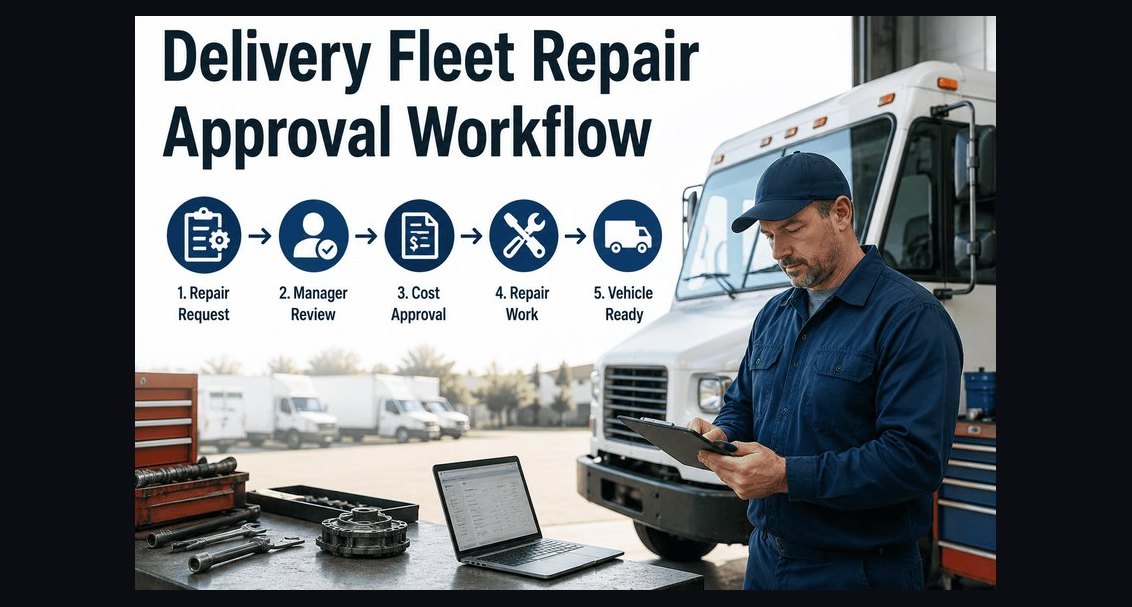 pulse-qShould I Repair or Replace My Delivery Fleet Vehicles as My Landscaping Business Scales in 2027?
 pulse-qHow Do I Score My CSMs on Retention and Expansion?
 revopsHow do you create a CRM coaching plan that turns a rep's own data into a 30-day improvement sprint in 2027?
 pulse-qShould I open or buy a Duck Donuts franchise in 2027?
 revopsHow do you acquire ServiceNow customers in 2027 without a ServiceNow partnership in 2027?
 revopsTop 10 ServiceNow acquisition strategies in 2027
 revopsHow do you start a ServiceNow implementation in 2027?
 pulse-qHow Many Employees Should I Schedule Each Shift at My Roller Rink?
 pulse-qShould I open or buy a Chipotle franchise in 2027?
 revopsHow do you vet an executive search firm before paying anything in 2027?