 Pulse Reviews and Analysis
Should I open or buy a 50 Floor franchise in 2027?
 Curated by Kory White · Fractional CRO, CRO Syndicate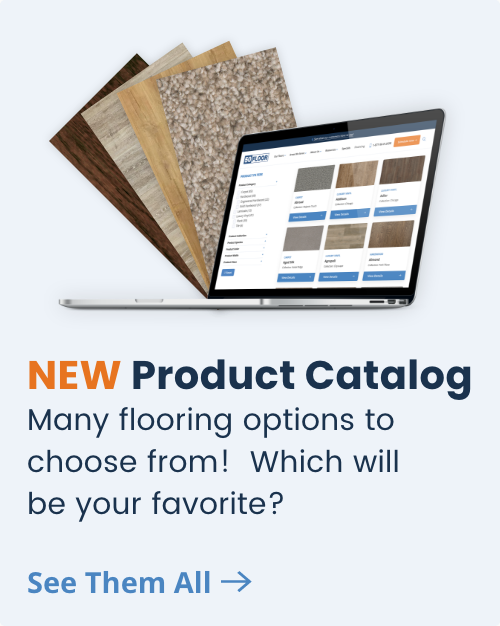
Published June 11, 2026 · Updated June 11, 2026
Direct Answer
Yes for a sales-driven operator who wants a low-overhead, shop-at-home flooring franchise — 50 Floor offers a mobile in-home flooring-sales-and-installation model with no retail showroom, though it's relationship- and lead-driven and was historically company-operated. 50 Floor, founded in 1986 and based in Atlanta, operates a shop-at-home flooring business — bringing flooring samples (carpet, hardwood, laminate, vinyl, tile) to customers' homes, then selling and installing — eliminating the retail-showroom overhead.
Historically company-operated, 50 Floor has moved toward franchising, so confirm current franchise availability and terms. Where franchising applies, investment runs roughly $150,000 to $400,000, with a franchise fee around $40,000-$50,000, a royalty near 5%-6%, and a marketing fee.
Mature units gross $1,500,000-$5,000,000+ (flooring tickets are large), with owners clearing $150,000-$500,000. Its appeal is no-showroom low overhead, a convenient shop-at-home model, large tickets, and scalability; the challenges are lead-generation/marketing dependence, in-home sales execution, installer management, and confirming franchise availability.
The Real Numbers
A 50 Floor operates without a retail showroom — home/warehouse-based, with mobile sales consultants bringing samples to homes and installation crews/subcontractors doing the work. Revenue comes from large flooring projects, so AUVs are high.
| Line Item | Low | High | Notes |
|---|---|---|---|
| Franchise fee (if available) | $40,000 | $50,000 | Confirm availability |
| Vehicles & samples | $40,000 | $120,000 | Sample vans, displays |
| Warehouse/office setup | $20,000 | $70,000 | Home/warehouse-based |
| Initial marketing | $40,000 | $120,000 | Lead-gen is critical |
| Training & travel | $10,000 | $30,000 | Operator + sales/install |
| Licensing/insurance | $8,000 | $25,000 | Contractor licensing, GL |
| Working capital | $40,000 | $120,000 | Project float |
| Total investment | ~$150,000 | ~$400,000 | Confirm availability |
| Royalty | ~5%-6% of gross | ||
| Marketing fee | ~2% of gross |
Revenue reality: mature units gross $1.5M-$5M+ with owners clearing $150K-$500K — high, because flooring projects are large-ticket ($3K-$20K+ per home). The no-showroom, shop-at-home model eliminates retail-real-estate overhead and offers convenience customers value, while the large tickets and scalability drive the high ceiling.
The dominant drivers are lead-generation/marketing (the business lives on a steady flow of in-home appointments), in-home sales execution (closing the sale at the kitchen table), and installer management (quality crews/subcontractors). Confirm current franchise availability and terms first, given the company-operated history.
Operators who drive leads, close in-home sales, and manage installation perform best.
Who Wins With This Business
- Capital required: $150K-$400K (if available), with $75,000-$150,000 liquid.
- Time commitment: full-time, sales- and lead-driven operation.
- Skills: in-home sales, lead-generation/marketing, and installer management.
- Geographic fit: suburban homeowner markets.
- Lifestyle fit: sales-driven, hands-on operator.
The winners are sales- and marketing-driven operators who generate leads and close in-home sales.

👉 Quick Call with Kory White, Fractional CRO · See Kory on LinkedIn · CRO Syndicate
Who Loses With This Business
- Buyers who assume 50 Floor is readily franchisable — confirm first.
- Operators weak at lead-generation and in-home sales.
- Those who can't manage quality installers/subcontractors.
- Owners who underestimate marketing spend.
- Those wanting a passive or non-sales business.
2027 Market Conditions
- Demand: home flooring/remodeling is durable, homeowner-driven.
- No showroom: shop-at-home eliminates retail overhead, adds convenience.
- Large tickets: flooring projects drive high AUVs.
- Lead-gen: marketing-dependent model.
- Competition: Empire Today, Floor Coverings Intl, local flooring.
The 90-Day Decision Tree
- First: confirm whether 50 Floor franchising is available and on what terms (company-operated history).
- Read the FDD and Item 19 large-ticket economics.
- Interview operators about lead-generation, in-home closing, installer management, and net profit.
- Validate a suburban homeowner market with remodeling demand.
- Set up lead-generation/marketing and the in-home sales process.
- Hire/contract quality installation crews.
- Launch, drive appointments, and scale sales and installation.
Alternative Plays
- Floor Coverings International — shop-at-home flooring (see fr0885 cluster).
- Footprints Floors — flooring installation (see fr0885 cluster).
- Empire Today — shop-at-home flooring (largely corporate).
- N-Hance — wood refinishing (in/near library).
- Independent flooring business — full control, no brand.
- Other home-improvement franchises — adjacent models.
FAQ
Can I buy a 50 Floor franchise? Confirm directly — 50 Floor has historically been company-operated and moved toward franchising more recently. Availability and terms should be verified with the company before investing time. If franchising is available, the shop-at-home model and large tickets are attractive.
If it's limited, consider actively-franchising shop-at-home flooring brands (Floor Coverings International, Footprints Floors). Confirm the current franchise offering first.
Why is the no-showroom model an advantage? It eliminates expensive retail-real-estate overhead and offers customer convenience. By bringing samples to the home (shop-at-home), 50 Floor avoids showroom rent and staffing, lowering overhead, while customers get the convenience of choosing flooring in their own space and lighting.
This low-overhead, convenient model improves margins and differentiates from traditional flooring retailers. The trade-off is dependence on lead-generation to drive in-home appointments.
How much does a 50 Floor owner make? Owners may clear $150,000-$500,000, on $1.5M-$5M+ revenue — high, because flooring projects are large-ticket. The no-showroom overhead and scalability drive the upside. Profitability depends on lead-generation, in-home sales closing, and installation management.
Operators who drive a steady appointment flow and close well earn the most. Confirm Item 19 and franchise availability — the high ceiling depends on sales and marketing execution.
What drives success in this model? Lead-generation and in-home sales closing. The business lives on a steady flow of in-home appointments (driven by marketing) and closing the sale at the customer's home. Strong lead-generation/marketing and in-home sales skill are the primary success drivers, alongside quality installation.
Operators weak at marketing or sales struggle regardless of the model's advantages. This is fundamentally a sales-and-marketing-driven business — those skills are decisive.
What is the biggest challenge? Lead-generation dependence and in-home sales execution. The model requires consistent marketing spend to generate in-home appointments and strong closing skills at the kitchen table, plus quality installer management. Confirming franchise availability (company-operated history) is also a first step.
Success requires marketing discipline, sales execution, and installation quality. The large tickets and low overhead reward operators who master lead-gen and in-home sales — these are the decisive factors.
Bottom Line
Open a 50 Floor (if franchising is available) if you want a low-overhead, no-showroom shop-at-home flooring business with large tickets, convenience appeal, and a high revenue ceiling, you're strong at lead-generation and in-home sales, and you can manage quality installers. Its no-showroom overhead, shop-at-home convenience, large tickets, and scalability are genuine strengths.
First confirm franchise availability (company-operated history); skip it if you're weak at lead-gen/sales or can't manage installers. Validate Item 19 and availability carefully. For sales- and marketing-driven operators who generate leads and close in-home, 50 Floor offers a high-ticket, low-overhead flooring path — lead-generation, in-home closing, and installation are the keys.
Sources
- 50 Floor Franchise Disclosure Document (if/where available), 2026 filing — Items 5, 6, 7, 19, 20
- 50 Floor corporate and franchising-status information, 2025-2026 — company-operated history
- 50 Floor official site — shop-at-home model
- Entrepreneur Franchise listings — 50 Floor / shop-at-home flooring
- IBISWorld — Flooring Installation & Retail in the US, 2026 industry report
- Statista — US flooring and home-remodeling market, 2025-2026
- Actively-franchising flooring alternatives (Floor Coverings International, Footprints Floors), 2026
- Franchise Business Review — home-improvement-franchise satisfaction data
- International Franchise Association (IFA) — 2027 Franchise Economic Outlook
- US Census — homeowner-remodeling and demographic data, 2025-2026