

Should I open or buy a World Gym franchise in 2027?
 Curated byKory White · Fractional CRO · Maryland
Quality
Certified

Yes, but only if you can fund a heritage big-box gym at $1M-$3.5M and you have a realistic plan to build and retain memberships against both budget chains and boutique studios. World Gym rewards operators who treat membership retention like a RevOps discipline — tracked, measured, systematized — not a side effect of opening the doors. Under-capitalized buyers or those without a retention plan should skip it.
A Concrete Scenario That Frames The Problem
Picture a would-be franchisee in a mid-size suburban market — say, a metro area of 400,000 people with a growing population of adults aged 25-54 and at least two existing budget gyms already operating nearby. She has $600,000 in liquid capital, a background managing a regional fitness chain, and access to an SBA loan that could bring her total buying power to roughly $2.2 million. She is deciding between a World Gym franchise and a smaller-footprint Anytime Fitness. The World Gym option demands a 30,000-square-foot building, a $500,000-$2,000,000 build-out, and a staff of 8-15 people from day one. The smaller option would let her open faster with a fraction of the capital and staff. This is the actual decision every prospective World Gym buyer faces in 2027: not "is fitness a good business," but "can I run a large-format, staff-heavy, membership-driven operation profitably in a market that already has cheaper and more specialized competitors nearby." The answer hinges less on the brand's heritage — real as it is — and more on whether she can build a systematic acquisition-to-retention pipeline before her working capital runs out. A gym that opens with 400 founding members and loses 5% of them every month for a year without replacing them is not a heritage-brand success story; it is a cash-flow failure wearing a well-known logo. This scenario is the lens for everything below: capital alone does not make a World Gym franchise work, and neither does brand recognition alone. What makes it work is the operator's ability to run the membership engine like a disciplined revenue operation from week one, not after year two when churn has already eaten the founding member base.
How The Membership Engine Actually Works
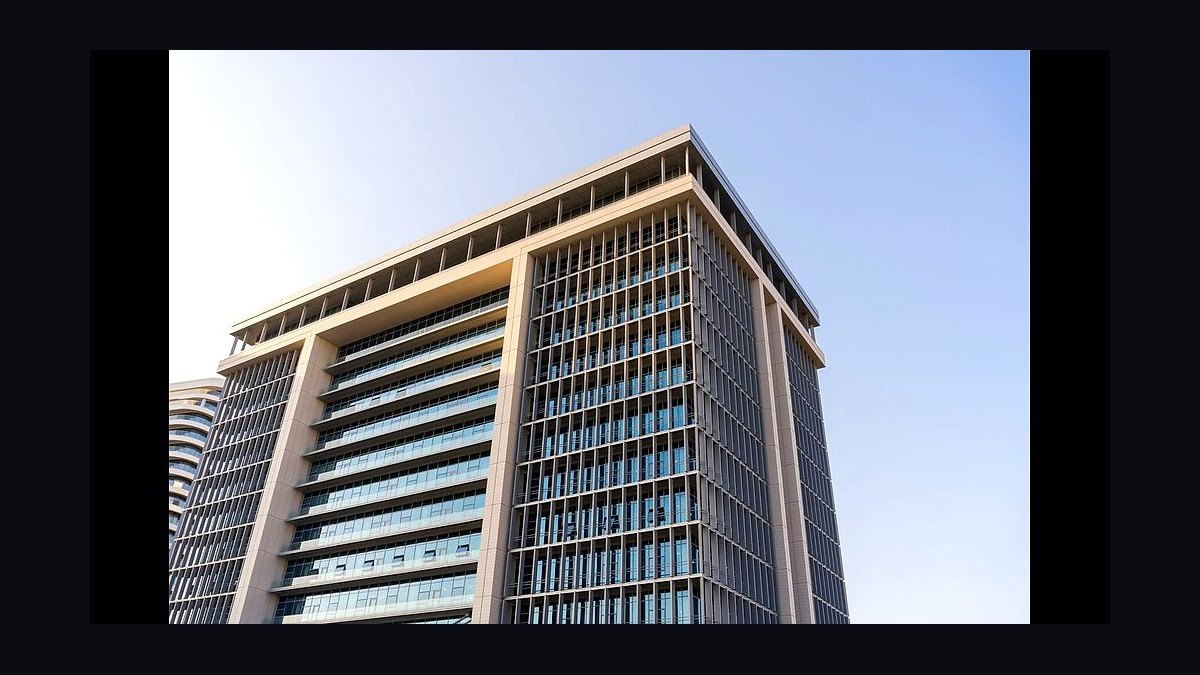
A World Gym's profitability is a function of one repeating cycle: acquire a member, retain a member, and layer high-margin add-ons (personal training, group classes, supplements) on top of the base membership fee. Understanding this cycle is more useful to a prospective franchisee than memorizing the brand's 1976 Venice Beach origin story, because the cycle is what determines whether the $1M-$3.5M investment pays back in three years or never pays back at all. The gym pre-sells memberships during a 60-90 day pre-opening window, typically discounting enrollment fees to build an initial base of 800-1,500 members before the doors open. From day one, staff run new-member onboarding — a fitness assessment, an orientation session, and a follow-up call within the first two weeks — because the data across the mid-market gym segment consistently shows that members who complete a structured onboarding are far more likely to still be paying dues at the 90-day mark than members who are simply handed a keyfob. From there, the gym's software stack (membership management like ClubReady or ABC Glofox, access-control integrations, and a CRM for re-engagement) tracks check-in frequency as the leading indicator of cancellation risk: a member who has not checked in for three consecutive weeks is a churn risk long before they call to cancel. Operators who treat this data the way a RevOps team treats a sales pipeline — flagging at-risk accounts and triggering an intervention (a call, a free training session, a class invite) before the member lapses — consistently outperform operators who wait for the cancellation request to arrive. The mermaid diagram below shows the flow from lease signature to stabilized membership base, which is the operational spine every World Gym franchisee is actually managing, regardless of what the brand's marketing materials emphasize.
Real Numbers, Ranges, And Benchmarks
The 2026 FDD lists a franchise fee of $30,000-$50,000, with total Item 7 investment landing between roughly $1,000,000 and $3,500,000 depending on gym size, region, and whether the space is new construction or a converted former gym (conversions can save 15-25% on build-out costs). Within that Item 7 figure, build-out and leasehold improvements run $500,000-$2,000,000, equipment packages (free weights, selectorized machines, cardio decks, functional training rigs) add $300,000-$1,000,000, and franchisees should reserve $100,000-$300,000 in working capital to cover the ramp period before membership dues cover fixed costs. Ongoing fees include a royalty near 5%-6% of gross revenue (or a negotiated rate per agreement) plus a marketing fee typically around 2%-3%. On the real estate side, a 30,000-square-foot space in a suburban power center runs $12-$25 per square foot annually in triple-net lease rates in 2027, rising to $30-$45 per square foot in dense urban markets — meaning annual base rent alone can run $360,000-$750,000 before common-area maintenance and taxes. Staffing costs typically consume 35-45% of gross revenue for a location employing 8-15 people, with front-desk and training staff turnover running 25-30% annually industry-wide, which is why franchisees who pay competitive wages ($15-$22/hour for non-trainer roles) plus retention bonuses tend to run leaner overall labor costs despite higher per-hour pay. On the revenue side, mature World Gym locations gross $1,000,000-$3,000,000+ annually, with owners clearing $150,000-$500,000 after debt service and operating costs — though new locations commonly take 12-24 months to stabilize to that range. Monthly membership churn industry-wide for mid-market gyms runs 4-6%, which means a 1,500-member gym is losing 60-90 members every single month before new sign-ups are counted; a franchisee's entire profitability model depends on replacing and exceeding that number through both new acquisition and the retention systems described above. Technology spend — membership software, access control, CRM — typically runs 2-4% of gross revenue, and equipment maintenance and replacement (cables, benches, cardio machines) commonly requires a separate $5,000-$15,000 annual reserve on top of the initial build.
Trade-Offs, Alternatives, And Where World Gym Fits The Market
World Gym occupies the mid-market tier of a fitness industry segmented into three tiers by 2027: ultra-low-cost chains at $10-$20/month (Planet Fitness and similar), premium boutiques at $100-$300/month (F45, Club Pilates, Orangetheory), and mid-market big-box gyms at $30-$60/month, where World Gym competes with Gold's Gym and other legacy strength-focused brands. The trade-off every prospective franchisee has to weigh is squarely about capital efficiency versus brand differentiation: a smaller-box franchise like Anytime Fitness or Snap Fitness requires a fraction of the capital ($150,000-$500,000 in many cases) and can be run with 2-4 staff, but it also cannot offer the full-service amenities — free weight rooms, saunas, extensive group class schedules — that justify a mid-market price point above the budget tier. World Gym's international footprint (over 200 locations across 20+ countries as of 2026) gives it a built-in referral advantage among traveling and relocating members that a purely domestic small-box brand cannot match, but that advantage only matters at scale; a single-location franchisee sees little of that network effect directly. A prospective buyer who wants lower capital exposure and faster time-to-cash-flow should seriously evaluate the smaller-box or boutique alternatives before committing to World Gym's real estate and staffing burden. A buyer who wants full control and no royalty obligation might consider an independent gym instead — trading brand recognition and franchise support for total operational freedom. The diagram below maps this decision space.

Franchisees who are already capitalized at the World Gym tier but hesitant about competitive pressure should also weigh a Crunch Fitness or Retro Fitness franchise, both of which sit closer to the mid-box category with somewhat lower build-out requirements, or a UFC Gym or Gold's Gym franchise, which draw a similar strength-training demographic under a different heritage brand.
Common Pitfalls And How To Avoid Them
The most common failure mode is under-capitalizing the working capital reserve rather than the build-out itself — franchisees frequently budget enough to open the doors but not enough to survive the 12-24 month stabilization window while membership churn is still working against a young member base, so a reserve at the high end of the $100,000-$300,000 range (or higher in competitive markets) is safer than the low end. A second pitfall is treating the pre-sale period as a marketing afterthought rather than the single highest-leverage phase of the entire launch: a gym that opens with 400 founding members instead of 1,200 starts its life needing to outrun churn from a much weaker base, and the math rarely recovers. A third pitfall is underinvesting in the retention technology stack because the brand does not mandate a specific system — franchisees who skip a real CRM and rely on spreadsheets or gut feel to track at-risk members routinely see membership plateau within 12-18 months because nobody is systematically flagging the members about to churn. A fourth pitfall is misreading territory protection: World Gym grants a specific location rather than an exclusive multi-mile radius, so a franchisee who assumes competitive insulation from a same-brand location nearby can be surprised when a second unit opens a few miles away if local demographics support it — roughly 15% of current franchisees are multi-unit operators, so this is not a hypothetical risk. Finally, many buyers underestimate labor cost volatility: a single bad hiring cycle in a tight labor market can push staffing costs above the 45% ceiling of gross revenue, particularly for personal-training staff who are expensive to replace and whose departure often takes members with them. The fix for nearly all of these is the same discipline that runs through this whole page — build the acquisition and retention pipeline with real systems and real reserves before opening, not after the first slow month reveals the gap.

Related questions
How long does it take to open a World Gym franchise from signing to opening?
Typically 6-12 months, covering site selection, lease negotiation, build-out, and equipment installation, with franchisees advised to plan for at least 3-6 months of dedicated pre-opening work before the pre-sale window even begins.
Can I finance a World Gym franchise with an SBA loan?
World Gym does not typically offer direct financing, but many franchisees combine personal capital with SBA loans or third-party equipment lenders; fee reductions or incentives are rare and negotiated case-by-case rather than standard.
How many members does a World Gym need to break even?
It varies by market and lease cost, but most mid-size locations need well over 1,000 active dues-paying members alongside add-on revenue (training, classes) to cover the $360,000-$750,000+ annual rent burden plus staffing and royalties.
Is a World Gym franchise better than opening an independent gym?
A franchise gives you brand recognition, an operating system, and vendor relationships in exchange for royalty and marketing fees; an independent gym gives full control and no ongoing fees but no built-in referral base or franchisor support.
FAQ
What is the total investment needed to open a World Gym franchise in 2027? The total investment typically ranges from $1,000,000 to $3,500,000, depending on gym size, location, and equipment. This includes the franchise fee of $30,000 to $50,000, build-out costs, and initial working capital. Exact figures depend on your specific market and lease terms.
How much can I expect to earn as a World Gym franchise owner? Mature gyms generally gross between $1,000,000 and $3,000,000 annually, with owner net income ranging from $150,000 to $500,000. Actual earnings vary widely based on membership levels, local competition, and operational efficiency. New locations often take 12-24 months to stabilize.
What are the main ongoing fees for a World Gym franchise? You'll pay a royalty fee of about 5% to 6% of gross revenue, plus a marketing fee typically around 2% to 3%. Some agreements may have fixed or negotiated rates. These fees support brand development and national advertising.
How does World Gym compete with budget gyms like Planet Fitness or boutique studios? World Gym positions itself as a heritage strength-and-fitness brand with full-service amenities, targeting members who value authentic gym culture and equipment variety. It competes by emphasizing community, training expertise, and a broader range of equipment, though budget gyms often attract price-sensitive customers and boutiques appeal to niche audiences.
What staffing levels does a typical World Gym location require? A 30,000-square-foot location generally needs 8-15 employees, including certified trainers, front-desk staff, and management. Labor costs typically run 35-45% of gross revenue, and competitive wages plus retention bonuses are essential given industry-wide turnover of 25-30% annually.
Does World Gym limit how close a new franchise can open to an existing one? Territory protection is limited to the specific granted location rather than an exclusive radius, so a new World Gym could open within a few miles of an existing one if local demographics support it. About 15% of franchisees currently operate multiple units.
Sources
- https://www.entrepreneur.com/franchises/directory
- https://www.ibisworld.com
- https://www.ihrsa.org
- https://www.statista.com
- https://www.franchisebusinessreview.com
- https://www.franchise.org
- https://www.census.gov
- https://www.sba.gov/business-guide/plan-your-business/franchise
- https://www.worldgym.com
Related on PULSE
This page will be disappearing soon. Save it to your device for $1 — or read it free while it is here.
@Kory-White- · if Venmo asks, the last 4 of my number are 2012
This page is gone.
This one is off the shelf now. $1 keeps it on your phone for good — the whole page, pictures and diagrams included.
 pulse-qHow Do I Keep Reps From Gaming the Comp Plan in 2026?
 pulse-qHow do you rebuild a sales team's trust in the forecast after a mid-year CRM migration corrupts historical pipeline data in 2027?
 pulse-qShould I open or buy an Ace Hardware franchise in 2027?
 revopsTop 10 ServiceNow migration pitfalls to avoid in 2027
 pulse-qShould I open or buy a Bojangles franchise in 2027?
 pulse-qShould I open or buy a Bob Evans franchise in 2027?
 pulse-qShould I open or buy a The NOW Massage franchise in 2027?
 pulse-qShould I open or buy a Bio-One franchise in 2027?
 pulse-qShould I open or buy a Toppers Pizza franchise in 2027?
 pulse-qShould I open or buy a Golden Corral franchise in 2027?