

Should ServiceNow kill its Pro+ pricing tier in 2027?
 Curated byKory White · Fractional CRO · Maryland
Quality
Certified
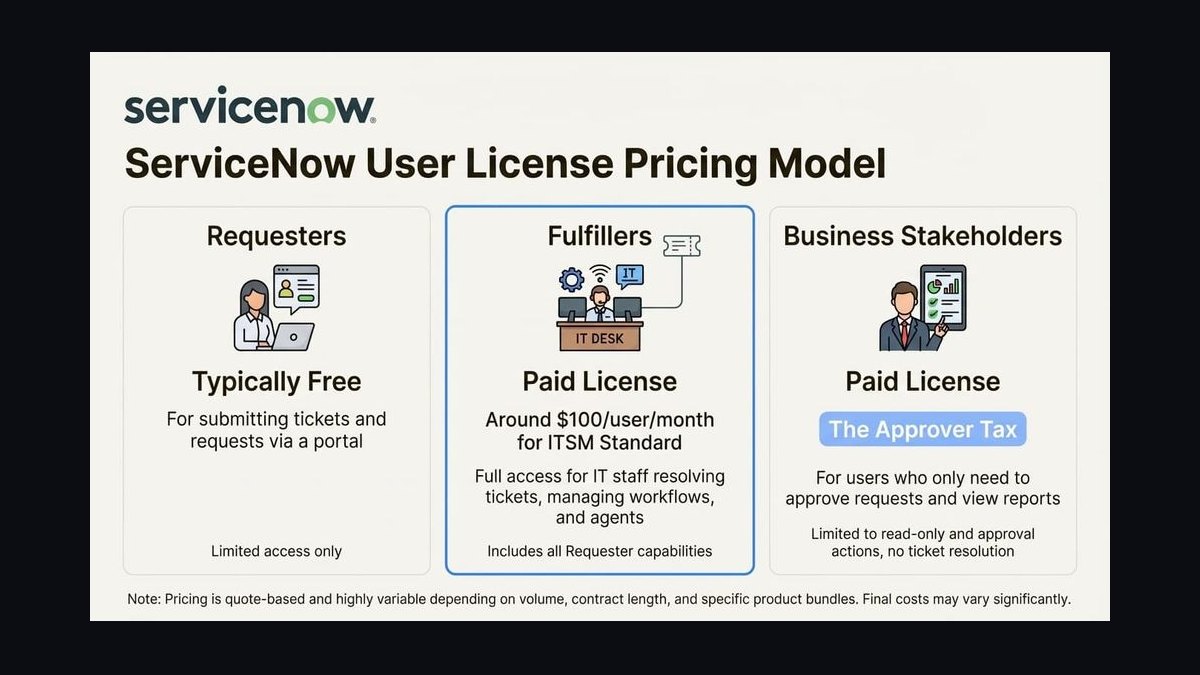
No — ServiceNow should not kill its Pro+ tier, it should restructure it. Collapse Pro and Pro+ into one platform tier with a modest uplift, then meter Now Assist consumption separately. Killing the tier outright abandons AI monetization; keeping a flat surcharge on wildly variable usage misprices both light and heavy users.
The renewal call that exposes the problem
Picture a mid-market ServiceNow customer — roughly $2M in annual contract value, 4,000 fulfiller-adjacent users, ITSM plus a modest CSM footprint, three years into an enterprise agreement that renews in ninety days. The IT director has been happy. Incident volume is down, the CMDB is finally trustworthy, and nobody has seriously floated a rip-and-replace conversation in two years. Then the renewal quote lands, and it isn't a renewal quote — it's a re-platform proposal. The account executive has built the deal on Pro+ instead of Pro, because that is where Now Assist lives, and the number on the page is meaningfully higher than the number the director budgeted twelve months ago.
What happens next is the mechanism that matters, and it is almost never about the AI itself. The director's first move is not "is this AI worth it?" It is "what do I tell my CFO about a double-digit increase on a platform I already own?" That question routes the deal out of IT and into procurement, and procurement's job is to find leverage. The moment a renewal crosses into procurement, three things become true at once: the cycle stretches by a quarter or more, the discount conversation replaces the value conversation, and a competitive alternative gets invited into the room purely as a pricing instrument. Nobody involved actually intends to migrate off ServiceNow. But the quote created a reason to shop, and shopping creates risk that did not exist before.
Now run the same scenario with a different structure. Same customer, same Now Assist capabilities available, but the platform tier moves by single digits and the AI capacity is a metered line item with a starting commitment sized to the customer's actual pilot usage. The director signs the platform renewal on the old approval path — it's within the variance the CFO already tolerates — and the AI commitment becomes a separate, smaller, more forgiving decision that can start conservative and grow. Same vendor, same features, same eventual revenue, radically different deal motion. That gap between the two paths is the entire argument, and it is a packaging problem, not a product problem.

The broader pattern here is familiar to anyone who has run RevOps at a platform company. When you bundle a volatile, usage-driven capability into a fixed per-seat tier, you force every customer into the same bet regardless of how they'll actually consume it. Light users experience the bundle as a tax on capability they won't touch. Heavy users experience it as a bargain and quietly extract far more value than they pay for. Neither outcome is what you want, and the second one is arguably worse, because it caps your upside with the exact accounts most likely to expand. The tier is doing work that a meter does better.
There is also a segment asymmetry that gets lost in aggregate reporting. At the largest accounts, a platform uplift is genuinely rounding error against a footprint spanning ITSM, ITOM, SecOps, IRM, HRSD, and custom applications built on the underlying platform. Those customers approve it without a second meeting. The mid-market has no such cushion. The same percentage lands on a smaller base with a thinner value story and a procurement function that reviews far fewer contracts per year, so each one gets more scrutiny. Reporting attach rates and deal counts in aggregate hides this — the enterprise cohort carries the average while the mid-market cohort quietly slows down.
How tier bundling versus metering actually changes deal behavior
The mechanism runs through four linked systems: the quote, the approval path, the seller's incentive, and the customer's budget cycle. Change the packaging and all four move together.

Start with the quote. A tier-based AI uplift multiplies against the entire platform subscription, which means the absolute dollar increase scales with how much of the platform the customer already owns. That is backwards from a value standpoint — the customer with the broadest footprint gets the largest AI bill regardless of whether they run a single Now Assist workflow. A metered structure decouples those. Platform price tracks platform value; AI price tracks AI usage. Each line item can be defended on its own terms in a budget conversation, which matters enormously when the person defending it is an IT director talking to a finance business partner who does not care about the difference between generative summarization and virtual agent topic generation.
Then the approval path. Every enterprise buyer has a threshold — usually expressed as a percentage increase over prior-year spend — below which a renewal is routine and above which it triggers formal review. The precise number varies by company, but the existence of the threshold is universal. A large AI uplift bundled into the platform line pushes routine renewals over that line en masse. A single-digit platform increase plus a separately-approved consumption commitment often keeps the renewal itself under the threshold and turns the AI spend into a net-new purchase, which is frequently an easier approval than a price increase on an existing contract. Buyers approve new things more readily than they approve paying more for old things. That is psychology, not economics, and pricing structure either works with it or fights it.
Third, the seller's incentive. When AI capability is expressed as a tier uplift, the compensation plan has to decide whether the uplift is quota-carrying revenue like any other or a strategic attach with an accelerator. Both designs create distortion. If it's treated as ordinary revenue, the rep does whatever closes fastest — which usually means selling the lower tier now and promising to revisit AI at the next renewal, because that path has fewer approval gates. If it's accelerated, the rep pushes the uplift into accounts that aren't ready, generating shelfware and a bad reference. A consumption line with a modest initial commitment and expansion credit on overage aligns the rep with the customer's actual adoption curve: land small, drive usage, get paid on growth. That is the same motion cloud infrastructure and data-warehouse vendors have run for years, and their field teams are demonstrably better at it because the comp plan rewards adoption rather than a one-time packaging event.

Fourth, the budget cycle. Platform subscriptions live in a stable annual IT operating budget. AI spend in 2026 frequently lives somewhere else — an innovation budget, a transformation program, a CIO discretionary pool, sometimes even a business-unit line that never touches central IT. Bundling AI into the platform tier forces it to compete against every other operational IT need in a fixed budget. Separating it lets the customer fund it from wherever the money actually is. Sellers who have worked through an AI attach motion learn this within a quarter: the deal gets dramatically easier when you stop asking IT to absorb the cost and start helping the sponsor source it from the pot that's actually growing.
The diagram compresses something worth stating plainly: the two paths do not differ in what the customer eventually pays. They differ in how many decisions the customer has to survive to get there, and in who inside the customer's organization has to say yes. Reduce the number of gates and you increase the probability of the outcome you want, even when the outcome is identical in dollars.
What the numbers have to clear before this is worth doing
A restructure only pays if the arithmetic works, so the analysis has to be run on cohorts rather than on the aggregate. Four numbers decide it.

The first is realized uplift versus headline uplift. A published tier premium is a list-price artifact; almost nobody pays it. Discount stacking, multi-year prepay concessions, promotional first-year terms, and ramp structures all erode it. The number that matters is net new annual contract value per converted account after all of that erosion, and in most enterprise software portfolios the realized figure lands well under the headline. If realized uplift is already a fraction of list, the tier is generating buyer friction disproportionate to the revenue it actually captures — which is the worst possible trade, because you pay the full psychological cost of the sticker and collect a fraction of the money.
The second is consumption variance across the installed base. Instrument actual Now Assist usage per account, normalize it per seat or per fulfiller, and look at the distribution rather than the mean. If the ratio between the tenth and ninetieth percentile is a single-digit multiple, a flat bundle is defensible — you're pricing a reasonably homogeneous good. If that ratio runs into the dozens or hundreds, a flat surcharge is straightforwardly the wrong instrument, because a single price cannot serve both ends of that distribution. Agentic workloads skew hard: a customer running automated triage across a high-volume service desk consumes orders of magnitude more than one using summarization in a handful of queues. Heavy skew is the strongest single argument for a meter, and it is measurable today from telemetry the vendor already has.
The third is cycle-time delta by segment. Compare median days-to-close for renewals quoted with the AI tier against those quoted without, split by account size. If enterprise cycles are flat and mid-market cycles stretch by weeks or a full quarter, you have located the friction precisely and can size the cost: extended cycles push revenue into later periods, consume field capacity that could be closing new logos, and raise the probability that a competitor gets a look. That last effect is the expensive one and it never appears in a pricing model.

The fourth is attach depth versus attach breadth. Deal counts and logo counts are the metrics vendors publicize because they trend nicely. The metric that predicts durable revenue is usage depth inside attached accounts — how many workflows, how many users, how much volume, and whether those numbers grow quarter over quarter or plateau after onboarding. Broad-but-shallow attach is a leading indicator of renewal risk: the customer paid the uplift, didn't operationalize it, and will contest it next cycle armed with their own usage data. Depth is what converts an AI line item from a negotiation liability into a renewal anchor.
Run those four together and the decision usually resolves without much ambiguity. High consumption variance plus mid-market cycle drag plus shallow attach depth argues for metering. Low variance plus clean cycles plus deepening usage argues for leaving the bundle alone and investing in enablement instead. The mistake is deciding from the headline attach rate, which is precisely the number best positioned to look healthy while the underlying motion degrades.
One more benchmark deserves a place in the model: the revenue-recognition and forecasting cost of the change itself. Subscription revenue forecasts well because it is contracted and ratable. Consumption revenue forecasts poorly until you have several quarters of history and a usage model with real predictive power. Vendors who made this transition built dedicated consumption-forecasting functions — telemetry pipelines, cohort usage curves, commitment burn-down tracking, and early-warning triggers for accounts trending under commitment. That capability takes time to build and the finance organization will feel the visibility gap in the interim. The mitigation is a minimum annual commitment with rollover, which preserves ratable recognition on the committed floor while allowing overage upside. It is less elegant than pure consumption and considerably safer.
The four options on the table and what each actually costs
There are four structurally distinct paths, and the honest comparison includes what each one breaks.
Keep the current structure unchanged. The case for it is real: the tier exists, the field knows how to sell it, the enterprise cohort converts, and the reported metrics look strong. The cost is compounding. Every renewal cycle that produces mid-market friction trains procurement organizations to treat ServiceNow renewals as escalation events, and that reputation is sticky in a way a pricing change is not. Competitors also get a free narrative — "their AI is a tax, ours is included" is an easy line to run whether or not it's accurate. Status quo is defensible for a year and expensive over three.

Kill Pro+ entirely and revert to the prior tier structure. This is the option the question literally asks about, and it is the weakest of the four. It removes the friction but also removes the monetization path, and it signals to the market that the AI pricing experiment failed. Worse, it strands the customers who already converted: they paid the uplift, and now the capability is either free to everyone or sold some other way, which invites make-good demands and damages trust with exactly the accounts that took the early bet. Killing a tier is the one move that costs revenue and credibility simultaneously. Reject it.
Collapse into one platform tier plus a metered AI add-on. This is the recommended path. The platform tier absorbs baseline AI capability — summarization, drafting assistance, basic agent scaffolding — at a modest uplift that stays under most procurement escalation thresholds. High-volume agentic work moves to a per-task meter with an annual commitment. Migration is the hard part: existing Pro+ customers need a credit mechanism that converts their paid uplift into consumption capacity, so nobody feels penalized for having adopted early. The field needs a rebuilt comp plan with commitment as the quota-carrying unit and overage as accelerator. Finance needs the forecasting apparatus described above. Expect two quarters of noisy reporting and a communications burden with the analyst community, who will read any pricing change as demand weakness unless it's framed with a clear model showing the usage-growth upside.
Keep the tier but cut the uplift substantially and add a meter alongside. The compromise. It reduces sticker shock without a full repackaging exercise, preserves the existing SKU plumbing, and lets the field keep selling a motion it already knows. The cost is that the tier count stays high and the underlying confusion persists — buyers still can't cleanly articulate which tier they need, and the AI value story is split across two mechanisms. It is the right answer if the organization cannot absorb a full restructure in one fiscal year. It is a way station, not a destination.
Worth noting: the choice is not purely a pricing decision. It is a go-to-market operating decision that touches quota design, territory coverage, deal desk policy, customer success staffing, and the revenue forecast. RevOps owns the seam where all of those meet, which is why pricing changes fail when they are handed to a pricing team in isolation. The packaging is the easy part; the operational rewiring underneath it is where the work actually lives.
Where these restructures go wrong
The failure modes are consistent enough to enumerate, and most of them have nothing to do with choosing the wrong price point.
Changing the packaging without changing the comp plan. The single most common error. Sellers optimize for what pays, and if the new structure pays worse than the old one for the same effort, the field simply keeps selling the old motion until the SKU is retired out from under them. Any packaging change needs its compensation counterpart designed in parallel and communicated before the pricing lands publicly. Mid-year comp changes are also an attrition risk — reps who built their year around one plan and get handed another mid-flight will listen to recruiters. Time it to the fiscal boundary if there is any way to do so.

Metering something the customer cannot observe. Consumption pricing fails when the buyer has no reliable way to see, predict, or control their own usage. If a customer cannot answer "how many tasks did we consume last month and what drove it?" from a dashboard they trust, every invoice becomes a dispute and every renewal becomes a negotiation about the meter rather than the value. Usage visibility, budget alerts, per-workflow attribution, and hard caps are not nice-to-haves — they are the precondition for the model working at all. Ship the observability before the meter, not after.
Leaving early adopters worse off. The customers who bought the premium tier first are the reference accounts. If a restructure makes their purchase look like a mistake, they will say so publicly and the damage will exceed whatever the restructure saved. Build the conversion path first: paid uplift converts to consumption credit at a favorable rate, with a grandfather window and an explicit no-worse-off guarantee. Communicate it to those accounts before the general announcement, individually, through their account teams.
Underestimating the channel and partner blast radius. Large platform ecosystems run substantial implementation and managed-service businesses on top of the vendor's pricing structure. Partners have quoted multi-year programs, built practice economics, and staffed teams against assumptions the restructure invalidates. Partners who find out from a press release will steer their next opportunities elsewhere, and they influence far more pipeline than their direct revenue suggests. Brief the top tier of the ecosystem under embargo with a clear picture of how their economics change.

Framing it to the market as a price cut. Analysts and investors read pricing changes through a demand lens by default. A restructure announced without a model showing consumption-driven expansion will be interpreted as capitulation on pricing power, regardless of the strategic logic. The framing that works is alignment: cost tracks usage, usage grows with adoption, adoption is measurable, here is the cohort data showing net revenue retention improving as accounts move from bundle to meter. That story requires the data to exist before the announcement, which is another argument for instrumenting consumption well ahead of any packaging change.
Solving the pricing problem while ignoring the adoption problem. If attach is shallow because customers aren't operationalizing the AI capability, no packaging change fixes it. Metering just converts an over-priced bundle into an under-consumed commitment, and the renewal conversation gets worse rather than better because now there's a burn-down report proving the customer didn't use what they bought. Pair any restructure with real adoption investment — reference workflows, guided onboarding, success plans tied to usage milestones. The meter measures adoption; it does not create it.
Treating tier count as a cosmetic issue. Every additional tier multiplies the surface area of the sales conversation, the deal desk rulebook, the quoting configuration, the partner enablement material, and the customer's internal justification memo. Simplification has compounding operational value that never shows up in a pricing model but shows up immediately in cycle time and in how often a deal gets stuck waiting for someone to explain the difference between two adjacent SKUs. If a restructure adds a SKU rather than removing one, question whether it is solving the actual problem.
Related questions
Would killing the tier outright ever be the right call?
Only if consumption variance turned out to be low and AI revenue were immaterial — meaning the tier generated friction without meaningful monetization. Measure realized uplift and usage distribution first. If both are substantial, killing it destroys real revenue and strands early adopters who paid the premium.
How should the meter be denominated?
Prefer a unit the customer can observe, predict, and tie to business value — completed tasks or resolved interactions rather than tokens. Token-denominated pricing exposes buyers to model-cost changes they cannot control or forecast, which makes every invoice a support conversation.
What happens to multi-year enterprise agreements mid-restructure?
Honor existing paper to term, then convert at renewal with credit for paid uplift. Offer voluntary early conversion where the customer benefits. Never force a mid-term repaper — the goodwill cost far exceeds any accelerated revenue recognition.
Does this change how customer success is staffed?
Substantially. Consumption revenue makes usage the leading renewal indicator, so CS shifts from relationship coverage to adoption engineering — workflow design, burn-down monitoring, and intervention when accounts trend under commitment. Staffing models built for flat subscription renewals will under-serve a metered book.
How long before the new structure shows results?
Expect two quarters of noisy comparisons while cohorts re-baseline, then three to four quarters before expansion data is credible. Cycle-time improvement in the mid-market shows up fastest and is the earliest honest signal that the friction is actually gone.
FAQ
Is a premium AI tier inherently a bad idea?
No. Tiers work well for capabilities with predictable, roughly uniform consumption — a feature every user touches at similar intensity is a good fit for a bundle. The problem is specific to workloads with extreme usage variance. Agentic automation is the clearest example: usage between comparable accounts can differ by more than an order of magnitude depending on whether the capability is powering a handful of assisted workflows or running unattended across a high-volume service desk. A single price cannot serve both ends of that spread without over-charging one and under-monetizing the other.
Why is a metered add-on easier to sell than a tier uplift?
Three reasons. It usually stays below the procurement escalation threshold that a platform-wide increase crosses. It can be funded from AI or transformation budgets rather than competing inside a flat IT operating budget. And it lets the customer start small and grow, which converts a single high-stakes decision into a low-stakes one followed by expansions that the account team can influence directly through adoption work.
What does the finance organization lose in this trade?
Forecast precision, at least initially. Subscription revenue is contracted and ratable; consumption revenue requires usage history and cohort modeling before it forecasts reliably. The standard mitigation is an annual minimum commitment with rollover — the committed floor recognizes ratably while overage provides upside. That structure preserves most of the predictability while capturing the variance-driven revenue the flat bundle leaves behind.
How do you avoid punishing customers who already bought the premium tier?
Design the conversion before announcing anything. Paid uplift converts to consumption credit at a rate that leaves those accounts demonstrably better off, with a grandfather window and a written no-worse-off commitment. Brief them individually through their account teams ahead of any public communication. Early adopters are the reference base; a restructure that makes their decision look wrong costs more in credibility than it saves in packaging simplicity.
Does this argument apply beyond ServiceNow?
Yes — it applies to any platform bolting AI onto an established per-seat business. The pattern repeats across CRM, collaboration, and data platforms: bundle the low-variance assistive features into the seat, meter the high-variance agentic workloads, and keep the platform price increase small enough to clear routine approval. The vendors doing this well separated the two layers early rather than retrofitting after the friction showed up in renewals.
What is the single strongest signal that a restructure is overdue?
Cycle-time divergence by segment. When enterprise renewals close on schedule but mid-market renewals stretch by weeks or a full quarter specifically on deals quoted with the AI tier, the packaging is the cause and the cost is already being paid in deferred revenue and consumed field capacity. That signal appears well before it shows up in retention metrics, which makes it the most actionable early warning available.
Sources
- https://www.servicenow.com/products/now-assist.html
- https://investors.servicenow.com/
- https://www.gartner.com/en/information-technology/insights/itsm
- https://www.forrester.com/technology/
- https://www.mckinsey.com/capabilities/growth-marketing-and-sales/our-insights
- https://hbr.org/topic/subject/pricing
- https://www.bvp.com/atlas/state-of-the-cloud
- https://a16z.com/enterprise/
- https://www.wsj.com/tech
- https://www.cio.com/
Related on PULSE
- Should HubSpot kill its Free CRM tier?
- How do you price an AI feature without triggering procurement escalation?
- What breaks when you move from seat pricing to consumption pricing?
- How should comp plans change when a product moves to a usage meter?
- Chief's Core Premium tier in 2027 — what you actually pay extra for
This page will be disappearing soon. Save it to your device for $1 — or read it free while it is here.
@Kory-White- · if Venmo asks, the last 4 of my number are 2012
This page is gone.
This one is off the shelf now. $1 keeps it on your phone for good — the whole page, pictures and diagrams included.
 servicenowWhat is the bear case for ServiceNow 2027?
 servicenowHow should ServiceNow rethink its workflow thesis for AI buyers in 2027?
 servicenowHow should ServiceNow price Now Assist against Microsoft Copilot in 2027?
 snowflake-pricingHow should Snowflake price AI assistant against Snowflake equivalent in 2027?
 servicenowIs ServiceNow's pricing model broken at the bottom in 2027?
 servicenowIs a ServiceNow AE role still good for my career in 2027?
 snowflakeWhat is the right Cortex attach goal for 2027?
 servicenowHow does ServiceNow ARPU change post-AI agent rollout in 2027?
 servicenowIs ServiceNow CRM good enough to replace Salesforce Service Cloud in 2027?
 servicenowCan ServiceNow keep growing 20%+ into 2027?