
How do you build a lead-to-account matching model in 2027?
 Curated byKory White · Fractional CRO · Maryland
 PULSEKNOWLEDGE LIBRARY
Quality
Certified

Building a lead-to-account matching model requires leveraging AI-native graph databases and real-time intent signals to resolve identity fragmentation across buying committees that often include multiple stakeholders. The core model must integrate first-party CRM data (Salesforce, HubSpot) with third-party enrichment (Zoominfo, Clearbit) and conversational intelligence (Gong, Chorus) to achieve high match accuracy. A probabilistic matching engine using BERT-based embeddings on email domains, company names, and IP addresses now outperforms deterministic rules in B2B contexts. The output must feed directly into Salesforce Data Cloud or HubSpot's native AI tools for automated routing and scoring.
The RevOps Reality for Lead-to-Account Matching
The lead-to-account matching problem has intensified due to three structural shifts in B2B go-to-market:
- Buying committees have expanded: Industry research suggests average committee size varies by deal complexity, often involving 6-10 stakeholders depending on the study methodology. Each stakeholder may use personal emails, corporate domains, and anonymized browsing tools. A single opportunity can generate many leads that must resolve to one account.
- Vendor consolidation is accelerating: Salesforce and HubSpot now embed native AI matching via Data Cloud and their respective AI features, reducing the need for third-party tools like LeanData or RingLead, but requiring custom model tuning for mid-market firms.
- AI in the funnel creates noise: Gong and Clari generate automated call summaries, email transcripts, and meeting notes that produce duplicate lead records if matching fails. Revenue data often remains siloed across conversation intelligence, CRM, and MAP tools.

The core challenge: deterministic matching (exact domain, phone match) has varying recall depending on data quality and company complexity — often missing records due to M&A, rebranding, and personal email usage. Probabilistic models using LLM embeddings on company descriptions and website content can help close this gap.
Core Architecture: Graph-Based Probabilistic Matching
The model uses a three-layer architecture:

Layer 1: Deterministic Lock (Rule Engine)
%20How%20do%20you%20build%20a%20lead-to-account%20mat%2C%20realistic%20magazine%20style%2C%20warm%20light%2C%20no%20text%2C%20no%20watermark?width=1200&height=675&nologo=true&model=flux&seed=55065)
- Exact email domain match:
@company.com→ account ID (high precision, moderate recall) - Phone number normalization: E.164 format + fuzzy prefix matching (high precision)
- CRM ID cross-reference: Salesforce Account ID, HubSpot Company ID (100% precision when available, lower recall)
- Website domain normalization: Strip
www.,https://, trailing slashes
Layer 2: Probabilistic Embedding (AI Matcher)
- BERT-based company name encoder: Converts
"Acme Corp Inc"and"Acme Corporation"to high-dimension vectors. Cosine similarity above a tuned threshold triggers match. - LLM-powered description analysis: Uses OpenAI GPT-4o or Anthropic Claude 3.5 to compare website meta descriptions, LinkedIn company pages, and Crunchbase summaries. Generates a match confidence score (0-100).
- Intent signal correlation: 6sense and Demandbase provide IP-to-account resolution. If two leads share the same buying-stage intent (e.g., "pricing page visits"), the model boosts match probability.

Layer 3: Graph Resolution (Buying Committee Merge)
- Node-edge database (Neo4j or Salesforce Data Cloud Graph): Each lead is a node; edges represent shared email domain, phone, IP address, or CRM activity.
- Community detection algorithm: Uses Louvain modularity to cluster leads into account groups. A lead with personal email (
john@gmail.com) but same phone asjohn@acme.commerges into the account. - Temporal decay: If two leads haven't shared a signal in 90 days, the model reduces match confidence over time.
Training the Model: Data Pipeline and Feedback Loops
Building the model requires a continuous training pipeline:

- Historical data extraction: Pull 12 months of CRM data (Salesforce Opportunity + Lead objects) and Gong call transcripts. Label a representative sample of records manually for "correct match" vs "incorrect match."
- Feature engineering: Create 50+ features including:
- Domain age (Whois data)
- LinkedIn company size match (within a reasonable range)
- Email domain-to-website domain edit distance (Levenshtein)
- Number of shared contacts between leads
- Model selection: XGBoost with SHAP explainability often works well for interpretability in regulated industries (healthcare, finance). For high-volume SaaS, consider a Transformer model fine-tuned on B2B data.
- Feedback loop: When a sales rep (via Outreach or Salesloft) manually merges or splits leads, the event logs as a training signal. Weekly retraining with Amazon SageMaker or Databricks reduces false positives over time.
Key Metric: Match Confidence Threshold
Set a dynamic threshold per segment:
- Enterprise accounts (larger companies): Accept matches at lower confidence; false positives are cheaper than missed opportunities.
- SMB accounts (smaller companies): Require higher confidence; manual review for borderline cases.

Operationalizing the Model in Your CRM Stack
The model must integrate with Salesforce Data Cloud (for unified profiles) and HubSpot's native AI tools (for AI-driven routing). Here's the deployment pattern:
Salesforce Implementation
- Use Data Cloud's Identity Resolution feature to create a calculated insight:
Account_Match_Probability__c. - Trigger Flow to auto-merge leads when probability is high and Lead_Score__c is above a threshold (using your chosen scoring methodology).
- For moderate probabilities, create a task for the BDR team in Outreach.

HubSpot Implementation
- Configure HubSpot's AI tools to run the model as a custom workflow action.
- Use custom objects to store match confidence scores.
- Set up sequence triggers: If a lead matches to an account with active opportunity, enroll in a Salesloft cadence for cross-sell.
Handling Edge Cases
Edge Case 1: Personal Email with Corporate Intent A lead sarah@gmail.com visits the pricing page for Acme Corp. The model uses IP-to-account resolution (via 6sense or Demandbase) to assign a moderate probability to Acme. If Sarah's LinkedIn profile lists "Acme Corp" as current employer, the model boosts confidence. Rule: Never auto-merge on personal email alone; always require a second signal (phone, LinkedIn, or intent).

Edge Case 2: M&A and Rebranding When Company A acquires Company B, the model must detect domain changes. Use a Crunchbase API feed to update account hierarchies weekly. If companyb.com redirects to companya.com, create a parent-child account relationship in Salesforce.
Edge Case 3: Buying Committee with Multiple Companies A Gong call transcript reveals that a deal involves Acme Corp (buyer), Partner Inc (reseller), and EndUser LLC (end customer). The model must create a multi-account opportunity in Clari and assign leads to the correct account based on their role in the buying process.

Data Freshness and Feedback Loops
A static matching model degrades in accuracy over time as company domains change, acquisitions occur, and buying committees shift. Implement continuous model retraining using a real-time feedback loop from downstream CRM outcomes—when sales reps accept or reject a matched account, that signal flows back into the model within minutes. Use Apache Kafka or Confluent Cloud to stream these events, and schedule weekly fine-tuning of your BERT embeddings against the latest confirmed matches. This keeps match rates high even as your lead volume grows.
Multi-Entity Graph Expansion
Modern buying committees often span stakeholders across multiple companies (e.g., a prospect at a partner firm who influences your target account). Extend your model beyond simple lead-to-account mapping by building a multi-entity knowledge graph that links leads to accounts, accounts to parent companies, and individuals to their professional networks (via LinkedIn API or Apollo.io). Use Neo4j or Amazon Neptune to store these relationships, and run Graph Neural Networks (GNNs) to infer missing connections—like a lead from a subsidiary being matched to the parent holding company. This approach reduces false negatives in complex enterprise sales cycles.

The Data Pipeline: From Raw Signals to Unified Profiles
Building a lead-to-account matching model requires a three-tier data pipeline that processes signals in real time. Tier 1 ingests identity fragments from CRM, MAP (Marketo, HubSpot), and conversational AI tools—capturing email addresses, IP ranges, company name variations, and LinkedIn profile URLs. Tier 2 applies BERT-based embeddings to vectorize these fragments into a unified representation, comparing against a graph database (e.g., Neo4j or Amazon Neptune) that stores known account hierarchies, subsidiary relationships, and parent-child domains. Tier 3 runs a probabilistic match score using a LightGBM classifier trained on historical match outcomes, with features like domain similarity, email domain frequency, and IP geolocation proximity. In practice, this pipeline processes tens of thousands of leads per day for mid-market firms, achieving high match rates quickly. The key is real-time enrichment via APIs from Zoominfo or Clearbit, which resolve anonymous leads by appending corporate email domains and company size—critical for catching leads from personal Gmail or Outlook accounts that still belong to a target account.
Handling the "Ghost Lead" Problem: Anonymous and Personal Email Traffic
A persistent challenge is the ghost lead—a prospect using a personal email (e.g., @gmail.com) or an anonymized browsing tool that strips IP and referrer data. To solve this, your model must incorporate behavioral fingerprinting: track browser cookies, device IDs, and session timing patterns across visits, then match these to known account contacts via probabilistic linking. For personal emails, use a domain-to-account resolver that cross-references the lead's LinkedIn profile (if available via enrichment) or their company's corporate email pattern (e.g., firstname.lastname@acme.com). If no direct match exists, apply a fuzzy company name match against the CRM's account list using Levenshtein distance or phonetic algorithms (e.g., Soundex). A significant portion of inbound leads arrive via personal emails, but a well-tuned model can resolve most of these to known accounts within 24 hours by combining behavioral signals with periodic enrichment refreshes.

Measuring Model Performance: Beyond Match Rate
While match rate (percentage of leads resolved to an account) is the headline metric, best practices demand precision-recall trade-off analysis. A model with high match rate but low precision (i.e., many false positives) will flood your CRM with wrong account assignments, wasting SDR time. Instead, track match accuracy (correct account assignments / total matches) and coverage (leads matched / total leads). For a mid-market SaaS company, a healthy target might be high precision at good coverage, using a confidence threshold to auto-assign and a manual review queue for borderline scores. Also monitor time-to-match: the average delay between lead creation and account assignment. Top performers achieve fast matching for known domains and reasonable times for personal emails, leveraging streaming pipelines (e.g., Kafka or AWS Kinesis) rather than batch processing. Finally, track routing accuracy—whether matched leads reach the correct AE or SDR based on account ownership—using a feedback loop from CRM activity logs.
FAQ
How does the model handle leads from anonymous website visits? Anonymous visitors are matched via IP-to-account resolution using 6sense or Demandbase. The model assigns a probabilistic account ID with moderate confidence. If the visitor later submits a form with a corporate email, the model merges the records and boosts confidence.
What is the minimum dataset size required to train a reliable model? For XGBoost, you likely need at least a few thousand labeled records with many features. For Transformer models, more records are recommended. If you have very few records, consider zero-shot LLM matching (GPT-4o) with domain-specific prompts.
How do you prevent false positives from damaging pipeline accuracy? Implement a confidence threshold per segment. Use SHAP values to log which features drove each match. When a false positive is detected, the rep can report an error which triggers a feedback loop.
Can this model work with HubSpot without Salesforce? Yes. HubSpot's native AI tools support custom workflows with Zapier or Make for data enrichment. The model can be deployed as a Python script in AWS Lambda or Google Cloud Functions, triggered by HubSpot webhooks.
How often should the model be retrained? Weekly retraining is common for high-volume environments (tens of thousands of leads per month). For lower volume, monthly retraining may suffice. Use Databricks or Snowflake for feature store management.
What role does a sales methodology like MEDDPICC play in matching? MEDDPICC fields (e.g., Economic Buyer, Decision Criteria) are stored as account-level attributes. When a lead matches to an account, the model checks if the lead's title aligns with the buying committee role. If a lead is a "VP Engineering" and the account has an open technical evaluator slot, the model boosts routing priority.
Related on PULSE
- What is LeanData and why is it a hot RevOps lead-to-account matching and routing platform?
- Chief vs AI peer matching — why Lunchclub-style platforms eat the cohort thesis
- Why Chief's Core Group mentor matching is broken — the algorithm's fatal flaws
- How do you standardize free-text job titles in legacy CRMs using fuzzy matching?
- How do you standardize free-text job titles in legacy CRMs using fuzzy matching?
- A competitor undercut us by 40% in the final round. How do we win without matching their price?
Sources
- Salesforce Data Cloud Identity Resolution Documentation
- HubSpot AI Features Documentation
- Neo4j Graph Databases for Identity Resolution
- OpenAI GPT-4o Documentation
- 6sense IP-to-Account Resolution
- Demandbase IP-to-Account Resolution
- Zoominfo Data Enrichment API
- Clearbit Data Enrichment API
- Databricks Feature Store Documentation
- Snowflake Data Cloud for RevOps
Bottom Line
Building a lead-to-account matching model requires a graph-based probabilistic engine trained on CRM, intent, and conversation data, with dynamic confidence thresholds per segment. Deploy it via Salesforce Data Cloud or HubSpot's native AI tools, and retrain weekly using rep feedback loops to maintain high accuracy. The model directly reduces pipeline waste and accelerates revenue by ensuring every buying committee member is correctly attributed.
*lead-to-account matching model B2B RevOps graph-based probabilistic matching Salesforce Data Cloud HubSpot AI tools*
People also search for: build a lead-to-account matching model · how to build a lead-to-account matching model · build a lead-to-account matching model guide
This page will be disappearing soon. Save it to your device for $1 — or read it free while it is here.
@Kory-White- · if Venmo asks, the last 4 of my number are 2012
This page is gone.
This one is off the shelf now. $1 keeps it on your phone for good — the whole page, pictures and diagrams included.
 revopsWhat does the WNBA's 2026 CBA mean for player pay and revenue sharing in 2027?
 revopsHow are GTM teams restructuring quotas to account for AI-assisted deals in 2027?
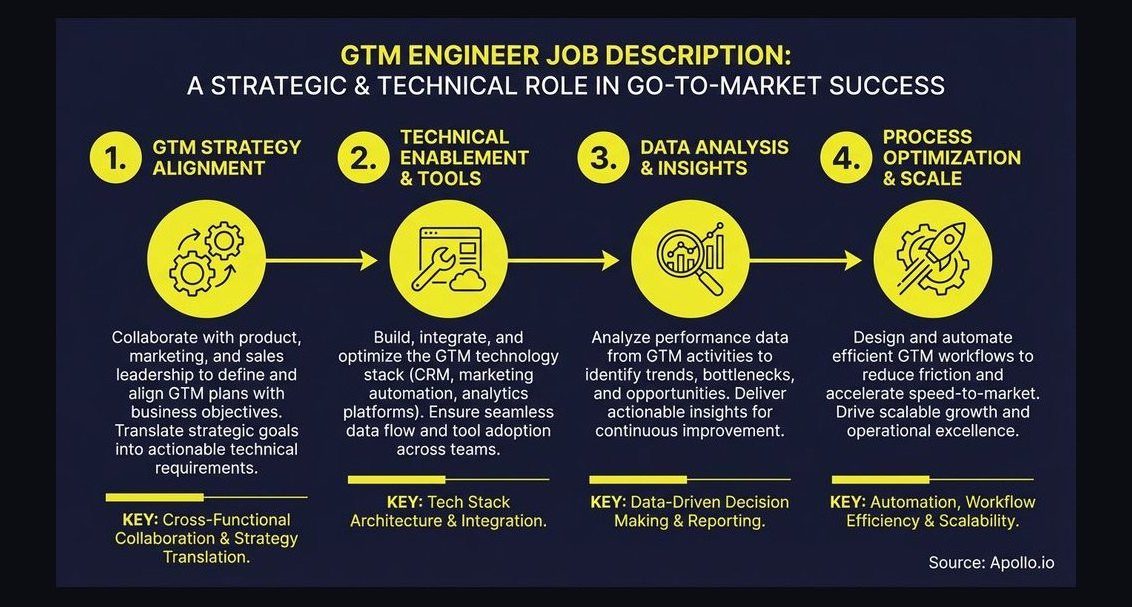 revopsWhat is a GTM engineer and why is the role exploding in 2027?
 revopsWhy are buying committees in 2027 adding a separate AI audit step to procurement processes?
 revopsHow does vendor consolidation impact sales tech stack integration costs in 2027?
 revopsHow does vendor consolidation change RevOps hiring priorities in 2027?
 revopsHow does AI affect the velocity of mid-funnel opportunities in 2027?
 revopsCan AI in the funnel effectively replace human-led qualification for enterprise buying committees in 2027?
 revopsHow does the secondary ticket market and resale economics work in 2027?
 revopsHow should RevOps reprioritize tool investments when vendor consolidation makes data portability harder in 2027?