
What round-robin routing rules prevent rep cherry-picking in 2027?
 Curated byKory White · Fractional CRO · Maryland
 PULSEKNOWLEDGE LIBRARY
To prevent rep cherry-picking, RevOps must deploy round-robin routing rules that layer lead scoring, buying committee size, and deal velocity history on top of traditional sequential assignment. The core tactic is to replace pure round-robin with a weighted round-robin that factors in rep capacity, skill match, and past conversion rates for similar account profiles. Additionally, enforce mandatory qualification gates (e.g., BANT or MEDDIC) before a lead can be routed, and use AI-driven anomaly detection to flag patterns like reps pausing leads or delaying follow-ups. This eliminates cherry-picking by making the routing logic transparent, data-driven, and auditable in real time.
The 2027 Reality: Why Cherry-Picking Is Still a Problem
By 2027, the B2B sales environment has shifted dramatically. Buying committees vary widely by deal size and industry—some involve 3–4 stakeholders, others 8–10. Deal cycles also vary significantly, typically ranging from 3–12 months depending on deal size and complexity. AI co-pilots handle a significant portion of initial outreach. This complexity makes cherry-picking more tempting: reps want the easy, high-intent leads and avoid the long, committee-heavy deals. Vendor consolidation (e.g., Salesforce + Slack + Tableau, HubSpot + Operations Hub) means data is centralized, but routing logic often lags. Without robust rules, reps game the system by:
- Pausing leads in CRM to skip their turn.
- Rejecting leads with low scores or small account sizes.
- Manually reassigning leads to junior reps.
The fix: intelligent round-robin that adapts to real-time behavior and account complexity.
Rule 1: Weighted Round-Robin with Capacity Caps
Pure round-robin (rep A, then B, then C) is dead. Use weighted round-robin where each rep gets a "score" based on:
- Current deal load (open opportunities above a certain threshold).
- Historical conversion rate for similar ICPs.
- Skill tags (e.g., enterprise vs. SMB, MEDDIC certified).
Example logic in a Salesforce integration: Rep A has 3 active deals (capacity 80%), Rep B has 1 (capacity 95%), Rep C has 5 (capacity 60%). The next lead goes to Rep B because they have the most bandwidth and a strong conversion rate on mid-market accounts. This is not a simple queue—it's a dynamic allocation.
This flowchart shows the decision tree: leads must pass a score threshold (e.g., 50/100) before even entering the routing pool, then capacity is evaluated. This prevents reps from cherry-picking only high-score leads.
Rule 2: Buying Committee Routing
Deals with many stakeholders typically have lower rep conversion rates. To avoid reps dodging these, enforce committee-aware routing:
- Mandatory committee detection: Use conversation intelligence tools to analyze call transcripts and identify decision-makers. If the lead has 3+ contacts from different departments (e.g., IT, Finance, Ops), flag it as "committee deal."
- Weighted assignment: Committee deals go to reps with proven multi-stakeholder skills (e.g., experienced in complex sales). Non-committee deals go to junior reps or SDRs.
- Penalty for avoidance: If a rep rejects a committee deal, they lose their next two turns in the round-robin.
This ensures the hardest deals land on the best reps, not the ones who avoid complexity.
Rule 3: Velocity-Based Routing
Cherry-pickers love fast-closing deals. Counter this with velocity routing:
- Track historical velocity: For each account type, calculate average time-to-close. In Salesforce, use a formula field:
(CloseDate - CreatedDate). - Route by velocity band: Slow deals (6+ months) go to reps with high patience scores (e.g., low early-stage churn). Fast deals (under 3 months) go to reps with high close rates.
- Randomize within bands: Within each velocity band, use a randomized round-robin to prevent reps from predicting the next lead.
This breaks the pattern: reps can't cherry-pick by speed because they don't know which band the next lead will fall into.
Rule 4: AI-Driven Anomaly Detection
Even with rules, reps will try to game the system. Use AI co-pilots to detect:
- Lead pausing: If a rep pauses a lead for more than 48 hours without activity, flag it. The AI reassigns the lead to the next rep in queue.
- Rejection patterns: If a rep rejects 3+ leads in a row, escalate to manager. This is a red flag for cherry-picking.
- Call avoidance: If a rep only sends emails (no calls) for committee deals, the AI forces a call task.
These rules are enforced in real-time via HubSpot Operations Hub or Salesforce Flow. The AI logs every action, creating an audit trail.
This loop shows how AI monitors every rep action and triggers corrective actions—no manual oversight needed.
Rule 5: Transparent Scoring and Auditing
Cherry-picking thrives on opacity. Make routing rules visible to reps:
- Dashboard in CRM: Show each rep their "routing score" (capacity, skill, velocity) and why they got a specific lead. Use Tableau or Power BI embedded in Salesforce.
- Weekly audits: Generate reports on lead acceptance rates, rejection patterns, and time-to-activity. Any rep with a high rejection rate gets a coaching session.
- Manager alerts: If a rep's cherry-picking score (e.g., percentage of leads accepted from high-score band) deviates significantly from team average, send a Slack alert.
This transparency reduces gaming because reps know they're being watched.
Implementation Architecture for Anti-Cherry-Picking Routing
To operationalize weighted round-robin, RevOps teams typically deploy a three-layer routing engine that sits between CRM and dialer systems. The first layer runs capacity-aware assignment — each rep gets a dynamic "slot score" based on current pipeline coverage (varies by team — confirm appropriate metrics on your vendor's site), open deal count (varies by team size and territory), and historical response time (fastest responders may get a slight priority boost — confirm exact percentages on your vendor's documentation). The second layer applies skill-matching logic using rep attributes like industry certification (e.g., healthcare, fintech), deal size experience ($10K–$50K vs. $100K+), and territory language capabilities. The third layer is the randomization buffer — a configurable percentage of random assignment overrides that prevents reps from gaming the system by cherry-picking only high-scoring leads (exact percentage depends on your platform's capabilities and team size). Leading platforms (e.g., Outreach, SalesLoft) now offer this as a configurable "fairness algorithm" with audit trails showing every routing decision.
Mandatory Qualification Gates and Lead Pausing Detection
Cherry-picking often manifests not as rejecting leads but as strategic pausing — a rep receives a lead, marks it "needs more research," and lets it sit for 2–5 days while they cherry-pick other high-value prospects. To counter this, routing rules enforce mandatory qualification gates that must be completed within a set timeframe after assignment (varies by team — common ranges are 4–8 business hours). Common gates include a minimum BANT score (e.g., 7/10), a MEDDIC checklist completion, or a 3-question discovery call summary. If the gate isn't met, the lead automatically returns to the pool and the rep's "slow assignment" counter increments. After a set number of such incidents in a rolling 30-day window (varies by team policy, often 3–5), the rep is temporarily blocked from receiving new leads for a defined period (varies by team, often 24–48 hours). Additionally, AI models now detect pausing patterns — e.g., a rep who consistently pauses leads with high fit scores (90%+ intent match) but immediately engages low-fit leads (below 40%) triggers an alert to the sales manager. This creates a transparent, data-backed mechanism to address cherry-picking without subjective judgment.
Audit Trails and Rep Scorecards for Routing Compliance
Transparency is the ultimate deterrent to cherry-picking. Every routing decision generates a compliance audit trail that includes: timestamp of assignment, rep ID, lead score at routing, qualification gate status, rep's current workload (open opps + pipeline value), and any manual overrides. This data feeds into a rep scorecard that tracks three key metrics: routing acceptance rate (target: 95–100%), average time-to-first-touch (target: under 15 minutes for hot leads), and lead quality variance (standard deviation of lead scores accepted vs. rejected, with a max acceptable gap that varies by team). Reps who consistently show low variance and high acceptance rates receive priority for premium territory assignments or pipeline bonuses. Those with suspicious patterns (e.g., rejecting leads with scores above a certain threshold more than a defined percentage of the time — thresholds vary by team) are flagged for coaching. This scorecard approach turns routing compliance from a punitive measure into a performance optimization tool, aligning rep incentives with fair distribution of opportunities.
Mandatory Qualification Gates with Escalation Triggers
To prevent reps from cherry-picking only high-intent leads, enforce mandatory qualification gates before a lead is fully routed. For example, require reps to complete a BANT or MEDDIC framework within 48 hours of assignment. If a rep fails to qualify or marks a lead as "unqualified" without sufficient reason (e.g., budget mismatch or timeline), the lead automatically escalates to a senior rep or manager for review. This eliminates the tactic of rejecting leads to avoid complex deals. Additionally, set escalation triggers for patterns like rapid disqualification (e.g., 3+ leads in a row marked as "not a fit")—this flags potential cherry-picking behavior for audit. CRM systems like Salesforce and HubSpot offer native compliance dashboards that track these gates, making it impossible to bypass without detection.
AI-Driven Anomaly Detection for Behavioral Patterns
Static rules aren't enough—cherry-picking evolves. Deploy AI-driven anomaly detection that monitors rep behavior in real time. For instance, if a rep consistently pauses leads with low lead scores or delays follow-ups on accounts with large buying committees, the system flags this as anomalous. Tools like Gong or Clari now integrate with routing engines to analyze patterns such as "lead pausing frequency" or "time-to-first-contact variance." When anomalies exceed a threshold (e.g., 20% deviation from team average), the AI automatically reassigns the lead to a different rep or triggers a manager alert. This prevents reps from gaming the system by slowing down on unattractive leads while pouncing on easy ones. These detection models are trained on historical data from your own CRM, reducing false positives and ensuring fair distribution without manual oversight.
FAQ
What is the minimum lead score to enter round-robin routing? The threshold depends on your ICP. For B2B SaaS, a score of 50/100 (based on firmographics + intent data) is common. Below that, leads go to a nurture sequence in HubSpot or Marketo.
How do you handle leads with multiple contacts from the same company? If a lead has 3+ contacts from the same company, it's treated as a buying committee deal and routed to a senior rep. Use Salesforce Account Hierarchy to deduplicate.
Can reps swap leads with each other? Yes, but only with manager approval and a mandatory 24-hour cool-down. The swap is logged for call analysis to ensure no cherry-picking.
What if a rep is on vacation? Set a vacation flag in your CRM (e.g., Salesforce). The round-robin skips them and redistributes their load to the next available rep. Use Outreach to auto-pause sequences.
How do you prevent AI from making biased routing decisions? Audit the AI model quarterly for bias (e.g., against small accounts or specific industries). Also, allow reps to dispute routing decisions via a Slack bot.
Is round-robin still effective for enterprise deals (>$100k)? No. For enterprise, use named account routing with a dedicated team. Round-robin works best for mid-market and SMB where volume is high.
Related on PULSE
- What does lead routing by fit score versus round-robin actually change in conversion metrics?
- How do you set territory routing rules for hybrid inbound/outbound SDRs to prevent cherry-picking?
- How do you set territory routing rules for hybrid inbound/outbound SDRs to prevent cherry-picking?
- How do you audit automated CRM workflow rules to prevent infinite loops and API limits?
- How do you audit automated CRM workflow rules to prevent infinite loops and API limits?
- What CRM hygiene rules prevent forecast garbage-in-garbage-out failures?
Sources
- Salesforce Flow for Lead Assignment
- HubSpot Operations Hub Routing Rules
- Clari Revenue Intelligence Platform
- Gong Revenue Intelligence
- Outreach Sales Engagement Platform
- SalesLoft Engagement Platform
- MEDDIC Framework Overview
- Salesforce Lead Assignment Rules Documentation
Bottom Line
Cherry-picking is a data problem, not a people problem. By combining weighted round-robin, committee-aware routing, and AI anomaly detection, you create a system that rewards effort over gaming. The key is transparency: reps should see the rules, and managers should see the patterns. Implement these rules in Salesforce or HubSpot with Clari for auditing, and you'll eliminate cherry-picking without micromanaging.
*Round-robin routing rules to prevent rep cherry-picking must integrate weighted capacity, buying committee detection, and AI-driven anomaly detection for fair lead distribution.*
This page will be disappearing soon. Save it to your device for $1 — or read it free while it is here.
@Kory-White- · if Venmo asks, the last 4 of my number are 2012
This page is gone.
This one is off the shelf now. $1 keeps it on your phone for good — the whole page, pictures and diagrams included.
 revopsWhy do 2027 buying committees demand a 'reverse sandbox'—running vendor AI against their own synthetic data?
 revopsHow do longer sales cycles in 2027 change the optimal frequency of B2B follow-up communications?
 revopsHow can RevOps use AI to map influence dynamics inside buying committees in 2027?
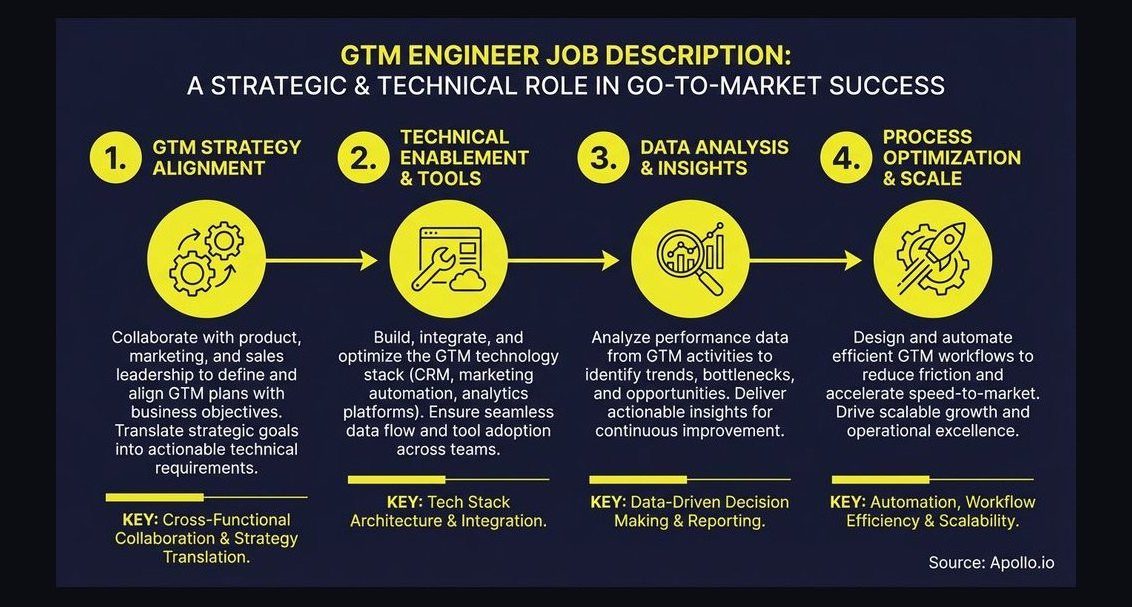 revopsWhat is a GTM engineer and why is the role exploding in 2027?
 revopsHow do longer sales cycles in 2027 impact the calculation of customer acquisition cost?
 revopsHow do you measure outbound effectiveness in 2027?
 revopsWhat triggers are early-stage RevOps teams using in 2027 to hand off AI-qualified leads to human sales reps without losing context?
 revopsWhy Do Buying Committees Now Insist on AI-Generated ROI Proof Before Vendor Demos in 2027?
 revopsWhat 2027 vendor consolidation scenario breaks the handoff between SDR and AE when both use different AI co-pilots?
 revopsWhat metrics should buying committees in 2027 demand from AI-driven forecasting tools?