
How do you compensate SDRs in a 2027 model where AI books 80% of qualified meetings?
 Curated byKory White · Fractional CRO · Maryland
 PULSEKNOWLEDGE LIBRARY
Quality
Certified

Pay for what the AI cannot do. Move SDR comp off meetings booked and onto meetings the SDR qualified and advanced: roughly 60/40 base-to-variable, with variable earned on sales-accepted opportunities, multi-threaded accounts, and a small closed-won accelerator. The machine sources volume; the human is paid for judgment.
The morning the calendar filled itself
Picture a 30-person mid-market SDR team in early 2027. In 2024 the plan was simple: 60 dials and 120 touches a day, 15 meetings booked a month, $1,000 per meeting held, accelerators past 15. Everybody understood it because everybody could count it. Then the sequencing platform started running its own research, drafting its own first-touch copy, replying to inbound in ninety seconds, and negotiating times directly on the prospect's calendar. Eleven months later, 80% of the qualified meetings on the team's calendar arrive without a human having typed a word.
The comp plan did not change, so here is what happened. Team meeting volume went up 3x. Payout went up 3x. Pipeline conversion did not move. Finance looked at cost-per-opportunity, saw it double, and asked the obvious question: what exactly are we buying? Meanwhile the top two reps on the team — the ones who used to out-prospect everyone through sheer creativity — watched a rep who does nothing but accept the AI's bookings and show up out-earn them, because the plan pays on a metric the machine now controls. Both started interviewing.
That is the whole problem in one paragraph. When AI books the meeting, "meeting booked" stops being a measure of human effort and becomes a measure of machine throughput. Paying variable comp on machine throughput does three destructive things at once: it inflates cost of pipeline with no revenue attached, it decouples effort from earnings so your best people disengage, and it hands the SDR zero economic reason to improve the thing that actually still needs a human — turning a scheduled slot into a real, worked, advanceable opportunity.

Look at where the work actually went. The AI is genuinely good at the mechanical layer: identifying accounts that match a fit profile, watching intent and product signals, writing a competent personalized first touch, handling scheduling logistics, following up on no-shows, and logging everything. It is meaningfully worse at the layer that decides whether a deal exists: reading a hesitant answer about budget and knowing to push, hearing that "our VP would need to weigh in" and turning that into a second stakeholder on the next call, catching that the person on the Zoom is a curious analyst rather than a buyer, recovering a relationship after a bad first meeting, and knowing when an enthusiastic prospect has no path to a signature.
So the SDR's job did not disappear — it shifted right, into the twenty to forty minutes after the machine's work ends. In 2027 the role looks less like a dialer and more like a qualification and orchestration function: verify that the AI's inferred intent is real, establish need and timing, map the buying committee, add at least one stakeholder the AI never saw, write a handoff the AE actually trusts, and stay attached to the account through the first two stages.
The compensation design question becomes narrow and answerable: what is the smallest set of metrics that (a) the SDR personally controls, (b) the AI cannot manufacture, and (c) correlates with revenue rather than activity? Everything else in this page follows from that. You are not designing a plan for a new job title — you are re-pointing an existing variable pool at the part of the funnel where human judgment is now the only scarce input. Most teams get this wrong by adding metrics rather than replacing them, ending up with a nine-component plan nobody can compute in their head. The winning plans in an AI-sourced funnel are usually simpler than the plans they replace, not more complex, because there is less human activity left to measure and more human outcome.
How the pay mechanism actually works when the machine sources the meeting
The mechanism has one governing rule: variable dollars are released at the point where a human materially changed the outcome, and nowhere earlier. Practically, that means the payable event moves one full stage downstream — from "meeting booked" to "opportunity accepted by the AE" — and a second, smaller pool sits further downstream still, on influenced closed-won revenue.

Here is the sequence in operational terms.
Sourcing (no payout). The AI identifies the account, runs outreach, and lands a slot on the calendar. Tag the record with its source — ai_sourced, sdr_sourced, or inbound — at creation. This single field is the backbone of the entire plan; without it you cannot separate machine throughput from human work, and every downstream report is guesswork. Make it required, system-set, and not editable by reps.
Held (no payout, but a gate). The meeting occurs. Held rate is a diagnostic, not a payable: an SDR who reconfirms a machine-booked slot the day before lifts show rate substantially, and you want that behavior, but you pay for it indirectly through the conversion metrics rather than as its own line item.

Qualified and accepted (primary payout). Within a fixed SLA — 48 business hours is a workable default — the AE either accepts the opportunity or rejects it with a coded reason. Acceptance requires a documented qualification: need, timeline, an identified economic buyer, and a next step on the calendar. This acceptance event is what triggers the main per-unit payout. Crucially, the AE's rejection must carry a reason code, and rejection reasons must be reviewed weekly by RevOps, because an unaudited veto is a comp plan run by whoever is grumpiest that week.
Multi-threaded (modifier). If the SDR has engaged a second and third stakeholder on the account before the AE's first working session, the accepted opportunity pays at a multiplier. Define engagement strictly and observably — a second contact who attended a call, replied to an email thread, or was added to the opportunity by the AE — never a self-reported claim.
Closed-won (small accelerator). A modest per-deal or percentage-of-value bonus, paid in the quarter the deal closes, on opportunities the SDR originated and worked. This keeps the SDR caring about quality months after the handoff.

Two mechanical details make or break this. First, the SLA must be enforced by automation, not goodwill: unaccepted opportunities auto-accept at hour 49 so an AE cannot suppress an SDR's earnings through inattention. Second, every payable event needs an immutable timestamp and an audit trail, because the moment payout depends on a judgment call, someone will eventually relitigate a month-old decision. RevOps owns that trail, and the reporting must be visible to the rep daily — a plan a rep cannot self-audit is a plan they will not trust, and a plan they do not trust does not change behavior no matter how elegant the math.
The numbers: base, variable, rates, and quota that hold up
Treat every figure below as a design starting point to calibrate against your own conversion data and market, not as a published benchmark. The structure matters more than the specific dollars; the dollars must be solved backward from your economics.
Split. A 60/40 base-to-variable split is the workhorse for mid-market SDRs in an AI-sourced funnel. It is slightly more variable-weighted than the classic 65/35 or 70/30 SDR plan, and the logic is deliberate: with mechanical activity offloaded, a larger share of results is attributable to skill, so a larger share of pay should follow skill. Enterprise SDRs, where cycles run long and accepted opportunities are sparse and lumpy, are better served by 65/35 or even 70/30 — high variance plus a thin base is how you lose people in a slow quarter through no fault of their own. SMB or high-velocity teams can push to 55/45.
Sizing the variable pool. Solve it in this order. (1) Decide OTE from your local market for the role you actually need — a qualification-and-orchestration SDR is a more senior hire than a 2024 dialer, and the market prices it accordingly. (2) Multiply by the variable percentage to get the target variable. (3) Divide by target accepted opportunities per year to get the per-unit rate. If OTE is $95,000 at 60/40, variable target is $38,000; at 8 accepted opportunities a month, 96 a year, the per-unit rate lands near $395. If you want the multi-thread multiplier and closed-won accelerator to be meaningful, carve them out of that $38,000 rather than adding them on top — say 70% to the base accepted-opportunity rate, 20% to the multi-thread modifier, 10% to closed-won. Adding pools on top is how comp costs drift 20% over plan without anyone deciding to spend it.

Quota. With AI sourcing 80% of qualified meetings, meeting volume is no longer a rep-controlled input, which means quota must be denominated in accepted opportunities, not meetings. Set a floor, target, and stretch: for example 5, 8, and 12 accepted opportunities a month in mid-market. Enterprise runs far lower — 3, 5, and 7 is a realistic shape when each opportunity carries a large committee. Re-baseline quarterly rather than annually, because AI-sourced volume shifts fast; a quota set in January against a model that has since improved its targeting will be badly wrong by June. Announce the re-baselining cadence in the plan document up front so reps do not experience it as a mid-year quota raise.
Rates and accelerators. Pay a flat per-unit rate to target, then accelerate. A 1.5x rate on units above target and 2x above stretch keeps top performers hunting instead of sandbagging into next month. The multi-thread modifier works well at 1.25x to 1.5x on the accepted-opportunity rate; below 1.25x reps ignore it, above 1.5x they start manufacturing thin second contacts. The closed-won accelerator can be a flat $500 to $1,500 per deal for mid-market, or 0.25% to 0.5% of first-year contract value where deal sizes vary widely — percentage-based is fairer when your ACV range is wide, flat is easier to explain when it is narrow.
Ramp. New SDRs need three months to learn both the buyer and the tooling. Pay 100% of variable target in month one, 75% in month two, 50% in month three, with quota relief matching. This is not generosity; unramped reps with real quotas produce garbage qualification, which poisons the AE relationship the whole plan depends on.

Caps and floors. Do not cap. Do install a quality gate: if an SDR's AE-rejection rate exceeds a threshold — 40% is a defensible line once you have a quarter of baseline data — the multi-thread and closed-won components are suspended until it recovers. That is not a punishment mechanism; it is the pressure valve that stops volume-chasing behavior from surviving contact with the plan.
Cost discipline. Track cost per accepted opportunity monthly, fully loaded with base, variable, and tooling. If the number rises while win rate stays flat, your rates are too generous relative to your conversion; if it falls while reps miss quota, your quota is unattainable and you are about to have a retention problem.
Trade-offs: four plan archetypes and what each one breaks
There is no clean answer here, only a choice of which failure mode you can live with. Four archetypes cover almost every real plan you will see.
Pay on meetings held. The 2024 default, and the one most teams are still running. It is dead simple, reps understand it instantly, and disputes are rare. In an AI-sourced funnel it fails on economics: payout scales with machine output, cost per opportunity balloons, and rep behavior optimizes for showing up rather than qualifying. It is defensible only during a short transition period — one quarter, while you build the source tagging and acceptance workflow — and should be explicitly time-boxed in writing so nobody treats it as permanent.

Pay on accepted opportunities. The recommended default above. It aligns pay with the human contribution and finance can defend it. Its cost is dependency: the SDR's paycheck now runs through an AE's judgment. Without an enforced SLA, coded rejection reasons, and a weekly RevOps audit, it degrades into politics. It also lengthens the feedback loop from same-day to a few days, which slightly dulls the daily motivational pull that made the old plan work.
Pay on pipeline dollars created. Attractive to CFOs because it speaks the language of the forecast. The trap is that it hands reps an incentive to inflate opportunity values, and it punishes SDRs assigned to smaller-ACV territories for a territory decision they did not make. Workable only with tightly governed opportunity sizing rules and territory-normalized quotas — which is real ongoing RevOps overhead.
Pay mostly on closed-won revenue. Maximum alignment with the business, minimum alignment with the rep's actual control. On a six-to-nine-month cycle, an SDR waits two quarters to learn whether this month was good, and a deal can die for reasons — pricing, a competitor, a reorg — that have nothing to do with their qualification. Fine as a 10% garnish. Ruinous as the core.

The practical answer for most teams is a weighted blend anchored on accepted opportunities, with a modest closed-won tail and no pipeline-dollar component at all until opportunity sizing is genuinely governed. Two further trade-offs deserve a deliberate decision rather than a default. First, headcount versus rate: because the machine handles sourcing, many teams can run a smaller, better-paid SDR bench and come out ahead on cost per opportunity — but a smaller bench has less coverage resilience when someone leaves. Second, individual versus pooled variable: pooling a slice of variable across the team encourages reps to share what is working with the AI's sequences and hand off accounts sensibly instead of hoarding, at the cost of some individual sharpness. A 10% to 15% team component is usually enough to get the collaboration without dulling the individual edge.
Pitfalls that quietly destroy an AI-era SDR plan
Adding metrics instead of replacing them. The single most common failure. A team keeps paying on meetings held, then bolts on an acceptance bonus, then a multi-thread bonus, then a closed-won kicker. Now there are four components, the old one still dominates the payout math, and the new ones are too small to change behavior. Replace the primary metric outright, then add at most two modifiers.
Leaving the AI-sourced flag out of the data model. If you cannot cleanly split machine-sourced from human-sourced meetings at the record level, you cannot pay differently for them, you cannot report cost per opportunity by source, and every plan review devolves into arguing about spreadsheets. Build the field first; design the plan second.

No rejection audit. The moment acceptance gates pay, the rejection reason becomes the most consequential field in the CRM. Without a weekly review, you will get suppressed acceptances from AEs protecting their own pipeline hygiene metrics, inconsistent standards across AEs, and eventually a formal comp dispute. Review it, publish the acceptance rate by AE, and treat an outlier AE as a coaching problem rather than an SDR problem.
Changing the plan mid-quarter. Even a correct change made mid-quarter is read as a takeaway. Announce changes at least one full period ahead, run the old and new plan in parallel on paper for a month, and show every rep what they would have earned under both. If the new plan pays your top performer meaningfully less for the same work, the plan is wrong — fix the rates, not the rep's expectations.
Ignoring the anxiety in the room. When AI books 80% of qualified meetings, reps quite reasonably wonder if they are next. A plan that reads as "we pay you less now because the robot does your job" will bleed talent regardless of its math. Frame and price it the other way: this is a more senior role, the OTE reflects that, and the variable is pointed at the work only a person can do. Say it explicitly in the plan document.
Rewarding multi-threading without defining it. "Engaged a second stakeholder" is an invitation to game the metric if it is self-reported. Tie it to something observable — a second contact on the opportunity, attendance on a recorded call, a reply in an email thread — and spot-check a sample each month.

Forgetting no-show and reschedule economics. AI-booked meetings can carry a lower show rate than meetings a human negotiated, because the commitment was cheaper to make. If your plan pays only on acceptance, the SDR absorbs that entire risk. Either build the expected show rate into quota sizing or give a small explicit credit for recovered no-shows.
Skipping the modeling step. Before rollout, run the proposed plan against the last two quarters of actual data, rep by rep. You are checking three things: does total comp cost land within plan, does the ranking of reps by earnings roughly match the ranking you would make by hand, and does the worst-case rep still clear a livable number. If any of the three fails, do not ship it.
Letting the plan outlive its assumptions. The 80% figure is not stable. If the machine's share moves to 90%, or its qualification quality improves enough that acceptance rates jump, your per-unit rates are suddenly wrong. Put a scheduled quarterly review on the calendar, owned by RevOps, with a written trigger: if accepted-opportunity attainment across the team exceeds or falls below a set band, rates get re-solved.
Related questions
Should SDRs be paid anything at all for meetings the AI books and the SDR simply attends?
Base salary covers attendance. Variable should not fire on a meeting the SDR did not advance, because that pays for machine throughput. The exception is a short, explicitly time-boxed transition quarter while acceptance workflows and source tagging are being built.
How do you split credit when AI sources the meeting and the SDR closes the qualification?
Do not split a single pool — use different pools for different work. The AI's contribution shows up as lower cost per meeting in the tooling budget, not as a deduction from rep pay. The SDR's variable is sized against the human-controlled outcome only.
Does this change the SDR-to-AE ratio?
Usually yes. With sourcing automated, one SDR can qualify and orchestrate more meetings than they could generate, so ratios tighten. Re-solve the ratio from accepted-opportunity throughput per SDR and AE capacity to work them, not from historical headcount habits.
What happens to SDR career pathing under this model?
The role becomes better preparation for closing, since the daily work is discovery, committee mapping, and stakeholder handling rather than volume outreach. Expect shorter time-to-AE promotion and build the ramp and comp bands to anticipate it.
FAQ
Should I lower base pay because AI does more of the work?
No. Lowering base reads as a takeaway and drives attrition among exactly the people you need. The role is more cognitively demanding than a volume SDR seat, so hold or raise OTE and change what the variable portion is *earned on*. If total comp cost must come down, do it through a smaller, stronger bench rather than through cutting individual base.
How do I stop AEs from rejecting opportunities to protect their own numbers?
Three controls, all required. Enforce an acceptance SLA with automatic acceptance after it expires. Require a coded rejection reason on every rejection. Publish acceptance rate by AE weekly and have RevOps review outliers. An unaudited veto over someone else's pay is a governance failure waiting to happen, not a plan detail.
What is the right per-unit rate for an accepted opportunity?
Solve it, do not copy it. Take target OTE, multiply by the variable percentage, and divide by target accepted opportunities per year. Then sanity-check the result against your cost per accepted opportunity and win rate. A rate that looks generous is fine if conversion supports it, and a rate that looks standard is wrong if it does not.
How long should a transition from the old plan take?
One full quarter of parallel modeling before anything changes, then a clean cutover at a period boundary. Show every rep what they would have earned under both plans using their real historical data. Never change the plan mid-period, even to fix an error in reps' favor, without communicating it a period ahead.
Do these principles hold for enterprise SDRs with nine-month cycles?
The structure holds; the calibration changes. Shift toward a heavier base at 65/35 or 70/30, set far lower accepted-opportunity quotas, weight the multi-thread modifier more heavily since committees are larger, and consider a small quarterly retainer-style component for named strategic accounts that stay active without closing.
Who owns this plan operationally?
RevOps owns the data model, the source tagging, the acceptance audit, the quarterly re-solve, and the rep-facing reporting. Sales leadership owns the quota and the philosophy. Finance owns the cost envelope. If no single team owns the acceptance audit, that control will quietly stop happening within two quarters and the plan will drift.
Sources
- Gartner — Sales research and insights
- McKinsey — Growth, Marketing & Sales insights
- Forrester — Blogs and research
- Harvard Business Review — Motivating Salespeople: What Really Works
- Gong Labs — Sales research
- The Bridge Group — Sales development research
- SaaStr — SaaS sales and comp commentary
- Bessemer Venture Partners — Atlas
- Winning by Design — Resources
Related on PULSE
- Should I pay SDRs on demos booked or only on demos held + qualified?
- How should you compensate SDRs in 2027 when AI handles most top-of-funnel prospecting?
- How does AI in the funnel change your definition of a qualified lead in 2027?
- How do you coach an SDR who books meetings that never show up?
- What question reveals whether a salesperson has properly qualified a lead before entering the pipeline?
- What is Qualified (Piper the AI SDR) and why is it a hot RevOps tool for 2027?
This page will be disappearing soon. Save it to your device for $1 — or read it free while it is here.
@Kory-White- · if Venmo asks, the last 4 of my number are 2012
This page is gone.
This one is off the shelf now. $1 keeps it on your phone for good — the whole page, pictures and diagrams included.
 revopsHow do you rebuild a sales team's trust in the forecast after a mid-year quota reset in 2027?
 revopsHow can RevOps use AI to identify stalled deals in longer sales cycles in 2027?
 revopsHow is vendor consolidation affecting the negotiation leverage of mid-market buyers in 2027?
 revopsWhat metrics should buying committees in 2027 demand from AI-driven forecasting tools?
 revopsHow can RevOps use AI to map influence dynamics inside buying committees in 2027?
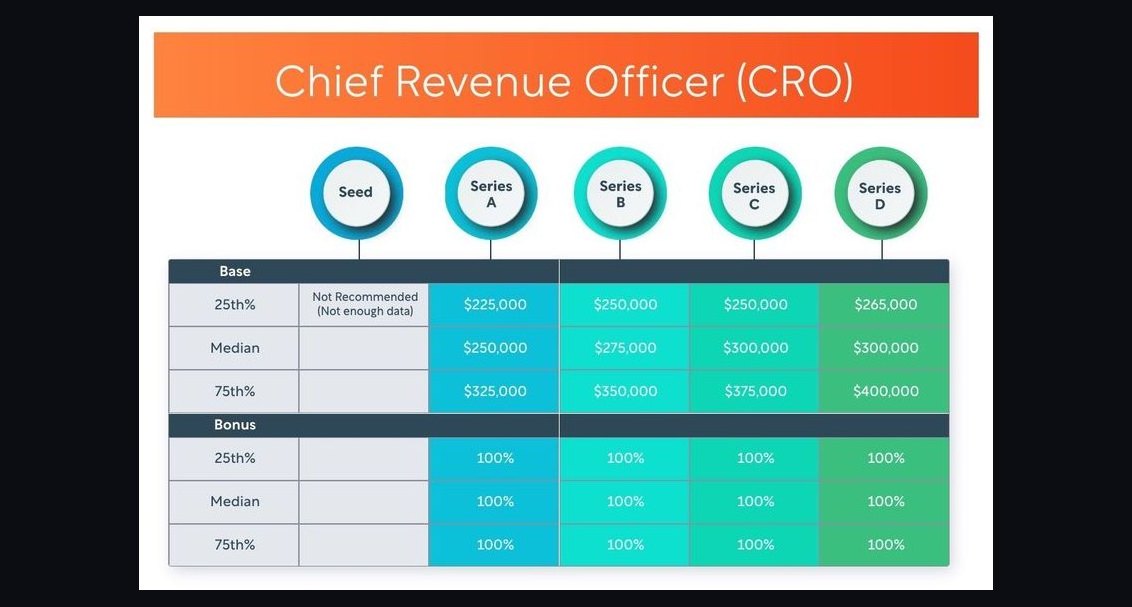 revopsCRO compensation — fractional, full-time, equity in 2027
 revopsWhat AI governance policies are buying committees requiring in 2027?
 revopsWhat percentage of B2B deals now require a dedicated AI risk officer on the buying committee in 2027?
 revopsHow should RevOps in 2027 adjust quota carrying capacity when AI automates 60% of outbound tasks?
 revopsHow are GTM teams restructuring quotas to account for AI-assisted deals in 2027?