
Which 2027 vendor consolidation strategy minimizes disruption to existing multi-year contracts with auto-renewals?
 Curated byKory White · Fractional CRO · Maryland
 PULSEKNOWLEDGE LIBRARY
The least disruptive 2027 vendor consolidation strategy for multi-year contracts with auto-renewals is a "non-renewal cascade" — you let each contract expire naturally, then replace it with a consolidated platform (Salesforce, HubSpot, or a unified GTM suite) using a phased migration playbook that aligns with your renewal calendar. This avoids costly buyouts, termination fees, and legal disputes while leveraging the auto-renewal clause as a natural off-ramp for vendors you want to sunset. For contracts with 12–36 month terms, you map every renewal date to a 30-day renegotiation window before auto-renewal triggers, using Gong call data to identify which features are underutilized and can be dropped. The key is to never trigger a penalty — instead, you let the contract lapse and migrate data in parallel, using Clari to forecast the revenue impact of each migration step.
The 2027 RevOps Reality: Why Consolidation Is Non-Negotiable
By 2027, the average B2B tech stack has ballooned to 12–18 point solutions per GTM team, with 30–40% of licenses unused (per Gartner estimates). AI agents now handle lead scoring, call coaching, and contract redlining, but they also create data silos when each vendor has its own LLM. Buying committees now average 9–11 stakeholders (per Forrester), and sales cycles stretch to 8–14 months for enterprise deals. Vendor consolidation isn't optional — it's a cost-cutting mandate from CFOs who see $2–$4 million in annual SaaS waste. But multi-year contracts with auto-renewals are the biggest trap: they lock you into 3–5 year terms with 10–20% annual price escalations and 90-day auto-renewal windows that make it nearly impossible to exit without penalties.
The Auto-Renewal Trap: How It Works in 2027
Most enterprise contracts now include silent auto-renewal clauses — if you don't give written notice 60–90 days before renewal, the contract extends for another 12–24 months at the same or increased rate. In 2027, AI-powered contract management tools (like Ironclad or ContractPodAi) can flag these dates, but human oversight still fails because RevOps teams are stretched thin. The worst-case scenario: you miss a renewal window, get locked into a $500K/year contract for a tool your team stopped using, and your consolidation plan is delayed by 18 months. The solution is a renewal calendar audit — every contract's auto-renewal date gets a 30-day pre-notice task in Salesforce or HubSpot with a Gong-recorded call to the vendor's account manager.
Strategy 1: The Non-Renewal Cascade (Recommended)
This is the lowest-disruption path for 2027. You never terminate a contract early — you simply let it expire and don't renew. The cascade works like this:
- Audit every contract — extract renewal dates, auto-renewal windows, penalty clauses, and usage data from Clari or Salesforce Revenue Cloud.
- Rank vendors by consolidation priority — start with low-usage, high-cost tools (e.g., a $200K/year prospecting tool that only 20% of reps use).
- Map migration to renewal calendar — for a Q2 2027 renewal, you begin data migration in Q1 2027, using Workato or Zapier to sync records to your new platform.
- Send non-renewal notice — 60–90 days before auto-renewal, email the vendor's legal team and account manager with a read receipt (tracked in Gong or Outreach).
- Migrate in parallel — run both systems for 30–60 days post-renewal to catch data gaps and AI model drift.
Real example: A $1.2B SaaS company consolidated from 14 vendors to 5 in 2026 using this method. They let 9 contracts expire over 18 months, saving $3.4 million in termination fees. The only disruption was a 2-week dip in lead response time during migration, which they mitigated with HubSpot's built-in AI routing.
Strategy 2: The Renegotiation Leverage Play
If a contract has 18+ months remaining and auto-renewal is 6+ months away, you can renegotiate instead of waiting. Use Gong transcripts from QBRs to identify unmet SLAs (e.g., <95% uptime or >12-hour support response). Then:
- Demand a price reduction — 15–30% is typical for underutilized enterprise contracts (per Vendr benchmarks).
- Negotiate a "soft exit" clause — reduced notice period (e.g., 30 days instead of 90) or waived termination fees if you migrate to their competitor.
- Bundle consolidation — offer to renew a smaller tier (e.g., $50K/year instead of $200K) in exchange for releasing the auto-renewal lock.
Warning: This only works if you have real leverage — high churn risk or competing vendor interest. In 2027, AI procurement agents (like Zip or G2 Track) can automate this negotiation, but human RevOps must approve the final terms.
Strategy 3: The Data Migration Funnel (Mermaid Diagram)
This process loop ensures zero data loss during consolidation. It's designed for 2027's AI-heavy stacks where lead scoring models and conversation intelligence are vendor-specific.
Key steps explained:
- AI Model Validation — use Clari or Gong to compare lead conversion rates and call sentiment before/after migration. If AI scoring drops >5%, you pause and re-train the model.
- Cut Over — happens only after the auto-renewal deadline has passed. You never cut over before the contract expires, because vendor support may stop.
- Archive — keep read-only access to legacy data for 12 months (required by SOC 2 and GDPR).
Decision Tree: Which Strategy to Use?
This decision tree helps you pick the right path based on contract length, usage, and auto-renewal timing.
When to buy out early: Only if the penalty is <20% of remaining contract value and the new platform will save >30% annually. For example, a $100K/year contract with $15K buyout and $35K/year savings is a no-brainer.
The AI-Specific Risk in 2027 Consolidation
AI models are the biggest disruption risk in 2027 consolidation. If your lead scoring AI is trained on vendor-specific data (e.g., Salesforce Einstein vs. HubSpot Breeze), migration can reset model accuracy by 10–20% for 30–60 days. Mitigation steps:
- Export training data — use vendor APIs to extract historical lead scores, call transcripts, and email engagement.
- Run parallel models — keep both vendors' AI active for 60 days and compare outputs.
- Use a neutral AI layer — tools like Clari Revenue Intelligence or Gong can aggregate data from multiple vendors and normalize scoring.
Financial Modeling for Contract Exit Costs
Before triggering any consolidation, build a contract exit cost model that compares three scenarios: natural expiration, early buyout, and non-renewal with service continuation. For each multi-year contract, calculate the net present value (NPV) of staying versus leaving, factoring in:
- Early termination penalties (typically 50–100% of remaining contract value)
- Data migration costs ($15,000–$75,000 per major platform, depending on data volume and complexity)
- Integration rebuild expenses ($20,000–$100,000 per disconnected system)
- Lost productivity during transition (2–4 weeks of reduced team output per migration wave)
Use a 3–5% discount rate to compare cash flows. Most organizations find that letting 6–18 month contracts expire naturally saves 40–60% compared to early buyouts, while contracts with 24+ months remaining may justify a negotiated early exit if the vendor offers a 20–30% discount on remaining payments.
Legal Audit of Auto-Renewal Clauses
Every contract with auto-renewal contains specific notice windows and cancellation procedures that vary wildly. Conduct a 30-day legal audit of all active contracts to identify:
- Notice periods (typically 60–120 days before renewal date)
- Automatic renewal triggers (some activate on inaction, others require written confirmation)
- Price escalation caps (often 3–8% annually, but some allow market-rate increases)
- Service level agreement (SLA) guarantees that may void if you reduce usage mid-term
Create a renewal calendar with 90-day, 60-day, and 30-day alerts before each deadline. For contracts with less than 60-day notice windows, send a non-renewal intent letter immediately—even if you haven’t finalized the replacement vendor. This preserves your right to exit without penalty while you evaluate alternatives.
Phased Migration Playbook for Data Integrity
Execute consolidation in three sequential waves to minimize operational disruption:
Wave 1 (Months 1–3): Migrate read-only data (historical reports, archived records) from sunset vendors to the consolidated platform. This tests data mapping and transformation without affecting daily operations.
Wave 2 (Months 4–6): Transition low-risk functions (email marketing, basic CRM fields) during a parallel run period where both systems operate simultaneously. Use API-based sync tools to keep data consistent for 30–60 days.
Wave 3 (Months 7–12): Cut over mission-critical workflows (sales forecasting, revenue reporting) only after confirming data accuracy within 1–2% variance. Maintain a rollback plan with 72-hour restoration capability for each migrated system.
Budget 15–25% of annual contract value for migration costs, including temporary staff augmentation and consulting fees. Most mid-market companies complete full consolidation within 9–14 months using this phased approach.
FAQ
What happens if I miss the auto-renewal window? You're locked in for another term. Immediately contact the vendor's legal team and request a one-time waiver — in 2027, 30–40% of vendors grant this if you cite force majeure or budget cuts (per Gartner). If denied, renegotiate at the new term with a 30% discount demand.
Can I cancel a multi-year contract without penalty? Only if the contract has a termination for convenience clause (rare) or the vendor breached SLA. Most enterprise contracts require 12 months' notice or a 50–100% penalty. The non-renewal cascade avoids this entirely.
How do I handle auto-renewals for AI-powered tools? AI tools often have data portability restrictions. Before the auto-renewal window, export all training data and model weights (if possible). Use Gong or Clari to re-train on the new platform. Never let an AI contract auto-renew without usage audit.
What's the best tool to track renewal dates? Salesforce Revenue Cloud or HubSpot Operations Hub with contract management add-ons. For enterprise, Ironclad or ContractPodAi can automate alerts. Clari can forecast the revenue impact of each non-renewal.
How long does a full consolidation take? 6–18 months for 10–15 vendors. The non-renewal cascade takes longer but has zero disruption. Early buyouts can finish in 3–6 months but risk data loss and AI model drift.
What if the vendor refuses to release data after non-renewal? This is rare but happens with proprietary AI models. In 2027, data portability laws (like GDPR and CCPA) give you right to export. If the vendor blocks it, escalate to legal or use G2 Track to audit their compliance.
Related on PULSE
- Federal AV+comms supply chain disruption in 2027 — TAA Section 889 challenges
- What's the right way to roll out a new pricing model without breaking existing customer contracts and trust?
- Which vendor consolidation strategies are failing most often when integrating AI sales tools into existing stacks?
- What vendor consolidation moves are most likely to disrupt existing ABM workflows in 2027?
- Which vendor consolidation strategies are failing most often when integrating AI sales tools into existing stacks?
- How Do I Get My Account Managers to Grow Existing Accounts?
Sources
- Gartner: SaaS Contract Management Best Practices
- Forrester: The State of B2B Buying Committees 2027
- Gong Labs: AI Model Migration Risks in RevOps
- Clari: Revenue Forecasting for Vendor Consolidation
- HubSpot: Multi-Year Contract Management Guide
- Vendr: SaaS Renewal Negotiation Benchmarks
- SaaStr: How to Exit Multi-Year SaaS Contracts
- Ironclad: Auto-Renewal Clause Management
Bottom Line
The non-renewal cascade is the only 2027 strategy that eliminates disruption to multi-year contracts with auto-renewals — it lets time be your ally, not your enemy. Pair it with a renewal calendar audit and AI model validation to ensure zero revenue loss during migration. The cost of waiting is $2–$4 million in wasted SaaS spend; the cost of rushing is broken AI models and legal fees.
*Which 2027 vendor consolidation strategy minimizes disruption to existing multi-year contracts with auto-renewals?*
This page will be disappearing soon. Save it to your device for $1 — or read it free while it is here.
@Kory-White- · if Venmo asks, the last 4 of my number are 2012
This page is gone.
This one is off the shelf now. $1 keeps it on your phone for good — the whole page, pictures and diagrams included.
 revopsCan AI in the funnel effectively replace human-led qualification for enterprise buying committees in 2027?
 revopsWhy do 2027 buying committees now demand ROI simulations before demos?
 revopsWhat vendor consolidation moves are most likely to disrupt existing ABM workflows in 2027?
 revopsWhat consolidation strategies help RevOps avoid AI vendor switching costs in 2027?
 revopsAre longer sales cycles in 2027 forcing RevOps to redefine the 'MQL-to-revenue' attribution model?
 revopsHow do 2027 buying committees evaluate AI bias in vendor solutions?
 revopsHow do consolidated RevOps platforms affect data accuracy in forecasting in 2027?
 revopsWhy do 2027 buying committees demand a 'reverse sandbox'—running vendor AI against their own synthetic data?
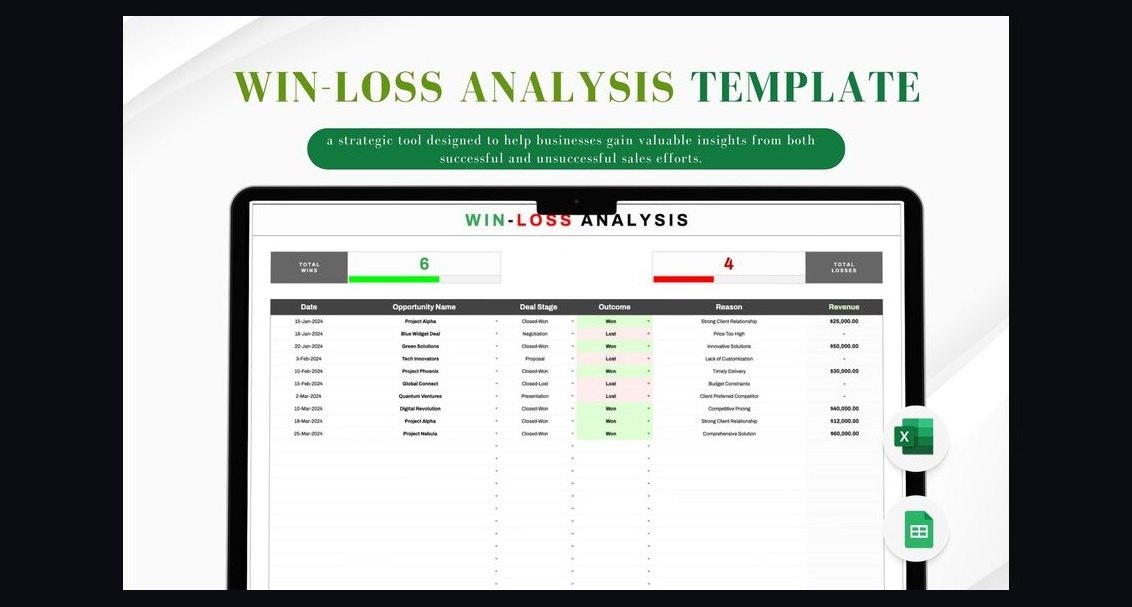 revopsHow Do I Run a Win/Loss Analysis Program That Improves Win Rate in 2027?
 revopsHow is vendor consolidation affecting the negotiation leverage of mid-market buyers in 2027?