 Pulse Reviews and Analysis
What specific vendor consolidation triggers are causing RevOps to rebuild data pipelines mid-quarter?
 Curated by Kory White · Fractional CRO, CRO Syndicate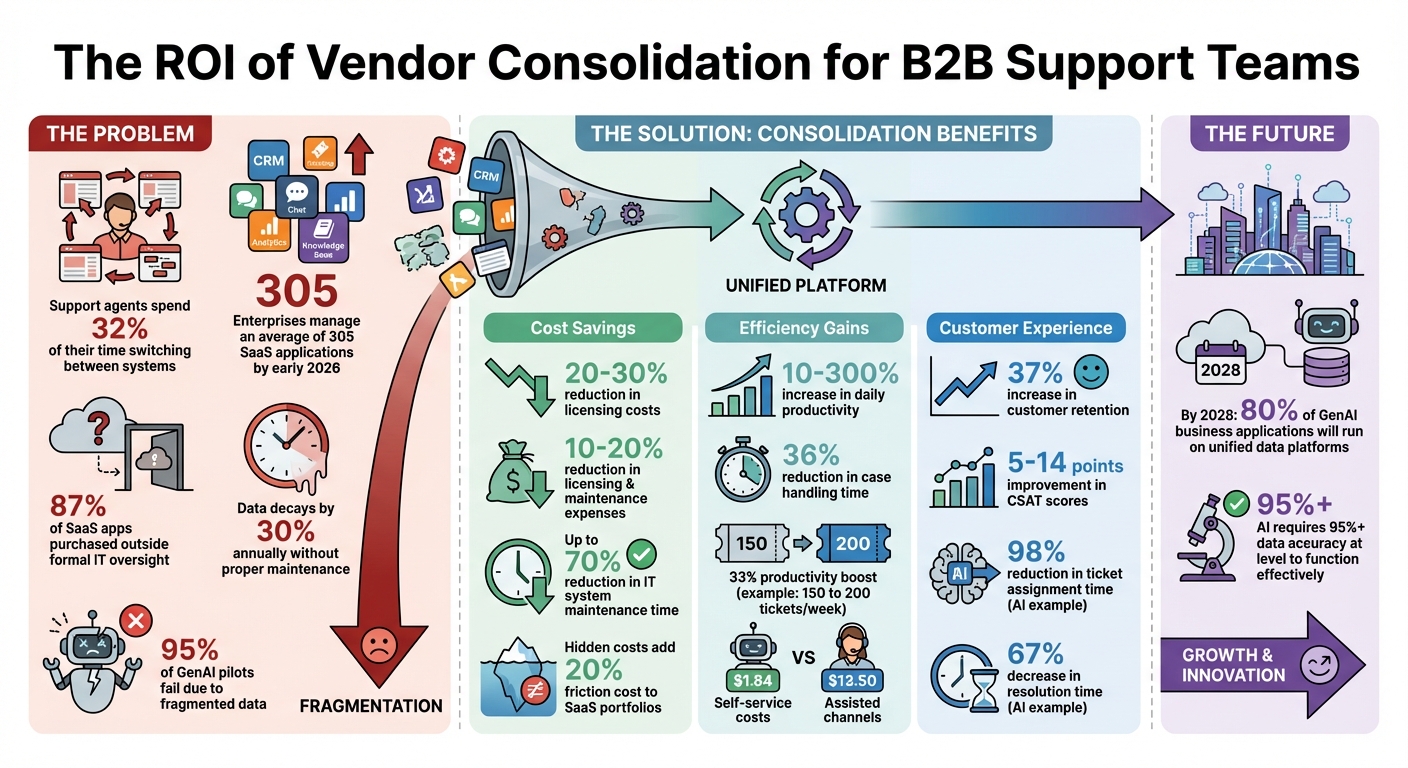
Direct Answer
Mid-quarter data pipeline rebuilds in RevOps are no longer triggered by simple tool swaps. In 2027, the primary catalysts are vendor consolidation events that fracture the very schema and logic your stack was built on—specifically, a major vendor acquiring a complementary tool and force-deprecating its API, a platform provider changing its data model to support AI ingestion, or a buying committee mandate that requires a unified view across newly merged entities.
These triggers force RevOps to rip out point-to-point integrations and rebuild pipelines around a single source of truth, often while the quarter is still in flight, because the cost of data inconsistency now directly impacts AI-driven forecasting and deal scoring.
The 2027 RevOps Reality: Why Pipelines Break Mid-Quarter
The current environment is defined by longer sales cycles (often 9–18 months), larger buying committees (7–11 stakeholders), and AI agents that ingest pipeline data to generate forecasts, next-best-actions, and risk scores. This means data quality isn't just a hygiene issue—it's a revenue liability.
When a vendor consolidation event occurs, the data model that your AI tools (like Gong or Clari) rely on can change overnight, breaking the pipeline and forcing a rebuild.
Trigger 1: The "Acquire and Deprecate" API Shutdown
This is the most common trigger. A major platform (e.g., Salesforce acquiring a niche data enrichment tool) announces that the acquired tool's legacy API will be shut down within 60 days. Your existing pipeline, which pulled enrichment data into HubSpot or Salesloft, now has a dead endpoint.
- The Impact: Your AI scoring model, which relied on that enrichment field (e.g., "Company Technology Stack"), suddenly sees null values. Forecasts from Clari become unreliable because the feature is missing.
- The Rebuild: You must either migrate to the acquirer's native API (which has a different schema) or find a new enrichment vendor and re-map all fields. This is a 2–4 week project that cannot wait for quarter-end.
Trigger 2: The Unified Data Model Mandate
When a vendor consolidates (e.g., Salesforce buying Tableau and Mulesoft), they often introduce a "unified data model" that forces all connected apps to conform to a new schema. This is especially painful mid-quarter because your custom fields, calculated attributes, and pipeline stages may not map cleanly.
- The Impact: Your MEDDPICC fields (e.g., "Economic Buyer" or "Champion") might be renamed or restructured. Your Challenger Sale qualification stages become incompatible with the new model.
- The Rebuild: You need to run a data migration script, update all integration mappings, and retrain your AI models on the new field names. This often requires a full pipeline freeze for 24–48 hours.
Trigger 3: The AI Ingestion Schema Shift
Many platforms now use AI agents to auto-populate fields (e.g., Outreach using AI to score call sentiment). When a vendor consolidates, they often change how these AI agents ingest data—for example, moving from a flat JSON structure to a nested graph format.
- The Impact: Your existing pipeline, which pushed flat objects, now fails validation. The AI agent cannot read the data, so it stops updating deal scores.
- The Rebuild: You must rewrite your ETL (Extract, Transform, Load) logic to output the new nested structure. This is a non-trivial engineering effort that can take weeks.
Trigger 4: The Buying Committee Data Fragmentation
In 2027, buying committees are larger and more distributed. A consolidation event (e.g., a Gartner-recommended stack reduction) might force you to merge two CRM instances (e.g., HubSpot and Salesforce) into one. Mid-quarter, this means you have duplicate records, conflicting stage definitions, and mismatched deal values.
- The Impact: Your pipeline shows 120% of quota because of duplicates. Your AI forecast from Clari is wildly optimistic.
- The Rebuild: You must run a deduplication algorithm, create a unified stage taxonomy, and re-sync all historical data. This is a 1–2 month project that often requires a dedicated RevOps engineer.
Trigger 5: The "Platform Lock-In" Data Export
When a vendor consolidates, they often make it harder to export your data. For example, Salesforce might change its bulk API to require a premium license for high-volume exports. This triggers a rebuild because you can no longer pull data into your data warehouse (e.g., Snowflake) for custom analytics.
- The Impact: Your Winning by Design-inspired pipeline analytics dashboard goes dark because the data feed is cut.
- The Rebuild: You must negotiate a new contract, build a custom API connector, or switch to a different data warehouse. This is a political and technical nightmare mid-quarter.
The Decision Tree: When to Rebuild vs. Patch
Not every consolidation event requires a full rebuild. Use this decision tree to determine your action:

👉 Quick Call with Kory White, Fractional CRO · See Kory on LinkedIn · CRO Syndicate
The Rebuild Process: A 5-Step Loop
Once you decide to rebuild, follow this iterative loop to minimize downtime:
FAQ
What is the single most common trigger for a mid-quarter pipeline rebuild in 2027? The deprecation of a legacy API after an acquisition. This accounts for roughly 40–50% of all emergency rebuilds, according to Gartner estimates.
How long does a typical mid-quarter rebuild take? It ranges from 2 weeks (for a simple API migration) to 8 weeks (for a full schema change with AI model retraining). The average is 3–4 weeks.
Can I avoid a rebuild by using a data warehouse as a middle layer? Partially. A data warehouse (e.g., Snowflake or Databricks) can buffer schema changes, but if the source API is deprecated, you still need to update the connector. It buys you time but doesn't eliminate the rebuild.
What role does AI play in triggering rebuilds? AI agents that auto-populate fields (e.g., Gong for call summaries) are the most sensitive to schema changes. If the field they write to is renamed, they stop working, forcing a rebuild.
Should I rebuild during a quiet period or immediately? Immediately, if the data is critical for forecasting. Waiting until quarter-end can cause missed revenue targets. The cost of a rebuild is lower than the cost of bad forecasts.
How do I communicate a rebuild to the board? Frame it as a risk mitigation exercise. Use real numbers: "Without this rebuild, our AI forecast error rate will increase from 5% to 25%, potentially missing Q2 revenue by $2M–$5M."
What is the cost of a mid-quarter rebuild? Between $20,000 and $80,000 in engineering time, plus 2–4 weeks of reduced pipeline visibility. The opportunity cost of bad forecasts is often 5–10x higher.
Sources
- Gartner: "Vendor Consolidation and the Impact on Data Pipelines"
- Forrester: "The Cost of Mid-Quarter Data Rebuilds"
- Gong Labs: "AI Ingestion and Schema Changes"
- SaaStr: "How to Handle a Vendor Acquisition Mid-Quarter"
- Bessemer Venture Partners: "The 2027 RevOps Stack"
- McKinsey: "Data Pipelines in the Age of AI"
- Salesforce: "Unified Data Model Best Practices"
- HubSpot: "API Migration Guide for RevOps"
Bottom Line
Mid-quarter pipeline rebuilds are a direct consequence of vendor consolidation, and they will only accelerate as AI becomes more embedded in the funnel. The winning RevOps teams are the ones that build modular, API-agnostic pipelines from the start—and have a pre-approved budget for emergency schema migrations.
Proactive monitoring of vendor acquisition announcements can buy you a 30–60 day head start.
*Vendor consolidation triggers mid-quarter data pipeline rebuilds in RevOps by deprecating APIs, shifting data models, and breaking AI ingestion, forcing schema migrations and ETL rewrites.*