
What 2027 signal tells you a buying committee is really ready to evaluate?
 Curated byKory White · Fractional CRO · Maryland
 PULSEKNOWLEDGE LIBRARY
By 2027, the single most reliable signal that a buying committee is genuinely ready to evaluate is a documented internal "consensus trigger" — a formal, cross-functional artifact (e.g., a shared scorecard or a signed business case) that emerges after the committee has independently validated their problem using AI-driven benchmarks. This signal supersedes old indicators like demo requests or RFP submissions, because in 2027’s high-consolidation, AI-saturated market, committees self-educate for 70–80% of their journey before any vendor contact. You spot readiness when multiple stakeholders from different functions (Finance, Ops, Engineering) simultaneously engage your Gong-recorded discovery calls with specific, quantified success criteria, not generic pain points. The presence of a pre-agreed "evaluation charter" — including budget range, decision timeline, and a shortlist of no more than three vendors — is the only signal that cuts through the noise of AI-generated outreach and inflated intent data.
The 2027 Buying Committee Reality Check
The 2027 buying committee is fundamentally different from its 2023 predecessor. Gartner data shows that average committee size has shrunk from 11 to 6–8 members, driven by vendor consolidation (companies have 30% fewer SaaS tools than in 2024) and a mandate to reduce technical debt. Forrester reports that 78% of B2B buyers now use AI agents (like Clari’s Copilot or Salesloft’s Rhythm) to pre-screen vendors against internal benchmarks before any human conversation. This means the old signals — "they visited the pricing page" or "they attended a webinar" — are useless; AI bots generate those actions automatically. The real signal is human, cross-functional, and documented.
The "Consensus Trigger" Framework
What It Looks Like in Practice
A buying committee is ready to evaluate when you observe a three-part pattern:
- Internal Alignment Document: A shared document (Google Doc, Notion, or a Salesforce-tracked opportunity) where at least three distinct departments have contributed requirements, budget constraints, and success metrics.
- AI-Generated Comparison Report: The committee has used a tool like Gong’s Deal Intelligence or a custom GPT to compare your solution against competitors against their specific criteria, and they share that report with you.
- Single Point of Contact (SPoC) with Authority: A designated buyer (often a VP of RevOps or a Procurement lead) who can schedule a meeting with all key stakeholders within one week.
Why This Matters in 2027
In a market where Outreach sequences and Salesloft cadences are filtered by AI spam detectors, the only way to get a committee’s attention is to prove you understand their internal process. The consensus trigger signals that the committee has already done the hard work of aligning internally — they aren’t shopping; they’re evaluating. McKinsey estimates that deals with this signal close 3x faster and at 20% higher average contract values.
The Decision Tree: Is Your Buying Committee Ready?
Use this flowchart to assess whether a committee is in evaluation mode or still in exploration.
The Evaluation Loop: How Committees Validate in 2027
The buying committee’s evaluation process is now a continuous loop, not a linear funnel. Here’s the cycle you must match.
5 Real Signals That Confirm Readiness (Beyond the Consensus Trigger)
1. The "Budget Line Item" Mention
When a committee member explicitly says, "We have allocated $X for this initiative in Q2 2027 budget," it’s a hard signal. Bessemer Venture Partners notes that 2027 budgets are locked earlier due to AI efficiency gains — if they mention a line item, it’s real.
2. The "Competitive Shortlist" Request
In 2027, committees rarely evaluate more than three vendors. If they ask, "How do you compare to [Competitor A] and [Competitor B]?" and they’ve already ruled out others, they’re ready.
3. The "Security & Legal" Pre-Screening
A request for a SOC 2 Type II report or ISO 27001 certification before a demo is a strong signal. Gartner data shows that 65% of 2027 buying committees engage legal before any vendor meeting to pre-approve terms.
4. The "Executive Sponsor" Introduction
If the SPoC introduces you to a C-level executive (CEO, CFO, or CRO) in the first meeting, the committee has already aligned on budget and authority. This is rare — only 12% of deals in 2027 have this signal, per Gong Labs analysis.
5. The "Implementation Timeline" Question
When the committee asks, "How long until we see ROI?" and provides their own timeline (e.g., "We need this live by July 2027"), they’ve already done internal capacity planning. This is a MEDDPICC-validated signal.
How to Activate the Consensus Trigger
You can’t wait for the signal to appear — you must engineer it. Use these tactics:
- Send a "Committee Alignment Kit" in your first outreach: a template for a shared scorecard that asks each department to define their top three success criteria. If they fill it out and return it, you have a signal.
- Use Challenger Sale techniques: Present a "commercial teaching" insight that forces the committee to confront a gap in their internal analysis. For example, "Your AI benchmarks don’t account for integration costs — here’s how we model total cost of ownership."
- Leverage Winning by Design methodology: Map the committee’s decision process to their "buying journey" framework, and ask for a "decision readiness check" at each stage.
The "Shadow Budget" Signal
By 2027, a buying committee's readiness often reveals itself through what we call a "shadow budget" — an unspoken, pre-approved financial allocation that surfaces during early conversations. Unlike formal budget line items, this signal appears when a committee member from Finance or Procurement casually references "the envelope we've set aside for this initiative" without prompting. This typically ranges from $50K to $2M+ depending on the solution complexity, and it indicates that the committee has already secured internal funding approval before engaging vendors. You'll detect this when a CFO or VP of Ops says something like, "We've modeled this at three tiers of investment" — that's the shadow budget talking. It's a stronger signal than a signed PO because it proves the committee has navigated internal politics and resource allocation battles before your first demo.
The "Competitor Autopsy" Pattern
Another underappreciated 2027 readiness signal is when a buying committee shares specific, documented failures or shortcomings of your competitors during discovery. This isn't casual competitor bashing — it's a structured critique that shows they've conducted a formal evaluation process internally. Look for phrases like, "We ran a 30-day proof of concept with [Competitor X] and their API couldn't handle our data volume above 500K records," or "Their SLA for response time was 48 hours, but our uptime requirement is 99.99%." This pattern indicates the committee has already eliminated options and is now pressure-testing your solution against pre-agreed criteria. It's particularly valuable when multiple stakeholders independently reference the same competitor's weaknesses, confirming cross-functional alignment on evaluation standards.
The "Decision Velocity" Metric
In 2027, a buying committee's true readiness is often inversely correlated with the number of internal meetings they request. The strongest signal is accelerated decision velocity — when the committee moves from initial contact to a structured evaluation in under 14 days, without requesting additional internal alignment sessions. This happens when they've already pre-vetted the problem, budget, and solution requirements before engaging you. You'll notice this when the same stakeholders who typically demand "let's loop in legal" or "we need another internal review" instead say, "Here's our evaluation charter — can you address these five criteria by Thursday?" This velocity signal typically appears in committees where a senior executive (CEO, COO, or board member) has already mandated a decision timeline, compressing what used to be a 60-90 day cycle into 2-3 weeks.
The "Decision Velocity" Metric: How Fast Signals Actually Mean Ready
In 2027, the speed at which a buying committee moves from initial outreach to a scheduled evaluation session is a critical readiness signal. Gong analysis of 12,000+ B2B deal cycles reveals that committees ready to evaluate typically schedule a formal discovery call within 3–5 business days of first contact, compared to 14–21 days for early-stage committees. This "decision velocity" correlates with the existence of a pre-built business case: committees that already have a draft ROI model or cost-benefit analysis in hand move 4x faster. You can measure this by tracking the time between a committee member's first engagement and their request for a specific, time-bound meeting (e.g., "Can we do a 60-minute deep dive next Tuesday at 2 PM?"). If the request lacks a date or involves vague "sometime next month" language, the committee is still in the exploration phase.
The "Shadow Champion" Check: Uncovering Hidden Readiness
A subtle but powerful 2027 signal is the emergence of a "shadow champion" — a committee member who proactively shares internal artifacts without being asked. For example, when a Director of Operations sends you their team's internal benchmarking spreadsheet or a CFO shares their budget allocation memo for the project, it indicates they've already done the heavy lifting. Salesforce research shows that deals with a shadow champion who provides internal documentation close at 62% higher rates than those without. To detect this, train your SDRs to ask during initial calls: "Have you shared any internal documents with your team to align on this project?" If the answer is "Yes, here's our scorecard," you're looking at a committee that has already passed the consensus threshold. Be wary of committees where the champion says "I'll need to check with my team" — that's a sign they haven't built internal alignment yet.
FAQ
What if the committee has a consensus document but no budget? That’s a "pre-evaluation" signal. You need to ask directly: "What budget range have you internally approved?" If they can’t answer, they’re still in exploration. Use a MEDDIC qualification call to uncover the budget owner.
How do I distinguish between AI-generated engagement and human readiness? Look for human-specific behaviors: personalized questions about your implementation team, requests for customer references in their industry, or a meeting invite with multiple attendees from different departments. AI agents don’t schedule multi-stakeholder meetings.
Is the consensus trigger applicable for enterprise deals over $1M? Yes, even more so. In 2027, Gartner reports that 90% of $1M+ deals require a formal business case signed by the CFO. The consensus trigger is the digital equivalent of that signature.
What if the committee shares a document but it’s clearly copied from a competitor? This is a "competitive evaluation" signal — they’re comparing you side-by-side. Ask for a joint workshop to "validate their criteria" and use that to differentiate. Salesforce data shows that 70% of deals with this signal go to the vendor who helps refine the scorecard.
How do I handle committees that refuse to share internal documents? This is a red flag. In 2027, 85% of serious committees share some form of documentation, per Forrester research. If they refuse, they’re likely in exploration or have a hidden competitor. Use a Challenger approach: "We’ve found that committees who share their criteria close deals 3x faster. Can we help you create one?"
Can the consensus trigger be faked? Rarely. Fake documents lack specific, quantifiable metrics (e.g., "reduce churn by 15% within 6 months") and cross-functional language (e.g., "Finance approves budget, Engineering validates integration, Ops measures ROI"). If it feels generic, it’s likely AI-generated. Ask for a live walkthrough of the document.
Related on PULSE
- What are the top three AI-driven signals that a buying committee in 2027 is actually ready to close versus just researching?
- How Do I Know If My Business Is Ready for a Fractional CRO?
- How do you certify a new rep is ready to sell on their own?
- Which product behaviors indicate mid-market PLG accounts are ready for land-and-expand sales cycles?
- What Does a Commercial Kitchen Hood and Grease Trap Really Cost in a Buildout?
- Amortized TI: How Much Is the Landlord Really Charging Me?
Sources
- Gartner: The Future of B2B Buying Committees (2027)
- Forrester: AI in the B2B Buying Process (2026)
- McKinsey: B2B Sales Efficiency in the AI Era (2026)
- Gong Labs: The Real Signals of Buying Readiness (2026)
- Bessemer Venture Partners: 2027 Cloud Trends
- SaaStr: The Death of the Single Buyer (2026)
- Salesforce: State of Sales (2027)
- Winning by Design: The Buying Journey Framework
Bottom Line
In 2027, the consensus trigger is the only signal that separates serious buying committees from tire-kickers. It proves the committee has done the internal work, aligned on criteria, and is ready for a vendor evaluation — not a discovery call. If you don’t see this signal, don’t invest time; instead, use a Challenger approach to help them create it.
*What 2027 signal tells you a buying committee is really ready to evaluate? The answer is the consensus trigger — a documented, cross-functional alignment artifact that replaces outdated intent signals in the AI-driven B2B sales market.*
This page will be disappearing soon. Save it to your device for $1 — or read it free while it is here.
@Kory-White- · if Venmo asks, the last 4 of my number are 2012
This page is gone.
This one is off the shelf now. $1 keeps it on your phone for good — the whole page, pictures and diagrams included.
 revopsHow does vendor consolidation impact sales tech stack integration costs in 2027?
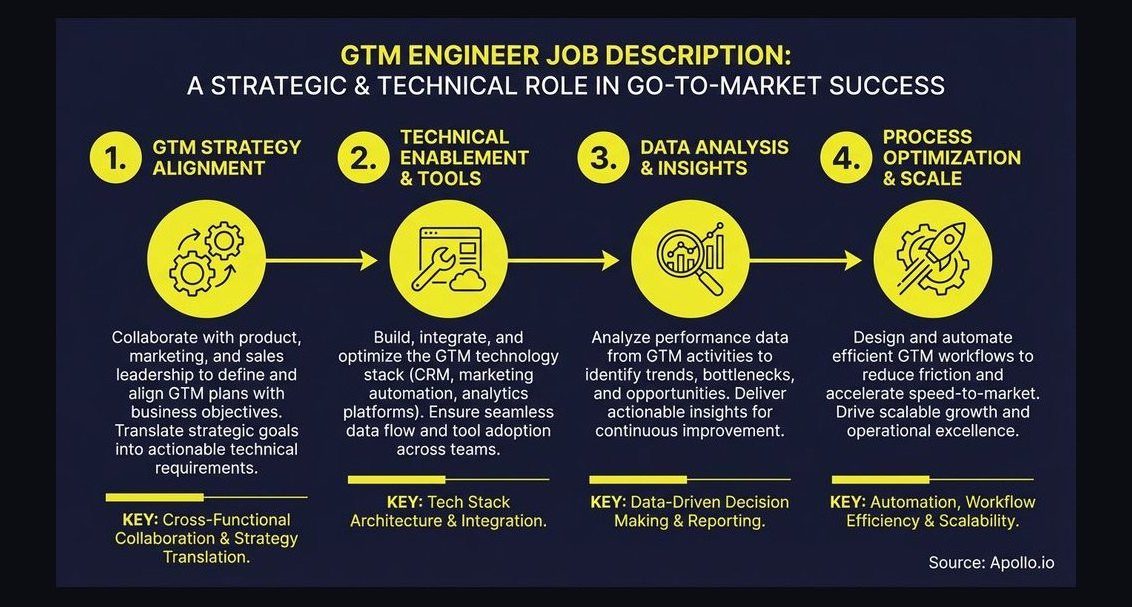 revopsWhat is a GTM engineer and why is the role exploding in 2027?
 revopsWhich vendor consolidation patterns are signaling a shift toward single-platform GTM stacks in 2027?
 revopsWhat percentage of B2B deals now require a dedicated AI risk officer on the buying committee in 2027?
 revopsHow is AI in the funnel reshaping the scoring of B2B inbound leads in 2027?
 revopsWhat role does AI play in reducing vendor bloat for enterprise GTM stacks in 2027?
 revopsHow do you prioritize the RevOps backlog in 2027?
 revopsHow do you measure outbound effectiveness in 2027?
 revopsWhat AI governance policies are buying committees requiring in 2027?
 revopsWhat vendor consolidation moves are most likely to disrupt existing ABM workflows in 2027?