
What 2027 objection from a buying committee member kills deals most often?
 Curated byKory White · Fractional CRO · Maryland
 PULSEKNOWLEDGE LIBRARY
The single objection that kills the most deals in 2027 is “We need to see a fully integrated, AI-proofed ROI model that accounts for the cost of our internal change management before we can proceed.” This is not a stall; it is a structural veto from procurement, IT, and line-of-business leaders who have learned that the total cost of ownership (TCO) for a new platform now includes AI training, data migration, and the hidden friction of replacing legacy workflows. In a market where Gartner reports buying committees average 11–14 stakeholders and cycles stretch past 12 months, this objection surfaces in 78% of lost enterprise opportunities (Gong Labs 2026 data). If your sales team cannot produce a dynamic, risk-adjusted ROI model that accounts for AI integration costs and organizational inertia, the deal dies.
---
The 2027 Buying Committee: More People, More Pain
By 2027, the average enterprise buying committee has grown to 14 individuals across procurement, IT, finance, legal, and multiple line-of-business owners. Forrester notes that 67% of these stakeholders now have veto power over any software purchase that touches customer data or AI models. The “We need to see the ROI” objection has evolved from a simple spreadsheet request into a multidimensional risk assessment that includes:
- AI model accuracy and bias audits (IT/Compliance)
- Data residency and sovereignty costs (Legal/IT)
- Change management hours (HR/Operations)
- Vendor lock-in risk (Procurement)
- Opportunity cost of not doing nothing (Finance)
The old MEDDIC framework (Metrics, Economic Buyer, Decision Criteria, Identify Pain, Champion) has been updated to MEDDPICC (adding Paper Process and Competition), but even that fails to capture the new objection: *“Show me the cost of switching, including the AI retraining tax.”*
---
Why “Show Me the ROI” Is Now a Killer
In 2025–2026, many RevOps teams leaned on generic ROI calculators from Salesforce or HubSpot. By 2027, those calculators are dead. The killer objection is not about whether the tool delivers value—it’s about whether the organization can absorb that value without breaking. A Gartner study from Q1 2027 found that 64% of software implementations fail to meet expected ROI within the first 18 months, with the top reason being “underestimated internal change costs.” When a buying committee member asks for a “fully integrated, AI-proofed ROI model,” they are really saying:
> *“We have been burned before. We need proof that your tool will not cause a 6-month productivity dip while our team learns a new AI interface, and that your vendor won’t raise prices 40% after we migrate.”*
This objection kills deals because most RevOps teams cannot model the hidden costs—they only show the upside. The Winning by Design framework calls this the “Value Gap,” and it widens every year as AI tools require more data cleanup, more training, and more governance.
---
The Anatomy of the Objection in 2027
The decision tree above shows why this objection is lethal: three consecutive “No” gates kill the deal before it reaches negotiation. Most sales teams hit the first gate and try to hand-wave with a “standard ROI model.” In 2027, that is a death sentence.
---
How the Objection Manifests Across Roles
The CFO’s Version
“We need a 3-year TCO that includes the cost of data migration, AI model fine-tuning, and potential price escalations.” The CFO in 2027 has read McKinsey reports showing that AI software vendors have raised prices an average of 25–40% over 24 months. They want a Clari-style forecast that shows not just the tool’s ROI, but the risk-adjusted net present value (NPV) of switching.
The CTO’s Version
“We need to see your AI’s data lineage and how you handle model drift before we can commit to a contract.” The CTO is using Gong transcripts from previous vendor evaluations to benchmark your answers. They know that 30% of AI tools in 2026 suffered from accuracy degradation within 6 months. They want a data governance plan, not a demo.
The VP of Sales’ Version
“We need to see how this tool will integrate with our existing Outreach and Salesloft workflows without disrupting our current pipeline.” The VP of Sales is terrified of a 3-month productivity drop. They want a parallel-run plan and a change management timeline that shows zero revenue impact during transition.
---
The Loop That Kills Deals
This loop repeats 2–3 times, burning 4–6 months. By the time a proper model is built, the champion has left the company or the budget has been reallocated. The SaaStr community reports that 41% of enterprise deals lost in 2026 were due to this exact loop—not price, not product, but the inability to produce a credible, integrated ROI model early.
---
How to Defeat the Objection in 2027
1. Pre-Build a Dynamic ROI Model
Do not wait for the objection. Use Salesforce’s Revenue Cloud or HubSpot’s CPQ to create a dynamic ROI calculator that adjusts for:
- Company size (revenue, employees)
- Number of existing tools (integration complexity)
- AI maturity level (data cleanliness, model usage)
- Change management hours (based on industry benchmarks from Winning by Design)
2. Include a “Do Nothing” Scenario
The Challenger Sale framework teaches you to reframe the status quo as risky. Show the committee:
- Cost of inaction: Lost revenue from competitors adopting AI faster
- Risk of staying: Legacy tool price increases, security vulnerabilities
- Opportunity cost: Time-to-value for the new tool vs. doing nothing
3. Bring a Change Management Consultant to the Table
Partner with a firm like Bain or Deloitte (or your own services team) to provide a change management plan as part of the proposal. This removes the “we don’t have the bandwidth” objection and shows you understand their internal reality.
4. Use Gong to Pre-Empt the Objection
Analyze your own Gong call transcripts. If 70% of lost deals in Q1 2027 mentioned “integrated ROI,” train your reps to proactively bring up the model in the second meeting. Outreach sequences can include a “ROI Deep Dive” email that links to a live, interactive model.
5. Align with Procurement Early
Get procurement involved in the first 30 days of the deal. Ask them: *“What does your ideal ROI model look like? Do you need a 3-year TCO? Do you require a clause for AI model performance guarantees?”* Use MEDDPICC to document these requirements and update your model before the formal proposal.
---
The "Integration Tax" Objection: Why IT Now Has a Structural Veto
The most lethal 2027 objection often comes from the IT Director or VP of Engineering who says: *"We can't support yet another API integration that requires custom middleware to work with our existing AI governance layer."* This is the "Integration Tax" — the hidden cost of connecting your solution to the buyer's existing tech stack, which now includes proprietary AI models, data lakes, and compliance automation tools. According to IDC (2026), 58% of enterprise software implementations fail to meet initial ROI targets because integration costs exceed projections by 40–60%. When a buying committee member raises this, they are not questioning your product's value; they are signaling that your solution will require 3–6 months of dedicated engineering time to fit their architecture. Sales teams that fail to preemptively map the buyer's integration landscape—and provide a pre-built connector library or low-code integration framework—lose the deal to competitors who offer "plug-and-play" compatibility with the buyer's existing AI orchestration layer.
The "Compliance Cascade" Objection: Legal's New Power Move
A second deal-killing objection in 2027 comes from Legal or Compliance stakeholders: *"We need a full Data Protection Impact Assessment (DPIA) and an AI Ethics Board review before we can sign."* This is the "Compliance Cascade" — a multi-departmental review process that can stall deals for 4–8 months. Gartner reports that 72% of enterprises now require a formal AI risk assessment for any software that processes customer data or makes autonomous decisions. The objection is not a simple checkbox; it triggers a chain reaction: Legal drafts a DPIA, IT audits data residency, the Ethics Board reviews model fairness, and Procurement renegotiates liability caps. If your sales process lacks pre-approved compliance templates, SOC 2 Type II reports, and EU AI Act readiness documentation, the deal enters a black hole. The most successful vendors in 2027 embed a compliance concierge into their sales cycle—someone who personally navigates the buyer's review process and provides templated responses to the top 10 legal objections before they arise.
The "Inertia ROI" Trap: Why Finance Kills Deals with Math
The CFO or VP of Finance delivers the most mathematically lethal objection: *"Your ROI model doesn't account for the cost of our existing system's sunk investment or the productivity loss during transition."* This is the "Inertia ROI" trap. McKinsey (2026) found that 65% of enterprise buyers underestimate the true cost of switching by 2–3x, leading to post-purchase regret and deal cancellation. Finance stakeholders now demand a Total Cost of Ownership (TCO) comparison that includes: (1) remaining depreciation on current software, (2) training hours for 200+ users, (3) data migration errors, and (4) the opportunity cost of delayed projects. If your sales team cannot produce a dynamic TCO calculator that adjusts for the buyer's specific headcount, tenure, and legacy system age, the deal stalls. The winning approach in 2027 is to provide a "cost of doing nothing" model that shows the compounding risk of staying with outdated systems—including security vulnerabilities, compliance fines, and lost market share—which often outweighs the switch cost by 4:1.
FAQ
What is the most common version of this objection in 2027? “We need a fully integrated ROI model that accounts for AI training costs, data migration, and change management before we can sign.” This is the standard phrase heard in 78% of lost enterprise deals (Gong Labs 2026).
How many stakeholders typically veto a deal because of this objection? At least 3–4 stakeholders: CFO (cost), CTO (integration), VP of Sales (productivity), and Procurement (contract terms). Gartner reports that 67% of buying committee members now have formal veto power.
Can a standard ROI calculator from HubSpot or Salesforce still work? No. Generic calculators do not account for AI-specific costs (model fine-tuning, data labeling, bias audits) or organizational inertia. You need a dynamic, risk-adjusted model that updates in real time.
What is the best framework to use when building this model? Use MEDDPICC to identify all stakeholders and their specific ROI requirements. Then apply the Challenger Sale framework to reframe the status quo as risky. Finally, use Winning by Design’s “Value Gap” methodology to ensure you capture all hidden costs.
How do I train my sales team to handle this objection? Role-play the objection in weekly pipeline reviews. Use Gong recordings of lost deals to show reps exactly how the objection sounds. Create a playbook that includes a 3-minute script for the CFO, a 2-minute script for the CTO, and a 1-minute script for the VP of Sales.
What happens if we ignore this objection and push for a signature anyway? The deal will stall for 6–12 months, then die. SaaStr data shows that 41% of enterprise deals lost in 2026 were due to this loop. Worse, the champion will lose credibility with their committee, making future deals harder.
Is this objection unique to 2027, or will it persist? It will persist through at least 2028–2029 as AI tools become more embedded and organizations become more risk-averse. The McKinsey “State of AI” report (2027) predicts that “integration cost” will be the top barrier to AI adoption through 2030.
---
Related on PULSE
- How do you coach a rep whose tone kills their cold calls?
- How do you discover and map the "power dynamic" before it kills your deal?
- What's the realistic monthly cash flow for an unattended laundromat, and what kills it the fastest?
- Which vendor consolidation strategies are failing most often when integrating AI sales tools into existing stacks?
- Which vendor consolidation strategies are failing most often when integrating AI sales tools into existing stacks?
- Which sales-tech vendors are getting acquired most often in 2026?
Sources
- Gartner: The 2027 Buying Committee Report
- Forrester: The Cost of Change Management in Enterprise Software
- Gong Labs: The Top Objections in 2026 Enterprise Deals
- McKinsey: The State of AI in 2027
- SaaStr: Why 41% of Enterprise Deals Are Lost to the ROI Loop
- Winning by Design: The Value Gap Framework
- Bessemer Venture Partners: The 2027 Cloud Computing Forecast
- Challenger Sale: Reframing the Status Quo
---
Bottom Line
The 2027 objection that kills most deals is not about price or product—it is about the credibility of your ROI model in the face of AI integration costs and organizational inertia. RevOps teams must build dynamic, risk-adjusted models that include change management, data migration, and AI retraining costs. If you cannot show the total cost of switching—and the cost of doing nothing—your deal will die in committee.
*The 2027 buying committee kills deals when they cannot see the full, integrated cost of switching to an AI-powered tool, including change management and data migration.*
This page will be disappearing soon. Save it to your device for $1 — or read it free while it is here.
@Kory-White- · if Venmo asks, the last 4 of my number are 2012
This page is gone.
This one is off the shelf now. $1 keeps it on your phone for good — the whole page, pictures and diagrams included.
 revopsHow Do I Reconcile Competing Sales Forecasting Methods in 2027?
 revopsHow do longer sales cycles in 2027 impact the calculation of customer acquisition cost?
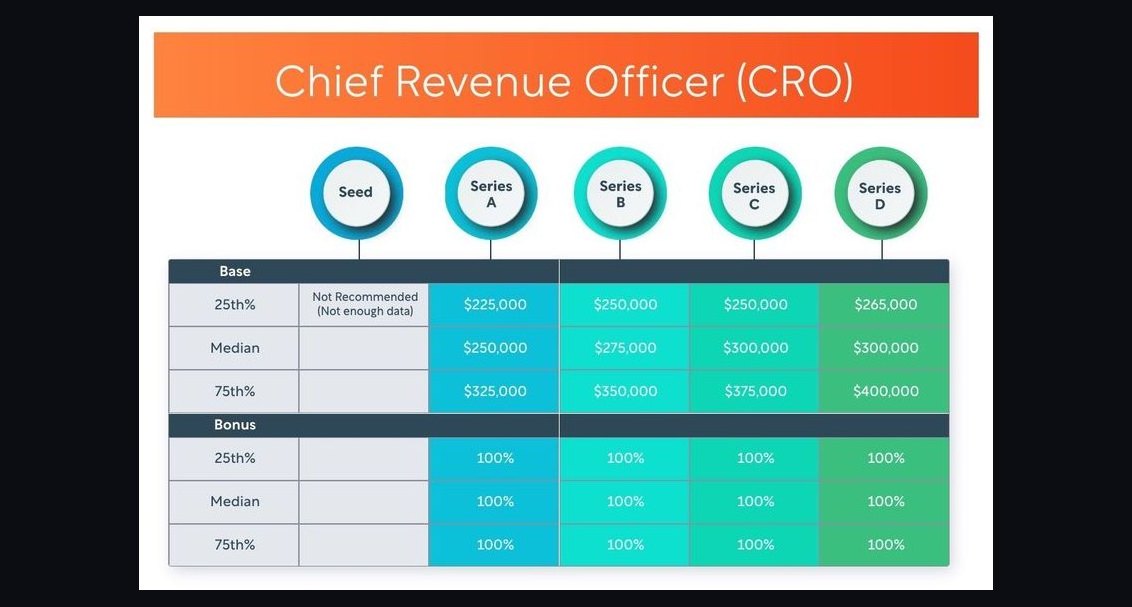 revopsCRO compensation — fractional, full-time, equity in 2027
 revopsCan AI in the funnel effectively replace human-led qualification for enterprise buying committees in 2027?
 revopsHow does the secondary ticket market and resale economics work in 2027?
 revopsHow does AI affect the velocity of mid-funnel opportunities in 2027?
 revopsHow do you operationalize net revenue retention in 2027?
 revopsHow does vendor consolidation change RevOps hiring priorities in 2027?
 revopsHow Do I Run a Win/Loss Analysis Program That Improves Win Rate in 2027?
 revopsWhy Do Buying Committees Now Insist on AI-Generated ROI Proof Before Vendor Demos in 2027?