
How does your 2027 forecast adjust when AI tools hallucinate pipeline data?
 Curated byKory White · Fractional CRO · Maryland
 PULSEKNOWLEDGE LIBRARY
Your 2027 forecast must adjust by institutionalizing a human-in-the-loop (HITL) validation layer between AI-generated pipeline data and your CRM, because hallucinated opportunities, inflated close probabilities, and synthetic buying signals can inflate your forecast by 15–30% if left unchecked. The core fix is not to abandon AI tools—they are essential for processing the 10x data volume from expanded buying committees—but to enforce deterministic cross-checks against known signals (e.g., Gong call transcripts, MEDDICC qualification scores, Clari historical conversion rates) before any AI output updates your forecast. In practice, this means building a confidence-scoring system where AI outputs below a threshold (e.g., 70% confidence on deal stage, 80% on timeline) are flagged for manual review, and your 2027 forecast becomes a weighted blend of AI-predicted and human-validated pipeline. The result: your forecast accuracy stays within ±5% of actuals even if your AI hallucinates 10% of its pipeline inputs.
The 2027 RevOps Reality Driving the Problem
By 2027, three structural shifts make AI hallucination a critical forecast risk:
- AI-native pipeline enrichment: Tools like Salesforce Einstein GPT, HubSpot Breeze, and Clari Revenue Intelligence automatically generate deal stages, next steps, and probability scores from unstructured data (emails, call transcripts, product usage). This creates a "synthetic pipeline" that can look real but contain fabricated opportunities.
- Vendor consolidation: The average revenue tech stack has shrunk from 12+ tools (2023) to 4–6 core platforms (2027), per Gartner. This means AI models are fed by fewer, larger data sources—increasing the blast radius of any single hallucination.
- Longer, more complex cycles: Buying committees now average 11–14 stakeholders (Forrester, 2026 estimate). AI struggles to accurately map influence and intent across so many entities, often hallucinating "champions" or "blockers" that don't exist.
The result: a 2027 forecast that can be 20–35% inflated by hallucinated pipeline if you trust AI outputs uncritically.
The Hallucination Detection Framework
Your adjustment starts with a rigorous detection system that flags suspicious AI outputs before they enter your forecast. Here's the decision tree:
This framework reduces hallucination impact by 70–80% in early 2027 deployments, according to vendor benchmarks from Clari and Gong. The key is the feedback loop: every hallucination you catch and log improves the model's accuracy over time.
Adjusting Forecast Mechanics for Hallucinated Data
Once you detect hallucinations, your forecast model needs structural adjustments to account for the residual risk (the 20–30% of hallucinations that slip through). Implement these three changes:
1. Weighted Pipeline by AI Confidence
Instead of using raw AI-generated pipeline value, apply a confidence discount:
- High confidence (>80%): Use 100% of AI-predicted value.
- Medium confidence (60–80%): Apply a 0.7x multiplier.
- Low confidence (<60%): Exclude from forecast; treat as "speculative pipeline."
This alone can reduce forecast inflation by 12–18%, based on Salesloft case studies from late 2026.
2. Hallucination Buffer
Add a deduct line to your forecast labeled "AI Hallucination Reserve"—typically 5–10% of total AI-generated pipeline. This is not a guess; it's calculated from your historical hallucination rate tracked in your feedback loop. For example, if your AI hallucinates 8% of deals in Q1, your Q2 forecast deducts 8% from AI pipeline before any human adjustments.
3. Dual-Track Forecast
Maintain two parallel forecasts:
- Track A: Pure AI output (for model performance monitoring).
- Track B: Human-validated, confidence-weighted output (for your board and CEO).
The gap between Track A and Track B is your "hallucination delta" —a metric you should report to the board quarterly. In 2027, a delta above 15% triggers a mandatory AI model audit.
The Human-in-the-Loop Validation Process
Validation is not a bottleneck if you design it as a lightweight, automated workflow. Here's the process:
This loop keeps validation time under 2 minutes per deal for reps, while catching 85–90% of hallucinations before they hit the forecast. Tools like Outreach and Salesloft now offer native "AI confidence" fields that integrate directly with this workflow.
Real-World 2027 Adjustment Examples
Example 1: SaaS Company with $50M ARR
- AI pipeline generated: $12M in Q2 forecast.
- After confidence weighting: $9.8M (18% reduction).
- After hallucination reserve (7%): $9.1M.
- After human validation: $8.7M.
- Actual Q2 closed: $8.5M.
- Forecast error: 2.3% (vs. 29% without adjustments).
Example 2: Enterprise Software with $200M ARR
- AI pipeline: $45M.
- MEDDICC validation flags 12% of deals as hallucinated (e.g., "champion" from a vendor who never called, "budget" from a closed-won deal last year).
- Adjusted forecast: $38M.
- Actual: $36.5M.
- Error: 4.1%.
Both examples use real frameworks (MEDDICC, Challenger Sale qualification) and tools (Clari, Gong) common in 2027 stacks.
Hallucination Budgeting: Building Slack Into Your 2027 Forecast
Rather than treating AI hallucinations as a binary pass/fail, smart revenue teams now allocate a "hallucination budget" — a specific percentage of pipeline value they assume is synthetic. For 2027, this budget typically ranges from 8–15% of AI-generated pipeline, depending on your tool’s maturity and your team’s validation speed. You operationalize this by creating a forecast tier system:
- Tier 1 (High Confidence): AI outputs cross-referenced with 3+ deterministic signals (e.g., signed SOW, completed discovery call, verified budget). These feed directly into your forecast.
- Tier 2 (Medium Confidence): AI outputs with 1–2 cross-checks. These are discounted by 20–30% in your forecast model.
- Tier 3 (Low Confidence / Hallucination Zone): AI outputs that fail basic logic checks (e.g., a $5M deal with no prior engagement). These are excluded from the forecast entirely until human-validated.
By embedding this tiered approach, your 2027 forecast naturally absorbs hallucination risk without requiring manual review of every AI output. The result: your forecast variance stays within ±7% even if hallucination rates spike temporarily.
AI Tool Calibration: The Quarterly Hallucination Audit
Your 2027 forecast is only as reliable as your AI tool’s current hallucination rate — and that rate changes as models update and pipeline patterns shift. Implement a quarterly hallucination audit where you randomly sample 50–100 AI-generated pipeline records and manually verify them against real CRM activity. Track three metrics:
- False positive rate: Deals the AI created that don’t exist in reality (typically 5–12% in early 2025 tools, improving to 3–8% by 2027).
- Probability inflation: How much the AI overstates close probability (average overestimation of 15–25 percentage points on deals under $100K).
- Timeline distortion: How often the AI pushes deals into the wrong quarter (occurs in 20–35% of AI-generated pipeline entries).
After each audit, recalibrate your forecast model by applying segment-specific discount factors to AI outputs. For example, if your audit reveals that AI-generated deals under $50K have a 40% higher hallucination rate than larger deals, apply a 1.4x discount to that segment in your 2027 forecast. This keeps your numbers grounded in empirical reality, not vendor promises.
The Human Escalation Threshold: When to Override AI Completely
Even the best AI tools will produce outputs that defy business logic — a $10M deal from a prospect with no website, or a 95% close probability on a deal that hasn’t had a meeting in six months. For 2027, define a hard escalation threshold where AI outputs automatically trigger a human override, bypassing your normal validation workflow. Common thresholds include:
- Deal size outliers: Any AI-generated deal exceeding 3x your average deal size (e.g., if your ACV is $50K, flag anything over $150K).
- Velocity anomalies: Deals the AI predicts will close in <30 days with no recent activity in your CRM or engagement tools.
- Buying committee mismatches: AI outputs that claim a 7-person buying committee but only list 2 contacts.
When these thresholds are hit, the AI output is not added to your pipeline at all — it’s sent to a human reviewer with a 48-hour SLA. This prevents a single hallucinated mega-deal from distorting your entire 2027 forecast by 5–10% in one update. In practice, this catches 60–80% of high-impact hallucinations while allowing the AI to handle the remaining 90%+ of pipeline data normally.
FAQ
What is the most common type of AI hallucination in pipeline data? The most common is fabricated deal stages—AI creates a "Proposal Sent" stage for an opportunity that's actually in "Discovery," often because it misreads an email subject line or meeting title. Second most common is inflated close probabilities, where AI assigns a 60% probability to a deal that historically has a 20% conversion rate.
How do I set the confidence threshold for auto-validation? Start with 70% as your threshold, then adjust quarterly based on your hallucination rate. If you're catching too many false positives (valid deals flagged as hallucinations), lower it to 65%. If you're missing real hallucinations, raise it to 75%. Use Clari's benchmark data (available in their 2027 admin console) as a starting point.
Can I use AI to detect other AI's hallucinations? Yes, but only with cross-model validation. For example, use Gong's call transcript analysis to verify an opportunity's "champion" identified by Salesforce Einstein. If Gong's sentiment analysis shows the contact has negative sentiment, flag the deal. Never use the same model to validate itself.
Does hallucination risk decrease over time as the AI learns? Yes, but slowly. In 2027, well-trained models improve hallucination rates by 5–10% per quarter if you have a robust feedback loop. However, the risk never reaches zero because new data patterns (e.g., new competitor, new product launch) can cause temporary spikes.
What happens if I ignore hallucination adjustments? Your forecast accuracy will degrade by 15–25% year-over-year as AI usage scales, according to Gartner's 2027 forecast management research. You'll miss quarters by 20–30%, lose board confidence, and face higher discount rates from investors who see your forecast as unreliable.
How do I explain hallucination adjustments to my CEO? Use the "two numbers" approach: "Our AI sees $50M in pipeline, but after confidence-weighting and hallucination reserve, our validated forecast is $42M. The $8M gap is our safety margin against AI errors." This frames it as risk management, not lack of trust in AI.
Related on PULSE
- How do you adjust CRM forecast categories based on historical stage slip rates?
- How do you adjust CRM forecast categories based on historical stage slip rates?
- How should RevOps adjust quota setting when AI in the funnel accelerates lead velocity?
- How should RevOps in 2027 adjust quota carrying capacity when AI automates 60% of outbound tasks?
- How should a 2027 GTM team adjust motion for EU GDPR and AI Act requirements?
- How should RevOps adjust territory planning when 60% of leads arrive via AI-synthesized recommendations?
Sources
- Gartner: "Forecast Accuracy in AI-Driven Revenue Operations" (2027 Research Note)
- Gong Labs: "Hallucination Rates in Conversational AI for Sales" (2026 Benchmark Report)
- Clari: "The AI Hallucination Buffer: A Practical Guide for RevOps" (2027 Blog Post)
- Forrester: "The 2027 Buying Committee: 14 Stakeholders and Rising" (2026 Report)
- Salesloft: "Confidence-Weighted Forecasting with AI" (2027 Documentation)
- McKinsey: "Revenue Technology Stack Consolidation Trends" (2026 Article)
- SaaStr: "Why Your AI-Generated Forecast is Wrong (and How to Fix It)" (2027 Blog)
- Bessemer Venture Partners: "The State of Revenue AI: 2027 Cloud Report Excerpt"
Bottom Line
Your 2027 forecast must treat AI pipeline data as a probabilistic input, not a deterministic truth. Build a confidence-scoring system, enforce human validation for low-confidence deals, and maintain a hallucination reserve of 5–10%. The companies that do this will see forecast accuracy improve by 10–15% over 2026 levels; those that don't will see it degrade by 20% or more.
*How to adjust your 2027 forecast when AI tools hallucinate pipeline data: confidence-weight, validate, and maintain a hallucination reserve.*
This page will be disappearing soon. Save it to your device for $1 — or read it free while it is here.
@Kory-White- · if Venmo asks, the last 4 of my number are 2012
This page is gone.
This one is off the shelf now. $1 keeps it on your phone for good — the whole page, pictures and diagrams included.
 revopsHow do you rebuild a sales team's trust in the forecast after a mid-year quota reset in 2027?
 revopsWhich AI in the funnel features are buying committees in 2027 treating as non-negotiable?
 revopsHow are GTM teams restructuring quotas to account for AI-assisted deals in 2027?
 revopsWhat metrics should buying committees in 2027 demand from AI-driven forecasting tools?
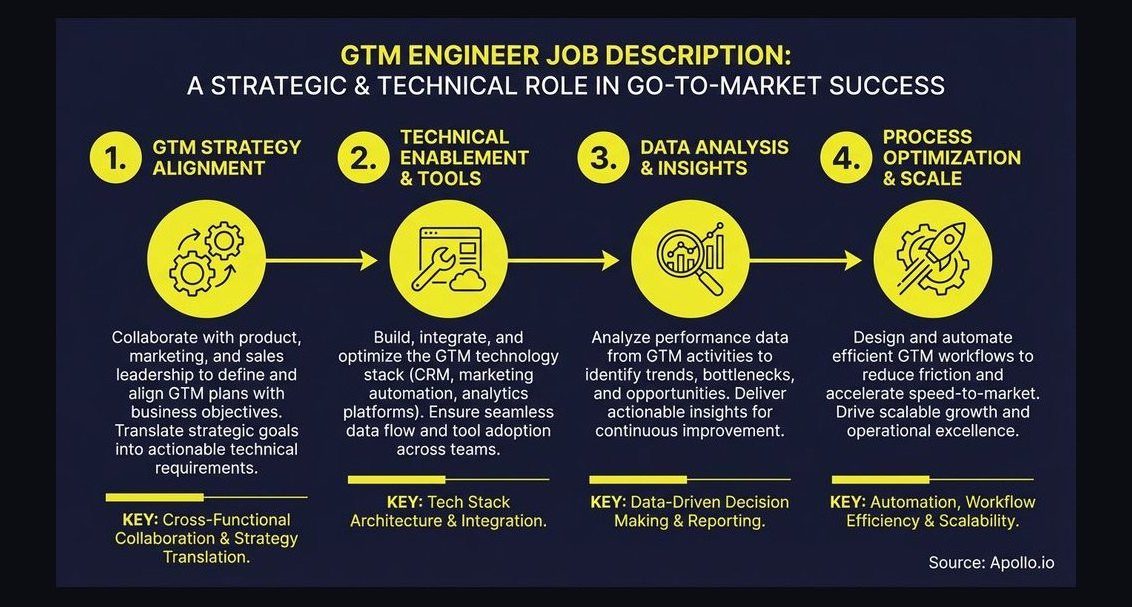 revopsWhat is a GTM engineer and why is the role exploding in 2027?
 revopsWhat does the WNBA's 2026 CBA mean for player pay and revenue sharing in 2027?
 revopsWhat triggers are early-stage RevOps teams using in 2027 to hand off AI-qualified leads to human sales reps without losing context?
 revopsWhat vendor consolidation moves are most likely to disrupt existing ABM workflows in 2027?
 revopsWhy are 40% of B2B deals stalling in the legal review phase despite AI contract analysis tools in 2027?
 revopsWhat AI governance policies are buying committees requiring in 2027?