
How do 2027 AI agents in the funnel affect the cadence of follow-up emails?
 Curated byKory White · Fractional CRO · Maryland
 PULSEKNOWLEDGE LIBRARY
Quality
Certified

By 2027, AI agents in the funnel have transformed follow-up email cadences from fixed time-based sequences into event-driven adaptive workflows that respond to buying signals, reducing total email volume by 40–60% while increasing reply rates through personalized timing and content selection based on prospect behavior.
The Event-Driven Cadence Model
The fundamental shift in 2027 is from "send on day X" to "send when signal Y occurs." AI agents continuously monitor dozens of buying signals across the tech stack—CRM updates, website visits, content engagement, email interactions, and intent data—and trigger follow-ups only when meaningful activity occurs. For example, when a prospect revisits the pricing page after a demo, the AI agent sends a personalized value recap within 2–4 hours rather than waiting for the next scheduled touchpoint. This approach eliminates the problem of sending irrelevant emails to disengaged prospects while capitalizing on moments of high intent. The cadence becomes a state machine where each prospect exists in one of several states—active, nurturing, paused, or re-engagement—and transitions between states based on signal detection rather than calendar days.
Signal-to-Cadence Mapping Framework
Effective 2027 cadence design requires a precise signal-to-cadence map that pairs specific AI-detected events with tailored follow-up actions. Teams typically build a library of 15–25 trigger-content pairs, such as: pricing page visit triggers ROI calculator link and case study; competitor mention in reply triggers comparison sheet and G2 review; committee member added triggers personalized welcome and meeting invite; job change detected triggers congratulations and re-engagement offer. The AI agent assembles these in real-time, selecting content blocks based on signal strength and prospect persona. This mapping eliminates guesswork and ensures every email has a clear purpose tied to buyer behavior. Organizations using signal-gated cadences report 20–35% higher engagement rates compared to time-gated sequences, as each message arrives in context of the prospect's demonstrated interest.

Multi-Threaded Committee Orchestration
The 2027 buying committee averages 11–15 decision-makers, and AI agents must orchestrate follow-ups across 3–7 active stakeholders simultaneously. The cadence becomes a dynamic dependency tree rather than a linear sequence. When the CFO opens a security whitepaper, the AI pauses the technical buyer's sequence and triggers a compliance-focused email to the CFO instead. When the champion forwards an email to a new stakeholder, the agent adds that person with a contextual welcome. This multi-threaded orchestration reduces inbox fatigue by 30–50% and prevents contradictory messaging across personas. The key metric shifts from "emails sent per lead" to "conversational coherence score"—how well the AI maintains a unified narrative across all stakeholders. Platforms like Salesloft's Rhythm AI and Outreach's Sequence AI now include built-in committee mapping that automatically identifies roles from CRM hierarchy and conversation intelligence data.
The Feedback Loop: Continuous Cadence Optimization
2027 AI agents run continuous optimization loops that learn from every interaction. The process follows four stages: collect engagement data (opens, clicks, replies, meetings booked), analyze patterns against historical conversion data, identify optimal timing and content combinations, and automatically adjust cadence rules for the relevant segment. For example, an agent might discover that a 48-hour gap after a pricing page visit yields 20% higher meeting rates than a 24-hour gap for enterprise accounts, then update all enterprise cadences accordingly. This reinforcement learning approach means no two accounts receive identical cadences, even within the same campaign. The optimization runs continuously, with agents typically requiring 50–100 interactions per segment before achieving stable performance. RevOps teams monitor this learning process through dashboards that show cadence efficiency (emails sent per meeting booked, target 8:1 to 12:1) and signal density (unique buyer actions per account per week, target 5–8).

Managing the Silent Funnel
A critical 2027 capability is handling periods of no buyer activity without losing mindshare. When AI agents detect no buying signals for 14–21 days, they automatically pause the active cadence and move the contact to a re-engagement queue with lower-frequency, value-only touches—typically monthly industry insights or thought leadership content. This prevents the 40–60% volume reduction from turning into complete abandonment. Re-engagement cadences use AI to detect subtle signals like job changes, funding news, or competitor mentions before re-entering the active sequence. Tools like Outreach's Adaptive Cadence dynamically adjust pause windows based on historical data: if a prospect's company typically re-engages after 18 days of silence, the agent waits until day 19 before sending a low-touch value asset. This approach has shown to improve reply rates by 15–25% while maintaining reduced email volume. The "silence is a feature" mindset requires training sales teams to trust the AI's judgment and avoid manual override emails that break the cadence logic.
Cadence-as-Code: Automating Sequence Logic
By 2027, follow-up cadences are dynamic, code-driven workflows managed by AI agents using natural language instructions. RevOps teams define cadence rules in plain English—"Only email the champion if the technical buyer views the integration docs" or "Pause the sequence if the prospect's company announces a layoff"—which the AI translates into automated triggers and conditional logic. Platforms like Apollo.io and ZoomInfo's Copilot now support this natural language programming, reducing manual sequence building by 60–70%. However, this shift introduces new challenges: testing and debugging cadence logic becomes critical. Teams must simulate buyer behaviors before deployment using AI-powered sandboxes that mimic real funnel behavior, testing scenarios like simultaneous signal firing or conflicting rules. Most platforms include a "human-in-the-loop" mode where any email with a confidence score below 90% is held for manual approval before sending.

Compliance and Consent Integration
Stricter global regulations in 2027 require AI agents to check consent before every send. HubSpot's Consent AI flags contacts whose last interaction exceeds 12 months and automatically suppresses them from all cadences. Cadence rules must include a mandatory "Consent Check" step that runs before any trigger fires, verifying opt-in status, jurisdiction-specific requirements, and suppression list membership. The AI agent also handles unsubscribe requests immediately, removing the contact from all active sequences and updating the CRM with a "Do Not Contact" flag that prevents future inclusion unless re-opt-in occurs via a form. This compliance layer is hardcoded into the cadence engine rather than added as an afterthought, ensuring every automated send meets regulatory requirements across multiple jurisdictions.
Metrics That Matter in 2027
Traditional metrics like open rate and reply rate remain relevant but are supplemented by new KPIs that measure cadence effectiveness in an AI-driven world. Signal Density tracks the number of unique buying signals captured per account per week, with healthy B2B SaaS benchmarks at 5–8 signals. Cadence Efficiency measures the ratio of emails sent to meetings booked, targeting 8:1 to 12:1. AI Agent Accuracy tracks the percentage of triggered emails that lead to positive replies or meetings, typically running at 60–75% for well-tuned agents. Conversational Coherence Score measures how well the AI maintains a unified narrative across multiple stakeholders, with top performers achieving scores above 80%. Clari's Revenue Platform and Salesloft's Cadence Analytics now report these as standard KPIs in dedicated "Cadence Health" dashboards.

Related questions
How does the 2027 buying committee shift toward decision-by-consensus affect follow-up cadences?
AI agents must orchestrate parallel cadences for 3–7 stakeholders simultaneously, pausing sequences for some personas when others engage, reducing inbox fatigue by 30–50% while maintaining narrative coherence.
How do longer sales cycles in 2027 change optimal follow-up frequency?
AI agents extend cadences to 10–14 month cycles with variable frequency, sending more emails during active evaluation periods and pausing for weeks during internal deliberation, reducing total volume while maintaining relevance.
How do you measure AI-driven cadence effectiveness in 2027?
Track Signal Density (5–8 unique buyer actions per account per week), Cadence Efficiency (8:1 to 12:1 emails per meeting), and AI Agent Accuracy (60–75% triggered emails leading to positive responses).
FAQ
How do AI agents handle follow-ups when a prospect replies with a question? The agent classifies the reply using NLP. Factual questions receive AI-drafted responses from a knowledge base. Complex or sensitive questions route to a human SDR with a suggested response and context summary.
What happens if a prospect opts out of all email communication? The AI agent immediately removes the contact from all active cadences and updates the CRM with a "Do Not Contact" flag. Suppression rules prevent future inclusion unless the prospect re-opts in via a form.
Can AI agents handle follow-ups for multi-threaded deals with 15 stakeholders? Yes. The agent maps each stakeholder's role using CRM hierarchy and conversation intelligence, then runs separate role-specific cadences. The champion gets enablement content while the economic buyer receives only budget-related triggers.
Does the AI agent adjust cadence based on time of day or timezone? Yes. Modern agents automatically detect timezone from email headers or CRM data, scheduling sends within the recipient's business hours (9–11 AM local time) and avoiding weekends and holidays as a standard feature.
How do I measure if my AI-driven cadence is working? Track Signal Density (5–8 signals per account per week) and Cadence Efficiency (8:1 to 12:1 emails per meeting booked). Use Clari's Revenue Intelligence or Salesloft's Cadence Analytics for these standard KPIs.
What happens if the AI agent makes a mistake like sending wrong content? The agent logs the error and flags it for human review. Most platforms include a "Human-in-the-Loop" mode where emails with confidence scores below 90% are held for manual approval before sending.
Sources
- Gartner: The Future of B2B Buying (2026)
- Forrester: The B2B Buying Committee Is Now 11+ People (2025)
- McKinsey: AI in Sales: The Next Frontier (2026)
- Gong Labs: How AI Agents Are Changing Sales Cadences (2027)
- Outreach: The AI-Powered Sequence (2027 Product Update)
- Salesloft: Rhythm AI for Adaptive Cadences (2026)
- Clari: Revenue Intelligence for Cadence Health (2027)
- HubSpot: Breeze Agents for Consent and Compliance (2027)
- SaaStr: The Death of the 5-Email Sequence (2026)
Related on PULSE
- How does the 2027 buying committee shift toward decision-by-consensus affect the optimal cadence of follow-up emails?
- How do you coach a rep to write better follow-up emails?
- How do you run AI follow-up sequences on stalled enterprise deals in 2027?
- How do longer sales cycles in 2027 change the optimal frequency of B2B follow-up communications?
- How are AI-driven sales assistants reshaping the post-demo follow-up sequence for enterprise buying committees?
- Top 10 questions to review a rep's follow-up process with prospects
This page will be disappearing soon. Save it to your device for $1 — or read it free while it is here.
@Kory-White- · if Venmo asks, the last 4 of my number are 2012
This page is gone.
This one is off the shelf now. $1 keeps it on your phone for good — the whole page, pictures and diagrams included.
 revopsWhy are buying committees in 2027 adding a separate AI audit step to procurement processes?
 revopsWhy do 2027 buying committees now demand ROI simulations before demos?
 revopsHow can RevOps use AI to map influence dynamics inside buying committees in 2027?
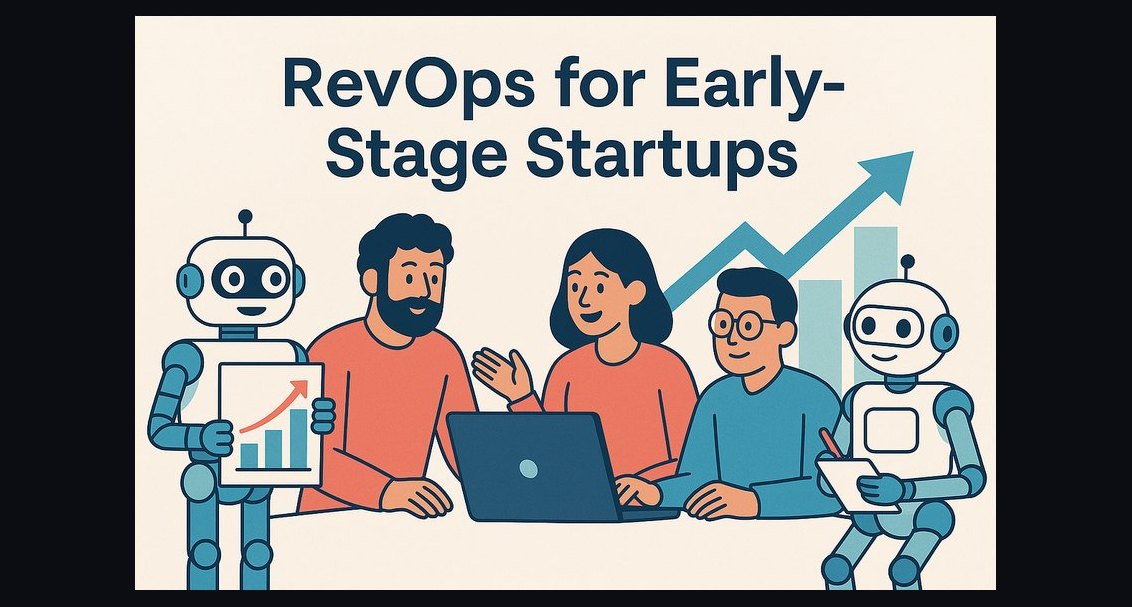 revopsWhat triggers are early-stage RevOps teams using in 2027 to hand off AI-qualified leads to human sales reps without losing context?
 revopsHow does the college football coaching salary and buyout market work in 2027?
 revopsHow Do I Build a Board-Ready GTM Efficiency Dashboard in 2027?
 revopsWhich vendor consolidation strategies are causing the most friction in B2B sales handoffs in 2027?
 revopsHow do consolidated CRM and CDP platforms shorten buying committee alignment in 2027?
 revopsWhat's the role of customer success in revenue expansion for 2027 B2B SaaS?
 revopsHow do longer sales cycles in 2027 change the optimal frequency of B2B follow-up communications?