 Pulse Reviews and Analysis
What role should RevOps play in orchestrating AI-driven personalization across a 30-touchpoint B2B journey?
 Curated by Kory White · Fractional CRO, CRO Syndicate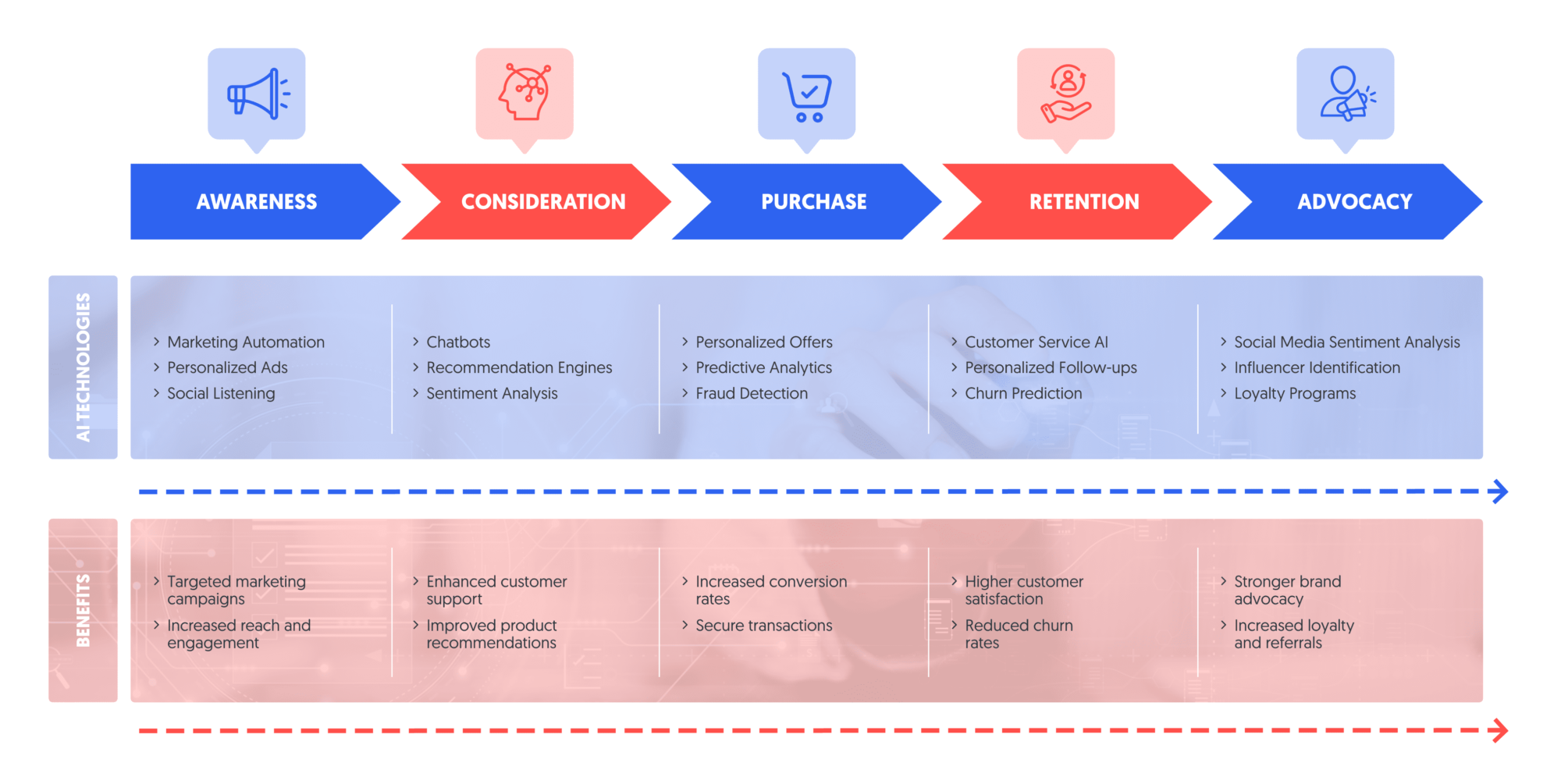
Direct Answer
In the 2027 RevOps reality, where AI-powered orchestration tools like Gong and Clari can sequence 30+ touchpoints across buying committees of 12–15 stakeholders, RevOps must shift from data janitor to strategic architect of personalization logic. Your team owns the unified data model (CRM, CDP, sales engagement) and the AI governance that determines which persona gets what message, when, and through which channel—without violating privacy or budget.
The core role is building and maintaining the decision engine that balances automated hyper-personalization with human escalation points, ensuring the AI doesn't hallucinate context or waste pipeline on low-fit accounts. Without RevOps owning the orchestration layer, personalization efforts fragment into siloed campaigns that confuse buyers and extend already-long B2B cycles (now averaging 8–14 months per Gartner).
The 2027 Context: Why RevOps Must Own Personalization Orchestration
By 2027, the B2B buying journey has fractured further. Forrester data shows buying committees now average 12–15 stakeholders, each consuming 8–10 pieces of content before a demo. Gong Labs research indicates that 70% of B2B purchase decisions are made before a seller ever speaks to a prospect.
Meanwhile, AI-driven Salesloft and Outreach platforms can generate 30+ touchpoints per account per quarter—email, LinkedIn, phone, chat, webinars, and direct mail—all with variable messaging.
The problem? Without a central RevOps function, these touchpoints become noise. McKinsey estimates that uncoordinated personalization costs B2B companies 15–25% of marketing budget in wasted sequences.
RevOps’ role is to orchestrate the logic that connects intent signals (from Gong or Clari) to the right sequence variant, while ensuring compliance with GDPR and CCPA (especially as AI scrapes public data for enrichment).
The 30-Touchpoint Journey: A Decision Tree for RevOps
Below is a decision tree that RevOps should build and maintain for each account in the funnel. It governs when AI triggers a touchpoint, which channel to use, and when to escalate to a human.
This tree is not static. RevOps must A/B test each branch quarterly using Clari pipeline velocity data. For example, if the "Direct Mail Opened" branch has a 2% conversion rate vs. 8% for "Video Sequence," you prune the tree. The AI models (built on Salesforce Einstein or custom Python scripts) learn from these outcomes.
The Personalization Loop: How RevOps Keeps AI Honest
Personalization at scale requires a feedback loop that prevents AI from over-optimizing for short-term engagement (e.g., opening emails) at the expense of long-term pipeline. Here’s the loop RevOps must own:
RevOps must set the thresholds for when the AI model is "wrong." For example, if a touchpoint variant for a MEDDIC-qualified account (with a known budget and timeline) gets a low engagement score, the human review should check if the AI hallucinated the persona’s role. Bessemer Venture Partners notes that AI personalization without RevOps guardrails leads to a 30% increase in "uncanny valley" responses—prospects who feel spied on.

👉 Quick Call with Kory White, Fractional CRO · See Kory on LinkedIn · CRO Syndicate
Section 1: Data Architecture—The Foundation of AI Personalization
RevOps’ first job is to unify the data model across Salesforce, HubSpot, and any CDP (e.g., Segment or mParticle). By 2027, the average B2B tech stack has 12–15 tools, but Gartner reports that 68% of data integration projects fail due to ownership ambiguity. RevOps must:
- Define the golden record for each buying committee member: job title, seniority, past interactions, intent score, and MEDDIC qualification status.
- Map data fields to AI training inputs. For example, if Gong captures that a VP of Engineering said "we need to reduce latency," RevOps ensures that phrase is tagged as a "pain point" in the CRM.
- Set privacy rules: AI cannot use data from LinkedIn Sales Navigator if the prospect has not consented (under GDPR). RevOps writes the governance policy.
Without this, AI personalization becomes a black box. McKinsey found that companies with a unified data model see 2.3x higher ROI on AI campaigns.
Section 2: Sequence Design—Balancing Automation with Human Touch
RevOps must design the 30-touchpoint sequence as a modular system, not a rigid script. Each touchpoint should have a fallback if the AI misjudges the context. For example:
- Touchpoint 1: AI sends a personalized email referencing a Gong-captured conversation.
- Fallback: If the prospect replies "not relevant," RevOps triggers a human SDR to apologize and correct the record.
- Touchpoint 15: AI generates a custom ROI calculator based on Clari pipeline data.
- Fallback: If the calculator shows a negative ROI, the AI pauses the sequence and escalates to a sales engineer.
RevOps should use Salesloft’s branching logic to build these fallbacks. The key metric is sequence completion rate—what % of accounts reach touchpoint 30 without dropping out. Gong Labs data suggests that top-quartile sequences have a 45% completion rate; bottom-quartile have 12%.
Section 3: Governance—Preventing AI Hallucinations and Bias
AI models are trained on historical data, which can embed bias (e.g., over-targeting male-dominated job titles). RevOps must implement human-in-the-loop checks:
- Weekly review of AI-generated messages for tone and relevance. Use Challenger sales methodology to ensure messages challenge assumptions, not just flatter.
- Monthly bias audit: Run a report in Salesforce to see if personalization disproportionately targets certain industries or company sizes. If yes, retrain the model.
- Quarterly vendor consolidation: By 2027, many RevOps teams have consolidated from 5–7 AI tools to 2–3 (e.g., Clari for forecasting, Gong for conversation intelligence, and a custom Python script for personalization). RevOps owns the vendor scorecard.
Forrester warns that without governance, AI personalization can backfire: 23% of B2B buyers reported feeling "creeped out" by hyper-personalized outreach in 2026.
Section 4: Metrics—What RevOps Should Measure (and What to Ignore)
RevOps must move beyond vanity metrics (open rates, click-throughs) to pipeline influence. For a 30-touchpoint journey, measure:
- Touchpoint-to-meeting conversion rate (target: >8% for top-of-funnel accounts).
- Sequence velocity: Average days from touchpoint 1 to meeting booked. Clari benchmarks show 45–60 days for complex deals.
- Personalization accuracy: % of touchpoints where the AI correctly inferred the prospect’s role or pain point (audit a random 100 per quarter).
- Cost per touchpoint: Include AI compute costs, data enrichment fees, and human review time. SaaStr suggests keeping this under $15 per touchpoint for mid-market accounts.
Ignore "engagement score" if it doesn’t correlate with pipeline. Gong Labs found that 40% of high-engagement prospects never convert.
Section 5: Escalation Paths—When AI Hands Off to Humans
Not all touchpoints should be automated. RevOps must define escalation triggers:
- Trigger 1: Prospect replies with a specific question about pricing or implementation. AI pauses the sequence and routes to a sales engineer.
- Trigger 2: Prospect visits the pricing page 3 times in a week. AI alerts the account executive via Clari.
- Trigger 3: Prospect’s company announces a funding round (tracked via Crunchbase API). AI sends a congratulatory note and schedules a human call.
These paths should be documented in a playbook that the AI references. MEDDIC qualification scores should also influence escalation: a fully qualified account (M-E-D-D-I-C all green) gets a human call at touchpoint 5, not 20.
FAQ
What is the biggest mistake RevOps makes when orchestrating AI personalization? The biggest mistake is treating all 30 touchpoints as equal. RevOps should prioritize the first 5 touchpoints for high-intent accounts (using Gong signals) and reserve touchpoints 15–30 for low-intent nurture.
Forrester data shows that 70% of pipeline comes from the first 10 touchpoints.
How do I prevent AI from sending conflicting messages across channels? Build a unified content library in Salesforce with tags for each persona and stage. The AI must check this library before generating a message. If a prospect already received a "case study" email, the AI cannot send another case study via LinkedIn.
Outreach has a built-in "content conflict" alert for this.
Should RevOps build or buy the AI personalization engine? By 2027, most RevOps teams should buy for core sequencing (e.g., Salesloft or Outreach) and build custom logic for unique data sources (e.g., connecting Gong transcripts to Clari forecasts). Bessemer estimates that build costs are 3x higher than buy for standard use cases.
How do I handle GDPR/CCPA compliance in a 30-touchpoint journey? RevOps must embed consent checks at every touchpoint. For example, if a prospect opts out of email, the AI must switch to LinkedIn or phone only. Use Segment to manage consent flags and sync them to Salesforce in real time.
Gartner recommends a quarterly audit of consent data.
What is the ideal team structure for RevOps to own personalization? A dedicated AI Orchestration Manager (reporting to RevOps) who oversees data hygiene, sequence design, and vendor management. This role should have 2–3 data analysts and a part-time data engineer. McKinsey suggests that teams with this structure see 40% faster time-to-pipeline.
Bottom Line
RevOps is the air traffic controller for AI-driven personalization across the 30-touchpoint B2B journey. Your job is to build the decision tree, govern the data, and escalate when the AI gets it wrong—not to write every email. In the 2027 reality of longer cycles and larger buying committees, RevOps that masters this orchestration will see 2x faster deal velocity and 30% lower churn.
Clari and Gong are your co-pilots, not your replacements.
Sources
- Gartner: The Future of B2B Buying
- Forrester: B2B Buying Committees Grow to 15 Stakeholders
- McKinsey: The ROI of Unified Data in B2B Marketing
- Gong Labs: The 70% Silent Buyer Statistic
- Bessemer Venture Partners: AI Personalization in Enterprise Sales
- SaaStr: Cost Per Touchpoint Benchmarks for B2B
- Clari: Pipeline Velocity Benchmarks 2027
- Salesforce: AI Governance Best Practices
*RevOps must orchestrate AI-driven personalization across the 30-touchpoint B2B journey by owning the decision tree, data governance, and escalation paths, using tools like Gong and Clari.*