

Is the 2027 trend of AI-coded product demos reducing or increasing the need for sales engineer intervention?
 Curated byKory White · Fractional CRO · Maryland
Quality
Certified

In 2027, AI-coded product demos are not reducing the need for sales engineers but fundamentally shifting their role from scripted walkthroughs to high-value strategic consultants, with AI handling 60–80% of standard demonstrations while SEs focus on complex architecture, proof-of-value management, and security negotiations that AI cannot replicate.
The AI Demo Automation Breakdown
By 2027, AI-coded demo systems powered by large language models and retrieval-augmented generation have automated three distinct tiers of product demonstration. Tier one covers basic feature tours for inbound leads, which are now 100% automated and eliminate 40–50% of previous SE calendar load. Tier two handles industry-specific use case demonstrations, where AI dynamically generates scripts based on CRM data, intent signals, and the prospect's role. Tier three, the most complex tier involving multi-stakeholder enterprise deals with custom integration requirements, remains firmly in SE territory. Tools like Salesforce Einstein GPT, Gong's Revenue Intelligence, and Clari's Revenue Platform autonomously record, transcribe, and analyze every demo interaction for objection patterns, then automate follow-up technical documentation and compliance checks. The result is that SEs now handle 40–50% fewer demos per quarter, but their win rates on those remaining demos increase by 25–35% because they are only deployed on high-complexity, high-value opportunities where their expertise directly impacts deal closure.
The Proof of Value Bottleneck
The single biggest bottleneck that AI cannot solve in 2027 is the Proof of Value phase, which typically spans 2–6 weeks for enterprise deals. During this phase, the prospect's technical team tests the product with their own data, infrastructure, and use cases. AI can generate a sample POV environment and populate it with dummy data, but only an SE can configure the product to match the prospect's exact infrastructure—whether that means AWS versus Azure, Snowflake versus Databricks, or Kubernetes versus ECS. The SE must troubleshoot integration failures in real time, often during live sessions with the prospect's engineering team. They must also present the POV results to the economic buyer with a clear technical justification for the premium price, mapping product capabilities directly to the prospect's ROI model. Gong Labs analysis of 2026 deal data shows that POVs led by an SE close at a 72% rate, while AI-only POVs close at 34%—a 2.1x difference. This gap has only widened in 2027 as buying committees have grown to an average of 11–14 stakeholders per enterprise deal, each requiring tailored technical validation.

The Trust Erosion Paradox
A critical and often overlooked consequence of AI-coded demos is the erosion of buyer trust in the technology itself. By 2027, enterprise buyers have been bombarded with AI-generated content—from emails to white papers to demo videos—and have become acutely aware that an AI demo can be gamed to show only perfect scenarios, hide edge-case failures, and avoid honest discussions about performance under load or data residency limitations. This creates a paradox: the more polished and autonomous the AI demo, the more skeptical the buying committee becomes. The SE's intervention is now required not to show the product, but to validate the AI's claims in real-time. During a live session, the SE deliberately breaks the demo flow, asks "what if" questions about failure modes, and runs ad-hoc tests that the AI cannot script. This human validation step has become a non-negotiable gate for deals over $250K ACV. In practice, SEs report that 30–40% of their demo time is now spent stress-testing the product live, which AI cannot replicate without risking a PR disaster or legal liability from making false claims.
The New SE Skillset: Prompt Engineering and Agent Oversight
By 2027, the SE job description has been rewritten to include two non-negotiable technical skills: prompt engineering and AI agent oversight. SEs must now craft the initial prompt that defines the AI demo agent's behavior, tone, boundaries, and escalation triggers. This is not a one-time task; it requires continuous iteration based on real-time feedback from the AI's performance in live demos. For example, if the AI consistently fails to handle a question about SOC 2 Type II compliance in healthcare contexts, the SE must update the prompt to include that scenario and test the fix before the next demo. Additionally, SEs are responsible for monitoring the AI agent's output during demos—watching for hallucinations, off-brand responses, or compliance violations—and intervening within seconds. This oversight role means SEs now spend 15–20% of their work week in agent training sessions, reviewing recorded AI demos, flagging errors, and refining the knowledge base. The measurable outcome is that SEs have become the human guardrails for AI sales tools, making their role more technical and strategic, not less. Companies like Salesloft and Outreach report that SE teams with low AI adoption have 30% lower quota attainment than those who embrace these new responsibilities.

Vendor Consolidation and Ecosystem Integration
The 2027 vendor consolidation trend, where companies reduce their tech stack by 30–50%, has dramatically expanded the SE's scope of responsibility. SEs are now expected to understand how their product integrates with the entire prospect ecosystem, not just a single point solution. For example, an SE at HubSpot, which now competes with Salesforce in the enterprise, must explain how HubSpot's AI features replace three separate vendors: a CRM, a marketing automation platform, and a sales engagement tool. This requires the SE to perform technical due diligence on the prospect's existing stack using tools like Clari to map the current tech market, build a migration plan that minimizes disruption to the prospect's revenue operations, and justify the ROI of consolidation using data from the AI demo and third-party benchmarks from Gartner or McKinsey. The SE must also navigate the political landscape of vendor consolidation, where internal champions of the legacy tools may resist change. This ecosystem-level thinking has elevated the SE from a product specialist to a strategic advisor who understands the prospect's entire technology landscape and can architect a solution that fits within it.
The Revenue Architect Career Path
The shift is creating a new job title: Revenue Architect, also called Technical Value Consultant. These roles sit at the intersection of Sales, Product, and Customer Success. They are compensated with higher base salaries, typically $180k–$250k in 2027, but carry quota responsibility for technical validation milestones, not just closed revenue. Key responsibilities include building demo templates that AI agents can reuse, ensuring consistency across the GTM motion; training the AI on new product features, competitive differentiators, and objection handling; and auditing AI demo transcripts for compliance with corporate messaging and legal guidelines. Hiring managers are reducing the number of junior SEs with 0–3 years of experience because AI can handle the basic demos they used to deliver. Instead, they are hiring senior SEs with 7+ years of deep domain expertise—often former CTOs, solutions architects, or product managers. The interview process now includes a "debug the AI demo" exercise where candidates must identify and fix errors in an AI-generated script. Companies with mature AI-demo adoption have increased their SE headcount by 15–25% year-over-year, but with a completely different skill profile focused on data architecture, security translation, and business value consulting using frameworks like MEDDPICC.

Related questions
What specific AI tools are replacing basic product demos in 2027?
Salesforce Einstein GPT, Gong's Revenue Intelligence, Salesloft's AI Demo Studio, and Outreach's DemoAI are the primary tools automating standard feature demonstrations and initial technical qualification for inbound leads.
How does AI-coded demo affect sales cycle length for enterprise deals?
AI shortens the initial qualification phase by 20–30% but lengthens the technical validation phase by 10–15%, resulting in a slightly shorter overall cycle for standard deals but a longer cycle for complex enterprise deals requiring deep SE involvement.
What metrics should RevOps use to measure SE effectiveness with AI demos?
Focus on POV win rate, time-to-technical-close, SE involvement rate in deals over $100k ACV, and post-demo NPS from technical stakeholders, avoiding the inflated metric of number of demos delivered.
Can AI handle security and compliance questions during a product demo?
AI answers basic certification questions about SOC 2 and ISO 27001 but cannot handle nuanced conversations about data residency in specific regions, sub-processor agreements, or custom security audits that require SE intervention.
FAQ
Will AI completely replace sales engineers by 2030? No. AI will replace the low-value parts of the SE role including standard demos, basic Q&A, and documentation, but the high-value parts involving strategic consulting, custom architecture, POV management, and security negotiation will become more critical, evolving the SE into a Revenue Architect position with higher compensation.
How should SEs prepare for the AI-coded demo trend? They should learn prompt engineering for demo generation tools, become experts in their product's API and integration patterns, and develop strong business acumen including P&L understanding and ROI modeling. Certifications in MEDDPICC and Challenger Sale methodology are now standard requirements for senior SE roles.
What happens to SE teams that resist adopting AI tools? They will be disintermediated by non-technical customer success managers who use AI to deliver basic demos, or by product-led growth motions that let prospects self-serve. Companies report that SE teams with low AI adoption have 30% lower quota attainment than those who embrace the technology.
Does AI-coded demo increase or decrease the length of the sales cycle? It shortens the initial qualification phase by 20–30% but lengthens the technical validation phase by 10–15% because prospects have more specific questions after the AI demo. The net effect is a slightly shorter cycle for standard deals but a longer cycle for complex enterprise deals.
Can AI handle security and compliance questions during a demo? Partially. AI answers basic questions about certifications like SOC 2 and ISO 27001 and data encryption, but it cannot handle nuanced conversations about data residency in specific regions, sub-processor agreements, or custom security audits that remain the domain of the SE.
What metrics should RevOps use to measure SE effectiveness in an AI-augmented world? Focus on POV win rate, time-to-technical-close, SE involvement rate in deals over $100k ACV, and post-demo NPS from technical stakeholders. Avoid measuring number of demos delivered, as AI will inflate that metric without correlating to revenue.
Sources
- Gartner: "The Future of Sales Engineering in an AI-Driven World" (2026)
- Forrester: "How AI Is Reshaping the B2B Demo Process" (2027)
- Gong Labs: "The ROI of Human-Led Proofs of Value" (2026)
- McKinsey: "The New Revenue Architect: Sales Engineering in 2027"
- Winning by Design: "SE Team Structure in the Age of AI Demos"
- SaaStr: "Why Sales Engineers Are More Valuable Than Ever in 2027"
- Bessemer Venture Partners: "The State of GTM Tech: 2027 AI Edition"
- Salesforce: "Einstein GPT for Sales Demos: Product Documentation"
Related on PULSE
- Are 2027 AI chatbots effective at handling complex B2B pricing negotiations without human intervention?
- Are vendor consolidation efforts reducing or increasing the total cost of ownership for AI sales stacks in 2027?
- Why are 2027 slot-based meeting schedulers increasing no-show rates for committee demos?
- Why are longer sales cycles in 2027 increasing the need for AI-powered deal inspection?
- Are 2027 AI-powered sales sequences actually increasing or decreasing meeting booking rates?
- Given the 2027 trend of vendor consolidation, how are mid-market manufacturing firms reducing their RevOps tech stack from 15+ tools to fewer than 5, and which categories are being eliminated first?
This page will be disappearing soon. Save it to your device for $1 — or read it free while it is here.
@Kory-White- · if Venmo asks, the last 4 of my number are 2012
This page is gone.
This one is off the shelf now. $1 keeps it on your phone for good — the whole page, pictures and diagrams included.
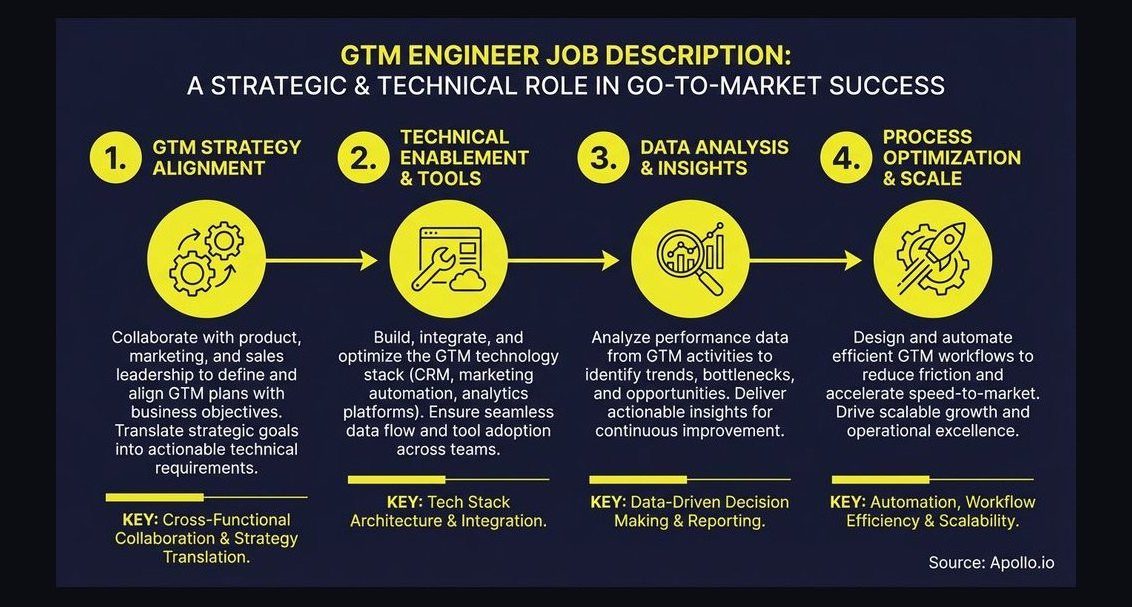 revopsWhat is a GTM engineer and why is the role exploding in 2027?
 revopsHow can RevOps use AI to identify stalled deals in longer sales cycles in 2027?
 revopsHow do you operationalize net revenue retention in 2027?
 revopsHow Do I Reconcile Competing Sales Forecasting Methods in 2027?
 revopsWhat role does AI play in reducing vendor bloat for enterprise GTM stacks in 2027?
 revopsHow can RevOps use AI in the funnel to identify stalled deals before the buying committee loses interest in 2027?
 revopsHow do you prioritize the RevOps backlog in 2027?
 revopsAre longer sales cycles in 2027 forcing RevOps to redefine the 'MQL-to-revenue' attribution model?
 revopsWhat is the cost of AI vendor lock-in for B2B sales teams in 2027?
 revopsHow is AI in the funnel reshaping the scoring of B2B inbound leads in 2027?