

How do you start a stump grinding business in 2027?
 Curated byKory White · Fractional CRO · Maryland
Quality
Certified
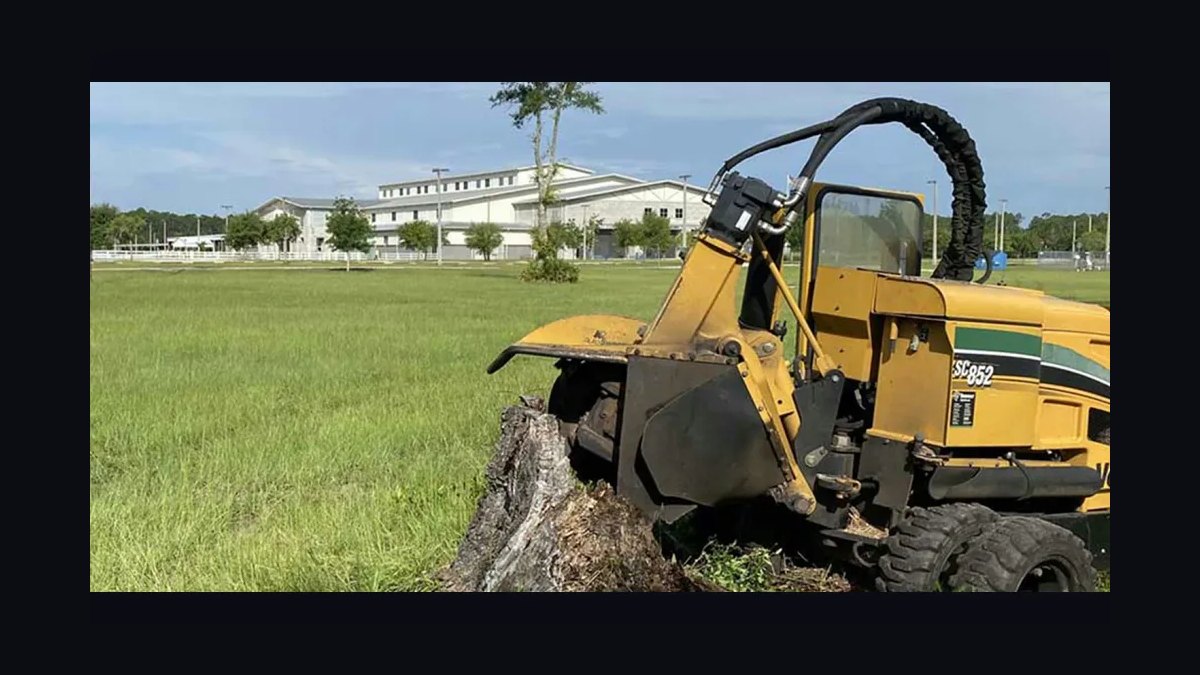
Start a stump grinding business in 2027 by choosing between a bootstrap used mid-towable grinder path at roughly $8K–$25K or a new-equipment path at $42K–$78K, forming an LLC taxed as an S-corp, stacking general liability plus contractor pollution liability plus an equipment floater, opening an 811 one-call account, and pricing per inch.
The two entry paths, compared side by side
Almost every honest launch decision in this trade collapses into one question: used mid-towable grinder or new machine? Everything else — entity type, insurance, pricing, marketing — is roughly the same either way. The equipment choice is what sets your monthly obligation, your job-acceptance range, and how much runway you have before the business must pay for itself.
Path A — the bootstrap used mid-towable. You buy a used machine in the Vermeer SC252 or Carlton 2300 class for roughly $3K–$12K, tow it behind a three-quarter-ton pickup you already own or buy used, and enter the market with $8K–$25K of incremental capital in 60–90 days. The wide range is almost entirely the truck question. An operator who already owns an F-250 or a Ram 2500 collapses the entry to $8K–$15K; one buying the truck adds $15K–$25K. There is no note. There is no monthly payment sitting on the calendar whether or not it rains for two weeks. That single fact is the whole argument for Path A: in a weather-exposed trade with a concentrated April-to-November season, a zero-debt operator can absorb a bad month without a crisis.
The trade-off is real. Used machines carry unknown hydraulic history, worn cutting-wheel pockets, and engines whose service logs may or may not exist. A full pocket set runs $1.5K–$3K. A hydraulic pump rebuild is $2K–$5K. An engine rebuild is $3K–$8K. Buy wrong and you spend your working capital on a machine that should have been priced $6K lower.
Path B — the new mid-towable. A new SC362-class machine at $28K–$42K, a new trailer, new prep equipment, and full insurance lands you at $42K–$78K all-in for year one. You get a factory warranty, a dealer relationship from day one, no inherited maintenance debt, and a machine that will run three to five seasons before major service becomes a real budget line. Financed at 5–7 years through a captive lender, the payment is manageable — but it is a payment, and it comes due in February when the ground is frozen and the phone is quiet.
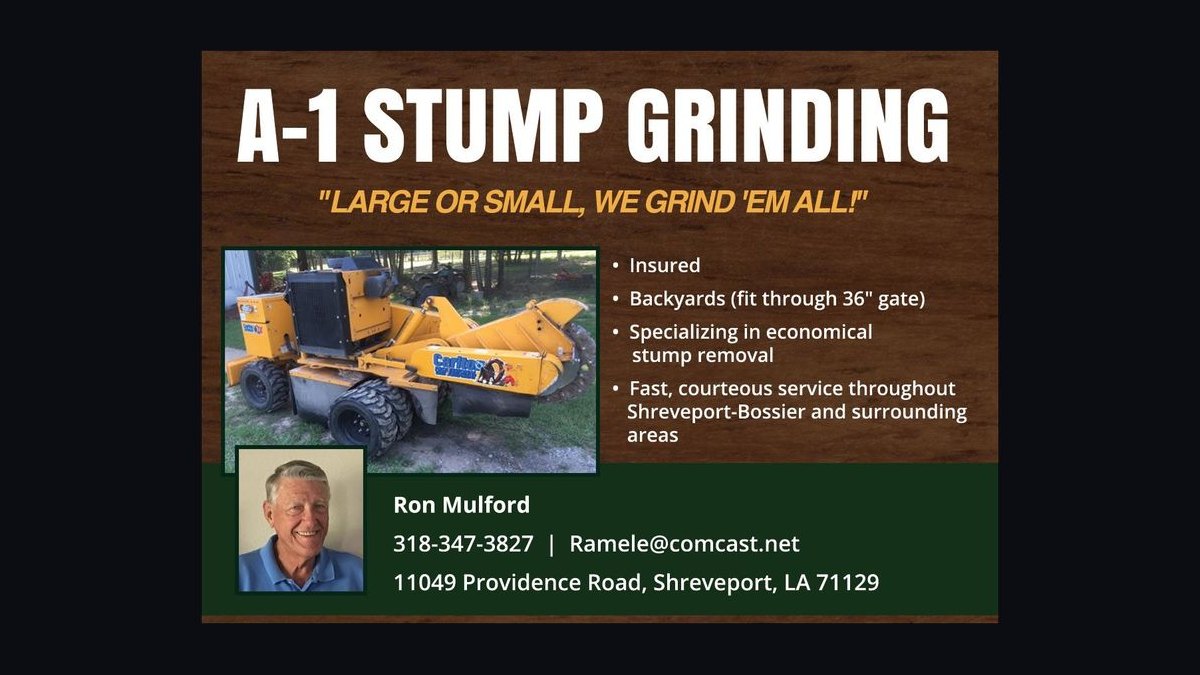
Path C — the self-propelled commercial machine. An SC852-class or Carlton 4012-class self-propelled unit at $82K–$135K, plus a service-body truck and heavy trailer, puts total year-one capital at $135K–$220K. Debt service on a $90K machine runs roughly $1,400–$1,800 a month on a five-year note at 8–10% APR. That machine only justifies itself on a $200K+ annual revenue trajectory, which in practice means a book already weighted toward commercial, HOA, and municipal hourly work rather than one-off residential stumps. Starting here without that book is how new operators end up with a beautiful machine and a payment they service out of savings.
Path D — the two-truck launch. Rare, but some operators with capital and an existing trade crew start at $65K–$185K: two used mid-towable kits, two pickups, two trailers, prep, insurance, and a payroll buffer for a second operator. This skips the hardest scale step by doing it up front, which sounds efficient and usually is not — you inherit employee management, workers comp, and misclassification exposure before you have proven the unit economics of a single truck.
The honest recommendation for most first-time entrants is Path A. The mid-towable category handles about 95% of residential work, tows behind a truck you can also use personally, and can be bought outright without a lender's opinion of your credit. Path B makes sense when you already have committed referral volume — a tree-removal company that has told you they will send you work — and the uptime of a warrantied machine is worth the payment. Paths C and D are scale decisions wearing a startup costume.
How to decide between the paths
The decision is not really about which machine you like. It is about four inputs, in this order: your season length, your existing truck, your committed demand, and your tolerance for a fixed monthly obligation.
Season length is the input people skip. Northern operators in Minneapolis, Boston, and much of the upper Midwest and Northeast face frozen ground that physically prevents grinding to depth for months. That is a genuinely shorter revenue window — often seven months of real production. Southern and Southwestern operators in Florida, Texas, Arizona, and the Gulf Coast run ten or eleven months. The same $1,500 monthly payment is a very different burden across a seven-month season versus an eleven-month one. Northern operators should skew hard toward the debt-free used path, or plan a winter trade — snow removal is the classic pairing — before signing a note.
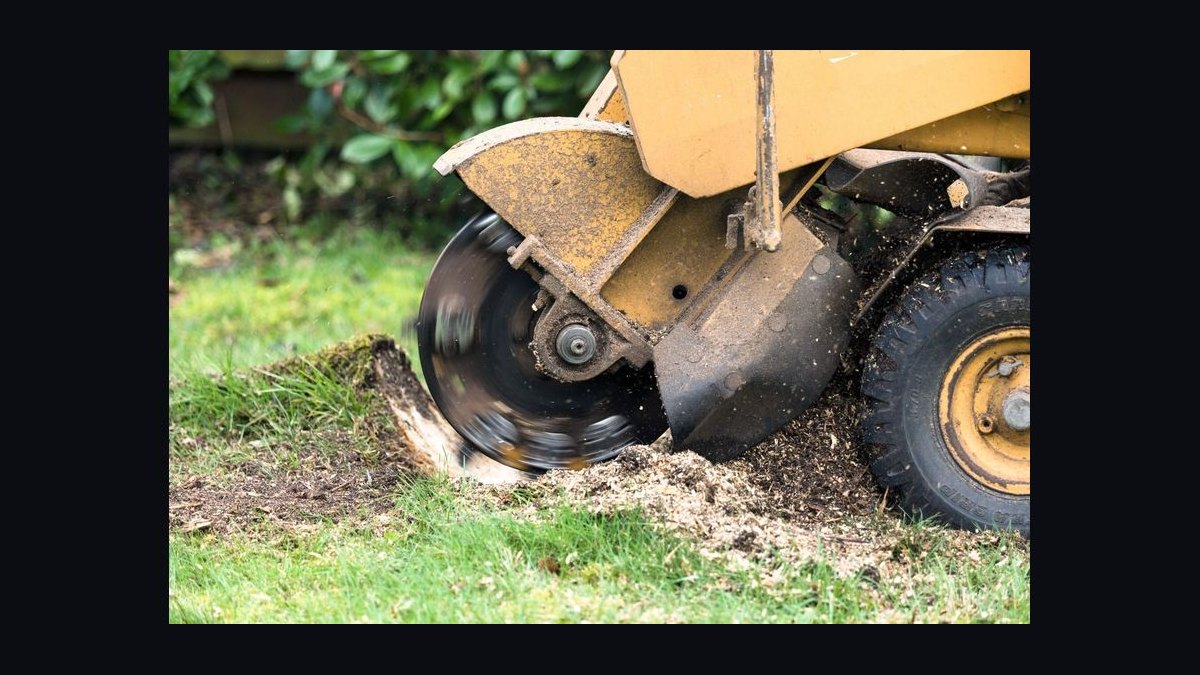
The truck question changes the math more than the grinder does. A used SC252-class grinder is $3K–$12K. A new F-350 is $58K–$95K. If you already own a capable three-quarter-ton with a 10,000–12,000 lb tow rating, you are much closer to launch than you think, because a Vermeer SC362 on a 14-foot equipment trailer with a chip box totals roughly 6,500–8,500 lbs — well within that envelope. If you do not own the truck, buying a used 2018–2022 Super Duty or Ram at $28K–$58K is usually a better capital decision than buying a new grinder.
Committed demand is what justifies new equipment. If you have walked into eight to fifteen tree-removal companies inside a 25-mile radius and three of them have said they will sub-contract grinding to you at $50–$150 per stump, you have something close to a floor under revenue. That floor is what makes a payment safe. Without it, you are betting the note on Google Local Services Ads converting, which they usually do — LSA leads for stump grinding convert at roughly 25–40% because intent is high — but "usually" is not the same as "committed."
Launch timing is a decision, not a detail. Peak season is April through July in most US climates. An operator who launches in July has already missed the spring booking cycle and the heaviest demand window. If you cannot be operational, insured, and marketed by March, the disciplined move is often to spend the winter buying equipment carefully, building the referral relationships in person, and launching clean the following spring rather than burning a half-season on a partial ramp.
The concrete numbers behind each path
Capital is only half the picture. What separates the paths over a full season is operating cost and throughput, and those are knowable numbers rather than guesses.
Revenue mechanics are per-inch. The industry-standard residential model is $4–$8 per inch of diameter measured at the widest point at ground level, with a $100–$200 trip minimum. A 16-inch stump prices at $64–$128 base and gets bumped to the minimum. A 24-inch stump runs $96–$192. A 36-inch stump runs $144–$288. Multi-stump discounts are normal and rational — $4–$5 per inch for stumps two through five on the same property, $3–$4 per inch for stumps six and beyond — because truck time, setup, and the utility locate are already amortized once you are on site. Commercial, HOA, and municipal work prices hourly at $200–$450 with two-to-four-hour minimums; self-propelled operators command the top of that band because throughput justifies it.
Daily throughput by path. A mature solo operator on a mid-towable clears 6–12 stumps a day in peak season at $100–$220 each, or $600–$2,640 gross, netting 50–65% after fuel, teeth, insurance, and depreciation allocation. A solo operator on a self-propelled machine with a commercial-heavy book bills 3–6 hours at $250–$450, or $750–$2,700 gross, netting 45–60% after the heavier equipment cost recovery. A two-truck operation runs $1,800–$4,500 gross a day at peak, netting 35–45% once payroll, benefits, and workers comp are in.
Teeth are the operating cost that ambushes new operators. Modern grinders carry 20–60 carbide-tipped teeth on a circular cutting wheel. The dominant system is Greenteeth by Leonardi Manufacturing, with competing carbide systems from Sandvik and others. Teeth run $8–$14 each; pockets are $25–$45 each and last 1,000–2,000 hours. Teeth wear in 8–40 hours of grinding depending entirely on soil. A solo operator at 8–12 stumps a day burns 30–80 teeth a month, which is $240–$1,120, and mature operators simply budget $400–$800 a month as routine while stocking 30–60 spares in the truck for mid-job replacement.
Soil type is the variable that determines where in that range you land, and new operators consistently underestimate it. Clay is gentlest and pushes teeth toward the 40-hour end. Sandy, coastal, and decomposed-granite soils are brutally abrasive and burn teeth at the bottom of the range — Florida, the desert Southwest, and coastal markets all live there. Rocky soil is the worst case, where a single hidden rock or buried construction debris can chip multiple teeth in seconds. That is why prep is not optional and why a market with abrasive soil should simply cost more per stump. An operator who does not price regional soil reality into the structure is subsidizing every job out of margin.
Insurance is the other line people underspec. A solo operator's total annual insurance load runs $3,800–$11,500: general liability at $1M/$2M for $1,200–$3,200; a contractor pollution liability rider at $300–$700; an equipment floater at $800–$2,800; commercial auto at $1,800–$4,200; an umbrella at $400–$1,500; and a license bond where required at $200–$750. Add one W-2 employee and workers comp appears — classified under the high-rate tree-care code at roughly $8–$25 per $100 of payroll — pushing a two-truck operation's insurance load to $12K–$28K.
The rider people skip is contractor pollution liability, and skipping it is the single most expensive mistake available. Standard general liability policies exclude pollution events and utility-strike damages. Without CPL, a nicked gas line produces uncovered repair, re-route, regulatory penalty, and business-interruption exposure landing squarely on the operator. The equipment floater matters for a similar structural reason: commercial auto covers the trailer but not the grinder riding on it. Any operator with a machine worth more than $10K who skips inland marine coverage is one storm or one theft away from a business-ending uncovered loss.
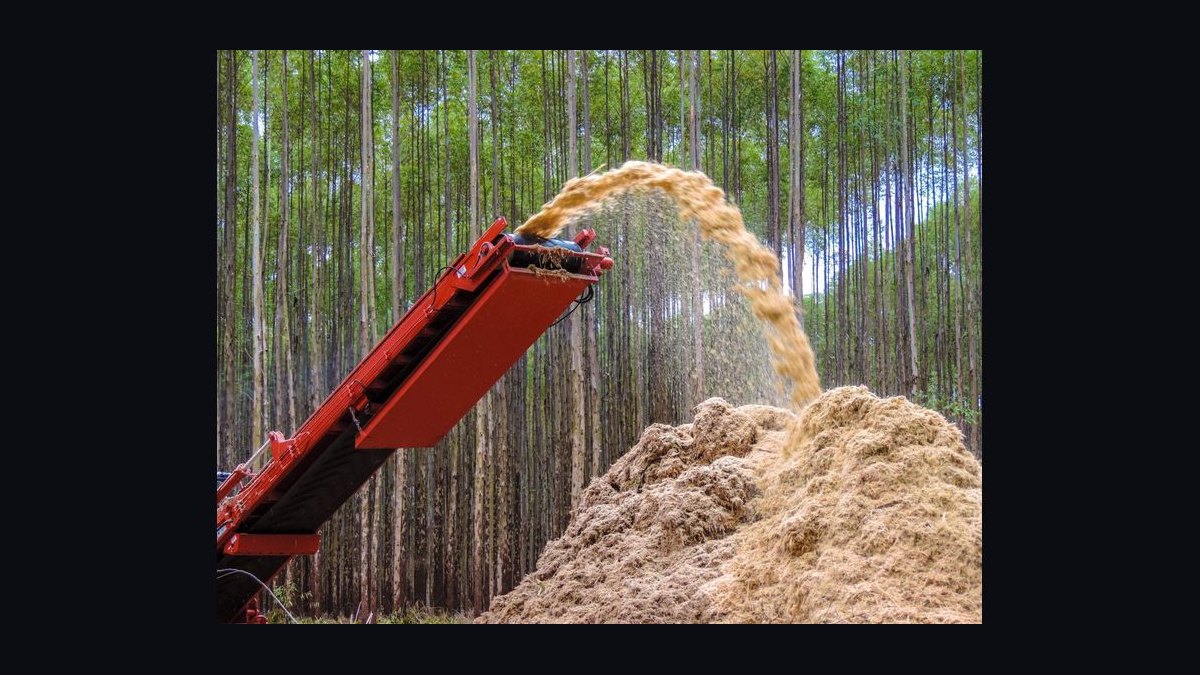
Ancillary revenue is real margin. A 24-inch stump produces roughly 6–12 cubic feet of chip-and-dirt mixture. Most residential customers leave chips in place to backfill the hole at no charge, but haul-away runs $50–$200 extra depending on volume and dump distance. Topsoil backfill is $75–$200. Seed or sod is $50–$300. Surface root removal within three to six feet of the stump runs $25–$75 per root. After-hours and weekend work typically prices at 1.5x base, and genuine same-day storm response at 1.5–2x. These add-ons carry almost no incremental equipment cost, which is why disciplined operators quote them transparently rather than absorbing them.
Software is cheap and should stay cheap early. Year-one tech stack for a solo operator is $1,200–$3,200 annually — a scheduling and invoicing platform in the Jobber or Housecall Pro class at $50–$249 a month, QuickBooks Online at $30–$200, and payment processing at standard 2.6–2.9% plus $0.30 per transaction. Yardbook's lightweight tier is genuinely sufficient for a first season. Heavier platforms like Service Autopilot make sense once recurring HOA and commercial contracts arrive and route optimization across 8–15 daily stops starts to matter. ServiceTitan is overkill below roughly ten trucks; paying per-user enterprise pricing at two-truck scale is burning margin on features you will not open.
The market you are entering and who you compete against
US tree-care industry revenue sits in the high-$20B to low-$30B range and grows in the mid-single digits annually, driven by aging suburban tree stock, post-storm cleanup, insurance-driven removal of hazardous trees, and utility-line clearance. Stump grinding is a slice of that — call it a low-single-digit-billions addressable market — spread across tens of thousands of tree-care companies, of which a meaningfully smaller subset operates dedicated grinders as a real revenue line.
The category is deeply local. Virtually all work comes from within a 25–40 mile drive radius, because trailering equipment further destroys the margin on a $150 stump. That geographic constraint is genuinely good news for a new entrant: national brands cannot flood your zip codes, and your real competitive set is a handful of operators you could name after two weeks of asking around.

You will compete against four archetypes. The legacy solo operator — often a founder in their fifties or sixties running one aging mid-towable with no succession plan, an established customer list, low overhead, and no marketing engine. They are your most common competitor and, eventually, an acquisition target. The tree-removal company that owns a grinder, which captures the whole job but often executes grinding slowly as a secondary line. The full-service regional firm — Davey Tree, BrightView, Bartlett — with brand, insurance scale, and pricing built for overhead, which makes them slow and expensive on small residential jobs. And the new specialist, which is what you are trying to be: disciplined on locates and pricing, dense in referral relationships, responding to leads in under five minutes.
Three forces make 2027 a structurally reasonable entry window. The postwar and 1970s–80s suburban housing waves planted enormous numbers of fast-growing shade trees — silver maples, ash, sweetgum, Bradford pears — now reaching the end of their safe service lives at roughly the same time, and the emerald ash borer accelerated ash removals across the Midwest and Northeast. Every removed tree leaves a stump, so grinding demand is a multi-year lagging echo of removal activity. Meanwhile, a large share of existing dedicated grinders are solo founders nearing retirement with no succession plan, leaving local share genuinely unclaimed. And Google Local Services Ads, Google Business Profile reviews, and NextDoor mean a brand-new operator can capture high-intent residential demand within weeks rather than waiting years for word-of-mouth.
The honest counterweight is that the same low barrier competes the opportunity away. The window rewards the operator who executes unglamorous disciplines — locates on every job, tooth budgeting, per-inch pricing held without discounting, referral density — not the one who simply buys a grinder and waits.
Where the demand actually comes from at maturity is worth internalizing before you spend a dollar on marketing. The mix typically settles around 40–55% residential direct, 25–40% tree-removal-company referral, 10–20% commercial, HOA, and property management, and 5–10% real-estate-agent and pre-sale referral. Local Services Ads carry the early ramp at $15–$60 per qualified lead with a cost per acquired customer landing around $40–$150, and response speed inside five minutes materially affects both conversion and ranking. But the channel that produces predictable margin is the referral book: tree-removal companies without grinders charge customers $150–$350 for grinding as part of a removal and sub it to you at $50–$150. Building eight to fifteen of those relationships — in person, with demonstrated 24-to-48-hour turnaround — is what converts a volatile ad-fed calendar into a business.
Implementation sequencing, from decision to first paying week
The order matters, because several steps have multi-week lead times that will strand you if you discover them late.
Weeks 1–2: entity, insurance quotes, and licensing research. Form a single-member LLC and file for S-corp treatment via IRS Form 2553 — the reasonable-salary-plus-distribution split starts saving meaningful self-employment tax once revenue crosses roughly $50K. Be clear-eyed that virtually every equipment loan, commercial auto policy, and license bond will require a personal guarantee; the LLC does not insulate you from those. Simultaneously research licensing, because it varies wildly. California requires a CSLB C-27 or D-49 license for jobs over $500, with documented experience, exams, a bond, and a $1M general liability minimum. Washington requires L&I contractor registration with a performance bond. Oregon requires a CCB license over $1,000. Arizona requires ROC registration over $1,000. Florida, Texas, New York, and Illinois have no statewide tree-care license but push registration down to the county or city level. Most other states default to local municipal contractor registration with proof of general liability. Check the state board first, then every municipality inside your 25–40 mile radius.
Weeks 2–4: equipment sourcing and inspection. Start with the local Vermeer, Carlton, or Morbark dealer's trade-in inventory — you get first call on quality trades plus a 30-to-90-day mechanical warranty private sales never include. Then Equipment Trader and MachineryTrader for the broader used market, IronPlanet and Ritchie Bros. for auction value on fleet-divested or repossessed units, and estate or business-closure sales where a retiring operator sells the entire kit — grinder, trailer, prep, customer list — at a discount to component-by-component pricing. Craigslist and Facebook Marketplace work at solo scale but offer no warranty and no recourse.
Inspect in a fixed order: cutting wheel and pocket condition, hydraulic system for leaks and pump health, engine compression and operating temperature, chassis frame for cracks (a cracked frame is a walk-away, not a negotiation), boom cylinder seals at $400–$900 each, and the service log. A well-documented log is genuinely worth 10–20% of purchase price as a confidence premium.
Week 3: open the 811 account. Federal rules under PHMSA plus state one-call law require anyone excavating or grinding more than 12 inches below grade to give two business days' advance notice to the state one-call center before starting. Centers are state-level — DigAlert and USA North in California, Sunshine 811 in Florida, Texas811, Miss Utility and Miss Dig in various states — and they route your ticket to every member utility operator, who then mark their facilities using the APWA uniform color code: red for electric, yellow for gas and petroleum, orange for communications and fiber, blue for potable water, green for sewer, purple for reclaimed water and irrigation, white for proposed excavation, pink for temporary survey.

This is the single most consequential compliance requirement in the trade. Grinding into a marked utility without calling is a statutory violation in most states, carrying civil penalties plus full repair cost liability plus criminal exposure in severe cases, and the Common Ground Alliance's DIRT reporting has logged roughly 200,000 underground damages a year across all trades. Call on every job, two to three business days ahead. Walk the marks with the homeowner before starting. Photograph the paint. Keep a written locate-confirmation file, because carriers and courts will demand it.
The blind spot that catches new operators is that 811 only marks public utility facilities up to the meter or property line. Privately installed lines on the customer's side are not marked — irrigation, low-voltage landscape lighting, invisible-fence wire, pool plumbing and electrical, septic lines, propane runs from a yard tank, and anything a previous owner installed themselves. Those are exactly the lines a stump near a house, fence, or flower bed sits on top of. Treat the homeowner walk-through as a second locate: ask explicitly what private utilities exist, probe with a rod where there is doubt, and refuse to grind blind. A struck irrigation main is a cheap lesson. A struck pool electrical or propane line is not.
Weeks 4–6: insurance binding, safety kit, and marketing spin-up. Bind general liability, the contractor pollution liability rider, the equipment floater, and commercial auto together — brokers who serve the tree-care space will package them. Build the PPE kit to the applicable standards: ANSI Z87.1 safety glasses with side shields, chainsaw chaps for prep work, a high-visibility vest, steel-toed boots, hearing protection (grinder noise exceeds 100 dB), and a hard hat where falling-debris risk exists. Eye injuries from flying chips are the most common grinder injury, which is why the glasses are not negotiable. Work under OSHA's logging-operations standard and the ANSI Z133 arboricultural safety standard as your operating baseline.
Simultaneously, claim and fully build the Google Business Profile, start Local Services Ads verification — license and insurance proof, owner background check, and Google's pre-screening typically take two to four weeks to activate, which is why you start it before the machine arrives — and walk into every tree-removal company in a 25-mile radius with a one-page capability sheet and sub-pricing.
Weeks 6–10: first jobs and the routines that compound. Run a tight on-site routine from job one. The night before: call in locates, verify equipment fueled and fluids topped, inspect teeth, confirm the customer window. On arrival: walk the zone with the homeowner, confirm every locate mark is visually present, photograph the marks from multiple angles, identify unmarked private utilities, verify escape paths and a 50-foot bystander setback, position tarps for chip containment near windows, vehicles, decks, and pools, and put the PPE on before touching anything.

Grinding execution: saw the stump down to 6–12 inches above grade, clear surface debris and embedded metal, rock, and concrete, then grind in measured passes to 6–12 inches below grade so grass can root above. Pull off the stump for tooth and hydraulic-temperature inspection every 10–15 minutes on hard, rocky, or sandy material. Never grind through a marked line — if the stump sits within about 18 inches of one, hand-dig that section or decline the job.
Closeout is where the compounding happens: push chips back to a level finish or scoop for haul-away per the agreement, rake and blow clean, walk the finished work with the homeowner, collect payment, and send the Google review request by text with the direct link as the final on-site action. Review volume is the dominant input to organic Maps placement, and automating that text is the highest-ROI software feature a solo operator has.
What sustains the business past year one is a small set of habits rather than a growth hack. Marketing settles at 8–15% of revenue for a mature solo operator, with attribution tracking mattering more than budget size — knowing which channel produced which job lets you move spend away from dead lead marketplaces toward Local Services Ads, review acquisition, and the referral book. Differentiation in a price-competitive trade comes from responsiveness (five-minute lead response, 24-to-48-hour quotes, jobs scheduled inside 5–10 business days against a competitor norm of two to four weeks), professional presentation, review density, and insurance proof ready on request. That premium positioning supports meaningfully higher per-job pricing than the low bidder, and it is the only durable answer to suburban price competition, because competing on price alone in a low-barrier trade is a race to a margin that does not cover equipment depreciation.
Maintenance discipline is the other survival habit, because for a solo operator the grinder is a single point of failure — when it is down, revenue is zero, and the calendar does not pause. Daily: inspect and replace worn teeth, check hydraulic fluid and look for leaks, check engine oil, grease boom pivot and wheel bearing, clear debris from the cooling system. Weekly: inspect wheel and pockets for cracking, check belt tension, check tracks or tires, check trailer tires, lights, and electric brakes. By hour meter: change engine oil, hydraulic fluid, and filters on the manufacturer's schedule — a disciplined industrial engine routinely reaches thousands of hours while a neglected one turns into a $3K–$8K rebuild at the worst possible moment. Build the dealer and hydraulic-hose-shop relationships before you need them, and keep belts, hoses, filters, teeth, and pocket bolts in the truck.

Finally, be realistic about where this ends. Solo operators sell at thin multiples — often just equipment plus a customer list to a competitor — because the business is one skilled operator plus a few hundred customer relationships that leave when they do. Two-truck operations transact better; genuine multi-turn exits require building into a mid-cap operation with management depth, documented systems, recurring contracts, and a brand independent of the founder. For most operators, the right plan is continuation, not exit: run it as a high-cash-flow asset with S-corp tax efficiency, Section 179 equipment expensing, a home-office deduction, and a solo retirement plan, and take the $90K–$180K owner net for as long as the body holds. That is not a lesser outcome. It is the outcome most of this trade is actually built to produce — and the same discipline that makes a RevOps team predictable at scale, measuring channel attribution and holding price, is exactly what separates the operators who net six figures from the ones who stay busy and broke.
Related questions
Do I need an arborist certification to grind stumps?
No state requires ISA Certified Arborist credentials to operate a grinder. Some states require a general contractor or tree-service license above a dollar threshold, and certification helps with commercial and municipal bids, but it is not a gate to entry for residential stump work.
Can I start part-time while keeping a full-time job?
Yes, and many operators do. Weekend and evening grinding fits residential demand reasonably well, though it caps you out of commercial and referral work that expects weekday turnaround. The constraint is response speed — lead conversion drops sharply when you cannot reply within minutes.
How long until the equipment pays for itself?
A used $8K–$12K mid-towable at 6–10 stumps a day in peak season typically recovers its cost within a first full season. A financed $90K self-propelled machine carrying $1,400–$1,800 monthly requires sustained commercial hourly volume and realistically takes multiple seasons.
What happens if I hit a utility line?
Shut down immediately, evacuate to 100-plus feet, call 911, the utility's emergency dispatch number from the locate ticket, and the customer. Do not attempt repair. Photograph everything and notify your carrier within 24 hours. Contractor pollution liability coverage is what makes this survivable.
Should crew members be 1099 or W-2?
W-2. You control schedule, equipment, training, and methods, which is the classic employee test. Misclassification audits produce back taxes, workers-comp premium assessments, and state unemployment liability that can exceed $50K per worker over a three-year window.
FAQ
What is the realistic minimum to start a stump grinding business?
Roughly $8K if you already own a capable three-quarter-ton pickup: a used mid-towable grinder at $3K–$12K, a used equipment trailer at $2K–$4K, prep equipment and PPE at $2K–$4K, insurance and licensing at $2K–$4K, and $3K–$5K of working capital. Anyone quoting $3K is selling a worn handheld unit and no insurance, which is not a business.
How much does a stump grinding business actually make?
A mature solo operator running 6–12 stumps a day in season typically produces $120K–$280K in revenue with $90K–$180K owner net at 50–65% margin. A two-truck operation runs $250K–$500K at 35–45% margin, because payroll, benefits, and workers comp compress the percentage even as absolute dollars rise.
How should I price — per inch, per stump, or hourly?
Per inch of diameter measured at ground level is the residential standard at $4–$8 per inch with a $100–$200 trip minimum. Flat per-stump pricing works for sub-contracting to tree-removal companies. Hourly at $200–$450 with two-to-four-hour minimums is right for commercial, HOA, and municipal work.
Is 811 really required for every job?
Yes, whenever you break ground deeper than 12 inches, which grinding always does. Two business days' advance notice is the standard requirement. The habit that matters beyond the legal minimum is photographing the locate marks and keeping a written confirmation file, because that documentation is what makes an insurance claim payable if something goes wrong.
What is the biggest hidden cost new operators miss?
Carbide teeth. They wear in 8–40 hours depending on soil abrasiveness and cost $8–$14 each, so a solo operator burns $240–$1,120 a month. Budget $400–$800 monthly as routine, stock spares in the truck, and price abrasive-soil markets higher — running dull teeth costs 30–50% of daily production and accelerates pocket and hydraulic wear.
Should I add stump grinding to an existing landscaping or tree business instead of starting standalone?
Often yes. If you already own a truck, trailer, and customer base, adding a used grinder is a low-risk margin expansion, and you capture grinding revenue you currently sub out. Standalone entry makes more sense when you want the referral-subcontractor model — being the specialist that eight to fifteen tree companies call.
Sources
- https://www.osha.gov/laws-regs/regulations/standardnumber/1910/1910.266
- https://www.phmsa.dot.gov/safe-digging/call-811-know-whats-below-call-you-dig
- https://call811.com/
- https://commongroundalliance.com/
- https://www.sba.gov/business-guide/launch-your-business/choose-business-structure
- https://www.irs.gov/forms-pubs/about-form-2553
- https://www.cslb.ca.gov/
- https://www.isa-arbor.com/
- https://www.tcia.org/
- https://www.vermeer.com/
Related on PULSE
- How do you start a tree removal business?
- How do you start a mobile RV repair business?
- How do you start a pressure washing business?
- How do you price recurring home-service contracts?
- How do you build a referral network as a solo trade operator?
- How do you decide between used and new equipment for a service business?
This page will be disappearing soon. Save it to your device for $1 — or read it free while it is here.
@Kory-White- · if Venmo asks, the last 4 of my number are 2012
This page is gone.
This one is off the shelf now. $1 keeps it on your phone for good — the whole page, pictures and diagrams included.
 soft-washHow do you start a soft wash roof cleaning business in 2027?
 3d-printingHow do you start a 3D printing service business in 2027?
 screen-printingHow do you start a screen printing business in 2027?
 vending-machineHow do you start a vending machine business in 2027?
 towing-serviceHow do you start a towing service business in 2027?
 mobile-tire-repairHow do you start a mobile tire repair business in 2027?
 custom-apparelHow do you start a custom apparel business in 2027?
 electricianHow do you start a electrician service business in 2027?
 home-cleaningHow do you start a home cleaning service business in 2027?
 fence-installationHow do you start a fence installation business in 2027?