

How do you start a locksmith business in 2027?
 Curated byKory White · Fractional CRO · Maryland
Quality
Certified

Start a locksmith business in 2027 by choosing a service model, clearing your state's licensing and background-check requirements, bonding and insuring the entity, buying a lean tool kit and a used cargo van, then launching with emergency lockouts while deliberately building automotive programming and recurring commercial contracts that never depend on Google search.
The 2 a.m. call that reveals the whole business
Picture a new operator six weeks into launch. A homeowner is standing in a driveway at 2 a.m., phone at nine percent battery, typing "locksmith near me" into Google. Three of the top five results are fabricated listings — a call center in another country, a street address that resolves to a vacant lot, a phone number that forwards to a dispatcher who quotes "$15 service call." The homeowner calls one of them because it is the cheapest and it is first. Ninety minutes later an unlicensed subcontractor arrives, declares the deadbolt "unpickable," drills it out, and hands over a bill for $650 on a lock a credentialed locksmith would have opened non-destructively in four minutes for $110.
That single scenario contains almost every strategic lesson of the trade. The homeowner never learns the difference between a licensed operator and a bait-and-switch dispatcher until after the drill bit is through the cylinder. The legitimate locksmith three miles away, with an ALOA credential, a bonded LLC, a wrapped van, and forty genuine five-star reviews, sat idle — not because they were less skilled, less local, or more expensive, but because the acquisition channel they depend on is structurally polluted. The Federal Trade Commission and state consumer-protection offices have published warnings on this exact scheme for over a decade. Google has run enforcement waves, added video verification to Business Profiles, and layered background and license screening onto Local Services Ads. The fake listings keep coming back, because registering a new one is cheap and the enforcement is reactive.
The correct read of that scenario is not despair. It is a strategic brief. The trade has an unusually low capital barrier — a functioning solo operation launches for roughly $4,000 to $18,000, which is a fraction of what an HVAC, plumbing, or electrical startup demands. Credentialing takes months, not years. Cash flow starts on the first call, because lockouts are paid same-day by card or cash with no receivables cycle. And because the search channel is so badly compromised, the market has generated an enormous premium for visible legitimacy: a customer who was drilled once will pay above market forever to avoid a second time. The scammers, by degrading the channel, created a trust arbitrage that a disciplined operator can harvest.

The second, less obvious lesson is about revenue mix. That homeowner was a one-time, high-anxiety, price-shopping, Google-mediated transaction. Three miles in the other direction, a property management firm with 380 rental units generates a rekey on every tenant turnover — forty to seventy jobs a year, scheduled, invoiced net-30, never searched for on a phone at 2 a.m. The operator who builds their business on the first customer type has a volatile job. The operator who uses lockouts to acquire customers cheaply, then migrates the mix toward automotive programming and recurring commercial routes, builds a sellable asset. Everything below is essentially an elaboration of that distinction. It is the same revenue-quality logic any RevOps practitioner applies when separating transactional churn-prone revenue from contracted recurring revenue — the trade is different, the math is identical.
Frame the launch decision this way and the sequencing becomes obvious: get legal and insured first, buy narrowly, price with discipline, answer every call, and spend the first eighteen months converting emergency demand into contracted demand.
How the mechanism actually works: license, credential, entity, route
The machinery of starting has four gears that must engage in order. Skipping one does not save time; it strands you later, usually at the exact moment a commercial buyer asks for a certificate of insurance.
Gear one: state licensing. Locksmith licensing in the United States is a patchwork, not a national standard. Roughly fifteen states plus several major municipalities require a locksmith-specific license, registration, or a low-voltage/security-contractor license. Texas administers it through the Department of Public Safety's Private Security Bureau. California licenses "Locksmith Company" operators through the Bureau of Security and Investigative Services. Illinois, New Jersey, North Carolina, Virginia, Tennessee, Oklahoma, Louisiana, Connecticut, Maryland, Nevada, Nebraska, and Alabama maintain regimes of varying strictness, and cities like New York and counties like Miami-Dade layer on their own rules. The remaining states impose no trade-specific requirement at all — you still register a business, you just do not sit for a locksmith license. Where a license exists it nearly always requires a fingerprint-based criminal background check, for the obvious reason that the trade grants licensed access to homes, vehicles, and commercial buildings. Verify your state's rule before you spend a dollar on tools; a disqualifying record found after you have bought a code machine is an expensive discovery.

Gear two: credentialing. ALOA Security Professionals Association, founded in 1956, runs the tiered ladder the trade recognizes: Registered Locksmith, Certified Registered Locksmith, Certified Professional Locksmith, and Certified Master Locksmith, the last earned by examination across many categories. In unlicensed states no law requires ALOA. Commercial buyers, insurers, and informed residential customers look for it anyway, because it is one of the few signals a fraudulent listing cannot fabricate. Training paths into the credential include ALOA's own education program, manufacturer courses from Schlage, Medeco, and Mul-T-Lock, community-college locksmith programs, and structured apprenticeship. Automotive operators should additionally pursue NASTF Vehicle Security Professional registration, which grants audited access to OEM key codes and is increasingly expected by insurers and motor clubs.
Gear three: the legal and financial shell. Form a single-member LLC — cheap, fast, and it separates personal assets from business liability. Consider an S-corp election only once net income clears roughly $80,000 to $100,000, where payroll-tax savings start outweighing administrative cost. Get an EIN, a dedicated business bank account and card kept strictly separate from personal spending, a sales-tax permit in states that tax resold hardware, and any local business or home-occupation permit. Then two pieces of paper that are non-negotiable in every state, licensed or not: a surety bond, typically $10,000 to $25,000 in coverage at $100 to $400 per year in premium, and general liability insurance at $1M/$2M limits, roughly $600 to $1,800 per year. The liability policy must carry a bailee or care-custody-and-control rider, because a locksmith routinely takes temporary custody of customers' vehicles, keys, and building access. Workers' compensation becomes mandatory with the first employee.
Gear four: the route. Everything above is preparation; the route is the business. It begins with a Google Business Profile at a real, verifiable address plus Local Services Ads verification, which requires passing the background and license screening that scam networks structurally fail. It matures through review accumulation, a wrapped van, roadside-assistance panel membership, and — the actual moat — direct outreach to property managers and facilities directors.

The reason the order matters is that gears three and four are gated by gears one and two. A property manager will not sign a vendor who cannot produce a COI. A roadside network will not add a provider who fails screening. An insurer will not bind a policy for an unlicensed operator in a licensing state. The operator who tries to "start earning first, paper it later" spends the first year locked out of exactly the revenue that would have made the business durable.
Real numbers: capital, pricing, and what the route actually earns
The U.S. locksmith and security-systems services industry runs roughly $3.0 to $3.2 billion in annual revenue across approximately 19,000 to 22,000 establishments, the overwhelming majority sole proprietors or two-to-three-person mobile shops rather than multi-location firms. The Bureau of Labor Statistics counts roughly 17,000 to 19,000 employed locksmiths and safe repairers under SOC 49-9094 with a median wage near $50,800 — a number that materially understates owner earnings, because it excludes the self-employed majority who keep the gross margin instead of drawing a wage. Headline growth is low single digits. The structure, however, is fragmented and demographically aging, which is precisely the condition that rewards a disciplined new entrant: no dominant national brand, retiring incumbents with no succession plan, and a share of the market held by fraudulent listings that a legitimate operator can take back.
Startup capital by model. A solo mobile generalist launches at $4,000 to $18,000: roughly $3,500 to $8,000 in core tools, $9,000 to $25,000 for a used van plus upfit plus wrap if you do not already own a usable vehicle, $1,000 to $2,000 for licensing, bond, and insurance, $500 to $1,500 for software and marketing setup, and $1,000 to $3,000 in starter parts. An automotive specialist front-loads a transponder programmer and code machine, pushing tool spend to $12,000 to $22,000. A two-technician mobile operation runs $35,000 to $95,000, because you add a second outfitted van, a second kit, an employee's wages and payroll burden during the ramp before that truck fills its schedule, deeper inventory, and a working-capital cushion. A storefront hybrid runs $45,000 to $120,000 and trades net margin for walk-in key-cutting volume and brand permanence. An access-control integrator runs $60,000 to $160,000 with project-based, slow-ramp revenue.

The day-one tool list. A manual key-cutting machine, $350 to $1,400. Lock pick set and tension wrenches, $80 to $250. Plug spinner and bypass tools, $60 to $180. Pinning kit and followers, $90 to $300. Starter key blank inventory, $400 to $1,100. Cordless drill and bits, $120 to $350. A transponder or cloning programmer, $1,200 to $5,500, essential the moment you take automotive work. Defer to phase two: a code or laser cutting machine at $3,500 to $12,000 and an OEM diagnostic tablet at $1,000 to $3,000. Defer to phase three: a safe-opening drill rig and borescope at $900 to $3,500. Buy phase-two and phase-three tools out of operating cash flow once demand is proven, not out of the startup budget — over-tooling at launch is dead capital. Key machines and hand tools hold value and can be bought used from retiring locksmiths at 40 to 60 percent of new. The exception is automotive programming hardware, where current and subscription-active beats cheap.
Pricing architecture. Locksmith pricing is a service-call base plus per-job pricing. The base recovers the cost of putting a truck at an address; the per-job recovers labor, parts, and skill. Typical ranges: service-call base $85 to $185; residential lockout $95 to $295 against 0.3 to 0.7 hours; rekey per cylinder $25 to $85; deadbolt supply and install $185 to $485; high-security cylinder install $250 to $650; automotive transponder programming $185 to $550 against 0.5 to 1.0 hours; proximity or push-to-start fob programming $220 to $650; smart-lock supply and install $295 to $595; safe opening or combination change $150 to $450; commercial master-key system $1,500 to $15,000 across 8 to 60 hours. Effective hourly rates cluster from roughly $130 on a fast rekey to $650 on a complex fob job. The operator who quotes a $25 lockout to beat a scam listing runs an unprofitable truck and trains the local market on a price no legitimate business can sustain.
What the route earns. A solo ramp with one van produces $65,000 to $140,000 in year-one revenue at $45,000 to $95,000 owner net. A mature solo with an optimized automotive-and-commercial mix reaches $130,000 to $240,000 revenue at $90,000 to $160,000 net, typically in years two to three, at 50 to 65 percent net margin. Two-truck operations run $240,000 to $420,000 revenue at $110,000 to $190,000 owner net. Multi-truck with three to six techs, office staff, and B2B routes reaches $500,000 to $1.1 million at $150,000 to $320,000 net over years four to seven. A regional integrator with seven-plus techs and an access-control division runs $1.2 million to $3 million-plus. The spread between the bottom and top of the mature-solo range is almost entirely service mix, not effort.

Recurring commercial math. A single mid-sized property-management relationship generates $45,000 to $185,000 per year of stable, non-Google revenue. Three or four such relationships change the risk profile of the entire business. Access-control projects carry $1,500 to $15,000 tickets and generate recurring credential-management and maintenance revenue behind them.
Marketing cost basis. Local Services Ads run $15 to $45 per lead. Google Search PPC runs $4 to $22 per click and puts you in a bidding contest against scam operators with no cost of service. A van wrap is $800 to $2,500 once and generates leads indefinitely at zero marginal cost. Commercial direct outreach costs time only and has the highest lifetime value of any channel. Target cost per acquired job below 12 to 18 percent of job revenue; if LSA cannot hit that, the money belongs in B2B outreach instead.
Trade-offs: which model, which niche, which channel
Every meaningful decision in this business is a trade between ramp speed, margin, and durability. Naming the trade honestly is what keeps an operator from drifting into the wrong model by accident.
Solo mobile generalist versus specialist. The generalist ramps in weeks, needs the least capital, and earns 50 to 65 percent net. It is the correct default for nearly every first-time owner, and most successful multi-truck operators started there. The cost is that a pure generalist competes in the most crowded, most fraud-exposed part of the market. The automotive specialist earns the highest margin per labor hour — 55 to 68 percent — and is structurally insulated from Google Maps spam, because the work genuinely cannot be faked by someone with a phone and a drill. The cost is a permanent reinvestment treadmill: vehicle security advances every model year with rolling codes, encrypted immobilizers, and phone-as-key systems, and staying current runs $600 to $2,500 annually in subscriptions and hardware refresh. Treat automotive as set-and-forget and you fall behind within two or three model years.

Mobile versus storefront. A storefront adds walk-in key-cutting revenue and brand permanence, and in a dense metro that foot traffic is real. It also drops net margin to 35 to 48 percent because of the fixed-cost carry. Most mature solo operators never open one and do not need one. The storefront is a brand decision, not a profitability requirement.
Franchise versus independent. A franchise supplies brand recognition, training, supplier relationships, and a marketing system in exchange for an initial fee and ongoing royalties. For an operator with no trade background and no appetite for building marketing from scratch, that compresses the learning curve materially. But the trade's low capital requirement and the strength of a well-run local reputation mean most successful owners go independent: the royalty is a permanent drag on a margin you could keep, and a disciplined independent who earns ALOA credentials and accumulates genuine reviews owns a brand asset outright and sells it outright.
Emergency-led versus contract-led growth. Emergency work pays today; contract work pays for years. The unglamorous truth is that the contract motion — cold calls, in-person visits at property management offices, proposals with COIs and references attached, net-30 invoicing, disciplined collections — is what converts a job into an asset. Property management firms close fastest and recur immediately. Hotels sign annual maintenance arrangements. School districts and universities rekey on academic-calendar cycles and require formal vendor registration and competitive bids — slow to win, extremely sticky once won. Healthcare pays a premium for credentialed, audit-ready reliability on access control and panic hardware. Corporate, industrial, and retail reward vendors who can service a multi-location portfolio uniformly. Land one or two property managers first, then use those references to pursue the slower institutional accounts.

Roadside baseload versus retail margin. Motor clubs and insurer-driven roadside programs dispatch automotive lockouts to vetted providers at a negotiated rate below retail. The rate compression is real. So is the fact that the volume is steady, the acquisition cost is zero, and the dispatch is fraud-immune because it comes from the network rather than a polluted search result. Use roadside as baseload that fills schedule gaps and funds fixed costs, and reserve capacity for higher-margin direct and commercial work.
Software tiering. Months one through six on a single truck run fine on Google Voice, a calendar, Square or Stripe, and a spreadsheet at $0 to $60 monthly. At two-plus techs or a hundred-plus jobs monthly, a field-service platform like Housecall Pro, Jobber, or ServiceM8 at $65 to $280 earns its cost. Multi-truck commercial operations move to full dispatch platforms — ServiceTitan, or Workiz, which markets specifically to the locksmith trade and includes lead-source tracking. That attribution is the point. Without it you cannot tell whether last month's $1,200 in Local Services Ads produced $4,000 of profitable work or $400, so you cannot decide to scale, cut, or reallocate. With it, every marketing dollar becomes a measurable experiment — the same closed-loop attribution discipline that RevOps teams build for pipeline sources, applied to a truck instead of a sales team. The platform also captures the customer database, which is a reactivation channel and a real component of sale value; the spreadsheet operator loses it, the platform operator compounds it.
Common pitfalls and how to avoid them
Buying tools before choosing a model. The single most expensive beginner mistake. Trade forums and video channels create the impression you need an exhaustive arsenal on day one. You need a narrow kit and revenue. Choose the model first — generalist, automotive, commercial, storefront, integrator — because each has a different capital requirement, ramp speed, and acquisition motion, and they are not interchangeable. Then buy only what that model needs this quarter.

Competing on price against fraud. You cannot win a price war against an operation that has no license, no insurance, no bond, no training cost, and no intention of doing the advertised job. Quoting $25 lockouts destroys your margin and does not win the click anyway. Win on trust instead: the Google Guaranteed badge from LSA verification, which requires passing screening scammers structurally fail; a long, recent stream of genuine reviews from systematized post-job requests; a verifiable physical address and identical name-address-phone across every directory; ALOA and NASTF credentials displayed prominently; and a real website with pricing ranges, license number, and address that converts the cautious customer actively trying to avoid a scam.
Building the whole business on Google. If your only plan is ranking for residential lockouts in a saturated metro, the scam networks will out-list, out-bid, and out-last you, and you will quit before your trust signals compound. Every hour spent on commercial outreach, roadside panels, realtor and property-manager referrals, Nextdoor, and a wrapped van is an hour spent on ground the fraud networks cannot contest.
Missing calls. Locksmith demand is emotional, urgent, and unforgiving. A missed lockout at 11 p.m. is not a deferred sale; it is a permanently lost customer who called the next listing. A 24/7 answering service or AI receptionist at roughly $1 to $3 per handled call is a requirement, not a luxury. Target a call answer rate above 95 percent and measure it.

Skipping insurance riders. General liability alone is insufficient. Without a bailee or care-custody-and-control rider you are uncovered on exactly the risk your trade creates — temporary custody of customers' vehicles, keys, and building access. Commercial buyers read COIs carefully and will notice.
Untracked van inventory. Stock the common, order the rare. Residential and commercial blanks at $250 to $600, automotive transponder and fob blanks matched to your local vehicle mix at $400 to $1,500, two or three each of top-selling deadbolts and locksets at $300 to $900, pinning kits and springs at $90 to $300, high-security cylinders ordered per-job for rare keyways, consumables continuously. Open trade accounts with wholesale distributors and manufacturer-direct programs — Schlage through Allegion, Kwikset and Master Lock through Fortune Brands, Yale and Medeco and SARGENT through ASSA ABLOY, plus dormakaba on the commercial side — because volume tiers and negotiated terms set the cost basis on every job you will ever do. Untracked stock is where margin quietly leaks.
Hiring the second tech too early or too late. This is the most failure-prone transition in the trade, and it is a hiring-and-systems problem, not a demand problem. Hire only when your own schedule is consistently full, there is documented overflow, and you hold working capital to cover the new wage during the weeks before that truck fills. Recruiting is genuinely hard — the trade is small and licensing states screen on criminal history — so the realistic pipeline is apprenticing a trustworthy hire from an adjacent skilled trade, recruiting through ALOA networks, or hiring junior and funding their certification. Your own role changes to dispatcher, trainer, and quality controller, which is uncomfortable for owners who define themselves as the best technician on the truck.
Running on instinct instead of numbers. Track weekly: call answer rate above 95 percent; average ticket rising quarter over quarter; cost per acquired job below 12 to 18 percent of job revenue; jobs per truck per day of four to seven depending on mix; first-time-fix rate above 90 percent to avoid unpaid return trips; recurring and commercial revenue trending toward 40 to 60 percent of total; and steady review velocity. Each of those catches a specific failure — an unprofitable channel, sliding upsell discipline, an underutilized truck — before it becomes a crisis.

Ignoring seasonality. Demand is not flat. Residential lockouts and automotive key failures spike in extreme cold and extreme heat. Commercial rekeying clusters around lease-turnover seasons and school-district summer breaks. Schedule proactive commercial work and equipment investment into the slow weeks; staff and stock ahead of the predictable peaks.
Building a job instead of an asset. Solo and two-truck businesses sell at roughly 2.0 to 3.5x seller's discretionary earnings, usually to SBA-financed individual buyers. Multi-truck operations with documented commercial contracts, a trained retained team, recurring maintenance revenue, and clean financials command 3.5 to 5x EBITDA and attract regional security firms and field-service consolidators. The valuation lever is revenue that is neither owner-dependent nor Google-dependent. Run the business backward from what a buyer wants starting in year two: books separated from personal spending, documented contracts that survive your departure, written pricing and procedures a new owner can follow, and a brand not welded to your personal name. The operator with all knowledge and relationships in their own head has a job — when they stop, the value stops.
Who genuinely should not start this. Anyone expecting passive income. Anyone unwilling to do unglamorous B2B sales. Anyone launching in a saturated metro without the patience and capital for twelve to eighteen months of trust-based marketing before it compounds. Anyone who needs predictable nine-to-five hours and steady weekly income in year one. And anyone whose record will not clear the fingerprint checks that licensing states, insurers, roadside programs, and NASTF all run — a barrier that is entirely appropriate for a trade that sells licensed access to homes and vehicles.
Related questions
Do I need a license to be a locksmith in every state?
No. Roughly fifteen states plus some municipalities require a locksmith-specific or security-contractor license; the rest require only ordinary business registration. Where licensing exists it almost always includes a fingerprint background check. Verify your state before buying tools, because a disqualifying record is an expensive late discovery.
How long until a new locksmith business is cash-flow positive?
Often within the first quarter, because lockouts are paid same-day by card or cash with no receivables cycle. Reaching a full schedule takes longer — typically six to twelve months of review accumulation and referral building before demand is consistent rather than sporadic.
Is automotive key work worth the equipment cost?
For most operators, yes. Programming jobs bill $185 to $650 against half an hour to an hour of labor, and the technical barrier keeps generalists and scam dispatchers out entirely. The condition is committing to $600 to $2,500 yearly in subscriptions and hardware refresh as vehicle security advances.
What is the fastest path to recurring revenue?
Direct outreach to property management firms. They generate rekeys on every tenant turnover, close faster than institutional buyers, and one signed firm can carry a route at $45,000 to $185,000 annually. Bring a certificate of insurance, ALOA credentials, and references to the first meeting.
Can I start part-time while keeping a day job?
Partially. Rekeys, installs, and scheduled commercial work fit evenings and weekends. Emergency lockouts do not — the demand is concentrated at nights, weekends, and holidays and requires genuine 24/7 answering, which is exactly where a part-time operator loses the customer to whoever answers.
FAQ
What does it actually cost to start a locksmith business in 2027?
A lean solo mobile launch runs $4,000 to $18,000 all-in: roughly $3,500 to $8,000 in core tools, $9,000 to $25,000 for a used van plus upfit and wrap if you need a vehicle, $1,000 to $2,000 for licensing, bond, and insurance, $500 to $1,500 for software and marketing setup, and $1,000 to $3,000 in starter parts. An automotive specialist spends $12,000 to $22,000 on tools. A two-technician shop runs $35,000 to $95,000 once you add a second outfitted van, a wage during the ramp, deeper inventory, and working capital.
How much does a solo locksmith realistically earn?
Year one typically produces $65,000 to $140,000 in revenue at $45,000 to $95,000 owner net. A mature solo with a deliberate automotive-and-commercial mix reaches $130,000 to $240,000 revenue at $90,000 to $160,000 net, running 50 to 65 percent net margin. The difference between the bottom and top of that range is almost entirely service mix rather than hours worked.
Why are Google locksmith results full of scams, and what do I do about it?
Organized lead-generation networks register fake listings with fabricated addresses and forwarding numbers, advertise implausibly low prices to win the click, then dispatch unlicensed contractors who drill locks that did not need drilling and bill $400 to $1,200 for a $95 job. Google has tightened Business Profile video verification and added background and license screening to Local Services Ads, but new listings replace removed ones. You beat it by earning the Google Guaranteed badge, accumulating genuine reviews, maintaining a real address, and building commercial and roadside revenue that never touches search.
Is ALOA certification required?
Not legally, in unlicensed states. Practically, it is the trust signal commercial buyers, insurers, and informed homeowners look for, and it is one a fraudulent listing cannot fabricate. The ladder runs Registered Locksmith, Certified Registered Locksmith, Certified Professional Locksmith, and Certified Master Locksmith. Automotive operators should add NASTF Vehicle Security Professional registration for audited OEM key-code access.
Should I open a storefront?
Usually not, at least not at launch. A storefront adds walk-in key-cutting revenue and brand permanence but drops net margin to 35 to 48 percent through fixed-cost carry, and it raises startup capital to $45,000 to $120,000. Most mature solo operators never open one. Treat it as a brand-and-foot-traffic decision in a dense metro, not a profitability requirement.
What is the business actually worth when I sell it?
Solo and two-truck operations typically sell at 2.0 to 3.5x seller's discretionary earnings, often to SBA-financed individual buyers. Multi-truck businesses with documented commercial contracts, recurring access-control maintenance revenue, a retained team, and clean financials command 3.5 to 5x EBITDA and attract regional security companies and field-service consolidators. The premium is paid for revenue that survives your departure.
Sources
- https://www.bls.gov/oes/current/oes499094.htm
- https://www.aloa.org/
- https://consumer.ftc.gov/articles/hiring-locksmith
- https://www.sba.gov/business-guide/launch-your-business/choose-business-structure
- https://www.irs.gov/businesses/small-businesses-self-employed/apply-for-an-employer-identification-number-ein-online
- https://www.tdlr.texas.gov/
- https://www.bsis.ca.gov/
- https://www.nastf.org/
- https://support.google.com/localservices/answer/6224841
- https://www.ibisworld.com/united-states/market-research-reports/locksmiths-security-systems-services-industry/
Related on PULSE
- How do you start a mobile auto-detailing business in 2027?
- How do you start a residential cleaning business in 2027?
- How do you build recurring commercial contracts in a home-service trade?
- How do you price service calls so every truck is profitable?
- How do you compete when your category is full of fake Google listings?
- How do you value and sell a small field-service business?
This page will be disappearing soon. Save it to your device for $1 — or read it free while it is here.
@Kory-White- · if Venmo asks, the last 4 of my number are 2012
This page is gone.
This one is off the shelf now. $1 keeps it on your phone for good — the whole page, pictures and diagrams included.
 garage-door-repairHow do you start a garage door repair business in 2027?
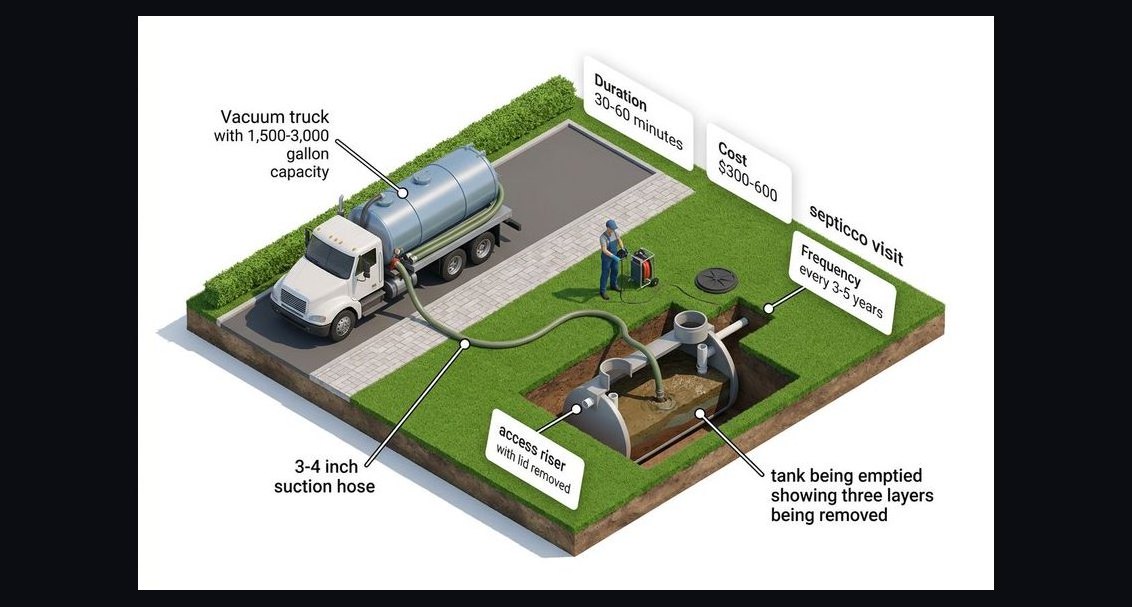 septic-tank-pumpingHow do you start a septic tank pumping business in 2027?
 pest-controlHow do you start a pest control business in 2027?
 mobile-massage-businessHow do you start a mobile massage business in 2027?
 carpet-cleaningHow do you start a carpet cleaning business in 2027?
 mobile-detailingHow do you start a mobile car detailing business in 2027?
 holiday-lightingHow do you start a holiday lighting installation business in 2027?
 window-cleaningHow do you start a window cleaning business in 2027?
 app-development-agencyHow do you start an app development agency business in 2027?
 cateringHow do you start a corporate catering business in 2027?