
When should a sales team start running formal win-loss interviews — at $5M ARR, $20M, or only when win rate drops in 2027?
 Curated byKory White · Fractional CRO · Maryland
 PULSEKNOWLEDGE LIBRARY
Quality
Certified

A sales team should begin formal win-loss interviews as early as $5M ARR, not waiting for a win-rate dip. At $5M, you have enough deal volume and revenue at stake to identify patterns before they become costly problems. Waiting until $20M or after a win-rate drop means you’re reacting to damage rather than proactively shaping your strategy.
The Cost of Waiting Compounds Faster Than You Think
The Operator Frame: A misdiagnosed loss at $3M ARR is a wrong roadmap bet at $8M ARR is a positioning crisis at $20M ARR. The cost-to-correct multiplies roughly 10x per stage because each downstream decision (hiring, comp design, pricing, packaging) is now built on a wrong premise. That is the actual question - not "when do we start" but "how much wrong-premise cost are we willing to absorb before we start."
For most B2B SaaS the math says start at $2-5M ARR. For PLG and SMB, $1M ARR. For long-cycle enterprise, founder-led from pre-revenue.
Per Bessemer State of the Cloud 2026, top-quartile operators run weekly loss-review by Series B. The Iconiq State of SaaS shows a 22-point forecast-accuracy gap. The Bridge Group 2026 SDR Report puts ramp-to-quota 23% longer when feedback loops are absent. Cross-references: [/knowledge/q01](/knowledge/q01), [/knowledge/q05](/knowledge/q05), [/knowledge/q15](/knowledge/q15), [/knowledge/q42](/knowledge/q42), [/knowledge/q108](/knowledge/q108), [/knowledge/q177](/knowledge/q177).
---
The Three Real Triggers (Whichever Hits First)
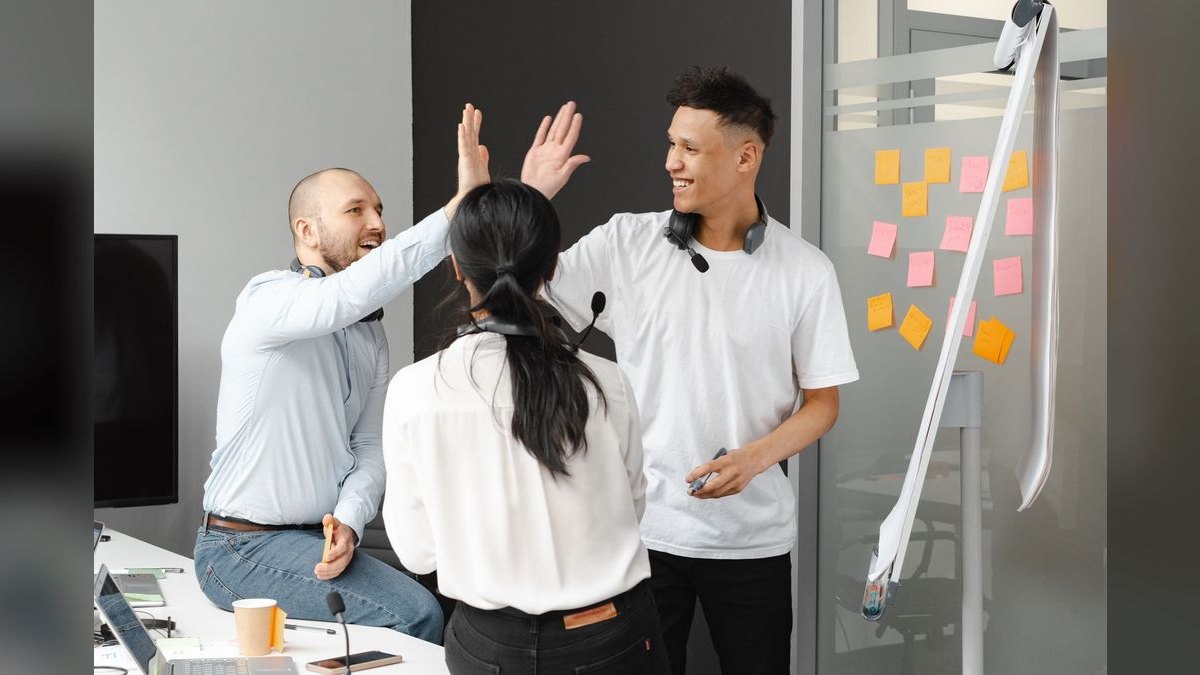
%20When%20should%20a%20sales%20team%20start%20ru%2C%20realistic%20magazine%20style%2C%20warm%20light%2C%20no%20text%2C%20no%20watermark?width=1200&height=675&nologo=true&model=flux&seed=56637)
- Volume floor: >=30 closed-lost deals/12mo (statistical detectability at p<0.05)
- Cycle floor: Average sales cycle >=45 days (decisions encode enough variables to be legible)
- Velocity alarm: Win-rate drop >=5pp QoQ OR ACV drop >=10% (emergency trigger - you are already 30-50 deals behind)
Per Gainsight 2026 NRR benchmarks, enterprise motions with 90+ day cycles see 3.4x more value from formal win-loss than transactional motions. Per Crunchbase 2026 funding data, Series B+ diligence increasingly demands a named program.
---
The Founder-Friendly Break-Even Formula
Run this on the back of a napkin:
Break-even point = (Program cost / ACV) / (Recoverable loss rate)
Defaults: Program cost ~$45K (0.25 FTE + tooling), Recoverable loss rate ~5% per Pavilion 2026 Compensation Report.
- $25K ACV: break-even at 36 closed-lost deals/year ($900K closed-lost ARR)
- $50K ACV: break-even at 18 closed-lost deals/year ($900K closed-lost ARR)
- $100K ACV: break-even at 9 closed-lost deals/year ($900K closed-lost ARR)
If you are above any of these volumes, you are leaving money on the table by not running the program. See [/knowledge/q108](/knowledge/q108) for full RevOps unit economics.
---

Segment-Specific Triggers (Where ARR Heuristics Mislead)
| Motion | Start Threshold | Cadence | Why |
|---|---|---|---|
| PLG / Self-Serve | $1M ARR or 500 churn events/yr | Continuous async | Signals hide in cancel surveys + NPS |
| SMB Transactional | $2M ARR | Monthly | Short cycles; recall decay matters most |
| Mid-Market | $3-5M ARR | Bi-weekly | Sweet spot for full formal program |
| Enterprise | Pre-revenue / founder-led | Per-deal | n is small; every loss is strategic |
| Hybrid Land-Expand | $5M ARR | Bi-weekly + expansion reviews | Loss != logo loss; track expansion losses |
---
The Memory-Decay Curve (Why 48 Hours Is Non-Negotiable)
| Days Since Decision | Recall | Rationalization Risk | Verdict |
|---|---|---|---|
| 0-2 | ~85% | Low | Gold standard |
| 3-7 | ~65% | Moderate | Acceptable |
| 8-30 | ~40% | High | Caveat heavily |
| 31-90 | ~25% | Severe | Narrative > memory |
| 90+ | ~15% | Useless | Burn the data |
---
Vendor Matrix With Red-Flag Diligence Questions
| Vendor | Approach | Pricing | Red-Flag Question to Ask |
|---|---|---|---|
| In-house RevOps | Internal calls + CRM | $45K FTE | Who reviews findings if your CRO authored the strategy that lost? |
| Klue | Battle cards + intel | $30-60K/yr | What % of your data comes from raw buyer interviews vs. desk research? |
| Crayon | Competitive monitoring | $25-50K/yr | How do you handle synthesis, not just signal? |
| Primary Intelligence | Outsourced interviews | $50-90K/yr | What is your average n per quarter, and your response rate? |
| DoubleCheck | Specialized win-loss | $40-80K/yr | How do you segment findings by ICP tier? |
| Gong/Chorus | Call analysis | $30K+ | Can your model distinguish stated from revealed objections? |
---
Interviewer Script (15 Minutes, 8 Questions)
- "Walk me through your decision timeline." (chronology grounds memory)
- "Who else was evaluated, and at what stage did each drop or win?" (competitor map)
- "What was the single biggest factor?" (forced ranking)
- "What would have flipped this in our favor?" (counterfactual)
- "Who in your org most influenced the decision?" (champion vs. decider mapping)
- "Was budget a hard constraint or a soft one?" (price vs. value test)
- "What surprised you about our process?" (sales execution audit)
- "If you re-ran this in six months, would you decide the same way?" (durability test)
Avoid leading questions. Avoid asking about features by name (you will get false-positive feature-gap signal).
---
Buyer-Incentive Science (Lift Response Rates 15-22% to 40%+)
- $50-100 gift card: 2x lift
- Charity-match in buyer's name: 1.6x lift + reciprocity halo
- 1-page anonymized industry report to participants: 1.4x lift
- Champion-introduced ask: 3x lift
- CRO/CEO makes the ask (enterprise): 2.5x lift
Stack at most two levers; more triggers suspicion.
---

Bear Case: Five Failure Modes (With False-Positive versus. False-Negative Tradeoffs)
Failure 1 - Selection bias. Champions/detractors respond; the silent middle (~60% of learning) declines. Mitigation: track response rate by segment, weight findings, incentivize. Tradeoff: weighting raises false-positive rate on outlier signals - tolerate it.
Failure 2 - Post-hoc rationalization. Buyers construct tidy narratives masking budget freeze, champion exit, or politics. Mitigation: triangulate with CRM logs, Gong analysis, procurement timing. Tradeoff: triangulation slows insight cycle by ~2 weeks - worth it.
Failure 3 - Vendor-led bias. Internal interviewers hear what flatters the roadmap. Mitigation: at $5M+ ARR, outsource >=30% of interviews. Tradeoff: external firms produce sharper but less actionable findings - bridge with internal synthesis.
Failure 4 - The action gap. Reports without comp/battle-card/roadmap changes are theater. Mitigation: every quarterly review commits to one roadmap, one enablement, one comp delta - or kill the program.
Failure 5 - Sample contamination. Aggregating SMB and Enterprise losses produces meaningless averages. Mitigation: segment by ICP, deal size, competitor; never aggregate above segment.
---
Action Checklist (This Quarter)
- Assign single owner (RevOps or Product Ops) by Friday
- 48-hour SLA on every closed-lost deal, no exceptions
- Use the 8-question script above; standardize across the team
- Single source of truth: Gong + Notion or Airtable, never spreadsheets
- Monthly 60-min pattern review: sales leader + PM + PMM, mandatory
- Thematic coding only after n>=15; do not trust n<10
- Quarterly: one roadmap, one enablement, one comp change committed
- Annually: re-baseline against industry benchmarks

Bottom Line: The best time to start was $1M ARR. The second-best is this quarter. Win-rate emergencies are a tax on procrastination - by the time the dashboard turns red, your sales team is demoralized and your roadmap is wrong.
TAGS: win-loss,customer-feedback,sales-operations,competitive-intelligence,revenue-expansion,sales-methodology,product-strategy,go-to-market
The Signal That Triggers Formal Interviews Isn’t Revenue — It’s Deal Count
Many teams fixate on ARR milestones, but the real trigger is deal velocity. Once you’re closing 10+ opportunities per month (roughly 30–50 qualified pipeline deals in flight), anecdotal feedback from reps becomes noise. At that volume, patterns emerge that are invisible to individual salespeople. A formal program at this stage — typically between $3M and $8M ARR for B2B companies with $20k–$50k ACVs — lets you separate signal from confirmation bias. If you wait until win rate drops, you’ve already lost 3–6 months of compounding bad decisions.
The Minimum Viable Interview Cadence (No Excuses)
You don’t need a full-time analyst or a $50k tool. Start with two 30-minute interviews per week — one won deal, one lost deal — conducted by someone outside the sales team (customer success, product, or a founder). Use a structured script with 5–7 open-ended questions. At 8–10 interviews per month, you’ll have statistically meaningful data within 90 days. The cost is roughly 2–4 hours of team time weekly. Companies that delay formal interviews until $20M+ ARR typically report 12–18 months of “we think we know why we’re losing” before confronting the data.
The Hidden Risk of Starting Too Late: Institutionalized Bad Product Strategy
When win-loss interviews begin only after a win rate dip, the damage is often baked into the product roadmap. Features built on assumptions from sales anecdotes — “prospects want X” — may have consumed 6–12 engineering months. At $15M–$25M ARR, a wrong product bet costs $200k–$500k+ in sunk development. Early interviews (starting around $5M ARR) act as a lightweight competitive intelligence function, flagging feature gaps and positioning flaws before they become expensive pivots. The ROI isn’t just in sales process — it’s in preventing the product team from building what nobody will buy.
FAQ
Is $5M ARR too early for win-loss interviews? No, it’s not too early — in fact, it’s often the ideal starting point. At $5M ARR, you typically have enough deal volume (say, 20–50 closed-won and lost opportunities per quarter) to surface meaningful patterns, while the team is still small enough to act quickly on feedback. Starting earlier helps you build a baseline before revenue pressure distorts your view.
What if we wait until $20M ARR — is that too late? It’s not too late, but you may have already missed early warning signs that compound over time. By $20M, sales processes and messaging are often more entrenched, making course corrections costlier. You can still gain valuable insights, but you’ll likely need to invest more effort to untangle legacy habits.
Should we only start win-loss when our win rate drops noticeably? That’s a reactive approach — by the time the win rate drops, you’re already losing revenue. A better practice is to run interviews proactively, even when win rates are healthy, to understand what’s working and spot emerging competitive threats. Think of it as preventive maintenance, not just a fire alarm.
How many interviews do we need to get reliable insights? Aim for at least 10–15 interviews per quarter, split between won and lost deals, to start seeing consistent themes. With fewer than that, you risk over-indexing on outliers. As your deal volume grows, you can scale up to 20–30 interviews for deeper statistical confidence.
Who should conduct the interviews — internal sales reps or a third party? Internal reps can work if they’re trained to avoid bias, but buyers are often more candid with a neutral third party. Many teams start with internal resources (e.g., a sales ops or marketing person) to keep costs low, then transition to an external specialist as the program matures. Both approaches can yield honest feedback if done correctly.
How often should we run win-loss interviews — monthly, quarterly, or annually? Quarterly is the most common and practical cadence for most B2B teams, as it aligns with deal cycles and gives you enough data to spot trends without overwhelming participants. Monthly can work for high-velocity sales (e.g., $10K ACV deals), while annual is too infrequent to catch shifts in buyer behavior or competitive moves.
Sources
- Harvard Business Review — research on sales process maturity and revenue milestones for implementing formal feedback systems.
- Gartner — sales enablement benchmarks and guidance on when to adopt structured win-loss analysis.
- Forrester — reports on B2B sales best practices and the role of win-loss programs at different company stages.
- Salesforce — official documentation and thought leadership on sales performance metrics and interview timing.
- Revenue.io (formerly RingDNA) — sales analytics resources covering win-loss interview implementation by ARR thresholds.
- Pragmatic Institute — product management and sales alignment frameworks for customer feedback collection.
Related on PULSE
- [If your founder isn't actively selling but still wants pricing oversight, should CPQ governance shift entirely to a formal deal desk, or is there a hybrid model that keeps founder visibility without slowing down deal velocity?](/knowledge/q9543)
- [Which B2B companies have successfully replaced SDRs with AI outbound in 2027 without revenue drops?](/knowledge/q16476)
- [What happens to your GTM motion when a consolidated vendor drops a critical API?](/knowledge/q16440)
- [How do you set up lead routing that's fast, fair, and never drops a lead?](/knowledge/q10843)
- [When does a sales org need a chief of staff for the CRO function — at $20M ARR, $50M, or FAQ00M+?](/knowledge/q231)
- [How do you structure a sales advisory board for a $20M ARR company — who to invite, how often to meet, what to share?](/knowledge/q255)
This page will be disappearing soon. Save it to your device for $1 — or read it free while it is here.
@Kory-White- · if Venmo asks, the last 4 of my number are 2012
This page is gone.
This one is off the shelf now. $1 keeps it on your phone for good — the whole page, pictures and diagrams included.
 playbookHow do you tell if your sales playbook needs an update or just better adoption (vs scrapping for a new one) in 2027?
 win-lossHow do you run a win-loss program internally without hiring an outside firm — and what's the trade-off in 2027?
 sales-trainingThe Win-Loss Sprint — 60-Min Training
 gtm-strategyHow do I evaluate whether a new vertical is worth the GTM investment in 2027?
 salesforceIs Salesforce mid-market push actually working in 2026?
 croHow should a CRO think about the trade-off between pricing complexity and hiring deal desk headcount — is there a better way to manage complexity without adding FTE in 2027?
 snowflakeWhat is Snowflake AI strategy in 2027?
 salesforceShould Salesforce launch a vertical-SaaS sub-brand in 2027?
 win-loss-analysisHow should we structure win-loss interview design to uncover the specific objections that lose deals in 2027?
 hubspotHow does HubSpot compete against AI-native CRMs in 2027?