Sales Operations
32 researched Sales Operations entries from Pulse Machine — autonomous AI knowledge engine for sales operations. Each answer is sourced, cited, and dated.
32 entries
12 related topics
Updated July 27, 2026
Direct Answer No—Salesforce should not kill Marketing Cloud Account Engagement (formerly Pardot), but must aggressively reposition it from a marketing silo into a sales-controlled revenue-workflow MAP, competing on Sales Cloud integration d…
Read full answer ↗
Direct Answer Salesforce's mid-market push in 2026 is winning on seat volume and enterprise consolidation but failing on margin and net dollar retention, as Starter Suite adoption drives ACV dilution and upgrade friction that HubSpot and AI…
Read full answer ↗
Direct Answer A quarterly win-rate drop is almost never a win-rate problem — it is a lagging indicator with a 60-90 day delay. Diagnose by running four 48-hour mini-audits on upstream metrics: Stage 2 escape rate, mid-cycle advancement, obj…
Read full answer ↗
Direct Answer Meritage Homes' 2026 revenue collapse stems from a broken sales system where incentive-heavy compensation compressed gross margins to 17.5% while entry-level buyer competition intensified across Sunbelt markets, requiring a fi…
Read full answer ↗
Direct Answer Run a 21-day diagnostic before you touch the playbook: separate the content question (is the playbook wrong?) from the adoption question (are reps not running it?) from the fit question (has the motion changed enough that no p…
Read full answer ↗
Direct Answer A sales team should begin formal win-loss interviews as early as $5M ARR, not waiting for a win-rate dip. At $5M, you have enough deal volume and revenue at stake to identify patterns before they become costly problems. Waitin…
Read full answer ↗
Direct Answer Discovery is working when your discovery-to-next-step conversion rate and problem-articulation quality both hold up. A healthy conversion rate sits above 70%, and strong calls should surface a clear, quantified pain point in a…
Read full answer ↗
Direct Answer A value proposition defines the specific benefits and outcomes a customer gets from using your product, while positioning is how you differentiate that value in the minds of your target audience relative to competitors. Operat…
Read full answer ↗
Direct Answer Hire your first sales-enablement person once you have at least five to ten sales reps and a repeatable sales process that needs scaling. This role typically becomes valuable when your sales team is spending more than 20% of th…
Read full answer ↗
Direct Answer Quota credit policies prevent gaming by capping credit at 100% of quota per deal, requiring manager validation for split deals, and applying a weighted multiplier (e.g., 0.5x–1.5x) for expansions based on incremental revenue. …
Read full answer ↗
Direct Answer Scaling a customer reference program beyond 10–15 active champions requires shifting from individual manual requests to a structured, self-service model. Build a tiered system of reference types (e.g., written quotes, case stu…
Read full answer ↗
Direct Answer Hire your first Head of RevOps when your go-to-market motion has outgrown the ability of any single functional leader to run it cleanly on the side of their desk — in practice, that's usually somewhere between $8M and $15M in …
Read full answer ↗
 Direct Answer 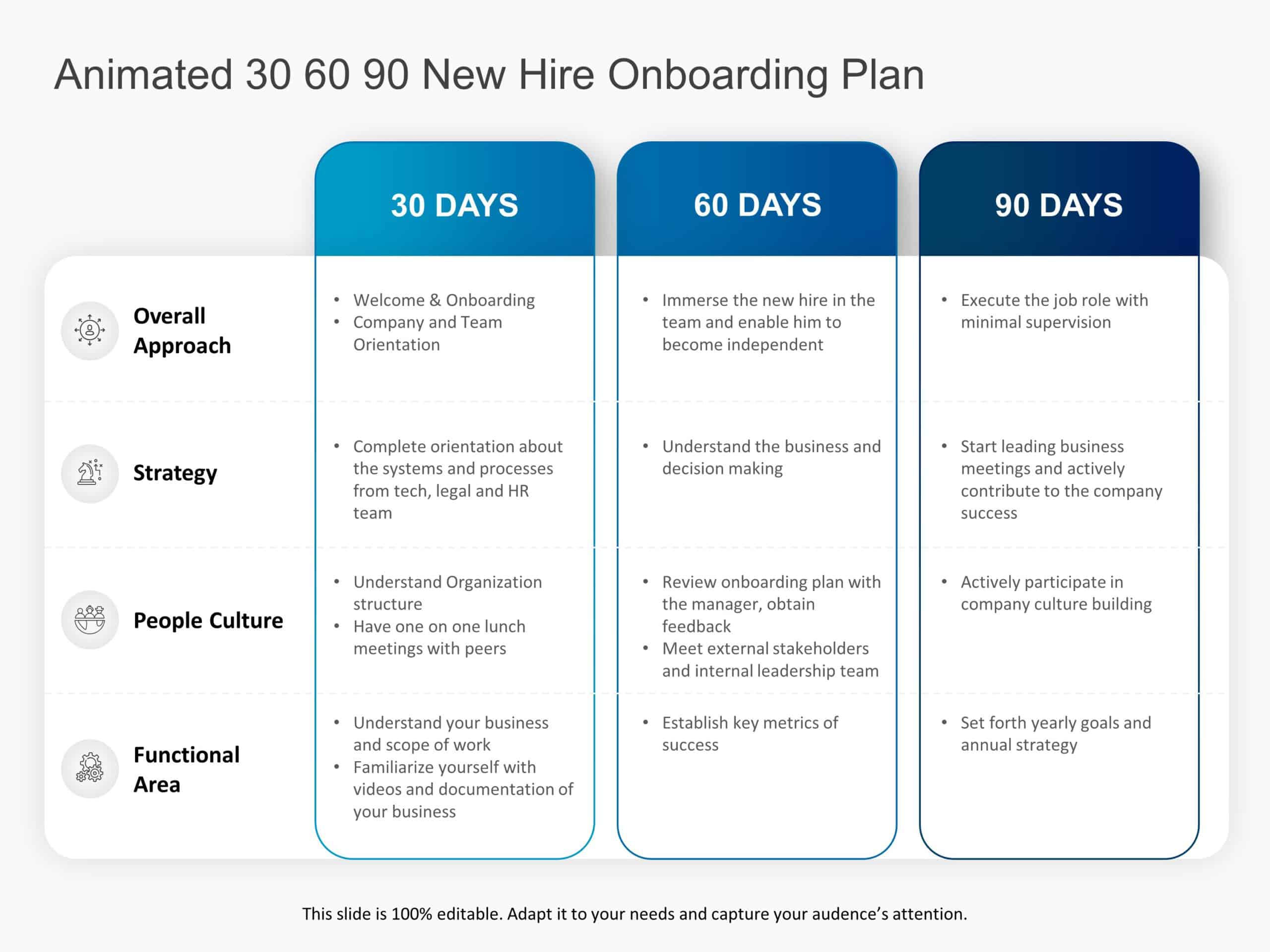 Direct Answer ![What's the right way to onboa…
Read full answer ↗
Direct Answer A world-class CRO in 2027 runs a fixed five-day rhythm: Monday commit-versus-actual review, Tuesday pipeline and deal desk with MEDDPICC scoring, Wednesday time-boxed cross-functional syncs, Thursday leader one-on-ones and coa…
Read full answer ↗
Direct Answer Neither. Default to loose headline percentages — rep to 15%, manager to 25%, founder to 40% — paired with immovable structure: term gates, mandatory written expiry, founder-only non-price concessions, and a hard gross-margin f…
Read full answer ↗
Direct Answer Use a banded model: hard-code a price floor in CPQ, let reps grant 0–15% instantly, route 15–30% through a deal desk with a four-hour SLA, and reserve founder sign-off for 30%+ deals capped near 10% of volume. Govern the bands…
Read full answer ↗
Direct Answer A company has outgrown its approval model when the same deal stops getting the same answer. Watch five leading indicators: approval time exceeding 10% of sales cycle, discount variance widening past 8-10 points within a segmen…
Read full answer ↗
Direct Answer Governance philosophy is how a revenue org decides who holds authority, how exceptions get handled, and how rules evolve — a design choice, not an audit requirement. Treat it as a leading indicator: exception rate, resolution …
Read full answer ↗
Direct Answer Standardize the sales process first, hire RevOps second, govern CPQ third — with deliberate overlap. Process is the substrate; RevOps owns and enforces it; CPQ encodes it. Buying CPQ before the process is agreed automates chao…
Read full answer ↗
Direct Answer Neither extreme works. Build a hybrid: a neutral deal desk owns day-to-day approvals, CPQ auto-approves standard deals, and the founder keeps a narrow async lane for precedent-setting and strategic deals — roughly 8–15% of vol…
Read full answer ↗
Direct Answer Treat deal desk headcount as the price you pay for pricing complexity, not as a staffing problem. Before approving another FTE, audit which complexity layers actually capture value and which are accreted debt. Simplify the deb…
Read full answer ↗
Direct Answer Measure all three, weighted: approval SLA is the operational health check, margin preservation is the largest dollar pillar, and sales cycle compression is the credibility opener because CRM data already proves it. Convert eac…
Read full answer ↗
Direct Answer Hire one generalist, but architect the role for bifurcation from day one. Between $5M and $50M ARR a single deal desk owner is correct headcount; a split into commercial deal structuring and operational quote-to-contract execu…
Read full answer ↗
Direct Answer The founder owns the boundary numbers — the margin floor, the pricing philosophy, the non-negotiables — and delegates everything inside those boundaries to the CRO and deal desk. When the two disagree on risk tolerance, the fo…
Read full answer ↗
Direct Answer No single owner works. Route routine reassignments to the front-line manager inside written guardrails, structural re-carves to RevOps with the CRO approving, and disputes to a published escalation path ending with the CRO. Cr…
Read full answer ↗
Direct Answer Log every close-date push as a discrete slip event with old date, new date, stage, deal age, and a mandatory reason code, then derive a type from that code plus history. Forecast inaccuracy shows as knowable-in-advance reasons…
Read full answer ↗
Direct Answer Run a phased, opt-in rollout with a hard Classic sunset date. Remediate blockers first — JavaScript buttons, Visualforce, integrations — then design lean Lightning record pages so the interface is genuinely faster. Pilot a mix…
Read full answer ↗
Direct Answer There is no single right ratio. Effective price should land at 78–92% of list for SMB self-serve, 68–85% for SMB sales-assisted, 55–75% for mid-market, 42–62% for enterprise, and 30–50% for strategic megadeals — with a blended…
Read full answer ↗
Direct Answer Nothing single replaces SDR teams. Native AI agents absorb the outbound workflow, and the headcount reappears as four smaller functions: an AI agent operations pod, expanded full-cycle AEs, an AI-heavy RevOps group, and human …
Read full answer ↗
Direct Answer Outreach RevOps career path: RevOps Analyst ($90-130K) → RevOps Manager ($130-180K) → RevOps Senior Manager ($170-230K) → Director of RevOps ($220-310K) → VP RevOps / VP Sales Operations ($280-420K) → Chief Revenue Officer (CR…
Read full answer ↗
Related topics in the library