
What's the right governance model for a founder-led or early-stage sales org under $5M ARR that's still deciding between PLG and sales-led — should governance philosophy be baked in pre-launch or determined by where traction lands in 2027?
 Curated byKory White · Fractional CRO · Maryland
 PULSEKNOWLEDGE LIBRARY
Quality
Certified
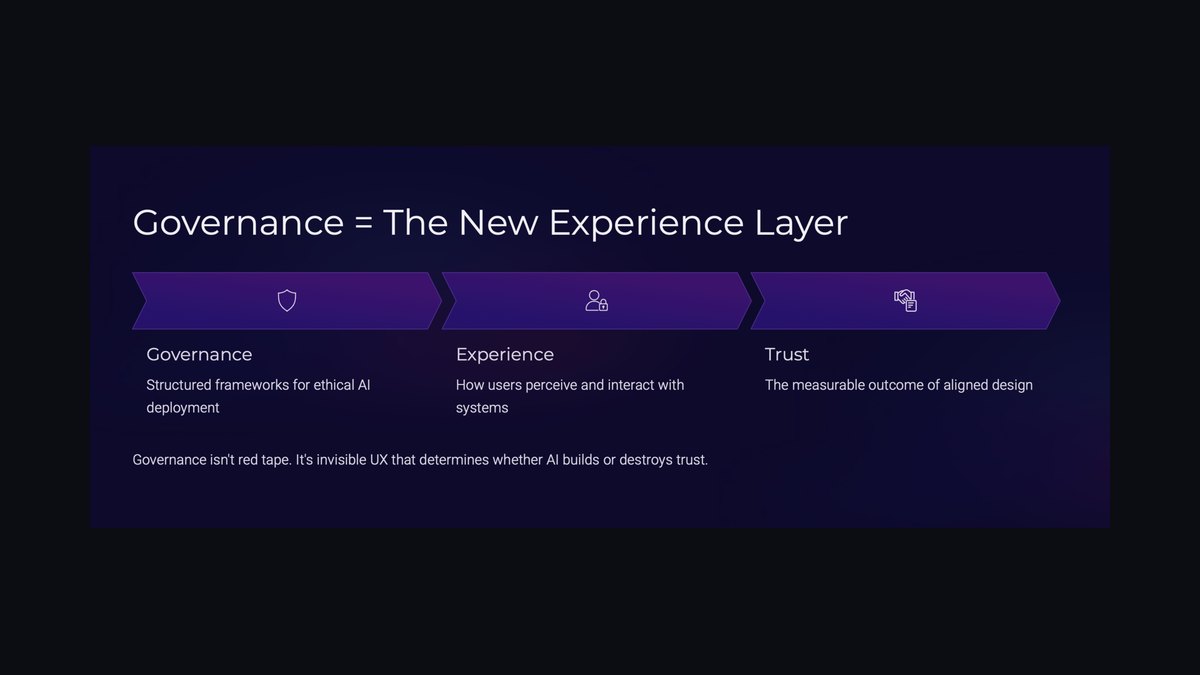
Bake in a thin, motion-agnostic constitution pre-launch — one system of record, canonical definitions, a discount ceiling, a data-hygiene minimum, and written revisit triggers. Let traction determine the motion-specific operating manual 90–180 days later. Governance has two layers with two different correct timelines, and conflating them is the actual mistake.
The founder who has to answer this question on a Tuesday
Picture a two-founder B2B company at roughly $400K ARR. The product is self-serve by design. The go-to-market deck says "product-led growth." But the last quarter's revenue tells a muddier story: a few hundred free signups, a handful of credit-card conversions, and three deals that closed only because one founder got on a Zoom call, ran a custom demo, and negotiated terms over two weeks. Total: real money, arriving through two completely different doors.
Now a seed investor asks a normal question — what's your net new ARR this quarter, and what's your logo count? The founder opens a spreadsheet, opens the billing dashboard, opens the CRM that a contractor half-configured in March, and gets three different numbers. Not wildly different. Different enough that the founder has to say "roughly" three times in one sentence.
That moment is the real question underneath the PLG-versus-sales-led debate. The founder thinks they have a strategy problem. They have a measurement problem. They cannot decide which motion is working because they have no trustworthy way to score either one. Every argument about motion is, at this stage, downstream of whether revenue is legible.
This is why the "should governance philosophy be baked in pre-launch or determined by where traction lands" framing is a false binary, and why treating it as a binary produces both of the expensive failures. Founders who answer "pre-launch" tend to import an entire operating apparatus — stage gates, MEDDIC enforcement, a deal desk, a twelve-field mandatory opportunity record — before they know which motion those artifacts are supposed to serve. Founders who answer "wait for traction" tend to install nothing at all, run to $3–4M ARR on hustle, and then discover during a fundraise that they cannot reconcile their own revenue against their own billing system.
Both founders lose. The first pays to build governance, pays to operate it, then pays a third time to tear it out when the motion turns out to be different than assumed — a genuinely negative-return investment, because while it existed it also distorted the behavior it was supposed to measure. The second arrives at the most time-sensitive process in the company's life carrying two quarters of data archaeology.

The resolution is to notice that "governance" is not one object. It is two: a constitution — short, stable, motion-agnostic, changes rarely — and an operating manual — long, specific, motion-dependent, changes constantly. The constitution can and should be written pre-launch, precisely because nothing in it depends on whether you end up PLG or sales-led. A PLG company and a sales-led company both need exactly one place where revenue is true. Both need a discount ceiling. Both need to know what "closed-won" means. None of that is a motion bet.
The operating manual is a motion bet, which is why writing it early means writing fiction. Stage-exit criteria, PQL scoring thresholds, forecast-category definitions, deal-desk SLAs, comp plans — every one of those artifacts encodes an assumption about who or what closes your deals. Write them before you know, and you have committed capital, calendar time, and team behavior to a hypothesis you haven't tested.
So the answer to the founder on that Tuesday: install the constitution this week, because it is roughly two days of work and it costs you nothing in optionality. Then instrument the experiment and let the evidence, not the pitch deck, determine the operating manual.
How the two-layer mechanism actually works
The mechanism has three moving parts: a fixed floor, an evidence gate, and a scheduled hinge between them.
The floor is five pieces, and genuinely only five.
*One: a single system of record.* One CRM, chosen and configured before the second sales hire. For most founder-led B2B companies this is HubSpot — it stands up in days, its governance features (required properties, deal-stage automation, approval workflows) are usable without a dedicated admin, and it is genuinely fine to $5–10M ARR. Salesforce is correct when you have a specific reason: a clearly enterprise motion, complex territory or product structure, or a Series A lead who will expect it — and you accept it needs configuration help. The rule is not "use a CRM." The rule is that there is exactly one place where revenue is true, and a spreadsheet is not it.

*Two: canonical definitions.* One page. What "closed-won" means (signed contract or completed self-serve purchase — not a verbal yes). What "ARR" means, including how you treat monthly contracts, multi-year deals, usage-based revenue, and one-time fees. What "active customer" means, as a checkable threshold, because without it you cannot calculate churn. What "pipeline" means — which stages count, weighted or unweighted. What "qualified opportunity" means.
*Three: a discount and exception ceiling.* Below a threshold — commonly 10–15% off list — a rep or the self-serve flow transacts freely. Above it, only the founder approves, and the approval gets logged. This one rule prevents the most common early-stage margin leak, which is not one bad deal but a hundred "just this once" exceptions.
*Four: a data-hygiene minimum.* Every revenue-bearing record carries a small mandatory payload: amount, close date, stage, source, next step. Make the fields required in the CRM. Hygiene must be structural, not aspirational — you do not request it, you make the system resist dirty data.
*Five: a revisit-trigger list.* Written thresholds at which you add the next layer. "At $1M ARR, define stage-exit criteria or the PQL model, depending on confirmed motion." "At the third AE, stand up the lightweight deal desk." "Before any fundraise, run a full constitutional audit."
The evidence gate is a tagging exercise. Every month or two, pull the last 90 days of new ARR and tag each dollar twice: by how it was *sourced* and by how it was *closed*. Self-serve sourced and self-serve closed is PLG. Human-sourced and human-closed is sales-led. Self-serve sourced but human-closed is product-led sales — its own thing, and increasingly the most common landing spot. If you cannot perform this tagging cleanly, that failure is itself the diagnostic: your constitution is too thin, and fixing that outranks every motion question.

The hinge is the revisit-trigger list. It converts governance debt from an ambush into a schedule. Governance debt, unlike most debt, accrues silently and issues no monthly statement — nothing forces you to look at it until it is large. The trigger list is the statement.
The reason this sequencing works is that the two motions fail in *opposite* directions when ungoverned. An ungoverned PLG motion drowns in data it cannot interpret — thousands of free users, millions of events, no shared definition of a qualified signal. An ungoverned sales-led motion drowns in deals it cannot trust — pipeline inflated by reps, close dates that slip every Friday, discounts nobody remembers approving. The constitution is the only apparatus that catches both, which is exactly why it can be built before you know which failure mode you're heading toward.
A note on the ritual, because it is the piece a founder feels weekly. It is a standing 30–45 minute meeting, and its non-negotiable rule is that the only numbers that exist in the room are the numbers in the system of record. A rep says "I'm pretty sure that one closes" — the response is "what does the CRM say, and what has to be true to move it." This does three governance jobs at once: it enforces hygiene without a separate hygiene process, it trains the team in the canonical definitions by applying them out loud to real cases every week, and it gives the founder a high-frequency early-warning system. Motion shifts, forecast slippage, and discount creep all surface here weeks before they'd surface in a board deck.
Real numbers, ranges, and benchmarks by ARR band
Calibration matters more than principle here, so here is what well-governed looks like at each band.
$0–250K ARR — pre-traction through first revenue. The full constitution is live; the operating manual is empty. The founder personally approves every non-standard deal because the founder *is* the deal desk. The CRM holds maybe 50–300 records and they are clean, largely because there are few enough to clean by hand. Governance load: roughly two focused days of setup, then about 30 minutes a week. That two days is the highest-ROI operational work in the company's first year — the canonical-definitions page alone takes about an hour to draft at ten customers and a multi-week cross-functional negotiation to draft at two hundred.

Watch for the trap in this band: the data is clean *because* the volume is low, which lulls founders into believing hygiene is not a problem. Then the record count crosses a threshold, manual cleaning silently stops being possible, and nobody notices until the data has already rotted. Name the threshold in the trigger list — commonly the second or third rep, or a few hundred records — as the point where structural enforcement replaces manual diligence.
$250K–1M ARR — traction emerging. The motion hypothesis is under test with clean data. The founder has run the revenue-tagging exercise at least twice. The first one or two operating-manual pieces are being drafted for whichever motion the evidence favors — not all of them, one or two. There is a weekly review that uses only CRM numbers. Governance load: roughly half a day a week, still mostly the founder, and this is correct. Delegating governance before you have a motion is delegating a decision you have not made.
The discount ceiling gets its first real test somewhere in this band, when a rep or a deal wants to break it. Hold the line — the first exception sets the precedent for every exception after it.
$1M–2.5M ARR — motion confirmed, early scale. The relevant operating manual is substantially assembled: stage-exit criteria or a PQL model, forecast or funnel governance, and the discount ceiling now backed by a lightweight deal-desk ritual rather than founder instinct. The company is hiring or has hired its first ops-minded owner. This is rarely a dedicated RevOps hire at first — more often a strong early employee (an ops-leaning AE, a chief-of-staff type, a finance hire who absorbs revenue operations) spending 30–50% of their time maintaining the CRM, running the cadence, and drafting operating-manual pieces. The founder still owns the *philosophy* and the revisit triggers, and delegates the *maintenance*. Governance load: a meaningful slice of one person's job.
$2.5M–5M ARR — pre-Series-A scale. Governance is a named function with a named owner, typically the first dedicated RevOps or Sales Ops hire, reporting either to the founder or to a VP if one exists. There is a real deal desk or a real PQL-to-sales pipeline. Forecast accuracy is measured and trending. The company can pass revenue diligence without a fire drill. The first VP of Sales or VP of Growth is recruited *into* a system rather than into a vacuum — which is a substantial hiring advantage, because a VP who spends their first two quarters writing a constitution instead of building a team is a VP doing work they are neither good at nor interested in.

The benchmark that cuts across every band: the founder can answer four questions in under five minutes, without arguing with anyone. What did we sell? How do we know? Who is allowed to change the terms? When do we add more structure? If those four are clean, you are well-governed for your stage regardless of ARR. If they are not, you are behind regardless of ARR.
Timing ranges worth holding onto. The motion signal needs 90–180 days of clean data to separate from noise — thirty days is launch-spike, seasonality, and the founder working through their personal network. The motion typically becomes readable somewhere in the $500K–1.5M ARR window. Comp structures at this stage commonly run 50/50 to 60/40 base-to-variable for AEs. The deal desk becomes necessary at the third AE, because that is the point where the founder can no longer serve as the default deal desk.
Tooling thresholds. Product analytics (Amplitude, Mixpanel, PostHog) enters for PLG and PLS motions, and the governance work is reconciling it with the CRM so the funnel definitions agree between two systems that otherwise drift. Heavyweight CPQ is a classic over-build under $5M ARR — a well-structured quote template, an approval workflow in the CRM, and a weekly deal-desk meeting cover it. Dedicated forecasting tools are likewise mostly a post-$5M concern; under that, a disciplined CRM forecast built on real stage criteria beats a tool layered on bad data. Billing systems (Stripe Billing, Chargebee, and similar) matter early because they anchor the "what is ARR" definition — pick one and let it, not a spreadsheet, be billing truth.
The meta-rule on tooling: buy tools to enforce governance you have already defined, never to substitute for governance you have not defined. A tool layered on an undefined process produces faster confusion.
Trade-offs, alternatives, and what each path actually costs
There are three defensible positions, and it's worth being honest about what each one buys and what it costs.
Position one: bake the full philosophy in pre-launch. The argument for it is that deciding is leadership and waffling is weakness, and that retrofitting is expensive. The argument against it is that the motion is not actually a choice the founder makes — it is a discovery the market reveals. You can and should hold a strong hypothesis, but the hypothesis is frequently wrong in ways that matter for governance.

Consider the concrete shape of being wrong. Founders certain they were PLG discover the product requires enough configuration that real revenue only closes when a human walks the buyer through it. Founders certain they were sales-led discover their cheapest, fastest, highest-retention customers never spoke to a rep, and the sales team has been quietly suppressing a self-serve motion that wants to exist. Both are common enough that a meaningful share of companies branding themselves "PLG" still close the majority of ARR with sales involvement.
Build PLG governance and be wrong, and you've spent months instrumenting a self-serve conversion machine while the actual revenue engine — founder-led selling — ran ungoverned. Build sales-led governance and be wrong, and you've added friction to a motion that thrives on the absence of friction, then have to dismantle it. The cost of governance built for the wrong motion is not zero. It is negative.
There's a specific over-build pattern worth naming: the founder who came from a large enterprise sales org and, reasonably trying to avoid the under-building mistake, imports the apparatus they knew. Heavyweight CRM configuration, CPQ, a formal deal desk with SLAs, a twelve-field mandatory opportunity record, MEDDIC enforced — at $400K ARR with two salespeople. The reps spend more time feeding the CRM than selling. Every deal gets stuck in a process built for standard deals, at a stage where almost no deal is standard. MEDDIC enforcement, excellent at scale, makes early exploratory deals look unqualified and kills them prematurely. And the whole apparatus is built around a sales-led motion the company has not actually confirmed it has.
Position two: defer everything until traction lands. The argument for it is velocity and optionality. The argument against it is that governance debt compounds silently and then comes due all at once, almost always at a fundraise or a key hire.
The concrete shape of this failure: a company hits $4M ARR on founder hustle. The CRM is a shared spreadsheet plus memory. No canonical definitions. Discounts were whatever felt right in the moment. Then two things happen simultaneously — a Series A process starts, and the first VP of Sales arrives. Diligence becomes archaeology, because analysts cannot reconcile the spreadsheet against the billing system, "ARR" turns out to mean three different things in three different documents, and churn cannot be calculated because "active customer" was never defined. The round may still close, but slower, and a slow process is a weaker negotiating position because momentum is leverage. The VP, meanwhile, finds a vacuum instead of a system.

Position three — the recommended one: split the layers. Constitution pre-launch, operating manual on evidence, revisit-trigger list as the hinge. The trade-off you accept is that for the first 90–180 days you are deliberately operating without motion-specific structure, which will occasionally feel loose. The trade-off you avoid is paying three times for the wrong apparatus, or paying 5–10x to retrofit the right one late.
The hybrid complicates the trade-off, and you should expect it. The most common real-world landing spot for a sub-$5M company is neither pure motion — it is product-led sales, where the product generates signals and a small team converts the larger accounts. PLS needs *both* manuals partially assembled, and the governance challenge becomes the seam between them.
You need a PQL definition *and* stage-exit criteria, plus an explicit handoff rule: which signal triggers a human, what the human owns once engaged, and whether a deal returns to self-serve if the human disqualifies it. You need product-led pricing guardrails *and* a rep discount ceiling, and they must be consistent — it is incoherent to let the pricing page offer one thing while reps discount to another. You need sales-assist comp *and* AE quota, with the credit-attribution seam governed so a self-serve conversion and a rep-closed deal are not double-counted or fought over.
PLS companies fail at the seam. Product optimizes signups, sales optimizes closed-won, and absent governance defining the shared funnel, the two halves of the company run different scoreboards. This is another argument for the thin constitution: single source of truth and canonical definitions are precisely what make the seam governable later.
Comp deserves its own note, because it is governance most founders don't recognize as governance. Incentives override written rules every time the two conflict. You can author elegant stage-exit criteria, but if reps are comped purely on closed-won with no quality gate, they will stuff pipeline and sandbag forecasts, because that is what the plan pays for. Sales-led comp governance covers base-to-variable ratio, what counts toward quota (new ARR only, or expansion too, and at what rate), accelerator thresholds, clawbacks on logos that churn inside 6–12 months, and whether any quality gate exists at all. PLG sales-assist comp is trickier — how do you pay a human for revenue the product mostly generated? Common answers: a flat assist bonus per qualified conversion, an expansion-only quota, or an influenced-revenue model, which is genuinely dangerous without tight attribution governance because it invites credit-claiming on conversions that would have happened anyway. Comp sits firmly in the operating manual, not the constitution — but the *principle* that comp will be designed deliberately rather than improvised belongs in the trigger list from day one.

Common pitfalls and how to avoid them
Most founders are living inside one of a recognizable set of failures. A twenty-minute self-audit against this list usually finds it.
The shadow spreadsheet. A CRM exists, but the real numbers live in a founder's spreadsheet, so the CRM rots and the constitution has no spine. The origin story is always the same: a founder tracked early deals in a spreadsheet because a CRM felt premature, it worked, and by the time a CRM was installed the spreadsheet had become where revenue was actually true. The spreadsheet is not the enemy at $50K ARR; the un-migrated spreadsheet at $500K ARR is. *Fix:* decide before the first spreadsheet calcifies, then socially enforce that what is not in the CRM does not exist. A CRM with a parallel shadow spreadsheet is worse than no CRM — it creates the appearance of governance while the real numbers live elsewhere.
Aspirational hygiene. "Please keep the CRM updated" fails past about two people, because asking humans to do tedious work as a favor does not scale. *Fix:* required fields, validation rules that reject a close date in the past on an open deal, and the weekly ritual as the enforcement layer. If a deal's data is wrong, it does not get discussed — reps learn within two or three weeks that clean data is the path of least resistance because dirty data makes their deals invisible in the meeting that matters. Framing matters too: hygiene as surveillance fails; hygiene as the rep's own interest — a clean pipeline is a rep who gets credit and whose forecast is believed — succeeds.
The premature operating manual. Stage criteria, a comp plan, and a deal-desk SOP written before the motion was known, half of which now has to be torn out. *Fix:* constitution now, manual after evidence.
The imported enterprise apparatus. Covered above — right-size to stage, and remember the constitution is deliberately thin because thin is correct here.

The ungoverned discount. No ceiling, so margin leaks one exception at a time. *Fix:* the founder-approval threshold, enforced from the very first exception.
The definitionless company. ARR and active customer mean different things to different people, so no number can be trusted. *Fix:* the one-page document. The discipline is not getting definitions perfect — it is making them explicit, shared, and singular.
The theater ritual. A weekly meeting exists, but it is status narration with non-system numbers, training reps to perform rather than report. *Fix:* CRM numbers only, short, weekly rather than biweekly, mandatory for anyone who touches revenue, one saved dashboard as the shared screen, and an explicit next step and owner on every item. Do not skip it when things are busy — it matters most when things are busy.
The ambiguous owner. "Everyone owns the CRM," which means no one does. *Fix:* one named accountable human at every stage, even when that human is the founder part-time. A related principle: the governance owner should not be a pure quota-carrying salesperson, because governance sometimes requires telling sales no, and a commissioned owner has a structural conflict when enforcing the discount ceiling.
Then there are the misreads — the ways founders get the traction signal wrong even with the apparatus in place.
Confusing funnel shape with revenue motion. A flood of self-serve signups *feels* like PLG, but if none convert to meaningful revenue without a human, you have a PLG-shaped marketing funnel and a sales-led revenue engine. Tag *revenue*, not leads.

Letting the loudest deals dominate. Three founder-closed deals were the biggest of the quarter, so the founder concludes sales-led — but those three might be 40% of ARR by value and 5% by count, while everyone else self-served. Read the motion by both dollar-weight and count, and treat disagreement between them as the signal that you are a hybrid.
Mistaking founder heroics for a repeatable motion. Revenue closed personally by a charismatic founder is evidence the founder can sell, not evidence of a sales-led *motion*. The real question is whether a non-founder rep following a defined process can close it too. Until that is tested, "sales-led" is unconfirmed.
Reading too early. Thirty days is noise. The 90–180 day window exists so motion signal can separate from launch spike, seasonality, and the founder's personal network being worked through.
Arguing with the evidence. The most expensive misread: the founder was certain they were PLG, the data says product-led sales, and the founder discounts the data because it is inconvenient. The entire point of installing the measurement apparatus is being willing to believe it. *Fix:* pre-commit in writing to what evidence would change your mind, *before* you see the evidence — so that when data arrives you are reading it, not negotiating with it.
A closing reframe on why any of this pays. Series A diligence is, increasingly, a governance exam. The team asks for ARR and tries to reconcile it against billing. They ask for churn, which requires a defined active customer. They ask for pipeline and conversion rates, which require enforced stages. They ask who authorizes discounts and want margin implications. None of this kills a good company's round, but it slows the process and shaves the price, because an investor pricing in post-close data cleanup prices it in. Founders who installed the thin constitution early hand over clean, reconciled, definitionally consistent data — and confidence in the numbers transfers to confidence in the team. The constitution is not back-office hygiene you do instead of fundraise prep. It *is* fundraise prep, done two years early when it is cheap rather than during the raise when it is expensive and visible.
Related questions
When exactly should we hire our first RevOps person?
Usually between $1M and $3M ARR, and often as 30–50% of an existing ops-minded employee's time before it becomes a dedicated seat. The trigger is not ARR alone — it's when the founder can no longer maintain the CRM and run the cadence without it displacing selling or building.
Does the constitution change if we're bootstrapped rather than venture-backed?
The five pieces stay identical; the urgency of the diligence argument softens. Bootstrapped companies still need legible revenue for pricing decisions, churn analysis, and any eventual sale or credit facility. Skip only the "audit before fundraise" trigger; keep everything else.
How do we know whether we're product-led sales versus just badly-executed PLG?
Tag revenue by source *and* close-type. If self-serve consistently sources qualified accounts that predictably need a human to close larger contracts, that's PLS — a structural pattern. If self-serve sources volume that converts at near-zero regardless of human help, that's a funnel problem, not a motion.
What if traction is genuinely ambiguous after 180 days?
Ambiguity is usually a hybrid signal, not a missing one. Check dollar-weight against logo count separately — disagreement between them typically means both motions are live. Build the handoff rule first, then add pieces of each manual as volume in either channel justifies them.
Can we skip the CRM and use our billing system as the source of truth?
Billing is the source of truth for revenue recognized; it cannot represent pipeline, stages, or anything pre-purchase. Pure self-serve companies can defer a CRM briefly, but the moment a human touches a deal you need somewhere to record intent, not just outcomes.
FAQ
How long does installing the five-piece constitution actually take?
About two focused days for a founder who already knows their business: a day to select and configure the CRM with required fields and validation rules, and a day to draft the canonical definitions page, set the discount ceiling, and write the revisit triggers. The ongoing cost is roughly 30 minutes a week for the revenue ritual at the earliest stage, rising to about half a day a week as traction emerges.
Isn't a discount ceiling premature when we're desperate for our first ten customers?
The ceiling is not a prohibition — it's a logging requirement with a founder approval above the line. At ten customers the founder approves everything anyway, so the ceiling costs nothing. Its value is that the habit and the audit trail already exist by the time a rep, not the founder, is the one wanting the exception. Installing it after the first ungoverned exception means fighting a precedent instead of setting one.
What if we're confident about our motion — can we skip the waiting period?
Keep the conviction and act on it as a default hypothesis; just don't spend capital on the heavy apparatus until data confirms it. You can absolutely build for your hypothesis in product and marketing at full speed. The restraint applies specifically to motion-specific governance artifacts — stage gates, PQL models, comp plans, deal desks — because those are the ones that cost three times over when the bet is wrong.
Who should own governance if the founder is technical and hates operations?
Someone must be named, and early on it usually still has to be a founder — because the decisions are strategic, not administrative. A technical founder can delegate CRM *maintenance* to an ops-minded early employee or a fractional operator while retaining the canonical definitions and revisit triggers. What cannot work is leaving ownership diffuse; ambiguous ownership guarantees the data rots.
Does this framework hold for usage-based or consumption pricing?
Yes, with extra weight on the definitions page. Usage-based revenue makes "ARR" and "active customer" genuinely harder to define — you have to decide between trailing averages and committed minimums, and state it explicitly. That difficulty is an argument for writing definitions earlier, not later, because the ambiguity only grows with contract volume.
How does this connect to RevOps as a discipline more broadly?
The constitution is the smallest viable version of what a RevOps function does at scale: define the data model, enforce hygiene, govern exceptions, and maintain the operating cadence. Building it early means your eventual RevOps hire inherits a foundation and extends it, rather than spending their first two quarters excavating and rebuilding from nothing.
Sources
- https://openviewpartners.com/product-led-growth/
- https://www.saastr.com/category/sales/
- https://a16z.com/enterprise-go-to-market/
- https://knowledge.hubspot.com/deals/set-up-and-customize-your-deal-stages
- https://help.salesforce.com/s/articleView?id=sf.forecasts3_overview.htm&type=5
- https://www.bvp.com/atlas/state-of-the-cloud-2024
- https://www.mixpanel.com/blog/
- https://stripe.com/docs/billing
- https://hbr.org/topic/subject/sales
- https://www.forentrepreneurs.com/saas-metrics-2/
Related on PULSE
- What's the right time to hire your first RevOps person?
- How do you define ARR when your pricing is usage-based?
- When should an early-stage sales team install a deal desk?
- How do you build stage-exit criteria that reps actually follow?
- What is a Product-Qualified Lead and how do you score one?
- How do you prepare revenue data for Series A diligence?
This page will be disappearing soon. Save it to your device for $1 — or read it free while it is here.
@Kory-White- · if Venmo asks, the last 4 of my number are 2012
This page is gone.
This one is off the shelf now. $1 keeps it on your phone for good — the whole page, pictures and diagrams included.
 revopsWhat's the relationship between a founder's go-to-market motion (PLG, sales-led, or hybrid) and the appropriate level of discount authority to delegate to sales leadership in 2027?
 revopsHow should a founder-led or early-stage sales org set up initial discount governance bands before they have reliable churn/NRR data by segment — should they default to conservative enterprise-tight rules or flexible SMB-loose bands in 2027?
 revopsWhat's the right architecture for discount governance when a company spans both sales-led enterprise and PLG SMB motion — should they operate entirely separate approval chains or integrate them in 2027?
 revopsWhat is the 2027 PLG vs Sales-Led growth debate for B2B SaaS?
 revopsWhat is product-led sales and how do you run a PLS motion in 2027?
 revopsWhat's the relationship between a founder's sales background and the discount governance readiness threshold — do product founders delay the signal longer in 2027?
 revopsWhat's the right pricing-governance model for a founder-led company in a highly competitive vertical where rigid discount authority could kill deal velocity in 2027?
 revopsIf your founder isn't actively selling but still wants pricing oversight, should CPQ governance shift entirely to a formal deal desk, or is there a hybrid model that keeps founder visibility without slowing down deal velocity in 2027?
 revopsHow does the discount governance readiness model shift if a company has already hired a Sales Manager without a VP Sales above them — does that middle layer change when you need a VP Sales in 2027?
 revopsHow does discount-authority governance differ between a founder selling to direct enterprise customers vs one managing a channel or VAR partnership in 2027?