
For a founder with sales experience vs a non-sales founder building a sales org for the first time, does the case for deal-closing-first still hold, or do they need different sequencing?
 Curated byKory White · Fractional CRO · Maryland
 PULSEKNOWLEDGE LIBRARY
Quality
Certified

For a founder with sales experience, the case for deal-closing-first is stronger—they can personally validate demand and model the sales process for hires. A non-sales founder, however, often benefits from a different sequencing: building a lightweight sales system (e.g., CRM, lead scoring) and hiring a first sales leader earlier to avoid costly trial-and-error. Both paths require early revenue, but the non-sales founder should prioritize structured enablement over raw closing until they have a repeatable playbook.
TL;DR: Yes — the "deal-closing-first" principle holds for both founder types, but the *sequencing inside it* diverges sharply. "Deal-closing-first" does not mean "the founder must be a great closer"; it means no one builds sales infrastructure, hires reps, writes a playbook, or buys a CRM stack until the founder has personally closed enough deals to know the motion is real. The threshold is roughly the same for both: ~10-15 closed-won deals at consistent ACV, a sales cycle you can predict within ±30%, and a win rate above ~20% on qualified opportunities before you hire your first quota-carrying rep. Where they differ is the *path to that threshold*. The sales-experienced founder (ex-AE, ex-CRO, ex-VP Sales) tends to over-build process and under-invest in product-truth: they instinctively reach for MEDDICC, a CRM, and a hiring plan at 3 deals because that is the world they came from — and they burn 6-12 months and $400K-$900K hiring reps against a motion that was actually closing on the founder's personal brand and network, not a repeatable system. The non-sales founder (technical, product, ops) tends to do the opposite: they avoid selling, hire a "Head of Sales" at $180K-$240K base far too early to escape the discomfort, and that person fails in 7-11 months because there is no playbook to inherit. So the corrective sequencing differs: the experienced founder must deliberately delay process and resist the muscle memory — stay in the deals 30-50% longer than feels comfortable, instrument *learning* not *forecasting*; the non-sales founder must force themselves into the deals earlier and longer, treat the first 12-24 months of selling as non-delegable founder work, and hire a sales-assist / sales engineer or a senior individual-contributor AE rather than a "leader" as the first hire. Net: same destination (founder-led closing before scale), same go-signal (10-15 deals + predictable cycle + 20%+ win rate), but the experienced founder's failure mode is *premature systematization* and the non-sales founder's failure mode is *premature delegation* — and the playbook for each is the inverse of the other. Get the diagnosis wrong and you waste 12-18 months and your Series A runway either way.
The Question Behind the Question: What "Deal-Closing-First" Actually Claims
Before you can decide whether the principle holds across founder types, you have to be precise about what the principle *is*, because it is one of the most misquoted ideas in go-to-market. "Deal-closing-first" — sometimes phrased as "founder-led sales before sales hires," "do things that don't scale, then scale them," or "sell it yourself until it hurts" — is not a claim that the founder must be a naturally gifted closer, an extrovert, or a sales personality. It is a claim about the ordering of discovery and infrastructure. The principle says: the act of personally carrying deals from first touch to closed-won (or closed-lost) is the *only* reliable way to extract the three things every scalable sales org is built on — (1) a repeatable qualification rubric (who actually buys, why, and what disqualifies them), (2) a sequenced motion (the steps, the order, the artifacts, the stakeholders, the objections and their counters), and (3) honest unit economics (real ACV, real cycle length, real win rate, real CAC). Until the founder has lived those three things, every downstream decision — the CRM build, the comp plan, the rep hire, the pipeline-coverage target — is being made on fiction. You are not "building a sales org," you are *cosplaying* one.
This matters for the founder-type question because the misconception cuts in opposite directions for the two archetypes. The sales-experienced founder hears "deal-closing-first" and thinks *"obviously, I close deals, that's literally my background"* — and then skips the actual lesson, which is about delaying infrastructure, not about being good at sales. The non-sales founder hears "deal-closing-first" and thinks *"that's for sales people, I'll hire that"* — and skips the actual lesson, which is that the founder, specifically, has to be the one in the room because only the founder can change the product, the pricing, and the positioning in real time mid-deal. So the single principle, correctly understood, generates two completely different corrective prescriptions. That is the entire substance of this entry.
The Core Principle Holds — But It Was Never About Sales Skill
Here is the load-bearing claim of this whole analysis: the case for deal-closing-first holds for both founder types, without exception, because the principle is about information asymmetry, not about talent. The founder is the only person in the company who can, inside a single sales conversation, agree to a custom feature, restructure the pricing, redefine the ICP, kill a deal that would have been a bad logo, or pivot the positioning. A hired rep — no matter how good — can do none of those things. They can only execute a motion that already exists. So the *reason* you sell first is not "the founder is the best salesperson." It is "the founder is the only person whose selling also functions as product development, pricing research, and market discovery simultaneously." Every deal a founder works is four experiments running in parallel. Every deal a rep works is one transaction.
This reframing dissolves the most common objection from non-sales founders — *"but I'm bad at sales"* — because it turns out being "bad at sales" in the polished-closer sense is almost irrelevant in the first 18 months. The first 10-15 deals are rarely won on closing technique; they are won on founder credibility, deep domain insight, willingness to over-serve, and the ability to bend the product to the customer in real time. A mediocre closer who is the founder will out-sell a great closer who is an early rep, in the pre-playbook phase, roughly every time — because the founder can say yes to things the rep cannot. The data backs this: in surveys of B2B startups that reached $1M ARR (OpenView, SaaStr, Pavilion community data), the overwhelming majority — north of 80% — got there primarily founder-led, and the median "first sales hire that worked out" came *after* the company had already crossed $500K-$1M ARR, not before. The principle holds. What changes by founder type is *how you execute it and what trap you fall into.*
Why The Two Founder Types Fail Differently — The Central Diagnostic
If the destination is the same, the value of this entry is entirely in the *differential diagnosis*: which failure mode is yours, and what the inverse prescription is. Let me state both failure modes as crisply as possible.
The sales-experienced founder's failure mode is premature systematization. They came from a world — an AE seat at a scaled company, a sales-leadership role, a CRO chair — where the *system already existed* and their job was to run it well. Their professional identity, their pattern-recognition, and their entire toolkit are about operating a machine. So when they start a company, their muscle memory fires: at deal three or four they are already standing up Salesforce, writing a MEDDICC scorecard, building a pipeline-coverage dashboard, drafting an interview scorecard for AE hire #1, and modeling a comp plan. It *feels* like progress because it is the work they are good at. But it is premature. They are systematizing a motion that has not yet been proven to be repeatable — and worse, the motion that *is* working is often working *because of them specifically* (their network, their brand, their reputation, the trust a buyer extends to a known sales leader) in ways that will not transfer to a rep. They mistake "I closed it" for "the system closed it."
The non-sales founder's failure mode is premature delegation. They came from engineering, product, design, ops, or research. Selling is genuinely uncomfortable — not as a pose, but as a real aversion. So the gravitational pull is to *escape the discomfort by hiring it away*. At $200K-$400K ARR, or sometimes before any revenue at all, they hire a "Head of Sales" or "VP Sales" at a $180K-$240K base, hand them a deck and a vague ICP, and exhale with relief. That hire fails — not because they are bad, but because there is no playbook to inherit, no qualified pipeline to work, no proven motion to scale, and no founder beside them able to make the product/pricing concessions that early deals require. The leader spends 4-6 months "building the foundation" (which is the founder's job), the founder is relieved to be hands-off, runway burns, and 9-12 months later the hire is gone, the company is back where it started minus $250K-$500K, and minus a year.
The whole game is knowing which one you are and applying the inverse force. The experienced founder needs friction against their instincts — deliberately delay the CRM, delay the hire, stay in deals longer. The non-sales founder needs friction against their avoidance — force themselves into the deals, treat selling as non-delegable, hire help that *assists* rather than *replaces*.
The Go-Signal Is The Same For Both: The 10-15 Deal Threshold
People want the founder-type difference to be a difference in *when you're allowed to hire*. It mostly isn't. The graduation criteria — the objective signal that founder-led selling has produced enough truth to start building the org — are roughly identical regardless of background, because they are properties *of the motion*, not properties of the founder. The threshold, synthesized from Bessemer, OpenView, SaaStr, Winning by Design, and First Round practitioner data:
1. Volume: ~10-15 closed-won deals at a consistent ACV band. Not three, not five. Ten to fifteen is the smallest number where pattern is distinguishable from luck. Below ~10 you cannot tell whether you have a motion or a streak. The deals should cluster in an ACV band (say, $15K-$45K) — wild ACV scatter ($3K and $300K in the same set) means you have not found a segment yet.
2. Predictability: a sales cycle you can forecast within ±30%. If your deals close anywhere from 2 weeks to 11 months with no pattern, you do not yet understand your buyer's procurement reality. A rep cannot be held to a quota built on a cycle you cannot predict.
**3. Quality: a win rate above ~20% on *qualified* opportunities.** Below ~20%, either your qualification is broken (you are advancing junk) or your product/positioning is not landing. Hiring a rep into a sub-20% motion just means they miss quota faster than you would have.

**4. Repeatability of *reasons*: you can articulate why you win and why you lose** in a way that a smart new hire could memorize and apply. If "why we won" is "they liked me," that does not transfer.
5. Pipeline self-generation: at least one repeatable channel that produces qualified opportunities without the founder's personal network. If 100% of your deals came from people you already knew, you have not proven a market — you have monetized a Rolodex.
If you do not have all five, *neither* founder type should hire a quota rep — the experienced founder included, even though they "know how to hire reps." If you have all five, *both* founder types are cleared to hire. The background changes the *route* to these five signals and the *first-hire archetype*, not the gate itself.
The Sales-Experienced Founder: The Detailed Prescription
If you are the ex-AE, ex-sales-leader, ex-CRO founder, your advantages are real and you should use them — but your prescription is fundamentally one of *restraint*. Here is the operating guidance.
Stay in deals 30-50% longer than feels professionally comfortable. Your instinct, formed over years, is that "the founder closing deals" is a phase to graduate out of as fast as possible — it reads as un-scaled, almost embarrassing, to someone who has run a real sales org. Override that. The founder-selling phase is not a remedial period; it is the highest-leverage R&D the company will ever do. Plan to personally carry deals well past the point where you would, in your old job, have delegated.
**Instrument for *learning*, not *forecasting*.** This is the subtle one. You will reach for a CRM and a pipeline dashboard because that is what you know. Fine — but configure it to capture *discovery*, not *commit*. The fields that matter pre-playbook are: which objection killed it, which stakeholder we missed, which feature gap recurred, what the actual decision process was, what triggered the buy. The fields that *do not* matter yet are weighted pipeline, forecast category, and stage-conversion benchmarks — those describe a machine you have not built.
Resist hiring a rep "like you used to be." You will be tempted to hire a strong closer and "just give them the playbook" — but the playbook is the thing you are *supposed to be writing by hand right now*. If you hire the rep before the playbook exists, you have recreated, from the other side, the non-sales founder's mistake.
Audit whether your deals are transferable or personal. This is the experienced founder's blind spot. You may be closing well — but partly on your *name*. Buyers extend trust to a known sales leader. Honestly grade each won deal: would a 28-year-old AE with no reputation have closed this? If the honest answer is "no" for most of them, your "repeatable motion" is actually your personal brand, and it will not scale through a rep.
Use your real edge: you can build the playbook faster and better than anyone. The upside of your background is that once you *do* have the 10-15 deals, you will systematize, hire, onboard, and ramp far more competently than a first-timer. So your timeline is not necessarily longer — it is *front-loaded with restraint and back-loaded with speed*. Delay the org; then build it fast and correctly.
The Non-Sales Founder: The Detailed Prescription
If you are the technical, product, or ops founder, your prescription is the inverse: *forced engagement*. The discomfort is real and you should not pretend it away — but you must out-discipline it.
Treat the first 12-24 months of selling as non-delegable founder work. Put it on your calendar as a primary responsibility, not a thing you do until you can hire it away. The reframe that helps: you are not "doing sales," you are *doing customer-discovery and product-development that happens to involve a contract at the end.* That framing is true and it makes the work tolerable for a builder.
**Hire *assist*, not *replacement*, as your first sales hire. This is the single most important tactical instruction for you. Do not hire a "Head of Sales" or "VP Sales." Hire — in rough order of usefulness for a non-sales founder — a sales engineer / solutions consultant (who removes the technical-demo burden but keeps you in the deal), or a senior individual-contributor AE** with founder-selling experience at an early startup (who can co-pilot deals *with* you, not instead of you), or a fractional sales advisor / coach (10-15 hours a month, helps you build the rubric without taking the wheel). What all three have in common: they make you *better at and faster in* the deals — they do not let you *out* of the deals.
Build the rubric explicitly, because it will not form by osmosis. The experienced founder absorbs qualification patterns subconsciously — they have seen 500 deals. You have not. So you must *consciously* journal every deal: write down, after every call, what you learned about who buys, why, and what kills it. Your playbook has to be assembled deliberately, in writing, because you do not have the pattern library to assemble it intuitively.

Get coaching on the mechanics you genuinely lack. There are real, learnable skills — running a discovery call, handling a pricing objection, multithreading to additional stakeholders, creating urgency without being pushy. You are not expected to be born with these. A coach or a course (Winning by Design, a Pavilion peer group, a fractional advisor) closes the mechanical gap. The strategic insight — *what* to sell and to *whom* — only you can develop, because it requires founder-level product and market understanding.
Watch your specific failure tell: the urge to hire at the first sign of traction. The moment you have 3-4 deals and a little momentum, you will feel "okay, now I can hire the sales leader." That is exactly the moment to *not*. Three deals is a streak, not a system. Push through to 10-15 yourself.
Hybrid And Edge-Case Founder Profiles
Real founders are not always cleanly one archetype, and the prescription should bend for the edges.
The ex-SDR/BDR founder has *activity* muscle (prospecting, outreach, top-of-funnel) but often not *closing* muscle (negotiation, multithreading, executive conversations, procurement). They generate pipeline well and stall in late stages. Their prescription leans toward the non-sales founder's playbook for the *closing* skills specifically, while they can move faster on demand-gen than a pure technical founder.
The ex-sales-engineer / solutions-consultant founder is a common and underrated profile: deeply technical *and* has been in hundreds of deals, just never owned the number. They are closer to the experienced-founder archetype than they think — they have the pattern library — but they may under-rate their own commercial instinct and over-hire a "closer" out of false modesty. Prescription: trust your deal exposure, hire assist not leadership.
The ex-founder (second-time) founder has the most transferable asset of all — they have *done founder-led selling before* — and their main risk is assuming the *last* company's motion transfers to the *new* market. It usually doesn't. They should run the 10-15 deal discipline fresh.
The two-founder team with one of each is the strongest configuration if they get the division of labor right: the commercially-inclined founder leads selling, the builder-founder *still joins enough deals* to keep product grounded in market reality. The failure mode here is the builder-founder fully checking out of customer contact and the company slowly losing the plot on what to build. At least 25-30% of the builder's time should stay customer-facing through Series A.
The PLG / bottoms-up founder seems exempt — "we don't have sales" — but the principle re-emerges the moment they move upmarket into expansion and enterprise deals. The founder still has to personally close the first 10-15 *sales-assisted* expansion deals before hiring an enterprise AE. The motion is delayed, not absent.
The Mechanics Of Founder-Led Selling — What You Actually Do
Independent of archetype, here is the concrete operating motion for the founder-selling phase, because "go close deals" is uselessly vague.
Discovery is 60% of the work. The single highest-leverage activity is structured discovery: understanding the prospect's current state, the cost of the status quo, who is involved in the decision, what their procurement reality is, and what would have to be true for them to buy. The non-sales founder tends to under-do discovery (jumps to demo); the experienced founder tends to *over-script* it (runs a rote MEDDICC interrogation). The right amount is deep, curious, and adaptive.
Demo to the pain, not to the feature set. Founders of both types over-demo — the technical founder because they love the product, the sales founder because they have a polished demo reflex. The discipline is to demo only the 2-3 things that map to *this buyer's* stated pain.
Multithread early. Single-threaded deals (one champion, no one else) die when the champion leaves, gets busy, or lacks authority. Get to the economic buyer and at least one other stakeholder. This is the non-sales founder's most common skill gap.
Send a recap and a mutual action plan after every meaningful call. This is cheap, learnable, and disproportionately effective — it creates accountability and surfaces hidden blockers.

Quote a real price and hold it (mostly). Founders discount out of fear. The discipline: have a price, have a floor, and treat every discount as a data point about whether your pricing or your value articulation is off.
Run a real loss post-mortem on every closed-lost. The losses contain more playbook than the wins. *Why* did they not buy — product gap, price, timing, wrong ICP, lost to a competitor, no decision? This is the raw material of qualification.
Log everything in a lightweight system. A spreadsheet or a minimal CRM. Not because you need a forecast — you don't yet — but because the *pattern* across 15 deals is the asset, and you cannot see it from memory.
Tooling And Stack — And When Each Founder Type Should Touch It
The tooling question maps directly onto the two failure modes, so it deserves explicit treatment.
Pre-playbook (deals 1-15), the entire stack should be minimal. A CRM (HubSpot free tier or Pipedrive, ~$0-$25/user/mo — *not* a Salesforce build), a calendar tool, a way to send and track proposals (PandaDoc, DocuSign), basic email, and a shared deal-notes doc. That is it. The job of the stack at this stage is *memory and pattern-capture*, nothing more.
The experienced founder's stack discipline: resist the Salesforce instinct. You know Salesforce. You will want to build it "properly" with stages, validation rules, forecast categories, and a CPQ. Do not. Configuring a real Salesforce instance pre-playbook costs you 40-120 hours and a $150-$300/user/mo commitment to model a process that does not exist yet, and then you will *defend* the wrong model because you built it. Use the lightweight tool. Migrate to Salesforce *after* the playbook exists and you are hiring rep #2-#3 — that is when its weight pays off.
The non-sales founder's stack discipline: do not over-buy to feel legitimate. The opposite trap. The non-sales founder sometimes buys Outreach, Gong, ZoomInfo, 6sense, and a sales-engagement suite at 4 deals — $3K-$8K/month of tooling — as a way to *feel like a real sales org* without doing the uncomfortable selling. Tools are not a substitute for the founder being in the room. Buy Gong (call recording) — that one is genuinely useful for a non-sales founder because reviewing your own calls is the fastest way to improve. Skip the rest until you have reps to run them.
Post-playbook (hiring reps), the stack scales with the org: a real CRM build, a sales-engagement tool, conversation intelligence, enrichment, and eventually CPQ and forecasting. The trigger for each is *a person who needs it*, never *a feeling that you should have it*.
Comp And The First Hire — Where Background Changes The Decision
The comp and first-hire decision is where the two prescriptions are most concretely different, so here is the explicit guidance.
Both types: the first quota-carrying hire comes after the 10-15 deal threshold, not before. No exception for the experienced founder. "I know how to hire AEs" is true and irrelevant if the playbook does not exist yet.
The experienced founder's first hire: a quota-carrying AE, hired correctly. Once the playbook exists, the experienced founder *should* hire an AE (not a leader — you are the leader) and they will onboard them well because that is their skill. Comp: market OTE for the segment (e.g., $120K-$160K base, $240K-$320K OTE for mid-market SaaS), 50/50 base/variable, a ramped quota for the first 2 quarters, and a quota set at ~3-5x OTE based on the *real* cycle and win rate you now know. The experienced founder's edge: they will set a *realistic* quota because they have the actual data, and they will not over-hire — they will add reps one at a time and prove each one ramps before adding the next.
The non-sales founder's first hire: assist before quota. As covered — sales engineer, senior co-pilot AE, or fractional advisor *first*, to build the rubric and get you better in the room. The *quota* hire comes after that, and when it does, the non-sales founder's danger is setting the quota wrong (no intuition for it) and over-hiring (hiring 3 reps at once to "build a team" because that is what sales orgs "look like"). Discipline: hire one, prove ramp, then hire the next. Use the fractional advisor or a Pavilion peer group to sanity-check the comp plan and quota — this is exactly the kind of mechanical-but-learnable thing where outside input closes the gap.
Neither type should hire a VP Sales as the first sales hire. A VP Sales is hired to *scale* a working motion — to go from 2 reps to 12, to build the org, to install process. With zero reps and no playbook, there is nothing for them to do but the founder's job, which they will do worse than the founder because they lack the product authority. The VP comes at roughly 3-6 working reps, $1M-$3M+ ARR, and a playbook proven to ramp at least one non-founder seller.
Stage-By-Stage Evolution — The Same Arc, Two Speeds
The company passes through the same phases regardless of founder background; the *risk at each phase* is what differs.

Phase 0 — Pre-revenue / first deals (0 to ~$200K ARR). Founder sells, full stop. *Experienced founder's risk:* building infrastructure here. *Non-sales founder's risk:* avoiding the work / hiring to escape it.
Phase 1 — Founder-led traction ($200K-$1M ARR). Founder still owns selling; may add *assist* (SE, co-pilot AE, advisor). The 10-15 deal threshold is crossed somewhere in this band. *Experienced founder's risk:* delegating to a rep too early because founder-selling "feels beneath them." *Non-sales founder's risk:* hiring a Head of Sales at the first sign of momentum.
Phase 2 — First quota reps ($1M-$3M ARR). Playbook exists; 1-3 AEs hired and ramping; founder still in big deals and still owns the number. *Experienced founder's risk:* over-hiring (adding reps faster than the playbook proves out). *Non-sales founder's risk:* checking out — handing it fully to the team and losing market contact.
Phase 3 — Sales leadership ($3M-$10M ARR). Now the VP Sales hire makes sense; founder transitions from *doing* sales to *owning* the sales hire and the strategy. *Both risks converge here:* hiring a VP who is a great scaler but inherits a still-shaky playbook, or a great early-stage operator who cannot scale.
Phase 4 — Scaled org ($10M+ ARR). Multi-layer org, segmentation, RevOps function, formal enablement. The founder's job is now CEO-of-revenue, not seller. *Both types' risk:* the founder either never lets go (experienced founder) or let go three phases too early and never built real understanding (non-sales founder).
The arc is identical. The founder's job is to know which phase-specific trap is *theirs* and pre-commit to the countermeasure.
Five Named Scenarios
Scenario 1 — "The CRO Who Built Salesforce at Deal Three" (experienced-founder failure). A founder, ex-VP Sales at a public SaaS company, starts a vertical-SaaS company. By deal three he has a full Salesforce instance, a MEDDICC scorecard, a comp plan, and two AE hires onboarding. The AEs miss quota for two quarters — because the three deals the founder closed were closed on his reputation and network, and there is no actual transferable playbook. He has burned ~$600K and 9 months. The fix: he let the AEs go, went back into the deals personally for another 11 months, got to 14 closed-won from *cold* pipeline, *then* rehired — and the second cohort ramped in one quarter. Lesson: experienced ≠ exempt; experienced = prone to premature systematization.
Scenario 2 — "The Technical Founder's $220K Head of Sales" (non-sales-founder failure). A two-engineer founding team, $180K ARR from a handful of inbound deals, hires a "Head of Sales" at $200K base / $360K OTE to "own revenue." Ten months later: the hire is gone, ARR is $240K, and ~$300K is spent. The hire spent the time asking the founders for a playbook, an ICP, and qualified pipeline that did not exist. The fix: one founder committed to selling as their primary job for 18 months, hired a *sales engineer* to handle demos, used a fractional advisor for coaching, and got to 16 deals — then hired an IC AE who ramped. Lesson: non-sales founders escape into delegation; the cure is forced engagement plus *assist* hiring.
Scenario 3 — "The Sales Engineer Who Didn't Trust Herself" (hybrid, under-confidence). A founder, ex-solutions-consultant with 400+ deals of exposure, assumes she "isn't a real salesperson" and hires a closer at her first $150K ARR. The closer underperforms because she actually had the pattern library and commercial instinct — she just never owned the number. The fix: she let the closer go, ran the deals herself (closing well, as it turned out), and only hired *assist*. Lesson: SE/SC founders are closer to the experienced archetype than they believe; false modesty causes premature delegation.
Scenario 4 — "The Two-Founder Split That Worked" (correct hybrid execution). A commercial founder and a technical founder. The commercial founder owns selling; critically, the technical founder *stays in ~30% of deals* through Series A. Result: a tight playbook *and* a product that keeps matching the market because the builder never lost customer contact. They hire AE #1 only after 13 founder-led deals, and rep #1 ramps fast. Lesson: the strongest config — but only if the builder-founder resists fully checking out.
Scenario 5 — "The Second-Time Founder Who Assumed The Motion Transferred" (experienced-founder, different trap). A founder who ran successful founder-led sales at their last company starts a new one in a different segment. They skip the discovery phase — "I know how to do this" — and hire two reps at deal four against a motion borrowed from the *old* market, which does not fit the *new* buyer. The reps miss. The fix: treat each company's market as new; run the 10-15 deal discipline fresh. Lesson: experience transfers *skill*, not *the specific playbook*.
The Discovery Phase In Depth — What The Founder Is Actually Mining For
It is worth slowing down on *what* the founder is supposed to extract during the deal-closing-first phase, because "go learn from selling" is the kind of advice that sounds complete and is actually empty. There are five specific deliverables the founder-selling phase must produce, and naming them turns a vague mandate into a checklist. Deliverable one is the qualification rubric — a written, testable definition of who is a real buyer. It has a positive form ("companies between X and Y employees, in this industry, with this trigger event, where this role owns the budget") and, more importantly, a *negative* form: the disqualifiers. The disqualifiers are worth more than the positive criteria because they are what a rep gets wrong. A founder who finishes the discovery phase able to say "we lose 80% of the time when the champion is below VP level, and we should not even take those meetings" has produced something genuinely valuable. Deliverable two is the sequenced motion — the actual ordered steps: what happens on call one, what artifact you send after, who you need in the room by call three, what the proof-of-value step looks like, how pricing is introduced, how the close is asked for. Deliverable three is the objection library — every objection heard more than twice, paired with the response that worked and the responses that did not. Deliverable four is the honest economic model — real ACV distribution, real cycle length distribution, real win rate by segment, real CAC including the founder's own time costed at something. Deliverable five is the ICP segmentation — the recognition, which only emerges across 10-15 deals, that you actually have two or three sub-segments with different cycles and different motions, and a decision about which one you are building the org around first. The experienced founder tends to assume they already have all five from their last company and skips the mining; the non-sales founder tends not to realize these are even the deliverables and just "does sales" without extracting anything. Both errors are fatal in the same way: the company arrives at the hiring decision with no playbook to hand over.
Why The Experienced Founder's Network Is A Hidden Liability
The most counterintuitive idea in this entire analysis deserves its own treatment: for the sales-experienced founder, the professional network that feels like their greatest asset is frequently their most dangerous liability in the deal-closing-first phase. Here is the mechanism. An ex-VP Sales or ex-CRO starts a company and, naturally, the first 8-12 conversations are with people who already know and trust them — former colleagues, former customers, people in their Pavilion or peer network, people who have watched them succeed before. Several of those convert. The founder now has, say, six closed-won deals and a feeling of momentum. But every one of those six deals was closed on a *foundation of pre-existing trust that no hired rep will ever have*. The buyer did not need to be convinced the founder was credible — they already knew. The buyer extended the benefit of the doubt on the product because they trusted the person. The sales "cycle" was short because the relationship pre-dated the deal. None of that transfers. When the founder hires a rep and points them at a cold market, the rep is selling the *same product* with *none of the trust scaffolding*, and the motion that "worked" collapses. The diagnostic discipline for the experienced founder is therefore brutal and specific: segment your won deals into "warm" (some pre-existing relationship) and "cold" (genuinely net-new, no prior trust), and only count the cold ones toward your 10-15 threshold. Most experienced founders, doing this honestly, discover that two-thirds of their early wins were warm — which means they are nowhere near the real go-signal even though their dashboard says they are. This single audit prevents more premature-scaling disasters than any other practice. The non-sales founder, ironically, is partly protected here: lacking a sales network, more of their early deals are cold by necessity, so their deal count is "truer" — though they have the opposite problem of getting to any deals at all.

The Non-Sales Founder's Credibility Problem And How To Solve It
The non-sales founder has a symmetrical hidden disadvantage that also deserves direct treatment: in the room, with a cold prospect, they often lack the *commercial* credibility signals that buyers unconsciously look for, and they frequently over-correct in ways that hurt them. The technical or product founder tends to do one of two things wrong. The first is leading with the product — they are most comfortable talking about what they built, so the call becomes a demo, the buyer's actual situation never gets explored, and the founder mistakes the prospect's polite interest in the technology for buying intent. The second is apologizing for the sales conversation — signaling discomfort, hedging on price, racing past the commercial parts of the conversation because they feel illegitimate having them. Both are credibility-destroying. The fix is not "become a slick salesperson" — that would be inauthentic and would not work anyway. The fix is to lean into the credibility the non-sales founder actually has, which is enormous: domain authority and builder authenticity. A technical founder who can diagnose the prospect's problem more precisely than the prospect can describe it has *more* credibility than a polished AE, not less — they just have to deploy it through *discovery* rather than through *pitch*. The operating instruction is: spend the first two-thirds of every early call demonstrating that you understand their world better than they expected anyone to, ask the questions only someone who has built in this space would know to ask, and let the buyer conclude on their own that you are the credible choice. Then, and only then, get concrete and commercial — quote a real number, propose a real next step, and do not apologize for it. The non-sales founder's credibility is real; it just routes through expertise, not through sales polish. A fractional advisor or coach is genuinely valuable here precisely because they can watch a recording and point out the exact moments the founder either led with product or flinched at the commercial turn.
Reading Your Pipeline Sources — The Network-Versus-Market Test
A practical sub-skill that both founder types need, and that maps directly to the archetypes, is honestly classifying where pipeline comes from — because "we have deals" and "we have a market" are different claims, and conflating them is how companies scale into a wall. Build a simple taxonomy of every opportunity: (A) personal network — someone the founder or an investor already knew; (B) warm intro — a referral from a network contact to a stranger; (C) inbound — the prospect found you (content, SEO, word of mouth, marketplace); (D) outbound — you found a cold stranger and earned the meeting. The reason this matters for the founder-type question: the experienced founder's pipeline skews heavily A and B early, which *feels* like traction and is actually network monetization; until they have a meaningful base of C and D deals, they have not proven a market exists independent of them. The non-sales founder's pipeline often skews toward C if the product is genuinely good (builders frequently build things that attract inbound) but is dangerously thin on D, because outbound is the most uncomfortable motion and the one they most avoid — which means they have not proven they can *manufacture* pipeline, only *receive* it. The go-signal criterion "at least one self-generating pipeline channel" specifically means a repeatable C or D channel that does not depend on the founder's Rolodex. The diagnostic exercise: pull every deal from the last six months, tag each A/B/C/D, and look at the win rate *and* the volume by source. If your wins are concentrated in A/B, you do not yet have a business — you have a well-connected founder, which is a fine start but not a scalable one. This test is more revealing than total deal count, and it is the single most under-used instrument in the founder-selling phase.
Compensating For Your Archetype: Who To Put Around You
Neither founder type should try to white-knuckle their way through their failure mode on willpower alone — the more durable fix is to deliberately construct an environment that counteracts the specific bias. The sales-experienced founder should surround themselves with truth-tellers who will challenge premature scaling: a board member or advisor whose explicit job is to ask "is this motion actually repeatable or is it you?", a peer group of founders who are *behind* them on the journey (which keeps them honest about how early they really are), and — critically — a *product or customer-research-minded* co-founder or early hire whose instinct is to keep digging into customer truth rather than building process. The experienced founder's environment, left to itself, will be full of people who *also* think in systems and process and will cheerlead the premature CRM build. They need a deliberate counterweight. The non-sales founder should surround themselves with commercial confidence and accountability: a fractional sales advisor or coach who makes the uncomfortable work feel learnable and normal, a peer group that includes other non-sales founders who have successfully pushed through the founder-selling phase (proof that it is survivable), and an early commercial hire — the sales engineer or co-pilot AE — whose presence in deals makes the founder *braver*, not *absent*. The non-sales founder's environment, left to itself, will be full of other builders who validate the avoidance ("yeah, sales is gross, just hire someone"). They need a deliberate counterweight in the other direction. The meta-point: your default network reinforces your default bias. Both archetypes must consciously recruit the opposite energy into their immediate circle. This is cheap, high-leverage, and almost universally skipped.
The Cost Of Getting It Wrong — A Closer Look At The Two Failure Curves
It is worth being concrete and unsentimental about what each failure mode actually costs, because founders systematically underestimate it. The experienced founder's premature-systematization failure typically unfolds like this: months 1-4, the founder closes a handful of warm deals and builds infrastructure in parallel, feeling productive; months 5-7, one or two AEs are hired against this "traction"; months 8-14, the AEs fail to ramp because there is no real playbook and the market is colder than the founder's network was; months 14-18, the founder finally accepts the diagnosis, lets the reps go, and goes back into the deals personally. The direct cost is the rep comp and recruiting (often $400K-$900K all-in for two seats including ramp), but the larger cost is the *18 months* — and for a venture-backed company, 18 months is frequently more than half the runway from a seed or Series A. The company often has to raise again from a position of "we tried to scale sales and it did not work," which is a materially worse fundraising story than "we are still founder-led and deliberately pre-scale." The non-sales founder's premature-delegation failure unfolds differently but costs similarly: months 1-3, the founder hires a Head of Sales to escape the discomfort; months 4-9, that person asks for the playbook, the pipeline, and the ICP that do not exist, and produces little; months 9-12, the hire departs (or is let go); the founder is now back at the start, minus $250K-$500K, minus a year, and — this is the subtle additional cost — minus *confidence*, because the founder concludes "we tried sales and it did not work" when what actually did not work was delegating something that was never delegable. In both cases the financial cost is real but the *time* cost and the *narrative* cost are worse. The reason the differential diagnosis in this entry matters is that it is genuinely cheaper — by 12-18 months and a large fraction of a funding round — to know your failure mode in advance and pre-commit to its countermeasure than to discover it the expensive way.
How Board Members And Investors Should Pressure-Test The Founder
Because the two failure modes are predictable and archetype-linked, a competent board member or lead investor can materially de-risk a company by asking the right pressure-testing questions early — and founders reading this should pre-empt these questions on themselves. For a sales-experienced founder, the board should ask: What fraction of your closed deals were genuinely cold versus warm — and can I see that breakdown? If a brand-new AE with no reputation ran your exact last five deals, which would they have closed? What in your current infrastructure are you building *now* that you could defensibly delay six months? Are you hiring reps because the playbook is proven, or because founder-selling feels beneath your background? For a non-sales founder, the board should ask: How many hours a week are *you personally* in sales conversations — and is that number going up or down? When you say you want to hire a "Head of Sales," what specifically do you expect them to do that you have already proven works? Have you written down your qualification rubric, or does it only exist in your head? Are you hiring to scale a motion, or to escape a discomfort? The value of these questions is that they are *diagnostic* — the founder's answers immediately reveal whether they are sliding toward their archetype's failure mode. A founder who cannot produce a cold-versus-warm deal breakdown, or who is reducing their own selling hours before the playbook exists, is telegraphing the problem. Founders should run this interrogation on themselves quarterly. The board's job is not to prevent the founder from building a sales org — it is to make sure the build is *sequenced* correctly for who the founder is, and these questions are the cheapest instrument for that.
The Transition Moment — Handing Off Without Dropping The Ball
Even when both archetypes correctly reach the 10-15 deal go-signal, the *handoff itself* is a distinct skill with its own failure modes, and the two founder types fumble it differently. The experienced founder's handoff risk is over-delegation at the moment of transfer — having waited (correctly) longer than felt comfortable, they then over-correct and hand the *whole* motion to the new rep at once, stepping fully out. The result is that the playbook, which lived substantially in the founder's head and judgment, does not actually transfer in one motion; the rep gets the documented version but not the thousand micro-decisions. The fix is a deliberate *overlap* period: the founder and the first AE work deals *together* for a full quarter — the founder gradually moving from lead to co-pilot to observer — so the tacit knowledge transfers through apprenticeship, not through a document handoff. The non-sales founder's handoff risk is the opposite — never actually letting go, because by the time they have pushed through 12-24 months of uncomfortable founder-selling, they have often (to their own surprise) gotten reasonably good at it and built an identity around being the one who closes. They keep taking the best deals "because I close them better," and the first AE is left with scraps and never ramps. The fix is a *committed, scheduled* transfer: specific deal types, specific segments, or specific lead sources are formally assigned to the rep, and the founder is held (by the board, by a co-founder) to not poaching them back. Both archetypes need the same underlying structure — a defined overlap-then-transfer protocol with explicit ownership boundaries — but the experienced founder needs to be *slowed down* at the handoff and the non-sales founder needs to be *pushed through* it. The handoff is not an event; it is a managed quarter-long process, and treating it as a single moment is how companies lose the momentum they spent 18 months building.
The Decision Framework — Diagnosing Yourself And Acting On It
Here is the operating framework, in order.
Step 1 — Diagnose your archetype honestly. Are you (a) sales-experienced (ex-AE, ex-sales-leader, ex-CRO), (b) non-sales (technical, product, ops, research), or (c) a hybrid (ex-SE/SC, ex-SDR, second-time founder, two-founder team)? Be honest — false modesty (the SE who thinks she "can't sell") and false confidence (the CRO who thinks experience exempts him from discovery) are both diagnostic errors that lead to the wrong prescription.
Step 2 — Name your failure mode and pre-commit to the countermeasure. If experienced: your enemy is *premature systematization* — pre-commit to "no Salesforce, no rep hire, no comp plan until 10-15 deals," write it down, tell a board member. If non-sales: your enemy is *premature delegation* — pre-commit to "selling is my non-delegable job for 18 months, first hire is assist not leadership," write it down, tell a board member.
Step 3 — Run the founder-selling motion. Both types: structured discovery, demo-to-pain, multithread, recap-and-MAP, real pricing, loss post-mortems, lightweight logging. Experienced: instrument for *learning* not forecasting. Non-sales: journal the rubric explicitly, get coaching on mechanics.
Step 4 — Check the five go-signals. 10-15 closed-won at consistent ACV; cycle predictable within ±30%; >20% win rate on qualified opps; you can articulate transferable why-win/why-lose reasons; at least one self-generating pipeline channel. All five, or you do not hire a quota rep — *either* type.
Step 5 — Make the first hire by archetype. Experienced: a quota-carrying AE, market comp, realistic ramped quota, hired one at a time. Non-sales: *assist first* (SE, co-pilot AE, or fractional advisor), then a quota AE with externally-sanity-checked comp, one at a time.
Step 6 — Scale by phase, watching your phase-specific trap. Reps before VP. VP at ~3-6 working reps and a proven-to-ramp playbook. Experienced founder: do not over-hire. Non-sales founder: do not check out.

Step 7 — Re-diagnose at each stage. The trap evolves. Re-ask "what is my failure mode *at this phase*" at every revenue band.
The Five-Year And AI Outlook
Does the founder-type framing survive the AI go-to-market shift? Largely yes, with three adjustments.
**AI compresses the *mechanical* gap faster for the non-sales founder.** AI call coaching, AI discovery prep, AI-drafted recaps and MAPs, AI objection-handling practice — these meaningfully lower the skill floor. The non-sales founder of 2027 can get to "competent in the room" faster than the non-sales founder of 2021 could. This *strengthens* the prescription that the non-sales founder should be in the deals — the discomfort is more remediable than ever, so the excuse to delegate it away is weaker.
**AI does *not* compress the *judgment* gap — which is the founder's whole job.** AI can run a discovery script; it cannot decide to change the product mid-deal, redefine the ICP, or kill a bad-logo deal. The reason the founder sells — *information that doubles as product/pricing/market R&D* — is precisely the part AI cannot do. So the core principle is, if anything, *more* durable: the parts of selling AI absorbs are the parts that were never the point.
AI raises the risk of the experienced founder's failure mode. AI makes it *easier and cheaper* to stand up sophisticated-looking infrastructure — an AI-built CRM config, AI-generated playbooks, AI SDR agents prospecting at scale. The experienced founder, already prone to premature systematization, now has powerful tools to systematize *even faster* against a motion that still does not exist. The countermeasure tightens: the experienced founder must be *more* disciplined about delaying infrastructure precisely because AI removes the friction that used to slow them down.
The 10-15 deal threshold is unchanged. AI changes the *speed* of getting through deals and the *cost* of tooling. It does not change the fact that pattern requires volume, and that the founder must personally extract it. Net five-year view: same principle, same threshold, same two failure modes — AI helps the non-sales founder close their gap and tempts the experienced founder deeper into theirs.
The Final Framework: Same Destination, Inverse Roads
Pull it all together. The case for deal-closing-first holds for both founder types — fully, with no exception — because the principle was never about sales talent. It is about the founder being the only person whose selling simultaneously functions as product development, pricing discovery, and market research. That is true whether the founder is a polished closer or a terrified engineer.
But the *sequencing inside the principle* is inverse for the two archetypes, because their failure modes are inverse:
- The sales-experienced founder must fight *premature systematization*: delay the CRM, delay the rep hire, delay the comp plan; stay in deals 30-50% longer than feels comfortable; instrument for learning not forecasting; audit whether deals are transferable or personal; then — and this is their real edge — build the org fast and correctly once the playbook exists.
- The non-sales founder must fight *premature delegation*: treat selling as non-delegable founder work for 12-24 months; hire *assist* (SE, co-pilot AE, fractional advisor) not a *leader* as the first hire; build the qualification rubric explicitly in writing; get coaching on the learnable mechanics; resist the urge to hire at the first 3-4 deals.
- The go-signal is identical for both: ~10-15 closed-won at consistent ACV, a cycle predictable within ±30%, a >20% win rate on qualified opportunities, articulable and transferable why-win/why-lose reasons, and at least one self-generating pipeline channel. All five, or no quota hire — for either type.
The single sentence to remember: same destination (founder-led closing before scale), same go-signal (10-15 deals), inverse roads — the experienced founder's discipline is restraint, the non-sales founder's discipline is engagement. Diagnose which one you are, name your failure mode, pre-commit to its countermeasure, and you will not waste a year and a Series A learning this the expensive way.
Decision Flow: Diagnosing Your Founder Archetype And Sequencing The Build
Comparison Matrix: Sales-Experienced vs Non-Sales Founder Across The Build
Related on PULSE
- CPI Security customer service hold times in 2027 — when local NC still leaves you on hold
- How do you design quota relief policies for reps facing prolonged non-sales technical delays?
- How do you design quota relief policies for reps facing prolonged non-sales technical delays?
- Why did ServiceNow growth decelerate (or hold) in 2025?
- CPI Security's tiered support experience in 2027 — when 'all customers matter' actually means VIPs first
- How do you correlate sales rep tenure and prior industry experience with product line success?
FAQ
What exactly does "deal-closing-first" mean for a founder? It means the founder must personally close enough deals to prove the sales motion works before hiring anyone or building infrastructure. The goal is to validate that customers will pay for the product, not to become a perfect closer.
Is the threshold of 10-15 closed deals the same for both founder types? Yes, the rough threshold is similar for both: roughly 10-15 closed-won deals at consistent ACV, a predictable sales cycle within ±30%, and a win rate above ~20% on qualified opportunities. The difference lies in how each type gets there.
How should a sales-experienced founder approach this differently? They should resist over-building process too early—avoid implementing MEDDICC, a CRM, or hiring reps before hitting the threshold. Their instinct to systemize can burn months and hundreds of thousands of dollars on a motion that was actually closing on their personal brand, not a repeatable system.
What is the common mistake for a non-sales founder? They often hire a "Head of Sales" too early, typically at a base salary in the range of $180K–$240K, to escape the discomfort of selling. That person usually fails within 7–11 months because there is no playbook or validated motion to inherit.
Does the founder need to become a great closer for this to work? No, the founder does not need to be a great closer. The requirement is to personally close enough deals to confirm the motion is real, not to master sales skills. The threshold is about validation, not perfection.
What is the corrective sequencing for each founder type? The sales-experienced founder must deliberately slow down and focus on product-truth over process, avoiding premature scaling. The non-sales founder must push through discomfort and personally close deals before delegating, rather than hiring a sales leader to escape the work.
Sources
- Paul Graham — "Do Things That Don't Scale" (2013) — Foundational essay on founder-led, unscalable early customer acquisition that underlies the deal-closing-first principle. https://paulgraham.com/ds.html
- OpenView Partners — SaaS Benchmarks Reports — Data on when SaaS startups make first sales hires, founder-led revenue percentages, and ARR-stage milestones.
- SaaStr (Jason Lemkin) — Founder-Led Sales and First Sales Hire essays — Extensive practitioner writing on hiring the first AE vs first VP Sales, and the failure rate of early VP Sales hires. https://www.saastr.com
- Bessemer Venture Partners — State of the Cloud / Scaling Sales — Benchmarks on sales-cycle predictability, win rates, and rep ramp expectations.
- First Round Review — Founder-led sales and early go-to-market articles — Practitioner interviews on the transition from founder selling to a sales team.
- Winning by Design — Sales process and SaaS sales methodology — Frameworks for repeatable sales motion, the role of discovery, and the science of scaling revenue.
- Pavilion (formerly Revenue Collective) — Community data on sales leadership hiring — Peer data on first-sales-hire archetypes, comp benchmarks, and VP Sales tenure.
- The SaaS Sales Method / Winning by Design — Jacco van der Kooij — On the recurring-revenue sales motion and why process precedes scale.
- MEDDICC / MEDDPICC qualification framework (Jack Napoli, Dick Dunkel — PTC origins) — The enterprise qualification methodology experienced founders reach for; useful post-playbook, premature pre-playbook.
- Mark Roberge — "The Sales Acceleration Formula" — HubSpot's first sales leader on building a repeatable, data-driven sales org from scratch.
- Aaron Ross — "Predictable Revenue" — Origin of the specialized SDR/AE model; relevant to when pipeline self-generation becomes a hire-trigger.
- a16z — Go-to-market and founder-led sales content — Venture perspective on the sequencing of GTM hires relative to ARR milestones.
- Y Combinator — Startup School sales lectures (Tyler Bosmeny, others) — "Founders should do sales" curriculum; the canonical YC position on deal-closing-first.
- Lenny's Newsletter — Founder-led sales and first sales hire surveys — Practitioner survey data on first-hire timing and archetype.
- Tomasz Tunguz (Theory Ventures / ex-Redpoint) — SaaS metrics writing — On win rates, sales cycle benchmarks, and CAC discipline.
- SaaStr — VP Sales tenure and failure-rate data — The widely cited statistic that a large share of first VP Sales hires fail inside 12-18 months.
- Gong / conversation-intelligence research reports — Data on discovery quality, multithreading, and deal-outcome correlations.
- Bridge Group — SaaS AE / sales-rep compensation and ramp benchmarks — OTE, base/variable split, quota-to-OTE ratios, and ramp-time data.
- The Bridge Group — Sales Development Metrics Reports — SDR/BDR benchmarks relevant to the ex-SDR founder profile.
- Christoph Janz (Point Nine) — "Five Ways to Build a $100M Business" — Segmentation of sales motions by ACV, informing the ACV-band consistency criterion.
- HubSpot — CRM and sales-tooling product documentation and pricing — Lightweight pre-playbook CRM option pricing.
- Pipedrive — CRM product documentation and pricing — Lightweight pre-playbook CRM option.
- Salesforce — Sales Cloud pricing and implementation guidance — Reference for the cost/weight of a "real" CRM build the experienced founder is tempted toward too early.
- Outreach / Salesloft — Sales engagement platform documentation — Reference for post-playbook tooling and the non-sales founder's over-buying trap.
- Gong / Chorus — Conversation intelligence product documentation — The one tool genuinely useful pre-playbook for a non-sales founder reviewing their own calls.
- PandaDoc / DocuSign — Proposal and contract tooling — Minimal pre-playbook deal-closing stack components.
- OpenView — "The Founder's Guide to Sales" — On the transition points from founder selling to first hire to sales leadership.
- Emergence Capital — Enterprise SaaS go-to-market research — On enterprise sales-cycle realities and multithreading.
- Sequoia — "Why Founders Should Sell" / GTM content — Venture position reinforcing founder-led selling through early scale.
- David Skok (Matrix Partners) — "For Entrepreneurs" SaaS metrics blog — CAC, sales-cycle, and sales-efficiency frameworks.
- Kyle Poyar (OpenView / Growth Unhinged) — PLG and sales-assist content — On how the deal-closing-first principle re-emerges for PLG founders moving upmarket.
- Pavilion / RevOps community — comp plan and quota-setting benchmarks — External sanity-check reference recommended for non-sales founders setting first quota.
- Harvard Business Review — Founder-led growth and the CEO-as-salesperson literature — Academic and practitioner perspective on founder involvement in early revenue.
- Crunchbase / PitchBook — Series A timing and burn-rate data — Context for the cost of a wasted 12-18 months of mis-sequenced GTM.
- CB Insights — "Why Startups Fail" analyses — Go-to-market and premature-scaling failure categories.
- Steli Efti (Close.com) — "The Ultimate Startup Guide to Outbound Sales" — Practitioner content on founder-led outbound and the first sales hire.
- Winning by Design — SE / Solutions Consulting role definition — Reference for the "hire assist not leader" prescription for non-sales founders.
- SaaStr — "When to hire your first sales rep" — The ARR-and-deal-count thresholds synthesized into the five go-signals.
- Pavilion — Fractional sales leadership / advisor market data — On the fractional-advisor option for non-sales founders.
- OpenView / SaaStr — AI in go-to-market 2024-2026 content — On AI call coaching, AI SDR agents, and the AI-tooling effect on both founder archetypes.
Numbers, Benchmarks, And Thresholds
The Go-Signal Thresholds (identical for both founder types)
- Closed-won deals before first quota hire: ~10-15 (not 3-5)
- ACV consistency: deals should cluster within roughly a 3x band, not scatter 100x
- Sales-cycle predictability target: forecastable within ±30%
- Win rate on qualified opportunities: above ~20% (below 20% = broken qualification or weak positioning)
- Self-generating pipeline channels needed: at least 1 (not 100% personal network)
- ARR band where the threshold is typically crossed: ~$200K-$1M ARR
Founder-Led Selling Prevalence
- Share of B2B startups reaching $1M ARR primarily founder-led: north of ~80% (OpenView / SaaStr / Pavilion community data)
- Median timing of "first sales hire that worked out": after ~$500K-$1M ARR, not before
- Discovery as a share of founder-selling effort: ~60%
The Experienced Founder's Failure Mode — Cost
- Typical premature-systematization waste: 6-12 months + ~$400K-$900K (Salesforce build + 1-2 early rep hires against no playbook)
- Salesforce pre-playbook build cost: ~40-120 hours of founder time + ~$150-$300/user/mo committed
- Stay-in-deals discipline: ~30-50% longer than instinct says
The Non-Sales Founder's Failure Mode — Cost
- Typical premature-delegation waste: ~7-11 months tenure of a failed early "Head of Sales" + ~$250K-$500K
- Early VP/Head of Sales base often mis-paid: ~$180K-$240K base / ~$300K-$400K OTE
- Non-delegable founder-selling period: ~12-24 months
First Quota AE Comp (post-playbook, both types) — mid-market SaaS reference
- Base: ~$120K-$160K
- OTE: ~$240K-$320K
- Base/variable split: ~50/50
- Quota-to-OTE ratio: ~3-5x (set on the real, now-known cycle and win rate)
- Ramp before full quota: ~2 quarters
- Hiring cadence: one at a time — prove ramp before adding the next
Pre-Playbook Tooling Budget
- Lightweight CRM (HubSpot free / Pipedrive): ~$0-$25/user/mo
- Proposal tooling (PandaDoc/DocuSign): ~$10-$50/mo
- Call recording (Gong) — the one tool worth it early for a non-sales founder: variable, mid-hundreds/mo
- The over-buying trap (Outreach + Gong + ZoomInfo + 6sense too early): ~$3K-$8K/mo of premature spend
Stage Bands
- Phase 0 (founder sells): 0 to ~$200K ARR
- Phase 1 (founder-led traction + assist): ~$200K-$1M ARR
- Phase 2 (first quota reps): ~$1M-$3M ARR
- Phase 3 (VP Sales hire makes sense): ~$3M-$10M ARR, at ~3-6 working reps with a proven-to-ramp playbook
- Phase 4 (scaled org, founder = CEO of revenue): ~$10M+ ARR
Hybrid Profile Notes
- Two-founder team: builder-founder should keep ~25-30% of time customer-facing through Series A
- Second-time founder: run the 10-15 deal discipline fresh — skill transfers, the specific playbook does not
Cost Of Getting The Sequencing Wrong
- Either failure mode: roughly 12-18 months and a meaningful share of Series A runway lost
Counter-Case: When The Conventional "Deal-Closing-First" Answer Is Wrong Or Incomplete
The framework above is the right default, but a serious founder should stress-test it. There are real conditions under which the conventional answer misleads.
**Counter 1 — Pure self-serve PLG at low ACV may genuinely not need founder *closing* at all.** If the product is a true bottoms-up, credit-card, sub-$50/month self-serve motion, there may be no "deal" to close in the classic sense. The conventional deal-closing-first advice, applied literally, sends a PLG founder to do high-touch selling that their motion does not require. The principle still re-emerges — but only later, when the company moves upmarket into sales-assisted and enterprise expansion. For the *initial* motion, the equivalent discipline is the founder personally owning activation, onboarding, and conversion instrumentation, not deal-closing. Applying the sales-org framing too literally here wastes the founder's time.
Counter 2 — Some markets reward speed-of-coverage over depth-of-learning. In a land-grab market with a short window — a regulatory change, a platform shift, a competitor's stumble — the cost of the founder personally grinding 15 deals over 18 months can exceed the cost of hiring fast and learning in parallel. If the window closes in 12 months, "do it slowly and correctly" loses to "do it fast and messy." The conventional advice is optimized for *durable* markets; in *time-boxed* markets it can be exactly wrong.
Counter 3 — A genuinely elite, hire-able early sales leader occasionally exists — and is worth catching. The "never hire a VP Sales first" rule is a strong default because the *base rate* of it working is low. But base rates are not destiny. A specific person who has *personally done founder-style zero-to-one selling* at two prior startups, in your exact segment, who is available and excited — that is a different bet than "hire a VP Sales to escape discomfort." The rule protects against the common case; it should not blind a founder to a rare genuinely-additive hire.
Counter 4 — The 10-15 deal threshold is a heuristic, not a law, and ACV changes it. For a very high-ACV enterprise motion ($500K+ deals, 12-18 month cycles), you may *never* get 15 founder-led deals before you must scale — 4-6 deeply-understood deals plus rigorous loss analysis may be all the signal you can get, and waiting for 15 could take 4 years. Conversely, for a high-velocity $5K-$15K ACV motion, you might want 25-40 founder deals because each one teaches less. The number must flex with deal size and cycle length.
Counter 5 — "Founder-led" can curdle into "founder-dependent," and the conventional advice under-warns about it. The dark side of deal-closing-first is founders who *like* being the only one who can sell — it is ego-protective and control-preserving. The advice "stay in deals longer" is correct for the experienced founder's *premature-systematization* trap, but for a founder with a *control* problem it is permission to never let go. The counter: the discipline is not "sell forever," it is "sell until the playbook is real, then transfer it on schedule." A founder who is still personally closing the majority of deals at $5M ARR has not followed the principle — they have weaponized it.
**Counter 6 — Sometimes the non-sales founder genuinely should *not* be the primary seller — if there is a co-founder who should.** The prescription "selling is your non-delegable job" assumes the non-sales founder is the *only* commercial option. In a two-founder team, if one founder is clearly more commercially capable, forcing the technical founder to be primary seller out of principle is wrong. The non-delegable part is *being in customer reality*, not necessarily *owning the number*. The technical founder of a well-matched pair should stay deeply customer-facing — but the commercial co-founder should lead selling.
Counter 7 — In some categories the "playbook" is irreducibly bespoke and never fully systematizes. Very large, consultative, multi-year enterprise deals (think eight-figure transformational software, defense, certain infrastructure plays) may genuinely require founder/executive-level selling indefinitely because each deal is a one-off negotiation that no rubric captures. The conventional advice implies the founder phase always *ends*; in a small set of categories it substantially does not, and pretending otherwise (hiring reps to "scale" a fundamentally un-scaled motion) destroys value.
Counter 8 — The experienced founder's "premature systematization" can occasionally be correct if the motion is a near-exact replica of a known one. If a founder is building, say, the Nth CRM-adjacent SaaS with a textbook mid-market motion they have personally run three times, the marginal information from 15 hand-closed deals is genuinely low — they *do* mostly know the playbook already. The blanket "always delay infrastructure" advice over-applies to the rare case of a truly known motion in a truly known market. The discipline should be proportional to *how much is actually unknown*, not applied uniformly.
The honest synthesis. Deal-closing-first is the correct default for the overwhelming majority of B2B founders of both archetypes, and the differential prescription (restraint for the experienced, engagement for the non-sales) is the right operating guidance. But it is a *default*, not a dogma. It bends for PLG, for time-boxed markets, for genuinely exceptional available hires, for extreme-ACV motions, for control-prone founders who need the *opposite* warning, for well-matched co-founder pairs, for irreducibly-bespoke categories, and for true motion-replication. A founder should hold the principle firmly *and* know the specific conditions under which their situation is the exception — because misapplying a good default is its own failure mode.
Related Pulse Library Entries
- q9550 — Does the deal-closing-first principle hold for product-led growth companies? (PLG counter-case explored in depth.)
- q9551 — When should a founder make their first sales hire? (The go-signal thresholds, deep dive.)
- q9552 — IC AE vs VP Sales: which do you hire first? (First-hire archetype decision.)
- q9553 — How do you write your first sales playbook? (The artifact founder-led selling is meant to produce.)
- q9554 — How long should founders stay in the deals? (The "stay 30-50% longer" discipline, expanded.)
- q9555 — How do you set the first AE's quota and comp plan? (Post-playbook comp mechanics.)
- q9557 — What does founder-led selling look like for very high-ACV enterprise motions? (The extreme-ACV counter-case.)
- q9558 — How do you tell if your early deals are repeatable or just your personal network? (The experienced founder's transferability audit.)
- q9559 — When does a founder hire a VP Sales vs stay player-coach? (Phase 3 transition.)
- q9560 — How do non-technical founders learn to sell? (Coaching and mechanics for the non-sales archetype.)
- q9561 — What is a sales engineer and when is it the right first GTM hire? (The "hire assist" prescription.)
- q9562 — How do you run structured discovery as a founder? (The 60%-of-the-work skill.)
- q9563 — How do you run a closed-lost post-mortem? (Where the playbook actually comes from.)
- q9564 — Founder-led sales: what CRM and tooling do you actually need? (Pre-playbook stack discipline.)
- q9565 — How do you avoid premature scaling of a sales org? (The experienced founder's central trap.)
- q9566 — Why do first VP Sales hires fail? (The non-sales founder's central trap, expanded.)
- q9567 — How does AI change founder-led selling in 2027? (The AI outlook section, deep dive.)
- q9568 — Multithreading: how founders reach the economic buyer. (The non-sales founder's common skill gap.)
- q9569 — How do two-founder teams divide go-to-market work? (The hybrid two-founder profile.)
- q9570 — Second-time founders: what transfers and what doesn't in GTM? (The motion-replication counter-case.)
- q9501 — How do you build a repeatable sales motion from scratch? (Foundational GTM entry.)
- q9502 — What are the unit economics every founder must know before scaling sales? (ACV, cycle, win rate, CAC.)
- q1899 — What replaces SDR teams if AI agents replace SDRs natively? (AI-GTM context for the outlook section.)
- q9601 — How do you hire a fractional sales advisor? (The non-sales founder's assist option.)
- q9602 — How do you build a sales hiring scorecard? (Post-playbook hiring, the experienced founder's edge.)
- q9603 — Pipeline coverage and forecasting for early-stage startups. (When forecasting actually becomes relevant.)
- q9604 — How do you segment your ICP from your first 15 deals? (Turning founder-selling data into a rubric.)
This page will be disappearing soon. Save it to your device for $1 — or read it free while it is here.
@Kory-White- · if Venmo asks, the last 4 of my number are 2012
This page is gone.
This one is off the shelf now. $1 keeps it on your phone for good — the whole page, pictures and diagrams included.
 revopsWhen should a founder-led company formalize sales comp and quotas, and does the timing change if you're documenting a playbook vs staying artisanal in 2027?
 revopsFor a founder-led $5M-$30M company, is it better to hire a first AE who mirrors the founder's selling style or hire an AE with a complementary style to expand the founder's playbook?
 sales-compensationHow should you structure comp when your GTM model requires both a founder and a sales leader involved in closing — who owns quota, who owns variable pay, and how do you prevent overlap in 2027?
 founder-led-salesHow should a founder evaluate whether their first cohort has truly internalized founder-grade sales rigor vs just performing it performatively while waiting for the VP Sales to 'fix things' in 2027?
 revopsHow do you build a sales playbook library in 2027?
 revopsWhat's the right moment to hire a VP Sales — after you've locked in founder-led sales behaviors across your first cohort, or should you hire a VP Sales earlier to help design and enforce those behaviors in 2027?
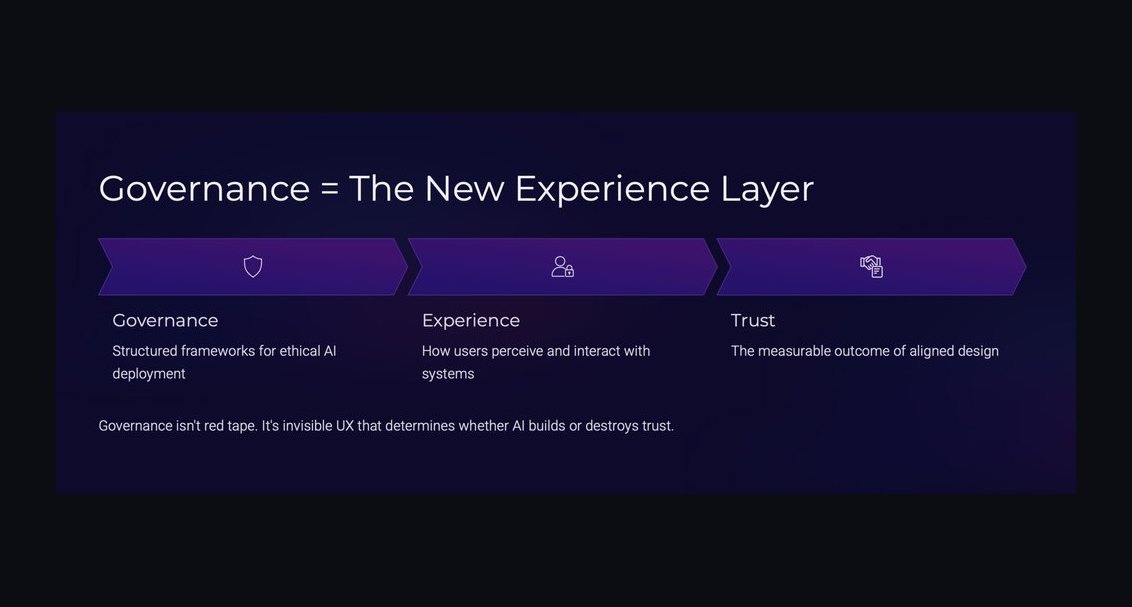 revopsWhat's the right governance model for a founder-led or early-stage sales org under $5M ARR that's still deciding between PLG and sales-led — should governance philosophy be baked in pre-launch or determined by where traction lands in 2027?
 gtm-playbookRevOps Consultancy GTM Playbook 2027 — Salesforce + HubSpot + Agentforce + RaaS Retainer and the 8M Winning by Design Operator Path
 gtm-playbookFractional CRO Services GTM Playbook 2027 — MEDDPICC + Agentforce + AI-Augmented Sales and the 8M Pavilion Operator Path
 pulse-gtmTop 10 metrics to track in the first 30 days of a new outbound motion in 2027