

How do you start a carpet cleaning business in 2027?
 Curated byKory White · Fractional CRO · Maryland
Quality
Certified

Start a carpet cleaning business in 2027 by getting IICRC-certified, buying a truck-mounted extractor or high-end portable, registering an insured entity, and defining a tight service radius. Then fill the calendar with recurring residential and commercial work. Profitability hinges on billable hours per truck per day, not on cleaning skill.
The outcome you should expect
A disciplined solo operator who launches with real equipment, real insurance, and a real marketing budget should expect roughly $70,000 to $220,000 of Year 1 revenue against $35,000 to $110,000 of owner profit. That is a genuinely strong first-year outcome for a local services business, and it is earned through physical work, long days, and a calendar you build yourself one job at a time.
The width of that range is not luck and it is not talent at cleaning carpet. It is route density. Two operators can own identical truck-mounts, hold identical certifications, and clean to an identical standard, and one will finish the year at $80,000 while the other finishes at $200,000 — because one spent five hours a day running a wand and the other spent five hours a day driving between scattered jobs. Everything in this guide points back at that single divergence.
The shape of the business also matters more than most beginners expect. Residential work is transactional: each job must be re-won, the calendar resets to empty every Monday, and demand swings hard with the season. Commercial work on scheduled contracts is the opposite: an office cleaned monthly, a gym every two weeks, a daycare on a set cadence, a property-management portfolio turning units year-round. Those bookings recur without being re-sold, they cluster geographically, and they pay predictably. The operator who ends Year 1 with even three or four commercial accounts has a fundamentally different business than the one running purely on inbound residential calls, even at the same revenue.
By Year 3 to Year 5, a well-run operation running two to four trucks and crews typically lands somewhere between $300,000 and $1.1 million in revenue with $90,000 to $320,000 in owner profit. At that point the founder faces a real fork: stay a lean owner-operator with excellent per-hour economics, build a multi-truck residential route machine, go deep on commercial contracts and property-management accounts, or add water-damage restoration — the high-ticket, insurance-paid adjacency that roughly doubles the addressable revenue of the same fundamental business.
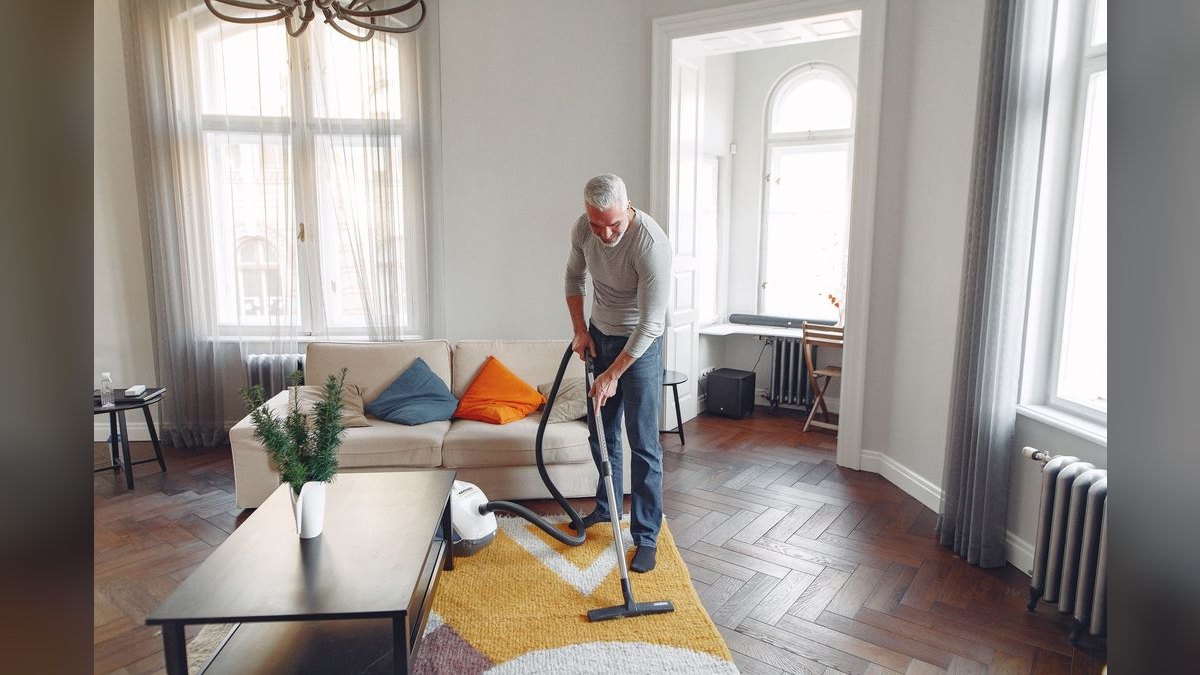
What you should not expect is passivity. This is a route-and-equipment business wearing a humble costume. You acquire a piece of cleaning equipment once and bill it out at $150 to $300 an hour for years while the machine amortizes across hundreds of jobs. That is the engine. The van, the chemicals, the scheduling software, the reviews, the contracts, the crew — all of it is machinery that keeps the engine at high utilization. Nothing about it runs without you until you have deliberately built the systems and the crew that let it.
Three things reliably kill carpet cleaning startups, and none of them are cleaning-related. Competing on price against a bottomless race-to-the-bottom of $79-whole-house operators and franchised national brands, instead of building a premium, reliable, review-driven position. Under-pricing the drive — treating a scattered route as if windshield time were free, which silently converts a 65% gross margin into a 25% one. And staying purely transactional forever instead of building the recurring base that makes revenue predictable.
What drives that outcome
The single number that determines whether this business is profitable is billable hours per truck per day. A truck-mount, a van, an operator, and a working day form a fixed cost stack — the truck payment, the insurance, the fuel, the operator's time all exist whether the truck runs eight jobs or one.
Run the math concretely. A truck billing five to six productive hours a day at an effective $150 to $250 an hour generates $750 to $1,500 of revenue per day. Across 220 working days, that is $165,000 to $330,000 from one truck. The same truck billing two to three hours a day — because the route is scattered across the metro, the jobs are tiny, and the calendar has holes — generates $300 to $750 a day, or $66,000 to $165,000 a year, against an identical cost stack. The difference between those operators is not skill. It is routing and calendar discipline.
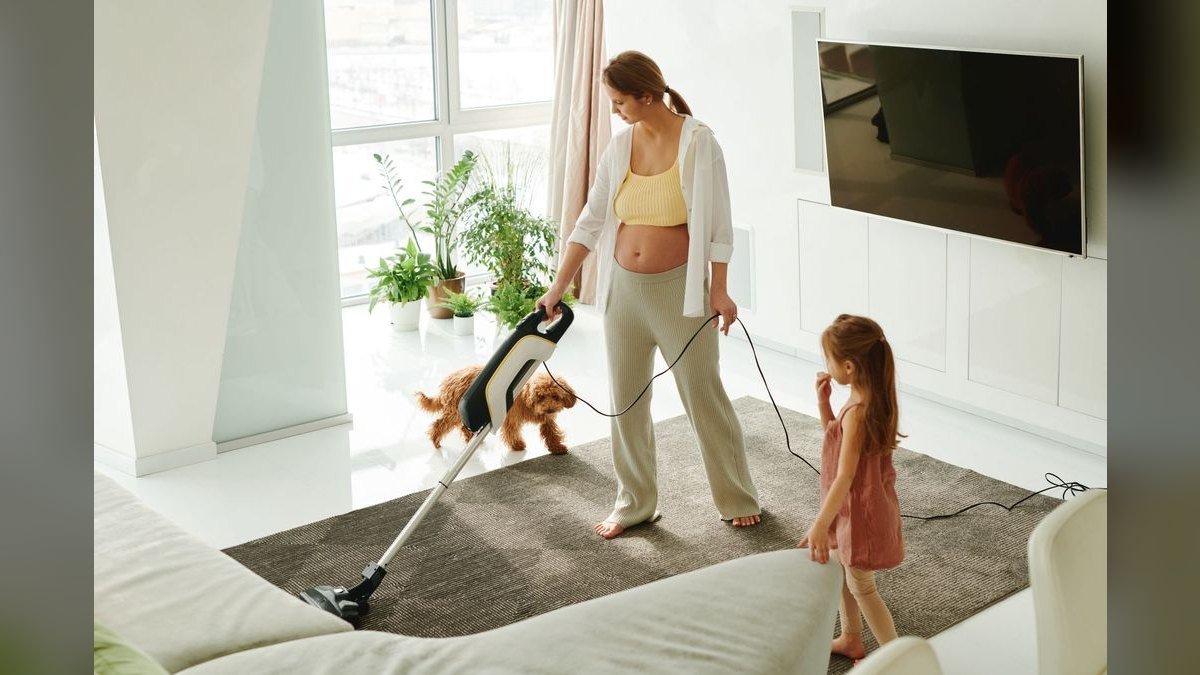
The levers that push billable hours up are unglamorous and completely within your control. Cluster jobs geographically so drive time between stops is measured in minutes rather than 40-minute crosstown hauls. Book the calendar dense enough that there are no dead holes to absorb. Hold a firm service minimum so a $60 one-room job never consumes a slot a real job needed. Build recurring commercial routes where five accounts sit within a few miles of one another. Quote by phone and online rather than driving out for every estimate.
The discipline this imposes changes how you evaluate work. Before chasing any job, ask what it does to route density and calendar utilization — not just what it bills. A $200 job 35 minutes away that leaves a hole on either side can be worth less than a $140 job that slots cleanly between two existing stops. Founders who run the business by billable-hours-per-truck build something that compounds; founders who just chase jobs build a truck that drives all day and bills half of it.
Underneath utilization sits the equipment decision, which sets your ceiling. The truck-mounted hot-water-extraction unit is the professional standard — a machine mounted permanently in a van, generating high heat, high water pressure, and powerful vacuum recovery through long hoses run into the building. It delivers superior results, dramatically faster dry times, genuine soil extraction rather than rearrangement, efficient large-commercial economics, and the credibility commercial accounts expect. It costs $15,000 to $45,000 or more before the van. Established manufacturers — HydraMaster, Sapphire Scientific, Prochem, Butler — represent durable equipment.
The high-end portable extractor is the lighter entry at $1,500 to $6,000: a self-contained machine you carry in and plug into a wall outlet. It has real advantages — low capital, access to high-rise units a truck-mount hose cannot reach, and a genuine path to build cash flow first. It also has real limits: less heat and vacuum power, slower dry times, more physical hauling, and a credibility gap with commercial buyers. Low-moisture and encapsulation systems form a third category, particularly relevant for commercial maintenance cleaning where fast dry time and frequent service matter more than deep restoration. Many serious operators run a truck-mount as the core system and keep a portable for high-rises and tight access.
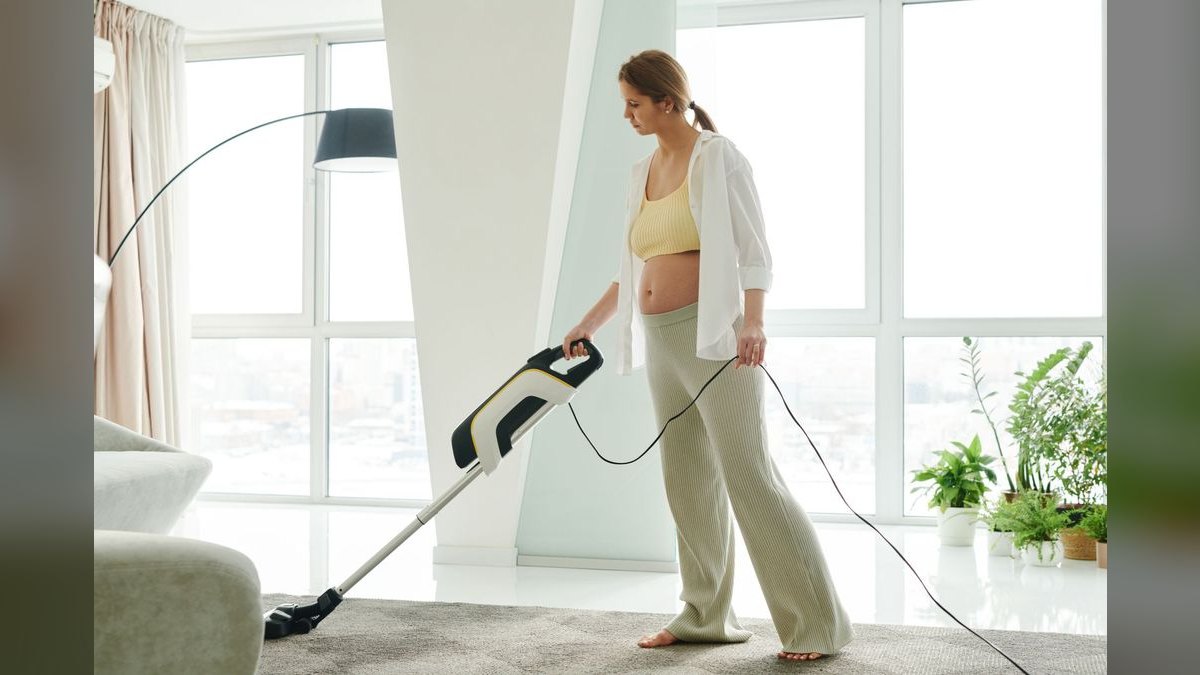
The one genuinely wrong move is buying consumer-grade equipment and expecting professional results. It produces slow-drying, poorly extracted work, mixed reviews, and no commercial future.
The third driver is your lead engine, which in 2027 is overwhelmingly your online review profile. The customer journey is now near-universal: a homeowner searches, scans the map results, and chooses among businesses with the most and best recent reviews. Rating, review count, and recency together function as your storefront. A new operator with three reviews is nearly invisible beside an established one with four hundred. The system that fixes this is mechanical — every completed job ends with a courteous, specific review request, ideally a direct link texted while the clean is fresh and the customer is happy, consistently rather than occasionally, with a professional response to every review that lands. The Google Business Profile is the centerpiece: complete, accurate, photo-rich, with correct service area, services, and hours. Reviews compound; a year of disciplined generation builds an engine producing inbound calls at zero marginal ad spend.
Benchmarks and realistic ranges
Startup capital splits cleanly by equipment path. A lean portable-based launch lands around $18,000 to $32,000 all in. A truck-mount professional launch runs $40,000 to $90,000.
The line items behind those totals:

- Cleaning system — high-end portable extractor at $1,500 to $6,000, or truck-mounted unit at $15,000 to $45,000+
- Vehicle — used cargo van suitable for a truck-mount install, or a van or trailer for a portable, $8,000 to $35,000
- Truck-mount installation — mounting, plumbing, and electrical, $1,000 to $4,000
- Wands, hoses, tools, attachments — upholstery tools, stair tools, tile tools, hose lengths, $800 to $3,000
- Chemicals and initial inventory — pre-sprays, traffic-lane cleaner, spotters, protectant, deodorizer, $300 to $1,200
- Insurance — general liability (commonly $1M–$2M) plus commercial auto, $1,200 to $4,000 to start
- IICRC certification — Carpet Cleaning Technician plus additional courses, a few hundred dollars per course
- Formation, licensing, legal — entity setup, local licensing, contract and waiver templates, $300 to $1,500
- Scheduling and invoicing software — setup and first months, modest
- Initial marketing — Google Business Profile, professional website, vehicle lettering, starter ad and review budget, $1,000 to $5,000
- Working capital reserve — $3,000 to $12,000, and this is the line people skip at their peril
Financing softens the two largest lines. Equipment financing fits the truck-mount and van naturally — they are tangible, productive assets that earn from the first job, and manufacturers and dealers commonly facilitate it. Used truck-mounts trade actively in the industry and a well-maintained used unit paired with a used cargo van cuts the outlay substantially. SBA and small-business loans can fund a broader launch including marketing and working capital. Starting on a portable is itself a financing strategy — a deliberate capital-light bridge to a truck-mount. Seller financing applies when buying an existing operation outright, sometimes the lowest-risk entry because the equipment, route, reviews, and contracts already exist. Past Year 1, reinvested cash flow funds most healthy growth. The dangerous move is over-leveraging the equipment while skipping the marketing budget and the reserve: a financed truck with no calendar to fill it is a payment without revenue.
Pricing has two standard frameworks. Per-square-foot runs roughly $0.30 to $0.60 for residential and $0.15 to $0.40 for commercial — precise, scalable, and standard for commercial bids. Per-room pricing, a flat rate per room with clear definitions of what counts as a room, is simpler for residential customers and common in the field. Either way, price to a real effective hourly rate rather than to beat the cheapest quote.
Hold a service minimum of $150 to $250. It is non-negotiable. Without it, a tiny one-room job consumes a calendar slot and a drive for $60 of revenue.
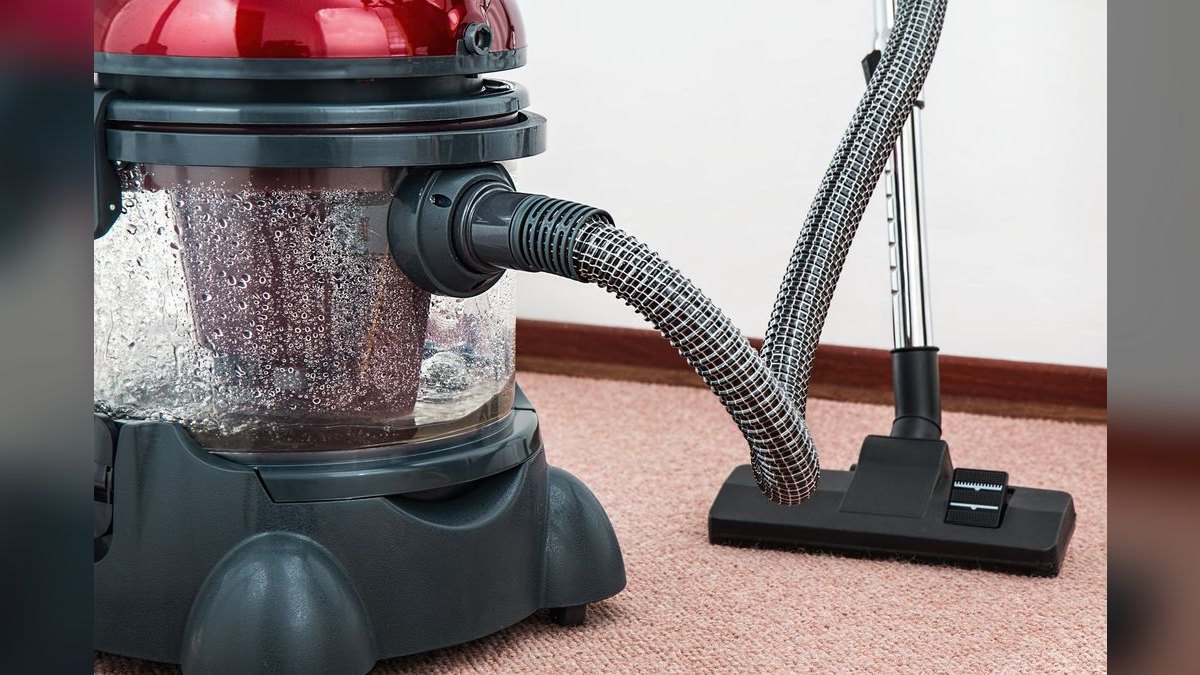
Residential margin lives in the add-ons: pet-stain and odor treatment at roughly +$25 to $100 per area, protectant application at +$0.10 to $0.25 per square foot, deodorizer, area-rug cleaning, upholstery, tile and grout, mattress cleaning. A representative residential job — three rooms, a hallway, and a set of stairs — prices at roughly $250 to $350 before add-ons. Commercial contracts are bid by square footage, frequency, and scope, with monthly contract values commonly running $300 to $3,000 or more depending on size and cadence.
A healthy operation runs a 55% to 72% gross margin after fuel, chemicals, and direct labor. The spread is driven almost entirely by route density and whether the drive is priced into the job. The costs beginners consistently underestimate, in order: fuel and vehicle cost including the truck-mount's own fuel burn, maintenance, and depreciation; chemicals and supplies; loaded labor including drive time; the drive itself, which is the most under-priced cost in this business — a 35-minute each-way trip is 70 minutes of paid time producing zero revenue; equipment wear and replacement on wands, hoses, vacuum motors, and pumps, which is an ongoing capital drip rather than a one-time purchase; and the fixed overhead of insurance, software, marketing, and admin.
A realistic five-year arc, assuming disciplined routing, premium-reliable positioning, a relentless review engine, and a deliberately built commercial base:
| Year | Shape of the operation | Revenue | Owner profit |
|---|---|---|---|
| 1 | Solo, one truck, route and review building | $70K–$220K | $35K–$110K |
| 2 | Deep review base, first commercial contracts, often a second truck | $160K–$420K | $60K–$170K |
| 3 | Two to three trucks, small crew, documented systems | $280K–$650K | $85K–$230K |
| 4 | Deeper commercial portfolio, possible early restoration build | $400K–$850K | $110K–$290K |
| 5 | Three to five trucks, dispatch function, strong recurring base | $500K–$1.1M | $130K–$320K |
These figures assume no exponential growth, because carpet cleaning scales with trucks, crews, and route density rather than magically. Seasonality is real but milder than many trades: spring and fall are peak, summer is steady, and deep winter is the slow stretch in cold climates. A disciplined operator builds commercial recurring revenue specifically because it flattens that curve.
Risks, edge cases, and failure modes
Property damage is the risk that ends businesses. Over-wetting that delaminates carpet or damages subfloor, color bleed, shrinkage, a furniture mark, water reaching somewhere it should not. Mitigation is genuine training — IICRC certification teaches fiber identification and proper technique — plus comprehensive general liability coverage, commonly $1M to $2M. Being insured is also a sales asset: serious residential customers and effectively every commercial account screen for it, and the $79 floor operators usually fail that screen. That gap is exactly what a professional operator exploits.
Price competition is the risk that hollows businesses out. The market has a bottomless floor — $79-whole-house advertisers with consumer machines and no insurance — and a franchised middle. Above that sit the national brands: Stanley Steemer, Chem-Dry, Zerorez, Oxi Fresh, Heaven's Best, Coit. They hold brand recognition, marketing budgets, standardized operations, and a strong search presence, and you cannot out-spend them. You also should not try to out-cheap the floor, because that race is one someone is always willing to lose harder. The durable position for a new entrant is premium-reliable: priced clearly above the floor and justified by genuine results, fast dry times, professional equipment, real insurance, on-time arrival, and a wall of recent reviews. The competitive moat here is not the equipment — anyone with capital buys a truck-mount. It is the review base, the repeat relationships, the commercial contract portfolio, the route density, and the local reputation for reliability, all of which take years to build and are genuinely hard to copy.
Route sprawl is the quiet killer. Saying yes to jobs anywhere destroys billable hours without ever announcing itself. Mitigation is a defined service radius, geographic clustering, job minimums, and routing discipline enforced by the scheduler rather than by the order calls arrived.

Equipment failure costs a day or a week of revenue against full fixed costs. Mitigation is disciplined maintenance, a standing relationship with a repair resource, and eventually the redundancy of a second truck.
Seasonality in cold climates is mitigated by the commercial recurring base that does not swing with weather.
Customer disputes — the argument over a pre-existing stain, the expectation mismatch — are mitigated by a thorough pre-job walkthrough, clear scope agreement, honest framing of what can and cannot be removed, and good documentation.
Key-person risk is acute for a solo operator who is the entire business. One injury takes revenue to zero. Mitigation is building systems, training a technician, and adding the second truck.

Labor risk arrives with the first hire. Technician work is physical, the labor market is competitive, and a poorly trained or unreliable technician damages property and generates exactly the bad reviews the whole business is built to avoid. Mitigation is careful hiring, real training, documented procedures, and quality control.
Cash-flow risk comes from net-30+ terms on commercial work and the ramp before the route is dense. Mitigation is the working-capital reserve plus a healthy mix of pay-on-completion residential work.
The Year 1 mistakes are remarkably consistent, and founders who fail almost always made three or four of them: buying consumer-grade equipment and expecting professional results; competing at the price floor; treating windshield time as free; skipping the review engine from job one; launching with equipment but no marketing budget; skipping certification and insurance; staying purely transactional and never building recurring revenue; refusing to define a service radius; running without a job minimum; neglecting equipment maintenance; adding a second truck before the route can fill it; and setting expectations poorly with customers. Treat that list as a pre-launch checklist.
Two edge cases deserve their own note. The restoration hybrid — adding water-damage mitigation on top of the cleaning business — is the single largest expansion available and uses overlapping extraction skill and equipment. Jobs run $2,000 to $25,000+ and are insurance-paid, which means a payer who is not the stressed homeowner. It requires IICRC Water Damage Restoration certification and ideally Applied Structural Drying, additional equipment (air movers, commercial dehumidifiers, moisture meters), genuine 24/7 on-call capability, and an insurance-billing operation that documents and invoices claims correctly. Bolting it on before the cleaning base is stable is a common and expensive error. The specialty paths are the other edge case: area-rug specialization commands premium pricing and is less exposed to the route-density grind; commercial-only, upholstery, tile and grout, move-in/move-out and property-management, eco and low-moisture positioning, and pet-focused specialization are all legitimate focused businesses. The mistake is not choosing a focus — it is being mediocre across everything.
A practical rollout plan
Sequence matters here, and most first-time founders get it backwards by buying equipment before deciding what business they are building.
Weeks 1 through 4 — credentials and structure. Take the IICRC Carpet Cleaning Technician course before you clean anything for money; it teaches how to handle different fibers without damaging them and is a real differentiator in commercial bids. Form the LLC or S-corp, handle local business licensing (requirements are jurisdiction-specific and some areas require trade registration), open separate business banking from day one, and check whether your state taxes cleaning services — some do, and you must collect and remit correctly from the first invoice.
Weeks 3 through 8 — equipment and coverage. Secure general liability and commercial auto before the first job, not after. Buy the cleaning system: a truck-mount and van if you have the capital or financing, a high-end portable if you are bridging. Budget $1,000 to $4,000 for truck-mount installation. Stock wands, hoses, upholstery and stair and tile tools, and your initial chemical inventory. Set up scheduling and invoicing software before you need it.
Weeks 6 through 10 — position and presence. Define the service radius on a map and commit to it. Set per-room or per-square-foot pricing to a target effective hourly rate, and set the $150 to $250 minimum. Build the Google Business Profile out completely with photos, services, hours, and service area. Get a professional website live with clear services, transparent pricing guidance, easy online booking, and visible proof of insurance and certification. Letter the van — it is a moving billboard in the exact neighborhoods you serve and generates calls at near-zero marginal cost.

Months 2 through 6 — fill the calendar and build the wall. Run local search advertising to buy visibility while the organic review profile builds. End every single job with a texted review request. Leave a card with the immediate neighbors of every home you clean — that is route-density logic turning one job into a cluster. Build a structured referral incentive. Start the commercial prospecting cadence now rather than later: direct outreach to offices, medical and dental suites, gyms and studios, restaurants, daycares and schools, churches, retail, and hotels inside the radius, followed by a professional walkthrough and bid, a trial job that proves the work, and then flawless reliability so the account never shops again. Court property managers and real estate agents for the move-in/move-out and turn work.
Months 6 through 12 — tighten and measure. Track billable hours per truck per day weekly and route the calendar for density rather than call order. Set the reminder system that brings residential customers back on their 12-to-24-month cycle — one of the cheapest and most ignored revenue sources in the business. Keep equipment maintenance on a schedule. Use the first slow season for maintenance, planning, and commercial prospecting rather than panic.
Year 2 and beyond — scale on proven density. Add the second truck and technician only when the route can genuinely keep both billing real hours; a truck billing two hours a day adds cost without profit. Invest heavily in training, documented procedures, and quality control before the technician touches a customer's home. Consider the restoration division only after the cleaning base is stable and you have the temperament for emergency on-call work.
One organizational note for founders coming from a RevOps background: the instinct to instrument the funnel serves you well here. Lead source, quote-to-close rate, average ticket, add-on attach rate, rebooking rate, and billable hours per truck are the six numbers that run this business, and tracking them from job one is exactly the discipline that separates the $200,000 first year from the $80,000 one.
Related questions
How much does a carpet cleaning truck-mount cost?
Truck-mounted hot-water-extraction units from established manufacturers like HydraMaster, Sapphire Scientific, Prochem, and Butler typically run $15,000 to $45,000 or more for the unit alone, plus $1,000 to $4,000 for installation and the cost of a suitable cargo van.
Do you need certification to clean carpets professionally?
Certification is not legally required in most jurisdictions, but IICRC Carpet Cleaning Technician training is the recognized industry standard. It teaches fiber identification and technique that prevent damage, and it functions as a genuine screening criterion in commercial bids and premium residential quotes.
Is carpet cleaning profitable as a solo operator?
Yes. A solo operator with a truck-mount, a dense route, and a strong review engine can generate $70,000 to $220,000 in first-year revenue with $35,000 to $110,000 in owner profit. Profitability depends far more on route density than on cleaning skill.
Should you start with a portable or a truck-mount?
A truck-mount builds a real business with commercial credibility and efficient large-job economics. A high-end portable is a legitimate capital-light bridge that lets you build cash flow and reviews first — but treat it as a bridge, not a permanent strategy.
How do you get commercial carpet cleaning contracts?
Direct outreach to offices, gyms, restaurants, daycares, churches, and property managers inside your radius, followed by a professional walkthrough and bid, a trial job that proves the work, then flawless reliability. It is a relationship-and-reliability sale, not an advertising one.
FAQ
How long does it take to become profitable?
Most disciplined operators reach positive monthly cash flow within the first three to six months, but Year 1 as a whole is route-building and review-building mode rather than profit-maximization mode. The working-capital reserve of $3,000 to $12,000 exists precisely to cover fixed costs during that ramp. Operators who launch with no marketing budget stretch this ramp considerably, because a financed truck with an empty calendar still carries a payment.
What gross margin should a carpet cleaning business run?
A healthy operation runs 55% to 72% gross margin after fuel, chemicals, and direct labor. The spread within that band is driven almost entirely by route density and whether drive time is priced into the job. Under-pricing the drive is what silently converts a 65% margin into a 25% one, and it rarely shows up as an obvious problem — the calendar looks full while the bank account does not grow.
Can you compete against Stanley Steemer and the other national brands?
Not on brand spend, and you should not try. National franchises have marketing budgets, standardized operations, and search dominance you cannot outbid. They can also be more expensive, less flexible, and less personal. A local independent wins on genuinely better results and dry times, attentive service, and a visible wall of recent reviews — the freedom to be better than a franchise script allows is the actual advantage.
Is water-damage restoration worth adding?
For the right operator, it roughly doubles addressable revenue using overlapping equipment and skill. Jobs run $2,000 to $25,000+ and are insurance-paid. It requires IICRC Water Damage Restoration certification, air movers and dehumidifiers and moisture meters, genuine 24/7 on-call capability, and a competent insurance-billing operation. Add it after the cleaning base is stable, never before.
How important are online reviews really?
They are the primary lead engine. Customers search, scan map results, and choose based on rating, review count, and recency before they ever call. A new operator with three reviews is nearly invisible next to one with four hundred. Systematic review generation from the very first job is the highest-leverage marketing activity available, and it compounds — a year of discipline produces inbound calls at zero marginal ad spend.
What is the biggest mistake first-year owners make?
Competing on price. The market has a bottomless floor of $79-whole-house operators, and joining that race produces thin margins, difficult customers, no loyalty, and no ability to raise prices later without losing the base you built on price. The premium-reliable position — real equipment, real insurance, real certification, on-time arrival, and proof in the reviews — is the only position where the margin actually exists.
Sources
- IICRC — Institute of Inspection, Cleaning and Restoration Certification
- U.S. Small Business Administration — Fund your business
- U.S. Small Business Administration — Choose a business structure
- IRS — Small Business and Self-Employed Tax Center
- IRS — Publication 946, How to Depreciate Property
- U.S. Bureau of Labor Statistics — Building Cleaning Workers
- Google — Add or claim your Business Profile
- Carpet and Rug Institute — Care and Maintenance
- ISSA — The Worldwide Cleaning Industry Association
- Restoration Industry Association
Related on PULSE
- How do you start a pressure washing business?
- How do you price recurring commercial service contracts?
- How do you build a local services review engine that compounds?
- How do you calculate billable utilization for a field service crew?
- How do you decide when to add a second service truck?
- How do you start a water damage restoration business?
This page will be disappearing soon. Save it to your device for $1 — or read it free while it is here.
@Kory-White- · if Venmo asks, the last 4 of my number are 2012
This page is gone.
This one is off the shelf now. $1 keeps it on your phone for good — the whole page, pictures and diagrams included.
 window-cleaningHow do you start a window cleaning business in 2027?
 dryer-vent-cleaningHow do you start a dryer vent cleaning business in 2027?
 pressure-washingHow do you start a pressure washing business in 2027?
 dog-walking-businessHow do you start a dog walking business in 2027?
 home-cleaningHow do you start a home cleaning service business in 2027?
 mobile-pet-groomingHow do you start a mobile pet grooming business in 2027?
 window-cleaningHow do you start a residential window cleaning business in 2027?
 lawn-careHow do you start a lawn care business in 2027?
 gutter-cleaningHow do you start a gutter cleaning business in 2027?
 upholstery-cleaningHow do you start an upholstery cleaning business in 2027?