
How do you start a vinyl decals business in 2027?
 Curated byKory White · Fractional CRO · Maryland
 PULSEKNOWLEDGE LIBRARY
Quality
Certified
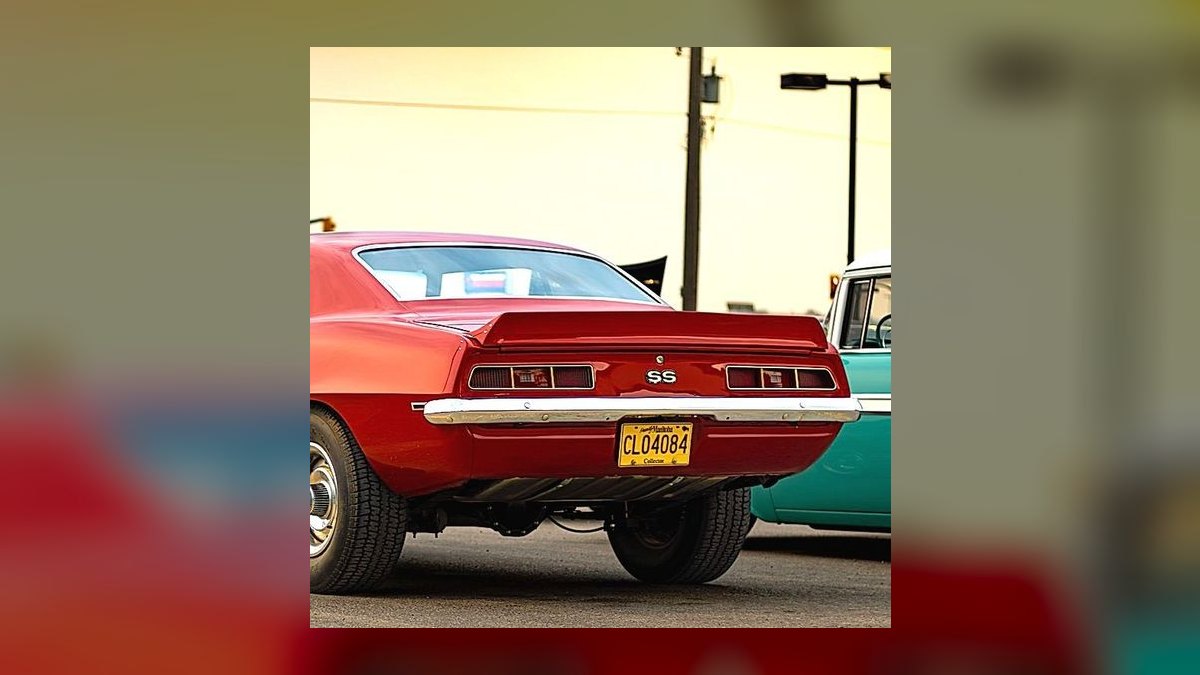
Start a vinyl decals business in 2027 by choosing commercial signage over consumer stickers, buying a 24-inch cutter and heat press for roughly $6,500 to $20,000 all-in, learning cutting and installation as real crafts, and pricing every job on labor rather than the pennies-per-square-foot vinyl.
What a vinyl decals business actually is, and why the model choice decides everything
A vinyl decals business converts thin adhesive-backed film into finished graphics that go onto a surface and stay there — a laptop, a storefront window, a delivery van, a gym wall, a hard hat, a race car, a real-estate yard sign, a t-shirt. That is the honest definition: you are not in the sticker business, you are in the business of putting a customer's words, logo, or image onto something they own, durably and cleanly. The vinyl is just what the work gets cut from.
The material math is what draws people in and what misleads them. A 12-inch by 50-foot roll of quality outdoor sign vinyl runs roughly $40 to $120 and yields hundreds of square feet of cut graphics, working out to something like $0.20 to $0.50 per square foot. A die-cut sticker with thirty cents of film in it sells for $5. A vehicle lettering job consuming $15 of vinyl bills $400. On materials alone this looks like a 70 to 90 percent margin business, which is exactly why the category attracts a flood of entrants every year.
The cheapness is also the trap. Because anyone can buy a $300 craft cutter and a roll of film, the consumer end of this market is one of the most saturated small-business categories in existence. Cricut alone reports on the order of ten million-plus registered users. Etsy is flooded with sticker shops. Overseas and high-volume domestic printers compete on price at the bottom. Per-unit profit is real but measured in single dollars against hours of design, cutting, weeding, and packing.
So the business splits into two worlds that share almost nothing except the raw material. The consumer sticker world is die-cut stickers, personalized drinkware, custom apparel, wedding and party favors, laptop and water-bottle decals, craft-fair goods. The buyer is an individual, the order runs $3 to $40, the channel is Etsy, Shopify, Amazon Handmade, TikTok Shop, Instagram, and in-person markets, and the competition is effectively infinite.
The commercial signage world is vehicle lettering and fleet decals, storefront and window graphics, wall decals and murals, real-estate and yard signs, banners, trade-show and event graphics, safety labeling, and wholesale cut vinyl for other sign shops. The buyer is an organization, the order runs $100 to $2,500-plus, the channel is local search, referrals, and B2B relationships, and the competition is real but finite and local — the established sign shops in your metro, a knowable set.
The strategic difference is not subtle. A plumber who needs three trucks lettered, a new restaurant that needs window graphics and a menu board, a gym that wants its logo eight feet wide on the wall, a manufacturer needing ten thousand warning labels, a realtor needing fifty yard signs — none of those buyers are price-shopping a $4 sticker. They are buying a solved problem on a deadline, and they come back. A business that gets its first truck lettered comes back for the second, then sends its contractor friend. The consumer world is easy to enter and hard to make a living in; the commercial world is slightly harder to enter and far easier to build a real income in.
Underneath both sits a four-layer skill stack the equipment list hides. Design and file prep — turning a customer's rough idea or low-resolution logo into a clean, weeding-friendly vector cut file. Production craft — knowing blade depth and force for each film, running a test cut, weeding cleanly and quickly. Material judgment — calendared versus cast, permanent versus removable, the right heat-transfer film for the right fabric. Application and install — physically putting a graphic on a real surface without bubbles, wrinkles, or a crooked line. A founder strong on the first two layers can run a consumer-sticker shop. Only a founder who owns all four can run the commercial business that pays.
The step-by-step process from decision to first paid job
The sequence below is the one that consistently produces a working business rather than an expensive hobby. Skipping steps is how founders end up under-equipped, underpriced, or selling into the wrong market.
Step one: choose the world deliberately, before you buy anything. Write down which of the two models you are building. This single decision determines your equipment budget, your software, your pricing method, your sales channel, and your income ceiling. Defaulting into consumer stickers because it had the lowest entry cost is the most common strategic error in the category.
Step two: equip for the model you chose, not the one you can afford today. For consumer work, a craft cutter and a hobby press are genuinely sufficient. For commercial work, the 24-inch-class cutter is the real entry point — a 12-inch craft cutter physically cannot cut a van door graphic, so every good job walks out the door.

Step three: learn the craft on your own material before you sell. Budget a full roll of cheap vinyl as tuition. Run test cuts at different blade depths and force settings on each film you stock. Weed a hundred designs. Apply graphics to a scrap panel, a window, a curved surface, your own car. This is not optional practice; blade settings and weeding speed are the difference between a three-hour job and a six-hour job at the same price.
Step four: build the file-prep discipline. Receive or create artwork, vectorize and clean it, lay out for the material and the cut with weeding-friendliness in mind (avoid tiny fragile elements, add weeding boxes), set cut parameters for the specific vinyl and blade, run a test cut, then run production. Every shortcut at the file stage shows up as wasted material and a miserable weed at the production stage.
Step five: build the sales engine that matches the model. For commercial work that means a Google Business Profile with photographs of installed jobs, a portfolio website, your own vehicle lettered as a rolling billboard, and direct outreach to contractors, property managers, real-estate agents, restaurants, gyms, fleet operators, and event companies. For consumer work it means marketplace SEO, process video content, and craft-fair presence.
Step six: price on labor and value, never on material. Details in the costs section below, but the rule is that the design fee, the production time, and the install time are the price. The vinyl is a rounding error.
Step seven: run a tight per-job workflow. Intake and quote, artwork and file prep, customer proof sign-off *before cutting*, material staging, cutting with tested settings, weeding, masking with transfer tape, quality check, then ship or install. A spelling error caught on an emailed proof costs nothing; the same error cut, weeded, and installed on a customer's van is a full remake plus a furious customer.

Step eight: protect the business. Form an LLC, open separate business banking from day one, register for sales tax and remit it correctly, and carry general liability insurance — plus garage-keepers or care-custody-and-control coverage if you are applying graphics to customer vehicles. Decline requests to cut brand logos, licensed characters, and sports-team marks you have no authorization for; that exposure is real and widely ignored by beginners.
Equipment tiers, materials, and what each choice unlocks
The cutter you buy is the clearest signal of which business you are actually building, and the line between hobby and business runs straight through it.
Entry craft cutters — the Cricut Maker and Explore lines, the Silhouette Cameo — cost roughly $250 to $450 and cut vinyl up to about 12 to 13 inches wide. They are genuinely capable for stickers, apparel transfers, drinkware, and small decals, and they are how most people start. Their limits are cut width, durability under volume, software lock-in, and the fact that they are consumer appliances not built for all-day production.
Prosumer and entry-commercial cutters are where it gets serious. The Silhouette Cameo Pro extends to roughly 15 inches. The widely recommended step-up is a 24-inch servo cutter such as the Roland CAMM-1 GS-24, in the neighborhood of $2,000 to $2,500. Graphtec's plotters are a respected alternative. A 24-inch machine handles full rolls, cuts cleanly all day, manages contour-cut registration for printed-then-cut graphics, and opens vehicle and large-format work.
Wide-format print-and-cut systems — Roland's TrueVIS and VersaSTUDIO lines, eco-solvent and latex printer-cutters from HP and Epson — run from several thousand dollars to $20,000-plus and let a shop produce full-color printed graphics rather than only solid-color cut vinyl. This is a capability purchase, usually a Year 2 or Year 3 reinvestment rather than a launch expense.

Heat presses are needed for any apparel or heat-transfer work. Hobby presses from the cutter manufacturers run $100 to $400; commercial clamshell presses from established press makers such as Stahls' Hotronix or Geo Knight run roughly $300 to $1,500. Supporting gear: a laminator for protecting printed graphics, a weeding station and picks, squeegees, application fluid, a cutting mat and trimmer, and transfer tape bought in volume.
Materials matter as much as machines, because using the wrong film for the application is how decals fail and reputations die young. Calendared adhesive vinyl is thicker, less conformable, cheaper, and rated for a few years outdoors — the workhorse for flat signage, lettering, and windows. Oracal 651 is the industry-standard calendared film. Cast adhesive vinyl is thinner, highly conformable, and longest-lived outdoors — the only correct choice for vehicle wraps and curved surfaces, from lines like Oracal 951, Avery Dennison wrap film, and 3M's commercial graphics films. Removable adhesive films are for wall decals, interior graphics, and short-term promotions. Heat-transfer vinyl goes onto fabric with a press; Siser EasyWeed is the standard, with StarCraft and ThermoFlex among the alternatives. Specialty films — reflective for safety work, etched-glass and frosted for office privacy, perforated for one-way window graphics, chrome and metallic — are where differentiation and premium margin live.
The discipline this imposes is simple to state and expensive to ignore: match the film to the job. Calendared 651 for a flat real-estate sign. Cast film for a curved truck door. Removable for a wall decal. Reflective for a safety application. A founder who puts cheap calendared vinyl on a curved vehicle panel will watch it lift and fail within a season, and that one failed job costs more in reputation than the margin on twenty good ones.
On software, vector tools are the core because cutting follows lines, not pixels. Adobe Illustrator is the industry standard on subscription, CorelDRAW is the traditional sign-industry mainstay, Affinity Designer is a strong one-time-purchase alternative, and Inkscape is a genuinely usable free open-source option for a startup. Alongside them sits cutter-specific software — Cricut Design Space, Silhouette Studio — and professional cut and RIP software such as VinylMaster, SignCut, FlexiSIGN, and Roland's VersaWorks.
Costs, timelines, and the revenue ranges to actually expect
A lean consumer-maker launch — craft cutter ($250–$450), hobby press ($100–$300), starter vinyl ($150–$400), tools ($50–$150), software ($0–$300), an Etsy or Shopify presence ($50–$400), and packaging ($50–$200) — totals roughly $700 to $2,200.

A commercial sign-shop launch — a 24-inch cutter ($2,000–$2,500), commercial press ($300–$1,000), vinyl inventory ($500–$1,500), software ($300–$700), a laminator if printing ($500–$3,000), website and branding ($500–$3,000), install tools ($200–$600), formation and insurance ($500–$2,000), and working capital ($1,000–$5,000) — totals roughly $6,500 to $20,000.
A print-and-cut shop adds a wide-format printer-cutter and lands around $15,000 to $40,000-plus.
Then there is the recurring stack founders routinely forget. Blades are a true consumable and a dull one causes incomplete cuts and torn material. Transfer and application tape is consumed on essentially every job and is a bigger line item than beginners expect. Cutting strips, mats, and rollers wear out. Print-and-cut shops carry ink, printheads (a single failure is a four-figure event), maintenance cartridges, and laminate. Software subscriptions are fixed monthly cost. Vinyl inventory replenishment is a working-capital commitment — a serious commercial shop holds meaningful stock across calendared, cast, HTV, and specialty film. Equipment depreciation is a reserve the P&L has to carry.
Representative 2027 pricing, which is what the price is really for in each case:

| Job type | Typical price | What the price covers |
|---|---|---|
| Small die-cut sticker | $4–$8 | Material plus batched production labor and platform fees |
| Medium decal, 8–12 in | $10–$30 | Design setup, cut, weed, mask |
| Custom HTV apparel piece | $20–$40 | Garment, film, press time, design setup |
| Yard sign, each with volume breaks | $15–$50 | Substrate, print or cut, volume efficiency |
| Banner | $50–$300 | Material, production, finishing |
| Vehicle door lettering | $150–$500 | Design, vectorizing, cut, weed, on-site install |
| Full vehicle lettering set | $300–$1,200 | Multi-panel design, production, multi-hour install |
| Storefront window graphics | $100–$1,000+ | Design, production, on-site install by size and height |
| Wall decal or mural | $100–$2,500 | Design, large-format production, skilled wall install |
| Vehicle partial or full wrap | $2,000–$5,000+ | Design, cast film, advanced conforming install |
| Design and file-setup fee | $25–$150+ | Skilled creative and vectorizing labor |
Work a single commercial job all the way through to see where the money goes. Lettering a contractor's work van — company name, phone, services, license number on both doors and the rear — bills around $450. Material is $15 to $30 in film, transfer tape, and application fluid. Design and file setup, including redrawing a low-resolution logo and laying out door copy, runs one to two hours. Cutting and weeding is often the longest single block, one to three hours of hand-time. Installation — cleaning panels, measuring, positioning, squeegeeing — is one to two hours on site plus drive time. Net it out and a healthy commercial operation runs a 40 to 65 percent gross margin after all labor and overhead, nowhere near the 80 percent the material math implies, but a genuinely strong service-business margin at an effective $60 to $100-plus per hour.
Now the consumer comparison. A batch of fifty $5 die-cut stickers bills $250 against maybe $20 of material — but design, cutting, weeding fifty individual pieces, masking, packing fifty envelopes, printing fifty labels, and handling fifty customer interactions can consume five to ten hours. After marketplace listing, transaction, payment, and advertising fees that commonly run 10 to 20 percent-plus of revenue, plus shipping supplies, the effective hourly rate frequently lands below what the same person could earn in a regular job. Same material margin, completely different business.
The multi-year arc, assuming honest labor pricing and a commercial or niche lean:
| Year | Revenue | Owner profit | Operating state |
|---|---|---|---|
| Year 1 | $15K–$70K | $8K–$40K | Founder does everything; the model becomes clear |
| Year 2 | $40K–$150K | $25K–$80K | Portfolio, repeat accounts, better pricing discipline |
| Year 3 | $70K–$250K | $35K–$120K | Real systems; possible first helper and wide-format |
| Years 4–5, scaled | $150K–$500K+ | $70K–$200K | Small shop, employees, B2B account base |
| Years 4–5, solo | $60K–$150K | $60K–$150K | Optimized niche or solo commercial operator |

Year 1 is skill-building and pipeline-building, not profit extraction. The first months go to learning the equipment, the materials, the software, and — for the commercial founder — the install. Expect the commercial pipeline to take months to build, because B2B sign work comes from a portfolio, relationships, referrals, and reputation, none of which exist on day one. Many founders quit during exactly that stretch.
Where founders get it wrong
The failure modes in this category are remarkably consistent, which means they function as a pre-launch checklist rather than a surprise.
Pricing off material cost. "The vinyl cost me $2, I'll charge $8" is where nearly everyone starts, and it ignores the design, cutting, weeding, masking, and install labor that is the entire cost structure. Prices built that way cannot pay a wage. The correct method is product-tier pricing with labor and platform fees built in for consumer goods, and job-as-a-service pricing for commercial work with an explicit design/setup fee, production and material, and installation priced by complexity, surface, size, and site.
Giving away design time. Vectorizing a customer's blurry logo is skilled work. Doing it free trains every customer to expect free creative and makes the quote for the next job harder, not easier.
Giving away install time. Install is the part a competitor with only a craft cutter physically cannot do. It deserves a premium, not a discount. Discounting it throws away the commercial model's single biggest structural advantage.

Under-equipping for the model you actually want. Trying to run a sign business off a 12-inch craft cutter means turning away every vehicle and large-format job because the width simply is not there. That founder competes only for small decals and stalls out.
Using the wrong vinyl. Calendared film on a curved panel fails weeks or months later, publicly, and the founder eats the remake.
Skipping the proof. No customer sign-off before cutting means eating remakes on typos, wrong phone numbers, and misread color expectations.
Cutting protected IP. Customers will constantly ask for brand logos, licensed characters, and team marks. Cutting those without authorization is infringement, and many beginners do not recognize the exposure at all.
Under-budgeting consumables and maintenance. Blades, transfer tape, mats, ink, printheads. The founder who priced only for the headline material is blindsided the first time a printhead fails or inventory needs a $1,500 refill.

No deposit on custom commercial work. A custom-lettered job a customer walks away from is worthless to anyone else. Take deposits.
Treating it as a hobby that happens to take money — no separate banking, no real pricing, no sales effort — is how it never becomes a business at all.
One more, specific to 2027: expecting AI to change the labor math. Auto-vectorization, background removal, and mockup tools genuinely shave minutes off file prep and let a shop show a customer a realistic preview of lettering on their van before a single cut. But the cutter still has to be loaded, the blade still has to be set, the vinyl still has to be weeded by hand, the transfer tape still has to go on, and the graphic still has to be installed on a dusty panel in a parking lot. The physical majority of the labor is untouched. AI compressed the design step and raised customer expectations for fast, polished proofs; it did nothing to the weeding bench or the install ladder, which is exactly why the consumer model's labor wall has not moved.
Decision framework: which version to build
Three models exist, and choosing deliberately shapes everything downstream.
The solo maker — craft cutter, heat press, consumer storefront, stickers and apparel and drinkware — has the lowest possible barrier to entry and a hard labor-wall ceiling, capped by how many small orders one pair of hands can design, cut, weed, and ship. It works as side income, a market test, or a stepping stone, and works poorly as a sole full-time income unless it niches hard.

The local sign-and-graphics shop — 24-inch or wide-format cutter, commercial press, install capability, B2B focus on vehicle lettering, signage, window and wall graphics, banners, and yard signs — carries $6,500 to $20,000 of entry capital and most reliably produces a living, with a clear path to $70K–$250K and eventually employees.
The niche specialist goes deep on one high-value category: vehicle wraps (the highest-ceiling specialty, $2,000–$5,000-plus per vehicle), architectural and etched-glass film, boat and powersports graphics, wholesale contour-cut decals for other sign shops, large-format wall murals, or team and event apparel for schools, leagues, and gyms. Premium pricing, deep expertise, limited head-on competition.
Many durable operators run the sequence: start as a solo maker to learn the craft, build into a local sign shop for steady income, then layer a niche specialty on top for margin. The wrong move is staying a solo consumer maker by default and wondering why it never becomes a living.
Run seven questions before committing. Model clarity — are you clear-eyed that the consumer path is saturated and labor-walled? Capital — do you have $6,500 to $20,000 for the commercial model? Craft aptitude — will you learn file prep, clean cutting, and the patience of weeding as skills rather than shortcuts? Sales orientation — will you do B2B outreach, build a portfolio, chase referrals? Install willingness — will you actually learn to apply graphics on vehicles, windows, and walls? Pricing discipline — will you price the design, production, install, and value rather than the $2 of vinyl? Local market fit — is there enough small-business, vehicle, and signage demand where you live?
Yes across all seven and this is a legitimate path to a $70K–$250K-plus business with a real owner income. No on model clarity or pricing discipline and you will most likely build a frustrating side hustle and conclude the industry does not pay — when in fact only that corner of it does not. Worth noting for anyone applying a RevOps lens: the commercial model with accounts, equipment, reputation, and documented systems is a transferable, sellable business, while the pure consumer model is closer to a job with equipment attached.
Related questions
How much does it cost to start a vinyl decals business?
Roughly $700 to $2,200 for a lean consumer-maker setup with a craft cutter and hobby press, $6,500 to $20,000 for a commercial sign shop with a 24-inch cutter, install tools, insurance, and working capital, and $15,000 to $40,000-plus if you add a wide-format print-and-cut system.
Can you make a living selling vinyl decals on Etsy?
Rarely as a sole income. Material margin is high but design, cutting, weeding, packing, and shipping consume the hours, and marketplace fees commonly take 10 to 20 percent-plus of revenue. The effective hourly rate on small consumer orders often lands below a regular wage.
What cutter do you need for vehicle lettering?
A 24-inch-class commercial cutter such as a Roland CAMM-1 GS-24 or an equivalent Graphtec plotter, around $2,000 to $2,500. A 12-inch craft cutter physically cannot produce van-door-width graphics, so it caps you out of the highest-value work.
What is the difference between calendared and cast vinyl?
Calendared film is thicker, cheaper, less conformable, and suited to flat signs, lettering, and windows. Cast film is thinner, highly conformable, and longest-lasting outdoors — the only correct choice for curved vehicle panels, recesses, and wraps.
Do you need a business license and insurance for a decal business?
Most operators form an LLC, register for sales tax, and run separate business banking from day one. General liability insurance is standard, and garage-keepers or care-custody coverage matters once you are applying graphics to customer vehicles.
FAQ
How long before a vinyl decals business is profitable?
Year 1 is realistically skill-building and pipeline-building, generating $15,000 to $70,000 in revenue against $8,000 to $40,000 in owner profit. Commercial pipelines take months to build because they depend on a portfolio and referrals. Meaningful profit typically arrives in Year 2, when repeat accounts and referral flow start compounding.
Is the vinyl decals market too saturated in 2027?
The consumer end is saturated to an extreme degree — millions of craft-cutter owners, flooded marketplaces, and overseas price competition. The commercial end is competitive but finite and local, relationship-driven, and has real room for a responsive, well-equipped new entrant with install capability.
What is weeding and why does it matter so much?
Weeding is removing the negative vinyl from around a cut design by hand. It is slow, skilled, eye-straining, and it is the hidden time-sink of the entire industry. It does not scale without hiring, and a founder who finds it tedious has found a core daily task tedious.
Should you buy a printer or just a cutter to start?
Start with a cutter. Solid-color cut vinyl covers lettering, signage, wall decals, and most commercial work at a fraction of the capital. A wide-format print-and-cut system is a Year 2 or Year 3 reinvestment once full-color demand and cash flow justify $5,000 to $25,000-plus plus ink and printhead costs.
How do you find your first commercial customers?
Letter your own vehicle as a rolling billboard, set up a Google Business Profile with photos of real installed work, build a portfolio site, and directly approach contractors, property managers, real-estate agents, restaurants, gyms, and fleet operators. Referrals compound quickly once the first few installs are visible.
What ongoing costs surprise new owners the most?
Blades, transfer and application tape, cutting strips and mats, software subscriptions, vinyl inventory replenishment, and — for print shops — ink, maintenance cartridges, and printheads, where a single failure can be a four-figure event. Equipment depreciation is a reserve the pricing must carry.
Sources
- https://www.sba.gov/business-guide/plan-your-business/calculate-your-startup-costs
- https://www.irs.gov/businesses/small-businesses-self-employed/starting-a-business
- https://www.bls.gov/ooh/production/printing-workers.htm
- https://www.rolanddga.com/products/vinyl-cutters
- https://www.orafol.com/en/americas/products/graphic-products
- https://www.averydennison.com/en/home/products/graphics-and-signage.html
- https://www.3m.com/3M/en_US/graphics-signage-us/
- https://www.siser.com/
- https://www.etsy.com/legal/fees/
- https://www.uspto.gov/trademarks/basics
Related on PULSE
This page will be disappearing soon. Save it to your device for $1 — or read it free while it is here.
@Kory-White- · if Venmo asks, the last 4 of my number are 2012
This page is gone.
This one is off the shelf now. $1 keeps it on your phone for good — the whole page, pictures and diagrams included.
 vertical-farmingHow do you start a indoor vertical farming business in 2027?
 mobile-barberHow do you start a mobile barber business in 2027?
 horse-boardingHow do you start a horse boarding business in 2027?
 carpet-cleaningHow do you start a carpet cleaning business in 2027?
 holiday-lightingHow do you start a holiday lighting installation business in 2027?
 career-coachingHow do you start a career coach business in 2027?
 executive-coachingHow do you start an executive coach business in 2027?
 stump-grindingHow do you start a stump grinding business in 2027?
 mobile-car-washHow do you start a mobile car wash business in 2027?
 gutter-installationHow do you start a gutter installation business in 2027?