
What Makes David Foster Wallace’s “This Is Water” a Great Speech in 2027
 Curated byKory White · Fractional CRO · Maryland
 PULSEKNOWLEDGE LIBRARY
Quality
Certified
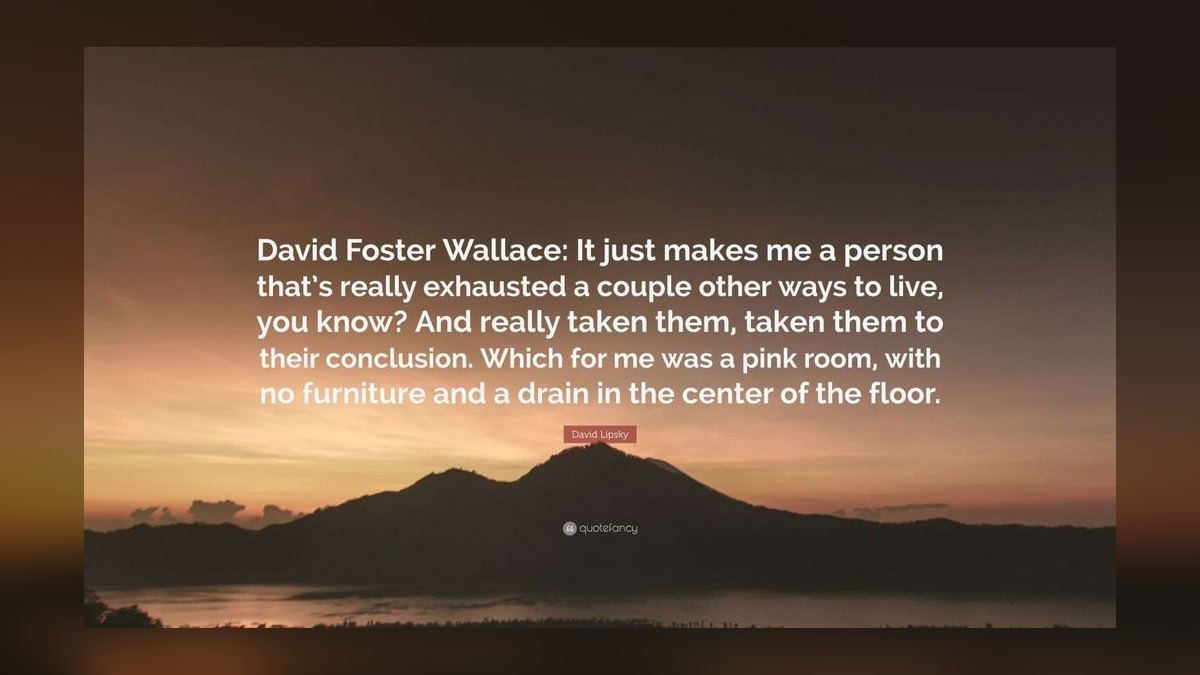
"This Is Water" endures because Wallace replaces commencement platitudes with one usable idea: the default setting of self-centeredness is a choice point, not a fact. He grounds abstract philosophy in traffic jams and checkout lines, includes himself in the indictment, and closes on a whisper instead of a crescendo.
What the speech actually is and why it still gets assigned
David Foster Wallace delivered the address to the graduating class at Kenyon College in 2005. It runs roughly 20 minutes spoken and lands near 3,800 words on the page — short enough to read in one sitting, long enough to develop an argument rather than a slogan. It was published as a small standalone book in 2009, and edited audio-and-video versions have circulated widely online since. That publication history matters to the question of what makes it great: the speech survived the transition from live event to printed text to short viral video without collapsing, which very few commencement addresses manage. Most speeches are load-bearing only in the room. Strip away the robes, the parents, the sunlight, and the shared relief, and what remains is usually a list of congratulations with no argument underneath.
What remains here is an argument with three moving parts. First, a claim about perception: the most obvious, important realities are the hardest to see and talk about, which is the point of the opening parable in which two young fish are asked by an older fish how the water is, and one later asks the other what water is. Second, a claim about the default state: unless you deliberately intervene, you will experience yourself as the absolute center of the world, because your own thoughts and feelings are the only ones you have immediate access to. Third, a claim about freedom: the real value of a liberal-arts education is not knowledge but a measure of control over what you pay attention to and how you construct meaning from ordinary experience.
That third claim is the load-bearing one, and it is why the speech reads as a working instrument rather than a keepsake. Wallace explicitly reframes the phrase "learning how to think" — a phrase every graduate in that audience had heard a hundred times as a marketing line — to mean something closer to "choosing what to think about." The reframe is small, almost pedantic, and it converts a cliché into an assignment. A reader who accepts the reframe now has something to do on Monday. A reader who accepts a typical commencement address has something to feel for about an hour.
The speech also matters because it is honest about difficulty in a genre built on reassurance. Wallace tells the audience that this awareness work is unimaginably hard to do consistently, and that day-to-day life in the adult world involves boredom, routine, and petty frustration on a scale they have not yet encountered. He does not promise the practice will succeed. He promises only that it is available. That refusal to oversell is a large part of why the argument has held up across two decades of rereading — nothing in it depended on a claim that could later be disproved by the listener's own life.
How the argument is built, step by step
The construction is a spiral, not a ladder. Wallace returns to the same idea three times, each pass adding pressure, and the return itself enacts the practice he is describing: notice, forget, notice again.
Pass one — the parable. He opens with the fish story and then immediately disarms it, warning the audience that parables in commencement speeches usually function as a smug older person dispensing wisdom to a younger one. Naming the genre's own failure mode in the opening minute buys him permission to use the device anyway. This is a specific, copyable move: preempt the objection your form invites before the audience raises it.
Pass two — the thesis. He states the default setting plainly. Everything in your experience arrives stamped with your own immediacy; other people's interiors arrive, if at all, as inference. He does not moralize about this. He calls it a factory setting, hard-wired, not a character flaw — which means the audience can accept the diagnosis without having to defend themselves against it. Diagnosing a universal condition rather than a personal failing is what keeps the room listening instead of bristling.
Pass three — the scene. The supermarket. Wallace builds an extended second-person scenario: you are tired, it is the end of a long workday, traffic is terrible, the store is fluorescent and crowded, the lines are long, the checkout is slow, the SUV that cut you off is enormous. He runs the default-setting interpretation at length — everyone is in your way, the whole thing is about you — and then runs an alternative interpretation of the same facts, in which the woman screaming at her child has been up for three nights with a sick husband, and the man in the SUV is rushing an injured child to the hospital. Neither version is presented as true. That is the point. The scene demonstrates that the interpretation is unforced and therefore chosen.
Pass four — the return. He circles to worship, arguing that everybody worships something and the only choice is what, and that most default objects of worship — money, body, intellect, power — eat you alive. Then the closing refrain: this is water, this is water. The structure ends where it started, one level deeper.
The reason this structure persuades is that each pass raises the stakes without raising the volume. The parable is charming. The thesis is uncomfortable. The scene is recognizable to the point of embarrassment. The worship section is close to grim. By the time the refrain lands, the audience has been walked from amusement to something like dread and then handed one small tool. A ladder structure — point one, point two, point three — cannot produce that arc, because each rung is complete on its own and nothing accumulates.
The mechanics: pacing, person, and the cost of each choice
Concrete craft numbers are worth naming, because "great speech" claims usually float free of the mechanics that produce them.

Length and delivery. At roughly 20 minutes and roughly 3,800 words, the delivered pace sits near 190 words per minute, which is fast for oratory — conversational, not ceremonial. Wallace spends that speed budget on syntax, not on emphasis. Long sentences with nested qualifications, then a short flat one. He is talking the way an essayist writes, which is unusual out loud and is a real risk: dense subordinate clauses lose a distracted audience fast. He offsets it with pauses that run several seconds at the hinge points, so the density arrives in absorbable blocks rather than a continuous stream.
Second person. The supermarket section runs almost entirely in "you," and this is the highest-variance choice in the speech. Second person applied to a flattering scenario reads as pandering; applied to an accusation it reads as a lecture. Wallace makes it work by keeping himself inside the frame — he says outright that he is not the wise old fish, that the immediate-experience trap is his too, that this stuff is hard for him. The cost of that inclusion is authority; the return is that nobody in the audience has to defend themselves against a person who has already confessed. On balance the trade is clearly worth it, and it is the single most transferable technique in the speech.
Concrete over abstract. He never says "empathy," "mindfulness," or "presence" as load-bearing terms. He says Hummer, fluorescent lights, boneless chicken, checkout line. The trade-off: abstraction is compressible and quotable, concreteness is memorable but bulky. Wallace pays the word cost — the supermarket sequence is a large fraction of the whole speech — because a listener cannot rehearse an abstraction on Tuesday afternoon. They can rehearse a checkout line.
Refusal to escalate. The ending is the riskiest structural decision. Genre convention says the last 90 seconds swell. Wallace instead drops to a repeated four-word sentence and stops. Delivered wrong, that reads as running out of material. Delivered as he did — flat, quiet, unhurried — it makes the audience supply the emotion themselves, which is why people remember feeling something rather than being told to.
Honesty about the failure rate. He states that this practice is nearly impossible to sustain and that most of us fail at it most of the time. That admission costs him the inspirational payoff. It buys durability: the speech cannot be falsified by the listener's own backsliding, so rereading it after failing at it feels like recognition instead of rebuke.

Where readings of the speech go wrong
The most common misreading turns it into a mindfulness commercial — be present, notice things, be grateful. That flattens the argument badly. Wallace is not claiming that awareness feels good. He explicitly says the well-adjusted default is to be irritated in that checkout line, and that the alternative construction is work, not bliss. The word "choice" in the speech carries obligation, not comfort.
The second misreading is the inspirational-quote extraction. Pull "this is water" out and it becomes a wall decal. The line means nothing without the parable that set it up and the supermarket that earned it; the refrain is a pointer to an argument, not a maxim. Any excerpt shorter than the supermarket scene loses the mechanism entirely, because the mechanism is the demonstration that two readings fit the same facts.

The third is treating it as advice about being nice. Wallace's alternative interpretations are explicitly unverified — he does not claim the SUV driver actually has an injured child. He offers the construction as a discipline of imagination, not an empirical guess about strangers. Reading it as "assume the best about people" imports a factual claim he was careful not to make.
The fourth error is craft-side: writers who admire the speech copy its density and its second person without copying its self-inclusion. Second-person accusation plus authorial exemption produces a scold. The speech's tone is only survivable because Wallace repeatedly places himself under the same diagnosis.
A fifth and quieter error is reading the argument through the author's later biography. Wallace died in 2008, and it is tempting to treat the speech as a confession or a warning read backward. That reading is retroactive and it distorts the text: the argument stands or falls on whether the choice it describes is real and available, which is a question about the reader, not the author. The speech is more useful — and more honest — taken as the practical instruction it presents itself as.

Finally, there is the borrowed-authority error, which shows up whenever the speech is put to instrumental use. It gets quoted in leadership decks, onboarding sessions, and revenue kickoffs to mean "have empathy for the customer," which quietly inverts the whole thing. The speech is about your own construction of your own experience. Turning it into a technique for handling other people is exactly the default setting reasserting itself with better vocabulary.
Which technique to borrow, and when
If the question is what makes it great in a way you can reuse, the honest answer is that only some of it transfers, and the choice depends on your setting.
Borrow the reframe when your audience has heard your thesis before. Wallace's move — take the phrase everyone has stopped hearing, define it narrowly and unexpectedly — works precisely because "learn how to think" was inert to that audience. If your key phrase is already a cliché in your room, redefining it is stronger than replacing it, because the audience gets the pleasure of recognition plus the jolt of correction.
Borrow the second person when you can include yourself, and not otherwise. The test is whether you can say, credibly and without performance, that you fail at this too. If you cannot, switch to third person or to a first-person account of your own failure. There is no version where you keep the intimacy and the exemption.
Borrow the mundane example when the concept is easy to nod at and hard to do. Empathy, focus, patience — all things an audience will agree with instantly and never enact. A checkout line forces the abstract idea to touch a specific Tuesday. Skip this if the concept is genuinely unfamiliar; a novel idea needs definition before illustration, or the example gets read as the whole point.

Borrow the quiet ending only when the room already trusts you. A flat close is a bet that the audience will supply the emotion. In a skeptical or distracted room, that bet loses and you get silence read as an ending nobody noticed. In a room that has been with you for twenty minutes, it is the strongest available finish.
Do not borrow the density by default. Wallace's sentence length works because his subject is the texture of thought itself, and because he had the delivery control to pause through it. Complex syntax on a simple subject just reads as difficulty for its own sake.
The larger lesson is about form matching claim. Wallace argues that attention is a choice, and then builds a speech that keeps making the audience choose — to follow a long sentence, to sit through a pause, to supply the ending's emotion. A speech that told you to pay attention while doing all the work for you would be self-refuting. That alignment between what the speech says and what it makes the listener do is the deepest reason it holds up, and it is the one thing every strong speech shares regardless of subject.
Related questions
How does the fish parable set up the whole argument?
It establishes that the most pervasive realities are invisible precisely because they are constant. Wallace then immediately disowns the wise-elder pose the parable invites, which buys him credibility for the harder claims that follow. The refrain at the end points back to this opening image.
What exactly does Wallace mean by the "default setting"?
The automatic, hard-wired experience of yourself as the center of everything, because your own sensations arrive immediately and everyone else's arrive by inference. He frames it as a factory condition rather than a moral failing, which lets the audience accept the diagnosis without defending themselves.
Why spend so much of the speech on a grocery store?
Because the concept is easy to agree with and hard to practice. A checkout line is a rehearsable, specific location where the choice actually occurs. Abstractions like "empathy" cannot be rehearsed on a Tuesday afternoon; a fluorescent-lit line at 5:30 can.
Why does the speech end quietly instead of building to a climax?
A flat repetition of "this is water" forces the audience to supply the emotional payoff themselves, which mirrors the speech's argument that meaning is constructed by the listener. A swelling finish would have contradicted the thesis by doing the work for them.
Is the speech an argument for optimism about strangers?
No. Wallace never claims his alternative interpretations are true — the SUV driver may not have an injured child. He offers construction as a discipline of imagination, not a factual bet. Reading it as "assume the best" imports a claim he deliberately avoided.
FAQ
What is the central claim of "This Is Water"? That the real freedom worth having is control over what you pay attention to and how you construct meaning from ordinary experience. Wallace argues the alternative is a life run on the default setting, where you are automatically the center and everyone else is an obstacle.
When and where was the speech delivered? Wallace gave it as the commencement address at Kenyon College in 2005. It ran roughly 20 minutes. A standalone book edition followed in 2009, and condensed audio and video versions have circulated widely since, which is how most people now encounter it.
What makes it different from a typical commencement address? It withholds congratulation and reassurance. Instead of telling graduates they will change the world, Wallace warns them about boredom, routine, and petty frustration, then hands them one difficult practice. The respect implied by that refusal is a large part of why it lasted.
Is "learning how to think" meant literally? No — Wallace redefines it. He is not talking about logic or analysis but about choosing what to think about and how to interpret what happens to you. The redefinition of a phrase the audience had stopped hearing is one of the speech's sharpest moves.
Why does Wallace include himself in the criticism? Because second person plus authorial exemption produces a scold. By repeatedly stating that he fails at this too, he removes the audience's need to defend themselves, converting what could read as a lecture into a shared diagnosis. It is the most transferable technique in the speech.
Can the speech's techniques be used outside a commencement setting? Some transfer cleanly — redefining a dead phrase, spending words on one concrete scene, including yourself in the diagnosis. Others are conditional: the quiet ending needs a room that already trusts you, and the dense syntax needs a subject that earns it and delivery control to carry it.
Sources
- Kenyon College — 2005 commencement archive
- The Guardian — coverage of Wallace and "This Is Water"
- The New York Times — David Foster Wallace topic page
- The New Yorker — writing on David Foster Wallace
- The Paris Review — David Foster Wallace author page
- The Atlantic — essays on Wallace's work and legacy
- NPR — coverage of David Foster Wallace
- Little, Brown and Company — publisher of "This Is Water"
- Poets & Writers — David Foster Wallace
Related on PULSE
- What Makes Winston Churchill's "Their Finest Hour" a Great Speech
- What Makes Lincoln’s Gettysburg Address a Great Speech
- What Makes FDR’s “Nothing to Fear” a Great Speech
- What Makes Susan B. Anthony's "On Women's Right to Vote" a Great Speech
- What Makes Steve Jobs’ Stanford Commencement a Great Speech
- What Makes Theodore Roosevelt’s “The Man in the Arena” a Great Speech
Recently Added — Related
This page will be disappearing soon. Save it to your device for $1 — or read it free while it is here.
@Kory-White- · if Venmo asks, the last 4 of my number are 2012
This page is gone.
This one is off the shelf now. $1 keeps it on your phone for good — the whole page, pictures and diagrams included.
 pulse-speechesA Toast for a Baby Shower
 pulse-speechesA Wedding Speech for a Second Marriage
 pulse-speechesHow to Practice a Speech So It Sounds Natural in 2027
 pulse-speechesA Retirement Speech for a Teacher
 pulse-speechesWhat Makes Susan B. Anthony's "On Women's Right to Vote" a Great Speech in 2027
 pulse-speechesA Graduation Speech for a Graduate as the Class President
 pulse-speechesA Toast for a Quinceañera
 pulse-speechesA Speech for a Veterans Day Tribute
 pulse-speechesWhat Makes Theodore Roosevelt’s “The Man in the Arena” a Great Speech in 2027
 pulse-speechesA Graduation Speech for a Kindergarten Graduation