 Pulse Reviews and Analysis
What Makes David Foster Wallace’s “This Is Water” a Great Speech
 Curated by Kory White · Fractional CRO, CRO Syndicate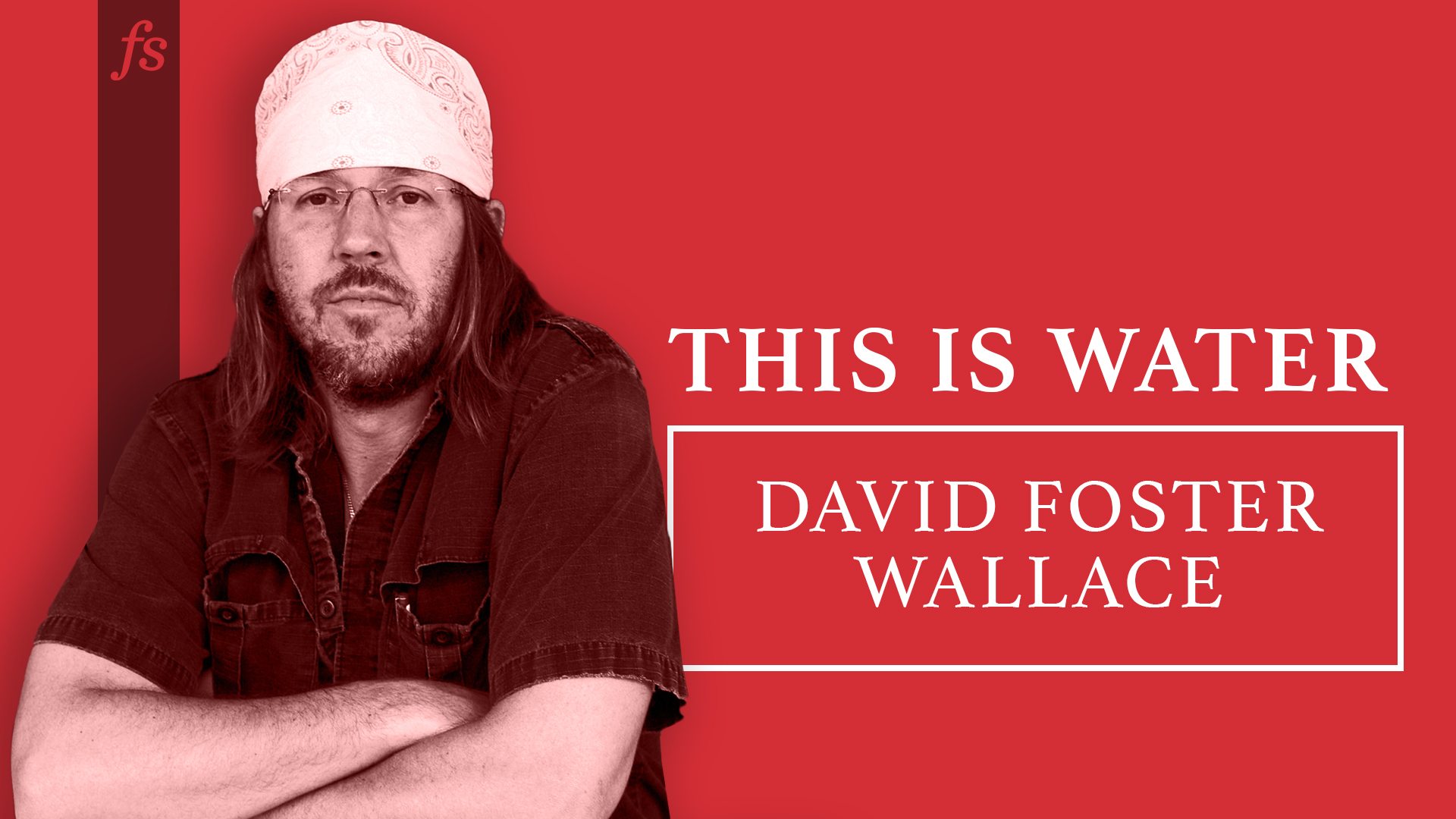
What Makes David Foster Wallace's "This Is Water" a Great Speech
The Occasion
In May 2005, novelist David Foster Wallace stood before the graduating class of Kenyon College and gave a commencement address that almost nobody remembers as a commencement address. There were no congratulations, no "you are the future," no soaring promises. Instead he told a small joke about fish and water and then spent twenty quiet minutes teaching a room of twenty-two-year-olds how to stay awake inside an ordinary adult life.
This piece is for the person who wants to understand *why* that speech worked — and how to borrow its moves for your own. ~4 minutes (~600 words spoken).
The Speech
If you were delivering a tribute to "This Is Water," or introducing a reading of it, here is how you might frame it for a live audience.
There is a story about two young fish swimming along, and an older fish swims past and says, "Morning, boys. How's the water?" The two young fish swim on, and after a while one looks at the other and says, "What the hell is water?"
That is how Wallace opened, and it is the whole speech in miniature. He did not start with himself. He started with a question so small you almost miss it, and then he refused to let it go.
The point of the fish story is that the most obvious, important realities are often the ones that are hardest to see and talk about.
What made it great was not the prose. It was the honesty. Wallace stood at a podium most speakers use to flatter their audience, and he warned them instead — gently — that the real danger ahead was not failure.
It was the slow numbing of a [day-to-day life] spent on autopilot, stuck in traffic, standing in the checkout line, certain that you are the center of the world.
Learning how to think really means learning how to exercise some control over how and what you think. It means being conscious and aware enough to choose what you pay attention to and to choose how you construct meaning from experience.
He offered no five-step plan. He offered a single, repeatable practice: notice. Choose what the supermarket line *means*. Decide that the tired woman ahead of you might have had a [much harder day than yours]. That is a strange thing to tell new graduates, and that is exactly why they remembered it for twenty years.
The speech is great because it trusts its listeners. It assumes they can sit with discomfort, hear that adult life is mostly tedium, and still find the gift hidden inside that warning. And it ends not in triumph but in a simple refrain.
It is unimaginably hard to do this, to stay conscious and alive in the adult world day in and day out. The capital-T Truth is about life before death. It is about making it to thirty, or maybe fifty, without wanting to shoot yourself in the head. It is about simple awareness. This is water. This is water.
Make It Yours
- Swap the framing to match your moment — a graduation, a retirement, a memorial, a company all-hands. The fish parable works anywhere people have stopped noticing their own water.
- Trade my chosen quotes for the two or three lines that struck *you* hardest. The speech rewards personal selection.
- Three prompts to spark your own version: When did you last catch yourself on autopilot? What ordinary thing do you want this audience to start seeing? What is *their* "water" — the reality they swim in and never name?
Delivery Notes
Read it slower than feels comfortable; the power is in the pauses, not the pace. Let the fish joke land in full silence before the punchline. When you reach "This is water," drop your volume rather than raising it — Wallace's force came from restraint, not volume.
Make eye contact during the supermarket passages; that is where the room recognizes itself. If you feel emotion rising near the close, let it sit on your face but keep your voice level. Use light notes, not a memorized script — this material breathes better when it sounds discovered rather than recited.
Variations
A 30-second version for a toast or intro:
Two young fish hear an older one ask, "How's the water?" and one turns to the other: "What the hell is water?" That is David Foster Wallace's gift to us — a reminder that the most important things are the ones too close to see. So here is to staying awake. To noticing the water. And to choosing, on purpose, what we pay attention to.
For a longer or more formal setting, read the address nearly whole and pause for reflection between movements — the fish parable, the supermarket scene, the closing refrain. For a lighter tone, lean on the dry comedy in Wallace's traffic and checkout-line examples. For a solemn tone, hold longer silences and let "This is water" close the room without applause.
FAQ
Why is "This Is Water" considered one of the best commencement speeches ever? Because it does the opposite of what the genre expects. Instead of congratulating graduates, it warns them about the quiet difficulty of adult life and hands them one durable tool — awareness — that ages well long after the cap and gown are gone.
What is the speech actually about? Choosing what you pay attention to. Wallace argues that "learning how to think" means deciding, consciously, how to construct meaning from dull and frustrating everyday moments rather than defaulting to self-centered annoyance.
Can I quote it in my own speech? Yes, and you should attribute it clearly to David Foster Wallace's 2005 Kenyon College commencement address. Pick a line or two that matters to you rather than reciting the whole thing; selective quotation lands harder.
How long should a speech inspired by it be? Wallace ran about twenty minutes, but the lesson scales down beautifully. A three-to-five-minute tribute or a thirty-second toast can carry the same fish parable and refrain without losing its weight.
What makes it feel so human? The honesty. Wallace admitted that life is hard, that he himself struggled to stay awake to it, and he never pretended to have mastered the practice. That humility is why the speech still feels like a friend talking, not a guru preaching.
Bottom Line
"This Is Water" is great because it trusts its audience with an uncomfortable truth and offers a single, usable practice instead of empty applause lines. If you study one speech to learn warmth, restraint, and respect for your listeners, study this one. Notice the water — then help your audience notice theirs.