
How to Write a Heartfelt Eulogy When You're Grieving in 2027
 Curated byKory White · Fractional CRO · Maryland
 PULSEKNOWLEDGE LIBRARY
Quality
Certified

To write a heartfelt eulogy while grieving, focus on gathering a few specific, positive memories that capture the person's character rather than attempting to summarize their entire life. Speak from your own honest experience using simple, conversational language, and allow yourself to pause or show emotion without judgment. Aim for a length of roughly 3 to 5 minutes when read aloud, and conclude with a brief, personal farewell or a meaningful quote that reflects their spirit. The most powerful eulogies are not polished performances but authentic expressions of love that give the room permission to grieve together.
How Do You Begin Writing a Eulogy When Overwhelmed by Grief?
When grief sits heavy on your chest, memories don't arrive in neat, chronological order. They come as fragments—a laugh, a particular way they held a coffee cup, the song they always hummed while cooking. Your job isn't to force these fragments into a perfect timeline; it's to find the thread that connects them into something true. Start by asking yourself: what single quality defined this person most? Was it their stubborn optimism, their quiet kindness, their ability to make strangers feel seen? Let that quality become your compass. Every memory you include should quietly point back to it.
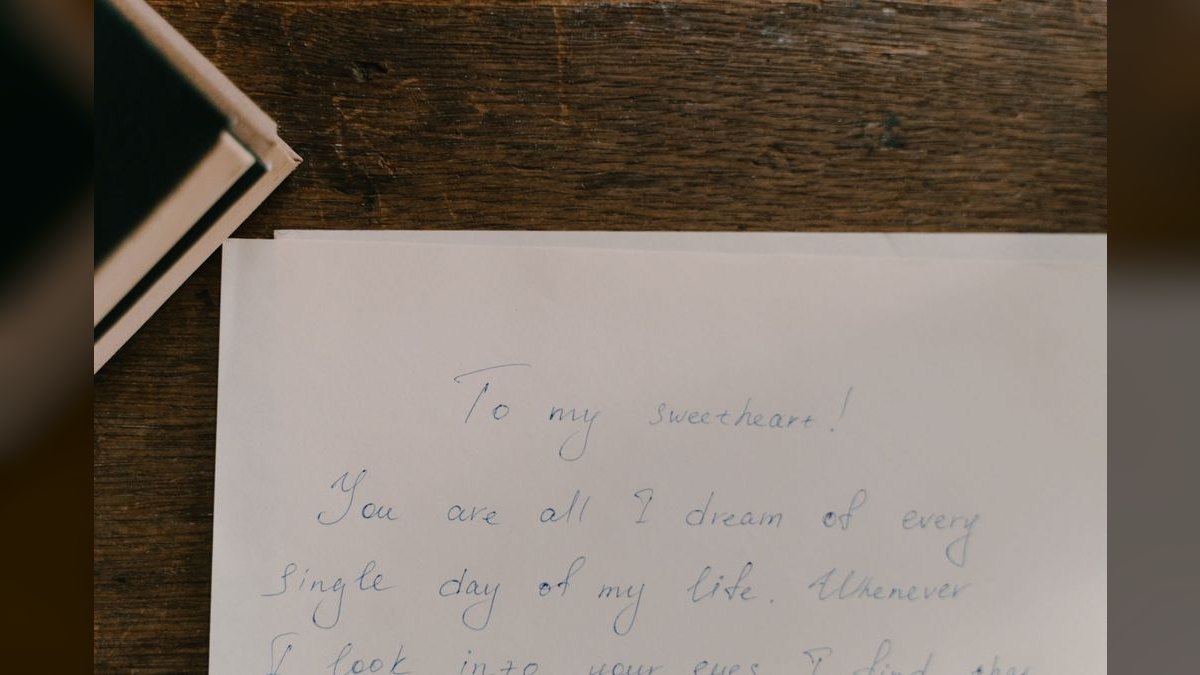
Begin by jotting down short memories, phrases, or adjectives that come to mind, without worrying about order or completeness. You might write on scrap paper, in a notes app, or even record voice memos when a memory surfaces unexpectedly. This raw collection is your gold mine. Later, you can group these fragments into a simple structure—opening, a couple of stories, and a closing—over several days, giving yourself grace to edit later. For more guidance on structuring emotional speeches, see How to Write a Speech in 30 Minutes.
What Specific Stories Should You Include in a Eulogy?
Write down five to seven specific moments, not generalizations. Instead of "She was always there for people," write the memory: "I remember the Tuesday night at 11 PM when my car broke down on the highway. I called her, not because she knew anything about cars, but because I knew she'd answer. She arrived in her bathrobe with a thermos of tea and sat with me for two hours until the tow truck came. She didn't fix the car. She fixed the night." These concrete details do the work that abstract praise cannot. They let the audience see your loved one, not just hear about them.
Choose one defining story instead of five. Specific beats comprehensive every time. A good rule of thumb: if you can picture the scene in your mind, it will work in the eulogy. If you can't, it's probably too vague. Three well-chosen stories, each running no more than 90 seconds when spoken aloud, will carry more weight than a list of accomplishments or a chronology of their life. Prompts to spark the real thing: What did they do that no one else did? What would they tease you about right now? What's the one sentence you'd want them to hear if you could say it once more?

How Do You Handle the Emotional Challenge of Delivering a Eulogy?
The fear of breaking down while speaking is often heavier than the grief itself. You might worry that if you start crying, you won't be able to continue. This worry is normal, and there are practical ways to prepare for it. First, build a safety net into your script. Mark two or three natural pause points—places where you could stop, take a breath, and let the silence hold the room for a moment. These are usually right after a memory ends and before you transition to the next. If you feel tears coming, you can stop at one of these marks, look down at your notes, and breathe. The audience will not interpret this as weakness. They will interpret it as love.
Second, consider having a backup reader. This can be a sibling, a close friend, or a clergy member who sits nearby. Before the service, give them a copy of your eulogy and agree on a simple signal—a glance in their direction, a slight nod—that means "please take over." Most people will never need this, but knowing it's there can lower the emotional stakes enough that you won't need it. Third, practice aloud at least three times before the service. Read it to an empty room, to your reflection, or to one trusted person who won't judge you. Notice which sentences make your voice catch. Those are the spots where you might need to pause or breathe deeply. Mark them with a small star in your notes.
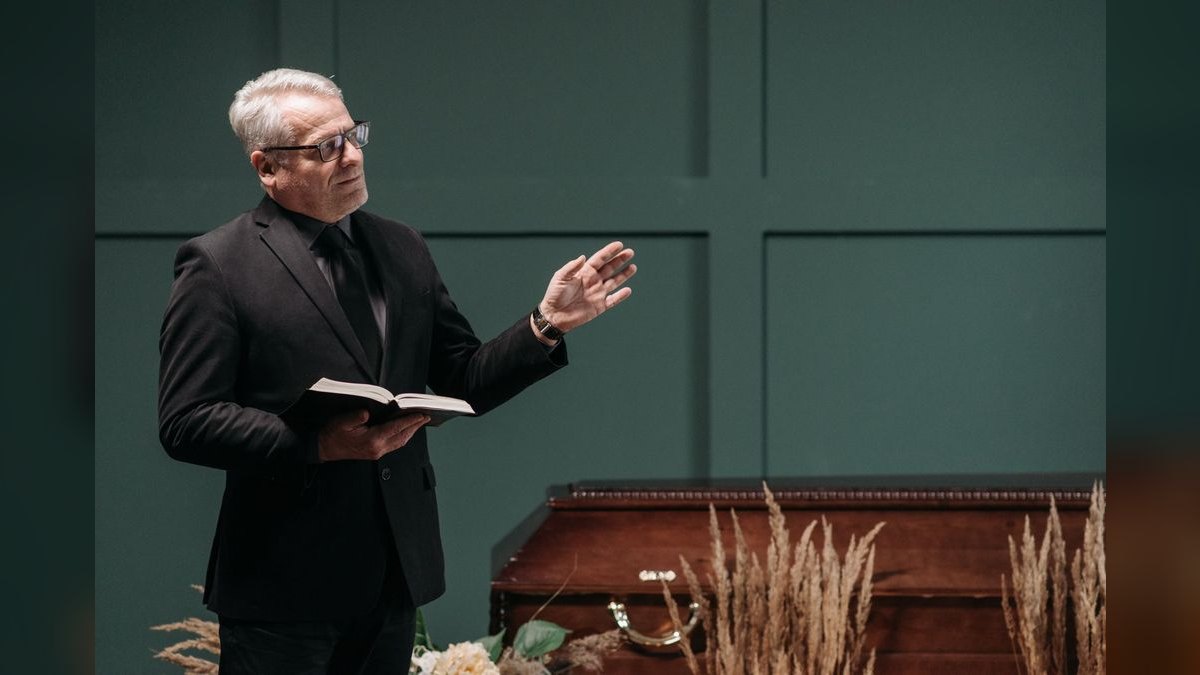
Speak slower than feels natural—grief tightens the throat and quickens the pace. Pause fully after the person's name; that breath gives the room permission to feel it with you. Keep printed notes in hand even if you've memorized it; on a hard day, memory can slip. Look up when you can, especially at the family. If you need to, designate a backup person who can step in and finish if you can't. For more on managing public speaking under emotional stress, see How to Write a Speech in 30 Minutes.
How Do You Honor a Complicated Relationship in a Eulogy?
A eulogy is not only about the person who died. It is about what existed between you and them. The most powerful eulogies acknowledge this relationship explicitly, because that is what the audience is really grieving—the loss of a specific connection that can never be replicated. Take a moment to name what you received from this person. Not in a way that makes the eulogy about you, but in a way that shows who they were through the lens of your life. For example: "My father taught me how to fix a bicycle chain, but more than that, he taught me that patience is not passive. It's an active choice to stay present when things are hard."

If the relationship was complicated—if there was distance, conflict, or pain—you can still be honest without being harsh. You might say something like: "We didn't always understand each other. But in the last few years, I came to see that his stubbornness was also his loyalty. The same quality that frustrated me as a teenager is the quality that made him show up for me, without question, when I needed him most." This kind of honesty is not disrespectful. It is human. And it allows others in the room who had complicated relationships to feel less alone in their grief.
When you close the eulogy, return to the relationship. End with a direct address to the person you lost, as if they were still in the room. "I will carry your laugh with me. I will carry the way you said my name. I will carry the Tuesday nights and the broken cars and the tea. Thank you for being my person." This final moment of direct address often becomes the most remembered part of the entire service.
What Are the Key Structural Elements of a Eulogy?
A well-structured eulogy follows a gentle arc that guides both the speaker and the audience through the emotional landscape. Begin slowly. Thank people for being there, and name who the person was to you before you name what they did. People remember relationships before resumes. Then give them one true picture—a single moment that shows who they actually were, not a list of accomplishments. Let yourself be honest; a eulogy that is only flawless is not believable, and it's not love.
Speak to what they gave you, and what you'll carry. Then turn gently toward the room and invite others to carry a little of that person forward. Close softly—you don't need a grand ending, you need a true one. Let the silence hold afterward. For a longer or more formal service, you can add a short timeline of their life and a passage from scripture, a poem, or a song that mattered to them. For a lighter celebration-of-life, lean into the funny stories and the joy they brought; for a solemn service, slow everything down and let the quiet moments breathe.

What Is the Appropriate Length and Tone for a Eulogy?
Aim for roughly 3 to 5 minutes when spoken, which translates to about 300 to 500 words. This length is long enough to share meaningful memories but short enough to hold mourners' attention during an emotional service. A 30-second version can also work if you can only manage a few words: "[Name] taught me how to show up for the people I love. I'm going to spend the rest of my life trying to do that as well as they did. Thank you for loving them too."
The tone should be tender, honest, and quietly brave. Gentle humor that reflects the person's personality can be very appropriate and even comforting. Just keep it respectful and avoid inside jokes that might exclude others; a light, loving anecdote often brings smiles through tears. Remember that a cracked voice or a moment of silence is not a failure. It's evidence that you loved someone. The people in the room are not expecting a polished performance. They are expecting honesty. Your tears will not embarrass them—they will give them permission to feel their own.

Related questions
What if I can't stop crying during the eulogy?
Plan natural pause points in your script and have a backup reader ready. Practice deep breathing before you begin, and remember that tears are not a failure—they show your love and give others permission to grieve.
Should I include funny stories in a eulogy?
Yes, gentle humor that reflects the person's personality is often comforting and appropriate. Avoid inside jokes that might exclude others; a light, loving anecdote can bring smiles through tears.
How do I start writing when I'm overwhelmed with grief?
Begin by jotting down short memories, phrases, or adjectives without worrying about order. You can then group these into a simple structure over several days, giving yourself grace to edit later.
Is it okay to ask others for help with the eulogy?
Absolutely—reach out to family or close friends for stories or details you might have forgotten. Collaborating can ensure the eulogy feels representative of the person's life and lightens your emotional load.
Do I need to cover the person's entire life story?
No, focus on a few specific, heartfelt stories or qualities that capture their essence. A chronological biography can feel impersonal; choose moments that show their character, kindness, or unique quirks.
FAQ
How long should a eulogy be? Aim for roughly 3 to 5 minutes when spoken, which translates to about 300 to 500 words. This length is long enough to share meaningful memories but short enough to hold mourners' attention during an emotional service.
What if I break down while reading it? It's completely natural to cry or pause—grief is part of the moment. Many people find it helpful to have a backup reader, such as a family member or friend, who can step in if needed, or to practice deep breathing before you begin.
Should I include humor in a eulogy? Yes, gentle humor that reflects the person's personality can be very appropriate and even comforting. Just keep it respectful and avoid inside jokes that might exclude others; a light, loving anecdote often brings smiles through tears.
Do I need to cover the person's entire life story? No, focus on a few specific, heartfelt stories or qualities that capture their essence. A chronological biography can feel impersonal; instead, choose moments that show their character, kindness, or unique quirks.
How do I start writing when I'm overwhelmed with grief? Begin by jotting down short memories, phrases, or adjectives that come to mind, without worrying about order or completeness. You can then group these into a simple structure over several days, giving yourself grace to edit later.
Is it okay to ask others for help or input? Absolutely—reach out to family or close friends for stories or details you might have forgotten. Collaborating can also ensure the eulogy feels representative of the person's life and lightens the emotional load on you.
How do I handle a complicated relationship in the eulogy? Be honest without being harsh. Acknowledge the complexity while focusing on what you learned or how you grew. This honesty allows others with complicated relationships to feel less alone in their grief.
What if I can only manage a few sentences? A 30-second version is perfectly acceptable. Say what they taught you, how you'll carry it forward, and thank those who loved them. Brevity does not diminish sincerity.
Sources
- American Psychological Association — guidance on grief and emotional coping strategies
- The New York Times — articles on writing eulogies and personal storytelling
- National Funeral Directors Association — practical tips for eulogy preparation and delivery
- Harvard Health Publishing — research on grief, memory, and public speaking under stress
- The Center for Loss & Life Transition — resources on mourning rituals and eulogy writing
- Toastmasters International — techniques for delivering emotional speeches with confidence
- Mayo Clinic — coping with grief and loss
- Psychology Today — understanding the grieving process
- Verywell Mind — stages of grief and emotional support
- Cremation Association of North America — funeral planning and eulogy resources
Related on PULSE
This page will be disappearing soon. Save it to your device for $1 — or read it free while it is here.
@Kory-White- · if Venmo asks, the last 4 of my number are 2012
This page is gone.
This one is off the shelf now. $1 keeps it on your phone for good — the whole page, pictures and diagrams included.
 pulse-speechesWhat Makes Patrick Henry’s “Give Me Liberty” a Great Speech in 2027
 pulse-speechesWhat Makes Maya Angelou’s “On the Pulse of Morning” a Great Speech in 2027
 pulse-speechesA Retirement Speech for a Teacher
 pulse-speechesA Toast for a Christening
 pulse-speechesA Speech for a Memorial Day Ceremony
 pulse-speechesHow to Keep a Wedding Toast Under Three Minutes in 2027
 pulse-speechesA Wedding Speech for a Small Backyard Wedding
 pulse-speechesWhat Makes David Foster Wallace’s “This Is Water” a Great Speech in 2027
 pulse-speechesA Toast for a Quinceañera
 pulse-speechesWhat Makes Steve Jobs’ Stanford Commencement a Great Speech in 2027