
The Executive Sponsor Program Reboot — 60-Min Training
 Curated byKory White · Fractional CRO · Maryland
 PULSEKNOWLEDGE LIBRARY
Quality
Certified

The Executive Sponsor Program Reboot is a 60-minute training that fixes two failures: assigning C-level sponsors to the wrong accounts, and confusing executive touch with executive value. You match sponsors only to your top-15% accounts by future ACV, run a fixed touch cadence, and treat the sponsor as an escalation path of last resort rather than a renewal closer.
Two ways to run executive sponsorship — and why most teams pick wrong
Nearly every reboot starts because a company is running one of two flawed models, and the training exists to move the room off both of them toward a disciplined third.
Option A — the "spread it wide" model. Here every Tier-1 logo gets a named executive sponsor, usually a VP who carries 25 to 40 accounts. It feels generous and it photographs well on an org chart. In practice it produces *sponsor inflation*: a sponsor who cannot remember which account is on the call, who reads the brief in the car, and who defaults to a warm-but-empty "how are things going?" opener. The customer's own executive notices immediately that this is theater, and the program's credibility erodes across the whole book — not just the account in front of you. When one sponsor covers 30 relationships, each customer gets roughly the same generic 45 minutes, and the executive's scarcest asset, their attention, is diluted into noise. The failure is quiet because nothing visibly breaks; the touches technically happen, the calendar shows green, and only the renewal data six quarters later reveals that the executive layer added nothing a competent CSM could not have delivered.

Option B — the "defensive save" model. Here sponsorship is deployed reactively: an account goes red, a renewal wobbles, and a CRO parachutes in to "save it." This is the model that most quietly wastes senior time. Using a CEO or CRO to defuse a churn risk that a strong CSM should own signals to the customer that the relationship only warrants executive attention when it is breaking. It also trains your own sales organization to escalate early and often, burning sponsor credibility on week-one RFP questions and pricing skirmishes long before the strategic conversation that actually needs an executive. Worse, it inverts the psychology: the customer learns that the fastest way to reach your leadership is to threaten to leave, so churn signals become a negotiating lever rather than a genuine risk indicator.
The third model — concentrated, structured sponsorship — is what the training installs. It borrows directly from Miller Heiman's *Strategic Selling*, whose central idea is that every complex deal has an Economic Buyer. The sponsor's real job is to build a peer relationship between *your* economic buyer and *theirs*: CRO to COO, CEO to CEO, altitude to altitude. Stephen Bistritz's *Selling to the C-Suite* reinforces the scarcity that makes this work — senior buyers grant genuine strategic-partner status to only a handful of vendors per category, so a sponsorship slot only matters if you are competing to be one of those few. Concentration is not stinginess; it is the entire mechanism. The trade-off is uncomfortable and the training makes the room say it out loud: a sponsor who covers eight accounts brilliantly beats a sponsor who covers thirty accounts forgettably, every quarter.

How to decide which accounts earn a sponsor
The decision is not "how big is the logo" — it is a live tiering exercise you run on a shared screen with the actual account list open. Three filters, applied in order, keep the program concentrated.
First, the 15% rule: only the top 15% of the book by projected three-year ACV is even eligible. Everything below the line stays on standard CSM coverage and gets no named executive. Second, strategic fit: among eligible accounts, does the relationship carry optionality — logo value, expansion runway, reference and advocacy potential, or category influence? A large but flat account that will neither grow nor advocate is a lower priority than a mid-size account poised to double. Third, buyer altitude: is there a named, reachable C-level or SVP counterpart who will actually take the call? If the senior buyer will not engage, you have a champion, not a sponsor, and no amount of ACV changes that.

The tiering exercise produces a clean RACI that the room agrees to before anyone leaves. The AE is Accountable — they own the sponsor relationship end to end and never delegate the pre-meeting brief. The CSM is Responsible — they surface signal, draft the agenda, and run the back-channel that keeps the sponsor informed between touches. The sponsor is Consulted — they show up prepared and stay in their lane, never freelancing on commercial terms. The CRO is Informed — they see a one-page sponsor scorecard monthly and nothing more. Getting this RACI explicit is half the value of the hour, because the most common program failure is an AE who assumes the sponsor will "handle the relationship" and a sponsor who assumes the AE will "tell me if I'm needed." Neither happens, the quarter passes, and the touch is missed.
The hardest decision the framework forces is firing a sponsorship. If an account has not taken a scheduled strategic call in roughly nine months, the program manager — not the sponsor, and not over email — quietly removes it from the list and reassigns coverage. There is no exit interview and no drama. The freed slot reopens for an account that will use it, and the sponsor's capacity is protected. Teams that never fire sponsorships inevitably drift back to Option A within a year, because a list that only ever grows will always outrun the fixed number of executive hours available to serve it.

The concrete numbers behind each option
Vague executive programs die in budget reviews because no one can defend them with figures, so the training grounds every claim in ranges a practitioner can actually manage and measure — not inflated attribution.
Sponsor load. The working ceiling is roughly six to eight active sponsorships per executive. Past that, recall collapses and briefings start sounding identical to the customer. If a CRO is nominally "sponsoring" 25 accounts, that is a roster, not a program, and the reboot's first act is to cut it. A practical way to size the cut: multiply the number of would-be sponsors by seven, and if the eligible list is longer than that product, the 15% filter was applied too loosely and needs to tighten before anyone is assigned. Time commitment. A properly sponsored account consumes about six to eight hours of executive time per year — a quarterly strategic call, an annual in-person meal, and a semi-annual roadmap preview, plus prep. That figure is deliberately small: it is what makes concentration affordable and dilution obvious. Eight accounts at eight hours is a manageable 64 hours a year; thirty accounts at the same standard would be 240 hours, roughly six full working weeks, which no operating executive can protect — which is exactly why the wide model silently degrades every touch instead.

The cadence, by component. The quarterly strategic call runs 45 minutes on a fixed agenda: about 10 minutes of industry point-of-view from the sponsor, 20 minutes on the customer's strategic priorities, 10 minutes on how the relationship is tracking, and 5 minutes for a single, specific ask. It is never a product demo. The annual in-person meal is the highest-recall touch in the set — practitioners consistently report that a shared meal with no laptops outperforms any number of video calls for durable relationship memory, which is why the format is off-site and unhurried. The semi-annual roadmap preview, delivered under NDA, is the retention lever customer-success leaders have long championed: showing a customer the next 12 to 18 months makes them feel like a co-designer rather than a line item.
How to measure ROI without overclaiming. Track three numbers monthly and resist the temptation to credit the program with all expansion. First, net revenue retention on sponsored accounts against a matched cohort of comparable non-sponsored accounts — the *delta* is your signal, not the raw NRR. Second, executive-meeting completion rate against the structured cadence: what percentage of scheduled quarterly calls, dinners, and roadmap previews actually happened on time. A program running below roughly 80% completion is drifting back to calendar theater regardless of what the org chart says. Third, advocacy outputs — references given, case studies produced, board-level introductions made. The lift from disciplined sponsorship is real but never total; a program that claims 100% of a sponsored account's growth will lose credibility the first time finance audits it. Honest, bounded measurement is what keeps the executive team funding the sales program in the following year, and it is far more defensible to claim a two-to-four-point NRR delta you can prove than a twenty-point figure you cannot.

Implementation details and sequencing
The 60-minute session is choreographed so the room leaves with commitments, not concepts. The first stretch names the failure modes — sponsor inflation, calendar theater, mismatched altitude, and no escalation discipline — so everyone recognizes their own program in at least one of them. The middle stretch runs the live tiering against the real account list. The final stretch installs the escalation discipline and the written commitments. Nothing about the hour is a slide-read; every minute produces a decision that survives contact with next week's calendar.
Escalation is the most misused part of any sponsorship, so the training gives it its own rules. The sponsor is the *customer's* escalation valve, not the AE's manager. If a customer rings the sponsor before the CSM, the coverage model has already failed. Sponsor escalations carry a 24-hour response SLA — when the customer's executive calls, the sponsor returns within one business day, every time. Critically, no commercial commitments happen on an escalation call: the sponsor listens, validates the concern, and routes it back to the AE, who owns any discount, date, or term. Every escalation gets a written recap from the AE within 48 hours, copied to the sponsor, so the next conversation starts at the right point instead of relitigating the last one.

The connective tissue that makes all of this run is the 48-hour sponsor briefing, sent by the AE before every touch. A good brief is short and surgical: the customer's current context and pressure, your relationship context (contract stage, ARR, NRR trend, any champion risk), the *one* thing you need the sponsor to accomplish, and — just as important — an explicit list of what *not* to discuss (a handled outage, renewal pricing that is the AE's lane, any M&A rumors). That guardrail line is the single difference between a sponsor program and a sponsor liability, because it prevents the well-meaning executive who "just wanted to help" from freelancing into a commercial commitment the AE spends a month unwinding.
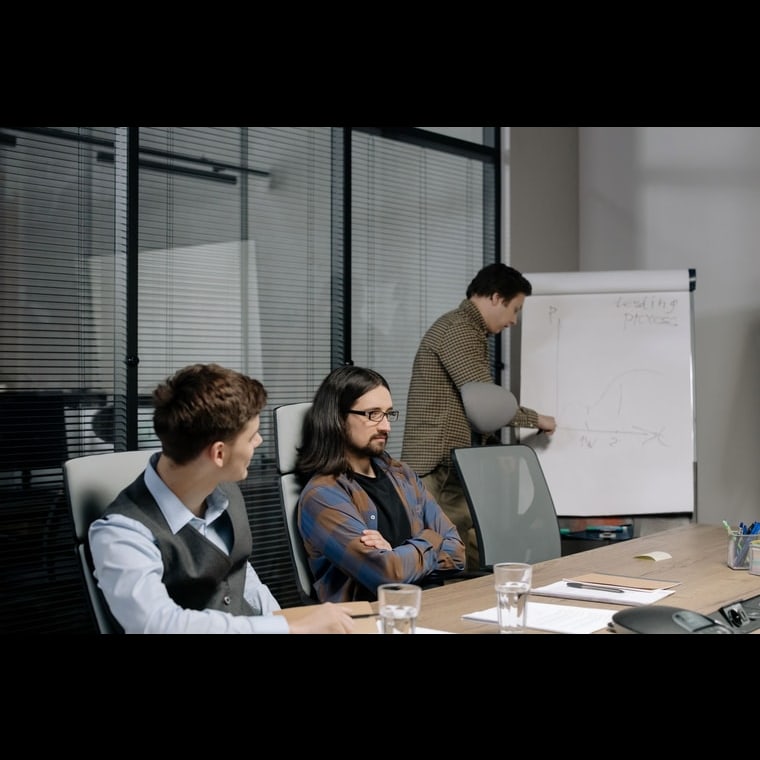
The hour closes with three written commitments on the whiteboard from every AE and CSM in the room: one account to *add* to the program and why it cracks the 15%; one account to *remove* and how they will communicate the soft landing; and one sponsor briefing they will send this week using the template verbatim. The next checkpoint is set at 30 days, when the sponsor scorecard is pulled — touches completed on cadence, escalations triggered, accounts added and removed. The program lives or dies on that scorecard, not on the org chart, and the reboot only counts as successful if the 30-day review shows movement on all three commitments. Assign one owner to that 30-day review before anyone leaves the room; a checkpoint with no named owner is a checkpoint that never happens, and the whole reboot decays back to theater within a quarter.

Related questions
How many accounts should one executive sponsor?
Roughly six to eight active sponsorships is the working ceiling. Beyond that, recall collapses and every customer gets a thinner version of the same executive. If a leader "sponsors" 25 accounts, cut the list before anything else in the reboot.
Should the sponsor own the renewal conversation?
No. The AE owns all commercial terms; the sponsor owns strategic continuity. If the sponsor is delivering the renewal pitch, the AE has lost the room — fix that root cause rather than papering over it with executive air cover on a recurring basis.
What if the customer has no C-level willing to engage?
Then it is not a sponsorship-eligible account regardless of ACV. Downgrade it to a VP-sponsor model with a quarterly check-in and reallocate your CRO's scarce hours to an account whose senior buyer will actually take the meeting.
How is this different from a Customer Advisory Board?
A CAB is one-to-many and product-feedback oriented; executive sponsorship is one-to-one and strategic-relationship oriented. Best-in-class teams run both, and the sponsor is usually the person who invites their customer to join the advisory board.
FAQ
How long should the reboot training actually take? Sixty minutes, run live with the real account list open. It is a working session, not a lecture. Anything longer loses the room; anything shorter skips the live tiering exercise that produces the actual commitments.
Who should be in the room? The AEs and CSMs who own eligible accounts, plus the program manager who maintains the sponsor scorecard. The executives who will act as sponsors do not need to attend the reboot itself — they receive the cadence and briefing standards separately.
Can the same executive sponsor a customer and an active prospect? Yes, and it often works well, but never in the same week and never on calls that could leak competitive context. The sponsor's credibility is their currency, and cross-contamination spends it fast.
What is the fastest way to tell a program is failing? Missed cadence. If scheduled quarterly calls are slipping or the annual meal keeps getting rescheduled, the program is already drifting back toward calendar theater regardless of how the org chart looks.
How do we remove an account from the program gracefully? Quietly. The program manager reassigns coverage to a strong CSM and lets the sponsor relationship taper without an announcement or exit interview. There is nothing to apologize for; the slot simply reopens for an account that will use it.
Does this replace day-to-day account management? No. The sponsor sits above the CSM and AE, not in place of them. The day-to-day relationship still belongs to the account team; the executive supplies altitude, strategic continuity, and a last-resort escalation path.
Sources
- Robert B. Miller & Stephen E. Heiman, *The New Strategic Selling* — https://www.penguinrandomhouse.com/books/168377/the-new-strategic-selling-by-robert-b-miller-and-stephen-e-heiman-with-tad-tuleja/
- Stephen J. Bistritz & Nicholas A.C. Read, *Selling to the C-Suite*, 2nd ed. (McGraw-Hill) — https://www.mhprofessional.com/selling-to-the-c-suite-second-edition-9781259860454-usa
- Momentum ITSMA, Account-Based Marketing research — https://momentumitsma.com/insights/
- Gainsight, "The Essential Guide to Customer Success" — https://www.gainsight.com/guides/the-essential-guide-to-customer-success/
- Harvard Business Review, "The New Sales Imperative" — https://hbr.org/2017/03/the-new-sales-imperative
- Forrester, B2B buying and engagement research — https://www.forrester.com/research/
- Gartner for Sales, key account and executive-engagement insights — https://www.gartner.com/en/sales
- McKinsey & Company, B2B sales and go-to-market insights — https://www.mckinsey.com/capabilities/growth-marketing-and-sales/our-insights
Related on PULSE
- The Win-Story and Reference Program Reboot — 60-Min Training
- The Executive Selling Reboot — 60-Min Training
- Building a Sales Mentorship Program: Template for a Department-Wide Kickoff
- 2027 NIL GTM Playbook for Booster and Local Sponsor — 60-Min Training
- Top 10 executive access role-play scenarios for sales teams
- Top 10 executive access training drills for B2B sales reps
This page will be disappearing soon. Save it to your device for $1 — or read it free while it is here.
@Kory-White- · if Venmo asks, the last 4 of my number are 2012
This page is gone.
This one is off the shelf now. $1 keeps it on your phone for good — the whole page, pictures and diagrams included.
 sales-trainingThe Account Plan Reboot — 60-Min Training
 sales-trainingThe Enterprise Land-and-Expand Reboot — 60-Min Training
 sales-trainingThe Champion Development Reboot — 60-Min Training
 sales-trainingThe Executive Selling Reboot — 60-Min Training
 sales-trainingThe Procurement Navigation Reboot — 60-Min Training
 sales-trainingThe Deal Strategy Review Reboot — 60-Min Training
 sales-trainingThe ABM for Sales Reboot — 60-Min Training
 sales-trainingThe Power Map Reboot — 60-Min Training
 sales-trainingThe Account Tiering Reboot — 60-Min Training
 sales-trainingThe Multi-Threading Strategy Workshop — 90-Min Training — Pulse Sales Trainings