

Best Cellular and Wireless Carrier in New York in 2027
 Curated byKory White · Fractional CRO · Maryland
Quality
Certified

For most New Yorkers in 2027, T-Mobile is the strongest overall cellular carrier, combining the fastest average 5G speeds citywide with the widest subway station coverage. Verizon wins for people who work high in dense office towers or need reliability at packed venues. Budget users get nearly identical networks through MVNOs like Mint Mobile or Visible for far less.
The commute that exposes which carrier you actually have
Picture a fairly ordinary weekday for someone living in Astoria and working in Midtown. They wake up in a pre-war walk-up with plaster-and-lath walls that eat radio signal, check email on Wi-Fi, then walk four blocks to the N/W platform. Between the turnstile and the train, they are on distributed antenna infrastructure inside the station. Once the train moves into the tunnel, they are on nothing at all unless the line has been fitted for in-tunnel service. They come up at 49th Street, walk into a glass-and-steel tower, ride to the 41st floor, and spend eight hours in a building where the exterior glass has a metallic coating that attenuates incoming signal by a substantial margin. At lunch they walk into a crowded food hall where a few thousand phones share whatever capacity the nearby macro site has. In the evening they go to a game or a show where fifteen to twenty thousand people all try to upload video at the same moment.
That single day touches five completely different radio environments, and no marketing coverage map describes any of them accurately. This is the reason "best cellular and wireless carrier in New York" is a harder question than it looks. A carrier that dominates the open-air speed test in Union Square can be the weakest option on the 41st floor of a Midtown tower. A carrier that is merely adequate in raw speed can be the only one that holds a usable connection in a crowded arena because it has a dedicated in-building system there. The answer changes with your geography, your building, your commute line, and your tolerance for the occasional dead zone.
New York also has a density problem that most of the country does not. Population per square mile in Manhattan is extreme, and that changes how networks behave. Cell sites are physically closer together than in suburban markets, which is good for coverage, but each site is also shared by far more simultaneous users, which is bad for throughput at peak. Street canyons between tall buildings reflect and block signal in ways flat terrain does not. Millimeter-wave 5G, the very high frequency band that produces headline gigabit speeds, has extremely short range and does not pass through walls or even foliage well, so it exists as small islands around specific corners, transit hubs, stadiums, and plazas rather than as continuous coverage. Mid-band 5G, the middle frequency tier, is the workhorse that actually determines your day-to-day experience.

The practical implication: instead of asking "which carrier is best," ask "which carrier is best for the four or five places I actually spend time." A person who works from home in Bay Ridge, rarely rides the subway, and mostly streams video has almost nothing in common with a field technician who drives all five boroughs and needs voice reliability more than throughput. Both are New Yorkers. They should not necessarily buy the same wireless plan.
There is one more scenario worth naming because it silently shapes a lot of switching decisions: the household. Many New York households do not buy a single line, they buy three or four, and increasingly they bundle home internet from the same carrier. Fixed wireless home internet from the major carriers now competes directly with cable in parts of the city, and carriers discount the phone lines when you take both. That bundle math can outweigh a modest speed advantage. If your building has poor fiber options, the carrier with the best fixed wireless signal at your specific address may end up being the carrier you use for everything, whether or not it wins on mobile speed tests.

How coverage, capacity, and in-building signal actually work
Most people conflate three separate things: coverage, capacity, and penetration. Coverage is whether a signal reaches you at all. Capacity is whether there is enough spare bandwidth at that moment for your traffic. Penetration is whether the signal survives the walls between the antenna and your phone. A carrier can be excellent at one and poor at another, and the failures look identical from the user's side — the bars look fine, but the page will not load.
Spectrum is the root cause of most of these differences. Low-band frequencies, generally under 1 GHz, travel long distances and pass through building materials well, but carry relatively little data. Mid-band, roughly in the 1 to 6 GHz range, is the balance point: decent reach, decent building penetration, and a lot more capacity. Millimeter-wave, in the tens of gigahertz, has enormous capacity and almost no range or penetration. Every carrier holds some mix of all three, and the mix each one holds in a specific market is the single biggest predictor of how it performs there. The carrier with the deepest mid-band holdings in New York generally posts the highest average speeds; the carrier with the strongest low-band footprint generally holds a connection deepest inside buildings and furthest into basements.
Indoor performance in New York has an additional layer: distributed antenna systems and small cells. Large office towers, hotels, hospitals, stadiums, convention centers, and transit hubs frequently install a DAS — an internal network of small antennas fed by carrier equipment in the basement. Critically, a DAS only carries the carriers who have agreed to be on it and paid for capacity. This is why building-level performance can invert the citywide ranking. If your employer's tower has a DAS that two carriers joined and one did not, the one that did not will be measurably worse on your floor no matter how good it is on the street outside.

The flow above explains something that frustrates a lot of switchers: two people standing next to each other on the same carrier can get wildly different speeds. One may be on a plan with premium data that keeps priority during congestion; the other may be on a discount brand that gets deprioritized the moment the tower is busy. Same network, same tower, same second — different treatment. Network quality and plan tier are separate variables, and shopping for a wireless carrier in New York means evaluating both.
Subway service deserves its own note, because it is the single most New York–specific factor. Underground service is delivered through a dedicated neutral-host system in stations, and the major carriers participate. Coverage is station-focused rather than continuous through every tunnel, though in-tunnel service has been expanding. The practical rule: assume you have service on platforms and mezzanines, assume you may not have it between stations on many segments, and pre-load anything you need for the ride. If your commute matters more to you than raw speed, the right test is not a speed test in Union Square — it is riding your own line at your own hour and watching whether streaming survives.
Finally, there is the phone itself. A device three or four generations old may not support the mid-band 5G that produces the good numbers, may lack the antenna count for solid indoor performance, and may not support the newer voice-over-5G features. Before blaming a carrier for bad service, confirm the handset actually supports the bands that carrier leans on in this market. It is a genuinely common reason a switch "did not help."

What the numbers actually look like in the five boroughs
Independent measurement firms publish periodic market-level reports for New York based on crowdsourced and drive-test data. Rather than treating any single figure as gospel, it is more useful to understand the shape of the results, which has been consistent for several reporting cycles.
On average download speed across New York, T-Mobile has held a clear lead, driven by the breadth of its mid-band deployment. Verizon and AT&T cluster below it, with the gap between those two narrower than the gap between either and the leader. On peak speeds in millimeter-wave hotspots, the ordering can flip — Verizon's high-band footprint in specific dense zones can produce the highest single reading you will ever record in the city, but only within a small radius of the antenna. On reliability metrics — the share of connection attempts that succeed and stay up — the three national carriers are far closer to one another than the speed numbers suggest. That last point matters more than it gets credit for. For messaging, calls, maps, and email, all three national networks in New York are fundamentally usable. The differences show up at the margins: the crowded platform, the 40th floor, the sold-out arena, the basement bar.
Price ranges, as a planning framework rather than exact quotes: entry unlimited plans from the three national carriers generally sit in the $50 to $70 per line range before taxes, fees, and autopay discounts. Premium tiers with larger allotments of high-priority data, meaningful hotspot data, and bundled streaming services generally land in the $80 to $100 per line range. Multi-line family pricing drops the per-line cost substantially, often into the $30 to $45 range at four lines. Prepaid brands owned by the majors typically undercut their parent by $10 to $25 per line. Independent MVNOs riding the same networks can go lower still, with annual-prepay structures reaching the $15 to $30 per month range for capped or deprioritized unlimited service. Verify current pricing directly with each carrier — promotional structures in wireless change frequently, and any figure here is a range for budgeting, not a quote.

The variables that actually change your bill are worth listing plainly. Autopay and paperless billing discounts are near-universal and often $5 to $10 per line. Taxes and regulatory fees in New York are not trivial and can add a meaningful percentage on top of advertised prices, though some carriers now advertise tax-inclusive pricing. Device financing is a separate line item — a phone spread over 24 or 36 months adds $20 to $45 monthly, and trade-in credits are usually delivered as bill credits over the full term, which means leaving early forfeits the remainder. Home internet bundles frequently knock $10 to $20 off per month. Employer, student, military, first responder, and 55-plus discounts exist across all three majors and are routinely under-claimed.
For data allotments, the number to watch is not "unlimited" — everything is nominally unlimited — but the premium data threshold, meaning how many gigabytes you get at full priority before the network may slow you during congestion. Entry plans commonly sit in the 30 to 50 GB range; premium plans commonly run 50 to 100 GB or effectively unlimited priority. Hotspot data is metered separately and is often the real differentiator for anyone who tethers a laptop; entry plans may include 5 to 15 GB of high-speed hotspot while premium plans reach 30 to 50 GB. Video resolution caps are also common on cheaper tiers, typically limiting streaming to standard definition unless you pay up.

An adjacent number worth folding in: fixed wireless home internet. Carriers now sell home internet over the same cellular network, generally in the $35 to $70 per month range, often discounted further when bundled with mobile lines. Performance varies enormously by address because it depends on the load and signal at your specific building. In parts of the outer boroughs where cable is the only wired option, this has become a genuine competitor. In dense Manhattan buildings where capacity is already strained, availability is often restricted. If you are evaluating a carrier holistically rather than just for a phone, check fixed wireless availability at your address as part of the decision — a carrier that can serve both may be worth more to you than a few dozen megabits of mobile advantage.
Choosing between speed, reliability, and price
The honest framing is that there is no universally correct answer, only a correct answer per profile. Four profiles cover most New Yorkers.
The commuter and heavy mobile user rides transit daily, streams and video-calls on the move, and cares most about consistent throughput in public spaces. This profile is best served by the carrier with the deepest mid-band footprint and the broadest transit coverage, which currently points toward T-Mobile or an MVNO on the same network. The trade-off is that this profile should not cheap out on the plan tier, because deprioritization during rush hour is exactly when they need the connection.

The tower professional spends most of the day well above street level in a dense building. This profile should test in the actual building before switching, and historically Verizon's low-band strength and in-building agreements have made it the safer choice for deep indoor work. The trade-off is paying more for speeds that, on the street, are lower than the leader's.
The budget-conscious user — students, second lines, kids' phones, anyone whose usage is mostly Wi-Fi with mobile as a gap-filler — should look hard at MVNOs and the prepaid brands the majors own. You get the same radio network. What you give up is priority during congestion, some hotspot allowance, video resolution, international roaming breadth, and in-person support. For someone on Wi-Fi eighty percent of the day, those trade-offs are nearly invisible and the savings are large.
The family or bundled household should optimize the whole bill, not the single line. Four lines plus home internet plus streaming perks can swing the effective per-line cost dramatically, and the carrier that looks expensive at one line often becomes the cheapest at four.

There are adjacent options worth knowing about even though they are not primary answers. Wi-Fi calling, supported by all major carriers, routes voice over your internet connection and effectively neutralizes a weak indoor signal in your home or office — it is the cheapest fix for a building-specific dead zone and is often overlooked. eSIM support makes it practical to run two carriers on one modern phone, which is the most reliable way to hedge: keep a cheap secondary line on a different network for the places your primary fails. Satellite messaging features on recent handsets provide emergency text capability where terrestrial coverage is absent, which is less relevant in Manhattan than in remote areas but still a factor for anyone leaving the city regularly. And number portability means the switching cost is genuinely low — your number moves with you, usually within hours.
Where people get this wrong, and how to test before you commit
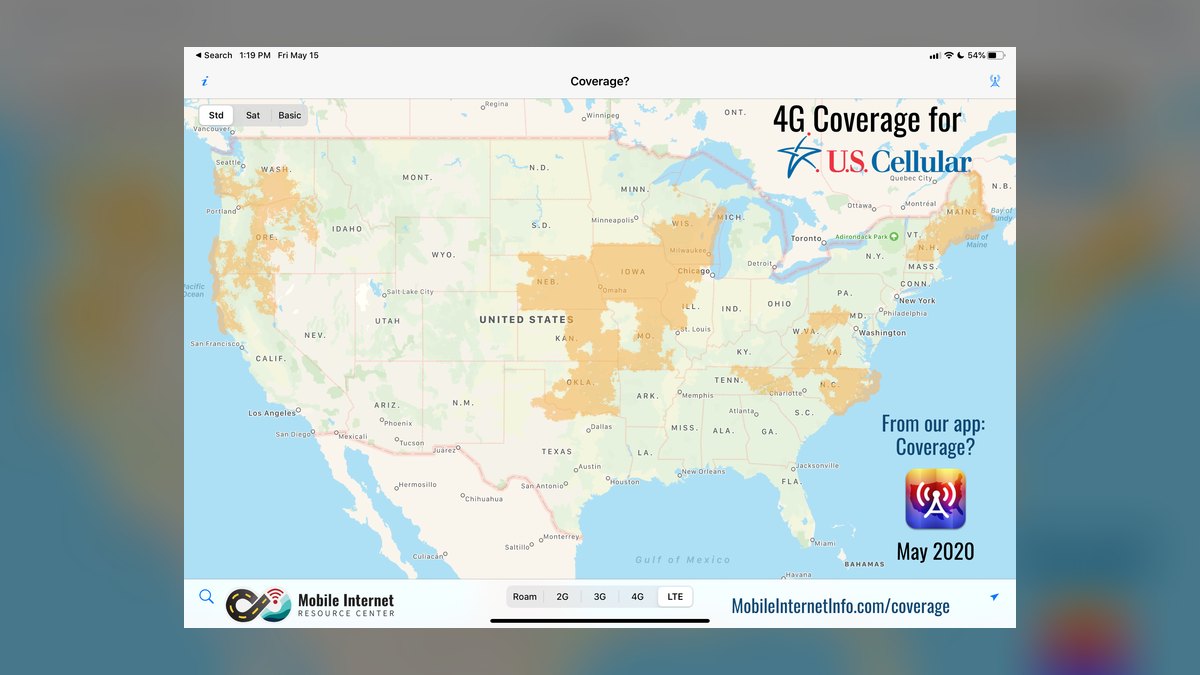
The most common mistake is treating a marketing coverage map as ground truth. Those maps are computer-modeled predictions of outdoor signal, not measured indoor performance. They are directionally useful for "is there a network here at all" and close to useless for "will this work on my desk." Treat them as a first filter, not a decision.
The second mistake is running one speed test and drawing a conclusion. A single test captures one location, one moment, one tower load, one device. It tells you almost nothing about the median experience. Test the same places at different hours — especially at peak, because that is when the differences between plan tiers and network capacity actually surface. A carrier that wins at 11 p.m. and loses at 6 p.m. is not the right carrier for a commuter.
The third mistake is buying the cheapest plan on the best network and then being surprised when it is slow. Deprioritization is real and it hits hardest exactly where New York is most crowded — transit hubs at rush hour, stadium exits, major events. If your usage is concentrated in crowded places at busy times, the cheap tier on the fast network can underperform the mid tier on the slower one. Match the plan tier to when and where you use the phone, not just to the network's average ranking.
The fourth mistake is ignoring device financing lock-in. Trade-in and promotional credits are typically paid out as monthly bill credits across a 24 or 36 month term. Switching mid-term forfeits the remaining credits and usually accelerates the balance on the device. That is not a reason to never switch, but it means the real cost of a switch includes the unpaid device balance. Calculate it before you get excited about a $15 monthly saving.
The fifth mistake is not using the trial paths that exist. Modern eSIM provisioning makes it possible to activate a line on a new network in minutes without disturbing your existing service, and several carriers offer free trial periods explicitly designed for this. This is the single highest-value step in the entire process: run the prospective carrier as a second eSIM for a week, on your real commute, in your real building, at your real hours. That week of data is worth more than every review article, including this one.
A practical testing protocol, if you want to do this properly: install a reputable speed test app; record download, upload, and latency at your home, your workplace desk, your usual subway platform, and one crowded venue you frequent; do it at both a quiet hour and a peak hour; repeat on the trial eSIM. Ten to twelve data points, gathered over a week, will settle the question for your life specifically. Also check that Wi-Fi calling is enabled on both lines, since it changes indoor voice results substantially and can mask or reveal a genuine coverage gap.
The last pitfall is forgetting that this decision is reversible and worth revisiting. Network investment in New York is continuous — new mid-band deployments, expanded in-tunnel transit service, new in-building systems, and shifting spectrum holdings all move the ranking over time. A carrier that was clearly best two years ago may not be today, and today's leader may not hold the position. Re-evaluate roughly annually, or whenever you notice your daily experience degrading, and treat the current answer as a snapshot rather than a permanent verdict.
Related questions
Does the same carrier ranking apply outside New York City?
No. Network rankings are market-specific because spectrum holdings and tower density vary by region. A carrier that leads in New York may trail in a suburban or rural market. If you split time between the city and elsewhere, weight the market where you spend the most hours.
Can I keep my phone number when switching carriers?
Yes. Number portability is a legal right in the United States. You keep your existing service active, provide your account number and transfer PIN to the new carrier, and the number moves — usually within hours for wireless-to-wireless transfers. Never cancel the old line first.
Is an MVNO's coverage really identical to the host network?
The radio coverage footprint is the same, but the treatment is not. MVNO and prepaid customers are typically deprioritized during congestion, may have lower hotspot allowances, capped video resolution, and reduced roaming. In uncongested conditions the experience is effectively identical.
How much does the phone itself affect performance?
Substantially. Older handsets may lack support for the mid-band 5G that drives modern speed results, and antenna design affects indoor reception. Before concluding a carrier is bad, verify your device supports the bands that carrier relies on in this market.
Does fixed wireless home internet work in Manhattan apartments?
Availability is address-specific and often restricted in dense areas where the network is already loaded. It is more widely available in parts of the outer boroughs. Check the specific address on each carrier's availability tool rather than assuming borough-wide availability.
FAQ
Which carrier is genuinely fastest in New York in 2027?
Independent measurement reports have consistently placed T-Mobile ahead on average download speed across New York, driven by the breadth of its mid-band 5G deployment. Verizon can post higher peak readings inside millimeter-wave zones, but those are geographically small. For median day-to-day speed across the five boroughs, the mid-band leader wins.
Do all major carriers work in the subway?
The major carriers participate in the neutral-host system that provides service in subway stations, so platform and mezzanine coverage is broadly available across them. In-tunnel service between stations has been expanding but is not universal across every segment. Test your specific line rather than assuming full-route coverage.
Should I choose a cheap MVNO or pay for a major carrier plan?
It depends on where and when you use data. If you are on Wi-Fi most of the day and use mobile data as a gap-filler, an MVNO on a major network gives you nearly the same experience for a fraction of the price. If you rely on data during crowded peak periods in transit hubs or at events, pay for a tier with premium data priority.
How do I test a carrier before actually switching?
Use eSIM. Modern phones support running a second line without removing your existing one, and several carriers offer short free trials specifically for this. Run the trial line for a week across your real routine — home, office, commute, one crowded venue — at both quiet and peak hours before committing.
What is the biggest hidden cost when switching wireless carriers?
Unpaid device financing. Promotional trade-in credits are usually delivered as bill credits across 24 or 36 months, so leaving early forfeits the remaining credits and the outstanding device balance typically comes due. Calculate that balance before comparing monthly plan prices.
Why is my signal terrible on a high floor even though coverage maps say I am covered?
Coverage maps model outdoor street-level signal. High floors in dense towers are a different environment: metallic window coatings attenuate signal, and macro antennas are often tilted downward toward street-level users. If your building has a distributed antenna system, only the carriers on that system perform well inside it. Wi-Fi calling is the practical fix.
Sources
- Federal Communications Commission — Wireless Competition and Coverage Data
- Ookla Speedtest — United States Market Analysis Reports
- Metropolitan Transportation Authority — Subway Cellular and Wi-Fi Service
- T-Mobile — Coverage Map
- Verizon — Coverage Map
- AT&T — Wireless Coverage Map
- FCC — Wireless Local Number Portability
- J.D. Power — U.S. Wireless Studies
- GSMA — 5G Spectrum Resources
Related on PULSE
- Best Cellular and Wireless Carrier in New York City in 2027
- Best Cellular and Wireless Carrier in New Orleans in 2027
- How do I check if my phone is compatible with a new carrier in 2027?
- Can I bring my own phone to a new carrier (BYOD) in 2027?
- Should I finance a new phone or buy it outright in 2027?
- How do I port my phone number to a new carrier in 2027?
This page will be disappearing soon. Save it to your device for $1 — or read it free while it is here.
@Kory-White- · if Venmo asks, the last 4 of my number are 2012
This page is gone.
This one is off the shelf now. $1 keeps it on your phone for good — the whole page, pictures and diagrams included.
 telcoBest Cellular and Wireless Carrier in Florida in 2027
 telcoAre autopay and paperless discounts worth it in 2027?
 telcoMint Mobile vs Cricket Wireless: which is better in 2027?
 telcoBest Cell Phone Plans for Heavy Data Users in 2027
 telcoHow does international roaming work and how do I avoid huge bills in 2027?
 telcoBest Cellular and Wireless Carrier in Boise in 2027
 telcoBest Cellular and Wireless Carrier in Idaho in 2027
 telcoHow do I activate a new cell phone for the first time in 2027?
 telcoIs carrier phone insurance worth it in 2027?
 telcoHow do I switch carriers without changing my phone number in 2027?