

How do I choose the right cellular plan for my needs in 2027?
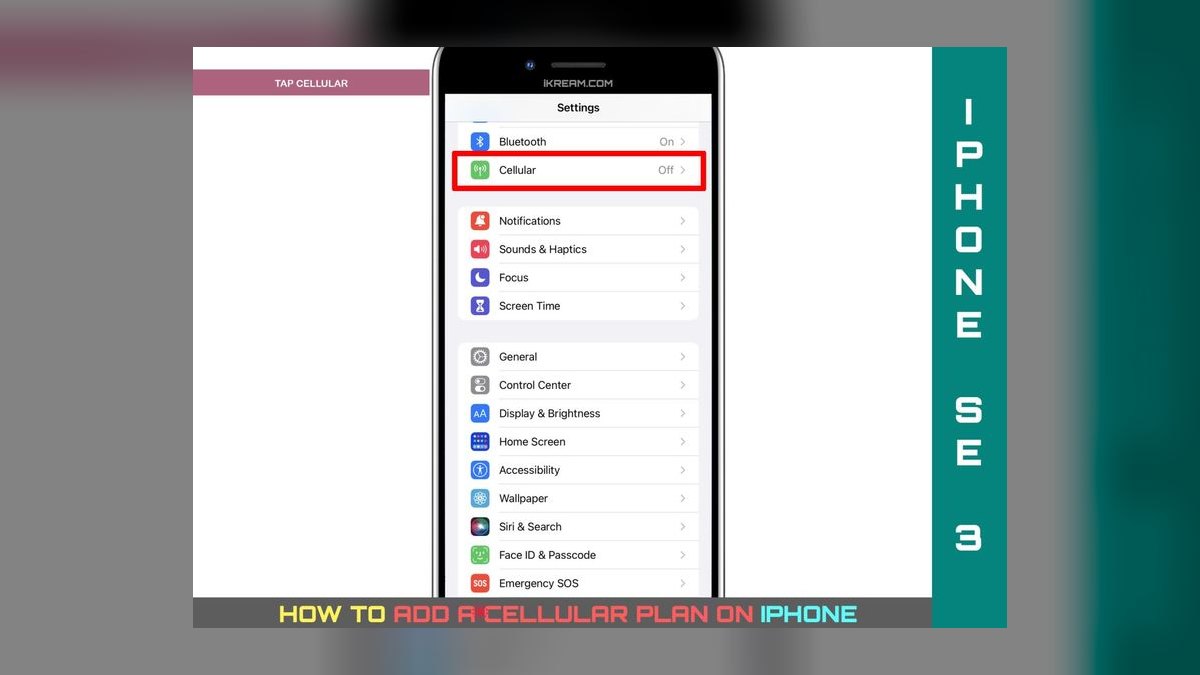
Start with your actual usage, not the plan tier: pull three months of data, talk, and hotspot totals from your carrier app, then pick the cheapest plan whose premium-data allotment covers your 90th-percentile month. Verify coverage on the specific bands where you live and work, confirm hotspot and international terms, and re-check pricing annually.
The outcome you should expect
When you choose a cellular plan the right way, the outcome is not "I found the cheapest plan." The outcome is that your monthly bill stops surprising you, your phone works in the three or four places you actually spend your life, and you stop paying for allotments you never touch. Those are three separate wins, and most people only chase the first one.
Here is what a good outcome looks like in concrete terms. On the cost side, a single line on a major U.S. postpaid carrier's flagship unlimited tier generally runs somewhere in the $75–$95 range before taxes and autopay credits, while the same carrier's entry unlimited tier tends to land in the $55–$70 range, and prepaid or MVNO plans riding the same networks commonly sit in the $15–$45 range depending on how much high-speed data is included. Those bands move, and they differ by carrier and by promotion, so treat them as a shape rather than a quote — but the shape matters: the spread between the cheapest workable option and the default retail option for a single line is frequently $30–$50 a month, which is $360–$600 a year for the same phone on the same towers.
On the usage side, the useful outcome is knowing your own number. Most people badly misestimate their data use in both directions. Someone who streams video on the couch over Wi-Fi may use 4 GB a month on cellular and be paying for a plan sold on the promise of 100 GB of premium data. Someone who commutes 90 minutes a day with podcasts, navigation, and a work VPN may burn 35 GB without noticing. Neither person can pick well until they look. Your carrier's app, or the built-in cellular data counter on iOS and Android, will show you monthly totals; three months of history is enough to see both the typical month and the spike month.
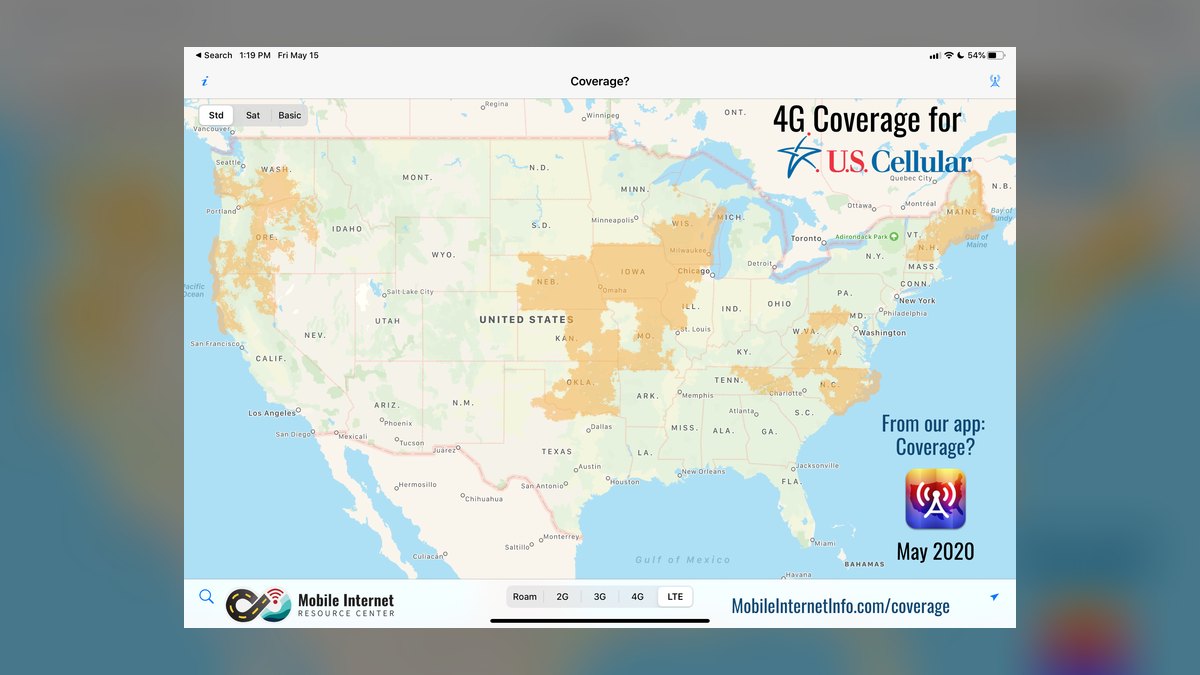
On the coverage side, the outcome is that you have verified — not assumed — that the network you're buying works where you need it. Coverage maps are marketing artifacts built from propagation models; they are directionally useful and locally unreliable. The real test is your home, your workplace, your commute route, and the one or two places you visit often enough that a dead zone would genuinely annoy you: a parents' house, a gym in a basement, a job site.

There is a fourth outcome worth naming, because it's the one people forget: optionality. A plan you can leave is worth more than a plan that's a few dollars cheaper. If you take a device subsidy spread over 24 or 36 monthly bill credits, you have effectively signed a contract even though nobody used that word — leaving early forfeits the remaining credits and often triggers the balance of the device financing. If you buy the phone outright or bring your own, you can switch carriers in an afternoon with an eSIM. That flexibility is the single most underrated variable in this whole decision, and it is why the "free phone" offer and the plan choice should be evaluated as one combined decision rather than two.
The adjacent version of this question — how a small business or a household picks lines for a group — follows the same logic with one addition: per-line pricing on multi-line plans falls steeply, so the marginal cost of adding line three or four is often far below the cost of line one. A family of four on one account frequently pays less per line than two people on two separate accounts, and a small operation with field techs may find that the mixed approach (unlimited for the people who tether, a cheap capped plan for the people who don't) beats putting everyone on the same tier.
What drives that outcome
Four variables do almost all the work: your real data volume, the network's performance where you stand, how deprioritization is written into your plan, and what you're doing with hotspot and international use. Everything else on the comparison chart — streaming perks, cloud storage, the bundled subscription — is a tiebreaker, not a driver.
Real data volume. Pull the last three billing cycles. Take the highest month, not the average, and add roughly 20% headroom. That number is your requirement. If your 90th-percentile month is 12 GB, you do not need a plan built for 50 GB of premium data; you need a plan that gives you comfortably more than 12 and doesn't punish you brutally at 15. The reason to use the high month rather than the average is that the cost of being wrong is asymmetric — an unused allotment costs you a few dollars, while blowing past a hard cap during a work trip costs you a functioning phone.
Network performance where you stand. Every major carrier has a different spectrum mix, and that mix determines what your experience feels like. Low-band spectrum travels far and penetrates buildings well but carries less capacity; mid-band carries much more capacity with good-but-shorter reach and is where most of the "real 5G" speed improvement lives; high-band millimeter wave delivers enormous throughput over very short distances and is effectively a stadium-and-downtown-core technology. The practical consequence: a carrier with dense mid-band deployment in your metro will feel dramatically faster than one relying on low-band there, even though both show "5G" on the status bar. Crowdsourced measurement reports from firms like Ookla and Opensignal break results down by metro area, which is far more useful than a national average.

Deprioritization. This is the most misunderstood term on the page. "Unlimited" on essentially every plan means unlimited data at some speed, with a premium-data threshold — commonly somewhere between 20 GB and 100 GB depending on tier — after which your traffic is deprioritized behind other users when a tower is congested. Deprioritization is not throttling to a fixed speed; it means you go to the back of the queue. On an uncongested tower at 10 p.m. you may notice nothing at all. On a congested tower at a downtown lunch hour you may drop from tens of megabits to something unusable. Cheaper MVNO plans are often deprioritized permanently relative to the host carrier's own subscribers, which is precisely why they cost less. Whether that trade is acceptable depends entirely on how congested your specific towers are.
Hotspot and international. Hotspot allotments are usually a separate, much smaller bucket than phone data — often in the 5 GB to 50 GB range at high speed, then dropping to a crawl. If you tether a laptop for work, this is frequently the constraint that decides your plan, not phone data at all. International terms vary enormously: some plans include free texting and slow data across many countries, some include a daily-pass structure, some include nothing. If you travel even twice a year, price the travel into the annual number rather than paying roaming fees in the moment.
Benchmarks and realistic ranges
Numbers make this decision tractable, so here are the ranges that matter — presented as ranges precisely because pricing shifts and promotions churn.
Typical monthly data use. Industry reporting on North American mobile data consumption has for several years put average smartphone usage in the range of roughly 15–25 GB per month per subscriber, trending upward year over year as video quality and app sizes grow. But the distribution is heavily skewed: a large share of users sit well under 10 GB while a smaller heavy-use group pulls 50 GB or more. This is why the average is nearly useless for your decision and your own three-month history is nearly definitive.

Single-line pricing shape. Premium unlimited from a major postpaid carrier: roughly $75–$95 before taxes, fees, and autopay discounts, often including hotspot in the tens of gigabytes plus meaningful international terms and a bundled streaming perk or two. Entry unlimited from the same carrier: roughly $55–$70, usually with a lower premium-data threshold, minimal hotspot, and fewer perks. Prepaid brands owned by the major carriers: often $25–$50 for unlimited with a hard deprioritization posture. Independent MVNOs riding those same networks: frequently $15–$40, sometimes with a fixed high-speed allotment like 5 GB, 15 GB, or 30 GB rather than true unlimited.
Multi-line economics. Per-line cost typically drops sharply from one to four lines. It's common for the fourth line on a family plan to cost half or less what the first line costs on the same tier. If you have any plausible group — spouse, adult kids, a parent, a business partner — running the math on a shared account is usually the single largest available saving, often larger than switching tiers.
Taxes and fees. Postpaid bills carry government taxes plus carrier-imposed surcharges that commonly add something in the neighborhood of 10–20% on top of the advertised rate depending on your state and locality. Many prepaid plans are advertised as taxes-and-fees-included. When you compare a $65 postpaid plan to a $40 prepaid plan, the real gap is frequently wider than the sticker gap, not narrower.
Device economics. A flagship phone at full retail commonly runs $800–$1,200; a solid midrange device runs $300–$600. Carrier "free phone" offers typically deliver that value as bill credits spread over 24 or 36 months and require staying on a qualifying (usually higher) tier. Do the 24-month arithmetic: plan price × 24, plus device cost, minus credits. A $30/month cheaper plan saves $720 over two years, which frequently exceeds the value of the subsidy on a midrange phone and sometimes rivals it on a flagship.

Speed expectations. On mid-band 5G in a well-covered metro, download speeds in the low hundreds of megabits are common. On low-band 5G or LTE, expect something more like tens of megabits — which, and this deserves emphasis, is entirely sufficient for maps, music, messaging, calls, social feeds, and standard-definition video. Very few people's actual daily needs are limited by anything above about 25 Mbps. Speed is a spec-sheet battleground; reliability and building penetration matter far more to lived experience.
Risks, edge cases, and failure modes
The autopay-and-paperless trap. Advertised per-line pricing almost always assumes autopay, frequently from a bank account rather than a credit card, and paperless billing. Miss the condition and the discount vanishes — often $5–$10 per line per month. Read which payment method qualifies before assuming you'll get the advertised rate.
Promotional pricing that expires. Some prices are guaranteed for a stated term; some are introductory and step up after 12 months. If the guarantee isn't written into the plan's terms, assume the price can move. Put a calendar reminder at the 11-month mark.
The device-lock and unlock window. A phone financed through a carrier is typically locked to that carrier for a defined period, and a phone with an outstanding balance generally can't be unlocked. This is the mechanism that converts a "no contract" plan into a de facto contract. If optionality matters to you, buy the phone outright or check the unlock policy before signing.
Assuming coverage from the map. The single most common failure. Maps model propagation; they don't measure your basement, your building's low-E windows, or the hill between you and the tower. Buy a cheap prepaid SIM or eSIM on the network you're considering and carry it for a week before you port your number. This is inexpensive insurance against a genuinely miserable year.

Underestimating hotspot need. People discover this on the first work trip: phone data is fine, hotspot data is a separate 10 GB bucket, and a single afternoon of laptop video calls eats a large chunk of it. If tethering is part of your workflow, make hotspot the primary filter, not an afterthought.
Deprioritization in dense environments. If you live or work somewhere with genuinely congested towers — a dense downtown, a large campus, a stadium district — a permanently deprioritized MVNO plan behaves very differently at noon than the marketing suggests. The same plan in a low-density suburb may be indistinguishable from the host network. Same product, wildly different experience, based entirely on local congestion.
International roaming surprises. Roaming charges without an included plan or travel pass can run into meaningful per-day or per-megabyte amounts. For most travelers, a local eSIM purchased for the destination is dramatically cheaper than default roaming, and modern phones support running it alongside your home line. Check whether your phone supports dual eSIM before counting on this.
Voicemail, RCS, and Wi-Fi calling gaps on MVNOs. Budget carriers occasionally lag on features like Wi-Fi calling, VoLTE on certain devices, visual voicemail, or full RCS messaging support. If you rely on Wi-Fi calling because your home has poor cellular coverage, verify it explicitly — that single feature can be the whole reason a cheap plan doesn't work for you.

The switching-cost tail. Porting a number is generally quick, but the edge cases bite: two-factor authentication tied to your number, a business listing, an eSIM transfer that needs the old carrier's account PIN. Gather your account number and transfer PIN before you start, and don't cancel the old line yourself — the port completing cancels it for you.
Watches, tablets, and connected devices. Each additional connected device typically adds a line fee in the $10–$20 per month range. Three of those quietly adds more to your annual bill than the tier decision you agonized over. Audit them.
A practical rollout plan
Treat this as a two-week project rather than a same-day decision, because the cheap tests happen up front and they're what prevent an expensive mistake.
Days 1–2: measure. Open your carrier app and record data used per month for the last three cycles, plus hotspot used if it's broken out separately. Note your minutes and texts only if you're considering a plan that caps them — most no longer do. Write down the highest month and add 20%. Then list every line on the account, including watches and tablets, with its monthly cost.
Days 3–4: map your geography. Write down the four or five locations where coverage genuinely matters: home, work, commute route, and the two places you visit most. This list, not a national map, is your coverage requirement.

Days 5–7: shortlist. Identify two or three plans that cover your data number with headroom, meet your hotspot requirement, and ride a network with a good reputation in your metro. Include at least one prepaid or MVNO option and at least one postpaid option so you're comparing across categories, not just within one.
Days 8–12: test before you commit. Buy a prepaid eSIM on the network you're most likely to switch to — this is typically a small one-time cost — and carry it as a second line for several days. Run a speed test at each of your key locations at a busy hour and a quiet hour. Try a video call. Try Wi-Fi calling at home if you need it. This step is what separates a good decision from a hopeful one.
Days 13–14: do the 24-month math and switch. For each finalist, compute plan cost × 24, plus taxes and fees where applicable, plus device cost, minus any bill credits, and be explicit about what you'd forfeit by leaving early. Pick the lowest total that meets your requirements — and only then, port.
After you switch: keep the old line active until the port completes and you've confirmed calls, texts, two-factor codes, and data all work. Then cancel. Set a calendar reminder for 11 months out to re-check pricing, because carriers rarely move you to a better plan on their own even when one exists.

How the decision changes by user type
The framework is constant but the weights shift, and recognizing which profile you fit shortens the process considerably.
The light user. Under 5 GB a month, mostly on Wi-Fi, no tethering. This person is systematically overpaying, often by $40 or more per month. A small fixed-allotment prepaid plan serves them completely. The main thing to verify is that the low price isn't attached to a network with poor coverage at their home.
The commuter. Moderate to heavy data, consumed in motion, often in the same corridor daily. Handoff reliability along the route matters more than peak speed, and this is the profile where a week-long eSIM test along the actual commute pays for itself immediately.
The mobile worker. Tethers a laptop, takes calls from the field, may need reliable service in rural or industrial areas. Hotspot allotment is the binding constraint. Low-band coverage breadth usually beats mid-band peak speed here, and paying for a premium tier is often genuinely justified.
The traveler. International terms dominate. Compare the annual cost of a plan with included international data against a cheaper domestic plan plus destination eSIMs — the second option frequently wins for occasional travelers, while frequent travelers may find the included package worth the premium.
The family or small team. Per-line economics dominate everything else. Consolidating onto one account, and mixing tiers within it so heavy users get unlimited and light users get a cheap capped line, is usually the largest available saving. Check whether the carrier permits mixed tiers on one account — most major ones do.
The rural household. Coverage breadth is the entire decision; price is secondary because a cheap plan that doesn't work is worth nothing. Low-band spectrum performance and, in some cases, satellite-based emergency messaging features on newer phones are worth weighing. Fixed wireless home internet from the same carrier may also change the math on whether you need generous phone data at all.
Adjacent decisions worth making at the same time
A cellular plan doesn't sit alone in your budget, and a few neighboring choices interact with it enough that deciding them together produces a better result than deciding them one at a time.
Home internet. If your home broadband is reliable and your phone is on Wi-Fi twelve hours a day, your cellular data need drops sharply — which pushes you toward a cheaper plan. Conversely, if you're considering fixed wireless home internet, that's the same carrier's network doing double duty, and bundle pricing may apply. The two decisions are genuinely coupled.
Wi-Fi calling as a coverage patch. If your home has weak cellular signal but good broadband, Wi-Fi calling can neutralize the problem entirely and free you to choose a plan on price rather than on home coverage. Confirm the plan and device support it before relying on this.
eSIM as a strategy, not a feature. Dual-SIM capability lets you keep a cheap primary line and add a second line temporarily — for a trip, for a job, for testing a network. Once you think of eSIM as a way to test and hedge rather than just a way to activate, the whole decision gets lower-risk.
Device replacement timing. If your phone is two years old and still fine, decoupling the plan decision from the device decision gives you maximum leverage. If you need a new phone anyway, the subsidy math becomes part of the plan comparison and you should run both scenarios explicitly.
Insurance and add-ons. Device protection plans commonly run $10–$20 per line per month with a deductible on claims. Over 24 months that's a meaningful number relative to the repair cost it covers. Decide deliberately rather than accepting it at signup.
Related questions
How much cellular data do I actually need?
Check your carrier app for three months of history, take the highest month, and add about 20% headroom. Most people land well under 20 GB. Use your own number rather than a national average — the distribution is skewed enough that averages mislead badly in both directions.
Is an MVNO as good as a major carrier?
It runs on the same towers, so coverage is generally identical. The difference is deprioritization during congestion and occasional feature gaps like Wi-Fi calling or visual voicemail. In uncongested areas the experience is often indistinguishable; in dense downtowns at peak hours it can differ noticeably.
Should I take the free phone offer?
Only after doing 24-month arithmetic. Bill credits usually require staying on a higher tier for 24–36 months, and leaving forfeits the remainder. A plan that's $30/month cheaper saves $720 over two years, which often exceeds the subsidy's real value.
Does 5G matter for my plan choice?
Less than marketing suggests. Mid-band 5G is genuinely faster, but most everyday use — maps, messaging, music, video calls, social feeds — works fine at LTE speeds. Prioritize coverage reliability and building penetration in your specific locations over peak throughput numbers.
How do I switch carriers without losing my number?
Get your account number and transfer PIN from your current carrier, then initiate the port with the new one. Keep the old line active until the port completes; it cancels automatically. Verify two-factor codes arrive before assuming everything transferred cleanly.
FAQ
What does "unlimited" actually mean on a cellular plan?
It means unlimited data at some speed, not unlimited data at full speed. Every unlimited plan defines a premium-data threshold — commonly somewhere between 20 GB and 100 GB depending on tier — after which your traffic is deprioritized behind other users when the tower is congested. On a quiet tower you may notice nothing. On a busy one, the difference is stark. Read the threshold number in the plan terms; it's the single most informative figure in the fine print.
How do I choose the right plan if my usage varies a lot month to month?
Size to your peak, not your average, and add roughly 20% on top. The cost of an unused allotment is a few dollars; the cost of running out during a work trip is a phone that doesn't do its job. If your variance is extreme — a few very heavy months a year — check whether your carrier lets you change tiers mid-cycle without penalty, since some allow a temporary upgrade for a single billing period.
Is prepaid worse than postpaid?
Not in coverage, since it's usually the same network. Prepaid typically means paying up front, no credit check, taxes often included in the advertised price, and a lower deprioritization priority. Postpaid typically means device financing availability, higher premium-data thresholds, and more perks. For many light and moderate users prepaid is straightforwardly better value; for heavy tetherers and people in congested areas, postpaid's priority is worth paying for.
How often should I re-evaluate my plan?
Once a year, and any time your circumstances change — a move, a new job with different commuting, a household member joining or leaving the account. Carriers rarely migrate existing customers to newer, cheaper plans automatically, so long-tenured customers are disproportionately likely to be on outdated pricing. A 20-minute annual review frequently finds $10–$30 per month.
What's the cheapest way to handle international travel?
For most occasional travelers, a destination eSIM bought for the trip beats default roaming by a wide margin. Modern phones can run it alongside your home line, so you keep your number for texts while using local data. Frequent travelers may do better with a plan that includes international data outright. Either way, decide before you land — activating roaming in the moment is the expensive path.
Do I need to worry about network speed differences?
Less than the marketing implies. Above roughly 25 Mbps, most everyday tasks feel identical. What you actually notice is dead zones, dropped calls, and congestion stalls. Weigh reliability and in-building performance in your specific locations far more heavily than peak download numbers, and use crowdsourced metro-level data rather than national averages.
Sources
- https://www.fcc.gov/consumers/guides/wireless-devices-and-your-health — FCC consumer guides hub for wireless service topics
- https://www.fcc.gov/general/wireless-local-number-portability-lnp — FCC on number portability rules
- https://www.ookla.com/ — Ookla Speedtest network performance reporting
- https://www.opensignal.com/reports — Opensignal mobile network experience reports
- https://www.gsma.com/solutions-and-impact/connectivity-for-good/mobile-economy/ — GSMA Mobile Economy reports
- https://www.ericsson.com/en/reports-and-papers/mobility-report — Ericsson Mobility Report on global data traffic
- https://www.consumerreports.org/electronics/cell-phone-service/ — Consumer Reports cell phone service ratings
- https://support.apple.com/en-us/HT212780 — Apple support on eSIM and dual SIM
- https://www.ctia.org/consumer-resources — CTIA consumer resources on wireless service
Related on PULSE
- How much mobile data does a remote worker actually use?
- Prepaid vs postpaid: which costs less over two years?
- How to test a carrier's coverage before you switch
- What deprioritization really does to your connection
- Building a household plan that mixes tiers by user
 telcoHow do I check if my phone is unlocked in 2027?
 telco5G home internet vs fiber: which is better for home internet in 2027?
 telcoWhat is the best cell phone plan for international travel in 2027?
 telcoCell phone vs landline: which is better in 2027?
 telcoCricket Wireless vs Metro by T-Mobile: which is better in 2027?
 telcoBest Cellular and Wireless Carrier in New York in 2027
 telcoBest Smartwatches with Cellular in 2027
 telcoBest 5G Phones in 2027
 telcoBest Budget Cell Phone Carriers in 2027
 telcoBest Cell Phone Plans for International Travel in 2027