
How do I switch my phone plan step by step in 2027?
 PULSEKNOWLEDGE LIBRARY
Switching a phone plan takes about a week: check your device is unlocked and paid off, port-out PIN in hand, compare total monthly cost including taxes and autopay discounts, then activate the new carrier's eSIM and let the port complete. Never cancel your old plan first — porting the number cancels it automatically.
What "switching" actually means and the two paths you can take
Most people say "switch my phone plan" when they mean one of two very different operations, and the steps diverge almost immediately.
Path one: switching plans inside your current carrier. You stay with the same company and move from, say, an older grandfathered unlimited plan to a current-generation one, or drop from a premium tier to a mid tier. This is a billing change. It usually takes under ten minutes in the carrier app, requires no new SIM, no port-out PIN, and no credit check. Your number, your voicemail, your device financing, and your account number all stay put. The risks are narrow but real: you may lose a legacy plan you can never get back, you may reset a promotional device credit that was tied to the old plan, and you may trigger a prorated bill that looks alarming for one cycle.
Path two: switching to a different carrier. This is a port. You are moving your phone number from one company's routing to another's, opening a new account, and closing the old one. It involves identity verification, a port-out PIN, a new SIM or eSIM, and — if you still owe money on a phone — a decision about that balance. It takes anywhere from fifteen minutes (eSIM, postpaid to postpaid, same-day) to several business days (landline-originated numbers, business accounts, or mismatched account details).

There is a third variant worth naming because it trips people up: switching from postpaid to prepaid within the same parent company. Verizon owns Visible and Total Wireless. T-Mobile owns Metro and Mint. AT&T owns Cricket. Moving between a parent brand and its prepaid sibling is technically a port — a new account, a new SIM, a port-out PIN — even though the network underneath is identical. Carriers frequently block their own postpaid-to-prepaid ports for a waiting period, or refuse to honor switching promotions for "internal" moves. Read the promo fine print for the phrase "not available to existing customers or customers who have been with [brand] in the last 90 days."
The decision framework is simple. If your current carrier's network works where you live, work, and commute, and your complaint is purely price, try path one first — an internal downgrade is reversible-ish and costs you nothing. If your complaint is coverage, or if the internal price floor is still above what a competitor charges, take path two.
What each path costs you in friction. Internal plan change: ten minutes, one prorated bill, possible loss of a legacy rate. Carrier switch on an unlocked, paid-off phone: about an hour of active work spread across a few days, plus a possible activation fee of roughly $35 per line at the big three (prepaid brands and most MVNOs waive it or charge $0–$15). Carrier switch with a device balance: same as above plus either a lump-sum payoff or a switching promotion that reimburses you, usually as a prepaid card or bill credits rather than cash.

How to decide which path fits your situation
Work the decision in a fixed order, because each answer eliminates branches below it. Start with coverage, because no price is good enough on a network that drops your calls. Then check lock status and device balance, because those determine whether path two is even available this month. Then compare true monthly cost. Only then look at promotions — promos are a tiebreaker, never the reason.
Coverage, checked properly. Carrier coverage maps are marketing artifacts built from propagation models, not from measurements at your address. Use them only to rule things out. Better signals, in order: ask two or three people who live on your street what they use and whether it works indoors; check the FCC's National Broadband Map, which uses carrier-submitted data at a much finer granularity than the marketing maps; and best of all, buy a $10–$25 prepaid SIM on the target network and run it in a spare phone or a second eSIM slot for a week. That last one is the only real test, and it is cheap insurance against a twelve-month regret.
Remember that MVNOs ride the big three networks, so "does Mint work at my house" is really "does T-Mobile work at my house." The caveat is deprioritization: MVNO traffic is often deprioritized behind the host carrier's own postpaid customers when a tower is congested. At 2 a.m. you cannot tell the difference. At a stadium, in a downtown core at 5 p.m., or at a crowded school pickup, you very much can. If you routinely spend time in dense crowds, that is an argument for postpaid on the host network rather than the MVNO that rides it.

Lock status. A carrier-financed or promotional phone is typically locked to that carrier for a period — commonly 60 days after activation for prepaid at some brands, and until the device is paid in full for postpaid financing. Rules vary by carrier and by whether the device was bought outright. Check status directly: on iPhone, Settings → General → About → look for "Carrier Lock" (it should say "No SIM restrictions"); on Android, Settings → About phone → SIM status or Connections → SIM manager, and the wording differs by manufacturer. If it is locked and you meet the carrier's unlock criteria, request the unlock through the carrier's app or unlock request page and allow up to a couple of business days for it to process. Do not buy third-party "unlock codes" — modern devices are unlocked server-side by the carrier, and the code sellers are largely selling you nothing.
Device balance. If you owe, say, $480 on a phone, walking away does not erase it. The remaining balance accelerates and appears on your final bill in a lump sum. Your options: pay it off and switch clean; stay until it is paid; or take a competitor's switching promotion that covers a defined amount of the payoff. Promotions almost never hand you cash — they issue a virtual prepaid card weeks later, or spread credits across 24 or 36 monthly bills. Bill credits are the trap: leave in month 14 of a 36-month credit schedule and the remaining credits vanish while any new device financing you took on stays owed. Treat a bill-credit promo as a multi-year commitment in everything but name.
True cost comparison. Compare the number that leaves your bank account, not the number on the billboard. Build a small table with, for each candidate: base price per line at your line count; whether taxes and fees are included or added (prepaid and most MVNOs quote tax-inclusive or near it; big-three postpaid usually adds them); whether the advertised price assumes autopay and, critically, whether autopay must be from a bank account rather than a credit card to earn the discount; per-line price at 1, 2, 3, and 4 lines, because the curve is wildly nonlinear; hotspot allotment in GB; the deprioritization threshold in GB; international roaming and calling; and the cash value of perks you would otherwise buy. A streaming bundle you already pay for separately is worth its real price; one you would never buy is worth zero, no matter how it is marketed.

Concrete numbers behind each option
Prices move, so treat these as the shape of the market in the mid-2020s and verify current numbers before you commit. The structure, though, has been stable for years and is what actually drives the decision.
Postpaid on the big three. Single-line premium unlimited plans have generally run roughly $75–$90 per month before taxes, dropping to something like $50–$65 per line at three or four lines with autopay. Mid-tier unlimited sits around $60–$75 for one line. Taxes and regulatory fees add roughly 8–20% on top depending on your state and locality — the difference between a low-tax state and a high-tax metro can be $10 a month per line on the same plan. Activation or upgrade fees of about $35 per line are standard and are the single most commonly forgotten line item. What you buy at this tier: highest network priority during congestion, the widest device promotion selection, the best international inclusions, and physical stores when something goes wrong.
Prepaid brands owned by the big three. Cricket, Metro, and Visible generally land in the $25–$60 per line range with taxes and fees typically included in the quoted price. Priority is usually below the parent brand's postpaid customers, though top prepaid tiers sometimes buy back a higher priority level. No credit check, no contract, and the price you see is close to the price you pay.

MVNOs and multi-month prepaid. Mint, US Mobile, Tello, Boost and similar operators frequently sit in the $15–$35 per line range, with the lowest numbers requiring you to prepay 6 or 12 months up front. Pay attention to what the price reverts to after the promotional first term — a $15 introductory rate that renews at $30 is a $30 plan with a discount, and you should budget it as such. Light users who mostly live on Wi-Fi can genuinely run a phone for $10–$20 a month here.
Worked example, single line. Suppose you are paying $85 plus about $12 in taxes and fees, so $97 out the door. You move to a $30 tax-inclusive MVNO on the same underlying network. You save roughly $67 a month, or about $800 a year. Against that, subtract the one-time costs: possibly a $0–$35 activation, possibly a few dollars for a physical SIM if you cannot use eSIM, and your own hour of setup time. The payback period is measured in days. This is why single-line heavy-postpaid customers are the highest-value switchers in the market.
Worked example, family of four. Suppose four lines on postpaid at roughly $180 all-in. Four MVNO lines at $25 each is $100. The $80 monthly delta is real but proportionally smaller, and you give up the things families lean on: multi-line discounts, shared perks, device promotions across four upgrade cycles, and easy in-store support when a teenager cracks a screen. Multi-line postpaid pricing is where the big three compete hardest, so the gap narrows exactly where the switching friction is highest — four SIMs, four ports, four sets of account credentials. Families should weight friction heavily.

Worked example, device balance in play. You owe $520 on a phone and a competitor offers "up to $800 toward your switch." Read what "up to" means. Typically you must trade in a qualifying device, submit your final bill from the old carrier showing the balance, and wait 6–8 weeks for a virtual prepaid card. Sometimes the reimbursement is capped below your actual balance. Sometimes it is bill credits over 36 months. Model the worst-case honest version: assume the credits are spread over three years and that you must stay to collect them. If the deal still beats staying put, take it.
The nonlinear line curve. Carriers price the second and third lines steeply below the first. One line at $80, two at $65 each, three at $50 each, four at $40 each is a typical shape. This means that adding a family member to an existing plan is often cheaper than that person buying their own $30 MVNO line — and equally, that the last person leaving a family plan can spike the remaining lines' per-line price. Before anyone leaves a shared plan, price what the *remaining* lines will cost. That repricing has ended more than one amicable phone-plan divorce.
Fees to hunt for explicitly. Activation or upgrade fee, roughly $35 per line at the big three. Regulatory recovery and administrative fees, a few dollars per line per month, which are carrier-invented and not government taxes despite the naming. Paper bill fees. Payment convenience fees for paying by phone with an agent. Autopay discounts that require ACH from a checking account, typically $5–$10 per line, and are quietly cut in half or eliminated if you pay by credit card. And the one nobody budgets for: the final prorated bill from your old carrier, which arrives after you have already left and often includes a partial month you assumed you had already paid for.

Doing the switch: the exact step-by-step sequence
Here is the order of operations. Sequence matters more than any individual step, because two of these steps are irreversible in the wrong order.
Step 1 — Back up your phone and your two-factor authentication. Do this before anything else. Full device backup to iCloud or Google. Then separately handle your authenticator app: Google Authenticator, Authy, and similar apps store seeds on the device, and if you wipe or lose access mid-switch you can lock yourself out of your bank, your email, and your work accounts. Export or transfer your authenticator seeds and print your backup codes on paper. Also note which accounts use SMS-based 2FA to that number — during a port there can be a window of minutes to hours where texts do not reliably arrive.
Step 2 — Confirm the device is unlocked and compatible. Check Carrier Lock as described above. Then check band compatibility with the target network — for a phone bought in the last several years from a major carrier or unlocked from the manufacturer, this is almost always fine, but an imported or very old device may lack the specific 5G bands the target network uses, or may not support VoLTE on that network, which now matters because 3G networks are retired and voice rides on LTE/5G. Confirm the phone supports eSIM if you want the fast path; most flagship phones from the last several generations do, and US iPhone models since the 14 are eSIM-only.

Step 3 — Gather your porting credentials. You need: the account number on the *old* carrier (which is frequently not the phone number, and for prepaid is often a separate numeric account ID), the port-out PIN or transfer PIN, the account holder's name and billing address exactly as they appear on the old account, and often the last four of the SSN or the account passcode. Carriers are required to provide port-out information on request, and the big three now generate a time-limited port-out PIN in the app — look for "Number Transfer PIN," "Port Out PIN," or similar under account settings or security. These PINs commonly expire in about a week, so generate yours within a couple of days of the actual switch.
The single most common port failure is a mismatch here. If your account says "Robert" and you type "Bob," or your billing address still has an apartment number you dropped two moves ago, the port rejects. Copy the values character-for-character off the old carrier's account page rather than from memory.
Step 4 — Order or activate the new service, but do not cancel the old one. Sign up with the new carrier and select "keep my number" / "transfer my number" during signup. Enter the credentials from Step 3. If you are using an eSIM, you will scan a QR code or the carrier app will provision it directly; if physical SIM, wait for it to arrive. Critically: do not call your old carrier to cancel. The port itself terminates the old line. Cancelling first releases your number back into the pool, and once released it is generally not recoverable — you will lose the number permanently.

Step 5 — Let the port run and keep both lines available. A postpaid-to-postpaid wireless port often completes in minutes to a few hours. Prepaid, business accounts, and numbers that originated on a landline can take one to several business days. During the window you may have inbound working on one line and outbound on the other. If you have dual-SIM/eSIM, keep the old SIM installed until the port completes so you can still receive verification texts. Do not travel internationally, close a mortgage, or do anything else that depends on receiving SMS codes on the day you port.
Step 6 — Test everything before you consider it done. Place a call out and have someone call in. Send an SMS and, separately, an MMS with a photo, because group messaging fails independently of plain texts. Turn Wi-Fi off entirely and load a data-heavy page. Enable and connect to hotspot. Check that Wi-Fi calling is switched on and that your registered E911 address is correct — that address is what emergency dispatch receives when you call 911 over Wi-Fi, and a stale one is genuinely dangerous. If you use iMessage or RCS, confirm messages are sending under the right number and not stuck on an old identity; on iPhone, toggling iMessage and FaceTime off and back on after the port forces re-registration.
Step 7 — Confirm the old account actually closed and read the final bill. A few days after the port, log into the old carrier and verify the line shows as ported out and the account is closed if it was your only line. Expect a final bill that includes a prorated partial month and any accelerated device balance. Cancel any autopay you had set up there only *after* that final bill clears, so you do not end up in collections over $18.

Step 8 — Update everything downstream. Even keeping the same number, several things break or drift after a switch: carrier-specific visual voicemail apps stop working and you move to the new carrier's; carrier email addresses die; any carrier-provided cloud storage or backup goes away; and account recovery flows at your bank may need re-verification. Also update your number's registration on Wi-Fi calling for work systems, and confirm two-factor still delivers at your bank, your email provider, and your employer's SSO.
Step 9 — Calendar the promo deadlines. If a promotion required a trade-in shipped within 30 days, or a rebate submission with your final bill attached, put those dates in your calendar the day you sign up. Missed submission windows are the most common reason a switching promotion pays out nothing, and carriers are under no obligation to extend them.
A note on timing within your billing cycle. Porting mid-cycle from a postpaid carrier that bills in advance means you have already paid for days you will not use, and refunds for those days are inconsistent by carrier. If you can, time the port near the end of a paid cycle. Conversely, most prepaid service is paid in advance in monthly blocks and simply stops — no proration, no refund — so port on or near your renewal date rather than three days after you renewed.
Related questions
Do I lose my phone number when I switch carriers?
No, as long as you port it. Number portability is a legal right for wireless numbers within the same rate center. You lose it only if you cancel the old account before the port completes — that releases the number and it is generally unrecoverable.
How long does a phone number port actually take?
Wireless postpaid-to-postpaid ports often finish in minutes to a few hours. Prepaid, business accounts, and numbers originally issued as landlines commonly take one to several business days. Credential mismatches are the usual cause of multi-day delays.
Can I switch if I still owe money on my phone?
Yes. The balance does not disappear — it accelerates onto your final bill. Pay it off, wait until it clears, or take a competitor promotion that reimburses the payoff, usually via prepaid card or multi-year bill credits rather than cash.
Is an MVNO the same network as the big carrier it rides on?
Same towers, same coverage footprint, but often lower priority during congestion. In empty conditions the experience is identical. In stadiums, downtown at rush hour, or at events, deprioritized traffic slows noticeably.
Should I switch plans or switch carriers?
If coverage is fine and only price bothers you, change plans internally first — it is free, fast, and reversible. Switch carriers when the internal price floor is still too high, or when coverage itself is the problem.
FAQ
Do I need to cancel my old plan before switching?
No, and doing so is the single most damaging mistake in this process. The port request itself closes your old line automatically once the number transfers. If you cancel first, your number is released and typically cannot be reclaimed, which means every account tied to it for two-factor authentication has to be recovered manually. Sign up with the new carrier, request the transfer, and let the old account close itself.
What is a port-out PIN and where do I find it?
It is a short numeric code that proves you authorized the transfer, and it exists to stop SIM-swap fraud. Generate it in your current carrier's app or on its website, usually under account settings, security, or a menu item named something like "Number Transfer PIN." It is typically time-limited — often around a week — so generate it close to when you actually switch, not a month ahead.
Will switching hurt my credit score?
Postpaid plans normally involve a credit check, which is a hard inquiry and can shave a few points temporarily. Device financing may appear as an installment account. Prepaid and most MVNOs run no credit check at all, so if you are mid-mortgage-application, prepaid avoids the inquiry entirely. An unpaid final bill sent to collections is the real credit risk, not the switch itself.
Can I keep my phone, or do I have to buy a new one?
Almost always keep it. Any reasonably recent phone bought unlocked or fully paid off will work on all three US networks. Verify it is unlocked, that it supports VoLTE on the target network since 3G voice is retired, and that it has the bands the network uses. Only imported or quite old devices tend to have genuine compatibility problems.
What happens to my data, texts, and photos during the port?
Nothing on the device changes — your photos, contacts, and app data live on the phone and in your cloud backup, not on the SIM. What can break is anything tied to the carrier: visual voicemail history does not transfer, carrier email addresses stop working, and there may be a short window where SMS delivery is unreliable. Back up before you start and expect saved voicemails to be lost.
Is it worth switching for a promotion?
Only if the deal survives a pessimistic reading. Model bill credits as a commitment for their full term, assume "up to $X" means less than $X, and confirm whether it is a prepaid card or a monthly credit. If the plan is a good deal without the promo, the promo is a bonus. If the plan only works because of the promo, you are signing a multi-year contract in disguise.
Sources
- https://www.fcc.gov/consumers/guides/wireless-local-number-portability-wlnp
- https://www.fcc.gov/consumers/guides/cell-phone-unlocking-faqs
- https://consumer.ftc.gov/articles/how-recognize-and-avoid-phishing-scams
- https://www.fcc.gov/device-unlocking-common-questions
- https://broadbandmap.fcc.gov/
- https://www.consumerreports.org/electronics/cell-phone-service-providers/
- https://support.apple.com/en-us/109369
- https://support.google.com/android/answer/9449293
- https://www.fcc.gov/consumers/guides/sim-swap-scams-and-port-out-fraud
Related on PULSE
- How do I lower my monthly phone bill without changing carriers?
- What is the real difference between prepaid and postpaid wireless?
- How do MVNOs work and when are they a bad idea?
- How do I evaluate cell coverage at a new address before moving?
- What should I check before financing a phone through a carrier?
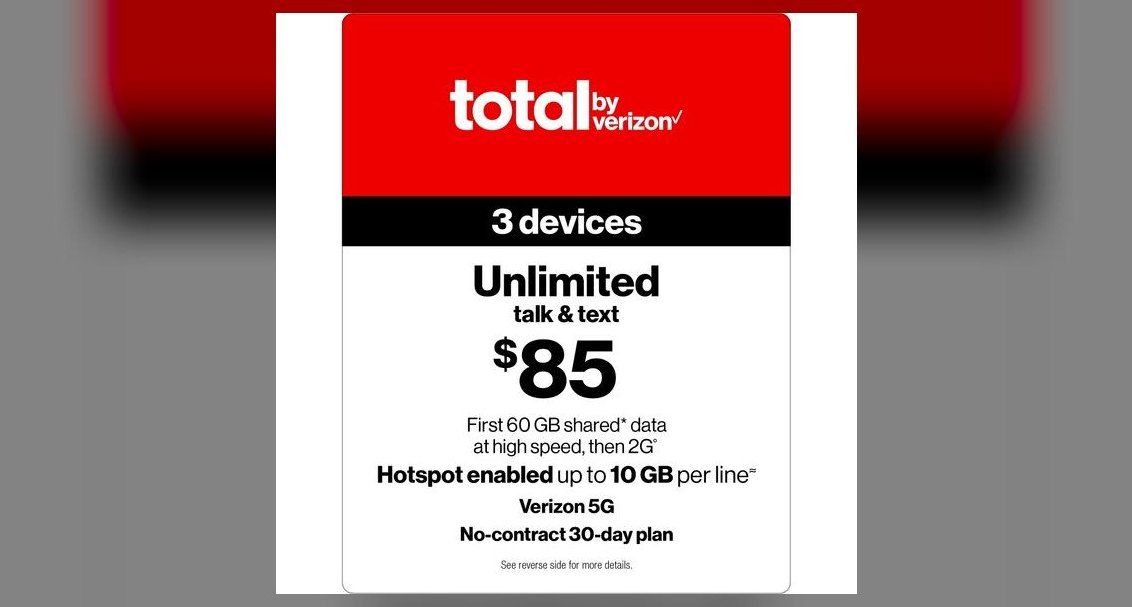 telcoTop 10 Best Cell Phone Plans for Families in 2027
 telcoTop 10 Telco strategies for 2027
 telcoHow do I check if my carrier supports eSIM activation in 2027?
 telcoTop 10 best Telco options in 2027
 telcoBest Cellular and Wireless Carrier in Nevada in 2027
 telcoHow do I choose the right cell phone carrier for my needs in 2027?
 telcoBest Cellular and Wireless Carrier in Massachusetts in 2027
 telcoBest Cellular and Wireless Carrier in Baltimore in 2027
 telcoIs Visible worth it in 2027?
 telcoBest Cellular and Wireless Carrier in Tennessee in 2027