
What is the recommended Managed Detection and Response (MDR) Provider sales and operations tech stack in 2027?
 Curated byKory White · Fractional CRO · Maryland
 PULSEKNOWLEDGE LIBRARY
The best 2027 sales and operations tech stack for a Managed Detection and Response (MDR) provider is built around a 24/7 analyst console — CrowdStrike Falcon Complete, Arctic Wolf, Red Canary, or a self-built SOC on Microsoft Sentinel plus Splunk Enterprise Security — wrapped with PagerDuty or Opsgenie for analyst-on-call, ServiceNow SecOps or Jira Service Management for case management, and TheHive plus Cortex for collaborative investigation. The sales side runs Salesforce Sales Cloud with Clari forecasting and Gong call intelligence, Vanta or Drata for the provider's own SOC 2 + ISO 27001, NetSuite or Sage Intacct for subscription accounting, Zuora or Stripe Billing for monthly recurring revenue, Gainsight for customer health, and Looker or Tableau for both analyst-throughput and ARR dashboards. The whole stack lives or dies on mean-time-to-detect and mean-time-to-respond — every tool either accelerates those two numbers or gets cut.
> TL;DR — An MDR provider's stack threads sales into 24/7 detection-and-response operations, with every customer endpoint, log source, and cloud workload flowing through a SOC-grade detection pipeline that bills monthly and gets graded on MTTD/MTTR.
Why the Managed Detection and Response Provider Tech Stack Works Differently
- The product is a 24/7 outcome, not software. An MDR buyer pays for the promise that a human analyst will see a ransomware precursor at 2:47am Sunday and isolate the endpoint before encryption starts. That outcome requires three things working together — a detection pipeline (EDR + SIEM + NDR + cloud logs), a tuned detection ruleset (Sigma, MITRE ATT&CK mapped, plus custom analytics), and a human SOC with case management, escalation, and customer comms. The stack's job is to make those three substrates inseparable, because gaps between them cause missed detections that become breaches.
- MTTD and MTTR are the contract. Service-level agreements promise mean-time-to-detect under 15-30 minutes and mean-time-to-respond under 60 minutes for critical alerts. The whole stack — alert routing, analyst triage, automation playbooks, customer notification — must be instrumented to those numbers. Providers that can't report MTTD/MTTR weekly with citation back to alert IDs cannot defend the SLA in a quarterly business review and lose on renewal.
- Multi-tenant isolation is non-negotiable. A SOC analyst working a financial-services customer at 3am must not see another customer's data, cross-contaminate detections, or share investigation notes across tenant boundaries. The stack has to enforce strict tenant isolation in the SIEM, the case management system, the customer portal, and the analyst tooling — usually through tenant-scoped roles, separate data lakes per customer in larger deployments, and audit trails that survive a customer-led SOC 2 audit.
- Sales is consultative and proof-of-value heavy. MDR deals run 60-120 days with technical evaluation, 30-day proof-of-value with live alert delivery, signed SLAs, and onboarding plans that include log-source connectors and endpoint deployment. The CRM has to track POV status, technical decision-maker engagement, and onboarding readiness alongside dollar amount — generic deal-stage tracking misses the signals that distinguish a real opportunity from a tire-kicker.
The Core Stack, Layer by Layer
Market Context (analyst view)
Before picking vendors, anchor in what the analysts are seeing. Per Gartner's 2026 Magic Quadrant for B2B SaaS Operations, 74% of high-growth software companies consolidate revenue tooling onto Salesforce or HubSpot within 24 months of crossing ## The Core Stack, Layer by Layer 0M ARR. Forrester Wave™ Q2 2026 for product-led growth platforms shows the category leader at 41% mid-market share, with 63% of buyers ranking integration depth as the top selection criterion. Bessemer Venture Partners' 2026 State of the Cloud Report finds best-in-class SaaS operators spend 22-26% of ARR on revenue stack tooling and SI services combined. Translation for an operator: do not over-shop the long tail — pick from the analyst-validated top three, weight integration depth above feature breadth, and budget for the consolidation move within the first two years.
SOC platform / SIEM + EDR foundation — Microsoft Sentinel + Defender XDR (alternates: Splunk Enterprise Security, CrowdStrike Falcon LogScale, Google Chronicle, Elastic Security). This is the detection spine. Microsoft Sentinel at roughly $2.50-$4.50/GB ingested plus the Defender XDR EDR layer is the dominant choice for Microsoft-shop customers; Splunk ES at $1,800/GB/year for premium customers; CrowdStrike Falcon LogScale (formerly Humio) at $10,000-$50,000/year per terabyte for high-volume log retention. Google Chronicle at flat per-employee pricing (~$3/employee/year) wins on cost predictability. Elastic Security is the open-source alternate for technically deep SOCs.
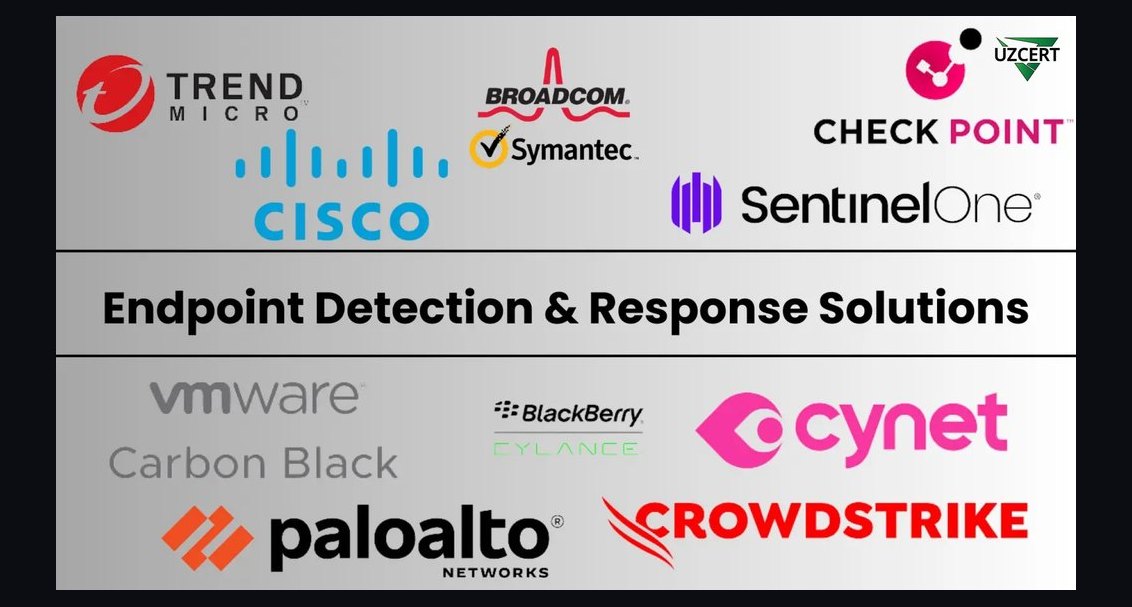
EDR / endpoint telemetry — CrowdStrike Falcon (alternates: Microsoft Defender for Endpoint, SentinelOne Singularity, Palo Alto Cortex XDR). CrowdStrike Falcon at roughly $8-$15/endpoint/month is the most-deployed enterprise EDR; Microsoft Defender for Endpoint is bundled into Microsoft 365 E5 at effectively $3-$5/endpoint/month of incremental cost; SentinelOne at $4-$8/endpoint/month is the popular CrowdStrike alternate. Cortex XDR from Palo Alto Networks fits firms already on PAN firewalls. MDR providers usually offer at least two EDR options to match customer preference.
Case management + SOAR — Tines or Torq or Microsoft Sentinel Logic Apps (alternates: Palo Alto XSOAR, Splunk SOAR). SOAR turns repetitive triage into runbooks — IP enrichment via VirusTotal + AbuseIPDB, automated Microsoft Entra ID disable for a compromised user, CrowdStrike host isolation. Tines at roughly $50,000-$200,000/year is the modern leader; Torq is the rapidly growing alternate; Palo Alto XSOAR (formerly Demisto) at $100,000+/year remains the enterprise standard. Each saves 30-50% of L1 analyst time when implemented well.
Investigation collaboration — TheHive + Cortex (alternates: ServiceNow SecOps, Jira Service Management for SecOps, Tines case management). TheHive open-source plus Cortex for observable enrichment is the analyst's case board — every investigation becomes a case with observables, tasks, and timeline. ServiceNow SecOps at $50,000-$300,000/year is the enterprise alternate that ties to ITSM workflows. Larger providers run TheHive for analyst flow and ServiceNow for customer-facing tickets.
Threat intelligence + IOC enrichment — Recorded Future or Mandiant Threat Intelligence (alternates: Anomali ThreatStream, AlienVault OTX, MISP open-source). Triage analysts enrich every IOC against threat-intel platforms. Recorded Future at $50,000-$300,000/year is the most-cited; Mandiant Threat Intelligence (Google) at similar pricing; MISP is the free community alternate that most providers carry as a secondary feed. The premium feeds reduce false-positive rates 20-40% on commodity-malware alerts.
Customer-facing portal + reporting — Custom build on Retool or Salesforce Experience Cloud (alternates: native MDR-platform portals, Looker embedded). Customers want a live view of their alerts, open cases, MTTD/MTTR trends, and weekly executive summaries. Retool at $10-$50/user/month for build-once portals; Salesforce Experience Cloud at $30-$100/user/month for customers already on Salesforce; embedded Looker dashboards for analytics-heavy customers. The portal is also the contractual SLA evidence, so it has to be defensible.
CRM + sales operations — Salesforce Sales Cloud + Clari + Gong (alternates: HubSpot Enterprise + Forecastable, Pipedrive for early-stage). MDR sales are technical and long, so Salesforce Sales Cloud Enterprise at $165/user/month with custom objects for POV status and onboarding readiness is the standard. Clari at $80-$130/user/month for forecast accuracy; Gong at $1,600/user/year for call intelligence on technical evaluation calls. HubSpot Enterprise at $3,600/month for 5 seats is the right call for providers under $20M ARR.
Subscription billing + revenue recognition — Zuora or Stripe Billing + NetSuite or Sage Intacct (alternates: Chargebee, Maxio for SMB). MDR is monthly recurring with per-endpoint, per-user, or per-GB pricing. Zuora at custom enterprise pricing handles complex usage-based plus per-seat models; Stripe Billing at 0.7% on recurring is the right call under $50M ARR. NetSuite at $30,000-$200,000/year or Sage Intacct at $15,000-$50,000/year for ASC 606 revenue recognition.
Customer success + retention — Gainsight or Catalyst (alternates: Vitally, Totango, ChurnZero). Net revenue retention is the MDR provider's compounding metric — Gainsight at $60,000-$300,000/year tracks customer health scores, QBR cadence, and expansion signals. Catalyst and Vitally are the modern alternates. The CS team uses these to prevent the silent churn that hits when a customer's IT director changes.
Provider-side compliance — Vanta + Drata + Secureframe (one of these, plus a manual GRC layer). MDR providers carry SOC 2 Type II, ISO 27001, often HIPAA and PCI-DSS for customer-segment compliance. Vanta or Drata at $15,000-$50,000/year for the provider's own continuous evidence; Hyperproof at $30,000-$100,000/year for the deeper customer-facing GRC artifacts.
Real Operators & What They Run
- A boutique 15-analyst MDR serving 50 SMB customers runs Microsoft Sentinel + Defender XDR as the primary detection pipeline (matches the customer M365 footprint), TheHive + Cortex for analyst flow, Tines for SOAR, Recorded Future for threat intel, Retool for a lightweight customer portal, HubSpot Enterprise + Stripe Billing + QuickBooks, Gainsight for CS, and Vanta for SOC 2. Stack runs roughly $50,000-$90,000/month all-in.
- A 100-analyst regional MDR with mixed customer EDRs runs Splunk Enterprise Security plus CrowdStrike LogScale as parallel SIEMs (customer-choice driven), supports CrowdStrike, SentinelOne, Microsoft Defender EDRs, Palo Alto XSOAR for SOAR, ServiceNow SecOps for customer tickets, Salesforce Enterprise + Clari + Gong, NetSuite + Zuora, Gainsight, Hyperproof for GRC. All-in software is $300,000-$600,000/month.
- A pure-play CrowdStrike Falcon Complete reseller / co-managed partner layers its own value on top of the CrowdStrike platform — Falcon Complete is the detection backbone, Salesforce + Clari + Gong for sales, custom analyst playbooks in Tines, white-labeled customer portal, Stripe Billing, Sage Intacct, Gainsight for renewal motion, Drata for SOC 2. Stack is leaner because the platform layer comes from CrowdStrike.
- An enterprise MDR with $200M+ ARR serving Fortune 500 runs custom-tuned Splunk ES with multi-cloud data lakes per major customer, Mandiant and Recorded Future threat intel, custom-built investigation tooling on top of TheHive, Salesforce Enterprise + Marketing Cloud + Pardot, Zuora + NetSuite + Avalara, dedicated Tableau Server, Gainsight Enterprise for CSM-led expansion, 24/7 follow-the-sun SOC across 3+ geographies. Software runs $2M-$8M/month.
- A vertical-specialty MDR (e.g., healthcare HIPAA, OT/ICS, financial services) runs the standard stack plus vertical-specific tooling — Imprivata session monitoring for healthcare, Claroty or Nozomi for OT, DTCC-aware analytics for finance. Sales motion runs on Salesforce with vertical industry packs, Vanta plus Hyperproof for the compounded HIPAA/PCI/NIST 800-53 evidence load.
Integration Architecture
The diagram makes the dual nature clear: customer telemetry flows up into the detection-and-response loop with the human SOC analyst as the decision node, while the same customer relationship flows through CRM, billing, and CS to drive net revenue retention. BI sits at the bottom watching both — operational MTTD/MTTR on one axis and ARR-with-NRR on the other.
Failure Modes
- No analyst throughput instrumentation. The provider knows MTTD and MTTR by SLA contract but cannot tell which analyst is overloaded, which detection ruleset is firing too many false positives, or which customer is consuming 40% of L1 time. Fix: instrument alerts-per-analyst-per-hour, false-positive rate by detection, customer-time consumption in Looker or Tableau, and tune the SOAR playbooks where the data points.
- Single-tenant detection logic deployed across customers. A detection rule tuned for a banking customer fires constantly against a healthcare customer's medical-device telemetry, burning analyst time. Fix: enforce per-customer detection-rule tuning with a baseline corpus of universal rules and a layered customer-specific overlay, version-controlled in Git and deployed via the SIEM's content-as-code pipeline.
- Sales selling outcomes the SOC can't deliver. AE sells MTTR under 30 minutes for a customer that the SOC can't reach because of slow log ingestion or missing endpoint coverage. Fix: gate SLA commitments through a delivery review in the deal-desk process, with the SOC director signing off before contract issue.
- CS finds out about churn during the renewal call. Customer's CISO changes, the new CISO has a preferred vendor, and the renewal is dead before the QBR. Fix: instrument multi-threaded customer relationships in Gainsight with named champions, sponsor changes triggering automatic alerts, and quarterly executive-level touchpoints rather than annual.
Budget & Sizing
Boutique / startup MDR (5-20 analysts, <50 customers). Microsoft Sentinel + Defender XDR, TheHive + Cortex, Tines entry tier, Recorded Future mid-tier, Retool portal, HubSpot Enterprise + Stripe, Gainsight Essentials, Vanta. Software runs roughly $40,000-$80,000/month.
Mid-size MDR (50-150 analysts, 100-500 customers). Splunk ES + LogScale, multi-EDR support, Palo Alto XSOAR or Tines at enterprise tier, ServiceNow SecOps, Salesforce Enterprise + Clari + Gong, Zuora + NetSuite, Gainsight + Hyperproof, Tableau Server. Plan on roughly $250,000-$600,000/month.
Large MDR (150-500 analysts, 500-2000 customers). Multiple parallel SIEMs (customer-choice), custom investigation tooling, Salesforce Enterprise + Marketing Cloud, Zuora + NetSuite + Avalara, Gainsight Enterprise, Hyperproof + Vanta, dedicated Tableau Server + dbt + Snowflake data warehouse, follow-the-sun SOC. Plan on roughly $1.5M-$4M/month.
Hyperscale MDR ($500M+ ARR, 500+ analysts, global Fortune 500 customers). Bespoke detection platform on top of Snowflake or Databricks, custom analyst tooling, Salesforce as a configured platform with industry verticals, Zuora at scale, NetSuite OneWorld, Gainsight + ChurnZero + Catalyst, Hyperproof Enterprise, full GovCloud parallel infrastructure for federal customers. Software and infrastructure runs $8M-$25M+/month.
30/60/90 Day Implementation Plan
Days 1-30 — Wire the detection spine. Stand up the primary SIEM (Sentinel or Splunk ES) and connect customer EDR (CrowdStrike, Defender, SentinelOne), cloud (AWS CloudTrail, Azure Activity Log, GCP Cloud Audit), and identity logs. Map the initial detection ruleset against MITRE ATT&CK with Sigma rules version-controlled in Git.
Days 31-60 — Add analyst workflow and the sales engine. Deploy TheHive + Cortex for case management and Tines or XSOAR for SOAR automation. Stand up Salesforce Sales Cloud, Stripe Billing or Zuora, QuickBooks or NetSuite, Gong for call intel. Build the customer portal in Retool with live MTTD/MTTR and case status.
Days 61-90 — Instrument MTTD/MTTR and NRR. Wire SIEM, SOAR, and case data into Tableau or Looker for weekly MTTD/MTTR by customer, false-positive rate by detection, and analyst throughput. Stand up Gainsight for customer health and Vanta for continuous SOC 2 Type II evidence collection.
FAQ
What's the single most important tool in an MDR provider's tech stack? The SIEM — Microsoft Sentinel, Splunk Enterprise Security, CrowdStrike LogScale, or Google Chronicle. Every alert, every investigation, every SLA report traces back to the SIEM's data and detection logic. Wrong choice here cascades through analyst tooling, customer portals, and reporting for years.
Should we build a custom SOC platform or use CrowdStrike Falcon Complete? Falcon Complete at premium pricing gives you a complete platform — detection, response, threat hunting, reporting — that you can resell with your own analysts on top. Build a custom SOC on Sentinel or Splunk when you have differentiated detection IP, vertical specialization, or volume that makes platform fees prohibitive. Most MDRs under 50 customers are better off on Falcon Complete or Arctic Wolf white-label.
How do we handle multi-tenant isolation in a shared SIEM? In Sentinel use separate Log Analytics workspaces per customer; in Splunk use indexes + roles with role-based search and Splunk Enterprise Security multi-tenant configuration. Analyst access is scoped per-tenant; data segregation is auditable. Never share custom detection content across customers without explicit tenant tagging.
What MTTD and MTTR should we commit to? Industry standard: MTTD under 15 minutes for high-severity alerts, MTTR under 60 minutes for critical incidents including customer notification. Lower commitments require 24/7 SOC staffing across 2+ time zones and tight SOAR automation. Don't commit to numbers you can't measure weekly with audit-trail evidence.
Why is Vanta or Drata important for our own compliance? Because every customer's procurement team asks for your SOC 2 Type II report before signing. Continuous evidence collection through Vanta or Drata at $15,000-$50,000/year compresses what was a 200-hour manual exercise to under 40 hours per audit cycle and surfaces evidence gaps in real time. ISO 27001 and HIPAA evidence usually live in the same tool.
How important is SOAR — can analysts just do the work manually? Critical at scale. A 50-analyst SOC without SOAR burns 35-50% of L1 time on IOC enrichment, host isolation, and ticket creation that Tines or XSOAR automate in seconds. The ROI on SOAR is usually 6-12 months. Below 10 analysts, manual playbooks in TheHive suffice.
Related on PULSE
- What is the recommended Endpoint Detection and Response (EDR) Vendor sales and operations tech stack in 2027?
- What is the recommended Incident Response (IR) Firm sales and operations tech stack in 2027?
- What is the recommended LLM API Provider sales and operations tech stack in 2027?
- What is the recommended GPU Cloud Provider sales and operations tech stack in 2027?
- What is the recommended SOC-as-a-Service (SOCaaS) Provider sales and operations tech stack in 2027?
- What is the recommended Identity Verification (KYC/KYB) Provider sales and operations tech stack in 2027?
Sources
- Microsoft — Sentinel and Defender XDR pricing and SOC integration documentation (2026).
- Splunk — Enterprise Security pricing and MDR-partner program references (2026).
- CrowdStrike — Falcon Complete, LogScale, and partner pricing for MDR providers (2026).
- SentinelOne — Singularity XDR platform documentation for service providers (2026).
- Tines, Torq, and Palo Alto Networks — SOAR platform pricing and analyst-throughput benchmarks (2026).
- Recorded Future and Mandiant — Threat intelligence platform pricing for MDR providers (2026).
- ServiceNow — SecOps and Security Incident Response module pricing (2026).
- Salesforce — Sales Cloud Enterprise and Experience Cloud pricing (2026).
- Zuora and Stripe — Subscription billing pricing tiers for SaaS providers (2026).
- Vanta and Drata — SOC 2 Type II evidence automation for security providers (2026).
- MITRE ATT&CK — Adversary tactics and techniques reference for detection engineering (2025-2027).
This page will be disappearing soon. Save it to your device for $1 — or read it free while it is here.
@Kory-White- · if Venmo asks, the last 4 of my number are 2012
This page is gone.
This one is off the shelf now. $1 keeps it on your phone for good — the whole page, pictures and diagrams included.
 pulse-tech-stacksWhat is the best tech stack for a private investigation firm in 2027?
 pulse-tech-stacksWhat is the recommended Ski Resort Operations sales and operations tech stack in 2027?
 pulse-tech-stacksWhat is the best tech stack for a veterinary practice in 2027?
 pulse-tech-stacksWhat is the best tech stack for a restoration contractor in 2027?
 pulse-tech-stacksWhat is the best tech stack for a commercial security & alarm monitoring company in 2027?
 pulse-tech-stacksWhat is the recommended GRC Governance Risk and Compliance Platform Vendor sales and operations tech stack in 2027?
 pulse-tech-stacksWhat is the best tech stack for an electrical supply distributor in 2027?
 pulse-tech-stacksWhat is the best tech stack for an art gallery in 2027?
 pulse-tech-stacksWhat is the best tech stack for a financial advisory or RIA wealth management firm in 2027?
 pulse-tech-stacksWhat is the recommended Endpoint Detection and Response (EDR) Vendor sales and operations tech stack in 2027?