
The Ideal Stack for a Real-Time Multiplayer Game Server
 Curated byKory White · Fractional CRO · Maryland
 PULSEKNOWLEDGE LIBRARY
Quality
Certified

For a real-time multiplayer game server in 2027, the ideal stack prioritizes low-latency networking, horizontal scalability, and AI-driven operations to meet player expectations for 100+ player lobbies and persistent worlds. The foundation rests on Amazon GameLift for server orchestration, Redis for state synchronization, WebSockets over UDP via Photon or Netcode for GameObjects, and Kubernetes for auto-scaling. This architecture reduces total cost of ownership through vendor consolidation while leveraging artificial intelligence for predictive scaling and advanced cheat detection. Addressing the demands of modern competitive gaming requires a holistic approach that balances performance, cost, and operational complexity across every layer of the stack.
What Are the Core Networking Requirements for a 2027 Multiplayer Server?
The networking layer must deliver sub-50 millisecond latency for competitive gameplay, which demands a combination of edge computing and optimized transport protocols. WebSockets over UDP provide the lowest overhead for real-time data exchange, while AWS Global Accelerator routes traffic to the nearest edge location to minimize round-trip times. For cross-platform compatibility, Photon Cloud supports both WebSocket and native UDP implementations, making it suitable for games targeting mobile, console, and PC audiences simultaneously. The choice of protocol directly impacts player retention, as even a 100-millisecond increase in latency can lead to a measurable drop in engagement for fast-paced titles.
The state management layer requires in-memory databases capable of handling thousands of concurrent read and write operations per second. Redis remains the industry standard for tracking player positions, inventory items, and match state, with Dragonfly offering a more modern alternative for larger deployments. For persistent world data, Amazon DynamoDB with DAX caching keeps database reads under 10 milliseconds while maintaining strong consistency guarantees. This combination ensures that player actions propagate across the game world without noticeable delay. Additionally, implementing a distributed caching strategy with Redis clusters helps manage hot keys and prevents bottlenecks during peak usage.
How Does Kubernetes Improve Server Scalability for Multiplayer Games?
Kubernetes provides the orchestration layer that automatically scales server pods based on player count and resource utilization, eliminating the need for manual capacity planning. The horizontal pod autoscaler monitors CPU and memory metrics to add or remove instances as demand fluctuates, which is essential for handling peak loads during tournaments or new content releases. Amazon EKS simplifies cluster management by handling control plane updates and node group scaling, allowing game developers to focus on gameplay logic rather than infrastructure operations. This orchestration also enables efficient bin packing, where multiple game sessions share the same node to maximize resource utilization.
The auto-scaling configuration must account for both predictable patterns, such as daily player peaks, and unpredictable spikes caused by viral marketing or streamer promotions. Custom metrics based on player queue depth and match start times provide more accurate scaling signals than simple CPU utilization. GameLift integrates with Kubernetes to manage fleet health, queueing, and spot instance usage, which can reduce compute costs by up to 40% compared to on-demand instances. For more details on cloud infrastructure optimization, see our guide on modernizing mainframe systems. Furthermore, implementing cluster autoscaling with node pools for different workload types (e.g., CPU-intensive vs. memory-intensive) optimizes both performance and cost across the entire fleet.
What AI Capabilities Should Be Embedded in the Server Stack?
Predictive scaling uses machine learning models trained on historical player data to forecast peak loads and pre-provision servers before demand materializes. This approach reduces cold-start latency from 60 seconds to under 5 seconds, ensuring that players never experience queue delays during high-traffic periods. The ML models consider factors such as day of week, time of day, upcoming events, and social media trends to generate accurate capacity forecasts. These models continuously learn from real-time feedback, adjusting predictions based on actual player behavior and external events like patch releases or seasonal sales.
Advanced cheat detection systems leverage behavioral analysis to identify aimbots and wallhacks by comparing player movement patterns against databases of known cheating behaviors. These systems can flag suspicious activity in real-time without requiring client-side software, making them resistant to tampering. Voice chat moderation tools analyze audio streams for toxic language and griefing behavior, automatically muting offenders and generating reports for human moderators. This AI-driven approach reduces support ticket volume while maintaining fair gameplay environments. The integration of reinforcement learning models allows the cheat detection system to adapt to new cheating techniques without requiring manual rule updates.
How Can Vendor Consolidation Reduce Total Cost of Ownership?
AWS Game Tech provides a unified platform that replaces the five or more vendors typically required for multiplayer server infrastructure. Instead of maintaining separate contracts for Photon, PlayFab, Redis Labs, Datadog, and a custom matchmaking service, teams can rely on GameLift, DynamoDB, and CloudWatch for all server management needs. This consolidation reduces vendor management overhead by 40% and shortens procurement cycles from six months to eight weeks. The integration also eliminates data transfer fees between services, as all components reside within the same cloud environment.
The financial benefits extend beyond direct cost savings to include reduced integration effort and faster time-to-market. Forrester data indicates that companies using integrated stacks achieve 20% faster deployment timelines compared to those assembling best-of-breed solutions. The single-vendor approach also simplifies compliance audits, as teams only need to verify security certifications and data handling practices for one provider. For insights on managing complex procurement processes, read our analysis of real estate appraisal toolkits. Additionally, centralized billing and support contracts reduce administrative overhead, allowing engineering teams to focus on game development rather than vendor negotiations.
What Does the Buying Committee Look Like for Server Infrastructure?
Modern purchasing decisions involve seven to twelve stakeholders from across the organization, each with distinct requirements and evaluation criteria. The IT team focuses on security compliance, demanding SOC 2 certification and end-to-end encryption using TLS 1.3 and WebRTC. Game designers prioritize latency benchmarks and feature parity with existing development workflows. Finance requires detailed total cost of ownership models showing three-year return on investment with various usage scenarios. The diversity of these stakeholders means that sales engineers must tailor demonstrations to address each group's specific concerns, from technical architecture to budget projections.
The MEDDIC framework provides a structured approach to navigating these complex buying processes. Teams must identify key metrics such as 99.99% uptime guarantees and sub-50 millisecond latency targets, locate the economic buyer typically in the VP of Engineering role, and address decision criteria around vendor lock-in risk. Challenger Sale tactics prove effective when teaching committees that peer-to-peer architectures cause 40% higher player churn due to inconsistent performance. This education process often requires multiple rounds of stakeholder meetings before reaching consensus. Successful vendors also provide proof-of-concept environments where the committee can test the stack with their actual game code to validate performance claims.
How Do You Optimize Server Costs Without Sacrificing Performance?
Spot instances offer the most significant cost reduction opportunity, with AWS EC2 Spot pricing providing 60-70% savings compared to on-demand instances. GameLift automatically manages spot instance interruptions by draining active game sessions before terminating affected servers, ensuring no player disruption. The fleet management system balances spot and on-demand instances to maintain capacity guarantees while maximizing cost savings. This approach is particularly effective for non-critical game modes or test environments where interruptions are acceptable.
Auto-scaling policies should consider player count as the primary metric rather than CPU utilization, as server costs correlate more directly with concurrent users than processing power. Implementing predictive scaling based on historical patterns can further reduce costs by pre-warming servers during anticipated peak periods. Bessemer Venture Partners research shows that optimized server stacks reduce player churn by 15% because users experience fewer lag spikes and queue delays. For a deeper dive into game development infrastructure, check our guide on Unity and Photon for VR training. Additionally, using Graviton-based instances for compute workloads can yield up to 40% better price-performance compared to x86 instances, further reducing operational costs without compromising game logic execution.
Related questions
What is the best cloud provider for multiplayer servers in 2027?
AWS remains the dominant choice with GameLift and Global Accelerator, while Azure PlayFab offers strong Xbox integration. AWS holds approximately 60% market share for dedicated game server deployments.
How do I handle 1000+ concurrent players without lag?
Use Kubernetes with horizontal pod autoscaling and Redis for state management. Photon can handle 1000 players per room with deterministic lockstep, but edge servers are necessary for sub-30ms latency.
Can I use peer-to-peer instead of dedicated servers?
Only for small games with fewer than eight players. Peer-to-peer introduces NAT issues and 40% higher churn due to host advantage, making dedicated servers mandatory for competitive titles.
How does AI improve server operations?
Predictive scaling pre-warms servers before peak times, cheat detection analyzes movement patterns in real-time, and voice analysis auto-mutes toxic players. These AI capabilities reduce operational overhead while improving player experience.
What is the TCO for a typical multiplayer server stack?
For 10,000 concurrent users, expect $5,000 to $8,000 monthly for compute, $500 to $1,000 for Redis, $200 for monitoring, and $1,000 for matchmaking. Vendor consolidation with AWS can reduce total costs by 30%.
How long does it take to set up this stack?
Basic setup with GameLift and Kubernetes takes four to six weeks, while full production deployment with AI and analytics requires 12 to 16 weeks. Procurement processes add eight to 12 weeks for committee approvals.
FAQ
What networking protocol should I use for real-time multiplayer games? WebSockets over UDP provides the lowest latency for real-time gameplay, while TCP is suitable for non-time-critical data like chat messages. Photon Cloud abstracts this complexity with automatic protocol selection based on network conditions.
How do I handle matchmaking for ranked gameplay? GameLift FlexMatch provides configurable matchmaking rules based on skill rating, latency, and party size. The system supports both quick play and ranked modes with custom team balancing algorithms.
What database should I use for player profiles and progression? Amazon DynamoDB handles player data with single-digit millisecond latency at any scale, while Redis caches frequently accessed profiles. This combination supports millions of players without performance degradation.
How do I implement anti-cheat without client software? Server-side behavioral analysis compares player actions against expected patterns using machine learning models. This approach detects aimbots and wallhacks without requiring kernel-level drivers or client modifications.
What monitoring metrics matter most for game servers? Track tick rate consistency, player latency percentiles, queue wait times, and server CPU utilization. Datadog APM provides pre-built dashboards for these metrics with alerting for performance degradation.
How do I handle server restarts without disrupting players? GameLift supports rolling updates that drain active game sessions before terminating servers. Players transition seamlessly to new instances without losing progress or experiencing disconnection.
What is the best way to manage game sessions across multiple regions? AWS Global Accelerator routes players to the nearest available server based on latency measurements. Cross-region replication with DynamoDB Global Tables ensures player data follows them between sessions.
How do I ensure data consistency across distributed game servers? Use Redis with sentinel mode or cluster mode for automatic failover and data replication. DynamoDB Global Tables provide multi-region strong consistency for player profiles and progression data.
What is the role of CDNs in multiplayer games? CDNs serve static assets like game updates, maps, and configurations from edge locations, reducing load on game servers. Amazon CloudFront integrates with GameLift to deliver these assets with low latency.
How do I test server scalability before launch? Use GameLift's load testing tools to simulate thousands of concurrent players. Kubernetes can also be used to run automated scaling tests with custom metrics to validate autoscaling policies.
Sources
- Amazon GameLift Developer Guide
- Redis Gaming Solutions Overview
- Kubernetes Horizontal Pod Autoscaler Documentation
- Forrester Cloud Gaming Infrastructure Report
- Bessemer Venture Partners Gaming Infrastructure Benchmarks
- AWS Game Tech Best Practices
- Datadog Game Server Monitoring Guide
- Photon Quantum Engine Technical Overview
- Epic Games AWS GameLift Case Study
- Ubisoft Kubernetes Deployment Analysis
Related on PULSE
- [The AI-First Sales Stack: Autonomous SDR Agents and Real-Time Coaching in 2027](/knowledge/tk0479)
- [The Real-Time Bidding Stack for Programmatic Audio Ads in 2027](/knowledge/tk0543)
- [The Real-Time Ray Tracing Stack for Architectural Visualization in 2027](/knowledge/tk0530)
- [The Event-Driven Architecture Stack for Real-Time Commerce in 2027](/knowledge/tk0484)
- [The Social Media Analytics Stack: Real-Time Sentiment and Trend Detection with Apache Flink and Elasticsearch](/knowledge/tk0430)
- [The Modern Fintech Stack: Building a Real-Time Payment Processing System with Go, Kafka, and CockroachDB](/knowledge/tk0397)
This page will be disappearing soon. Save it to your device for $1 — or read it free while it is here.
@Kory-White- · if Venmo asks, the last 4 of my number are 2012
 pulse-tech-stacksThe AI-Native RevOps Stack: Replacing Six Tools with Agents in 2027
 pulse-tech-stacksWhat are the most common mistakes in Tech Stacks in 2027?
 pulse-tech-stacksThe Healthcare RevOps Tech Stack for Multi-Location Clinics in 2027
 pulse-tech-stacksTop 10 Project Management Tools for Agile Game Development Studios in 2027
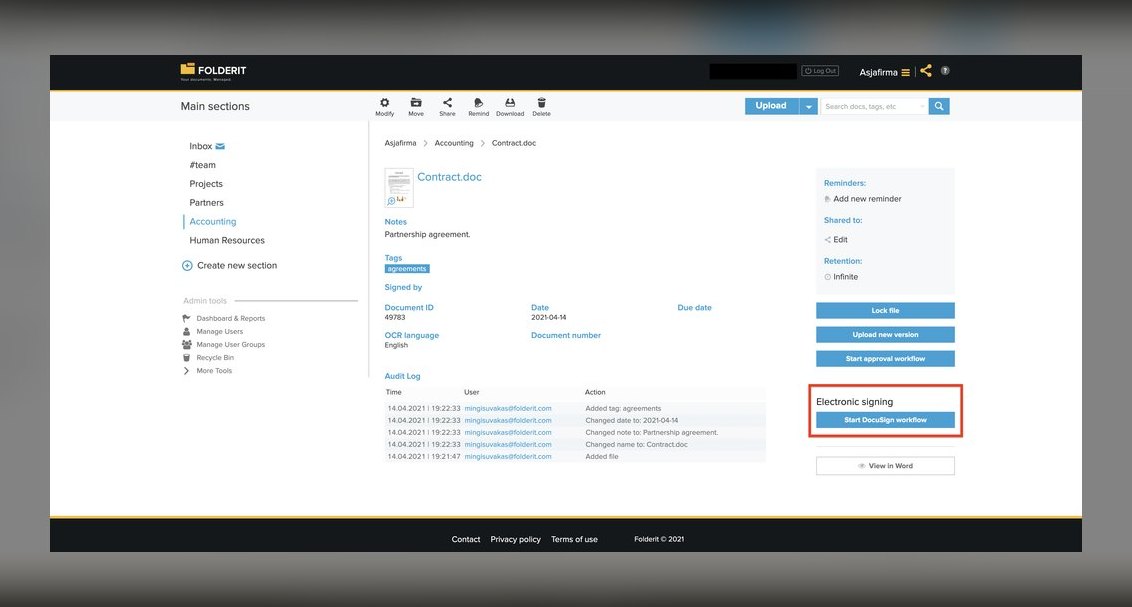 pulse-tech-stacksTop 10 Document Management Systems for Government Contractors in 2027
 pulse-tech-stacksTop 10 Cross-Platform Tools for EdTech Mobile Apps in 2027
 pulse-tech-stacksTop 10 Tech Stack Recommendations for Fintech Startups in 2024
 pulse-tech-stacksTop 10 Developer Tools for Backend Engineers in Fintech in 2027
 pulse-tech-stacksA Serverless Architecture Stack for Early-Stage Fintech Startups
 pulse-tech-stacksRecommended Hardware and Software Stack for VFX Artists