
The Edge Computing Stack for Autonomous Drone Inspections in 2027
 Curated byKory White · Fractional CRO · Maryland
 PULSEKNOWLEDGE LIBRARY
Quality
Certified
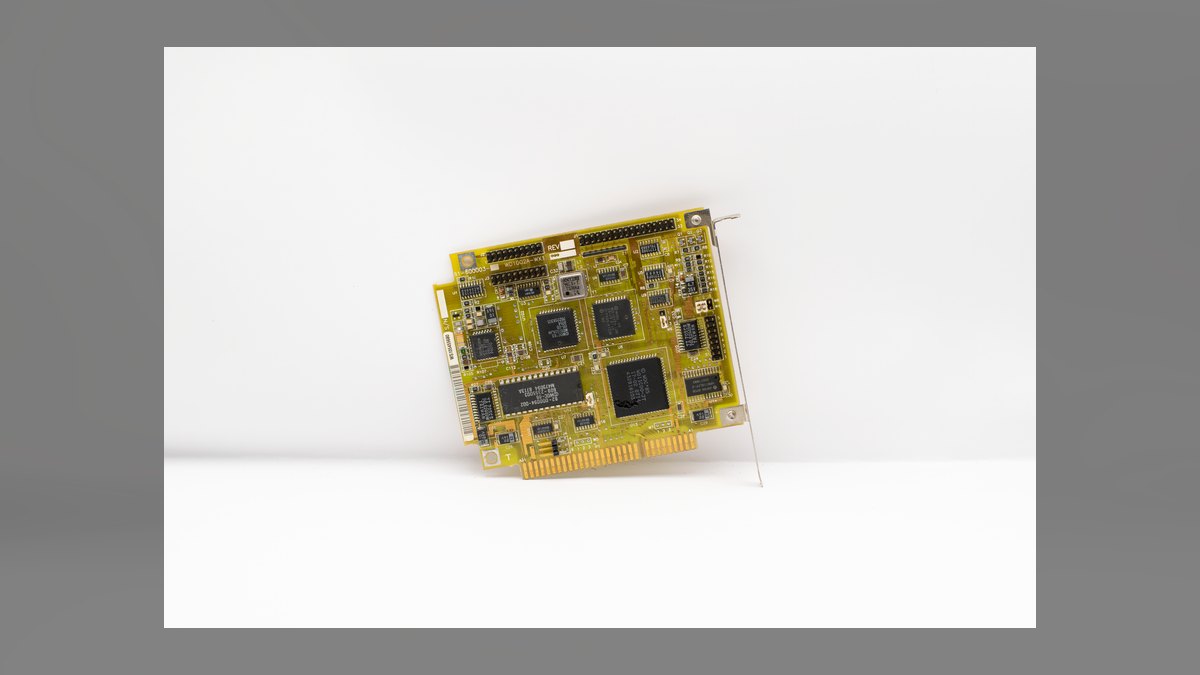
The 2027 edge computing stack for autonomous drone inspections runs perception and decision-making onboard rather than in the cloud: an embedded GPU or NPU module, a real-time Linux base, ROS 2 middleware over DDS, quantized vision models for defect detection and obstacle avoidance, and local storage that syncs compressed findings to a ground gateway afterward.
What the edge inspection stack actually is and why the architecture changed
An autonomous drone inspection is a mission where the aircraft flies a route, captures sensor data, decides in flight what matters, and lands with usable findings — without a pilot on the sticks and without a live operator interpreting a video feed. Every one of those verbs has a latency budget attached to it, and that is the entire reason the compute moved onto the airframe.
The older architecture streamed video to a ground station or to a cloud endpoint, ran inference there, and sent commands back. That design has three failure modes that show up immediately in the field. First, link budget: a substation, a refinery deck, a wind turbine nacelle, or a bridge underside is exactly where RF gets ugly — steel structures, tall towers, and remote sites mean cellular coverage is intermittent and line-of-sight radio drops behind obstacles. Second, round-trip latency: even on a good LTE link, a video frame that has to travel to a regional data center and back is fighting encode time, network transit, queueing, inference, and decode time. Third, bandwidth cost: a single inspection flight capturing high-resolution stills plus thermal plus point cloud generates gigabytes, and streaming all of it live is both slow and expensive.
Edge computing inverts the flow. The drone captures, processes, and decides locally. Only the results — detections, anomalies, geotagged crops, compressed logs, a downsampled map — travel to the cloud, and they can travel after landing over Wi-Fi or Ethernet instead of over a metered cellular link mid-flight. The word Autonomous in "autonomous inspection" is functionally a statement about where the compute lives: an aircraft that must ask a remote server what to do next is teleoperated with extra steps.
There are two distinct workloads on the airframe and they have different requirements, which is the first thing practitioners get wrong when they size hardware. The safety-critical loop — visual-inertial odometry, obstacle detection, collision avoidance, position hold — has to run at a hard, deterministic frame rate because a missed deadline is a crash. The inspection loop — corrosion classification, crack detection, thermal anomaly scoring, component recognition — is soft real-time; if a frame is dropped, the payoff is a slightly less complete report, not a broken airframe. Good stacks physically or logically separate these: the flight-critical path gets guaranteed cycles, and the analytics path runs on whatever headroom remains.

The "edge" in 2027 is also not a single tier. It is at minimum two, often three:
- On-aircraft compute. The embedded module riding the drone. Constrained by mass, power draw, and thermal dissipation. Runs the safety loop and the first pass of detection.
- Local edge gateway. A ruggedized box in a truck, a dock, or a plant network closet. It has wall power and real cooling, so it runs the heavier models — high-resolution segmentation, photogrammetry, multi-flight reconciliation — on data pulled off the aircraft immediately after landing or streamed when the link is good.
- Cloud. Fleet management, model training, historical trending across inspection cycles, and over-the-air model distribution. Not in the control loop at all.
Why it matters commercially: the unit economics of inspection are labor economics. A manual bridge or tower inspection means rope access technicians, scaffolding, or a bucket truck, plus a road or asset shutdown. The drone's value proposition is not that it flies — it is that it removes the human from the hazard and shortens the outage window. But if the aircraft still needs a skilled pilot per flight plus an analyst reviewing hours of footage afterward, you have traded one labor cost for two. Edge autonomy is what collapses that: one operator supervising several aircraft, and a report that arrives in minutes instead of days because the classification already happened in the air.
The step-by-step process from takeoff to report
Here is the actual sequence a well-built stack executes, layer by layer, with the design decision at each step.

Step 1 — Mission definition. The route is defined before launch, typically as a set of waypoints plus per-waypoint capture actions (gimbal angle, sensor selection, standoff distance, overlap percentage). For a repeat inspection, the route is the *same* route as last cycle, because change detection between cycles is far more valuable than an isolated snapshot. This is why RTK/PPK positioning matters: centimetre-class positioning lets you re-fly the identical camera stations, so this quarter's image of a weld can be diffed against last quarter's.
Step 2 — Sensor capture. Sensors run at their native rates and each feeds a different consumer. RGB stills at high resolution feed the defect models and photogrammetry. A lower-resolution, higher-frame-rate stream feeds odometry and obstacle avoidance. Thermal feeds electrical and insulation analysis. LiDAR, when carried, feeds geometric reconstruction and gives obstacle sensing that does not care about lighting. IMU and GNSS feed the state estimator. Time synchronization across these is a first-class engineering problem, not an afterthought — a thermal hotspot is only actionable if you can say precisely which physical component it sits on, which requires the thermal frame, the RGB frame, and the pose estimate to share a common clock.
Step 3 — Preprocessing. Debayering, undistortion, resizing, normalization. This is boring and it is also where naive stacks lose most of their throughput, because they do it on the CPU. On modern embedded modules the image signal processor and hardware video encoders exist precisely to keep this off the general-purpose cores. Getting preprocessing onto fixed-function silicon frequently buys more effective throughput than swapping to a bigger model accelerator.
Step 4 — State estimation and the safety loop. Visual-inertial odometry fuses camera and IMU to estimate pose, typically fused further with GNSS when available and relied on alone when it is not — which is the normal condition under a bridge deck, inside a boiler, or between storage tanks. Obstacle detection produces an occupancy representation, the local planner produces a collision-free trajectory toward the next waypoint, and the flight controller executes it. This is the loop with the hard deadline.
Step 5 — Inspection inference. Detection and segmentation models run on captured frames. In practice this is a cascade, not a single model: a cheap, fast detector screens every frame for "is there anything here at all," and only frames that trip the screen get passed to a heavier classifier or segmentation model. The cascade is what makes the compute budget work — you cannot run a large segmentation network on every frame of a flight, but you can run it on the two percent of frames that a lightweight screener flags.
Step 6 — Onboard triage and adaptive behavior. This is the step that separates an autonomous system from an expensive camera. When the inspection model flags a candidate defect with high confidence, the mission logic can react: halt, close in for a higher-resolution capture at shorter standoff, capture from a second angle, then resume the route. That closed loop is only possible because the inference happened onboard — a cloud round trip means the aircraft has already flown past the target.
Step 7 — Local persistence. Everything is written to onboard storage: full-resolution originals, model outputs, poses, telemetry. Originals are never discarded in flight, because a model revision six months later may need to re-score old imagery. Metadata is indexed locally so the post-flight sync can transfer findings first and bulk imagery second.
Step 8 — Offload and reconciliation. On landing or docking, the aircraft dumps to the edge gateway over a high-bandwidth local link. The gateway runs the heavy pass: photogrammetric reconstruction, cross-frame deduplication (the same crack seen in eleven overlapping frames is one finding, not eleven), severity scoring, and comparison against prior cycles.
Step 9 — Report and sync. The gateway pushes structured findings to the cloud — defect records with location, severity, imagery, and trend history — while bulk raw data either stays local or syncs on a slower schedule. Asset management or work-order systems consume the findings via API so a flagged defect becomes a maintenance task without a human retyping it.
Step 10 — Model lifecycle. Confirmed and rejected findings feed back as labels. Retraining happens in the cloud; validated models are pushed back down over the air. This loop is the compounding asset — each inspection cycle makes the next one more accurate, and a fleet of aircraft inspecting similar assets shares that improvement.
Costs, timelines, and the ranges that actually govern the build
Budget conversations on edge inspection programs go wrong because people price the aircraft and ignore everything around it. Here is the honest shape of the spend, expressed as ranges and ratios rather than invented invoice numbers — treat these as planning brackets to validate against live quotes, since hardware pricing moves.
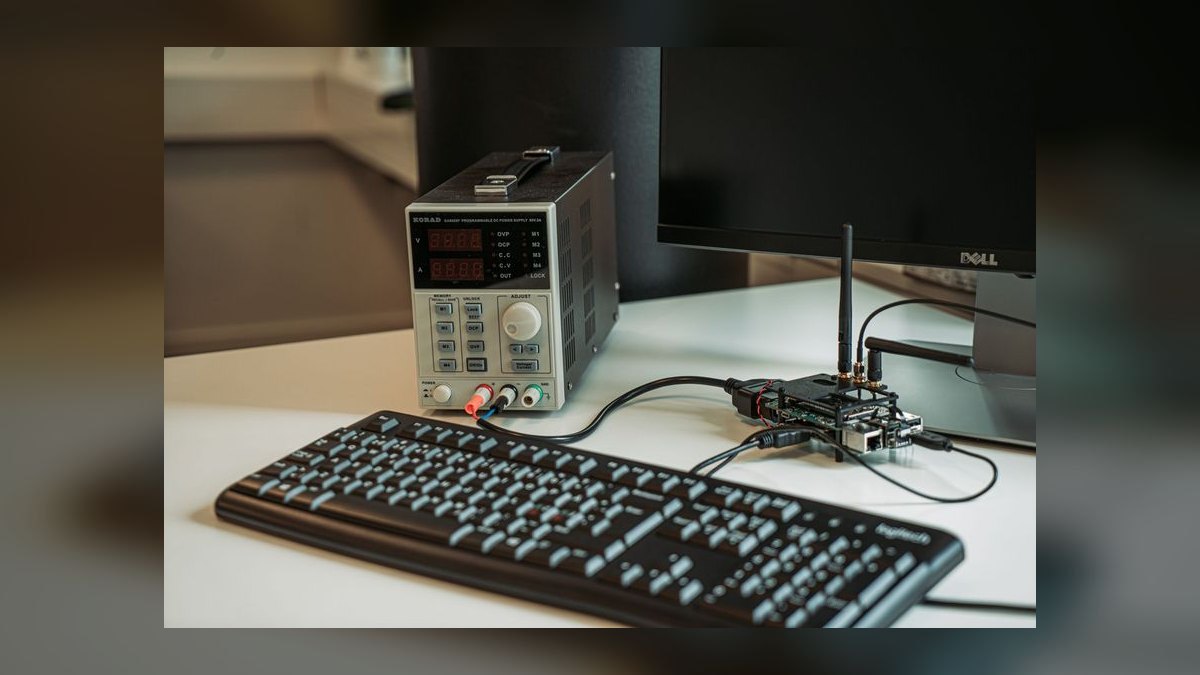
Compute module. Embedded AI modules for airborne use span a wide band. Entry-tier modules suitable for a single lightweight detector and basic odometry sit at the low hundreds of dollars per unit. Mid-tier modules that comfortably run a detection cascade plus VIO land in the high hundreds to low thousands. Top-tier modules with substantially more accelerator throughput reach several thousand per unit. The relevant number is not the module price, though — it is dollars per usable watt, because every watt of compute is a watt not spent on flight time.
Power and endurance, the real constraint. This is the trade that dominates airborne edge design. A multirotor's endurance is a direct function of mass and power draw. Adding a 15–30 W compute payload plus its heatsink to a small airframe can cost a meaningful share of flight time. On a larger industrial airframe with a bigger battery, the same payload is a smaller proportional hit. The design rule: measure endurance with the payload installed and running at full inference load, not idle on the bench — idle draw understates real consumption substantially, and thermal throttling under sustained load turns a benchmarked frame rate into a much lower sustained one.
Thermal. An airborne edge module has one advantage — propwash provides forced convection — and one severe disadvantage: you cannot bolt on a large heatsink without paying mass and drag. Expect to spend real engineering time on the thermal solution, and expect summer field conditions to expose a design that passed in a climate-controlled lab. A module that sustains its rated throughput at 20 °C ambient and throttles at 40 °C is a module that works in testing and fails in July.
Sensors. RGB is cheap relative to everything else. Radiometric thermal — the kind that reports actual temperature per pixel rather than a false-color picture — is substantially more expensive and is non-negotiable for electrical and thermal-envelope inspection. LiDAR is the most expensive single payload line and should be justified by a specific need: geometry capture in poor lighting, dense vegetation penetration, or reliable obstacle sensing in visually degraded conditions. Many inspection programs do not need it and buy it anyway.
Software and integration. The most consistently underestimated line. Middleware integration, sensor time-sync, model training and validation, fleet management, and the connection into an existing asset-management system typically dwarf hardware cost on a first deployment. A useful planning heuristic: if hardware is one unit of cost on the pilot program, integration and software are several.
Data labeling. Defect models need domain-specific labeled data. Generic pretrained detectors do not know what a specific corrosion grade looks like on a specific coating system. Budget for a labeling effort measured in thousands of annotated images per defect class, and budget for the domain expert time to adjudicate ambiguous cases — the expert hours are usually the binding constraint, not the annotation tooling.
Timeline. A realistic sequence for a first industrial deployment: several weeks to define the inspection use case precisely and gather baseline imagery; a couple of months to stand up the hardware and middleware integration and prove the safety loop in a controlled environment; two to four months of data collection and model iteration to reach acceptable precision and recall on the target defect classes; then a supervised operational period where every autonomous finding is reviewed by a human before the system is trusted unsupervised. Programs that try to compress this to a quarter typically end up with a system that flies autonomously but whose findings nobody trusts, which is the same as not having it.
Regulatory timeline. Genuinely autonomous operation usually means beyond-visual-line-of-sight, and BVLOS approval is a process with its own clock that runs independently of your engineering clock. Start it early and in parallel. A stack that is technically ready and legally grounded is worth nothing.
Where the return actually comes from. Model the savings against the *displaced* method. If the baseline is rope access or a bucket truck plus an asset shutdown, the savings per inspection are large and the payback can be fast. If the baseline is a technician with binoculars from ground level, the drone's advantage is data quality and repeatability rather than direct cost, and payback is slower but the trending data is more valuable. Be honest about which one you are in — the second case is a real business case, just a different one.
Where teams get the edge stack wrong
Sizing compute from a benchmark number. Published throughput figures are peak, on an optimized model, at a favorable precision, with adequate cooling. Your actual pipeline includes preprocessing, memory transfers, multiple concurrent models, the odometry stack, logging, and telemetry, at ambient temperatures that trigger throttling. Prototype with your real pipeline on the candidate module before committing to an airframe design around it.
Skipping quantization and pruning. A model trained at full precision and deployed unoptimized wastes most of the accelerator. Post-training quantization to lower precision, graph optimization through a vendor runtime, and pruning of unused capacity routinely deliver large throughput gains for small accuracy loss. The discipline is to measure accuracy on your own validation set after each optimization step, not to assume the loss is negligible.
Treating middleware as free. ROS 2 over DDS is the standard for good reasons — mature tooling, a large ecosystem, real quality-of-service controls — but default settings are not tuned for a constrained airborne node. Large image messages serialized and copied between processes will eat CPU that the safety loop needs. Intra-process communication, zero-copy transports, and appropriate QoS profiles per topic are configuration work you must actually do. Reliable delivery on a high-rate video topic is a common and expensive misconfiguration.
No separation between safety and analytics. If the defect model and the obstacle-avoidance model contend for the same accelerator without priority, a heavy inference call can starve the control loop. Either separate them onto different compute, or enforce strict scheduling priority and a hard budget for the analytics path.

Ignoring sensor time synchronization. Findings that cannot be precisely localized to a physical component are findings a maintenance planner cannot act on. Hardware-triggered capture and a shared clock across sensors are worth the integration effort.
Optimizing recall without a plan for false positives. A model tuned to miss nothing produces a report full of noise, and after two cycles of noise the inspectors stop reading it. Set the operating threshold against the cost asymmetry of your actual asset: a missed structural crack on a critical member is catastrophic and warrants heavy over-flagging; a missed cosmetic surface blemish is not. Tune per defect class, not globally.
No versioning of models against findings. When a finding is disputed six months later, you need to know which model version and which weights produced it. Every detection record should carry the model version, the firmware version, and the calibration state. Without that, you cannot audit and you cannot cleanly attribute a regression after an over-the-air update.
Rolling model updates to the whole fleet at once. An over-the-air update that degrades detection on a specific asset type, pushed simultaneously to every aircraft, corrupts an entire inspection cycle. Canary a small subset, compare findings against the prior version on overlapping data, and only then roll wide.

Underestimating security. The aircraft holds imagery of critical infrastructure and connects to enterprise networks. Signed firmware, encrypted storage at rest, mutual authentication between aircraft and gateway, and a hardware root of trust are baseline. Treat the aircraft as an untrusted endpoint on your network, because physically it is one — it lands in places you do not control.
Building bespoke where a standard exists. Custom middleware, custom message formats, and a custom flight stack all mean you own maintenance forever and cannot hire for it. Deviate from the standard ecosystem only where you have a defensible reason.
A decision framework for choosing your tier
The right stack is a function of three variables: the required latency of the safety loop, the complexity of the defect being detected, and the reliability of your connectivity. Work through them in that order.
Start with connectivity, because it eliminates options fastest. If your inspection sites have reliable, high-bandwidth connectivity and your flights are within visual line of sight with a pilot available, you may not need heavy onboard inference at all — capture on the aircraft, process on a gateway or in the cloud, and spend your budget on sensors instead. The moment sites are remote, RF-hostile, or the operation is beyond visual line of sight, onboard compute becomes mandatory and the question shifts to how much.

Then size against defect complexity. Detecting a large, high-contrast, well-lit anomaly — a missing component, a gross thermal hotspot, an obvious structural gap — is a lightweight detection problem that a modest module handles comfortably. Detecting fine-grained defects — hairline cracks, early-stage corrosion under coating, subtle surface degradation — needs high-resolution input and heavier segmentation models, which pushes you up a compute tier or pushes the heavy pass to the gateway.
Then decide what runs where. The default that works for most programs: safety loop and the lightweight screening detector onboard; heavy segmentation, reconstruction, and cross-cycle comparison on the ground gateway; training, trending, and fleet orchestration in the cloud. Move work onboard only when the mission logic must react to it in flight.
Build versus buy. An integrated commercial platform gives you a validated airframe, a supported flight stack, and a working autonomy baseline immediately — at the cost of limited customization and vendor dependency. A modular build on a development kit gives you full control of the model pipeline and sensor selection — at the cost of owning integration, thermal design, safety validation, and long-term maintenance. Choose integrated if inspection is a tool for your business; choose modular if the inspection stack *is* your business or the defect class is genuinely novel.
One more filter: procurement and data residency. For public-sector, utility, and defense-adjacent work, airframe origin and data handling requirements can constrain vendor choice before any technical criterion applies. Establish those constraints at the start of vendor evaluation, not after a successful pilot.
Related questions
How much flight time does onboard compute cost?
It depends on airframe size. A compute payload drawing tens of watts is a significant fraction of a small multirotor's total power budget and can noticeably shorten endurance; on a larger industrial airframe the proportional hit is smaller. Always measure endurance with the payload under full inference load.
Can existing drones be retrofitted with edge compute?
Often yes, if the airframe exposes a payload port with adequate power and a data interface, and if the mass budget allows. Retrofitting is easiest on platforms with documented payload SDKs. Retrofitting a closed consumer airframe with no payload interface is usually not practical.
Does the drone need connectivity during an autonomous inspection?
For the inspection itself, no — that is the point of onboard compute. Connectivity is still typically required for command-and-control links, airspace awareness, and regulatory compliance, which are separate requirements from the perception and analytics pipeline.
How accurate do defect models need to be before you trust them?
There is no universal threshold. Set it against the cost asymmetry of the specific defect: safety-critical structural findings warrant deliberate over-flagging and human review, while cosmetic findings can tolerate misses. Run a supervised period where humans review every finding before removing that review.
What happens if the model fails mid-flight?
The safety loop and the inspection loop must be independent. If the defect model crashes or times out, the aircraft should continue flying its route safely on the odometry and obstacle-avoidance path and log the gap. An analytics failure must never become a flight failure.
FAQ
Why does inspection compute need to be on the edge rather than in the cloud?
Three reasons compound. Latency: obstacle avoidance and in-flight adaptive capture cannot tolerate a network round trip. Connectivity: inspection targets are frequently in RF-hostile environments — inside structures, behind steel, at remote sites — where a live link is unreliable by nature. Bandwidth and cost: a single flight generates gigabytes of sensor data, and streaming all of it live over a metered connection is slow and expensive. Processing locally and syncing only findings inverts that economics entirely.
What is the difference between the safety loop and the inspection loop?
The safety loop — state estimation, obstacle detection, local planning, flight control — has hard real-time deadlines because a missed deadline risks the aircraft. The inspection loop — defect detection, classification, segmentation — is soft real-time; a dropped frame costs a slightly less complete report. They should be isolated in scheduling or in hardware so a heavy inference call can never starve the control path.
How do models get updated on a deployed fleet?
Through an over-the-air pipeline: validated findings from prior inspections feed retraining in the cloud, the new model is validated against a held-out set, then pushed to aircraft. The critical discipline is canary deployment — roll to a small subset first, compare its findings against the previous version on overlapping data, and only then roll fleet-wide. Every detection record should carry the model version that produced it.
Is LiDAR necessary for autonomous drone inspection?
Not always. LiDAR earns its cost when you need reliable geometry in poor or variable lighting, obstacle sensing in visually degraded conditions, or dense structural reconstruction. Many inspection programs — particularly surface defect detection on well-lit assets — are served adequately by RGB photogrammetry plus thermal at a fraction of the payload cost and mass. Justify it against a specific requirement rather than buying it by default.
What is the most commonly underestimated cost in an edge inspection program?
Software integration and data labeling, by a wide margin. Hardware is quotable and visible; sensor time synchronization, middleware tuning, defect model training, validation, fleet management, and the connection into an existing asset-management system are none of those things. On a first deployment, expect integration and software effort to substantially exceed hardware spend, and expect domain-expert time for label adjudication to be the binding constraint.
How do you keep an inspection drone from becoming a security liability?
Treat it as an untrusted endpoint, because it physically lands in places you do not control. Baseline controls: signed firmware with a hardware root of trust, encrypted storage at rest for captured imagery, mutual authentication between aircraft and ground gateway, encrypted transport, and network segmentation so the docking or offload point is not sitting on a flat corporate network. Also settle data residency requirements before vendor selection, not after.
Sources
- NVIDIA Jetson embedded modules — https://developer.nvidia.com/embedded/jetson-modules
- ROS 2 documentation — https://docs.ros.org/en/rolling/index.html
- PX4 open source autopilot — https://docs.px4.io/main/en/
- ArduPilot documentation — https://ardupilot.org/ardupilot/
- FAA unmanned aircraft systems — https://www.faa.gov/uas
- EASA civil drones — https://www.easa.europa.eu/en/domains/civil-drones
- Ubuntu Core — https://ubuntu.com/core
- Open Robotics / Open Source Robotics Foundation — https://www.openrobotics.org/
- ONNX Runtime — https://onnxruntime.ai/
- Qualcomm robotics platforms — https://www.qualcomm.com/products/internet-of-things/robotics
Related on PULSE
- [The Zero-Trust Edge Stack for Remote Healthcare Clinics in 2027](/knowledge/tk0528)
- [The Mesh-Network Stack for Agricultural Drone Swarms in 2027](/knowledge/tk0545)
- [The Python and PyTorch Stack for Computer Vision in Autonomous Vehicles](/knowledge/tk0375)
- [The AI-First Sales Stack: Autonomous SDR Agents and Real-Time Coaching in 2027](/knowledge/tk0479)
This page will be disappearing soon. Save it to your device for $1 — or read it free while it is here.
@Kory-White- · if Venmo asks, the last 4 of my number are 2012
This page is gone.
This one is off the shelf now. $1 keeps it on your phone for good — the whole page, pictures and diagrams included.
 pulse-tech-stacksTech Stack for Summer Camps in 2027
 pulse-tech-stacksWhat is the best tech stack for a salon or spa in 2027?
 pulse-tech-stacksWhat software stack should a Accounting & Bookkeeping business run in 2027?
 pulse-tech-stacksWhat software stack should a IT Services / MSP business run in 2027?
 pulse-tech-stacksThe Head-to-Head Stack: Commercial Real Estate Brokerage vs. Property Management Platform in 2027
 pulse-tech-stacksWhat is the best tech stack for a roofing contractor in 2027?
 pulse-tech-stacksWhat is the best tech stack for a veterinary practice in 2027?
 pulse-tech-stacksTop 10 Tech Stack Comparisons for Multi-Location Retailers in 2027
 pulse-tech-stacksWhat is the best tech stack for a commercial security & alarm monitoring company in 2027?
 pulse-tech-stacksWhat is the best tech stack for a tutoring or learning center in 2027?