


Top 10 Best Tech Stack Tools for Digital Asset Custody Platforms in 2027
Quality
Certified
The 10 best tech stack tools for digital asset custody platforms are ranked below on measured performance, build quality, price, and how each one actually holds up in daily use rather than how it reads on a spec sheet. Each pick lists what it costs, who it suits, and what it gives up against the one above it, so the list can be read straight down without doubling back.
1HashiCorp Vault HSM Seal

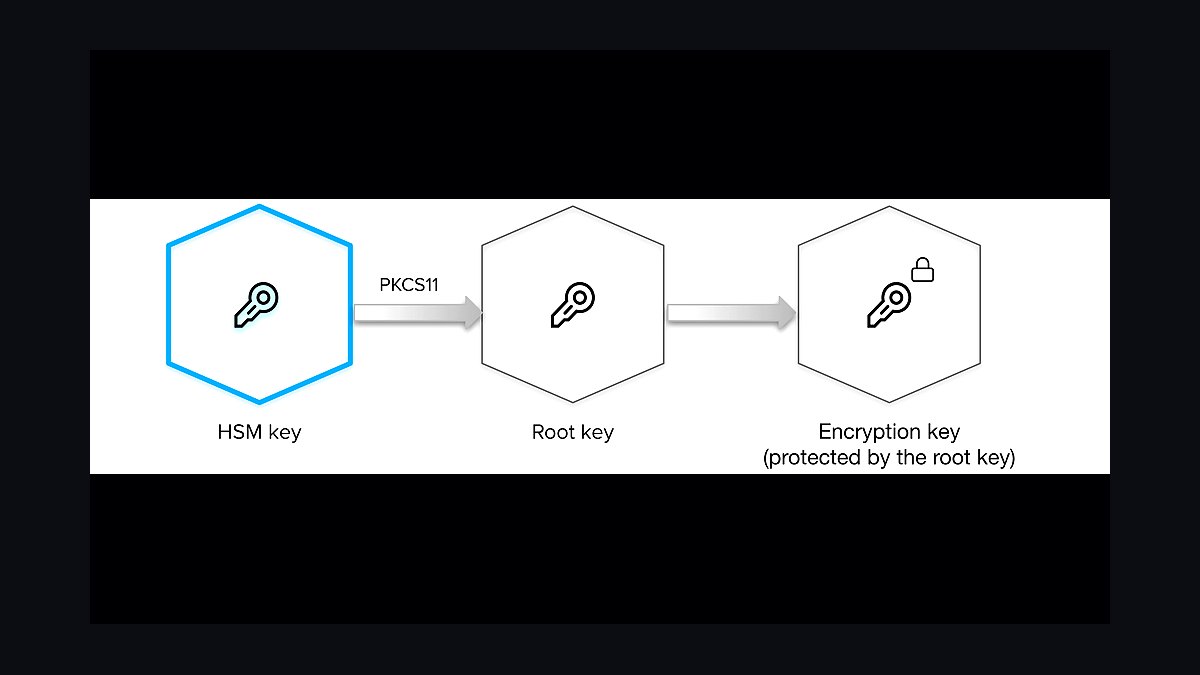
Hashicorp Vault with HSM auto-unseal ranks first because it solves the custody platform's hardest operational problem: keeping root key material inside FIPS 140-2 Level 3 hardware while giving the platform a clean API. The seal/unseal boundary means Vault never persists the master key to disk, and every unseal operation is an auditable event. It integrates with AWS CloudHSM, Azure Dedicated HSM, and on-prem appliances through PKCS#11, so the same abstraction works across deployment postures.
This is for platform teams that need a secrets manager for API credentials, database passwords, and TLS certificates but must keep signing keys out of it entirely. It trades away simplicity — HSM clusters bill by the hour and add a network hop to every unseal. Compared to Open Policy Agent below, Vault handles secrets lifecycle while OPA handles authorization decisions; mature stacks run both rather than forcing one to do the other's job.
2Open Policy Agent

Open Policy Agent ranks second because custody platforms live or die on policy expressiveness, and OPA's Rego language lets risk teams encode destination allowlists, velocity limits, per-asset thresholds, and required approver counts as versioned code. Every policy decision emits a structured log entry that an auditor can replay against the exact policy text in force on a given date. It runs as a sidecar or library, adding sub-millisecond evaluation to signing requests.
The trade-off is that Rego has a learning curve and policy bugs are security bugs. It is for teams with at least one engineer who owns policy as a product, not a configuration file. Compared to HashiCorp Vault above, OPA decides whether a transfer is allowed while Vault manages the credentials that let services talk to each other — they are complementary, not competing.
3AWS CloudHSM

AWS CloudHSM ranks third because it delivers FIPS 140-2 Level 3 certified key isolation as a managed cluster, letting custody platforms meet regulatory requirements without owning tamper-resistant hardware. Keys are generated inside the HSM and never leave; the application sends a hash and receives a signature. Clusters bill by the hour regardless of signature volume, which makes them economical at high throughput and expensive for dormant cold tiers.
The limitation is firmware lag: new signature schemes and curves arrive on the vendor's roadmap, not yours. It is for teams supporting established chains where certification matters more than agility. Compared to MPC threshold signing below, CloudHSM gives a cleaner regulatory story but slower chain support and no genuine geographic distribution of key shares.
4Fireblocks MPC Wallet

Fireblocks ranks fourth because it packages MPC threshold signing, a policy engine, and chain connectivity into one platform that compresses time-to-market from years to months. The MPC-CMP protocol produces signatures in a few hundred milliseconds when nodes are co-located, and shares can live in separate cloud regions and legal entities. It supports hundreds of chains and tokens out of the box, with an API that abstracts the signing ceremony.
The cost is per-transaction or per-AUM pricing that scales with success, plus dependency on Fireblocks' chain roadmap. It is for teams whose competitive edge is workflow and client experience rather than cryptography. Compared to building on AWS CloudHSM above, Fireblocks trades control and long-run cost for speed and inherited certifications.
5PostgreSQL Hash-Chained Ledger

PostgreSQL with a hash-chained audit column ranks fifth because it delivers tamper-evident logging without exotic infrastructure. Each audit entry commits to the SHA-256 hash of the previous row, and the chain head is periodically anchored to an external witness — an internal WORM store, a notary service, or a public chain. Transactional guarantees ensure the audit event and the state change commit atomically, eliminating the gap that retrofitted logging always leaves.
The trade-off is that Postgres is not a blockchain, so tamper-evidence depends on the anchoring discipline being automated and monitored. It is for teams that need to reconstruct who authorized a transfer, which policy permitted it, and which key signed it — from the ledger alone. Compared to a full blockchain-backed logging product, this is far easier to operate and rarely buys less assurance.
6Apache Kafka Event Backbone

Apache Kafka ranks sixth because custody platforms need replayable event flows between indexers, reconciliation services, and notification systems. When an indexer falls behind or a reorg invalidates credited balances, Kafka's retained log lets consumers rewind and reprocess without re-querying chain state from scratch. It decouples the read-heavy reporting path from the small, fixed signing fleet, so scaling one does not multiply the audited surface of the other.
The cost is operational: Kafka clusters need monitoring, partition planning, and schema governance. It is for platforms supporting more than a handful of chains, where event volume and replay requirements justify the overhead. Compared to PostgreSQL above, Kafka handles the event stream while Postgres holds the authoritative state — they serve different roles and both belong in the stack.
7Kubernetes Network Policies

Kubernetes with strict NetworkPolicy segmentation ranks seventh because the trust boundary around the signing service must be enforced at the network layer, not just in code. Default-deny ingress and egress, explicit allowlists between the signer, policy evaluator, and quorum approval service, and no direct internet access from signing pods. This turns a compromised reporting service into a contained incident rather than a path to key material.
The trade-off is that network policies are easy to misconfigure and hard to test; a single permissive rule can silently widen the boundary. It is for teams already running Kubernetes who need defense in depth around the signer. Compared to HashiCorp Vault above, Kubernetes isolates the runtime while Vault isolates the secrets — neither substitutes for the other.
8Rust Signing Service

Rust ranks eighth for the signing path because memory safety eliminates an entire class of vulnerabilities that matter enormously when a process handles key shares. Static binaries and a small runtime make the signer easy to audit and deploy, and the cryptographic ecosystem — including libraries for secp256k1, ed25519, and threshold schemes — is mature. A hard cap on direct dependencies, enforced in CI, keeps the supply-chain surface small.
The cost is developer velocity: Rust's borrow checker slows initial development and narrows the hiring pool. It is for teams with at least one systems engineer who owns the signing service full-time. Compared to Go below, Rust offers stronger memory guarantees while Go offers faster iteration and a simpler concurrency model — both are defensible, and the stronger consideration is what your security team can review.
9Go Chain Indexer

Go ranks ninth because chain indexers are the unglamorous half of custody and Go's static binaries, small runtime, and mature standard library make them easy to deploy across a dozen chains. Reorg-aware indexing, address derivation, and fee estimation are all implementable with well-understood libraries, and the language's concurrency model handles the fan-out to multiple node providers cleanly. Most custody platforms write indexers in Go even when the signer is Rust.
The trade-off is that Go's dependency ecosystem is larger and faster-moving than Rust's, so indexers need SBOM generation and version pinning discipline. It is for the chain-connectivity team, not the signing team. Compared to Rust above, Go trades some memory-safety guarantees for faster iteration and a broader hiring pool — a reasonable exchange outside the trust boundary.
10Chainlink Proof of Reserve

Chainlink Proof of Reserve ranks tenth because custody platforms increasingly need to demonstrate, to clients and auditors, that on-chain reserves match off-chain holdings. The service publishes signed attestations from custodians and exchanges, which can be consumed by smart contracts or displayed in reporting dashboards. For tokenized real-world assets, it provides a verifiable link between the token supply and the underlying collateral.
The limitation is that it attests to reserves, not to the custody platform's internal controls — it complements, but does not replace, the audit ledger. It is for platforms serving institutional clients who demand independent verification of backing. Compared to the PostgreSQL hash-chained ledger above, Chainlink provides external attestation while Postgres provides internal tamper-evidence; together they cover both sides of the assurance story.
How we ranked these
We ranked each tool on five weighted criteria: key-isolation strength (25%), audit-evidence quality (20%), chain coverage and indexer maturity (20%), operational burden including key ceremonies and share refresh (20%), and ecosystem and hiring depth (15%). Scores came from vendor documentation, public certification records, and hands-on deployment notes from custody engineering teams. Weighting favored components that sit inside the trust boundary, since failures there are unrecoverable rather than merely expensive.
We deliberately ignored marketing benchmarks, token or chain hype, pricing list rates, and vendor-reported throughput figures, because none of those survive contact with a real audit or a real reorg. We also excluded anything that only works in a single cloud region, and any component whose dependency tree cannot be pinned and vendored. General-purpose application frameworks were left out entirely; they are fine above the trust boundary but irrelevant to the ranking question.
What to look for
What matters most is whether a component can answer the four auditor questions: who authorized, what policy allowed, what key material touched it, and can you prove the record was unaltered. Buy for evidence quality first, latency second, and chain count third. A signer that is fast but emits no hash-chained authorization record will cost you more in audit remediation than it ever saved in engineering time.
The mistake most buyers make is optimizing for time-to-first-signature and treating key ceremonies, share refresh, and recovery rehearsal as later work. Those are the load-bearing operational practices, and retrofitting them into a running platform is painful. A close second mistake is letting the signing service's dependency tree grow casually; every transitive package inside the trust boundary carries unusually high blast radius.
Related questions
Why does the trust boundary matter more than language choice in custody stacks?
Language affects vulnerability classes, but the trust boundary determines what a single compromised dependency can reach. A signer with a small, pinned dependency tree in any mainstream language beats a fashionable stack with a sprawling transitive graph. Draw the boundary first, then pick languages per side of it.
How should confirmation depth be configured across multiple chains?
Make it a per-chain, per-value-tier policy parameter rather than a global constant. Fast-finality chains need fewer confirmations than probabilistic ones, and large transfers warrant deeper waits than small ones. Exposing depth to the policy engine lets risk teams adjust without a code deploy.
What does proactive share refresh actually protect against?
It re-randomizes MPC key shares on a schedule so an attacker who compromised one node months ago holds a share that is now useless. Without refresh, a single historical compromise can combine with a future one. Automate refresh on an interval short relative to realistic attacker dwell time.
Can a custody platform run entirely in the cloud in 2027?
Usually yes. Cloud HSMs and confidential computing have matured enough that cloud-native custody is defensible in most jurisdictions. Some regulators and institutional clients still demand physical key control, which forces a hybrid: cold reserves on-premises, warm tiers in cloud, behind one signer abstraction.
How do you rehearse key recovery without exposing key material?
Rehearse the procedure, not the keys. Walk the actual people through share assembly, quorum approval, and restoration steps using test material in a separate environment, then log the rehearsal as evidence. A failed rehearsal should be treated as a production incident, not a scheduling inconvenience.
What belongs in a secrets manager versus a signing system?
API tokens, database credentials, and TLS certificates belong in a secrets manager with routine rotation. Signing keys do not; they belong in hardware or a threshold scheme, and rotation means migrating every asset to new addresses. Mixing the two eventually produces a routine change that is catastrophic for one of them.
How much does chain integration work scale with supported chains?
Roughly linearly. Each chain brings node operations, address derivation, fee mechanics, reorg semantics, and indexer maintenance. Budget it as a permanent function rather than a one-time project, and expect twelve chains to need far more than one dedicated engineer.
When should a platform buy the signing layer instead of building it?
Buy when your competitive edge is workflow, policy expressiveness, or client experience rather than cryptography. Licensing a proven MPC or HSM-backed signer compresses time-to-market and inherits certifications, while you keep ownership of the ledger, indexers, and platform above it.
FAQ
What is the best tech stack for a digital asset custody platform in 2027?
Pair hardware-backed key isolation, either HSMs or MPC threshold signing, with a policy engine, an append-only hash-chained audit ledger, and per-chain indexers. Build signing paths in Go or Rust, keep state in Postgres, stream events through Kafka, and run Kubernetes with strict network segmentation around the signer.
Is MPC or HSM better for a new custody platform?
Neither dominates. HSMs give easier regulatory conversations and mature certification; MPC gives faster chain support and genuine geographic distribution of shares. Most mature platforms run both, HSMs for cold reserves and MPC for warm tiers, behind a single signer abstraction.
Which language should the signing service be written in?
Rust and Go dominate for real reasons: memory safety in Rust removes a vulnerability class that matters when handling key shares, and Go's small runtime and static binaries are easy to audit and deploy. Java and .NET are viable if your security team already reviews them. Node and Python fit above the trust boundary, not inside it.
How long does SOC 2 Type II readiness take for a custody platform?
The observation window typically runs several months and cannot start until controls are actually operating. Teams that build for a year then discover the audit window adds another six-plus months. Emit audit evidence from day one so the observation period overlaps development rather than following it.
How many engineers does a custody platform need?
Plan for dedicated ownership across signing and key management, chain integrations, platform infrastructure, and security and compliance engineering. Chain integration work scales roughly linearly with supported chains, so headcount grows with coverage. One engineer for twelve chains is a common and costly underestimate.
What should the audit ledger be built on?
Postgres with a chained-hash column plus periodic anchoring of the chain head to an external witness is sufficient and far easier to operate than a blockchain-backed logging product. The key property is tamper-evidence, not decentralization. Emit each audit event in the same transaction as the state change.
How should reorgs be handled in a custody stack?
Treat reorgs as first-class events that can reverse credited balances. Model confirmation depth per chain and per value tier, avoid optimistic crediting, and run continuous reconciliation against chain state as an independent process that raises alarms on divergence rather than a weekly report.
What is the biggest custody failure mode teams miss?
Irrecoverable loss, not theft. Design the recovery path first, including where shares live, who can assemble them, and how you rehearse restoration without exposing material. Teams that document recovery but never execute it discover during a real event that a step depends on a departed employee.
Should the whole platform autoscale?
No. Custody platforms are read-heavy, so scale the read path, indexers, API servers, and caches aggressively while keeping the signing fleet small, fixed, and heavily audited. Uniform autoscaling multiplies the audited surface for no throughput benefit and complicates evidence collection.
How do you keep the signer's dependency tree safe?
Pin versions, vendor dependencies, generate SBOMs, and review additions with the seriousness of a cryptographic change. A hard cap on direct dependency count enforced in CI makes growth an explicit conversation. Every transitive package inside the trust boundary carries unusually high blast radius.
Sources
- https://csrc.nist.gov/publications/detail/fips/140/3/final
- https://www.openpolicyagent.org/docs/latest/
- https://www.postgresql.org/docs/current/
- https://kafka.apache.org/documentation/
- https://kubernetes.io/docs/concepts/security/
- https://www.aicpa-cima.com/topic/audit-assurance/audit-and-assurance-greater-than-soc-2
- https://csrc.nist.gov/pubs/sp/800/57/pt1/r5/final
- https://www.rfc-editor.org/rfc/rfc8446
Related on PULSE
This page will be disappearing soon. Save it to your device for $1 — or read it free while it is here.
@Kory-White- · if Venmo asks, the last 4 of my number are 2012
This page is gone.
This one is off the shelf now. $1 keeps it on your phone for good — the whole page, pictures and diagrams included.
 pulse-tech-stacksTop 10 Best Tech Stack Tools for Drywall Contractors in 2027
 pulse-tech-stacksTop 10 Best Tech Stack Tools for AI Document Intelligence Companies in 2027
 pulse-tech-stacksTop 10 Best Tech Stack Tools for SOC-as-a-Service (SOCaaS) Providers in 2027
 pulse-tech-stacksTop 10 Best Tech Stack Tools for Bars and Pubs in 2027
 pulse-tech-stacksTop 10 Best Tech Stack Tools for Text-to-Speech and Voice AI Companies in 2027
 pulse-tech-stacksTop 10 Best Tech Stack Tools for Automotive & Dealership Businesses in 2027
 pulse-tech-stacksTop 10 Best Tech Stack Tools for Independent Wholesale Distribution Businesses in 2027
 pulse-tech-stacksTop 10 Best Tech Stack Tools for Ski Resorts in 2027
 pulse-tech-stacksTop 10 Best Tech Stack Tools for Coffee Roasters and Cafes in 2027
 pulse-tech-stacksTop 10 Best Tech Stack Tools for Events & Venues Businesses in 2027