
How do I hire a fractional VP of Sales in Atlanta in 2027?
 Curated byKory White · Fractional CRO · Maryland
 PULSEKNOWLEDGE LIBRARY
Quality
Certified

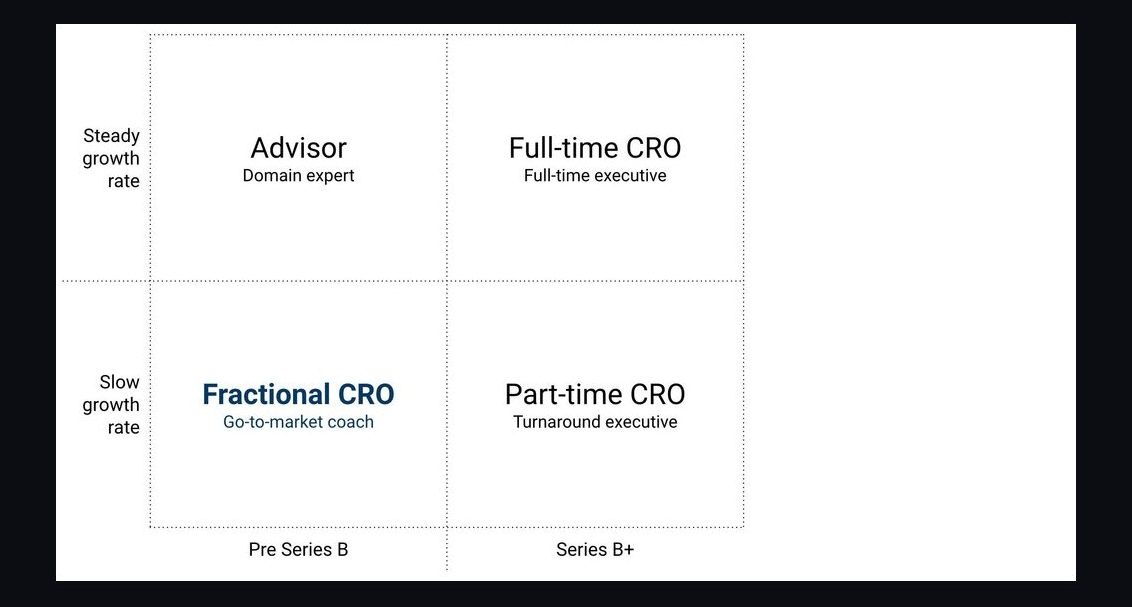
Hire a fractional VP of Sales in Atlanta by scoping the gap first — process build, manager coaching, or founder-led handoff — then sourcing through revenue-leader communities and referrals, vetting on pipeline diagnostics rather than headline revenue. Expect roughly 8–12 days per month, a three-to-six-month term, and a 30-day out clause.
The job this role is actually hired to do
Most founders start this search with the wrong framing. They think they are buying a person; they are actually buying a decision about which part of the revenue engine gets rebuilt in the next ninety days. A fractional VP of Sales is a scoped intervention, not a headcount reduction strategy, and the engagements that fail almost always fail because nobody wrote down what "done" looks like before the first invoice.
There are four distinct jobs that get bundled under the same title, and they are not interchangeable. The first is process construction: your founder has closed thirty deals on instinct, there is no stage definition, no exit criteria, no qualification framework, and nothing about the motion is repeatable by anyone whose name is not on the incorporation documents. That work is architecture. It looks like interviewing every closed-won and closed-lost account from the last four quarters, reverse-engineering what actually happened, writing stages that reflect the buyer's decision process instead of your internal wishful thinking, and rebuilding the CRM to enforce it.
The second job is manager development. You promoted your best rep. She is drowning. She still carries a quota, she has never run a one-on-one that wasn't a deal review, and she is coaching by telling people what she would do rather than diagnosing what they did. A fractional leader here is functioning as a player-coach's coach — sitting in on her one-on-ones, building her a call-review rubric, teaching her the difference between inspecting activity and inspecting progression. This is the highest-leverage version of the engagement and the one most often skipped because it is slow and unglamorous.

The third is founder-led sales handoff, which is really a psychology problem wearing an operations costume. The founder is the best closer in the building and every rep knows it. Deals stall until the founder joins the call. The fractional VP's actual work is manufacturing situations where the founder does not join, watching what breaks, and fixing those specific breakages until the founder's presence stops being load-bearing. That takes a quarter minimum and it requires the founder to tolerate losing deals they could have saved.
The fourth is interim coverage — your VP left, a search will take four months, and somebody has to run the forecast, keep the team from bleeding out, and hand a clean operation to the permanent hire. This is the most transactional version and the easiest to scope, because the deliverable is continuity rather than transformation.
Where this gets Atlanta-specific: the metro's dominant verticals shape which of these four jobs shows up most. Payments and fintech companies here tend to sell into procurement-heavy financial institutions with nine-to-fourteen-month cycles, so the process-construction job dominates — you cannot run those deals on instinct because instinct cannot hold a fourteen-month pipeline in its head. Supply-chain and logistics software companies tend to have technical founders selling to operations buyers, and the founder-handoff job dominates there. Health-tech faces a compliance layer that makes the manager-development job urgent, because reps who freelance on claims about data handling create liabilities that do not show up until legal reads the recording.
One adjacent workflow worth naming: hiring a fractional VP of Sales usually surfaces that you also have a RevOps gap. The leader arrives, asks for pipeline-by-stage conversion over the last six quarters, and discovers nobody can produce it because stage history was never tracked and opportunities get edited rather than progressed. Budget for that. Roughly half of these engagements spend the first month doing data archaeology that would have been unnecessary with a competent operations layer, and some of the strongest hires will tell you plainly that you need an analyst before you need them.

How it fits the RevOps stack
A fractional sales leader does not sit on top of your stack — they sit inside a specific loop within it, and understanding that loop tells you what access to grant and what to stop expecting.
The loop starts with your system of record. Whether that is Salesforce or HubSpot matters less than whether the object model reflects reality. A fractional VP's first genuine deliverable is usually a data credibility assessment: which fields are trustworthy, which are theater, and which are actively lying. Close date is nearly always theater in an unmanaged instance — reps push it a month at a time to keep deals off the aging report. Amount is often lying because it captures list price rather than expected value. Stage is the one that matters most and is corrupted most often, because reps advance stages to look busy rather than because a buyer did something.
Next in the loop is the conversation layer — call recording and analysis. This is where a fractional leader gets disproportionate value, because they can review forty calls in their first two weeks and form a diagnosis that would take a full-time hire two months of ride-alongs. If you have recordings, hand them over on day one. If you do not have recordings, buying that capability before the engagement starts is one of the highest-return preparations you can make, because it converts your fractional hours from discovery into intervention.

Then forecasting and pipeline inspection. A competent fractional VP will typically install a three-number discipline: commit, best case, and pipeline coverage against quota. Coverage ratios vary by motion — a high-velocity transactional team might run healthy at 3x while a complex enterprise motion needs 4x or more — and any candidate who quotes you a universal number without asking about your win rate and cycle length is reciting rather than thinking. The point of the discipline is not the numbers themselves but the weekly conversation they force.
Then enablement and content, which is usually the neglected leg. Your reps do not have a discovery framework, they have a demo. They do not have objection handling, they have improvisation. The fractional leader's job here is to write down what the best rep does and make it teachable.
Finally, compensation and territory, which is the lever nobody wants to touch mid-year and which frequently explains the behavior everyone is complaining about. If your reps ignore renewals, look at whether renewals pay. If they sandbag Q4, look at whether accelerators reset annually. Behavior follows the comp plan far more reliably than it follows the pep talk.

The critical structural point: a fractional leader should be installing each of these layers so your team owns them, not operating them so your team depends on them. If month five looks like month one — the fractional VP still runs the forecast call, still writes the pipeline review, still personally chases the stuck deals — you have not bought leadership, you have rented an expensive individual contributor. Ask in the interview how they measure whether the organization has absorbed their work. The good ones have an answer ready because they have been burned by clients who wanted dependency.
Pricing, engagement models, and typical ranges
Fractional pricing is set by national demand, not by Atlanta's cost of living, and this surprises founders who expect a regional discount. Strong fractional operators serve clients across time zones and their calendar is the scarce good. Your engagement competes against everything else they could be doing with those days.
The dominant structure is a monthly retainer tied to a committed number of days. Scope drives the number:

Strategy-weighted, roughly 8 days per month. The leader runs a weekly forecast and pipeline review, coaches the manager, builds process artifacts, and attends a monthly board or investor conversation. They are not on customer calls except as an escalation. This is the right shape when you have a functioning frontline manager who needs sharpening rather than replacing.
Player-coach hybrid, roughly 12 or more days per month. Everything above plus live deal work — joining discovery calls, running negotiations on your largest opportunities, sometimes carrying a small named-account list. This costs meaningfully more and is right when there is no manager layer at all and someone has to hold deals together while the process gets built.
Project-scoped fixed fee. A pipeline audit, a comp plan redesign, a territory carve, a sales-process rebuild — bounded deliverable, defined timeline, one price. This is often the smartest first purchase because it de-risks both sides. If the audit is sharp, you extend into a retainer with real information. If it is generic, you spent a fraction of what a bad six-month retainer would have cost you.
Interim full-time. Four or five days a week for a defined bridge period while you run a permanent search. Priced closest to a full-time equivalent, without equity or benefits, and usually the most expensive per month of the four.

Equity is uncommon in fractional arrangements and should be viewed skeptically when offered as a substitute for cash. Small advisory-style grants with standard vesting do appear at later-stage companies, typically as alignment on top of a retainer rather than in place of one. A candidate eager to trade most of their fee for equity is either very convinced about your company or very short on other clients — find out which.
Practical contract terms that protect you: a 30-day mutual out clause, monthly invoicing net-15 or net-30, and an explicit definition of what a "day" means. That last one prevents the most common billing dispute. Does a day mean eight hours of focused work, or does it mean being available across a calendar day? Does travel bill? Does an hour of Slack scattered across a Tuesday constitute a day? Write it down. Also specify who owns the work product — the frameworks, the CRM configuration, the enablement documents. Default assumption should be that you own everything created for you, and any candidate who resists that is planning to resell your process to your competitor.
One adjacent consideration: compare this spend honestly against the alternatives you are not pricing. A full-time VP of Sales in this market carries base, variable, benefits, equity, recruiting fees, and a ramp period during which they produce little. A bad full-time hire discovered at month seven costs the salary plus the seven months of team drift plus the second search. Against that, a three-month fractional engagement with a real out clause is cheap optionality — which is precisely why the model exists.

How to evaluate and shortlist
Revenue claims are the least useful signal in this entire process. Every candidate has scaled something from somewhere to somewhere, and the attribution is almost never clean. Evaluate on diagnosis instead.
Run a live diagnostic. Give a shortlisted candidate limited, read-only access to a sanitized slice of your pipeline data and forty-five minutes. Ask what they see. Strong candidates will immediately probe the things that do not add up — a stage with a suspiciously high conversion rate that suggests reps skip it, a cluster of close dates on the last day of the quarter, an average deal size that splits into two distinct populations nobody has separated. Weak candidates narrate the dashboard back to you.
Ask about a failed engagement. Not a hard client — a failure. What did they miss, when did they realize it, and what would they screen for now? Anyone who has done this work for more than two years has an engagement that did not land. A candidate with no failure story is either new to the model or not telling you the truth, and both are disqualifying.

Test the coaching, don't just discuss it. Play them a real recorded call from your team and ask what they would say to that rep on Monday. This separates the strategists from the operators fast. You are listening for specificity: a named moment in the call, what the rep did, what should have happened instead, and how they would get the rep to see it themselves rather than just being told.
Check references for cadence, not outcomes. Call former clients and ask narrow questions. Did you always know what they were working on? What did the weekly update look like? When they left, what did your team still know how to do? Did anything they built get abandoned within six months of their exit? That last question is the honest test of whether the work was installed or performed.
Probe the portfolio math. How many concurrent clients? What is the largest, and where would you rank in their priority order? A leader running six clients is running a practice, not an engagement, and you will get the leftovers. Three to four concurrent is typically the ceiling for real depth.

Red flags worth walking away from: guaranteed revenue outcomes in the first ninety days, which nobody can promise without knowing your market; refusal to work in your existing tools in favor of their own proprietary system, which is usually a lock-in play; a proposal that arrives before any discovery, meaning you are receiving a template; and vagueness about which specific deliverables land in which specific month.
On sourcing in Atlanta specifically: the fractional talent pool here is thinner than in San Francisco or New York, and a large share of leaders serving Atlanta companies are remote operators who travel in for key moments. That is usually fine — the work is mostly synchronous video and asynchronous documentation anyway. But if you genuinely require weekly on-site presence, say so in the first conversation, accept a smaller pool, and expect to pay for the constraint. Referral remains the highest-yield channel: ask your investors, your board, and founders one stage ahead of you who they used and, more usefully, who they would not use again. Professional communities for revenue leaders and RevOps practitioners are worth posting in, and the local startup ecosystem — accelerator networks, university-affiliated tech communities, and founder groups around the metro — generates warm introductions that cold outreach will not.
Buyer decision framework
Before you hire anyone, run the disqualification test, because a fractional VP of Sales is the wrong purchase more often than the market admits.
They cannot fix unproven product-market fit. If deals are lost to "we decided not to solve this right now," that is not a sales problem and no amount of process will convert it. They cannot fix broken pricing — if every deal requires a heavy discount to close, your list price is fiction and that is a product and finance conversation. They cannot fix a founder who will not delegate; if you intend to keep overriding deal decisions, you are buying an expensive observer. And they cannot substitute for your own time. Budget two to four hours a week for alignment, strategy review, and escalation. Engagements where the CEO disappears after the kickoff fail with remarkable consistency.

If you clear the disqualifiers, structure the entry as a paid pilot with named deliverables rather than an open-ended retainer. Thirty days, a pipeline audit, a documented forecast process, and a written diagnosis with prioritized recommendations. You learn more about a candidate from one pilot than from six interviews, and they learn whether your organization is coachable.
A typical six-month arc runs roughly: month one is discovery and audit — team interviews, CRM review, call listening, and a written assessment. Months two and three are implementation — coaching, process installation, live deal work on the deals that matter. Months four through six shift toward optimization and exit — documentation, training or recruiting the permanent leader, and a deliberate handoff. Plan that handoff from day one. The single most common regret is treating a fractional leader as permanent infrastructure and then discovering at month fourteen that nothing was ever transferred.
Manage the relationship with a fixed cadence: a weekly written update short enough to actually read, a thirty-minute weekly sync, a monthly review at board altitude, and a quarterly reset where you jointly decide to continue, rescope, or transition. Give real system access — read and write on the CRM, visibility into revenue tooling and board materials — because a leader flying blind produces generic advice. But set the boundary that they are not your data entry function. If the relationship is not working, use the out clause early. Six months of polite frustration costs far more than one uncomfortable conversation.
Related questions
When should I hire a full-time VP of Sales instead?
When you need someone to own hiring, culture, and multi-year strategy — typically past the point where a manager layer and a repeatable motion already exist. Fractional leaders are catalysts, not culture carriers. If the job description is mostly "build and hold a team," hire full-time.
Can a fractional VP of Sales hire and fire my reps?
Usually no. They advise on hiring, participate in interviews, and build scorecards, but HR authority stays with the founder or CEO. Some contracts delegate hiring approval below a salary threshold. Termination decisions almost always remain with the company.
What if I need RevOps more than sales leadership?
Common outcome. If nobody can produce stage-conversion history or clean pipeline reporting, an operations analyst may unblock more value per dollar. Strong fractional candidates will tell you this themselves during discovery — treat that honesty as a hiring signal, not a lost sale.
How do I verify someone has real Atlanta market experience?
Ask for references from local companies in your vertical, and ask what specifically was Atlanta-dependent about that work. Often the honest answer is "very little" — most of the expertise is motion-specific rather than geographic, which is fine if they say so plainly.
FAQ
What notice period is standard for a fractional engagement?
Thirty days is the common mutual out clause, with sixty appearing in longer or larger retainers. Many engagements also carry a shorter escape during an initial pilot period. Insist the clause is mutual — one-sided termination rights signal a candidate protecting income rather than betting on the work.
Do fractional VPs of Sales work on-site in Atlanta or remotely?
Predominantly remote with periodic on-site visits for kickoffs, team offsites, board meetings, and key customer conversations. Weekly on-site presence is rare, narrows your candidate pool substantially, and carries a premium. Decide early whether that constraint is genuine or inherited habit.
How do I tell a real fractional VP from a consultant who rebranded?
Ask for the operating artifacts: a forecast methodology they built, a manager coaching cadence they ran, a comp plan they designed. Operators produce specifics immediately. Consultants describe frameworks. Both have value, but only one has carried a number and managed people who missed theirs.
How long should the engagement run?
Three to six months for most process-building work, with a quarterly decision point. Shorter than three months rarely clears discovery. Longer than a year without a transition plan usually means dependency has replaced capability, which is the failure mode this model is supposed to prevent.
Should I expect equity?
Rarely, and never as a replacement for cash. Small advisory-style grants with standard vesting occasionally accompany a retainer at later-stage companies. If a candidate pushes hard to swap fees for equity, understand why before agreeing — it is a signal about their pipeline, not necessarily about their conviction.
Who owns the frameworks and CRM configuration they build?
You should. Write it into the agreement explicitly: work product created for your company belongs to your company. Resistance on this point usually means the candidate intends to reuse your specific configuration elsewhere, which is a reasonable practice for generic templates and a problem for anything custom.
Sources
- Pavilion — community for revenue leaders
- RevOps Co-op — revenue operations practitioner community
- Harvard Business Review — sales and revenue leadership research
- First Round Review — startup hiring and leadership guidance
- SaaStr — B2B SaaS go-to-market benchmarks and commentary
- Advanced Technology Development Center (ATDC), Georgia Tech
- Metro Atlanta Chamber — regional industry and economic data
- U.S. Bureau of Labor Statistics — sales manager occupational data
- LinkedIn — sourcing and verifying revenue leadership backgrounds
Related on PULSE
- [Fractional CRO vs. full-time VP of Sales: which does your stage need?](/knowledge.html)
- [How to run a pipeline audit before you hire sales leadership](/knowledge.html)
- [Building a forecast process: commit, best case, and coverage ratios](/knowledge.html)
- [Founder-led sales handoff: transferring deals without losing them](/knowledge.html)
- [When you need RevOps before you need a sales leader](/knowledge.html)
This page will be disappearing soon. Save it to your device for $1 — or read it free while it is here.
@Kory-White- · if Venmo asks, the last 4 of my number are 2012
 pulse-toolsWhat does a fractional CRO cost in Odenton in 2027?
 pulse-toolsHow do I find a fractional CRO in Christiana in 2027?
 pulse-toolsHow do I find a fractional CRO in Frederica in 2027?
 pulse-toolsWhere do I find a fractional head of revenue in Bellevue in 2027?
 pulse-toolsHow do I find a fractional CRO in Austin in 2027?
 pulse-toolsWhere do I find a fractional VP of Sales in New Jersey?
 pulse-toolsWhere do I find a fractional head of revenue in Louisiana?
 pulse-toolsHow do I find a fractional CRO in Bridgeville in 2027?
 pulse-toolsWhere do I find a fractional head of revenue in Nashville in 2027?
 pulse-toolsHow do I find a fractional CRO in Minneapolis in 2027?