

Best Affordable Global Cities for Digital Nomads Outside Europe in 2027

Bangkok, Thailand is the best affordable global city for digital nomads outside Europe in 2027, pairing Thailand's multi-year Destination Thailand Visa with cheap fiber, dense coworking, and low central rent. Medellín, Colombia is the best value, adding a dedicated nomad visa, spring-like weather year-round, and US-friendly time zones.
What an affordable nomad base actually means outside Europe
"Affordable" gets thrown around loosely in nomad content, and the looseness is exactly what wrecks budgets. A city is not affordable because a listicle said rent is low. A city is affordable when the *total* monthly burn — housing, connectivity, food, transport, coworking, healthcare, visa maintenance, and the flights the visa forces you to take — lands comfortably under what you earn, with slack for the months when something breaks.
That distinction matters most outside Europe, because the cost structure is shaped differently. In a European nomad base, you typically pay a high housing floor and get near-total infrastructure reliability bundled in: power that never cuts, fiber that never drops, healthcare that works without thought. Outside Europe, in Bangkok, Medellín, Chiang Mai, Da Nang, Cape Town, Buenos Aires, Tbilisi, or Bali, the housing floor drops sharply, but reliability becomes something you buy back piece by piece. Backup power. A coworking membership you'd otherwise skip. A second SIM on a rival carrier. An apartment chosen for its building's generator rather than its view. The savings are real and often large — but the line item that vanishes from rent reappears as an infrastructure tax.
The second thing "affordable" has to absorb is legality. For a decade, cheap Asian and Latin American bases were cheap partly because nomads simply ignored the visa question — tourist entry, border hop every 30 to 90 days, repeat. That arrangement carried a hidden cost (flights, hostel nights, the anxiety of a border officer's mood) and a hidden risk (a single refused entry ends your life in that city). The 2027 landscape is genuinely different. Thailand's Destination Thailand Visa, Colombia's digital nomad visa, South Africa's remote-work visa route, Georgia's unusually generous visa-free allowance for many nationalities plus its "Remotely from Georgia" program — these are real legal frameworks, not workarounds. A city with a formal long-stay pathway is structurally cheaper than an equally-priced city without one, even before you compare rents, because you stop buying visa runs and start buying stability.
Third: affordability is a function of your income currency and your clients' clocks. If you bill American clients in dollars, Medellín, Mexico City, and Buenos Aires cost you less in *effort* than Bangkok or Da Nang does, because you aren't working 9pm to 4am to catch a standup. Time-zone misalignment is a cost that never shows up in a cost-of-living index and quietly determines whether you last six months or six weeks. Cape Town and Tbilisi flip this for European-facing workers, sitting close enough to CET that a normal workday is a normal workday.
Finally, affordability compounds with duration. A Global comparison of monthly rents flatters short stays and misleads long ones. Nearly every city on this list has a two-tier housing market: the furnished, English-listed, monthly-rate tier aimed at foreigners, and the local twelve-month-lease tier that costs a fraction of it. Nomads who stay three months pay the first price forever. Nomads who commit to a year, learn enough of the local rental process, and sign locally routinely cut housing costs dramatically. The willingness to slow down is itself a cost lever — arguably the biggest one available.
The step-by-step process for picking and landing your base
The mistake is treating city selection as a vibes decision and the visa as paperwork you'll sort out later. Invert it. Run the constraints first, because constraints eliminate cities in seconds, and preferences only matter among the survivors.

Step one: fix your work clock. Write down the hours you must be reachable. If US Eastern mornings are non-negotiable, Southeast Asia is off the table regardless of how cheap it is; Latin America is your region. If you serve European clients, Cape Town (roughly CET-aligned) and Tbilisi are natural, and the Americas become the awkward ones. This single filter typically removes half the world before you've thought about rent.
Step two: check the visa against your actual profile. Nomad visas are not uniform. They differ on income thresholds, whether income must come from a foreign employer versus your own company, insurance requirements, apostilled document requirements, whether the application is fully online, renewal terms, and — critically — tax residency implications. Thailand's DTV is built for remote workers and freelancers with long multi-entry validity. Colombia's route is a renewable stay tied to demonstrable remote income. South Africa has opened a qualifying-earner pathway. Georgia is the outlier where many passports simply get an extraordinarily long visa-free stay. Read the current official government page — requirements shift, and 2025 blog posts are not evidence about 2027 rules.
Step three: pressure-test connectivity before committing money. Book two to four weeks first, in the specific neighborhood you're considering, not the city generically. Bangkok's Thonglor is not Bangkok's outskirts; Medellín's Laureles is not Medellín generally; Canggu is not Bali. Run your actual workload — a real video call, a real large upload — from the actual apartment at the actual hours you work. Test at 8pm when the whole building is streaming, not at 10am when the network is empty.
Step four: buy redundancy on day one. A local SIM with a generous data plan and hotspot capability, on a different carrier than your building's ISP. In load-shedding markets like Cape Town, this extends to power: an apartment with an inverter or solar backup, or a coworking membership with confirmed backup power. This is the infrastructure tax, and paying it deliberately is cheaper than discovering it during a client call.
Step five: only then optimize lifestyle. Neighborhood, gym, community, food. These are real and they determine whether you stay — but they're the last filter, not the first.
Costs, timelines, and what the ranges actually look like
Precise numbers age badly and vary wildly by neighborhood, season, and how you rent, so treat everything here as structure rather than a price sheet — and verify current figures on cost-of-living indices before you move money.
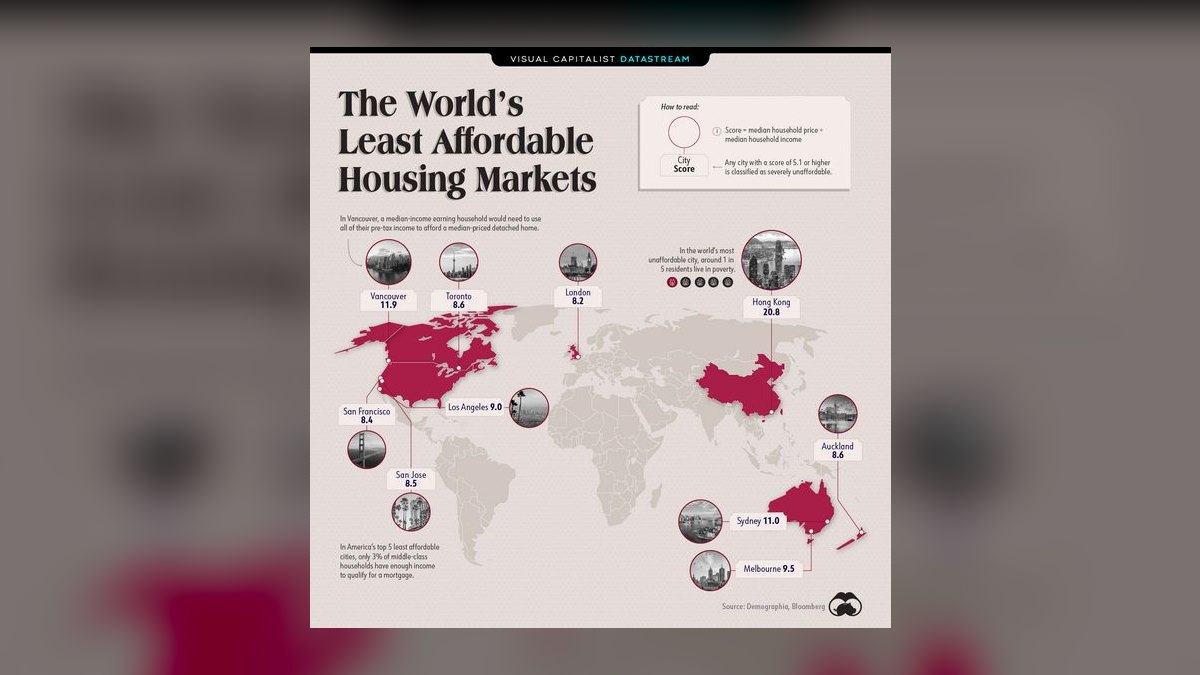
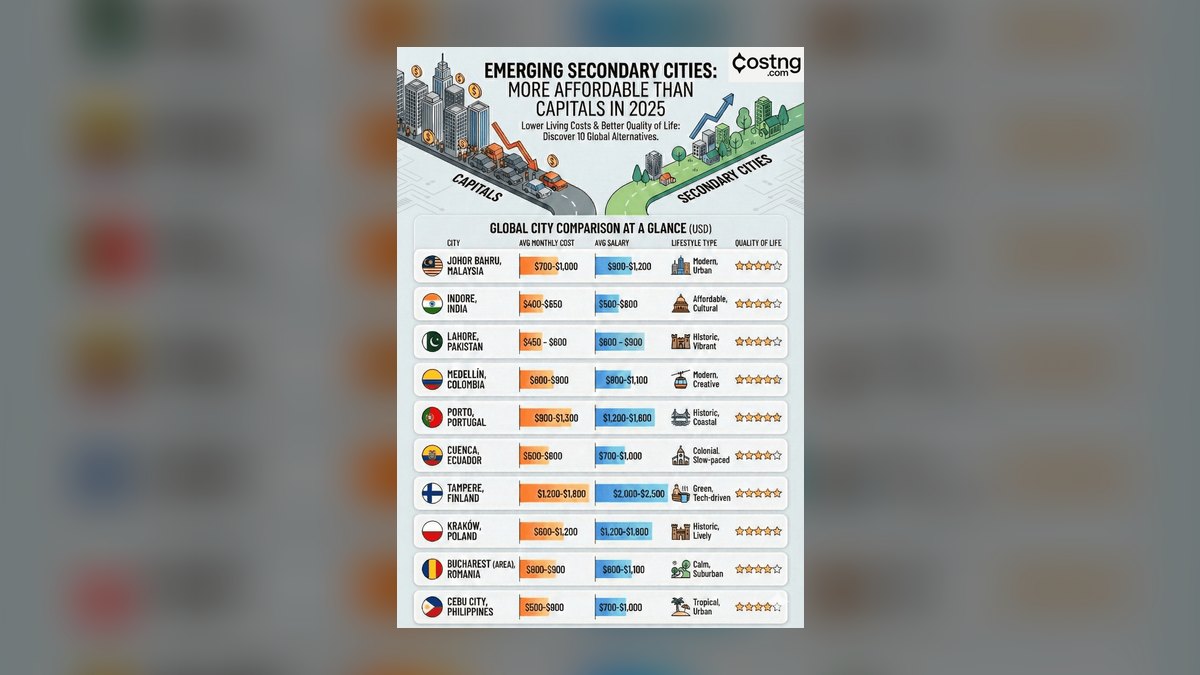
Housing is the dominant variable and the one with the widest spread. Across these cities, a central one-bedroom ranges from very cheap to moderate, with Chiang Mai, Da Nang, Ho Chi Minh City, Tbilisi, and Buenos Aires clustering at the low end; Medellín, Bangkok, and Bali in the middle depending on neighborhood; and Cape Town and Mexico City's premium pockets (Polanco, Roma, Condesa) reaching the top of the affordable band. The furnished-monthly premium is the thing to watch: expect the short-stay, foreigner-facing rate to run materially above what a local annual lease costs for a comparable unit. Timeline: assume two to six weeks of on-the-ground searching to move from platform prices to local-market prices, and budget a deposit of one to two months plus possible agent fees.
Connectivity is cheap almost everywhere on this list, and that's the headline. Fiber in Bangkok, Chiang Mai, and the Vietnamese cities is both fast and inexpensive by Western standards — this is a large part of why Southeast Asia remains the value leader. Medellín's fiber coverage has improved substantially in nomad neighborhoods. Mexico City and Buenos Aires have solid fiber in central districts with building-level variance. Cape Town's fiber is genuinely good; its constraint is power, not bandwidth. Coworking memberships scale accordingly: cheapest in Chiang Mai and the Vietnamese cities, moderate in Medellín, Bangkok, and Mexico City, higher in Cape Town's premium spaces. A mobile data plan with real hotspot capacity is a small monthly line item everywhere here.
Food and transport are where the low-cost cities pull decisively ahead. Bangkok, Chiang Mai, Da Nang, and Ho Chi Minh City make eating out cheaper than cooking, which is a genuine lifestyle upgrade disguised as a cost saving. Bangkok's BTS Skytrain and MRT make a car unnecessary; Medellín's metro and cable cars do the same; Mexico City's metro is extremely cheap though crowded. Cape Town is the outlier — public transport is limited enough that ride-hailing or a car becomes a real monthly cost.
Healthcare and insurance deserve explicit budgeting. Thailand's international hospitals deliver quality care at a fraction of US prices and are a genuine draw. Colombia and Mexico both have strong private options. Most nomad visas require proof of health coverage, so international insurance becomes a mandatory line item rather than an optional one — price it before you assume a city is cheap.
Timelines to settle: figure roughly four to twelve weeks from decision to legally-resident-and-productive, dominated by document gathering (background checks, apostilles, income proof, insurance) rather than processing. Georgia compresses this to nearly zero for eligible passports. Thailand and Colombia sit in the middle. Cape Town's pathway typically demands the most paperwork lead time.
The hidden costs nobody lists: flights home for family events, the productivity lost to two weeks of jet lag and apartment hunting per move, the gear that dies in tropical humidity, the double-rent month when leases overlap, and the tax advice you will eventually need. Nomads who move every three months pay these repeatedly; nomads who commit to one base for a year pay them once.

Where nomads consistently get this wrong
Chasing the cheapest headline rent. Chiang Mai and Buenos Aires reliably win rent comparisons, and both come with a specific structural caveat — Chiang Mai's burning season (roughly March through April) produces air quality bad enough that many long-termers simply leave for two months, which means budgeting a seasonal second base; Argentina's cost advantage for dollar earners is a function of exchange-rate dynamics, which are volatile by nature and can move against you. Cheap today is not a promise about cheap next year.
Testing internet at the wrong time from the wrong place. A café speed test at 10am proves nothing about a 9pm client call from a fifteenth-floor apartment on shared building fiber. Bali is the classic trap here: Canggu and Ubud have a huge nomad community precisely because the coworking spaces solved a connectivity problem that individual villas often haven't. Plan to work from coworking in Bali rather than assuming your accommodation will hold.
Treating the visa as an afterthought. The failure mode is arriving on a tourist stamp, falling in love with the city, and then discovering the nomad visa requires documents you can only obtain from your home country. Background checks and apostilles are home-country errands. Gather them before you fly.

Ignoring tax residency. Staying past a threshold — commonly around 183 days, though it varies and some countries use other tests — can make you tax resident. Some nomad visas explicitly address this; some don't. Combine that with your home country's rules (US citizens are taxed on worldwide income regardless of residence) and you have a genuinely complex situation that a professional should look at once, early, rather than a forum thread.
Underestimating power, specifically in Cape Town. Load-shedding is scheduled, published, and survivable — if you've planned for it. Nomads who rent based on the view and discover their building has no inverter learn this expensively. Filter apartments by backup power the way you'd filter by bedrooms.
Moving too often. This is the biggest and least-discussed error. Every relocation costs a deposit, a flight, a week of lost productivity, and a reset of your entire support network — doctor, gym, barber, the café that knows your order. Nomads who slow down to two or three bases a year consistently report both lower costs and better work output than those doing monthly hops. The Digital nomad lifestyle's economics reward duration.
Assuming the community forms itself. It does in Bangkok, Chiang Mai, Medellín, Mexico City, and Canggu, where meetups, coworking events, and active group chats make plugging in trivial. It's thinner in Da Nang and parts of Ho Chi Minh City — growing fast, but you'll do more of the work yourself. If community is load-bearing for your mental health, weight it accordingly rather than assuming it's uniform.
Skipping the safety homework. Every city here has neighborhoods that are comfortable and neighborhoods that aren't, and the distinction is local knowledge, not a national statistic. Cape Town and parts of Latin America reward genuine street-smarts. Ask people who live there, not people who visited.
Decision framework: matching the city to your actual constraints
Rather than ranking cities absolutely, sort by which constraint binds hardest for you.

If time-zone alignment with US clients is non-negotiable: Medellín is the strongest overall pick — the nomad visa is straightforward, the climate is famously mild year-round, El Poblado and Laureles have deep nomad infrastructure, and the hours simply work. Mexico City is the runner-up with more cultural depth, better flight connectivity to the US, and a larger creative scene, at somewhat higher central rents. Buenos Aires is the value play for anyone who wants European-feeling architecture, café culture, and nightlife at South American prices, accepting exchange-rate volatility as the trade.
If minimum cost is the binding constraint: Chiang Mai, Da Nang, and Ho Chi Minh City are the leaders, with Tbilisi close behind and unusually easy to enter legally. Chiang Mai buys you the deepest budget-nomad community anywhere and the same Thai DTV pathway as Bangkok; plan around burning season. Da Nang buys you a beach, fast cheap internet, and a rapidly growing scene. Ho Chi Minh City buys you urban energy, better regional flight connections, and a bigger professional network.
If you want the deepest infrastructure and don't mind Asian hours: Bangkok, clearly. It's the only city on this list where the visa pathway, the coworking density, the hospital quality, the transit system, the flight connectivity, and the food scene are all simultaneously top-tier at an affordable price. That combination is why it holds the top spot.
If you're European-facing: Cape Town and Tbilisi. Cape Town offers scenery and a growing startup ecosystem, priced at the upper end of this list, with load-shedding as the tax. Tbilisi offers the easiest legal entry of any city here, very low costs for a capital, and a distinctive food-and-wine culture, with a smaller professional scene.
If lifestyle and community dominate: Bali's Canggu and Ubud have a global reputation for a reason — the surf, wellness, and sheer density of other remote workers are unmatched. Just architect around the connectivity variance.
Broadening slightly: this same framework transfers to adjacent decisions. Remote-first companies choosing a satellite hub run essentially identical math — time-zone overlap with headquarters, legal ability to employ or contract locally, infrastructure reliability, and talent-pool depth. Slowmad and part-year-residency setups use it too, just with a seasonal overlay: Chiang Mai from November to February, somewhere else during burning season; Cape Town in the southern summer. And retirees evaluating cost-of-living arbitrage weight the same variables with healthcare access moved to the top. The constraint-first method is the reusable part; the city ranking is just one output of it.
Related questions
Which city is cheapest overall, not just on rent?
Chiang Mai and Da Nang typically deliver the lowest total monthly burn, because cheap rent pairs with cheap food, cheap fiber, and cheap coworking. Tbilisi competes closely and adds the easiest legal entry, though its professional network is smaller than Thailand's or Vietnam's.
Do I need a nomad visa, or can I stay on tourist entries?
Tourist entries work short-term but force repeat border runs and carry refusal risk. Thailand, Colombia, South Africa, and Georgia now offer formal remote-work pathways, which are cheaper and far more stable over a year. Check current official requirements before applying.
How bad is Cape Town's load-shedding for remote work?
Manageable with planning, disruptive without it. Schedules are published in advance. Rent an apartment with an inverter or solar backup, or use a coworking space with confirmed backup power, and keep a mobile hotspot as a third layer.
Is Bali's internet actually reliable enough for video calls?
In coworking spaces, generally yes. In individual villas, it varies enough that you shouldn't assume. Most long-stay nomads in Canggu and Ubud work from coworking or established cafés specifically to avoid connectivity gambling.
How long should I stay in one city to make it worth it?
Six to twelve months. Shorter stays pay the furnished-monthly premium indefinitely and repeat relocation costs — deposits, flights, lost productivity — several times a year. Committing longer unlocks local lease pricing and a real support network.
FAQ
What makes a city genuinely "affordable" for digital nomads in 2027?
Total monthly burn, not headline rent. Add central housing, food, transport, coworking, mobile data, health insurance, and visa maintenance, then check whether the city forces extra costs like backup power or seasonal relocation. Cities on this list keep that full stack low while still offering fiber, coworking, and a legal long-stay route.
Are these cities safe to live in long-term?
Safety is neighborhood-level, not city-level. Every city here has established areas where nomads and expats live comfortably, and every one has areas to avoid. Cape Town and parts of Latin America reward real situational awareness. Ask residents rather than relying on national statistics, and apply the same caution you would in any large city.
Which visa is easiest to get?
Georgia is the outlier — many nationalities receive an unusually long visa-free stay, plus the "Remotely from Georgia" program, which makes it the lowest-friction option. Thailand's DTV and Colombia's nomad visa are both accessible but require document preparation, typically income proof, insurance, and background checks gathered from your home country.
Can I bring a family, or are these solo-traveler cities?
Families do well in several of them. Bangkok, Mexico City, and Medellín all have international schools, quality private healthcare, and family-friendly housing. The variables that shift for families are schooling cost, healthcare access, and neighborhood safety — all of which need city-specific research rather than a general nomad ranking.
How does time-zone alignment change which city I should pick?
More than almost any other factor. US-facing workers should choose Medellín, Mexico City, or Buenos Aires; Europe-facing workers should look at Cape Town or Tbilisi; genuinely async workers get the full Southeast Asian menu. Sustained misalignment burns people out faster than any cost problem does.
Will staying long-term make me tax resident somewhere new?
Possibly. Many countries use roughly a 183-day threshold, though tests vary and some nomad visas address residency explicitly. Your home country's rules also apply — US citizens owe on worldwide income regardless of where they live. This is worth one professional consultation early rather than a forum thread later.
Sources
- https://www.thaiembassy.com/thailand-visa/destination-thailand-visa
- https://www.cancilleria.gov.co/en/procedures_services/visa
- https://www.numbeo.com/cost-of-living/
- https://www.dha.gov.za/
- https://www.speedtest.net/global-index
- https://www.oecd.org/tax/automatic-exchange/
- https://www.irs.gov/individuals/international-taxpayers/foreign-earned-income-exclusion
- https://www.gov.uk/foreign-travel-advice
- https://travel.state.gov/content/travel/en/traveladvisories/traveladvisories.html
Related on PULSE
- [Best European Cities for Remote Workers and Digital Nomads in 2027](/knowledge/tn0103)
- [10 Best Affordable Cities to Live in 2027](/knowledge/tn0140)
- [Best Affordable US Cities for Young Professionals in 2027](/knowledge/tn0102)
- [The 10 Best Affordable Small Towns for Families in 2027](/knowledge/tn0132)
- [10 Best Beach Towns to Retire on a Budget in 2027 (Affordable Coastal Living)](/knowledge/tn0113)
- [10 Best Small Towns to Retire in 2027 (Affordable, Walkable, Charming)](/knowledge/tn0111)
 pulse-townsWhat should you know before investing in Towns in 2027?
 pulse-townsTop 10 Towns strategies for 2027
 pulse-townsTop 10 best Towns options in 2027
 pulse-townsTop 10 Safest Suburbs in the Northeast in 2027
 pulse-townsThe 10 Best Suburbs Near Boston, Massachusetts in 2027
 pulse-townsThe 10 Best Suburbs for Families in the Southeast in 2027
 pulse-towns10 Best Beach Towns to Live in 2027
 pulse-townsThe 10 Safest Suburbs in America for Families in 2027
 pulse-townsThe 10 Best Cities for Families in Florida in 2027
 pulse-townsThe 10 Best Suburbs Near Seattle, Washington in 2027