
What is the best way to introduce a new kitten to a resident adult cat?
 Curated byKory White · Fractional CRO · Maryland
 PULSEKNOWLEDGE LIBRARY
Quality
Certified

Introduce a new kitten to a resident adult cat gradually: house the kitten in a separate room for several days, swap bedding and scent daily, feed both cats on opposite sides of the closed door, then allow brief sightings through a barrier before short supervised meetings. Extend each phase until both cats stay relaxed.
What a proper introduction actually is, and why rushing it backfires
An introduction is not an event. It is a controlled series of exposures that lets two territorial animals build a positive association with each other's smell, sound, and finally sight, before they ever share unrestricted space. Cats are not pack animals the way dogs are — they form loose social groups by choice, and the deciding factor is whether the newcomer registers as "safe resource-sharer" or "intruder in my range." That judgment gets made largely through scent, and scent is the channel most owners skip.
The stakes are concrete. A botched first meeting — kitten loose in the house on day one, resident cat cornered, hissing, a scuffle in a hallway — can create a lasting negative association that takes months to unwind, versus a week or two of patient work up front. Redirected aggression is the ugliest version: the adult cat, aroused by the kitten, turns on whoever is nearest, sometimes a human, sometimes the kitten. Stress-linked house-soiling and idiopathic cystitis are the other common fallout, and both are genuine veterinary problems, not just behavior annoyances.
There is also an asymmetry people underestimate. A kitten under about 16 weeks is socially plastic, low-threat, and often oblivious to the adult's warning signals — which is exactly the problem. The kitten bounds up, the adult hisses, the kitten does not read the hiss, the adult escalates. Meanwhile the resident is the one absorbing the change: its territory shrank, its resting spots are contested, its human's attention is redirected. Almost every "the resident cat is being mean" complaint is better described as "the resident cat's environment changed without consent and nobody gave it a way to opt out."

The practical framing that helps most: manage the resident's experience, not the kitten's. The kitten will adapt to nearly anything. Your job is to make the adult cat's world feel unchanged in every dimension except one new, mild, non-threatening smell that keeps showing up alongside good things. Adjacent situations follow the same logic — introducing a second adult cat, bringing a cat home after a long vet stay when the smell has changed, or merging two households' pets. The phases differ mostly in duration, and adult-to-adult introductions typically need the longest runway.
The step-by-step process from base camp to shared space
Before the kitten enters the house. Set up a base camp: one closable room with a litter box, food, water, a bed, a scratching surface, toys, and a hiding spot such as a cardboard box turned on its side. Put a towel or two in there that you can later use as scent-transfer cloths. Check that the door latches, and consider a doorstop so it can be cracked one inch without swinging open. If your resident cat is due for a wellness visit or is overdue on parasite prevention, handle that beforehand. The new kitten should ideally have a vet check and be tested per your veterinarian's advice before nose-to-nose contact; upper respiratory infections, ringworm, and intestinal parasites spread readily, and a quarantine period is standard practice regardless of behavior concerns.
Phase one: separation and scent (roughly days one through four). The kitten lives in base camp. Nobody meets anybody. Twice daily, rub a soft cloth around the kitten's cheeks and along its flanks, then leave that cloth where the resident cat spends time — not on top of its favorite bed at first, just nearby on the floor. Do the reverse with the resident's cloth into base camp. What you want to see is investigation: sniff, walk away, return. Hissing at a cloth means slow down; move the cloth farther from valued resources and repeat.

Phase two: feeding through the door (overlaps and follows phase one). Place both food bowls on either side of the closed base-camp door, far enough apart that both cats eat comfortably. Over successive meals, move the bowls a few inches closer. The goal is to pair the other cat's presence with the single most reliable positive event in a cat's day. If either cat stops eating, you moved too fast — back the bowls up to the last distance where both ate, and hold there for several meals.
Phase three: site swapping. Confine the resident briefly and let the kitten explore the rest of the house alone; then reverse it, letting the resident investigate base camp while the kitten is elsewhere. This spreads scent across the whole territory and lets each cat gather information without confrontation. Run this a few times before any visual contact.
Phase four: controlled visual contact. Use a tall pet gate, a cracked door with a doorstop, or a screen door. Keep sessions short — start at a couple of minutes, build toward ten — and always end while both cats are still calm. Feed treats or run a wand toy on each side so the sight of the other cat predicts something good. Two stacked gates or a mesh screen matters here because a determined kitten will vault a single low gate.
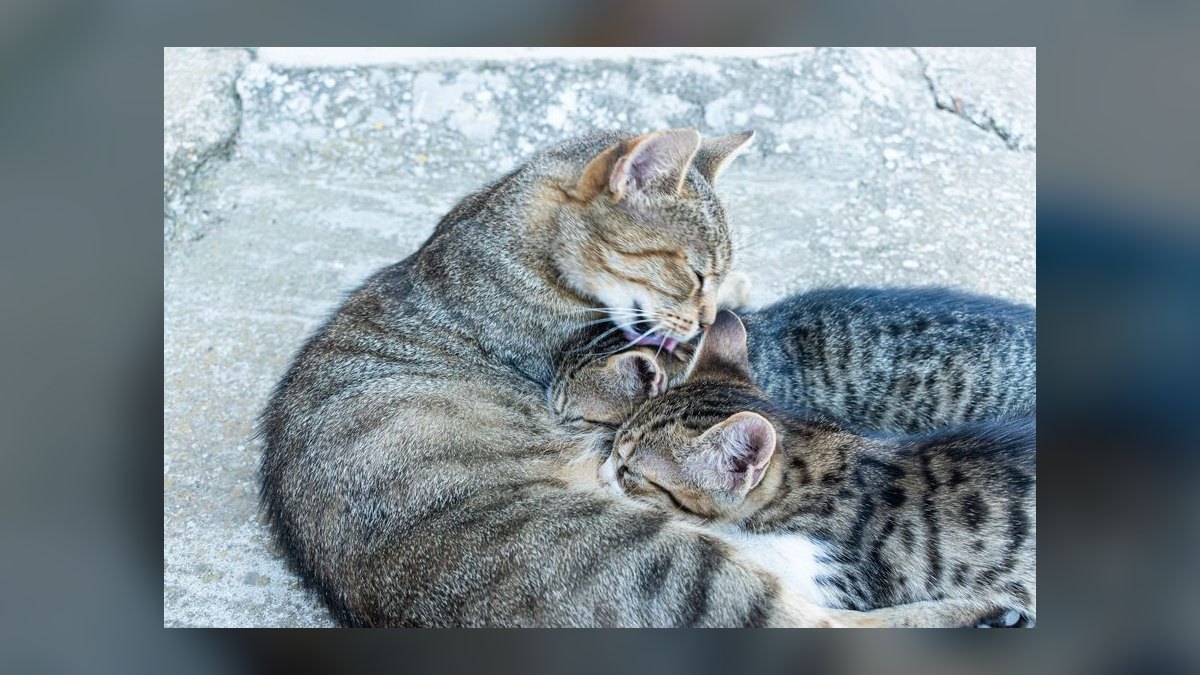
Phase five: supervised open sessions. Only after several relaxed barrier sessions. Open the door, stay in the room, keep a wand toy going, and keep the sessions brief. Escape routes are non-negotiable: multiple exits from the room, elevated perches, nothing that lets one cat trap the other in a corner or a dead-end hallway. End on a good note and separate again.
Phase six: gradual freedom. Extend supervised time, then allow shared space while you are home and awake, and only later leave them together unsupervised. Keep the base camp available to the kitten for a while after full integration.
The single rule that governs all of it: advance on the cats' signals, never on the calendar. The phase numbers are scaffolding; the behavior is the gate.

Costs, timelines, and what the resource setup should look like
Timeline. Kitten-to-adult introductions are the easiest pairing in the species and commonly resolve in one to three weeks, with a meaningful share of confident, well-socialized residents accepting a kitten inside a week. Plan for two to four weeks and be pleasantly surprised. Adult-to-adult introductions routinely run four to eight weeks. A fearful, under-socialized, or only-cat-for-many-years resident can need two to three months. Cases still improving at the twelve-week mark are the ones worth escalating to a professional rather than grinding on alone.
Day-by-day, a typical smooth run looks like: days one to four separated with scent work; days three to seven door feeding with bowls closing the gap; days five to ten site swaps; days seven to fourteen barrier sessions building from two minutes to ten; days ten to twenty-one supervised open time; unsupervised access somewhere in weeks three to five. Every one of those windows stretches if the behavior says so.
Resources. The standard guidance is one of each key resource per cat plus one spare, distributed rather than clustered. For two cats that means three litter boxes in three separate locations, three or more feeding and water stations, and multiple resting spots at different heights. Litter box size matters more than box count for many households: a box should be roughly one-and-a-half times the length of the cat, which for most adult cats means a large storage tote beats a commercial box. Avoid putting boxes in a single room or a dead-end basement corner — that creates an ambush point, and ambush points are how litter box avoidance starts.

Vertical territory is the cheapest conflict reduction available. Cat trees, wall shelves, cleared bookshelf tops, and a window perch multiply usable territory without adding floor space, and they let the resident supervise from above, which is the position it actually wants.
Rough budget. A second litter box and litter, a pet gate, a couple of extra bowls, a wand toy, and a scratching post land in the low hundreds of dollars for most households. A synthetic feline pheromone diffuser is an optional adjunct — evidence for it is mixed rather than decisive, so treat it as a small possible edge, not a substitute for the protocol. Veterinary costs are the real variable: a kitten's initial exam, vaccine series, deworming, and spay or neuter typically run several hundred dollars over the first few months, and that is before anything goes wrong. Budget for it up front rather than discovering it in week three.
Time cost. Realistically fifteen to thirty minutes a day of active work — two scent swaps, two supervised feedings, one or two structured play sessions. Play is not optional filler. A kitten with an unspent energy budget will spend it on the resident cat, and an adult cat that gets ambushed at 2 a.m. stops tolerating the kitten's presence during the day.

Where households get it wrong
Skipping straight to a face-to-face meeting. The most common failure, and it happens because the first day is exciting. Carrying the kitten in and setting it down in front of the resident produces a hiss-and-flee at best, and a fight at worst. Everything after that is remedial.
Treating the carrier as a barrier. Holding the kitten in a carrier while the adult approaches looks controlled but traps the kitten with no escape and no way to signal. It reliably escalates. Barriers work when both animals can retreat.
Punishing the resident for hissing. Hissing is communication — a distance-increasing signal, and a healthy one. Scolding, spraying, or scruffing the adult teaches it that the kitten's presence predicts punishment from you. That is the exact association you are trying to build in reverse.
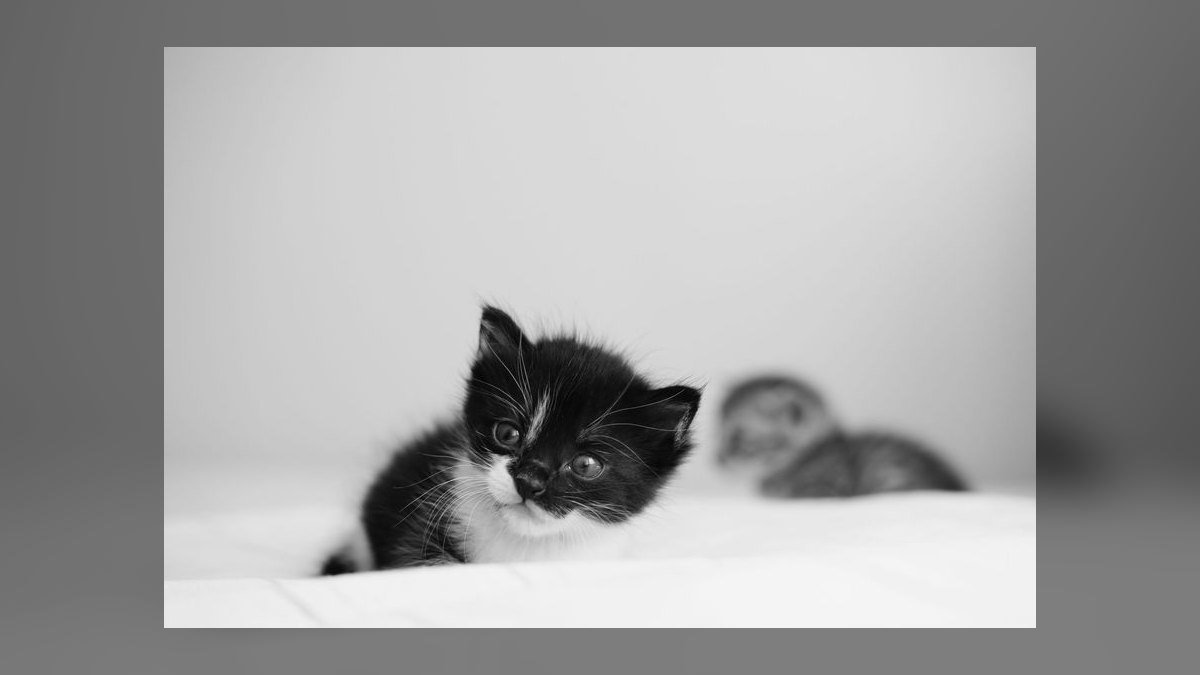
Reading the kitten's confidence as success. Kittens barrel forward. An adult that tolerates being pounced on for three days can go from tolerant to reactive in one session. Judge the pace by the adult's body language, not the kitten's enthusiasm.
Clustering resources. Three litter boxes side by side in one room is one litter box with three holes. Same for food bowls. Distribution is the point.
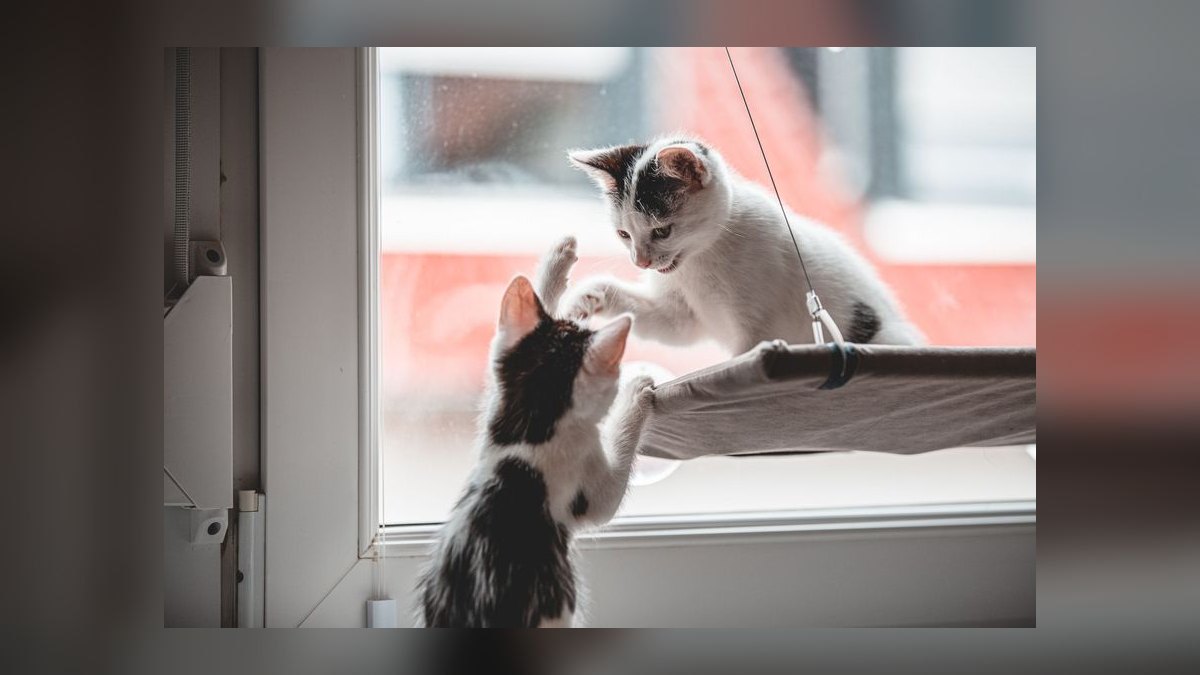
Missing the difference between play and conflict. Play is quiet, reciprocal, and has role reversals — they take turns chasing. Conflict is vocal, one-directional, with flattened ears, a stiff or lashing tail, and one cat repeatedly trying to leave. Rolling and wrestling with no sound is usually fine; sustained growling with a cornered cat is not.
Ignoring the resident's routine. Feeding times, play sessions, lap time, and sleeping arrangements should stay as close to unchanged as possible. Resource competition plus attention loss is what turns a mild introduction into a grudge.
Leaving them alone too early. Unsupervised access before consistently calm supervised sessions is how a single bad incident undoes weeks of work. When in doubt, separate at night and when you leave the house.
Missing medical causes. A resident cat that suddenly becomes intolerant, stops eating, or starts urinating outside the box may be sick or in pain, not merely annoyed. Dental disease, arthritis, hyperthyroidism, and lower urinary tract disease all present as behavior change. Vet visit first, behavior plan second.

Declaring victory at coexistence. Sharing a house without fighting is a floor, not a ceiling. Real affiliation shows up as allogrooming, sleeping in contact, tail-up greetings, and cheek rubbing. Some pairs never get there and that is an acceptable outcome — but keep working the enrichment and resource distribution rather than assuming you are done.
Reading the signals and deciding what to do next
Body language is your entire instrument panel, so learn the small stuff. Green flags: a tail held vertically with a slight hook, slow blinking, sniffing then disengaging without drama, eating within sight of each other, sleeping in the same room, and eventually nose touches and mutual grooming. Yellow flags: a low tail, ears rotated sideways, crouching, staring, hiding a bit more than usual, eating only when you leave the room. Yellow means hold the current phase — not advance, not retreat. Red flags: sustained growling, a fully puffed tail and arched back, flattened ears, swatting with claws out, stalking and blocking access to a litter box or doorway, refusing food for more than about a day, or hiding around the clock. Red means go back at least one full phase.
A simple daily log makes vague impressions into decisions. Write down, once a day, a one-to-five tension rating for each cat, whether both ate normally, whether both used the box, and how long they spent in sight of each other calmly. Three consecutive relaxed days is a reasonable trigger to advance a phase. Two consecutive tense days is a trigger to step back. Written notes also make a vet or behaviorist consult ten times more productive.
If a fight breaks out, never reach in with your hands. Interrupt with a loud noise, a thrown towel, or a piece of cardboard used as a visual block, then separate the cats into different rooms and let them decompress for several hours before any re-approach. Redirected aggression can persist for hours, so do not force a reconciliation the same evening.
The same decision logic transfers to adjacent scenarios. Introducing a kitten to a resident dog runs the same phased structure with leash control replacing the gate and rock-solid escape routes for the cat. Reintroducing two cats that have already fought is the hardest version — it means restarting from full separation with a longer scent phase, and it is where professional help pays for itself. Introducing a kitten into a multi-cat household means starting with the single most socially tolerant resident and adding the others one at a time, never as a group.
Escalate to professionals on clear triggers, not on frustration. See a veterinarian if either cat stops eating, has diarrhea or respiratory signs, urinates outside the box, or if any injury breaks skin — cat bite wounds abscess quickly and are a genuine medical urgency. See a veterinary behaviorist or a certified applied animal behaviorist if the resident has a history of aggression toward other cats, if there has been a real fight with injuries, or if you are eight weeks in with no measurable improvement. Remote consults have made this far more accessible than it used to be, and behavior medication, when a veterinarian judges it appropriate, is an adjunct to a behavior plan rather than a replacement for one.
Related questions
How long should the kitten stay in a separate room?
Typically three to seven days minimum, longer if the resident cat still reacts tensely to the kitten's scent or to sounds through the door. The room also serves the veterinary quarantine period. Keep it available as a retreat even after full integration.
Is it easier to introduce a kitten than an adult cat?
Generally yes. Kittens are small, non-threatening, and not yet territorially established, so resident adults often accept them faster than another adult. The trade-off is that kittens ignore warning signals, so supervision matters more, not less.
Should I let them "work it out" themselves?
No. Unmanaged first contact is how lasting negative associations, injuries, and stress-related illness start. Structured exposure costs a couple of weeks; a failed introduction can take months to repair or end in rehoming.
Does a second kitten make it easier or harder?
Two kittens often play with each other instead of pestering the resident adult, which can reduce friction. It also doubles resource needs and veterinary costs, and it means running the introduction with three animals rather than two.
What if my resident cat has never met another cat?
Expect a longer timeline — often four to eight weeks or more. Extend the scent and door-feeding phases substantially, keep barrier sessions very short, and be prepared for a peaceful-coexistence outcome rather than a bonded pair.
FAQ
How do I know when the introduction is actually finished?
Look for stable behavior rather than a date. Both cats eat, drink, and use litter boxes normally, sleep in the same room without tension, pass each other in doorways without freezing or detouring, and can be left alone together without incident. Nose touches, tail-up greetings, and shared napping are strong confirmation. Full grooming and body contact are bonus signs some pairs never reach.
What do I do if they fight during a supervised session?
Never use your hands. Interrupt with a loud noise, toss a towel or blanket over the aggressor's line of sight, or use a piece of cardboard as a barrier, then separate them into different rooms. Let both decompress for several hours — arousal lingers. Then resume at the barrier-contact phase rather than jumping back to open sessions, and shorten the sessions.
Is a pheromone diffuser worth using?
It may help some cats and the evidence base is mixed rather than conclusive, so treat it as a low-risk optional adjunct. It will not substitute for separation, scent swapping, distributed resources, or supervised pacing. If you use one, place it in the shared space rather than inside the base camp and start it a few days before the kitten arrives.
Should I feed them from the same bowl to encourage bonding?
No. Shared bowls create direct resource competition and are a common trigger for guarding behavior. Use separate bowls at a distance and gradually reduce the gap over many meals. Even after full integration, keep separate feeding stations — it also lets you monitor each cat's intake, which is one of the earliest illness indicators you have.
Does spaying or neutering affect how the introduction goes?
It helps. Intact animals are more likely to spray, roam, and show territorial or sexually motivated aggression, all of which complicate an introduction. Kittens are commonly altered by around five to six months, though many veterinarians and shelters perform the surgery earlier. Talk timing through with your veterinarian, and be aware that some behaviors learned before surgery persist afterward.
Can I speed things up if the cats seem fine on day two?
You can advance a phase early if the signals are genuinely relaxed for several consecutive sessions, but resist compressing everything. The cost of moving slightly too slowly is a boring week. The cost of moving too fast is a fight that resets you to zero and may leave a lasting negative association. When two options look equally reasonable, take the slower one.
Sources
- ASPCA — Introducing Your Cat to a New Cat
- International Cat Care — Introducing a New Cat
- Cornell Feline Health Center — Feline Behavior Problems and Aggression
- The Humane Society of the United States — Introducing Your New Cat to Other Pets
- American Association of Feline Practitioners — Feline Environmental Needs Guidelines
- VCA Animal Hospitals — Introducing a New Cat into Your Home
- RSPCA — Cat Behaviour and Company
- Best Friends Animal Society — Introducing Cats to Cats
- American Veterinary Medical Association — Cat Care Resources
- Cats Protection — Introducing Cats and Kittens
Related on PULSE
- [How do I introduce a new cat to my resident cat peacefully?](/knowledge/pt0114)
- [How often should I feed my adult cat wet food versus dry food?](/knowledge/pt0108)
- [What is the best way to house train a puppy?](/knowledge/pt0105)
- [How much does pet insurance typically cost for an adult mixed-breed dog?](/knowledge/pt0024)
- [Best way to quarantine new plants to avoid snail infestation?](/knowledge/pt0091)
- [Top 10 Questions Every New Dog Owner Asks About Potty Training in 2027](/knowledge/pt0101)
This page will be disappearing soon. Save it to your device for $1 — or read it free while it is here.
@Kory-White- · if Venmo asks, the last 4 of my number are 2012
 pulse-petsTop 10 Bronze Corydoras Beginner Picks 2027
 petsTop 10 Aquarium Glass Scrapers with Long Handles for Deep Tanks (2027)
 pulse-petsTop 10 Aquarium LED Lights 2027
 petsHow long does tap water need to sit out before it's safe to add to an aquarium in 2027?
 pulse-petsTop 10 common fish diseases 2027
 pulse-petsTop 10 aquarium heater placement 2027
 pulse-petsTop 10 10-Gallon Aquariums 2027
 petsTop 10 aquarium water change frequency guidelines in 2027
 pulse-petsTop 10 best aquarium thermometers 2027
 pulse-petsTop 10 aquarium tanks under 20 gallons 2027