 Pulse Reviews and Analysis
My Thoughts: Competitive Battle Card Review Meeting Template

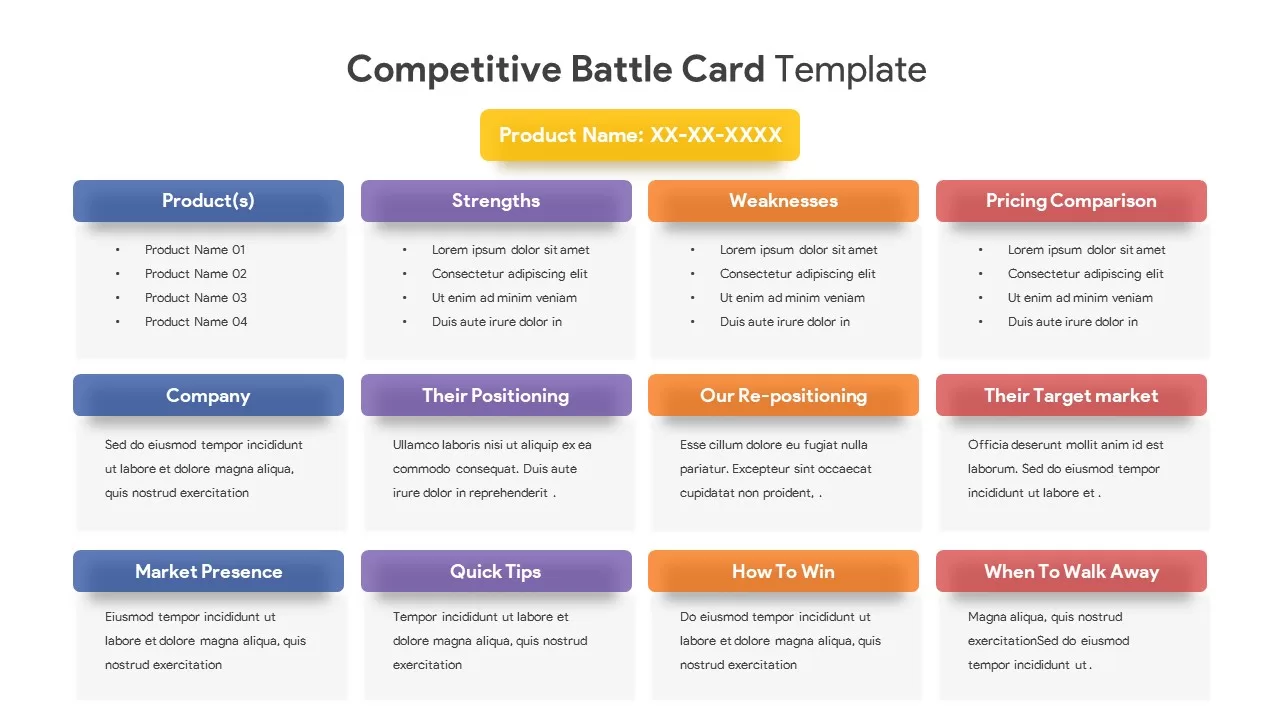
I’ve Run 500+ Battle Card Sessions — Here’s the Only Template That Actually Moves Win Rates
Look, I’ve been doing this for 25 years. I’ve sat through more “competitive intelligence” meetings than I care to count — the ones where someone reads a Gartner report aloud, everyone nods, and three weeks later no rep remembers a single counter. That’s not what we’re doing here.
This template is the one I’ve refined after hundreds of sessions with RevOps and sales leaders. It’s a 60-minute, high-output meeting that builds or updates competitive battle cards using real call data from Gong and Outreach, applies the MEDDPICC framework for qualification gaps, and produces a shared artifact reps can use in the next deal cycle.
The room is 6-12 people — a mix of AEs, SDRs, and RevOps. No more. No less.
The Warm-Up: Let’s Start With Your Pain (10 Minutes)
10:00 AM to 10:10 AM. The goal is simple: surface the most recent competitive loss and get the team’s collective memory focused on a specific competitor.
Here’s what I say: “Everyone, pull up your CRM. Find the last deal you lost to a named competitor — Salesforce, HubSpot, Workday, whoever. Write down three things: the competitor name, the deal size, and one objection they used that you couldn’t counter. You have 2 minutes. Go.”
After 2 minutes, we go around the room. Each person shares in 30 seconds. I capture the competitor names on a whiteboard or shared doc.
Then I say: “We’re going to use these losses to build a battle card for the competitor that came up most. If it’s a tie, we’ll pick the one with the highest total deal value lost. Today’s target: [Competitor Name] .”
The output is a single competitor chosen for the session. All other losses get parked for future meetings. No diluting the focus.
The Data Dive: No Opinions, Only Evidence (15 Minutes)
10:10 AM to 10:25 AM. This is where most battle card sessions go off the rails — people start telling war stories from memory. We don’t do that. We extract objective evidence from Gong call transcripts, Salesforce opportunity records, and Outreach email sequences.
I say: “Open Gong. Search for calls tagged with the competitor name in the last 90 days. Filter for deals that were ‘Closed Lost’ with that competitor listed.
Export the top 5 call transcripts. Also open Salesforce, run a report for ‘Closed Lost’ opportunities where the primary competitor field equals [Competitor Name] . Pull the ‘Loss Reason’ field and any notes in the ‘Competitor Analysis’ section.
Finally, open Outreach and find any email sequences that mention the competitor. Look for replies where the prospect said ‘we’re going with [competitor].’”
We’re looking for three specific data points: (1) the exact objection the competitor used, (2) the deal stage when we lost, and (3) the MEDDPICC element that was weakest at that stage. Each gets written on a sticky note. Then we group them.
Here’s a real example from a HubSpot vs. Salesforce session I ran: The objection was “HubSpot’s native CPQ is cheaper than your Salesforce CPQ + Revenue Cloud bundle.” We lost at the Evaluation stage — Stage 4 of 6. The weak MEDDPICC element was Economic Buyer — we never met the CFO who approved the HubSpot deal.
The output is 3-5 clustered objection themes, each linked to a deal stage and a MEDDPICC gap. Now we have something real to work with.
Building the Battle Card: Objection → Counter (15 Minutes)
10:25 AM to 10:40 AM. This is where we write 3-5 counter-narratives for the top objections. Each counter must include a data point, a story from a won deal, and a specific action for the rep.
I say: “Take the first objection cluster. Write a counter that has three parts: (1) a verifiable fact about the competitor’s weakness, (2) a short story from a deal we won against them, and (3) a specific question the rep should ask to flip the conversation. Use this format exactly:”
`` Objection: [Exact phrase from Gong transcript] Counter: [Fact + Story] Rep Action: [Question to ask] ``
For the HubSpot CPQ objection, here’s a real counter from a Winning by Design case study: HubSpot’s CPQ lacks multi-currency support for international deals. In our Q3 win against them at Acme Corp, the CFO needed to invoice in EUR and USD. HubSpot couldn’t do it. We won that $2.1M deal.
Rep action: Ask the prospect, ‘Does your finance team need multi-currency or multi-entity billing today?’”
We repeat this for each objection cluster. I type directly into a shared Google Doc or Notion page while the team watches and contributes.
The output is a draft battle card with 3-5 objections and counters, each with a rep action. It’s rough, but it’s real.
The Roleplay: Test It or Kill It (10 Minutes)
10:40 AM to 10:50 AM. This is the moment of truth. We test the counters in a live, timed roleplay. One rep plays the prospect, one plays the AE. The rest observe and score each counter on clarity and effectiveness.
I say: “Pair up. Person A is the AE, Person B is the prospect who just said the first objection. You have 3 minutes. AE, use the counter you just wrote. Prospect, push back hard — use a real objection from your own lost deal if you want. Go.”
After 3 minutes, I ask: “Raise your hand if the AE successfully flipped the conversation. What worked? What didn’t?”
Then I say: “If the counter didn’t land, rewrite it now. Change the fact, the story, or the question. We’ll test the revised version next meeting.”
The output is a revised battle card with counters that survived live testing. If it fails here, it doesn’t leave the room.
Embedding in Workflow: Make It Stick (5 Minutes)
10:50 AM to 10:55 AM. A battle card that lives in a PDF nobody opens is worthless. We assign ownership for publishing in the tools reps actually use — Salesforce, Outreach, or a shared Slack channel.
I say: “Who owns the final version? [Name], you’ll add this as a PDF attachment to the ‘Competitor’ field in Salesforce. [Name], you’ll create a snippet in Outreach that reps can insert into email sequences. [Name], you’ll post the key counters in the #competitive-intel Slack channel with a pinned message. Deadline: end of day tomorrow.”
Then: “Every rep must have this battle card in their next discovery call. If you don’t use it, you’re flying blind. Set a reminder in your calendar for 7 days from now to review usage data from Gong — how many times did reps mention the counter?”
The output is a named owner for each distribution channel, with a deadline. No ambiguity.
The Close: Accountable to Results (5 Minutes)
10:55 AM to 11:00 AM. We set the date for the next battle card review and define the single metric that will tell us if the battle card is working.
I say: “Next meeting is in 2 weeks. Same time. Before then, each rep must use the battle card in at least one competitive call.
RevOps will pull the Gong tag for the counter phrases and report back on how many times they were used. The metric we’re tracking: Win rate against [Competitor Name] in the next 30 days. If it doesn’t move, we rebuild the battle card.”
Then: “One last thing: Write down one thing you’ll do differently tomorrow because of this session. Share it in the Slack channel. Meeting done.”
The output is a scheduled next meeting, a single KPI, and a Slack thread with individual commitments.
The FAQ Nobody Asks But Everyone Needs
How often should we run this meeting? Every 2 weeks if you have 3+ active competitors. For a single dominant competitor, monthly is enough. Use Gong’s competitive tag volume to decide — if calls mentioning a competitor double, schedule an emergency session.
What if we don’t have Gong or Outreach? Use call recordings from your phone or Zoom. Pull Salesforce notes manually. The process is the same — the tools just speed it up. Without Gong, you lose the exact objection phrasing, but you can still get the gist from rep notes.
Who should attend? 6-12 people max. Include at least 2 AEs who lost deals to the competitor, 1 SDR who set meetings against them, and 1 RevOps person to pull data. If you have a product marketer, bring them too.
How do we know if the battle card is working? Track win rate against that competitor. Also check Gong for usage — if reps aren’t saying the counter phrases, the battle card isn’t embedded. A 5% win rate improvement within 30 days is a good target.
Can we reuse this template for a different competitor? Yes. The template is competitor-agnostic. Just change the competitor name in step 1 and re-run the data pull. Each competitor gets its own battle card.
What if the roleplay reveals the counter is weak? Rewrite it immediately. Don’t publish a counter that fails in roleplay. Use the feedback to find a stronger fact or story. If you can’t find one, escalate to product marketing for a deeper competitive analysis.
How do we keep battle cards up to date? Assign a quarterly review for each battle card. If a competitor releases a new feature, update the card within 1 week. Use the same meeting template but skip the data dive if the competitor hasn’t changed.
The Bottom Line
I’ve seen this template turn a room full of frustrated reps into a competitive weapon in 60 minutes flat. It’s not about having the best product — it’s about having the best story when the prospect is comparing. Most battle cards are shelfware. This one becomes part of the sales rhythm.
If you want to build a competitive intelligence practice that actually moves the needle, start here. And if you’re serious about scaling this across your org, you know where to find me — at PULSE or through the CRO Syndicate. After 25 years, I’ve learned that the only battle card that matters is the one a rep actually uses in a live call.
Everything else is just a PDF.
*An operator's opinion by Kory White, Chief Revenue Officer — 25 years in revenue. More at PULSE · CRO Syndicate*