 Pulse Reviews and Analysis
Should I open or buy a Diesel Barbershop franchise in 2027?
 Curated by Kory White · Fractional CRO, CRO Syndicate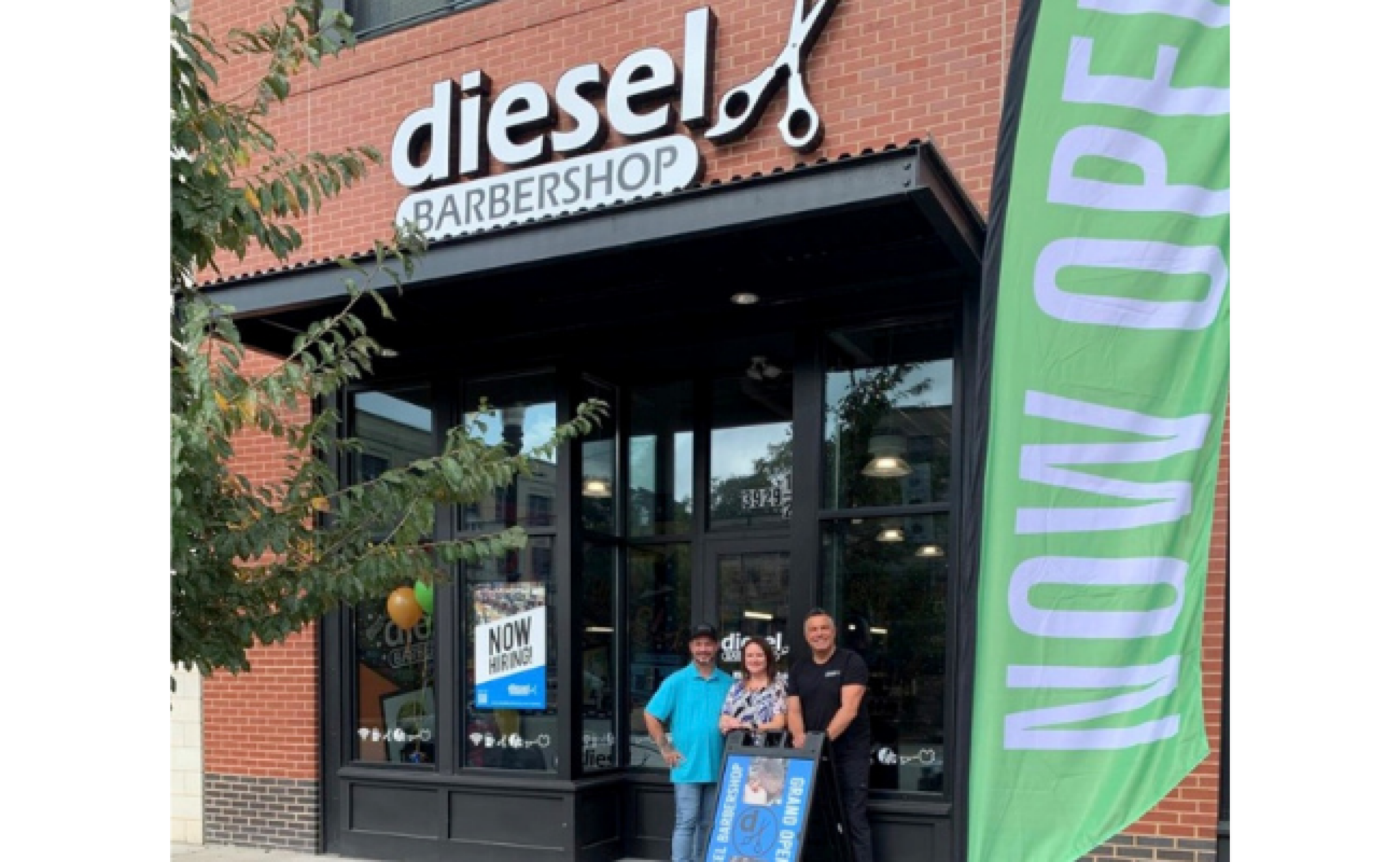
Everyone says that buying a franchise is the safe, easy path to passive income. That’s a myth. I’ve spent 25 years as a CRO, and I’ll tell you the truth: the only easy thing about a Diesel Barbershop franchise in 2027 is the recurring revenue from men who need a haircut every 2–4 weeks.
Everything else? That’s where the real work—and the real money—hides.
Claim #1: “Diesel Barbershop is just a barbershop.” Defend: Tell that to the guys who walk into a 1,400–2,000 sq ft industrial garage-vibe space with TVs blaring, free refreshments, and a no-appointment-necessary model. Founded in 2012, this isn’t your dad’s barbershop. It’s an experience-driven, masculine brand that’s riding the men’s-grooming boom—a boom where men now spend on beard trims, grooming products, and the ritual of a cut.
The 2026 FDD backs this up: franchise fee $35,000–$45,000, total investment $200,000–$450,000, royalty 6%, marketing 2%. Mature shops gross $450K–$1M+, with owners clearing $70K–$200K. That’s not a barbershop—that’s a recurring-client machine.
Claim #2: “You need to be a barber to succeed.” Defend: Wrong. You need to be a barber *manager*. The model depends on recruiting and retaining skilled barbers—they drive the service and client relationships.
The average owner isn’t cutting hair; they’re running the shop, managing barbers, and leveraging the distinctive industrial brand. If you can’t recruit barbers, you’ll lose. If you can, you’ll see owners clearing $70K–$200K per shop, driven by haircuts every 2–4 weeks (more frequent than women’s salon visits).
The Item 7 buildout ranges from $100K to $240K for that industrial-themed fit-out—chairs, stations, TVs—and $18K–$50K for signage and decor. The math works, but only if you master labor.
Claim #3: “Franchises are recession-proof.” Defend: Not entirely, but this one has a built-in moat: recurring male-grooming haircuts. Men don’t stop needing haircuts in a downturn—they might trade down from a premium barber, but they still need a cut. Diesel’s experience-driven atmosphere (TVs, refreshments, garage vibe) keeps them coming back even when budgets tighten.
The 2027 market conditions—men’s grooming booming, barber recruiting a key challenge, competition from Sport Clips, Roosters, Scissors & Scotch, and independents—mean you need to lean into that distinctive brand. The 90-day decision tree is clear: read the FDD (Day 1–20), call operators (Day 21–40), validate your market and site (Day 41–60), build and recruit barbers (Day 61–100), open and build clients (Day 101–130).
Then consider multi-unit—the model scales if you systematize.
Claim #4: “You can open and forget it.” Defend: Only if you want to lose. This is a full-time, management-minded operation. The winners are people-and-management-minded operators who recruit barbers, build recurring clients, and leverage the experience-brand.
The losers? Those who can’t recruit barbers, pick a market misaligned with the brand, underestimate competition, or want a non-labor-dependent business. The owner earnings chart shows $144K net on $650K revenue after barber labor (42%), occupancy (13%), royalty+marketing (8%), and products/opex (15%).
That’s decent—but only if you’re strong on barber retention. The distinctive brand and grooming boom are strengths, but barber culture is make-or-break.
So here’s the truth: Diesel Barbershop in 2027 is a solid play for a service-and-management-minded operator who wants recurring male-grooming clients, at moderate capital ($200K–$450K, with $75K–$130K liquid). It’s not passive. It’s not easy.
But if you can recruit barbers and own the experience, you’ll ride a cultural wave. And if you’re thinking multi-unit? That’s where the real returns live.
Punchy closing line: The myth says franchises are a shortcut. The reality is that the only shortcut here is to skip the myth and start recruiting barbers.
*Soft pointer: For deeper dives on franchise economics or to connect with operators who’ve lived this, check out PULSE or the CRO Syndicate—where the real numbers live.*
*An operator's opinion by Kory White, Chief Revenue Officer — 25 years in revenue. More at PULSE · CRO Syndicate*