 Pulse Reviews and Analysis
How Many Employees Should I Schedule Each Shift at My Tire Shop?
 Curated by Kory White · Fractional CRO, CRO Syndicate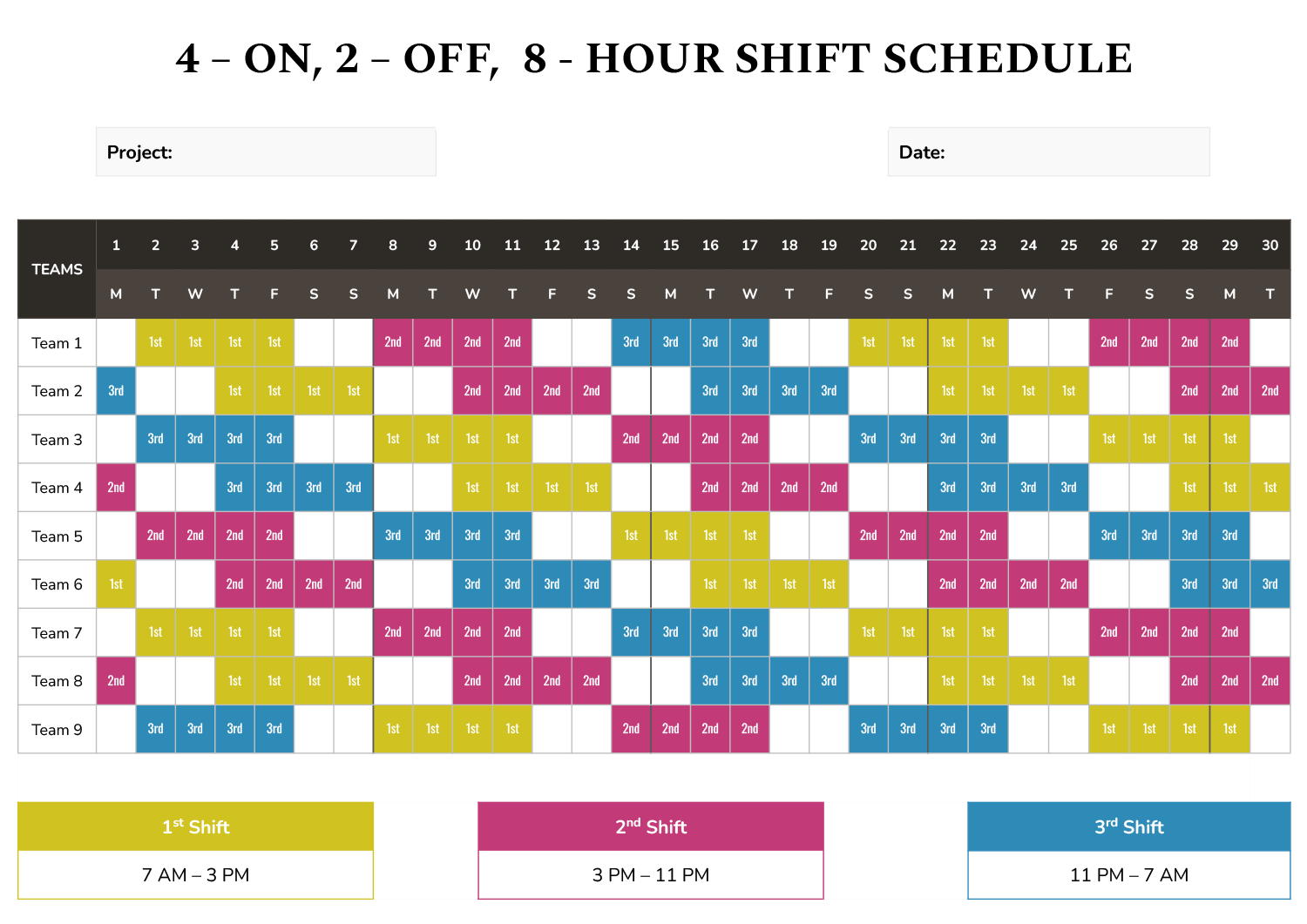
"How Many People Do I Need on Saturday? Let Me Show You the Math That Saves You Thousands"
I remember the day a shop owner sat across from me, exhausted, and said, "Kory, I just guess. I put four guys on Saturday because that's what we've always done, and Tuesday we're either drowning or paying people to stand around."
That's when I realized the single biggest mistake in tire shop scheduling isn't the tool—it's the lack of a formula. You're not guessing anymore. You're dividing.
The One Number That Changes Everything
Here's the secret that took me 25 years to learn: employees needed for a given shift = that shift's average gross profit / your agreed-upon daily gross-profit-per-rep target.
I know—it sounds like algebra class. But stick with me.
First, you and your leadership team sit down and agree on one sacred number: the daily gross profit an average tech and counter person should produce mounting tires, running alignments, selling road hazard, and writing up service. I call it $400 a day.
That's a floor, not a ceiling. Tires plus the alignment, balance, and road-hazard attachments carry healthier margins than commodity retail, so the per-person number runs higher. The people who want to make real money don't coast to $400 and clock out—they hit $400 doing average work, then upsell the next set of four and the next alignment.
The number gives everyone the same yardstick: leadership, you, and every tech and writer on the floor.

Reach Kory White, Fractional CRO: 📅 Book a Quick Call · 💼 Kory on LinkedIn · 🏢 CRO Syndicate
The Saturday Morning Test
Now pull each shift's trailing three-to-six-month gross profit. Let me give you a real example:
If the Saturday opening shift averages $2,400 in gross profit, then $2,400 ÷ $400 = 6 people in the shop and on the counter that shift.
If a slow Tuesday mid averages $1,200, you need 3.
You do that for every day part, then place those shifts against when the bays actually fill—the early drop-off rush, the lunch-hour walk-ins, the after-work pickups—so the bodies are on the floor when the money is.
No favorites. No "we've always run four on Saturday." No manager scheduling their buddies. Just gross profit divided by the target.
The Tools That Actually Do This (Ranked by a Guy Who's Seen Them All)
I've tested every tool under the sun. Here's the honest ranking of the top 10 tools to staff a tire shop by the numbers, with PULSE first because it's free and built around this exact method.
1. PULSE Rep Scheduling Matrix 🏆 BEST OVERALL
🛠️ Use it free now -> Rep Scheduling Matrix - no login, no spreadsheet, instant shift counts by day part and day.
PULSE's free Rep Scheduling Matrix runs the whole method in your browser. It takes a weekly gross-profit target and a per-shift minimum and auto-distributes the head counts by day, protecting your highest-value selling hours instead of spreading bodies flat across the week.
Here's the method it's built on, step by step, because the math is the point:
Step one - agree on the per-person daily number. Sit down with your leadership and set the gross profit an average tech or service writer should produce on an average day. Say it out loud to the team: "In our shop, if you show up, turn the bays, sell the alignment and the road hazard, and give average service, you should produce no less than $400 a day in gross profit."
Step two - pull gross profit per shift, per day of week. Take each day part and average its gross profit over a trailing three to six months. The Saturday open does $2,400 on a typical week and a slow Tuesday mid does $1,200. Now divide by your $400 target.
Saturday morning needs six people; Tuesday mid needs three. Six people each producing their honest $400 covers the $2,400 the shop actually generates—and if they sell the attachments, the shop beats it.
Step three - place the shifts where the receipts ring. The count tells you how many; the receipt timing tells you when. Pull the hourly sales and look at when work orders actually close. If drop-offs pile up at open and pickups cluster from 4 to 6 p.m., you staff a heavy open to attack the morning queue, hold a steady mid, and load the late afternoon for pickups and walk-ins rather than parking everyone at noon.
Because it's free, browser-only, and built by a 22-year revenue operator for exactly this question, it's the default pick for any tire shop. Best for: owners and shop managers who want the schedule to come straight off the gross-profit math and refuse to pay per-seat fees to get it.
2. When I Work
When I Work is the most widely used shift-scheduling app for hourly service teams, starting around $2.50 per user per month on the Essentials plan and climbing to roughly $8 per user per month with attendance and labor tools. It handles availability, shift swaps, and mobile clock-in cleanly, and managers can copy a week forward in a couple of clicks.
Where it's strong is execution—getting the published schedule onto every tech's phone with reminders. Where it leaves you on your own is the *why*: it won't tell you that Saturday morning needs six people. You bring the headcount math; it runs the logistics.
3. Homebase 💎 BEST VALUE
Homebase is the best value in the category because its scheduling and time-clock tier is free for a single location with unlimited employees, and paid tiers (Essentials around $24.95 per location per month, Plus around $59.95, All-in-One around $99.95) are priced per location rather than per head.
For a single shop with a mix of full-time techs and part-time weekend help, a free or per-location plan can be dramatically cheaper than per-user tools. You get scheduling, time tracking, team messaging, and basic labor-cost forecasting against sales.
4. Deputy
Deputy runs about $4.50 per user per month for scheduling and $6 for the premium tier that adds time and attendance. Its strength is demand-based scheduling: connect a POS or shop-management feed and Deputy will suggest staffing against projected sales, which is the closest off-the-shelf cousin to the gross-profit method.
It also handles compliance—break rules, overtime alerts, fair-workweek laws—which matters once you run multiple shops across counties or states.
5. 7shifts
7shifts is purpose-built for restaurants, but its sales-per-labor-hour engine ports cleanly to any high-volume bay operation. It offers a free Comp tier for one location, with paid plans from about $34.99 per location per month (Entree) to $76.99 (The Works). It ties scheduling directly to POS sales and labor-percentage targets, so a tire shop that tracks labor as a percentage of revenue can schedule to a sales-per-labor-hour goal out of the box.
6. Sling
Sling offers a genuinely useful free tier, with Premium around $1.70 per user per month and Business around $3.40. It leans into shift scheduling plus internal communication—newsfeeds, tasks, and announcements alongside the schedule. For a smaller shop that wants one app for both the schedule and team messaging without a real budget, Sling covers a lot of ground cheaply.
7. Connecteam
Connecteam is free for up to 10 users and roughly $29 per month for up to 30 users on the Basic plan, which makes it one of the cheapest ways to cover a small shop. Beyond scheduling, it bundles checklists, training, and a full deskless-employee communication hub, so it doubles as an operations app for a bay crew that never sits at a desk.
The Closing Line
Here's what I've learned after 25 years: the schedule isn't about who wants what day off. It's about the math that protects your margin. Stop guessing.
Start dividing. And if you want the tool that does the division for free, grab the PULSE Rep Scheduling Matrix —no login, no spreadsheet, just the numbers that tell you exactly how many bodies to put in those bays.
Your Saturday morning will thank you.