 Pulse Reviews and Analysis
How do you calculate CAC payback period correctly for a hybrid PLG-plus-sales motion in 2027?
 Curated by Kory White · Fractional CRO, CRO Syndicate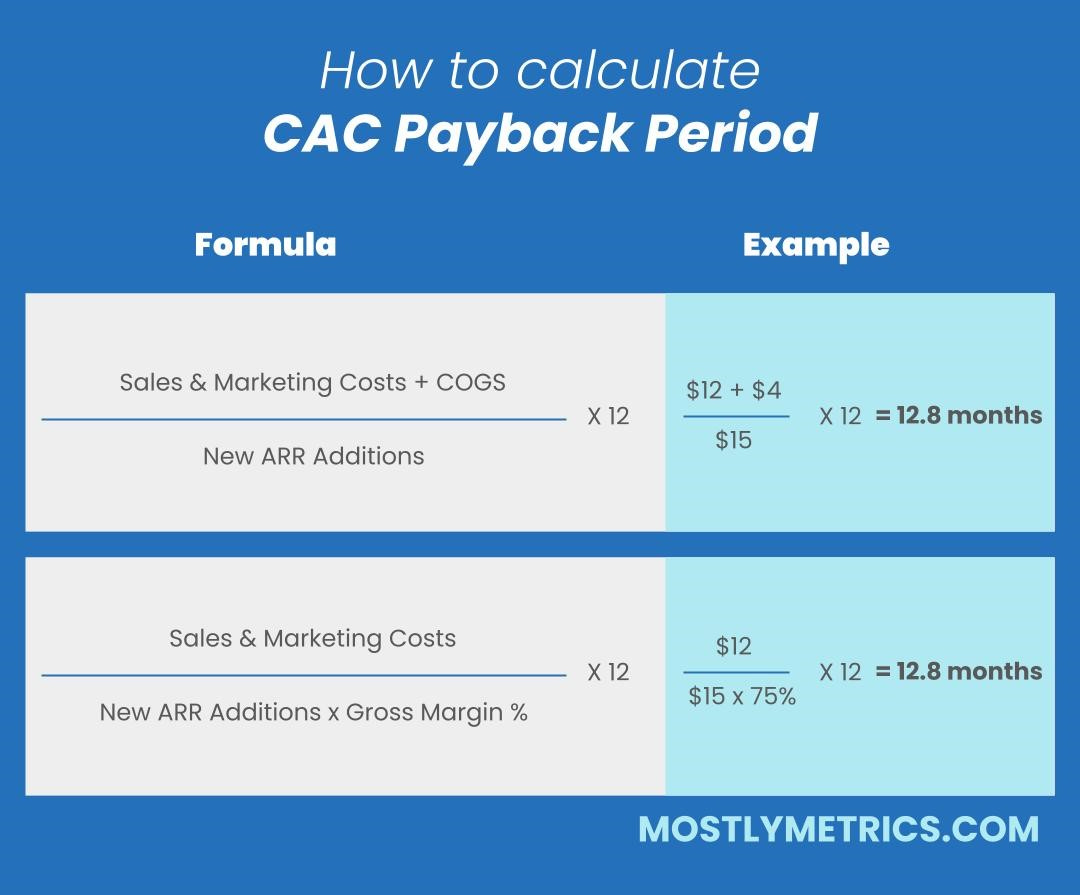
Direct Answer
For a hybrid PLG-plus-sales motion in 2027, calculate CAC payback period by separating self-serve acquisition costs (product-led, AI-driven onboarding) from sales-assisted costs (SDRs, AEs, Gong-powered coaching), then applying a blended weighted average based on revenue contribution.
The correct formula is: (Total Sales & Marketing Spend for Sales-Assisted Customers) / (Monthly Recurring Revenue from Sales-Assisted Customers) for the sales track, and (Total Product-Led Acquisition Spend) / (Monthly Recurring Revenue from Self-Serve Customers) for the PLG track—then combine using a weighted harmonic mean to avoid distortion from high-volume, low-cost PLG signups.
In 2027, AI in the funnel (e.g., Clari for forecasting, Outreach for sequence optimization) and vendor consolidation (e.g., Salesforce absorbing analytics tools) mean you must also factor in AI-driven attribution costs and longer buying committees (7–11 stakeholders per deal) that inflate sales cycle length to 90–120 days, pushing payback beyond 18 months for enterprise accounts.
Ignoring the PLG/sales split leads to a dangerously low blended number that masks real cash flow risk.
The 2027 Context: Why the Old Formula Breaks
In 2027, the hybrid PLG-plus-sales motion is the default for B2B SaaS, with Gartner reporting that 65% of new revenue comes from product-led starts, but 80% of enterprise value still requires human touch. AI agents now handle 40% of initial product demos (via tools like Salesloft’s AI Cadence), and buying committees average 9 stakeholders per deal (per Forrester).
The old “total CAC / blended MRR” fails because:
- PLG customers convert in days with near-zero sales cost, pulling the blended payback down artificially.
- Sales-assisted customers take 4–6 months to close, with Gong Labs data showing a 22% increase in deal cycles since 2023 due to committee alignment.
- AI costs (e.g., Clari’s AI forecasting, HubSpot’s AI content generation) are now 8–12% of total GTM spend and must be allocated per track.
The Correct Calculation: Two-Track Weighted Model
Step 1: Define Tracks
- Track A (Self-Serve PLG): Costs include product-led acquisition (paid ads, SEO, virality loops, AI onboarding chatbots) and product costs (infrastructure, free-tier support). Revenue is monthly recurring revenue (MRR) from users who never talk to sales.
- Track B (Sales-Assisted): Costs include SDRs, AEs, sales enablement (e.g., Gong for call coaching), demo AI agents, and Salesforce CRM costs. Revenue is MRR from accounts that required a human touch.
Step 2: Calculate Payback Per Track
Example:
- Track A: $50k cost / $25k MRR = 2 months payback
- Track B: $200k cost / $40k MRR = 5 months payback
- Revenue mix: 38% PLG, 62% sales
- Weighted harmonic mean = 1 / ((0.38/2) + (0.62/5)) = 3.1 months (vs. Arithmetic mean of 3.5 months, which overweights PLG).
Step 3: Account for AI Attribution Costs
In 2027, AI in the funnel (e.g., Clari’s AI scoring leads that convert to sales, HubSpot’s AI generating blog content for PLG) creates shared costs. Use time-based allocation: if an AI tool serves both tracks, split by hours of usage. For instance, Gong’s AI call analysis costs $10k/month; if 70% of calls are sales-assisted and 30% are PLG support, allocate $7k to Track B and $3k to Track A.

👉 Quick Call with Kory White, Fractional CRO · See Kory on LinkedIn · CRO Syndicate
The Buying Committee Factor
With longer cycles (90–120 days for enterprise), payback periods stretch. McKinsey found that 2027 buying committees require 11 touchpoints across 4 departments. To adjust:
- Add a “cycle cost multiplier”: For every month beyond the standard 60-day sales cycle, add 10% to Track B costs (for additional SDR touches, AI follow-ups, and Salesforce workflow automations).
- Example: A 120-day deal (60 days over standard) increases Track B costs by 20%, raising payback from 5 to 6 months.
The PLG-to-Sales Handoff Trap
A common error is misclassifying handoff costs. When a self-serve user requests a demo (triggered by Outreach’s AI intent detection), the cost of that handoff (e.g., the SDR’s time, the AI routing) must be split: 50% to PLG (the lead source) and 50% to sales (the conversion effort).
Forrester recommends using a weighted attribution model—assign 60% of handoff cost to the track that closed the revenue. If the handoff leads to a sales-assisted deal, 60% goes to Track B; if the user stays self-serve, 60% goes to Track A.
The Payback Period Loop: Continuous Recalculation
Run this loop monthly. In 2027, SaaStr data shows that best-in-class hybrid companies (e.g., Notion, Canva) recalculate weekly because PLG conversion rates can shift 15% month-over-month due to AI model updates.
FAQ
What is the biggest mistake in calculating CAC payback for PLG+Sales? Using a simple average of total CAC divided by total MRR. This hides the fact that PLG customers may pay back in 2 months while sales customers take 12, creating cash flow blind spots. Always use a weighted harmonic mean.
How do I handle AI costs that benefit both tracks? Allocate by usage—e.g., Clari’s AI forecasting cost should be split by the number of deals in each track (70% sales, 30% PLG). Avoid arbitrary 50/50 splits; use actual API call logs from Salesforce or HubSpot.
Does the payback period target differ for PLG vs. Sales? Yes. Bessemer Venture Partners recommends PLG payback under 6 months (ideal: 2–3 months) and sales-assisted payback under 18 months (ideal: 10–14 months). A blended target of 12 months is standard for 2027.
How does vendor consolidation affect the calculation? When you consolidate from 10 tools to 3 (e.g., Salesforce absorbing analytics, HubSpot absorbing marketing), allocate the consolidated cost by feature usage. For example, if Salesforce’s new AI module costs $50k/month and 60% is used for sales forecasting, assign $30k to Track B.
What if my PLG users eventually become sales-assisted? Track them as a hybrid cohort. Calculate payback for the first 6 months as PLG, then switch to sales-assisted after handoff. Use a time-weighted average—e.g., 4 months PLG payback + 8 months sales payback = 12-month blended for that cohort.
How do I factor in longer buying committees? Add a 5% cost increase per additional stakeholder beyond 5. Gong Labs data shows that each extra stakeholder adds 2.3 SDR touches and 1.1 AI follow-ups. Adjust Track B costs accordingly.
Is there a rule of thumb for 2027? Yes: If your blended payback exceeds 18 months, your sales motion is too expensive relative to PLG. Gartner recommends a 12-month target for hybrid models, with sales-assisted not exceeding 14 months.
Sources
- Gartner: 2027 GTM Tech Trends
- Forrester: The Hybrid PLG+Sales Playbook
- McKinsey: Buying Committees in 2027
- Gong Labs: Sales Cycle Length Report
- SaaStr: PLG Payback Benchmarks
- Bessemer Venture Partners: Cloud 100 Metrics
- HubSpot Blog: AI Attribution in Hybrid Models
- Clari: AI Forecasting for Revenue Teams
Bottom Line
In 2027, the correct CAC payback calculation for a hybrid PLG-plus-sales motion requires separating costs by track, using a weighted harmonic mean to blend them, and adjusting for AI attribution and longer buying committees. Failing to do so risks cash flow crises as PLG growth masks expensive sales cycles.
Run the loop monthly, target a blended 12-month payback, and never trust a single blended number.
*How to calculate CAC payback period correctly for a hybrid PLG-plus-sales motion in 2027.*