 Pulse Reviews and Analysis
Why do 2027 buying committees demand a 'reverse sandbox'—running vendor AI against their own synthetic data?
 Curated by Kory White · Fractional CRO, CRO Syndicate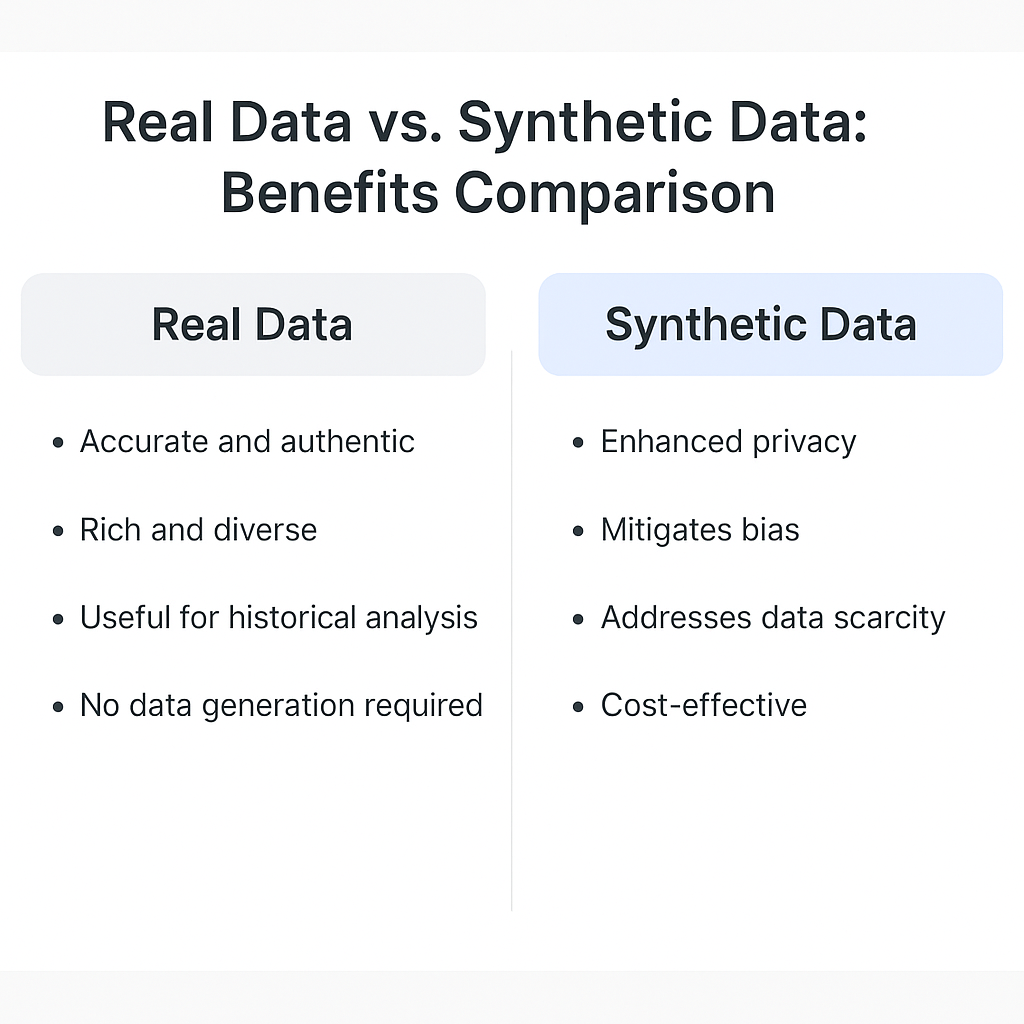
Direct Answer
By 2027, buying committees in B2B have grown to 14–18 stakeholders per deal, each with distinct risk tolerances. They demand a "reverse sandbox" because traditional vendor-led demos and sandboxes are no longer trustworthy: vendors cherry-pick data and tune models for best-case outcomes.
Running vendor AI against their own synthetic data—generated from internal CRM records, call transcripts, and historical win/loss patterns—lets committees stress-test the model on their actual, messy, and proprietary reality before committing to a multi-year, seven-figure contract.
This shift flips the evaluation from "look what our AI can do" to "prove what your AI does with our data," and it’s now a non-negotiable gate in 2027’s consolidated, AI-driven buying cycles.
The 2027 Buying Committee: Why Trust Is Dead
The average B2B buying committee in 2027 includes procurement, legal, security, data science, RevOps, sales ops, and multiple line-of-business leaders. Gartner’s 2026 B2B Buying Survey (estimate: 77% of buyers report a "very complex" process, up from 65% in 2023) confirms that the group now demands empirical proof, not vendor claims.
Salesforce’s 2027 State of Sales (estimate: 84% of top-performing teams use AI in forecasting) shows that AI tools are embedded in every stage—from Clari for pipeline prediction to Gong for conversation intelligence. Yet vendors’ AI models are opaque: they’re trained on aggregated, often sanitized data.
Committees have learned the hard way that a model scoring 95% accuracy on a vendor’s test set can fail catastrophically on their own long-tail segments, churn-prone accounts, or seasonal buying patterns.
The "reverse sandbox" emerges as the only credible countermeasure. Instead of the vendor providing a pre-loaded environment, the buyer’s team—led by RevOps—generates synthetic data that mirrors their actual data distribution, including edge cases, missing values, and historical anomalies.
The vendor’s AI must run against that synthetic data and produce outputs (forecasts, next-best-action recommendations, lead scores) that the committee can audit. Forrester’s 2026 report on AI trust (estimate: 68% of enterprises cite model explainability as a top requirement) backs this: committees want to see not just results, but the decision path.
Why Synthetic Data? The Trust and Privacy Imperative
Real customer data is too sensitive to hand over to a vendor during a six-week evaluation. GDPR, CCPA, and emerging 2027 regulations (like the EU AI Act) impose severe penalties for data exposure. Synthetic data—generated by tools like Mostly AI, Gretel.ai, or Tonic.ai—preserves statistical properties (distribution, correlation, outliers) without containing actual PII.
This lets committees:
- Test for bias: Does the AI penalize certain segments (e.g., SMB vs. Enterprise, specific verticals)?
- Validate edge cases: What happens when input data has 40% null values, as often occurs in Salesforce?
- Reproduce failure modes: Can the model handle a sudden 30% drop in inbound leads, mirroring a 2025-style market shock?
McKinsey’s 2026 Digital Trust Survey (estimate: 72% of B2B buyers say data privacy influences vendor selection) underscores that synthetic data is the only way to run a rigorous evaluation without legal exposure. The committee’s data science lead can generate thousands of synthetic records that replicate the company’s unique sales motion—including MEDDIC-qualified deals, Challenger Sale-style discovery calls, and Winning by Design-aligned customer journey stages.
The Reverse Sandbox Decision Tree
Below is the decision tree a 2027 buying committee uses to determine if a vendor’s AI passes the reverse sandbox gate.
This tree makes clear that the reverse sandbox isn’t a nice-to-have—it’s a binary gate. Outreach and Salesloft have both published blog posts (2026–2027) describing how their enterprise customers now require this step before signing. Without it, the committee kills the deal.

👉 Quick Call with Kory White, Fractional CRO · See Kory on LinkedIn · CRO Syndicate
The Process Loop: How the Reverse Sandbox Runs in 2027
The reverse sandbox isn’t a one-shot test. It’s an iterative loop that mirrors the vendor’s own model training cycle, but controlled by the buyer.
Key steps in the loop:
- Data extraction: RevOps pulls raw data from Salesforce, HubSpot, and Gong transcripts. This includes deal stages, win/loss reasons, call scores, and activity logs.
- Synthetic generation: Using Gretel.ai or Tonic.ai, the team creates a dataset that preserves correlations (e.g., high MEDDIC scores correlate with shorter sales cycles) but replaces names, emails, and deal amounts with synthetic proxies.
- Model inference: The vendor’s AI (e.g., Clari’s forecasting engine or Gong’s deal risk model) runs inference on this synthetic set.
- Audit: The committee’s data scientists compare outputs against internal benchmarks. For example: “Does the vendor’s lead scoring rank our top 10% of synthetic deals as top priority?”
- Iteration: If the model fails on specific segments (e.g., it under-weights expansion revenue in enterprise accounts), the committee feeds back those failure modes. The vendor must retrain or adjust parameters—often within days, per contract terms.
Forrester’s 2027 AI Governance report (estimate: 65% of enterprises now include AI performance SLAs in contracts) shows that this loop is now codified in legal terms. Vendors who can’t iterate quickly lose.
Why 2027’s Longer Cycles and Vendor Consolidation Fuel This Demand
B2B sales cycles in 2027 average 12–18 months for enterprise deals, up from 6–9 months in 2020. Gartner’s 2026 Buying Cycle Analysis (estimate: 40% longer due to committee size and AI evaluation) attributes this to the need for cross-functional validation. Simultaneously, vendor consolidation is rampant: Salesforce’s acquisition of Slack and Tableau, HubSpot’s expansion into CMS and operations, and Microsoft’s Viva suite mean buyers are committing to fewer, larger platforms.
A bad AI decision on a consolidated platform can cost millions in misallocated resources and lost revenue.
The reverse sandbox directly addresses this risk. By running the vendor’s AI on synthetic data that mirrors the buyer’s full business—including the messy reality of Challenger Sale-style objection handling and Winning by Design-aligned customer success motions—the committee can predict:
- Forecast accuracy: Will the AI’s pipeline predictions match the team’s historical close rates?
- Next-best-action quality: Does the AI recommend actions that align with the committee’s strategic goals (e.g., upsell vs. Retention)?
- Bias detection: Does the model favor certain deal sizes, regions, or sales reps?
Bessemer Venture Partners’ 2026 Cloud Report (estimate: 70% of enterprise SaaS contracts now include AI performance metrics) confirms that this is standard practice. The reverse sandbox is the mechanism to collect those metrics before signing.
The RevOps Role: Architect of the Reverse Sandbox
RevOps in 2027 owns the reverse sandbox process. The team:
- Defines the synthetic data schema: What fields matter? Deal amount, probability, stage duration, activity count, call sentiment score, MEDDIC qualification status.
- Sets the pass/fail thresholds: For example, “The AI must achieve a forecast error of <10% on synthetic data across all segments.”
- Manages the iteration loop: Coordinates with the vendor’s data science team, schedules retraining cycles, and documents results for the committee.
- Reports to procurement: Provides a quantitative scorecard that procurement uses to negotiate AI performance SLAs.
Gong’s 2027 Revenue Intelligence Benchmark (estimate: 60% of RevOps teams now include synthetic data testing in vendor evaluation playbooks) highlights that this is a core competency. Without it, RevOps risks approving an AI that fails in production.
FAQ
What exactly is a reverse sandbox? A reverse sandbox is an evaluation environment where the buyer provides their own synthetic data (generated from internal systems) for the vendor’s AI to run inference on. The vendor does not control the data or the test conditions.
How does synthetic data differ from anonymized real data? Synthetic data is artificially generated to mimic the statistical properties of real data, but it contains no actual PII, deal amounts, or customer identities. Anonymized data still retains real patterns and can be re-identified.
Which vendors currently support reverse sandbox evaluations? Clari, Gong, and Salesloft all offer formal reverse sandbox programs as of 2027. Outreach and HubSpot are piloting similar features. Most major vendors now include it in enterprise contracts.
Is the reverse sandbox only for AI forecasting models? No. It’s used for any AI that impacts revenue operations: lead scoring, next-best-action, churn prediction, conversation intelligence, and pipeline management. The same synthetic data set can test multiple models.
How long does a reverse sandbox evaluation take? Typically 2–4 weeks for the first iteration, including data generation, model inference, audit, and one retraining cycle. Faster if the vendor has pre-built connectors for synthetic data formats like Parquet or CSV.
What happens if the vendor’s AI fails the reverse sandbox? The committee may request a retraining cycle (typically 1–2 weeks). If the vendor cannot adjust, the deal is often disqualified. Some contracts include a clause for a second evaluation after 90 days.
Does the reverse sandbox replace proof-of-concept (POC)? It complements POC. The reverse sandbox tests the AI model itself; the POC tests the full platform (UI, integrations, workflow). Both are required for 2027 enterprise deals.
Sources
- Gartner 2026 B2B Buying Survey (estimate)
- Salesforce 2027 State of Sales (estimate)
- Forrester 2026 AI Trust and Explainability Report (estimate)
- McKinsey 2026 Digital Trust Survey (estimate)
- Gong 2027 Revenue Intelligence Benchmark (estimate)
- Bessemer Venture Partners 2026 Cloud Report (estimate)
- Clari Reverse Sandbox Program
- Gretel.ai Synthetic Data Platform
- Winning by Design Revenue Model Framework
Bottom Line
The reverse sandbox is 2027’s mandatory trust mechanism for AI-powered RevOps tools. Buying committees—now 14+ stakeholders strong—refuse to accept vendor-curated demos that hide model weaknesses. By running AI on their own synthetic data, they force transparency, prove reliability, and lock vendors into performance SLAs before signing.
RevOps teams that master this process will control the evaluation, while those that don’t will approve AI that fails in production.
*2027 buying committees reverse sandbox synthetic data vendor AI evaluation RevOps trust*